
Anime
Manga ‘Hotaru no Yomeiri’ Gets Live-Action Adaptation in 2027

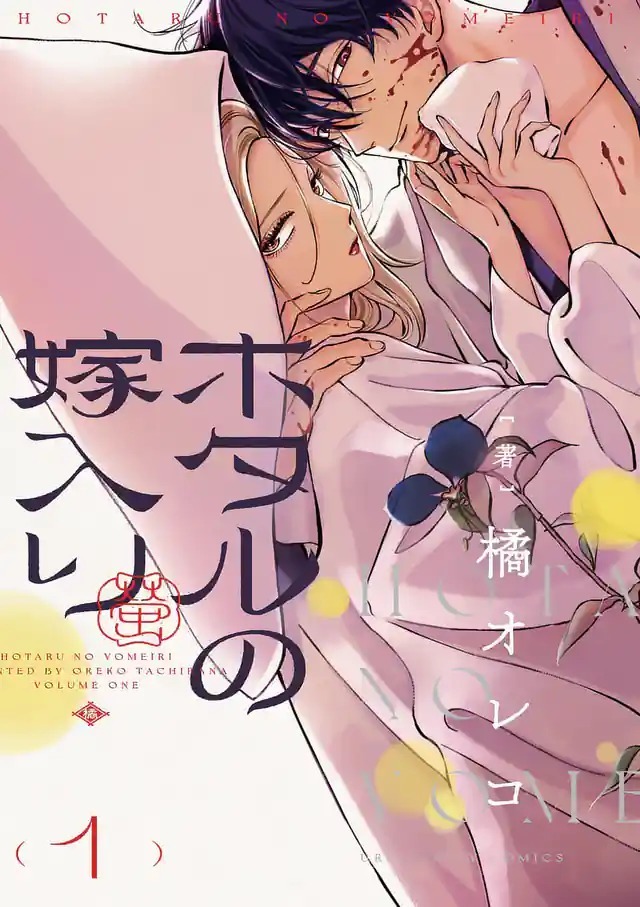
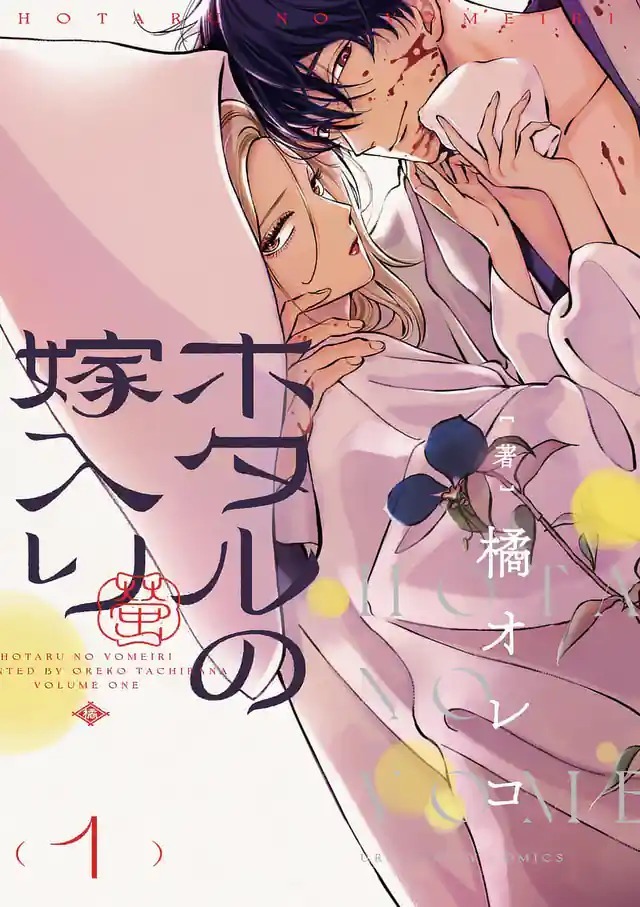 Television broadcast company Fuji TV announced a live-action adaptation of Oreco Tachibana‘s Hotaru no Yomeiri (Firefly Wedding) web manga on Saturday, revealing an announcement promotional video. The live-action series is scheduled to premiere on Fuji TV in 2027.
Tachibana began drawing the historical romance manga on the MangaONE platform in January 2023. The 12th volume was released on June 19, with the 13th and final volume scheduled for release on October 19.
The television anime is produced by David Production and began airing on October 9. Crunchyroll is simulcasting the series with English subtitles.
Comikey began publishing the series in English in June 2023. Viz Media licensed the series in May 2024. The seventh volume went on sale on July 14, with the eighth volume scheduled to be released on October 13.
Synopsis
Satoko, the eldest daughter of the honorable Kirigaya family, has received many marriage proposals from men captivated by her beauty and grace. However, she has turned them all down due to her secret heart defect. Despite her condition, Satoko is still willing to find a husband to ease her beloved father’s concerns.
While on a stroll, Satoko is kidnapped by a group of mercenaries, one of them being Shinpei Gotou—a legendary assassin tasked with executing her. Satoko tries to bribe Gotou into freeing her, but it proves unsuccessful. Out of options, Satoko makes a desperate gamble: under the pretense of love at first sight, she asks him to marry her.
Unexpectedly, Gotou takes the bait and vows to protect her. As the couple escapes to freedom, Satoko struggles to keep up the ruse and make sense of the mysterious man she has eloped with. [Written by MAL Rewrite]
Announcement
The promo is region-restricted. Click here.
Source: Comic Natalie, Oricon News
>
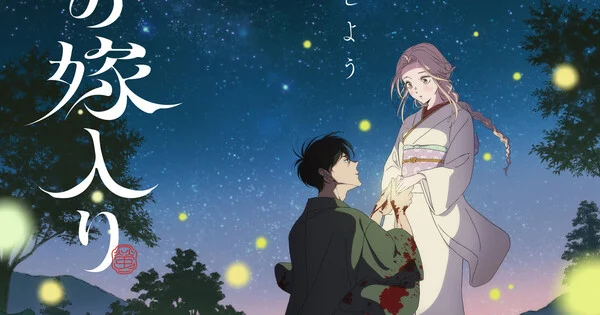
Anime adaptation debuted on Friday
The official website for the television anime of Oreko Tachibana‘s Firefly Wedding (Hotaru no Yomeiri) manga announced on Saturday that the manga is getting a live-action adaptation on Fuji TV in 2027. The website streamed a video, but it is not available in the U.S.

©橘オレコ/小学館/アニメ「ホタルの嫁入り」製作委員会
The anime adaptation debuted on Friday and airs on Fuji TV‘s Noitamina programming block on Fridays at 11:30 p.m. Crunchyroll streams the series as it airs.
Viz Media publishes the manga in English, and it describes the story:
On the surface, Satoko has it all—she’s beautiful, the daughter of a nobleman, and at a prime age for marriage. Unfortunately, she is also quite ill and only has a short time left to live. Before she can secure a marriage that will redeem her worth in her family’s eyes, she finds herself the target of the mysterious assassin Shinpei, and her plans are put in jeopardy. In order to save herself, she makes a desperate proposal—of marriage! When it comes to love, however, Shinpei takes “until death do we part” seriously.
Tachibana launched the manga on Shogakukan‘s Manga ONE app in January 2023, and ended it on January 12. Shogakukan published the 12th compiled book volume on June 19, and will release the 13th and final volume on October 19. A volume of spinoff chapters will launch on the same day.
Sources: Firefly Wedding anime’s website, Comic Natalie
>
Dragon Quest Heroes: Torneko’s Mystery Dungeon – Classic HD is a great classic game held back by curiosities surrounding its release.

© Square Enix
The facts of the matter are quite simple. This is a rerelease of the 1993 original, the first time it has been released in English. Torneko’s Mystery Dungeon is the first spinoff for the legendary Dragon Quest series, and the first Mystery Dungeon game – in that regard, it is a seminal work, establishing two distinct tributaries from the storied Dragon Quest mainline series. In a way, we have this game to thank for paving the way for series such as Dragon Quest Monsters, Pokémon Mystery Dungeon, and more. Having this title officially available on modern platforms and in multiple languages is a great step toward preserving this piece of gaming history.
The gameplay is similarly straightforward. You take on the role of Dragon Quest IV‘s Torneko and venture into the giant mystery dungeon. Each run involves gathering gold, treasure, items, weaponry, and more as you navigate the dungeon levels and try to clear all the way to the bottom floor. The dungeon is full of monsters who are not too pleased you’re there, and you will battle them for experience points as you head deeper underground. Along the way, you will find new weapon upgrades, healing items, wands and staves with magical spells, special one-use items, and more to help deal with the increasing challenges. Your goal is to get to the bottom floor and clear the dungeon, but more likely than not you will perish in your first few (dozen… hundred…?) attempts. But of course Torneko doesn’t truly die, and instead crawls back to the surface and goes to the shop to recuperate.

© Square Enix
You start over at level one, lacking any items, and return to the dungeon. But because it is a strange and mysterious dungeon, the floors will change completely. Nothing is quite the same twice, and you will have to challenge the dungeon and learn it all over again each time you descend anew.
You might be thinking, “Wait a minute, this is a roguelike.” And… yes! It is, in the truest sense, though likely not in the sense you mean it. For you see, dear reader, Torneko’s Mystery Dungeon is patterned off the 1980s classic game Rogue, the primogenitor of the genre from which the term roguelike springs. However, if you are used to modern roguelikes with copious progression paths, interconnected sub-systems, and compounding ability synergies, this will seem positively barren by comparison. Torneko’s Mystery Dungeon is not a game that is a roguelike; it is a game that is like Rogue – and that distinction is more than mere semantics.

© Square Enix
Don’t let that relative simplicity fool you – there’s a lot to sink your teeth into here. Part of the reason Rogue spawned other beloved franchises like Mystery Dungeon, Diablo, and other gaming luminaries is its highly rewarding, addictive gameplay. Before we had articulated the concept of gameplay loops, Rogue solidified the notion in the minds of the gaming public: delve, die, do it all again. The constant iterations and combinations that can arise from the game’s random elements create a nearly limitless number of possible experiences.

© Square Enix
Most importantly, Torneko’s Mystery Dungeon uses Rogue‘s turn system. It’s not real time, obviously, but even calling it turn-based doesn’t quite communicate how it operates. It is more akin to an I-go-you-go board game like chess: the player makes a single move or action, and the rest of the monsters, world, and so on make a single collective move in return. Yet between actions, the player essentially has unlimited time to look over menus, weigh the proper course of action, and decide. Each move, item use, weapon attack, and so on is one tick in the game world, and afterward the game responds in kind.

© Square Enix
This is the sweat-inducing beauty of the gameplay. When you are centered in a dungeon room, surrounded by enemies, and carefully weighing whether to take the time to shift one step or reach into your pack to use a wand charge, all that time spent deciding creates a magnified potential energy of tension that suddenly releases when the action starts. It’s the roleplaying game equivalent of a slow-motion gunfight where you have all the time in the world to aim your shots, but you are always outgunned, always running low on ammo, and always looking for an escape route. This is why the game became a phenomenon.
Yet it is a challenge to wrestle with the nature of Dragon Quest Heroes: Torneko’s Mystery Dungeon – Classic HD as a modern product in 2026. We have really turned a corner over the past decade or so in terms of Dragon Quest fandom in the English-speaking world. By now, we’ve had not only huge tentpole releases like Dragon Quest XI, but also spinoff games and full HD2D remakes/remasters of classic titles. Dragon Quest is more than mere curiosity in the English-speaking world; it is a franchise with popularity and name recognition. And with name recognition comes a level of expectations.

© Square Enix
It is certainly nice to have this game available from a historical perspective. Older games are increasingly lost to the ether via negligence or active destruction, so it is nice to have this preserved on modern hardware. And it clearly has been remastered on some level, having a color palette and fidelity similar to the mobile/DS remakes of the sprite-based games from recent years. But for my money, I don’t find this look as charming as the actual original Super Famicom/SNES visuals, nor as glamorous as the HD2D remasters that have become commonplace. It sits in a strange middle ground where its updates are more of a sidegrade rather than a strict upgrade.
There have also been some other mixed changes. The opening cinematic is brand new (to my knowledge) and made just for this release. It is very charming with an adorable storybook style that fits the game perfectly. That said, this opening cutscene was the only time I experienced any performance issues. It made a bad first impression and made it hard to enjoy one of the only objectively great presentation upgrades brought into the package.
Similarly, there have been some gameplay changes in the core gameplay. This is harder for me to judge, as, to be perfectly honest, I have not played the original title. I never ran into anything that felt alarmingly out of place as a newbie. But the fact remains that the core experience has changed, and alongside the “somewhat remastered but not totally” visual changes, it adds up to a less-than-perfect act of preservation. It is an altered experience on some level, even if it isn’t fundamental in either regard.
But this game is released, at the time of this writing, for US$24.99 at full price. That is a perfectly reasonable amount for a game which keeps a classic title available on modern platforms. I also think that despite its almost die-hard adherence to Rogue‘s principles, that very closeness is what makes it stand out in a sea of games which have branched off on such winding tributaries that it is hard to see the river they are sourced from. This is not a perfect experience, but it is a lot of fun for a reasonable price.
Now, if you’ll excuse me, I want to do one more run before bed…
>
Welcome back, folks! I don’t pay much attention to Star Wars, being that it’s never really been my thing. But the outright adulation that’s been going around for Star Wars: Galactic Racer has my attention. Apparently, ex-Burnout devs worked on the game, which in and of itself ought to be encouragement enough. But I’ve also seen videos of the legendary new Glup Shitto going around, Biddy Blas. I, too, have been entranced by “SCRIB DOON!” (I am not immune to silly voices.)
This is…

Godzilla Minus Zero Director Worked On Games Before Films
People around the world who love tokusatsu and giant monsters rampaging through cities are excited for Godzilla Minus Zero. (Hi, my name is Jean-Karlo, I love tokusatsu and giant monsters…) A long-awaited sequel to the award-winning and fan-cheered Godzilla Minus One, Minus Zero reunites us with old friends and old fears, in addition to director Takashi Yamazaki. Yamazaki’s been at this game for a long time; a look at his filmography reveals a treasure trove of anime films, like Lupin III: The First (which I covered years ago on This Week in Anime with fellow alumni, Nicky) and Stand By Me Doraemon (which I covered with Sylvia)! There are other notable titles, like the 1987 The Drifting Classroom and 1997’s Parasite Eve, which the Parasite Eve games are partially connected to. He also wrote and directed Dragon Quest: Your Story, which I don’t hold against him.
Would you believe me if I told you Yamazaki also dabbled in games? Not small ones, either. He worked on Metroid: Other M!
Yamazaki’s history with games is rather limited; MobyGames only lists six titles to his name, and he mostly handled stuff related to CGI art design or direction. But when you consider some of the stuff he worked on, you can see how he came to direct so many great CGI films (and Godzilla). Consider: the Onimusha 3 opening, which also featured stunt coordination by Donnie Yuen.
Quite possibly the biggest bit of games work in Yamazaki’s oeuvre is the intro to Onimusha 3. Practically a six-minute short film unto itself, the sequence shows protagonist Samanosuke taking on a demonic juggernaut on his own in an attempt at fighting one of Nobunaga Oda’s high-ranking soldiers—single-handed.
Yamazaki responded to a tweet reminding folks of this work from his past, saying, “It was over 20 years ago. That brings back memories.” It goes to show that talent comes out from all over, and skills in one field can apply to others. (And, considering he worked on Metroid: Other M, you can’t really measure someone’s skills off of their past failures.)
Onimusha 3 is still lost in limbo, with fans still awaiting the day that it gets ported to modern consoles. You’d think that managing the likeness of actor Jean Reno, who plays Jacques in Onimusha 3, would be a factor. But Reno actually voiced his willingness to reprise his role last year, so who knows what the hold-up is. You reckon reminding CAPCOM an award-winning filmmaker worked on their game would help…?
Dead of the Brain goes up on Steam
Back in July, we reported how Fakku (the Portland,OR-based eromanga publisher) acquired licenses from studio FairyTale to publish a number of their PC-98 games in the United States. Good news, and very well-timed at that: the first game’s Steam page is already up. As befitting October, the month of Spoops™, it’s Dead of the Brain!

© Fakku, FairyTale
While Dead of Brain isn’t strictly an eroge (it’s mostly horror, nudity aside), it’s still one of FairyTale’s most well-known PC-98 games: a first person adventure where you play as a young man named Cole trying to help a scientist clean up a mess of zombies in the wake of him developing a serum that brings corpses back to life. It’s a little Re-Animator, a little Night of the Living Dead. And it’s gruesome. You mostly interact with the game as a point-and-click adventure, with some quick-time events to deal with some pesky undead.
Fakku‘s playing this one as close to the hilt as they can; while the game is mostly unchanged, they’ve added a few quality-of-life features like the option to restart a scene if you get a “game over,” or displaying hover hints and hit boxes. The Steam page still underlines, however, that Dead of Brain is 30 years old and that it “may seem clunky by modern standards.”
So far, Dead of Brain doesn’t have a release date; one would hope it releases in time for Halloween. But we do know that its FM Synthesizer-backed soundtrack will be available as DLC. We’ll keep folks posted!
Monster Hunter Rise hits 20 million sales
Gonna be honest: I haven’t kept up with Monster Hunter Wilds all that much. Haven’t even played it. Not because I have some kind of issue against it, I was just busy with Xenoblade when it came out. (Man, now I can’t use that as an excuse anymore…) But I know the initial launch was a disappointment for folks. And while the upcoming Ascendance DLC has folks excited, there was a lot of consternation over Wilds. The good news is, that did help people come around on Monster Hunter Rise. Not only that, Monster Hunter Rise hit 20 million copies sold!
\【祝】/
『モンスターハンターライズ』が累計販売本数2,000万本を達成!
ハンターの皆様、応援ありがとうございます!
これからも「モンスターハンター」シリーズをよろしくお願いします!
未プレイの方は、現在各デジタルストアにてセールを実施中!
ハンターデビューのチャンスをお見逃しなく。
#モンハンライズ— モンスターハンターライズ:サンブレイク公式 (@MH_Rise_JP) October 6, 2026
Monster Hunter is in a weird place; while each game is mostly iterative, building upon the mechanics and quality-of-life features of its predecessor, it’s a bit like Street Fighter in that it’s not uncommon for people to pick just the one game and stick with it. Maybe they like the Styles from Monster Hunter Generations. Maybe there’s a movelist they’re attached to. Maybe they hate that you can’t use oils on sword-and-shields anymore. Take your pick. The end result is that you can still play some of these older Monster Hunter games and find folks to play with (especially since Monster Hunter 4 Ultimate is still available on the Switch). This not only gives the older games a ton of longevity, it also helps the games get re-evaluated later on.
This is important, because Rise was… well, I hesitate to say “maligned,” but there was definitely some grousing regarding Rise. Instead of following Monster Hunter World‘s approach and giving players massive detailed maps, Rise toned back some of the size of the game in order to accommodate it being on the Switch. And while you had a ton of nifty movement options like your Wirebugs and the Palamutes, it really did feel like a gussied-up 3DS Monster Hunter, which felt quite stark in the wake of Monster Hunter World.
But again, with the issues folks had with Wilds, it allowed folks to re-evaluate Rise. Which I’m all for. I love the movement options in Rise, and it disappoints me that stuff like the Wirebug weren’t made permanent going forward. While Wilds maintained mounting (a mechanic wherein you could “mount” a monster and deal extra damage to it while effectively rodeo-riding it as it bucked around), Rise introduced Wyvern Riding, wherein you not only mount a monster but have limited control over it. This allowed you to do neat things like steer a monster into a wall to knock it out, or control it to attack some other monster in the area. It’s a bit repetitive, mechanically speaking, but nothing amuses me more than steering a Rathian into a sheer cliffside and watching it brain itself.
What does this mean for Monster Hunter? Well, in the here-and-now: not much. Wilds is still their main project, and CAPCOM isn’t going to course-correct for the game just yet. But I think the next Monster Hunter title after Wilds might take on some aspects from Rise. And it might even combine them with some of the sophistication from World and Wilds… but me, I wanna see the Styles come back. Aerial Lance Style was just fun, man.
Sony Scraps VR Plans, Sells Patents
A few weeks ago, we covered Meta (née Facebook) and its inroads with virtual reality, specifically its attempts at a bespoke VR platform with a handful of games. This week, they got a big boost to their efforts: Sony has seemingly washed their hands of continuing their VR efforts, and have sold their patents related to the field to Meta.
It’s pretty obvious why they’re doing this; ignoring how slow VR’s adoption has been, Sony would rather cut their losses than keep tossing money down that pit. Which is a shame, because the PSVR on PlayStation 4 was actually pretty neat. But PSVR2 wasn’t very well-supported (not to mention, making a numbered continuation to something as niche as VR always seemed like a bit weird of an idea).
Do we stand to lose much from this? Well, other there’s Meta’s growing dominance in the field—for a given number of “growing,” since VR is still really expensive and impractical for a large population of potential buyers. Even if the hardware wasn’t so expensive and people had a hard time setting aside room in their precarious living situations for VR, the experience isn’t very comfortable and is liable to make a lot of people feel unwell from motion sickness. Meta’s staking everything on making “fetch” happen with VR, though. We’ll see how that pans out.
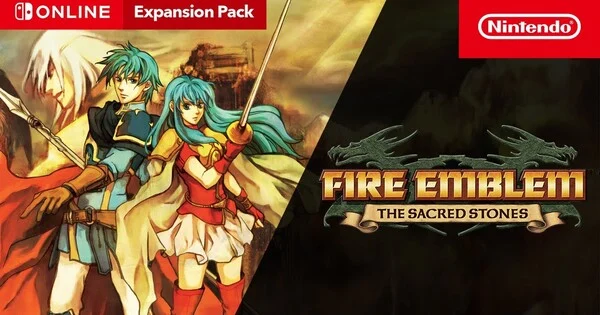
Wada Sachiko Rings In 22 Years of Fire Emblem: The Sacred Stones
Wada Sachiko’s a renowned name when it comes to the Fire Emblem series, being that they’ve been involved with the series for quite a while–particularly all three Game Boy Advance entries. This October 7th marked the 22nd anniversary for Fire Emblem: The Sacred Stones, an Wada rang the occasion in with new artwork of game co-protagonist, the Lord (“Lady”?) Eirika.
#FE聖魔の光石
https://t.co/44aVeaSH7m… https://t.co/uu6QjK57xr— ワダサチコ (@wadadot_Lv) October 7, 2026
The first two GBA Fire Emblem games were rather special in their own way; The Binding Blade never came stateside, but it featured Roy, who went on to appear in Super Smash Bros. Melee. Roy’s father, Eliwood, would star in the follow-up, Fire Emblem: The Blazing Blade, which ironically went on to be the first Fire Emblem game released in North America. While The Blazing Blade wasn’t exactly the best game in the franchise, it was rather liked by North American fans. So a follow-up was greatly anticipated. Wada, who had mostly served as the main artist for the other two GBA Fire Emblem games, also served as director for the new game. And for what it was worth, Sacred Stones took quite a few swings.
Sacred Stones told the story of the twin siblings Ephraim and Eirika, whose nation was overrun by a childhood friend in pursuit of the titular sacred stones. While you could choose either sibling at the outset of the game, they had their own unique routes through the story, with different characters they could meet along the way. North American fans were introduced to both branching promotions for characters and a map screen that could be explored, with old maps giving the options of being revisited via random encounters. These weren’t strictly new to the Fire Emblem series at large—both of those mechanics originated in Fire Emblem Gaiden. But North American fans were experiencing them for the first time, and had… thoughts on them.
For starters were the branching promotions; unlike Blazing Blade, where characters only had one promotion for their dedicated classes (Myrmidons into Swordmasters, Mercenaries into Heroes, MAGES. into Sages, and so on), characters in Sacred Stones could choose between two classes to promote into. Now your Cavaliers could choose between promoting into Paladins, for greater versatility, or Great Knights, for greater combat prowess. MAGES. and Clerics could either promote into Sages, for greater raw power, or Priests. And so on. And then there were the Journeyman classes, which had an extra promotion class; this was the best way of getting a Berserker or a really tanky General.
As for the map, being able to grind out battles against random encounters meant players could grind up experience points for their whole armies, theoretically granting use to everyone they’d recruited. This also potentially meant that money wasn’t as scarce. But this, and the branching promotions, had problems. For starters, some classes were inherently better than others. Spellcasters in particular had no reason to promote into Sages—not when Bishops had access to the Slayer skill, which tripled their damage to monsters. Folks also didn’t appreciate the maps, which just felt grindy.
Sacred Stones didn’t hurt the Fire Emblem series too much, though. It paved the way for Path of Radiance on the GameCube, which is still one of the most beloved entries to this day. And ironically, many of the mechanics from Sacred Stones—namely, branching progression and the map system, went on to become series standard for Fire Emblem games come Fire Emblem: Awakening on the 3DS.
As for Eirika and Ephraim, they’re still around. They’re still available through Fire Emblem Heroes, where they have a strong fan following. And Eirika even had a DLC appearance in Fire Emblem Awakening, where she was given the new Bride class. Sacred Stones similarly has more than a few loyal fans to this day, and Wada Sachiko’s contributions to Fire Emblem, from her art to her creative thumbprint, are still enjoyed and appreciated.
Let’s wrap up with some quick tidbits:
That’ll do it for this week, I think. This weekend is Portland Retro Game Expo! While I likely won’t be attending all three days, I’ll make time to visit the joint on Saturday. I’ve got to get my stuff prepared for Kumoricon this November, where I’ve been approved for another History of Japanese Superheroes panel! Maybe folks will see me, maybe not. Be good to each other, I’ll see you in seven.
This Week In Games! is written from idyllic Portland by Jean-Karlo Lemus. When not collaborating with Anime News Network, Jean-Karlo can be found playing Japanese RPGs, eating popcorn, watching VTuber content, and watching tokusatsu. You can keep up with him at @ventcard.bsky.social.
The views and opinions expressed in this article are solely those of the author(s) and do not necessarily represent the views of Anime News Network, its employees, owners, or sponsors.
>
How to watch Bears vs. Packers: TV channel and streaming options for October 11

Tony Gilroy: Disney Never Told Me Not to Discuss Fascism on ‘Andor’

‘Bloodaxe’: Release Date & Teaser For Prime Video Historical Series
-

 movies5 months ago
Search For Canadian TV Actor Stewart McLean Now Homicide Investigation
-

 Fashion9 years ago
These ’90s fashion trends are making a comeback in 2017
-
Fashion9 years ago
According to Dior Couture, this taboo fashion accessory is back
-
Fashion9 years ago
Model Jocelyn Chew’s Instagram is the best vacation you’ve ever had
-
Fashion9 years ago
Emily Ratajkowski channels back-to-school style
-
Fashion9 years ago
9 Celebrities who have spoken out about being photoshopped
-

 Anime4 months ago
Rurouni Kenshin: Hokkaido Arc Manga Takes 1-Issue Break – News
-

 Anime3 months ago
HIDIVE to Stream English Dubs for The World Is Dancing, The Forsaken Saintess and Her Foodie Roadtrip in Another World, The Dangers in My Heart: The Movie Anime – News