
Tech
Theo Baker spent four years investigating Stanford. Before he leaves, here’s what he found.


Most members of Stanford’s class of 2026 are smart, ambitious, and poised for remarkable careers. Theo Baker already has one. In his first semester of college, Baker broke the story that forced Stanford president Marc Tessier-Lavigne to resign — work that earned him a George Polk Award, one of journalism’s highest honors. Warner Brothers and producer Amy Pascal have optioned the rights to that story. And Tuesday, with graduation less than a month away, Baker publishes How to Rule the World, a sweeping account of his time at Stanford and the school’s often insidious relationship with the venture capital industry. Judging by early interest, it has every chance of becoming a bestseller.
We’ve been anticipating this one (we shared some related thoughts about it just a few weeks ago). We talked with Baker last Friday. This interview has been edited for length and clarity.
You showed up at Stanford as a coder. How did you end up breaking one of the biggest stories in the university’s history before your freshman year was even over?
I arrived thinking tech and entrepreneurship was the path for me. I joined the student hackathon, Tree Hacks, helped run it, skipped ahead to the CS weeder class. But my grandfather, with whom I was very close, had passed away a few weeks before I arrived, and he talked about working on the student paper more than anyone I’d ever known. So I joined the student paper to feel connected to him — it was supposed to be a hobby, a way to meet people and explore campus.
Very quickly things spiraled from there. My first few stories got more reception than we’d imagined, tips started flooding in, and one led me to a pseudonymous website called PubPeer, where scientists dissect published research. There were comments, seven years old at the time, suspecting that papers co-authored by Stanford’s president, Marc Tessier-Lavigne, had images that were duplicated, spliced, or otherwise irregular. I was a month into my time at Stanford when that investigation began, and by the time I was back for sophomore year, the president had resigned.
Were you warned off the story?
Multiple times, before I’d even published my first article. People warned me that Tessier-Lavigne was a person of very high integrity with a sterling reputation — that I didn’t want to do this, that it was going to place me in a very uncomfortable position within the institution. Which, of course, was not wrong. Over the course of the next 10 months, as the story widened, the pushback grew steeper. Within 24 hours of my first story, the board of trustees announced their own investigation. I quickly learned that one of the board members overseeing it had an $18 million investment in Denali Therapeutics, the biotech company Tessier-Lavigne co-founded. And the statement announcing the investigation praised his “integrity and honor”— in an investigation that was theoretically looking into his scientific integrity. So the investigation itself became an object of reporting. Tessier-Lavigne never once directly responded to a request for comment during my freshman year. Eventually he began sending missives to all of the faculty — which included all of my professors — describing my reporting as “breathtakingly outrageous and replete with falsehoods.” And then I began hearing more from his lawyers.
The book is really about something broader, though — what you call the Stanford inside Stanford. What does that mean?
Very soon after I arrived, I realized there was this parallel reality — an inside world — where the kids identified early as the next trillion-dollar startup founders are plucked from the crowd and placed into a world of access and resources. Yacht parties, slush funds, everyone texting the same billionaires for advice on weekends. As Stanford has become more famous as the home of great startups, it has become, according to some people at the university, increasingly difficult to spot actual talent. So many people arrive thinking they can be the next billion-dollar dropout that there’s an entire system of hangers-on whose job is to separate what they call the “wantrepreneurs” — people doing it because it looks good — from the so-called builders who actually have potential. It’s a system designed to sniff out the teenagers you can make a buck off of as early as possible.
The title of the book, it turns out, isn’t just a metaphor.
No. It’s literally the name of a so-called secret class at Stanford, taught by a Silicon Valley CEO. It’s not really a class. It’s more like a Skull and Bones for the aspiring tech elite. People aren’t getting course credit, but there are lectures, discussions, guest speakers, held once a week in the winter quarter on campus. When I arrived, it was a status symbol even to know it existed — that made you “rule-adjacent,” as one person told me. What this guy Justin was trying to do — as the students in the class told me — was what everyone seems to be trying to do: get in and network with the teenagers who can be useful to you, young. Only he figured out how to cloak himself in this mystique and make these talented, promising kids come to him, because he was promising them how to rule the world. He promised that the most brilliant students at Stanford would congregate in this 12-person seminar, and that the only way to learn these secrets was to go through him. It’s a very poignant example of how this system of talent extraction has come to manifest itself in strange ways.
What does that talent-scouting system actually look like on the ground?
There are VCs who employ older Stanford upperclassmen to identify freshmen as soon as they arrive on campus. It’s kept purposefully obscure. I’ve had people tell me it’s seen as an anti-signal to join one of the big entrepreneurship clubs, because that looks like you’re doing it for the title — as opposed to being in one of the secret feeder groups where the true builders supposedly congregate. But as much as there is genuine talent among the kids in this world, the primary qualification is who you know — whether you’re getting tapped on the shoulder. There was a CEO who cold-emailed me freshman year, asked to get to know me. The first time we went to dinner, we went to the Rosewood Hotel, and he’s sitting there spoon-feeding his eight-month-old caviar as he casually mentions that his first-ever contract was for Muammar Gaddafi. That casualness is something I find fascinating. And this whole system goes a long way toward explaining how the big frauds develop. It starts by vesting huge amounts of authority, money, and power in the hands of teenagers without adequate safeguards for when things go wrong.
You arrived right as the FTX collapse was happening and ChatGPT launched. What was that like to observe up close?
The timing was almost absurd. We arrived at the tail end of the crypto craze — the assumption when we showed up was that crypto was how you were going to make your fortune. SBF begins his descent on November 2nd. ChatGPT comes out November 30th. And immediately everything pivots. I remember being at a dinner shortly after ChatGPT’s release, sitting with one of the biggest crypto boosters on campus, and he’s telling me that SBF was “directionally correct” — that was the phrase — but that everyone was trying to figure out how to get around the legality. And quickly, many of those same people realized that AI was the new craze they could jump on. They told me they could reach the same heights as SBF, preferably without the fall, by taking advantage of the newest new thing. Silicon Valley operates in cycles, but this one has been particularly fascinating to observe up close because the scale is just unfathomable.
Do you think your peers are leaning into entrepreneurship partly out of anxiety about the job market?
Absolutely. The AI rush has made talent the resource to mine in this modern-day gold rush — the most valuable researchers and founders are more valuable than ever, but entry-level positions are starting to disappear. There’s a common refrain among people in this world that it’s easier to raise money for a startup right now than to get an internship. Which is remarkable, right? Entrepreneurship, rather than being the non-conformist outsider thing it might once have been associated with, has become an expected path. That changes the nature of it entirely.
What’s one piece of advice you’d give to a 17-year-old heading to Stanford or any elite university today?
You have to be really conscious about whether you’re doing what you’re doing because you believe in it and because it’s the right thing — or because it’s the easy thing. It’s very easy to be buffeted by trends and the tech whirlpool, to find yourself wasting away at a job you don’t actually want because you followed the expected path. Following the expected path is way less interesting than going out and doing something for yourself. I admire the best founders who emerge from this place because they feel genuinely empowered to make a difference. You just have to be careful that you’re doing it for the right reasons — and not just because you want to get rich.
You came here thinking you’d be a founder. Do you still want to start something?
Honestly, I haven’t thought about it that much — it’s been a mad dash to finish the book and get to graduation, which is astonishingly only about a month away. But I think it comes across in the book that I really did fall in love with journalism. It’s a temperament, almost an affliction, more than a career. Whatever I do, it will intersect with that.
When you purchase through links in our articles, we may earn a small commission. This doesn’t affect our editorial independence.
>

The Open Compute Project’s APAC Summit opened in Taipei on Aug. 11 with AI-scale systems management, power, cooling, and server architecture in focus as increasingly dense AI infrastructure changes how data center operators manage hardware at scale.
OCP’s Scalable Cloud Infrastructure Management work targets hardware-management problems in facilities with 100,000 nodes or more. Across Asia-Pacific, that push toward fleet-scale management is unfolding as operators simultaneously contend with rapid capacity growth, denser racks, and tighter access to power.
OCP scales hardware management for AI
OCP’s Scalable Cloud Infrastructure Management, or SCIM, subproject examines how hardware-management data can move across large data center networks and how technologies such as AI and machine learning systems, RDMA, PCIe/CXL, and DDR affect fleet operations. OCP’s SCIM is unrelated to the identity-provisioning standard that uses the same acronym.
The 2026 OCP APAC Summit extends that work across AI infrastructure, including telemetry and management systems that connect facility operations with equipment in the data hall. As GPU clusters expand, networking has become another AI infrastructure constraint, increasing the need for visibility beyond compute hardware alone.
Regional growth adds pressure. Asia-Pacific’s data center development pipeline increased by 7,103 MW in the first half of 2026 to 26,455 MW, according to Cushman & Wakefield. Vacancy fell from 10.9% to 10.3% despite new supply entering the market. In Indonesia, Firmus is planning a 360 MW Nvidia-powered AI data center on Batam, with initial operations targeted for 2027.
GEICO provides an enterprise example of the operational work involved in open infrastructure. The insurer reported cutting compute cost per core by more than 50% and storage cost per gigabyte by more than 60% after deploying OCP hardware across two colocation facilities with more than 1,000 servers, according to its OCP adoption white paper.
The deployment also required new processes and skills for firmware, validation, inventory, and fleet lifecycle management. GEICO’s results are not a regional benchmark, but its experience shows that lower hardware costs can come with higher requirements for in-house infrastructure engineering.
Power constraints reshape APAC deployments
Power availability is increasingly shaping where new capacity can be built. Schneider Electric executive Jean-Christophe Moureau told Computer Weekly in May 2026 that Singapore faced energy constraints on additional data center development through 2028.
Higher-density AI systems compound the problem. AlixPartners says operators may need to plan for rack densities around 135 kW for AI workloads, compared with 15–30 kW for typical cloud deployments. The shift is also making liquid cooling increasingly central to AI infrastructure as operators contend with greater heat loads.
A Feb. 10, 2026, Deloitte report recommends shifting suitable workloads across time or location when energy conditions allow and incorporating storage and operational flexibility into data center design.
Rising rack density is bringing server, network, cooling, and power management closer together. OCP’s standards work is aimed at making those increasingly interconnected systems easier to operate as AI deployments grow larger.
Read more: Australia is confronting a similar infrastructure challenge as rapid AI data center growth puts new pressure on the power grid.
>

TL;DR: UmanWrite is a new tool that translates AI writing into natural, human-sounding copy, and it’s only $79 for a lifetime subscription.
Businesses lean on AI writing tools to move faster, but the drafts often land flat, sound generic, or trip AI detectors. UmanWrite is a simple tool that fixes all that. Instead of manually editing every document, UmanWrite automatically translates AI writing into human-sounding prose, and it’s only $79 to get a lifetime subscription (reg. $1,799).
Make your AI writing sound human
For a team that pushes out blog posts, sales copy, and client emails every week, trimming the time it takes to produce quality content is essential. UmanWrite’s AI humanizer helps you streamline the process by rewriting machine-generated text into natural, human-sounding content. The built-in AI Detector then checks each piece for telltale patterns before you publish. Marketers and freelancers who answer to editors or clients get a cleaner draft and one less thing to sweat over.
One of the most difficult things for AI to get is that every human sounds different. UmanWrite accounts for that by letting you train different Voice Profiles based on writing samples, so future drafts sound like distinct authors. Context-aware writing adjusts each draft for the audience and purpose, whether that’s an SEO article, a newsletter, or a professional document. Every edit teaches the tool how your business writes, so consistency across a content team gets easier to hold.
Unlike subscription writing tools that meter your usage, this lifetime plan runs on unlimited monthly words with 2,500-word requests and no recurring fee. It even has an Advanced Grammar Checker that tidies up your work, all in one clean interface. No more bouncing between tools.
Add some humanity to your AI writing.
Get a UmanWrite Unlimited lifetime subscription for $79.

StackSocial prices subject to change.
>
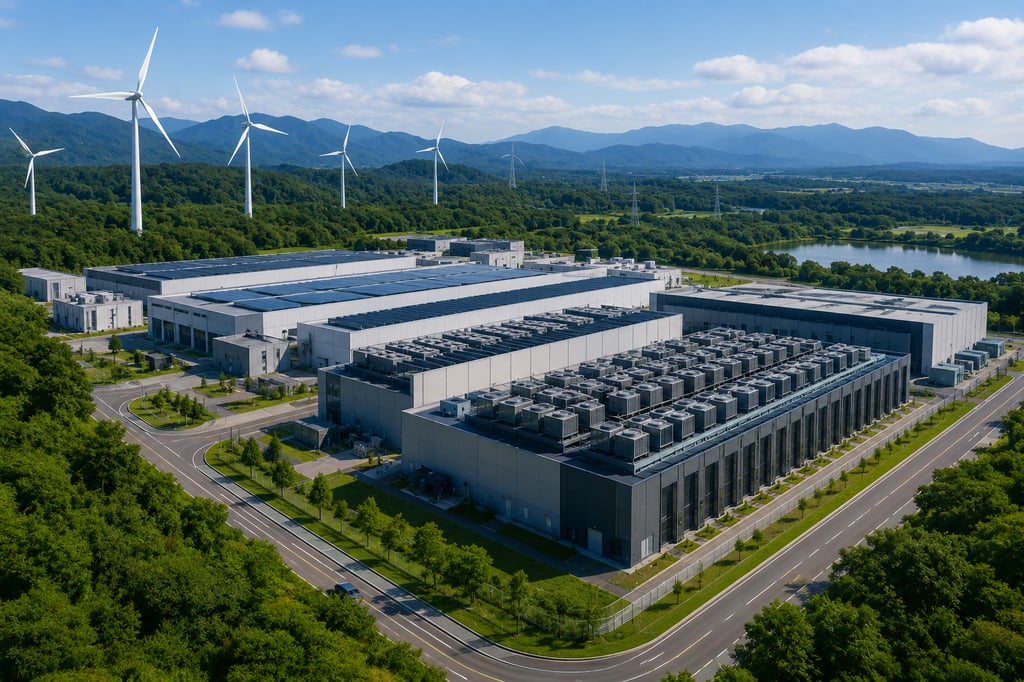
Japan could gain one of its largest AI data centers under a project in Akita now expected to cost more than ¥2 trillion, or roughly $12.6 billion, with Abu Dhabi sovereign investor Mubadala considering an investment.
If completed, the 300–500 MW project would add substantial AI compute capacity outside Japan’s established data center hubs.
For enterprises planning future Japan-based workloads, however, the useful capacity will depend on whether organizers can secure financing, grid connections, and enough deliverable power to support the proposed scale.
A ¥2 trillion project could expand Japan’s AI capacity map
Japan Today reported that expected construction costs now exceed ¥2 trillion and that Mubadala Investment Co. is considering backing the project. No final investment commitment has been announced.
The financial scope being discussed is considerably larger than earlier figures. JETRO reported in November 2025 that planned investment could reach ¥400 billion.
The figures are not directly comparable because the earlier number described expected investment while the new figure is reported as construction cost. Still, the latest estimate establishes Akita as a much larger infrastructure project than its initial public outline suggested.
Akita City signed a cooperation agreement with S2 and Bitgrit in October 2025. Organizers say they have secured 50 hectares in a renewable-energy industrial park in northern Akita City and are targeting full operation around 2033.
That scale could broaden where enterprises source Japan-based AI infrastructure. Most current capacity remains concentrated around established markets, although providers are expanding, including Alibaba Cloud with its fifth Japan data center.
Akita would offer a different proposition: large-scale AI infrastructure built around access to regional renewable generation rather than proximity to an existing metropolitan data center cluster.
Power and financing will decide how much capacity arrives
The project’s official site describes 300–500 MW of renewable-energy potential, including offshore wind. That does not mean the data center has already secured 500 MW of usable IT load or the grid connections required to deliver it.
That distinction directly affects future customers. A planned 500 MW campus does not create 500 MW of bookable compute capacity if electricity connections, substations, or generation cannot arrive on the same timetable.
Similar constraints are already affecting data center expansion elsewhere. US grid capacity constraints are slowing some proposed projects, while Australia is preparing for additional pressure from AI data center demand.
Akita therefore remains a long-term capacity prospect rather than infrastructure enterprises can include in near-term deployment plans. A Mubadala investment could strengthen the financing side, but customers will also need evidence of grid interconnection, construction milestones, operating partners, and committed capacity before the project becomes a realistic sourcing option.
Also read: Uptime Institute found 57% of major data center outages now cost more than $100,000, even as overall outage frequency declines.
>

CBS Kicks Off ‘The Late Show With Stephen Colbert’ Emmy Push

European Athletics Championships: Criticism as thousands of empty seats in Birmingham

OCP APAC Summit Highlights AI Data Center Management as Power Constraints Grow
-

 movies3 months ago
Search For Canadian TV Actor Stewart McLean Now Homicide Investigation
-

 Fashion9 years ago
These ’90s fashion trends are making a comeback in 2017
-
Fashion9 years ago
According to Dior Couture, this taboo fashion accessory is back
-
Fashion9 years ago
Model Jocelyn Chew’s Instagram is the best vacation you’ve ever had
-
Fashion9 years ago
Your comprehensive guide to this fall’s biggest trends
-
Fashion9 years ago
9 Celebrities who have spoken out about being photoshopped
-
Fashion9 years ago
Emily Ratajkowski channels back-to-school style
-
Fashion9 years ago
A photo diary of the nightlife scene from LA To Ibiza