
Anime
Chitose is in the Ramune Bottle Anime Series Review – Review

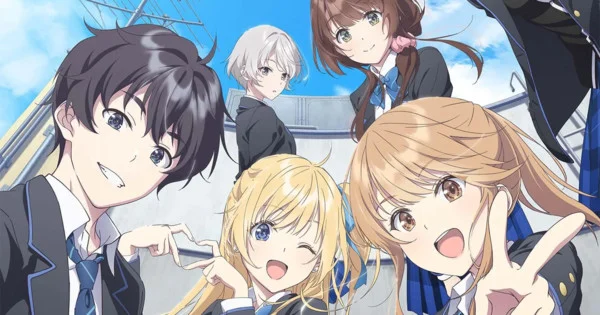
I’ve been dreading writing about this series. Initially, I was really hyped for this light novel adaptation, which started airing back in Fall 2025. Several English-speaking friends had raved – repeatedly – to me about how great the translated novels were, and the fact that in 2021 and 2022, on two separate occasions, the series was ranked first in the bunkobon category by guidebook Kono Light Novel ga Sugoi!, suggesting that it’s also popular in its homeland. And then came ANN’s Fall 2025 Anime Preview guide, with no less than four separate reviewers absolutely slating the anime adaptation’s first two episodes.
Although I always endeavor not to let others’ criticisms color my own judgement of the media I consume (to the point where I’ll often avoid reading other reviews until I’ve written my own), I do have to wonder if, in this case, my fellow reviewers’ negativity was infectious? I found myself actively disliking the main character so much the first time I watched the show that I seriously considered dropping it like almost everyone else seemed to. Yet, something niggled at the back of my mind. Something about this story must have connected with my friends, and possibly millions of Japanese readers, and I was curious to learn what that was.
Production problems can mark the death knell for many a show, especially when its final episodes are delayed weeks or months past the end of a season, and its viewership drifts elsewhere. I’ve never gotten around to watching the final two episodes of Whisper Me a Love Song, for example. Chitose‘s first season was a similarly cursed production, with lengthy delays between episodes that compounded to delay its final three installments by three whole months. In my case, this delay allowed me time to return to revisit the show and attempt to appraise it on its own terms, by starting from the beginning, with a clearer idea of its trajectory and intentions. Did it make my opinion of it improve? The answer is… complicated.
Full disclaimer: I did not enjoy secondary school much. I didn’t fit in with my peers; in fact, I actively disliked many of them, and made most of my friends elsewhere. Anime that tends to idolize the school experience as the best years of one’s life absolutely turn me off. However, I still enjoy intelligent school-based dramas like My Teen Romantic Comedy SNAFU, Bottom-tier Character Tomozaki, and Too Many Losing Heroines!, to all of which Chitose is a close cousin. All of these shows really delve into what makes their characters tick and explore the complexities of adolescent socialization. What marks Chitose out as different is that the titular protagonist isn’t a lovable loser or snarky curmudgeon. He’s one of the popular kids, apparently oozing with confidence, animal magnetism, and physical prowess. That already makes him difficult to empathize with, especially for viewers who perhaps spent many years in school being victimized by such people.
The point, I suppose, is that Chitose as protagonist is an inversion of the usual trope of a socially awkward character improving himself through interacting with others, and in a way, I see how that could be clever. It’s a shame, then, that Chitose, at least at the beginning, comes off as an utterly insufferable, smug know-it-all. I can completely see why the preview guide reviewers all bounced off this show, hard. It’s not like there aren’t other anime out there with unlikeable protagonists. Look at Re:Zero. It takes many episodes for Subaru to evolve past his nature as the personification of nails scraping down a chalkboard. Chitose doesn’t have the benefit of being horrifically, violently murdered multiple times every episode, only to be resurrected to try again. No, the worst that happens to Chitose is that his nature is lamp-shaded by his mean, nasty peers calling him a “fuccboi” or a “manslut.” Oh, how unjust. How my heart bleeds for the poor lad.
The first arc, being by far the weakest, doesn’t help, either. Shut-in boy Kenta is so initially off-putting with his cowardly, ill-informed put-downs of both Chitose and his various pretty girl friends that it’s justifiable for the viewer to want him to stay in his damned room and rot. That’s probably what we’re intended to think, so it allows the saintly, messiah-esque Chitose to smash his way in through Kenta’s window with a baseball bat as a way to shake him out of his self-inflicted complacency and negativity. By itself, this is a cool scene, yet the story in which it is employed is quite underwhelming.
Kenta’s depressed because he’s been rejected by a girl who intentionally manipulated his feelings for laughs. It’s a sucky situation, true, but Kenta’s attitude to women, and people in general, stinks, so it’s up to Chitose to fix this by… psychologically abusing him? Although Chitose’s questionable tactics do ultimately improve Kenta’s life, he very deliberately misleads him and withholds important information, which more than crosses the line between playful banter and bullying. While Chitose’s stated aim is to help Kenta interact with others naturally without judging them unfairly, his own actions invite negative judgment of his own behavior. This isn’t helped by the fact that almost every major character repeatedly enthuses about how Chitose is so god-damned wonderful. Not only does he clearly enjoy huffing his own farts, almost everyone else in the show is queueing up to take deep, full-bodied breaths of Chitose-guff too.
The second story arc, which focuses on love interest Yuzuki Nanase, is somewhat better, though with one major caveat we’ll get to shortly. Nanase reminds me most strongly of Aoi Hinami from Bottom-tier Character Tomozaki, in both appearance and personality (though she’s not quite as Machiavellian). At six episodes in length, it overstays its welcome, but it’s an interesting story of how an otherwise confident, cool girl can find her world crumbling around her because of the actions of shitty, entitled men. Chitose fully engages his hero complex here, putting himself in danger multiple times despite friends begging him not to do so.
Chitose’s actions are almost always calculated (and sometimes very underhanded), and the fact that he seems to be in control of his own reactions most of the time makes his “fake” attempted sexual assault of Nanase in episode nine even more unconscionable. He intends to shock her out of her passive mindset and get her to advocate for herself, but forcing himself onto a vulnerable girl, in the privacy of his own home, with no adults around to stop him, is beyond the pale. I almost turned off the TV in disgust. Of course, he doesn’t go through with it and receives a swift (deserved) kick to the balls in retaliation, but what stretches credulity even further is that Nanase doesn’t just leave in distress, as she should, but instead thanks him for his actions! In what world would something like that happen?
Contrastingly, the story arc’s resolution in episode ten is mostly very strong, feeling almost like a season finale (which it unfortunately more or less became). Chitose’s confrontation with Nanase’s abuser is relatively restrained, yet cathartic, and almost worth watching the show for alone. The subsequent “reveal” of Nanase’s stalker – yes, a different character – is less effective, leaving more of an “is that it?” feeling. At least Nanase’s speech about how she’s just a normal girl who menstruates and masturbates, hence destroying her stalker’s idolized vision of her, is bold and entertaining.
The final arc for this season is only three episodes long, and adapts the first half of the third volume, with presumably the rest to be adapted later. It leaves the story on a reasonably effective cliffhanger. This would be exceedingly unsatisfactory if the second season hadn’t already been announced, with the episode ending on a tease for the as-yet unreleased episode fourteen. White-haired older girl character Asuka Nishino is the featured heroine for this arc, and she’s the only one for whom it’s obvious Chitose harbors true affection. He’s not shy about the fact that he finds the other girls in his class attractive, but at least he’s always honest with them that he has no intention of reciprocating their blatant infatuation with him any time soon.
Nishino is fun, if a little manic pixie dream girl-coded at the beginning, but of course, there’s more to her than that. It’s completely understandable why someone like Chitose would fall for her, and I’m actually interested to see where her story arc goes next. The other girls have mostly only played bit parts in others’ arcs so far, but considering the pattern these kinds of stories take, they’ll almost certainly get their own time in the spotlight soon. Chitose Is in the Ramune Bottle is a lot like the Monogatari or Rascal Does Not Dream series, but without the supernatural elements or the wit. It’s rarely as entertaining or emotionally deep as those examples of the “boy who solves others’ problems” genre. Good grief, does it have try so hard to be, though?
Apart from its exceptionally irritating protagonist, Chitose Is in the Ramune Bottle‘s main issue is with its writing. It tries too impossibly damn hard to be profound and lyrical, but comes across as the most excruciatingly contrived ramblings of a fourteen-year-old who has just encountered poetry for the first time. Filled with painfully flowery expressions not only in Chitose’s tiresome narration, but also in the deeply improbable dialogue between these hopelessly verbose and self-obsessed teenagers, it’s hard not to unintentionally guffaw multiple times per episode. I know Monogatari can err way towards the end of loquaciousness, but at least it’s written playfully and well. Chitose‘s dialogue gives me hives.
On the more positive end of the spectrum, it’s a gorgeous-looking series, filled with beautiful depictions of real-life backgrounds and an eye-poppingly bright color palette. It’s a show aimed presumably at teenage boys, so the girls are all extremely cute, their movements well-captured by the above-average animation. Apart from a handful of prominent fan-servicey moments, they’re mostly drawn respectfully. It’s not the kind of show that’s filled with egregious panty-shots, for example.
I really like the music, especially the rock-tinged opener “Liar” by Kucci, and its hyperactive, colorful accompanying animation with its shimmering, bright motifs of water and glass. While it may sound like I’ve been overly negative about the show so far, I am genuinely interested to see where the series goes next. Later episodes begin to delve into Chitose’s backstory, and it’s obvious there’s more going on with him than initially meets the eye. I live in hope that there’s some reason the original author wrote him to be such an irritating douchebag, and that his characterization, along with the rest of the anime, will improve with the upcoming second season. As an author, it’s only worthwhile inverting reader expectations of your protagonist if you intend to do something truly special with them eventually.
>
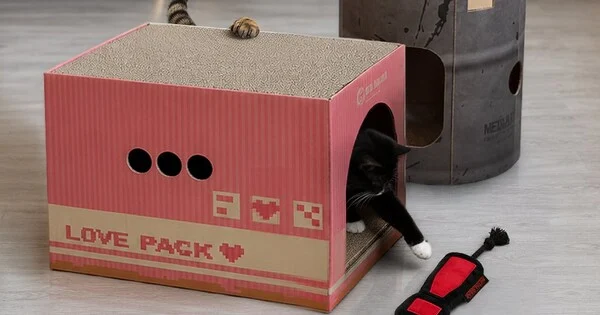
Now your cat can become the ultimate spy & special operations soldier
If you thought your cat was sneaky before, it can now become the ultimate espionage agent with the new Metal Gear cat boxes. The Metal Gear franchise announced the limited-edition Metal Gear cat boxes on Wednesday, and Konami is offering both the Pink Love Box and Barrel Box variants.

©Konami Digital Entertainment
The Pink Love Box and Barrel Box will be available at the Konami booth at CatCon, which will take place at the Pasadena Convention Center in Southern California between October 10 and 11. OKS Gear is also offering the boxes online during the convention. (OKS Gear previously offered a Metal Gear Solid: Master Collection Vol.2 cat scratch box during PAX West earlier this month, but that box featured that game collection’s real-life logo instead of in-game graphics.)
Hideo Kojima created the Metal Gear series in 1987 for the MSX2 and later for the Nintendo Entertainment System (NES). A sequel, Snake’s Revenge, debuted for the NES and subsequently the MSX2 as Metal Gear 2: Solid Snake in 1990. The series went on a near-decade hiatus until the release of Metal Gear Solid for the PlayStation in 1998. The Metal Gear Solid series has seen several sequels and re-releases. The latest release in the Metal Gear Solid series is 2026’s compilation Metal Gear Solid: Master Collection Vol. 2.
The Metal Gear Solid series oft sees players take control of special forces operative Solid Snake as he becomes embroiled in a global conspiracy.
Sources: Metal Gear Official’s X/Twitter account, CatCon via Siliconera
>
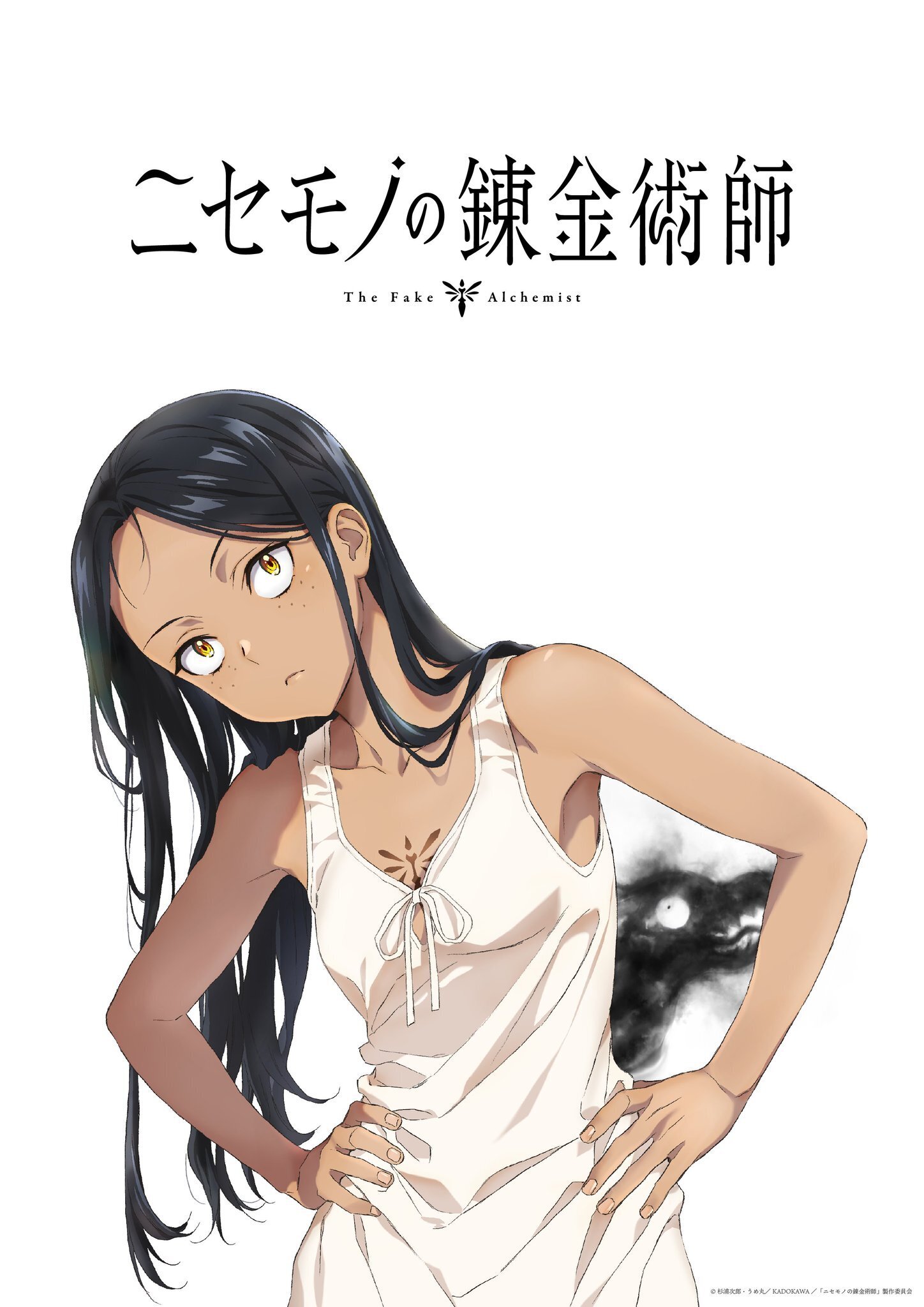
 The official website for the television anime adaptation of Jirou Sugiura and Umemaru‘s Nisemono no Renkinjutsushi (The Fake Alchemist) manga revealed the main cast, staff, and a teaser promotional video on Friday.
Voice actors Youhei Matsuoka (Fujimoto Tatsuki 17-26) and Miyari Nemoto (Ruri no Houseki) are starring as Paracelsus and Nora Petan, respectively.
Staff
Chief Director: Takeo Takahashi (Ookami to Koushinryou: Merchant Meets the Wise Wolf)
Director: Hijiri Sanpei (Watashi no Yuri wa Oshigoto desu!)
Series Composition: Kenta Ihara (Yuusha-kei ni Shosu: Choubatsu Yuusha 9004-tai Keimu Kiroku)
Character Design: Yuka Takashina (Ameku Takao no Suiri Karte)
Music: Luke Standridge (Jishou Akuyaku Reijou na Konyakusha no Kansatsu Kiroku.)
Studio: Passione
Sugiura originally began drawing the fantasy isekai series on pixiv in February 2020. Kadokawa began serializing the manga on its ComicWalker web service in June 2023 and released the first volume in January 2024. The fifth volume was published on February 20.
Yen Press licensed the manga in English in August 2025 and shipped the second volume on June 23.
The series ranked 12th in the web manga category of the Next Manga Award 2022.
Teaser PV
Source: Official Site
>
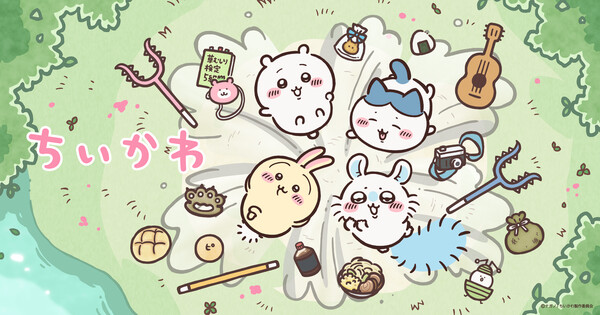
25 past episodes to rerun until December 25, with focus on early episodes, episodes tied to recent film

© ナガノ / ちいかわ製作委員会
The official website for the anime of Nagano‘s Chiikawa manga announced on Friday that the anime will temporarily pause the regular airing of new episodes, and will instead run a “revival” rebroadcast of 25 older “influential” episodes until December 25. The revival rebroadcast will focus on episodes early in the anime’s run, as well as episodes that are connected to the recent Eiga Chiikawa: Ningyo no Shima no Himitsu (Chiikawa the Movie: The Secret of Mermaid Island) anime film.
The Chiikawa anime premiered in April 2022, and it previously aired every Friday within Fuji TV‘s morning news and entertainment program Mezamashi Terebi, before it began airing twice a week on Tuesdays and Fridays in April 2023. Sentai Filmworks licensed the anime, and is streaming it on HIDIVE with English subtitles. ODK Media’s North American streaming platform Amasian TV began streaming a selection of 20 episodes from the anime on August 20.
Child actress Haruka Aoki (Liza in the Japanese dub of Mighty Express) voices the titular character Chiikawa as her first television anime voice acting role. Child actor Makoto Tanaka (Okko’s Inn) voices Hachiware. Ari Ozawa voices Usagi.
The anime’s new series premiered in July 2025. Before that, the anime had been rebroadcasting older “pivotal” episodes after its previous series ended regular airing of new episodes in April 2025.
Eiga Chiikawa: Ningyo no Shima no Himitsu (Chiikawa the Movie: The Secret of Mermaid Island), the first anime film adaptation of Nagano‘s Chiikawa manga, opened in Japan on July 24. The film has earned over 15.84 billion yen (about US$100 million) and sold about 10.86 million tickets at the Japanese box office, securing its spot as the top film in Japan’s box office this year.
Nagano originally started serializing the manga under the title Nanka Chiisakute Kawaii Yatsu on X (then Twitter) in January 2020.
Sources: Chiikawa anime’s website, Comic Natalie
>
How to watch No. 4 Ole Miss vs. No. 21 Florida: TV channel and streaming options for September 26

Konami Offers Official Metal Gear Solid Boxes (for Your Cat) – Interest
How to watch Oklahoma vs. No. 2 Georgia: TV channel and streaming options for September 26
-

 movies4 months ago
Search For Canadian TV Actor Stewart McLean Now Homicide Investigation
-

 Fashion9 years ago
These ’90s fashion trends are making a comeback in 2017
-
Fashion9 years ago
According to Dior Couture, this taboo fashion accessory is back
-
Fashion9 years ago
Model Jocelyn Chew’s Instagram is the best vacation you’ve ever had
-
Fashion9 years ago
Emily Ratajkowski channels back-to-school style
-
Fashion9 years ago
9 Celebrities who have spoken out about being photoshopped
-

 Anime4 months ago
Rurouni Kenshin: Hokkaido Arc Manga Takes 1-Issue Break – News
-

 Anime3 months ago
HIDIVE to Stream English Dubs for The World Is Dancing, The Forsaken Saintess and Her Foodie Roadtrip in Another World, The Dangers in My Heart: The Movie Anime – News