
Tech
Xpeng Flying Car Deliveries Target 2027 as Certification Gaps Remain

Xpeng’s flying car factory is moving from prototype to production, but certification gaps still separate delivery plans from public passenger service.
The post Xpeng Flying Car Deliveries Target 2027 as Certification Gaps Remain appeared first on TechRepublic.
>
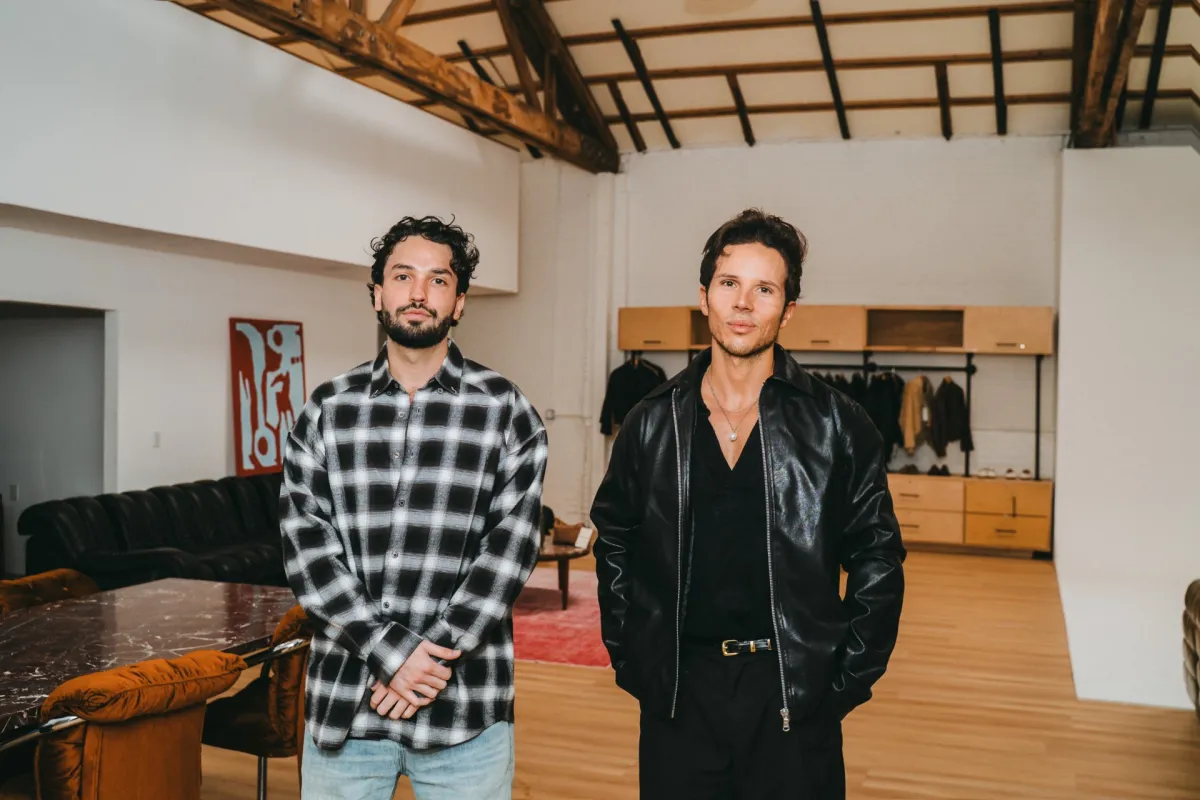
Fashion startup Atorie announced Thursday a $9.5 million seed round with investors, including a16z speedrun, Night Capital, and Lightspeed Ventures’ Jeremy Liew.
Shoppers can visit the Atorie website and buy handbags or clothes made from the same material — and coming from the same factory — that manufacturers use in high-end goods. The items are reasonably priced, too, with an Italian leather handbag costing just a few hundred, compared to the thousands a brand like Prada or Louis Vuitton would sell it for.
The startup arrives at a time when dupe culture has become increasingly popular, while the luxury sector has faced backlash from consumers in the post-pandemic era due to swift price hikes.
As a result, young consumers especially have sought cheaper, near-identical replications of these high-end goods; doing so has become almost a status symbol itself.
On Atorie, the items sold are mostly not dupes, says co-founder and serial entrepreneur Redouane Ramdani.
“It’s the same material, same craftsmanship,” he said. “It’s coming from the same factories.” He doesn’t consider Atorie fast fashion either. “It’s slow,” he clarified.
Before Atorie, Ramdani built the creator platform Snipfeed, which was acquired in 2024. Having grown up in France with a family that worked in luxury manufacturing, the founder always had an idea in the back of his mind that he would one day do something in the industry he grew up loving as a kid.
By the time he sold Snipfeed, however, the luxury manufacturing industry was quite different.
The biggest shift he noticed was that luxury factories were no longer just manufacturing goods. Traditionally, a brand like Ralph Lauren would bring its own designs and materials to a factory, which would then produce them. The problem was that brands had to commit to large minimum orders, which often pushed them to overproduce inventory. At the same time, a lot of these factories depend on working with a small number of large brand customers. If a brand pulled out at the last minute or not enough of that overproduced inventory sold, the factories faced financial and inventory risk.
“What’s changing is that the best factories increasingly have their own design and product-development capabilities,” Ramdani told TechCrunch. “Instead of simply manufacturing someone else’s designs, they can develop products themselves, adapt them quickly, and produce in smaller batches.”

AI also helps these factories by pulling data that helps them identify which products are likely to sell out before committing to large production runs.
“That reduces overproduction and allows factories to diversify beyond a handful of large customers,” he said.
These changes also gave Ramdani an idea, leading him to team up with Luis Angulo to launch the startup, which is now an AI-powered fashion brand that connects luxury manufacturers directly with consumers.
He compared his company’s approach to the retailer Quince, which is known for selling high-quality, low-priced items.
“We are talking to a different generation who is coming back for things that are trendy but well-made,” he continued, adding that consumers are getting tired of pure fast fashion, especially because of the harmful impact it’s having on the environment.
AI, of course, is used. Ramdani sees AI agents changing the entire shopping experience, where, in the future, people just instruct AI agents to buy things for them.
Ramdani said the company uses AI to analyze fashion trends and test what colors might look good on a product. It also uses AI agents to estimate consumer demand and trains the agents to predict when a material might start running short so factories can stock up in time.
On the consumer side, the Atorie website offers an AI agent that can build an outfit based on whatever — or whoever — inspires the customer. Over time, Atorie uses AI to learn shoppers’ habits to suggest what to buy next.
Ramdani said Atorie is already seeing an increase in sale referrals from platforms like ChatGPT and Claude.
The company said its goal is to become an alternative to Zara and offer something “very high quality for a price point that’s very affordable.” The company ended last year with around $5 million in sales and is expected to reach an annualized run rate north of $55 million this year.
“We are growing super fast,” Ramdani said, adding that the team is working with over 40 factories across the world right now.
The fresh capital will fund logistics, build more AI tools, and support production. The company also plans to release its own in-house line, like Amazon Essentials, and will work with creators and influencers to help them launch their own clothing lines quickly.
When you purchase through links in our articles, we may earn a small commission. This doesn’t affect our editorial independence.
>

The U.S. Bureau of Alcohol, Tobacco, Firearms and Explosives, or ATF, says a cyberattack on one of its systems has been declared a “major incident,” a formal, legally defined classification that prompts a formal notification to lawmakers in Congress.
ATF said in a statement that it’s responding to the cyberattack on a standalone system that’s separate from the bureau’s network. An ATF spokesperson told reporters that the targeted computer system contained information such as the “targets of ATF investigations.”
TechCrunch has seen a claim of responsibility by the Qilin ransomware gang on its leak site, but it did not provide evidence for its claim, such as a sample of leaked data. Qilin is known for running a “ransomware-as-a-service” operation, in which it leases its hacking tools to other criminal affiliates for a cut of the profits. The gang has listed media giant Lee Enterprises and U.K. pathology lab giant Synnovis.
Under federal law, “major incidents” include significant cyber incidents that are likely to cause demonstrable harm to U.S. national security or broader U.S. interests. Agencies are required to disclose major incidents to Congress within a week of their discovery.
The ATF joins several government agencies in recent years that have declared major incidents following a breach, including a 2023 ransomware attack on a system used by the U.S. Marshals Service, and a breach of an FBI system earlier this year that exposed phone numbers of targets under surveillance by federal agents.
>

Over a hundred tech companies — including OpenAI, Anthropic, Google, and Microsoft — have signed an open letter urging both the private and public sectors to work together to defend themselves from AI-related cyber threats.
The letter — which was also signed by prominent cyber firms like Crowdstrike, Okta, and Fortinet, as well as prominent financial institutions and internet infrastructure firms — calls for the adoption of new forms of cyber defense, while also encouraging governments at the “local, national, and international levels” to collaborate on security.
“In the coming months, AJ-enabled cyber attacks will become far more widespread and sophisticated as models around the world become increasingly capable,” the letter states. “The companies and public services our communities depend on — from hospitals to water treatment plants to the infrastructure that powers the internet — are at risk.”
The problem AI poses to traditional cybersecurity defenses has been thrust into the spotlight lately by a string of bizarre incidents in which AI agents have attacked companies.
The Hugging Face incident — in which one of OpenAI’s agents autonomously broke out of its sandboxed environment and attacked the tech company — has been followed by a trail of other reported break-ins involving agents developed by other AI companies, including Anthropic and Meta. These incidents have bolstered the argument that the field of cybersecurity has been fundamentally altered and that bold new commercial solutions are necessary to mitigate them.
The letter further suggests the mobilization of a “collective response,” one in which “new partnerships” are formed “to raise security standards and find new solutions to emerging cyber threats.”
Several of the AI companies that have signed the letter are still actively developing ever more advanced AI models, highlighting their conflicted position. At the same time, they are also offering programs to use frontier AI models for defensive purposes, including OpenAI’s Daybreak program, Anthropic’s Mythos, and Microsoft’s new cyber platform Perception.
When you purchase through links in our articles, we may earn a small commission. This doesn’t affect our editorial independence.
>

Fashion startup Atorie raises $9.5M to bring consumers luxury goods without the markup

The Cycle of Love Festival Crowdpleaser Took a Year to Reach Theaters

England vs Pakistan: Jamie Smith and Jordan Cox battle in second Test at Lord’s
-

 movies3 months ago
Search For Canadian TV Actor Stewart McLean Now Homicide Investigation
-

 Fashion9 years ago
These ’90s fashion trends are making a comeback in 2017
-
Fashion9 years ago
According to Dior Couture, this taboo fashion accessory is back
-
Fashion9 years ago
Model Jocelyn Chew’s Instagram is the best vacation you’ve ever had
-
Fashion9 years ago
Emily Ratajkowski channels back-to-school style
-
Fashion9 years ago
9 Celebrities who have spoken out about being photoshopped
-
Fashion9 years ago
Your comprehensive guide to this fall’s biggest trends
-

 Anime3 months ago
Rurouni Kenshin: Hokkaido Arc Manga Takes 1-Issue Break – News