
Tech
Amazon’s cloud business is surging — and so is its capital spending

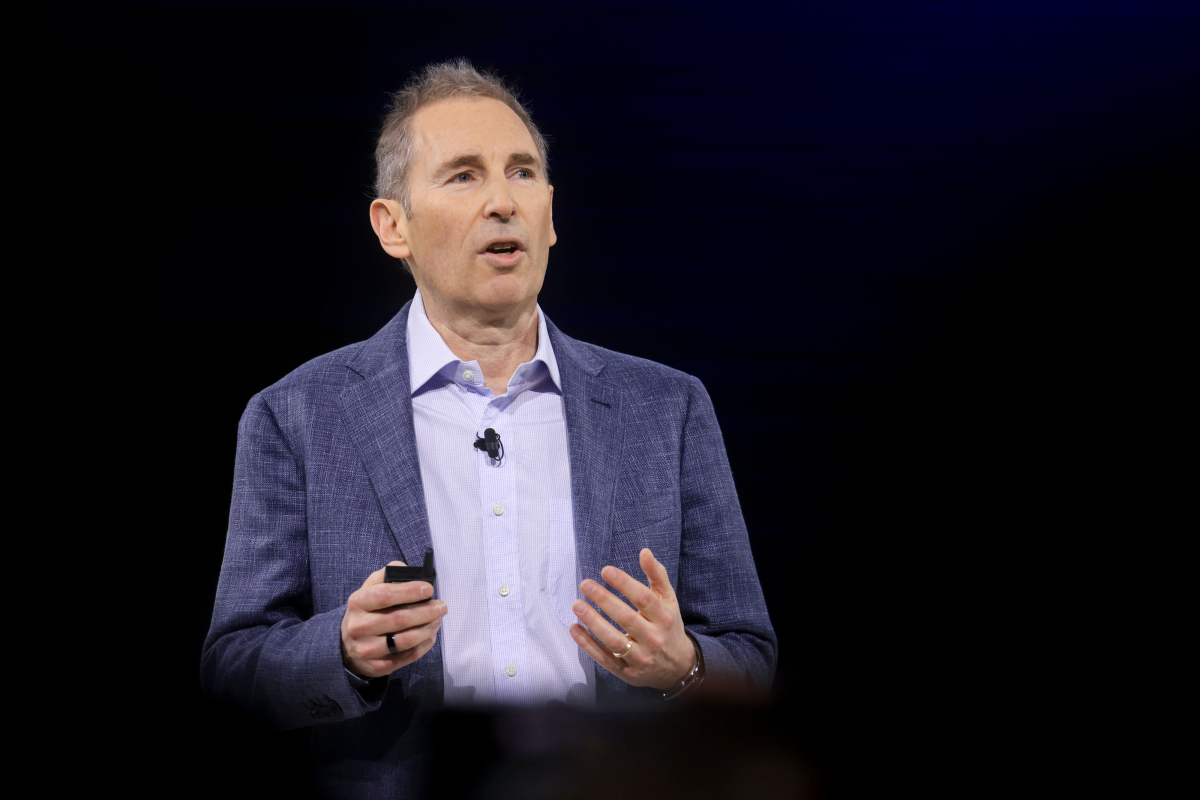
Amazon was one of several tech giants that on Wednesday beat Wall Street’s first-quarter earnings expectations, offering more financial evidence that the AI boom continues to reward companies that supply the picks and shovels.
Amazon’s cloud business is the latest example. Amazon Web Services, buoyed by its role in fueling the AI boom, saw its net sales increase 28% year-over-year, climbing to $37.6 billion, the company said Wednesday. It was the fastest growth rate for AWS in 15 quarters, Amazon president and CEO Andy Jassy said during the company’s earnings call.
Jassy attributed AWS’ success to its role in providing compute to the AI industry.
“It’s very unusual for business to grow this fast on a base this large. The last time we saw growth at this clip, AWS was roughly half the size,” Jassy said. “We’ve never seen a technology grow as rapidly as AI. Amazon is already a leader, and companies continue to choose AWS for AI.”
Jassy compared the business unit’s growth to the aughts. “To put our growth in perspective, three years after AWS launched, it had a $58 million revenue run rate. [During] the first three years of this AI wave, AWS’s AI revenue run rate is over $15 billion — nearly 260 times larger.”
Even as money flows into its cloud business, Amazon is also sinking increasingly large gobs of capital into building out the infrastructure that supports that cloud. Jassy said on Wednesday that capital expenditure growth would continue in the near term.
“The faster AWS grows, the more short-term capex we’ll spend,” he said. “AWS has to lay out cash for land, power, buildings, chips, servers, and networking gear, in advance of when we can monetize it.”
Techcrunch event
San Francisco, CA
|
October 13-15, 2026
Jassy positioned these investments as short-term cash burn for a long-term payoff, noting that these capital expenditures fund assets like data centers that last more than 30 years or chips, servers, and networking gear that have a useful life for five to six years.
Jassy did attempt to quell investor fears that the e-commerce giant was spending too much on infrastructure. He also provided more than a hint at how that kind of spending would affect free cash flow.
“In times of very high growth like now — where the capex growth meaningfully outpaces the revenue growth — the early years, free cash flow is challenged,” he said.
Amazon’s first-quarter earnings report reflects the pull on free cash flow. T he company reported that free cash flow decreased to $1.2 billion for the trailing twelve months, driven primarily by a year-over-year increase
of $59.3 billion in purchases of property and equipment — much of its related to AI. That’s a 95% drop from the $25.9 billion in free cash flow it had in the first quarter of 2025.
“We’ve been through this cycle with the first big AWS growth wave, and like the results. We expect to feel similarly about this next wave with much larger potential downstream revenue and free cash flow,” he added.
The e-commerce giant’s overall sales, meanwhile, rose 17% to $181.5 billion on a year-over-year basis. Sales grew 12% in North America and 19% throughout the rest of the world, the company reported.
When you purchase through links in our articles, we may earn a small commission. This doesn’t affect our editorial independence.
>
The game of musical chairs for AI executives continues. Barret Zoph, a co-founder of the AI startup Thinking Machines who left the company earlier this year to rejoin OpenAI, has found yet another job.
Zoph spent two years at OpenAI and left in October 2024 to co-found Thinking Machines with Mira Murati, who had left the AI lab the month prior. In January, Zoph and another Thinking Machines co-founder, Luke Metz, quite dramatically departed from the startup to return to OpenAI.
His return didn’t quite stick. Zoph spent only five months at OpenAI, where he was tasked with heading AI enterprise sales. He left the company in June. And now we know where he landed.
Zoph has taken a position as vice president of research at Google (which happens to be another company where he previously worked). “We look forward to Barret returning to Google and bringing his RL and post-training expertise to Gemini,” a Google spokesperson told the Wall Street Journal.
TechCrunch reached out to OpenAI and Google for more information.
It’s not always easy to divine why tech executives seem to be spending less time in their roles. The turnover rate in the AI industry is high, and it’s been especially high at OpenAI — a company that, despite readying itself for an IPO and being one of the most powerful presences in the tech world, has lost a lot of critical staff over the last eight months. High-level executives — from the departure of its COO to the recent loss of one of its top data center execs — has left onlookers scratching their heads.
>
YouTube announced on Thursday that eligible creators in the U.S. can now tag Amazon products in their content and receive a cut of sales. Creators can link Amazon products in their shorts, long-form videos, and livestreams.
The update turns product recommendations into a more direct revenue stream for creators, and for Amazon, the move puts its massive online marketplace inside one of the most popular video platforms.
Although YouTube already runs a Shopping affiliate program with participating retailers, the addition of Amazon’s vast catalog essentially allows creators to recommend a variety of products through a native integration. By bringing Amazon into the Shopping Affiliate Program, creators no longer need to paste Associates links in the video’s description, then hope viewers copy the link when they make a purchase.
Instead, YouTube says Amazon will provide it with a curated catalog of highly requested and trending products that creators can tag in their videos. If a creator can’t find a specific product that they want to tag, they can request to add it by reaching out to YouTube Support.
The feature also includes auto-tagging support. If enabled, YouTube’s systems can automatically review a creator’s recent uploads to identify and tag eligible Amazon products.
YouTube notes that creators won’t see breakdowns for specific products or individual videos in their analytics, but that they’ll see their overall daily earnings in YouTube Studio. If a viewer ends up returning an item, that commission will be deducted from the creator’s balance.
While only eligible U.S. creators can currently tag Amazon products, those tags can be seen globally. YouTube says it may automatically match a tagged product with a trusted local merchant offer to allow creators to earn commissions on eligible international purchases. If a local merchant isn’t available, the tag will route viewers to the Amazon U.S. website, where commission will be earned if a purchase is finalized on the U.S. site.
To be eligible, creators must be enrolled in YouTube’s Partner and Shopping Affiliate programs, have an active Amazon Influencer or Associates account, and link it to their YouTube channel.
When you purchase through links in our articles, we may earn a small commission. This doesn’t affect our editorial independence.
>

Meta has agreed to pay billions and restrict how teenagers use Facebook and Instagram, settling claims that the platforms were designed to encourage addictive use.
The settlement could be worth approximately $18 billion and ends a federal trial brought by a bipartisan coalition of US attorneys general.
The agreements cover 47 states, Washington, D.C., Puerto Rico, American Samoa and the Northern Mariana Islands, including a separate agreement with Texas.
Meta says its total payment could reach approximately $18 billion. About $12.7 billion will be distributed over 10 years, while the remaining $5.3 billion is contingent on TikTok and YouTube adopting comparable protections and making matching payments.
The settlement was submitted to US District Judge Yvonne Gonzalez Rogers and remains subject to court approval. The deal resolves allegations that Meta deliberately designed its platforms to encourage addictive use among young people, misled consumers about safety and collected data from children without proper parental consent.
Meta denies wrongdoing.
What changes for teen users
Under the agreement, users under 18 will face a default two-hour daily limit across Facebook and Instagram, which they can turn off only with a parent’s permission. The restrictions are expected to take effect within six months if the settlement receives court approval. Meta will also block most teen access from midnight to 6 a.m. and mute push notifications from 8 a.m. to 3 p.m. during school hours, except for direct messages and account security or safety alerts.
Other changes include hidden like counts, blocks on cosmetic surgery and extreme makeup filters, options to disable autoplay and use a non-personalized feed, and prompts after 15 minutes of continuous use and at 60 and 90 minutes of daily use.
Meta also agreed to strengthen age-assurance technology, restrict age-inappropriate content and improve parental controls.
If TikTok and YouTube adopt comparable protections, Meta would reduce its daily limit to one hour per app and extend the overnight block to 10 p.m. through 7 a.m.
A costly deal with wider consequences
The settlement does not require Meta to abandon personalized recommendations or targeted advertising, Reuters reported. That leaves a central part of its engagement-driven business model intact.
Still, the financial and product changes could influence thousands of other lawsuits against Meta, TikTok, YouTube and Snap. Reuters reported that governments and private plaintiffs are pursuing claims alleging social media companies contributed to a youth mental health crisis.
The agreement could therefore become more than a costly settlement for Meta: it may establish a practical template for regulating how major social platforms design products for teenagers.
An independent auditor will review Meta’s compliance and the effectiveness of its safeguards, while a research foundation will use data from consenting users to study teen well-being. For technology companies, the settlement shows that youth safety is becoming a product-design and compliance requirement affecting age-assurance systems, recommendation features, notifications and parental controls — not simply a matter of updating privacy policies.
Read more: A recent New Mexico ruling ordered Meta to pay $567 million and overhaul teen protections on Facebook and Instagram, showing how courts are increasingly treating youth safety as a product-design and compliance issue.
>

Barret Zoph, the Thinking Machines co-founder who defected to OpenAI, is now at Google

‘The Troop’ Movie Based On Nick Cutter’s Novel In Works At Paramount

Packers’ Josh Jacobs will face two misdemeanor criminal charges
-

 movies3 months ago
Search For Canadian TV Actor Stewart McLean Now Homicide Investigation
-

 Fashion9 years ago
These ’90s fashion trends are making a comeback in 2017
-
Fashion9 years ago
According to Dior Couture, this taboo fashion accessory is back
-
Fashion9 years ago
Model Jocelyn Chew’s Instagram is the best vacation you’ve ever had
-
Fashion9 years ago
Emily Ratajkowski channels back-to-school style
-
Fashion9 years ago
9 Celebrities who have spoken out about being photoshopped
-
Fashion9 years ago
Your comprehensive guide to this fall’s biggest trends
-

 Anime3 months ago
Rurouni Kenshin: Hokkaido Arc Manga Takes 1-Issue Break – News