
Entertainment
Liccardo Asks FCC to Deny Paramount-WB Middle East Investment

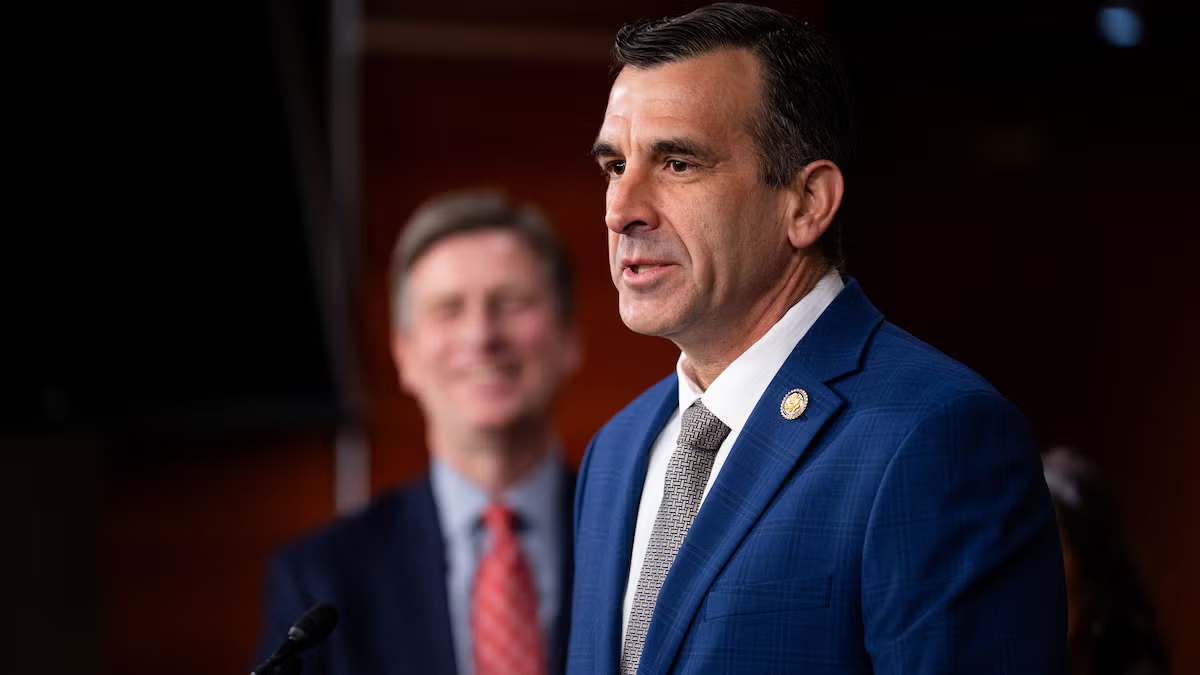
Congressman Sam Liccardo is urging FCC chairman Brendan Carr to deny Paramount Skydance’s petition that would allow three Middle Eastern sovereign wealth funds and other foreign investors to acquire 49.5% of the equity of the company following its merger with Warner Bros. Discovery.
Together, Saudi Arabia, Abu Dhabi and Qatar would control a combined 38.5% non-voting stake, exceeding the FCC’s statutory 25% cap for foreign ownership. Other foreign equity owners include “passive limited partner investors” in funds managed by RedBird Capital Partners, which would account for 5.8%, and foreign-based entities that have acquired the company’s Class B stock, who would control 5.2%.
The petition also asks for approval for foreign investors “in the aggregate to indirectly hold up to 100 percent of its equity and/or voting interests in light of routine fluctuations in publicly held equity interests and to account for potential future investments.”

Paramount has argued that it would not result in a transfer of control and that the Ellison family and RedBird Capital Partners would hold the largest equity stake in the company. But Liccardo points out that the “procedural subtlety of restricting these sovereign funds to non-voting equity shares does not resolve this conflict.”
“Paramount characterizes this arrangement as routine passive foreign investment. It cannot gaslight the American public,” he wrote in a Friday letter. “The scale of their ownership alone constitutes more than mere influence; the company’s financial dependence makes it beholden to its largest shareholders. The Commission must not allow a legal technicality to launder what is, in substance, a surrender of American media and infrastructure to the hands of foreign authoritarian regimes.”
He argued that the Middle East Funds “represent authoritarian regimes with complex and, at times, adversarial relationships with U.S. foreign policy objectives and norms of press freedom.”
“The Commission’s public interest standard is not satisfied merely by confirming that domestic parties hold voting shares. Broadcast licensees bear affirmative obligations to serve local communities, maintain editorial independence, and support a robust and free press,” the letter continues. “The financial architecture of this deal — in which foreign sovereign entities provide most of the equity capital—creates structural dependencies and incentive distortions incompatible with these obligations, regardless of formal voting arrangements.”

Liccardo warned that the FCC’s approval of the petition and “capitulation to foreign regimes” could result in Congress pursuing “legislative remedies.”
These include limits on foreign government ownership, mandating divestment of foreign sovereign equity stakes in FCC-licensed entities, establishing hard statutory caps on foreign government ownership with no waiver authority, and subjecting existing approvals—including any
granted in this proceeding—to mandatory retroactive review.
“Congress did not entrust the public airwaves to this agency so that it could auction off America to Riyadh, Abu Dhabi, and Doha. This will not stand,” the letter concluded. “I urge the Commission to exercise its full discretionary authority under Section 310(b)(4) to conduct a thorough
and independent public interest analysis and to deny or defer action on this petition pending the completion of all applicable national security reviews.”

The FCC says the petition has been accepted for filing upon initial review and that Paramount may be required to submit additional documents or statements. It will also be “referred to relevant Executive Branch agencies for their views on any national security, law enforcement, foreign policy, or trade policy.”
Paramount says it is also submitting responses to standard questions directly to the Committee for the Assessment of Foreign Participation in the United States Telecommunications Services Sector, also known as “Team Telecom.”
The public can file comments with the FCC until May 27, with replies due by June 11.

>

Netflix has found its leads for Icebreaker, its series adaptation of Hannah Grace‘s bestselling novel. Daisy Jelley (Poser, How To Have Sex) will play Anastasia “Stassie” Allen and Connor Simos (Subversion) will portray Nate Hawkins in the college hockey romance drama series.
In Icebreaker, she is the transfer gunning for Olympic gold. He is the campus star chasing the NHL. But when an accident forces their teams to share one rink, Anastasia Allen and Nate Hawkins collide—and discipline gives way to obsession, because the only thing more dangerous than wanting to win is wanting each other.
The book, the first in a trilogy, titled Maple Hills, spent 70 weeks atop the New York Times bestseller list. Originally published in November 2022 with a wide release in 2023, the blockbuster novel has surpassed nearly 5 million copies sold worldwide. Total sales for the three-book series have surpassed 7.5 million copies globally.
Icebreaker is created and executive produced by Jade Halley Bartlett (Road House, Doctor Strange in the Multiverse of Madness, Miller’s Girl). Amanda Lasher (Gossip Girl, The Bold Type, Togetherness) serves as showrunner, writer and excutive producer. Grace also executive produces along with Alex Cooper, Matt Kaplan and Mina Lefevre for Cooper’s Unwell Productions.
Icebreaker joins a lineup of Netflix adaptations, including I Will Find You, Little House on the Prairie, and the breakout series His & Hers Upcoming adaptations include East of Eden, Pride and Prejudice, The Corrections, and Lonesome Dove.
T.
>
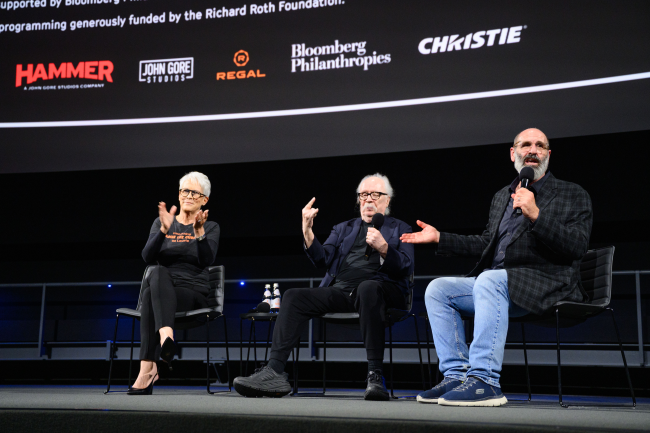
This weekend the Academy Museum launched “The Horror Show” exhibition, a celebration of horror since the beginning of cinema (and before) comprised of hundreds of pieces including an original face-hugger from Ridley Scott‘s “Alien,” storyboards from “The Exorcist,” and costumes and props from “Scream,” “Saw,” and “Us.” In keeping with the museum’s practice of supplementing its exhibits with carefully curated screening series, “The Horror Show” kicked off with a retrospective devoted to the greatest of all horror directors, John Carpenter.
“John Carpenter: Prince of Darkness,” is a month-long series featuring several of Carpenter’s best films (“In the Mouth of Madness,” “Big Trouble in Little China,” “The Thing”) as well as some of his most criminally underrated (the “Vampires” and “Memoirs of an Invisible Man” double bill is a must-see). But to open the series, and to kick off “The Horror Show,” there was really only one acceptable choice: Carpenter’s 1978 masterpiece “Halloween.”


Along with “Psycho” and “Alien” one of the most influential horror films of all time, “Halloween” was a low-budget indie with modest beginnings that became a classic thanks to Carpenter’s intense commitment and supreme sense of craft. Given the assignment to make a slasher movie about a killer going after babysitters, Carpenter and co-writer Debra Hill set out to create something more than just another exploitation movie; approaching low-budget horror more like Alfred Hitchcock or Howard Hawks than Herschell Gordon Lewis, Carpenter turned “Halloween” into a timeless nightmare where the quotidian collides with the mythic to yield relentless suspense.
Carpenter and Jamie Lee Curtis, who was propelled to stardom when “Halloween” became a massive box office hit, appeared at the Academy Museum to introduce the film alongside special effects master and “Halloween” enthusiast Howard Berger. Curtis noted that the film came along just when she needed it, after she had lost her job on a TV series adaptation of Blake Edwards’ “Operation Petticoat” (a movie that had starred Curtis’ father Tony). “They fired me, and that’s why I was available to come in and audition.”
Carpenter gave co-writer and producer Debra Hill credit for championing Curtis, and said he knew what he had as soon as production began. “I remember after the first day of shooting, I thought, ‘My God, this girl has got it. She is great,’” Carpenter said. When Carpenter called Curtis at home that night, she assumed he was calling to fire her, but in fact it was to let her know what a great job she had done — “The only time in my career I have ever had a director call me after a day of work,” Curtis said.
In a wide-ranging conversation, Curtis and Carpenter addressed everything from the origins of the Michael Myers mask (which, famously, was a William Shatner-Captain Kirk mask modified by production designer Tommy Lee Wallace) to the low-budget solutions to problems like shooting a film set on Halloween in March (the prop guy had to constantly toss old and painted leaves into the frame to distract from the green trees all around).

Carpenter also discussed the film’s iconic music, which he composed and performed in three days.”We didn’t have money for anybody else,” Carpenter said when asked his reason for scoring the film himself. “I scored the movie we made before ‘Halloween,’ ‘Assault on Precinct 13,’ in one day. ‘Halloween’ took three days. It was a lot bigger.”
While Carpenter was joking a bit about “Halloween” being a “big” movie, seeing the film on the Academy Museum’s huge screen in the Geffen Theater one can’t help but be struck by the movie’s ambition and scale — much of which Carpenter and Curtis credited to director of photography Dean Cundey, whose fluid use of the Panaglide (an early variation on the Steadicam) gave “Halloween” some of its most iconic sequences. Perhaps the most famous is an opening long take (actually broken up with two hidden cuts) in which we see the first murder from the young killer’s point of view.
That prologue was shot on the final day of production, and it takes place in the past the house in which it is set had to be spruced up after all the scenes depicting it in a dilapidated state. According to Curtis, the entire cast and crew joined forces to paint and fix up the house before the shot, which Curtis stayed to watch even though she wasn’t featured in it. Sensing she had just been a part of something special, Curtis asked Cundey if she could keep the film’s clapperboard. Once she took the clapperboard home she made an amusing discovery.
“Dean had been using that clapperboard for years,” Curtis said. “Back in the day they would just put another piece of tape over the name of the movie and write the new one in. Dean had done a lot of porn, so underneath the ‘Halloween’ piece of tape are a bunch of porno movies.” Curtis’ sense that the clapperboard would prove important was quickly confirmed when “Halloween” became one of the most popular horror movies ever made; 48 years later, her clapperboard (as well as her shooting script and personal copy of the one-sheet) is part of the Academy’s horror exhibition.
Carpenter reminded everyone, however, that “Halloween” was far from an instant success. “It came out and the reviews were awful,” Carpenter said. “I remember one that said, ‘John Carpenter does not have talent with actors.’ But it grew. It had word of mouth.” Curtis recalled going to see the movie with a crowd and finally understanding why Carpenter had spent the shoot directing her to be more vulnerable.
When Curtis’ character Laurie Strode crossed the street to enter the house Michael Myers occupied, a woman in the theater stood up and screamed, “Don’t go in there! There’s a murderer in there!” “That what was the minute where I understood what vulnerability meant,” Curtis said. “Because she cared about Laurie. She wanted to protect Laurie.” In spite of Curtis’ love for Carpenter, the character, and the movie — and in spite of the fact that her career as a scream queen has now spanned nearly 50 years — she said she personally can’t watch scary movies.
“I’ve given my entire life to horror movies, and yet I don’t like them,” Curtis said. “I don’t like to be scared. I wouldn’t go to this exhibit. I have no interest in knowing any of it.” “You’re a chickenshit,” Carpenter responded. But even if Curtis doesn’t like being scared, she treasures having been part of a movie that’s terrified several generations of filmgoers.
“This was made fast,” Curtis said. “The crew was tiny. Everybody was under 30. It was fantastic. It was independent filmmaking in its marrow. It was just beautiful. It was such an incredible experience.”
“John Carpenter: Prince of Darkness” runs at the Academy Museum of Motion Pictures through October 25. “The Horror Show” exhibition will be at the museum through July 25, 2027. For tickets and more information visit the Academy Museum’s website.
>
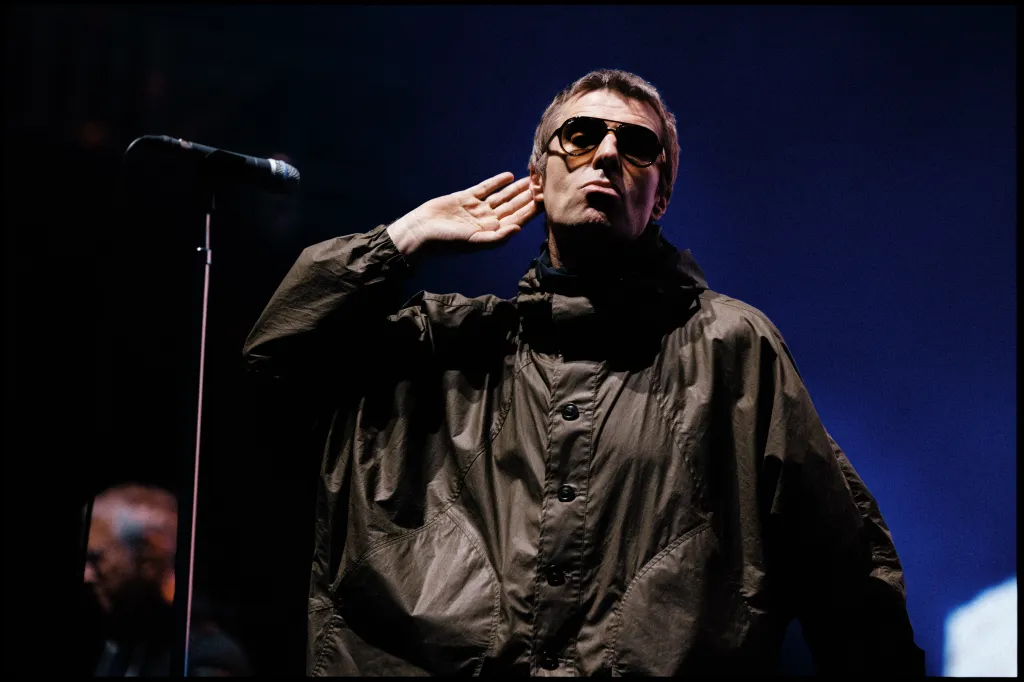
Disney has unveiled premiere date for Steven Knight’s Oasis documentary on Disney+ and Hulu.
The feature will land on October 9, just two weeks after tickets to Oasis’ next round of tour dates were snapped up, including some shows in the U.S.
Oasis: Don’t Look Back in Anger has already had a theatrical run where it became the UK’s highest-grossing documentary feature film of 2026. Described as an “unapologetically uplifting account of the biggest musical event of 2025,” Knight’s movie charts Liam and Noel Gallagher’s reunion tour, Oasis Live ‘25, which was one of the most anticipated rock ‘n’ roll comebacks in years.
The film from Magna Studios and directors Dylan Southern and Will Lovelace features material from a rare joint interview between the Gallaghers, along with plenty of coverage of the sold-out concerts. Peaky Blinders creator Knight, a huge fan of the band, is writer-creator.
Angela Jain, Head of Content, Disney+ EMEA, said: “The great wait is over…as we now bring Oasis: Don’t Look Back In Anger to as many people as possible through Disney+, and to be doing it with exclusive unseen footage too, is so exciting for fans. The Oasis reunion has been one of our defining cultural moments of recent times. We have seen how the documentary has resonated with audiences around the world as they celebrate the power of Oasis and music through this evocative and moving reunion story.”
Oasis featured for the first time in a Saturday Night Live UK cold open over the weekend, with the Gallagher brothers revealing themselves as Russian spies after almost convincing Prime Minister Andy Burnham to join them.
Featuring never-before-seen footage, the film is a Magna Studios production, presented by Sony Music Vision in association with Sony Music Entertainment UK. The producers are Sam Bridger and Guy Heeley. The executive producers include Kate Shepherd, Marisa Clifford, Davud Karbassioun, Rob Stringer, Tom Mackay, Krista Wegener, Thomas Benski, Isabel Davis, and Tim O’Shea, with Oscar-winning sound mixers James Mather and Tarn Willers, cinematographer Haris Zambarloukos and editors George Cragg and Martina Zamolo leading the creative technical team. The film was commissioned by VP Unscripted Content for Disney+ EMEA, Sean Doyle.
>
'Hockey Night in Canada' returns, will broadcast PWHL games

Insuretech Outmarket raises $34.5M just months after prior round

‘Icebreaker’ Netflix Series Casts Daisy Jelley & Connor Simos As Leads
-

 movies4 months ago
Search For Canadian TV Actor Stewart McLean Now Homicide Investigation
-

 Fashion9 years ago
These ’90s fashion trends are making a comeback in 2017
-
Fashion9 years ago
According to Dior Couture, this taboo fashion accessory is back
-
Fashion9 years ago
Model Jocelyn Chew’s Instagram is the best vacation you’ve ever had
-
Fashion9 years ago
Emily Ratajkowski channels back-to-school style
-
Fashion9 years ago
9 Celebrities who have spoken out about being photoshopped
-

 Anime4 months ago
Rurouni Kenshin: Hokkaido Arc Manga Takes 1-Issue Break – News
-

 Anime3 months ago
HIDIVE to Stream English Dubs for The World Is Dancing, The Forsaken Saintess and Her Foodie Roadtrip in Another World, The Dangers in My Heart: The Movie Anime – News