
Anime
Episode 5 – Nippon Sangoku The Three Nations of the Crimson Sun

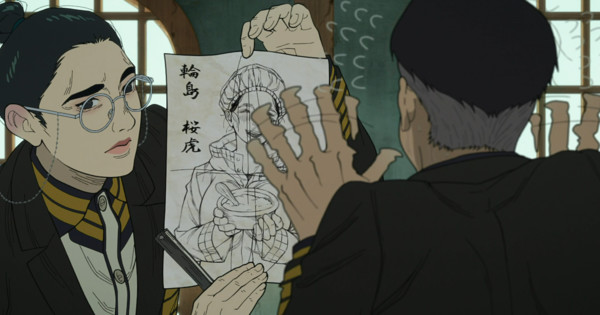

©松木いっか/小学館/日本三國製作委員会
If I ever get around to teaching courses on screenwriting and film analysis, I’m going to bookmark Nippon Sangoku as a perfect example for how to make interesting, entertaining art out of exposition and politicking. This entire episode is, if you couldn’t tell by the title of “The Borderland General Corps Marches Out,” all about detailing Yamato’s reaction to the coup d’etat in Seii that we witnessed last week. Specifically, we get to see how this political powderkeg creates a logistical battleground of its own, as the Taira Clan and General Ryumon’s side of the military clash over how to best take advantage of – or strategically avoid – all-out war with Seii and Dictator Wajima. This is, in short, another episode that consists entirely of dudes talking to other dudes about military maneuvers and political policy, and it’s still, for my money, easily one of the most gripping shows on television.
For instance, take how weird and farcical this very tense situation becomes once we realize that Taira’s son, who teams up with dear old dad to try and persuade the Emperor to stay the course and strike Seii, is literally a snot-nosed brat who is just walking around in grown-up clothes that don’t even fit him. It’s an absurd touch that highlights the very real danger of this green and nervous emperor being led astray by self-serving weasels who very obviously have no interest in helping anyone but themselves. It also serves to make the General that much more heroic and sympathetic by comparison.
Moving a bit closer to ground level, we also see Aoteru and Yoshitsune dealing with the fallout of the Taira’s scheming. I’ll admit, this is where all of the talk of Lieutenant movements and military stratagems started to lose me a bit, but the scene still simmers with the pair’s electric chemistry. It’s fascinating to see Aoteru, the one ready to make a scene and stick his neck out, while Yoshitsune has to make our hero see reason and hold off for a more opportune time to try and wrest control back from the Taira. Even in episodes like this, we still get great little morsels of character development to chew on.
The best part of the episode, though, is probably Kaku’s confrontation with the would-be defectors who actually want Dictator Wajima to win the war. Their arguments are compelling: The Tairas suck, and Wajima is cute and sweet. Kaku, of course, has experience dealing with the likes of The Gentle Dictator, and he gives a stirring (if somewhat obvious) lecture on how we can’t just trust charismatic demagogues with aspirations for complete military power just because they’ve got a cute smile and a sick face tattoo. To be honest, 90% of what made me love this scene is the score, which finally gives Kevin Penkin a chance to showcase his talents with a chaotic, jazzy composition that sounds very unique compared to his work on Made in Abyss and Apothecary Diaries.
I’ve been feeling like the lack of a true, blue Kevin Penkin banger was one of this series’ few drawbacks, thus far, so you have no idea how glad I was to find myself tapping my toes and snapping my fingers as Kaku did what Kaku does best. While this isn’t necessarily my favorite episode of Nippon Sangoku yet, it’s pretty impressive that even its most “middle of the road” chapters run circles around most of the anime competition.
Episode Rating:
Nippon Sangoku The Three Nations of the Crimson Sun is currently streaming on
Amazon Prime.
James is a writer with many thoughts and feelings about anime and other pop-culture, which can also be found on BlueSky, his blog, and his podcast.
The views and opinions expressed in this article are solely those of the author(s) and do not necessarily represent the views of Anime News Network, its employees, owners, or sponsors.
>
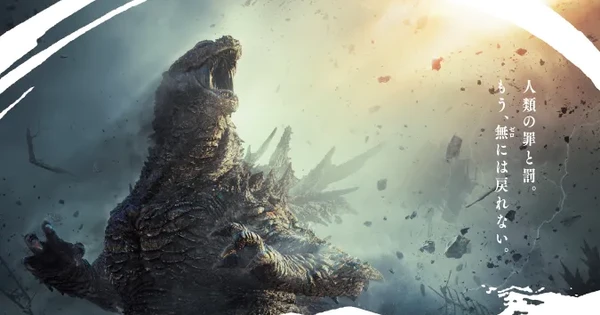
How do you bridge the gap between Godzilla as a force of terror and as a cool guy who fights other monsters? The American 2014 film tried to split the difference between metaphorical horror and “let them fight” fun before turning completely silly in its sequels. The last two JapaneseGodzilla films (Shin Godzilla and Godzilla Minus One) were stand-alone reboots that stripped the King of the Monsters down to his scary roots without another kaiju in sight. Then Minus One became an Oscar-winning global blockbuster, and writer/director/VFX genius Takashi Yamazaki pretty much had to make a sequel — and that means scaling up with another kaiju. How do you deliver the beatdowns fans want while still maintaining consistency with the dark historical drama of Minus One?
Godzilla Minus Zero‘s answer is to make its monster vs. monster fight the scariest you’ve ever seen. As everyone’s correctly guessed by now, King Ghidorah is the big new threat attacking Japan in 1949. Ghidorah’s a different beast in each Godzilla continuity, so I won’t say much about his portrayal here to avoid spoilers, but I’ll say this: we see a lot more of him this time around than we do Go dzilla, and he looks fantastic; Yamazaki’s special effects have leveled up beyond his already striking accomplishments in the first one. I’ll also note something from the press conference that followed the screening: when one critic offered his interpretation of what Ghidorah might be a metaphor for, Yamazaki said he welcomed all interpretations so long as he made the viewer feel a sense of powerlessness. Well, Yamazaki-san, you did your job.
The film’s surprising R rating is earned — though the violence is not excessively graphic, it refuses to sugarcoat the brutality inflicted on civilians in war. One of the new major characters, scientist Kanji Murakami (Min Tanaka), is a survivor of the Hiroshima bombing; we see flashbacks of him discovering his family’s burned bodies and even more PTSD-driven dark thoughts entering his head. Another flashback to the aftermath of Godzilla’s Ginza rampage in Minus One, answering the question of how Noriko (Minami Hamabe) managed to survive that attack in the first place, plays similarly to the Hiroshima scenes. You couldn’t edit this material down to a PG-13, and you wouldn’t want to. This very concern with the consequences of violence, however, might actually make it good for teenagers to see, a moral antidote to the wanton destruction of so many bloodless blockbusters.
If Godzilla Minus Zero has one big weakness in comparison to its predecessor, it’s that it’s so structurally tied into said predecessor that it won’t work nearly as well as its own story. The sequel has some good character development and powerful emotional moments, but it also doesn’t have an arc with the same easy hook as Koichi Shikishima (Ryūnosuke Kamiki) overcoming his kamikaze survivor’s guilt in Minus One. Beyond the spectacular kaiju attacks and the visceral war-horror elements, one’s attachment to the human characters here is more dependent on the attachments already established in the last movie, along with the general historical context that informs its depiction of post-war Japan.
While having fun with pulpier sci-fi plot elements and the inherent excitement that comes with Godzilla (that classic Godzilla theme still hypes one up), Minus Zero ends up being a darker movie than Minus One. Its mission is less one of heroic redemption and more entangled with complications. If Minus One was Star Wars, Minus Zero is The Empire Strikes Back. I don’t know if there will be a Return of the Jedi or if we’re left with a beautifully bleak duology. Of course I want to see more, but if Yamazaki wishes to end it here, he’s still left this series on a strong note. You can’t trust that the world will remain saved, but maybe you can still protect yourself and your family.
>
Anime
‘Destroy All Humans. They Can’t Be Regenerated. A Magic: The Gathering Manga’ Gets Miniseries in October – News

Original series based on card game ended in April 2025
The November issue of Kadokawa‘s Monthly Shōnen Ace magazine announced on Saturday Katsura Ise and Takuma Yokota will launch a new miniseries for their Destroy All Humans. They Can’t Be Regenerated. A Magic: The Gathering Manga (Subete no Jinrui o Hakai suru. Sorera wa Saisei Dekinai.) manga, based on the Magic: The Gathering trading card game, beginning in the December issue on October 26. The series will be titled Subete no Jinrui o Hakai suru. Sorera wa Saisei Dekinai. -Timeshift- (Destroy All Humans. They Can’t Be Regenerated. -Timeshift-).

© Wizards of the Coast LLC.
Ise confirmed on X (formerly Twitter) the new manga will be a short limited series that will run for four chapters irregularly in the magazine.
Viz Media releases the main manga in English and describes the story:
Travel back in time to the early days of Magic: The Gathering!
It’s the nineties at Tokiwagi Middle School. And for gamers like Hajime Kano, after the release of Magic: The Gathering, nothing will ever be the same again!
In everything he does, it seems like geeky Tokiwagi Middle School student Hajime Kano comes in second place behind popular honor student Emi Sawatari. But when Hajime takes a trip to a new game store he’s been hearing about, their rivalry takes an unexpected turn. Welcome to the early years of Magic: The Gathering, whena trading card game shaped a generation forever!
The manga first debuted as a one-shot in Monthly Shōnen Ace in August 2018. The manga started its serialization in the magazine in November 2018. Wizards of the Coast LLC. is credited with cooperation. The manga ended serialization in April 2025, and Kadokawa shipped the 18th and final volume in June 2025.
Sources: Monthly Shōnen Ace November issue, Katsura Ise‘s X/Twitter account
Disclosure: Kadokawa World Entertainment (KWE), a wholly owned subsidiary of Kadokawa Corporation, is the majority owner of Anime News Network, LLC. One or more of the companies mentioned in this article are part of the Kadokawa Group of Companies.
>

Side story debuted in January

© Akaza Samamiya, Kadokawa
Akaza Samamiya announced on X (formerly Twitter) on Saturday the Mr. Mallow Blue: After The Rain side story to the Mr. Mallow Blue manga will end in the next chapter.
The original series focuses on the meetings of various social outcasts, including a fragile girl, a shut-in, and a handsome man who wears a cold expression as a mask.
Samamiya launched the side story in the March issue of Kadokawa‘s Asuka magazine, which shipped in January.
Samamiya launched the main manga in Kadokawa‘s Asuka magazine in November 2019, and ended the series with the the sixth and final compiled book volume on December 24.
Samamiya launched the Ballad x Opera manga in Asuka in May 2017, and ended it in September 2019. Kadokawa published the manga’s fifth and final volume in November 2019.
Samamiya serialized the Bloody Mary manga series in Asuka from November 2013 until February 2017. Kadokawa published 10 volumes for the manga, and Viz Media published all 10 volumes in English.
Source: Akaza Samamiya‘s X/Twitter account
Disclosure: Kadokawa World Entertainment (KWE), a wholly owned subsidiary of Kadokawa Corporation, is the majority owner of Anime News Network, LLC. One or more of the companies mentioned in this article are part of the Kadokawa Group of Companies.
>
Minnesota Lynx, New York Liberty could turn No. 1 vs. No. 8 seed WNBA playoff game into a classic
Phillies come alive to avoid historic collapse, clinch playoff date with Braves
Dodgers reach 100-win mark for 5th time in last 7 full seasons
-

 movies4 months ago
Search For Canadian TV Actor Stewart McLean Now Homicide Investigation
-

 Fashion9 years ago
These ’90s fashion trends are making a comeback in 2017
-
Fashion9 years ago
According to Dior Couture, this taboo fashion accessory is back
-
Fashion9 years ago
Model Jocelyn Chew’s Instagram is the best vacation you’ve ever had
-
Fashion9 years ago
Emily Ratajkowski channels back-to-school style
-
Fashion9 years ago
9 Celebrities who have spoken out about being photoshopped
-

 Anime4 months ago
Rurouni Kenshin: Hokkaido Arc Manga Takes 1-Issue Break – News
-

 Anime3 months ago
HIDIVE to Stream English Dubs for The World Is Dancing, The Forsaken Saintess and Her Foodie Roadtrip in Another World, The Dangers in My Heart: The Movie Anime – News