Politics
The House | The New Generation of Mayors Trying To Bring Young People Back Into Politics

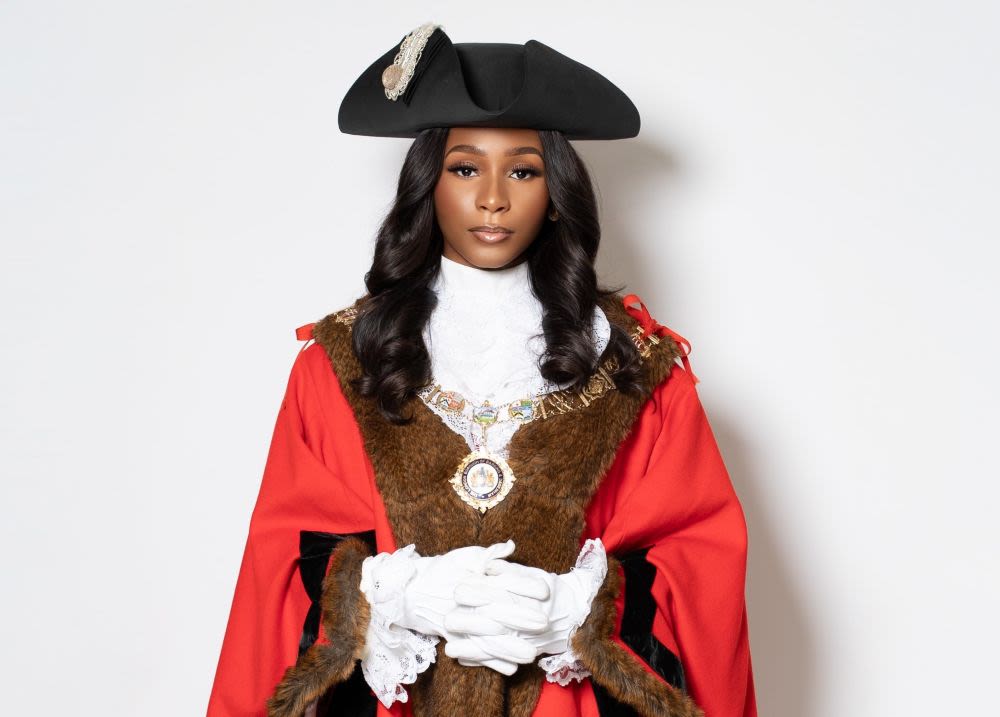
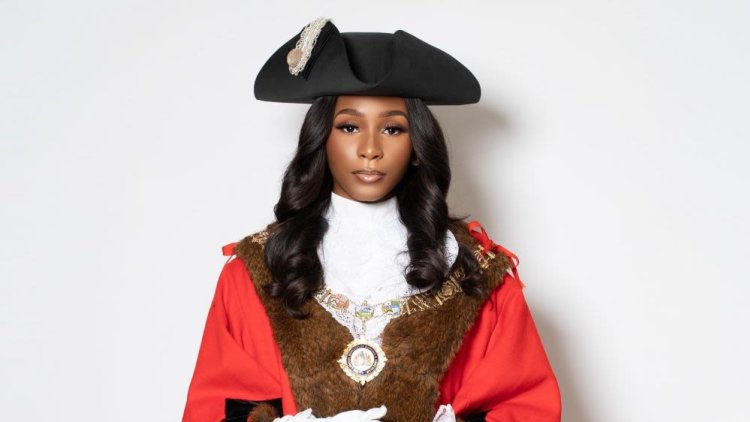
Credit: Princess Bright

11 min read
Young people in Britain are often described as disengaged and distrustful of politics. Zoe Crowther speaks to a new generation of civic leaders who believe they can help close that gap
Connor Mulhall and Princess Bright are from opposite corners of the country and come from contrasting backgrounds, but they do have one thing in common: both are the youngest-ever ceremonial mayors chosen to represent their town or borough.
They hope that if young people in their areas can see someone like them in positions of civic leadership, they are more likely to believe the system works for them.
There are around 300 civic mayors across England, alongside more than a dozen directly elected metro mayors. Mulhall and Bright are both far from the traditional image of a ceremonial mayor: usually an older white man in robes, wearing a heavy chain.
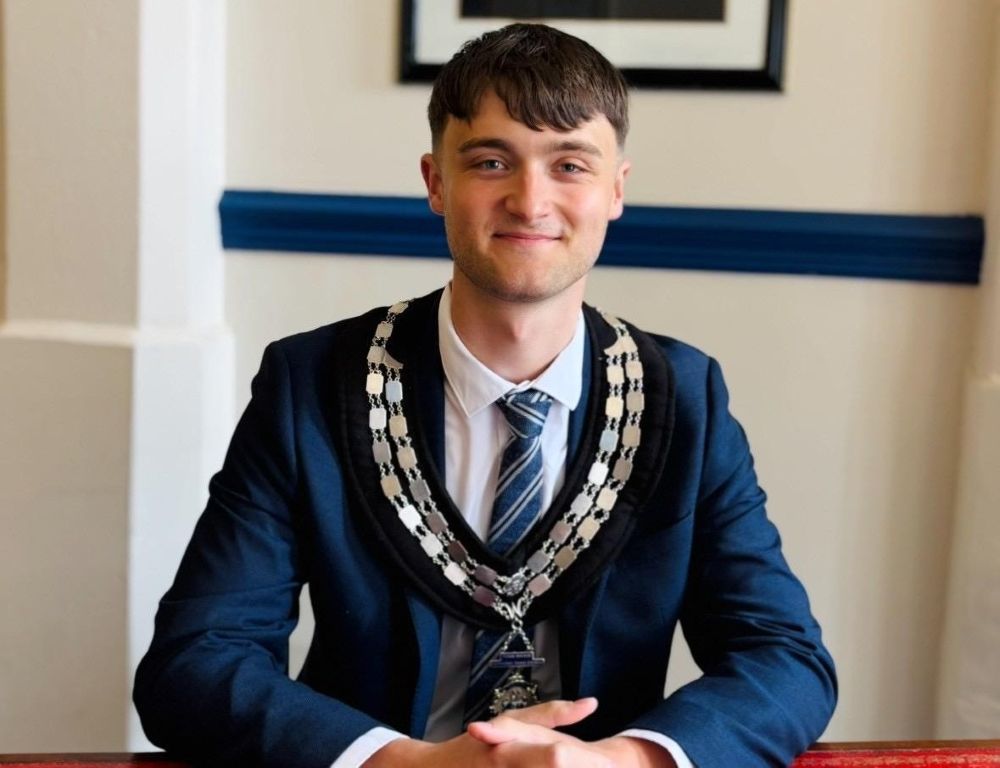
The House travelled to Wetherby, West Yorkshire, to meet its 27-year-old mayor, Connor Mulhall, who was named Young Councillor of the Year by the National Association of Local Councils earlier this year.
Many people are likely to know Wetherby for its large service station stop on the A1, the long dual carriageway that connects London all the way up to Edinburgh.
For Mulhall, it is much more. Walking through the town, he points out the details of every little feature of the town. The best fish and chip shops. An information board about the historic brass band marching contest. A school building in need of repair. Air pollution monitors he helped to install. Flowerbeds that have been upgraded. Some fallen branches in the river that he had requested be cleared. “And look, there’s a woodpecker!” he exclaims.
Inside the town hall, the generational contrast between Mulhall and his council colleagues is obvious. Mulhall is the only person in his 20s we come across in the building, and there is a lunch being hosted for elderly residents. An older woman approaches him to say thank you for his “lovely” get-well card. She turns out to be his ex-girlfriend’s grandmother.
Mulhall did not follow a typical route into politics. He left sixth-form to start an apprenticeship with O2, where he still works, alongside serving as mayor and councillor. At 19, he was encouraged by the local Conservative association to stand for the council, and broke the record to become the town’s youngest-ever councillor before doing the same as mayor when he was selected last year.
Wetherby is a traditionally Conservative area, and Mulhall is a Tory councillor. But he sees the mayoralty as something separate from party politics. For him, it is about being an ambassador for the town, supporting charities, organising events and encouraging people to take part in local life. This includes advocating for causes very personal to him. The following weekend, he is due to speak at a service raising money for the mental health charity Mind. Mulhall grew up with both parents experiencing mental health problems and relying on benefits, and had to live with his grandparents from a young age.
“My mum and dad have been helped by that charity, and I know that a lot of people in Wetherby have as well,” he says.
“We have had a lot of young suicides in Wetherby in the last few years. It’s a lovely place to be, but we’re not immune to that, and it does happen. It is worth talking about, because it can go on quietly; a lot of people don’t know.”
A new study by a research team from Royal Holloway, University of London, has found that nearly three-quarters (72 per cent) of UK adolescents aged between 12 and 17 would vote if given the opportunity – far above the most recent voter turnout in the 2024 general election (60 per cent).
A majority – 57 per cent – also said they were interested in politics, and 58 per cent said they were willing to participate politically across five different forms of participation, with a higher preference for online than in-person participation.
The report argues that while lowering the voting age to 16 could help to include young people in democracy, this engagement is tempered by anxiety about the future and low trust in institutions, leaving young people “willing but wary”.
Mulhall says that reflects what he sees on the ground, and he does not accept the idea that young people are apathetic. Instead, he points to growing involvement in local projects and events.
“We’ve got a lot of younger people wanting to be involved in the council’s work, getting involved in things like the town bonfire,” he says. “That’s how the interest in getting involved in local stuff starts, and that has improved over recent years.”

Princess Bright, 30, became the youngest-ever Mayor of Barking and Dagenham in London last year, at the age of 29. Her route into politics was very different, with her mother having served as a Labour mayor before her, and her father as a pastor.
Like Mulhall, Bright believes that mayors can help to turn young people’s interest in politics into active engagement.
Bright believes visibility matters, explaining that young people have told her that before seeing someone like her as mayor, they “didn’t really care” about politics or local events.
“One thing I would say to young people is for them to remember that their voices matter,” she says. “And why I say that is the fact that even at a local level, they can be part of a change.”
Her presence online has helped reinforce that message. With more than 20,000 followers across Instagram and Facebook, she believes her social media profile has led to her being invited into more schools and community spaces than her mayoral predecessors, giving her opportunities to engage directly with younger audiences.
Bright believes social media is crucial for making local politics more visible and understandable.
“There is a lack of education about local politics in general,” she says.
Mulhall agrees, but stresses the need to balance the traditions of the ceremonial mayor’s role with more modern digital communication.
“Having the traditional stuff that happens every year – I think it’s really important, and I will continue to do that, because that’s the historic part of it all,” he says.
But he puts his own energetic twist on his role as mayor. In the run-up to Christmas, he filmed himself recreating the Hugh Grant dance scene from Love Actually in Wetherby town hall to raise money for Martin House children’s hospice.
Particularly for young people, if there is any time to get involved in politics, it’s now, because it’s not normal times in terms of the state of the world
Mulhall traces his own political interest back to primary school in York, where he lived as a child before moving to Wetherby.
“The park on my street was really derelict, and it had been neglected,” he says. “I worked with the local council and councillors to help redesign that park.
“I brought it to the school for consultation, and I worked really closely with a lot of the teachers. We converted this playground into a brand new one, and it’s still being used today. It still looks really nice. I do occasionally go down there, and that’s something I think is really nice in local politics… You can look at something and go: ‘I actually helped to do that’.”
He briefly considered standing for Youth Parliament as a teenager, but decided local government was where he could have the most impact.
“For me, it’s about getting things done,” he says, hinting at a sense of urgency.
“Particularly for young people, if there is any time to get involved in politics, it’s now, because it’s not normal times in terms of the state of the world.
“Regardless of your viewpoints, you need to be involved in that conversation, because it could go down paths that you may not agree with or dark paths.”
When pressed on what he means, he points to a broader breakdown in political dialogue rather than any single party. But he and Bright are clearly both painfully aware that their mainstream parties are getting squeezed by Reform UK on the right and the Green Party on the left, with young people even more likely to be tempted by the insurgent challenger parties.
“There is a lot of work that goes on behind the scenes to kind of bridge those gaps, but that can easily slip away,” Mulhall says. “I think it’s now more than ever for young people to get involved and have their voice heard.”
Mulhall is not up for election as a councillor this year, but Bright is fighting for her council seat. She also avoids directly criticising Reform and the Greens, which are both predicted to win multiple seats from Labour in the upcoming May elections. Barking and Dagenham looks to be a tight race between Reform and Labour, while there are multiple contests across the capital where the Greens could win councils from Labour. However, Bright encourages young people “not to vote blindly just because of what the hype is online”.
“We had Nigel Farage come down to Dagenham last week, because there is a huge influx of Reform, especially on social media, doing a lot to try and build a narrative and gain a lot of the Labour and Tory votes.
“I always say to young people when I’m out on the doorstep that they should make sure that they are reading literature properly and really understanding what the parties are offering, what their ethos is, what their manifesto is, what their policies are. I can never really personally try and convince them to vote a specific way this year because of my apolitical status.”
Being a young mayor is not always straightforward, with both saying their age can prompt scepticism from older councillors and residents.
“It can be quite challenging sometimes when they think I’m quite naive,” Mulhall admits. “But I’ve actually got over 10 years of experience in working and relationship building.
“I’ve been working since I was 14, and the things I’ve seen in my life, the people I’ve met and the jobs that I’ve done, it’s all part of the experience that I bring to the table. I don’t have a traditional background in terms of how I’ve got to be here.”
Last year, the Labour government announced that 16- and 17-year-olds will be able to vote in the next general election. While Bright supports the change, Mulhall is unconvinced.
“I appreciate there are lots of other things you can do when you’re 16, but actually it should be up to 18 for everything,” he says, arguing that many 16-year-olds do not yet “have a real grip and understanding of the world”.
When it comes to their own futures, both mayors are cautious, but do not rule out considering a move into higher political office, including running for Parliament.

“Do I want my political career to stop at just being the mayor?” Bright says. “No. But do I know my next steps, and have I mapped it out yet? No.”
Mulhall admits he has thought about what he might be giving up by pursuing a political career. Before becoming mayor, he had been considering leaving Wetherby and travelling, like many of his friends.
“I love what I do,” he says, but acknowledges that the role comes with trade-offs. For now, he has chosen to stay, and says “never say never” when it comes to running for a seat on Leeds City Council in the future.
“But one thing that I’ve learnt is that it’s all well and good having a plan, but there’s something that can come and hit you from the side and completely change what you do and where you are.
“So, I’ll just see where I am. My focus is working with the town council and the other councils to get through the strategy for the next year. But never say never… That’s a very politician’s answer.”
Back in Wetherby town hall, his name now sits at the bottom of a plaque listing every previous mayor dating back to the 1970s. But it is another plaque that holds his attention longer: the one celebrating outstanding young people in the town, part of an annual award he says he is most proud of hosting.
>

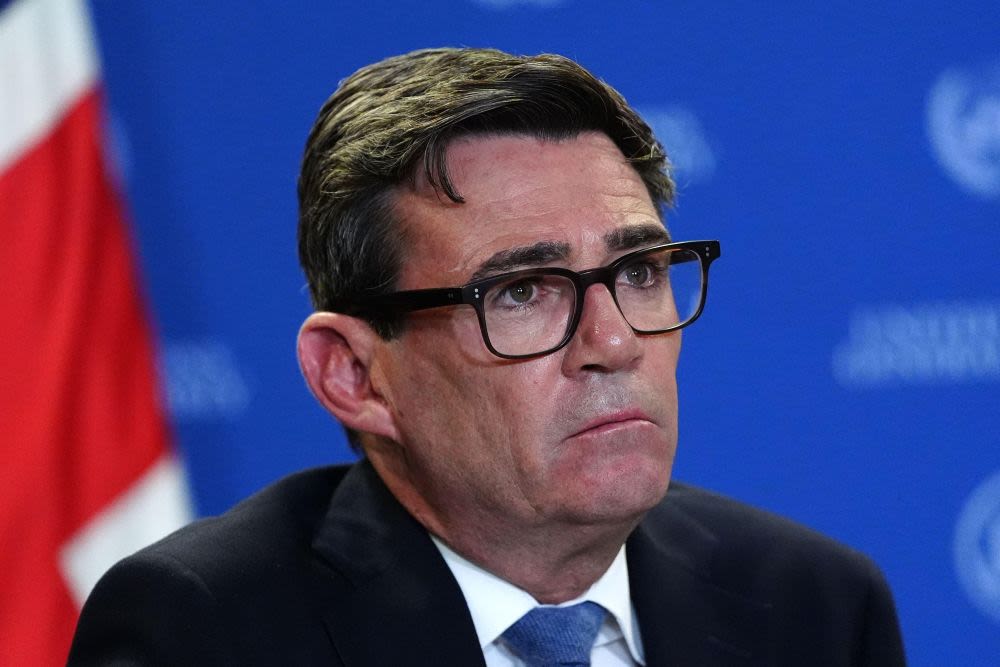
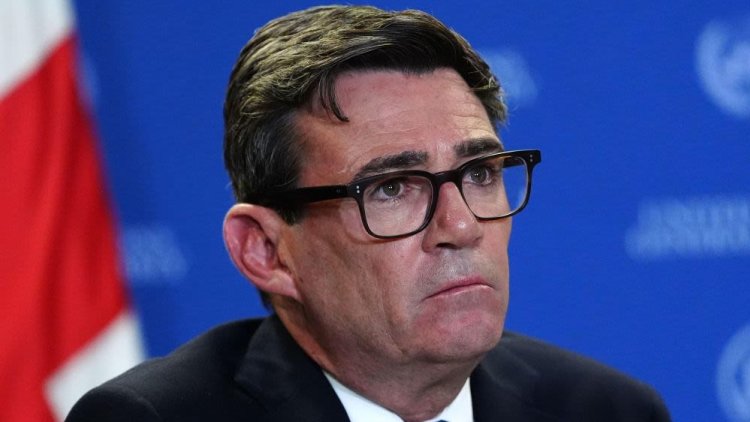
Burnham has ruled out an early election amid speculation (Alamy)
2 min read
The Prime Minister has said he can “knock dead” speculation of an early election, claiming that the move would be “self-serving politics”.
Andy Burnham’s comments come ahead of Labour Party conference in Liverpool as the party is riding high on a recent boost in the polls, widely labelled “the Burnham bounce”.
A YouGov poll published this week revealed that Labour would return the most MPs to Westminster if an election were to be called tomorrow, but would still not achieve a majority.
Burnham said that his conference speech next week would set out the “direction I want to take the country in the coming period”.
While speculation regarding the possibility of Burnham calling an early election had been swirling in recent days, Burnham was keen to correct the record.
Asked by ITV Calendar whether the next general election would be in 2029, Burnham said: “Well, yes, that’s when the next election will be. All of this speculation on an early election, I can knock that dead.”
Burnham went on to say that the public would want him to be “getting on with the job of delivering…rather than putting self-serving politics before that, which was what I would be doing if I call an election. I am not going to do that.”
In a separate interview with BBC West, Burnham said his priority was to get people “feeling a bit of hope in their lives again”, rather than “putting people back into an election cycle”.
>
Politics
Politics Home | Trade Unions Call On Burnham To End “Military Collaboration” With Saudi Arabia
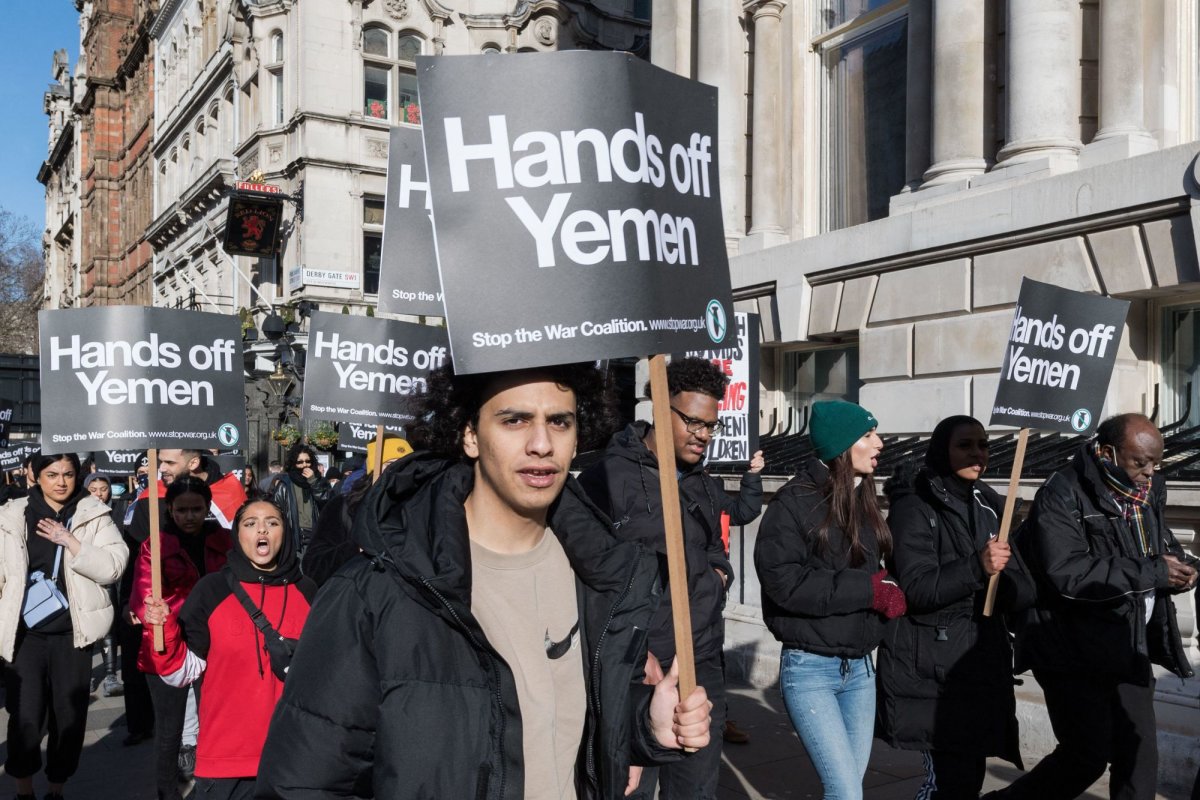

Anti-war demonstrators march against the ongoing war and humanitarian crisis in Yemen, February 2022, London (WIktor Szymanowicz/NurPhoto / Alamy)
5 min read
Exclusive: Ten trade unions have signed an open letter to Andy Burnham calling on his government to end its “military collaboration” with Saudi Arabia amid concerns over the humanitarian crisis in Yemen.
The letter, shared exclusively with PoliticsHome, criticises the UK government’s decision to provide military support to the Saudi-led coalition, which it accuses of targeting civilians and breaking international law in Yemen.
Conflict in the region has escalated in recent weeks, with Saudi Arabia claiming on Friday that it had intercepted six ballistic missiles fired by the Iran-backed Houthis.
Earlier this week, the UK government announced that it would provide additional defensive military support to Saudi Arabia, claiming “escalating tensions in the Gulf can have a serious impact at home in the UK”.
Ongoing disruptions to the Strait of Hormuz, a vital trade route, mean any attacks affect Saudi Arabia’s ability to export oil through the Red Sea, hitting prices across the globe.
Ahead of Labour Party conference this weekend, the general secretaries of 10 unions – including four Labour-affiliated unions – said they were “shocked” by the decision to increase military support, and criticised the government’s reasoning.
“Contrary to the government’s statements, the more this war expands, the more expensive our bills will get. The only way out is a diplomatic settlement to the regional war,” the letter reads.
Affiliates Unison, Britain’s largest trade union, the Communication Workers Union (CWU), Transport Salaried Staffs’ Association (TSSA) and the Fire Brigades Union (FBU), among other unions, argued that Britain “should not collaborate with a military that has repeatedly violated international law and has been central to creating one of the world’s worst humanitarian crises in Yemen”.
The letter calls for Burnham to urgently end both Britain’s military support for Saudi Arabia and the UK’s wider involvement in the Iran war “by revoking support for US air strikes launched from RAF bases”.
Burnham has argued that he agreed to help refuel Saudi jets to defend key energy infrastructure against the Houthis in a bid to keep oil flowing from the Gulf and ease economic pressures that will affect the UK.
The union signatories to the letter do not accept this justification, however.
“As the war expands, our members are paying the price. Inflation rose again in August, driven by petrol prices,” the unions said.
“Escalating this war will make our bills more expensive. If the government is serious about tackling the cost of living crisis, it must get serious about diplomacy.”
The Times reported on Thursday that ministers are drawing up plans to help poorer households with energy bills in next month’s Budget.
Khem Rogaly, co-director of Transition Security Project, the militarism-focused research centre that organised the letter, said: “Collaborating in Saudi military operations in Yemen is reckless, inflaming the regional war that started with the massive US-Israeli attack on Iran earlier this year.
“Britain should have no part in the US-led war against Iran or Saudi-led interventions in Yemen. Saudi interventions in Yemen have relied on British military support for more than a decade, leaving a legacy of war crimes and humanitarian crisis that has killed hundreds of thousands of people.”
The letter is one of the biggest organised since Burnham entered No 10 and the unions led by the signatories collectively represent more than 2.3 million workers.
The full text of the letter is below.
Dear Prime Minister,
As trade union leaders we are shocked by the government’s decision to provide yet more military support to Saudi Arabia. Britain should not collaborate with a military that has repeatedly violated international law and has been central to creating one of the world’s worst humanitarian crises in Yemen.
Providing military support to Saudi Arabia inflames the war started by the US and Israel against Iran in February, which has expanded across the region. Contrary to the government’s statements, the more this war expands, the more expensive our bills will get. The only way out is a diplomatic settlement to the regional war.
Saudi Arabia has intervened in Yemen for 11 years, with devastating results. Throughout this war, the Saudi-led coalition has repeatedly targeted civilians, breaking international law, while its air and sea blockade helped cause a humanitarian crisis that left 377,000 people dead by 2021.[i] Britain has supported this war throughout — supplying Saudi Arabia with aircraft, missiles and on-the-ground maintenance to keep its fighter jets in the sky. Earlier this year, the government approved a £468 million weapons sale to Saudi Arabia, mostly composed of missiles.[ii] These actions have fuelled a brutal war that has left Yemen in ruins. Providing military support to Saudi Arabia as the US-Iran war extends to Yemen only exacerbates regional conflict and takes us further from the diplomatic settlement that the world urgently needs.
As the war expands, our members are paying the price. Inflation rose again in August, driven by petrol prices. Energy bills will rise again in October, perhaps exceeding £2100 for the average household from January.[iii] Escalating this war will make our bills more expensive. If the government is serious about tackling the cost of living crisis, it must get serious about diplomacy.
First, we ask you to urgently end Britain’s military support for Saudi Arabia. Second, we ask you to end the UK’s wider involvement in the Iran war, by revoking support for US air strikes launched from RAF bases. These are essential steps for a cost-of-living government to take.
Yours sincerely,
Andrea Egan, General Secretary, UNISON
Daniel Kebede, General Secretary, National Education Union
Dave Ward, General Secretary, Communication Workers Union
Eddie Dempsey, General Secretary, National Union of Rail, Maritime and Transport Workers
Fran Heathcote, General Secretary, Public and Commercial Services Union
Jo Grady, General Secretary, University and College Union
Paul W. Fleming, General Secretary, Equity
Maryam Eslamdoust, General Secretary, Transport Salaried Staffs’ Association
Sarah Woolley, General Secretary, Bakers, Food and Allied Workers’ Union
Steve Wright, General Secretary, Fire Brigades Union
>
Politics
The House | Hazards Ahead: How Labour Unity Under Andy Burnham May Be Tested In The Months Ahead

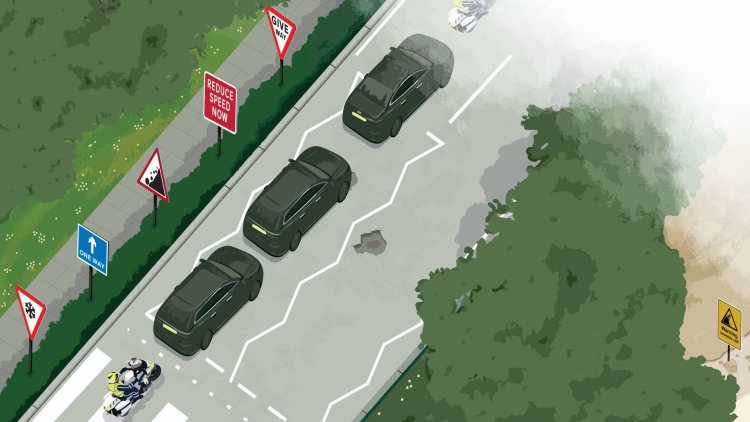
Illustration by Tracy Worrall

12 min read
The first few months of Andy Burnham’s premiership have passed in relative calm but the Labour Party’s newfound unity is about to be tested. Harriet Symonds reads the warnings on the road ahead.
Things, as they might say, can only get worse. Labour gathers in Liverpool with tails up, ahead in the polls having overtaken Reform UK. But it is in the nature of bounces that what goes up must come down, and Andy Burnham well knows that the momentum will fade.
Despite repeated public denials he is planning an early election, the Prime Minister is understood to have discussed the option with James Purnell, his chief of staff. No firm conclusion was reached, say sources.
On one level, that is unsurprising – indeed it would be odd if he hadn’t at least reviewed the possibility with his closest political aide – but it adds to the sense there is an ongoing calculation.
Although the decision will be Burnham’s alone, Labour MPs will do much to condition his thinking in the months ahead.
If he believes he can carry the party through difficult decisions – on welfare and immigration in particular – he may be more likely to wait until he can more confidently campaign on Labour’s record in government. On the other hand, if it appears he has become their captive, he may be more inclined to seek a mandate of his own.
Watching on are the dispossessed and disgruntled, ejected from government for their loyalty to Sir Keir Starmer. The revelation by Louise Haigh that Burnham’s return to Westminster had been in the works for a year has only deepened their resentment.
At the centre of this emerging group is Darren Jones, the former chief secretary to the prime minister, whose exclusion from Burnham’s Cabinet has angered MPs in the group who saw it as a serious miscalculation.
“Even now, they still don’t realise how much power Darren wields in the PLP,” warns an MP in the group. “When the wheels start falling off, they might need him.”
Jones showed his teeth when he challenged No10 claims about how much would be saved through shelving the digital ID scheme, for which he’d had ministerial responsibilities.
At the moment Jones sees himself as something of a Jeremy Hunt-like figure in the Labour Party, who can make significant interventions without undermining the government.
But he is not the only former minister to know where the bodies are buried. Some, like Olivia Bailey and Catherine Atkinson, have been elected to chair select committees which will look at policy areas they tackled in government.
MPs on ‘rebel watch’ insist they want Burnham’s government to succeed, but they have no problem being “critical friends” when it comes to some of the difficult choices ahead, especially those affecting the economy.
“The group has so much institutional knowledge of government – they have a lot to offer,” says an MP organising for the group.
They have begun meeting regularly, including for drinks at the Clarence pub on Whitehall.
Those involved describe it primarily as a support network for MPs adjusting to life outside government, but it has also become a place to connect with donors and develop longer-term policy ideas aimed at securing a second Labour term.
Burnham’s first real tests will come not in Liverpool but in the months ahead, when he will have to make tough decisions that will upset different wings of his party.
MPs are eagerly awaiting the government’s 10-Year Plan in November to provide more clues about the government’s direction of travel.
Welfare, defence, the Troubles Bill, oil and gas and plans for devolution are all issues on which the new government could face opposition from its own benches.
The economy
Burnham inherited an economy with little room for manoeuvre and will deliver his first Budget on 28 October against a backdrop of rising inflation, high borrowing costs and sharply reduced fiscal headroom. The government is facing pressure to fund defence, ease the cost of living and maintain its fiscal rules at the same time.
The government wants the Budget to be as quiet as possible. The Spending Review next year is likely to be the more significant test, particularly on welfare and defence.
Attacks on Rachel Reeves have not gone unnoticed by Labour MPs, with some saying it is “totally unfair” and warning it “will not wash”.
The group of disgruntled Labour MPs is watching closely to see whether Chancellor John Healey sticks to the fiscal rules and how he balances competing demands from defence, welfare and public services.
In a sign that the government is taking the group seriously, The House understands that Healey has asked to speak to Jones ahead of the Budget.
Meanwhile, talk of an early election is rife among Labour MPs, with some reporting contact from regional organisers that they believe could be preparation for a snap poll.
Welfare
Addressing Britain’s £333bn ballooning welfare bill will be one of Burnham’s most politically dangerous tasks. He has said he wants to reduce spending but has yet to set out in any detail how he intends to do it.
Two reports will soon land on his desk: one by former minister Alan Milburn examining youth unemployment and another by Stephen Timms on disability benefits. Milburn has already argued that the welfare system is trapping young people in unemployment and called for a tougher “working state”.
The PLP is divided over how far Burnham should go. Starmer’s attempt to cut £5bn from welfare spend last year ended in a revolt that exposed the depth of opposition on the Labour benches and started the downfall of his premiership.
Burnham faces the same fundamental dilemma: how to reduce the bill without provoking another rebellion from the left.
Some MPs want to see a credible plan to get welfare spending down, while MPs on the Labour left, including Kim Johnson, Rachael Maskell and John McDonnell, will not tolerate what they regard as “punitive” cuts.
Many of those who were involved in last year’s welfare rebellion are now in government, including the new Chief Whip Anneliese Midgley, creating the prospect of a fight within the government itself if Burnham struggles to win support.
“It will be the moderates that will end up saving Burnham when a vote comes to cut welfare,” predicts an MP on the party’s right flank.

Defence
Defence spending could provide Burnham with an equally awkward coalition of rebels. The Prime Minister has committed to spending 3.5 per cent of GDP on defence by 2035 but has so far refused to set out a timetable for reaching three per cent.
With little spare cash, reaching three per cent by 2030 would require difficult decisions elsewhere. The government has indicated that the route to the 3.5 per cent target will be set out at next year’s Spending Review.
The decision to appoint former defence secretary John Healey as Chancellor is a sign of the importance Burnham attaches to the issue.
MPs on Labour’s right want to see the government make defence a priority, particularly after Burnham declared that national security “cannot come at the expense of social security”.
The line was pre-prepared, The House understands, and while the sentiment spoke to some Labour backbenchers, others were less impressed.
“He was dreadful today. Everything I feared,” one Labour MP said following that PMQs performance on 9 September.
Healey’s decision to resign from Starmer’s government over defence spending has also given him little room for manoeuvre. Many MPs will expect him to demonstrate that his new role as Chancellor has not diluted his commitment to increasing military spending.
Tan Dhesi, chair of the Defence Select Committee, has already warned the Prime Minister that “vibes alone just isn’t going to be enough”.
Troubles Bill
New Northern Ireland Secretary Chris Bryant faces the difficult task of passing the Northern Ireland Troubles Bill, intended to replace contentious elements of the Legacy Act.
The legislation is contentious as it could expose former British military personnel who served in the Troubles to continuous unfair legal action. The government has been attempting to address those concerns while also preserving routes to justice for victims and their families.
The bill has become deeply controversial in the veteran community. Since his appointment,
Bryant has been on a charm offensive to convince Labour MPs with military backgrounds to give their support to the bill, some of whom could present powerful opposition if the government gets this wrong.
Several MPs invited for talks say the government is moving in the right direction, but key MPs remain uncertain about whether they can support the bill until they see the final amendments.
Former armed forces minister Al Carns cited the legislation as one of the reasons for his resignation in June, saying it risked failing the veterans it was intended to protect.
Immigration
Home Secretary Shabana Mahmood is facing a growing rebellion from Labour MPs on the soft left over plans to retrospectively extend the qualifying time for Indefinite Leave to Remain (ILR) from five to 10 years or more.
The size of the growing rebellion from within the PLP means Mahmood will likely end up watering down her proposals. Some MPs are calling for skilled worker visa holders to be exempt from extended settlement, allowing them to qualify in five years instead of 10.
Darren Jones sees himself as something of a Jeremy Hunt-like figure in the Labour Party
A motion calling for this move tabled by Neil Duncan-Jordan, the left-wing Labour MP for Poole, has attracted 81 signatures so far, including 42 other Labour MPs.
Duncan-Jordan argues that the proposals could make it harder to recruit workers into sectors such as social care, where there are already around 110,000 vacancies.
“The Prime Minister’s plan to reset the social care system has no chance of succeeding if we keep on with the current plans of ILR. We already have 110,000 vacancies in the sector and the threat of making people wait another five or 10 years until they reach settled status is simply unfair,” he says.
“You can’t reset social care without the workforce and to change the rules for those who are already here is cruel. The Prime Minister needs to rethink or he could be facing his first rebellion.”
Justice
The Courts Bill will be another test of Burnham’s ability to absorb pressure from his own benches.
Under proposals from the Starmer government, jury trials in England and Wales were set to be scrapped and replaced with a single judge for crimes carrying a likely sentence of up to three years. The move was justified as a bid to tackle the courts backlog, which has reached a record level of 80,000 cases.
The plans were originally put forward by former justice secretary David Lammy but faced a significant backlash from Labour MPs. Karl Turner, the MP for Hull East, was at the forefront of efforts to defeat the proposals, calling them “undemocratic” as well as ineffective in reducing the backlog.
Andy Burnham has since described jury trials as a “linchpin of a fair society”, signalling he will scrap the reform – the rest of the Courts Bill, however, is expected to remain very similar, which could be a source of frustration for some.
The extent to which Burnham reverses the Lammy-era proposals will be made clear when the bill returns on 13 October.

Devolution
English devolution is central to Burnham’s premiership. The PM has pledged to take power out of Westminster and give it to communities across England, promising “good growth in every postcode”.
There is broad support for moving power out of Whitehall. The problem for Burnham is that a growing number of Labour MPs fear their constituencies, particularly in London and the South, are being asked to surrender power and money to regional mayors.
Labour MPs representing constituencies in the South have told The House that Burnham’s ‘Manchesterism’ agenda risks being seen as overlooking other parts of the country also facing serious economic and social challenges.
London Labour MPs in particular are worried that deprived parts of the capital will be ignored. In his first intervention since leaving government, former housing secretary Steve Reed publicly warned Burnham that he “can’t make the rest of the country richer by making London poorer”.
There has also been backlash from MPs in regions that do not have elected mayors and those in rural constituencies who fear they will be overlooked.
Perran Moon, Labour MP for Camborne and Redruth, tells The House: “There’s a misunderstanding about Cornwall. We will never join a combined mayoral authority because of our national minority status. So we are at risk of being excluded from the powers and funding we need to unleash Cornwall’s economic potential.”
Burnham has attempted to head off that criticism, promising to work with Cornwall council and its six MPs on a devolution deal “with or without an elected mayor” and extending the offer to areas across England without devolved power.
The government’s decision to row back on local government reorganisation has been welcomed by many MPs who criticised the one-size-fits-all approach. But it now leaves unanswered questions over who gets power, who loses it, who gets the money and who is accountable.
Oil and gas
There is growing pressure on Burnham to approve North Sea oil and gas projects, notably Rosebank and Jackdaw. He has previously said he is “open-minded” about North Sea drilling and recognises the need to balance energy security, jobs and the transition to net-zero.
It is widely expected that Burnham will green-light Jackdaw, but the announcement has been delayed. It is thought that a decision will now only come after the Holborn and St Pancras by-election next month, amid fears it could lose votes to the Greens.
The issue has split Labour. Labour MP Henry Tufnell broke ranks back in March to publicly call for North Sea drilling, arguing it would boost economic growth, create jobs and prevent further deindustrialisation. Unions are also watching the decision closely, with Unite and the GMB in favour of drilling.
But some on the soft left of the party, many of whom are now in government, remain hostile to new oil and gas licences. Foreign Secretary Ed Miliband clashed with the Treasury over the decision when he was energy secretary.
In August, Labour MP Clive Lewis wrote a letter to the new Energy Secretary, Miatta Fahnbulleh, urging against new oil and gas licenses. He wrote on X: “Framing this as a choice between protecting the climate and protecting jobs is misleading. The real risk lies in clinging to volatile fossil fuels, which leave us vulnerable to energy price shocks.”
This new government will not be able to satisfy every wing of the party. For a Prime Minister who has promised to end the factionalism of the Starmer years, Burnham’s first real test may be learning to accept he can’t please everyone.
>

Prem Rugby: Northampton Saints, Bath begin season with crushing wins vs Newcastle Red Bulls, Harlequins as Henry Pollock sports new hair | Rugby Union News

Presidents Cup: International Team stun Team USA with session sweep in Friday foursomes to build shock lead at Medinah | Golf News

Chris Hansen Reviews Robert Pattinson ‘Primetime’ Move, Not a Fan
-

 movies4 months ago
Search For Canadian TV Actor Stewart McLean Now Homicide Investigation
-

 Fashion9 years ago
These ’90s fashion trends are making a comeback in 2017
-
Fashion9 years ago
According to Dior Couture, this taboo fashion accessory is back
-
Fashion9 years ago
Model Jocelyn Chew’s Instagram is the best vacation you’ve ever had
-
Fashion9 years ago
Emily Ratajkowski channels back-to-school style
-
Fashion9 years ago
9 Celebrities who have spoken out about being photoshopped
-

 Anime4 months ago
Rurouni Kenshin: Hokkaido Arc Manga Takes 1-Issue Break – News
-

 Anime3 months ago
HIDIVE to Stream English Dubs for The World Is Dancing, The Forsaken Saintess and Her Foodie Roadtrip in Another World, The Dangers in My Heart: The Movie Anime – News