
Anime
Milky☆Subway: The Galactic Limited Express Film to Screen New Version With Added Scenes on June 12 – News

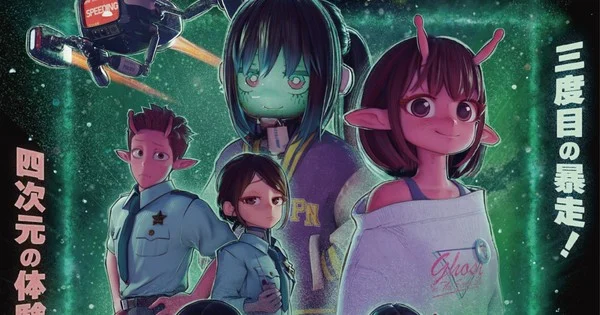
The staff for Ginga Tokkyū Milky☆Subway Kakueki Teisha Gekijō Iki (Milky☆Subway: The Galactic Limited Express: Local Train to the Theater), the re-edited film for Yōhei Kameyama‘s Milky☆Subway: The Galactic Limited Express (Ginga Tokkyū Milky☆Subway) anime, announced on Thursday that a new version of the film with added scenes will screen in Japan from June 12. The film’s new version is titled Rinji Zōhatsu Milky☆Subway Kakueki Teisha Gekijō Iki (Extra Service Milky☆Subway Local Train to the Theater), and it will screen in MX4D, 4DX, and 2D formats.

©亀山陽平/タイタン工業
The film opened in Japan on February 6. It sold 109,500 tickets and earned 151,305,440 yen (about US$988,200) in its first three days.
The film is a re-edited version of the anime’s 12 episodes with additional new content.
Momoka Terasawa and Anna Nagase returned for the film as Chiharu and Makina, respectively. The anime’s additional cast also reprised their roles in the film. Yōhei Kameyama once again directed, wrote, and produced the sequel, and he also handled the character designs, modeling, animation, editing, and other duties mostly himself. Bit Grooove Promotion is credited as the film’s sound company.
The anime premiered in July 2025 on the Tokyo MX channel and simultaneously streamed on YouTube. The anime’s dubbed versions in English, Portuguese, Spanish, Korean, Chinese, Thai, Indonesian, French, Hindi and Russian, also streamed on YouTube.
The anime’s English website describes the story:
Super human Chiharu and cyborg Makina got arrested for breaking space traffic laws.
They’re stuck with a crew of misfits who got caught around the same time: Akane and Kanata, the super human pair; and Kurt and Max, the cyborg pals. Ryoko, the police officer, sentenced them to clean up the interplanetary train – the so-called “Milky☆Subway,” as their community service.It should’ve been a simple job – until the train suddenly takes off into deep space! The crew scrambles in confusion as chaos unfolds onboard!
No purpose! No principle! No point!
A never-before-seen space-train spectacle, powered by nothing but pure momentum!
The anime’s theme song is “Gingakei Made Tonde Ike!” (Fly to the Galaxy!), the 1977 song by the girl group Candies.
Kameyama released the original Milky☆Highway short in 2022 as his graduation project for Kadokawa‘s Vantan Game Academy CG Animator major. The English-subtitled version and the original version have 6.75 million views combined.
Mizuki Fumitsuki voiced Chiharu in the original short, while Kana Kobayashi voiced Makina.
Sources: Ginga Tokkyū Milky☆Subway Kakueki Teisha Gekijō Iki film’s website, Comic Natalie
>
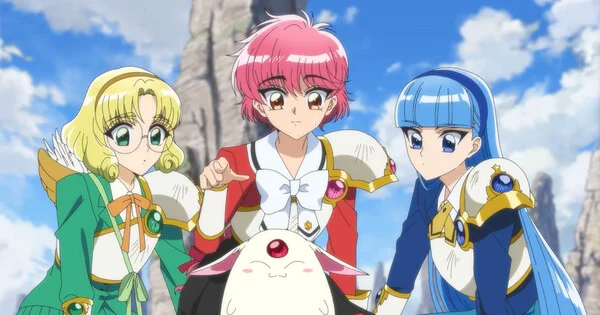

I noted in the Worst of Summer that we’re all a bit sick of disappointing classic shojo adaptations. We’re also gluttons for punishment. This season has two highly anticipated adaptations: the remake of CLAMP‘s beloved Magic Knight Rayearth and Kyoko Hikawa’s From Far Away, both “isekai” before the term was tied to an entire genre. In fact, quite a lot of comebacks made it onto the team’s list this season.

© Toshiaki Iwashiro,Shueisha/PSYREN Secret Society
Even though we seem to be in an age where nearly any old manga property can experience a revival through an anime if it has enough of a following (still waiting on that Spirit Circle anime), I still never really imagined Psyren would be one of them.
The manga originally debuted towards the very tail end of the 2000s in Weekly Shonen Jump, and while it performed well enough within the magazine to last three years, it didn’t gain enough traction to get an anime within that time, eventually leading to it getting unceremoniously axed, with its ending being extremely rushed, much to my disappointment when I was reading it back in high school. Even though there’s been no shortage of people asking for an anime adaptation ever since, that always seemed like a bit of a pipe dream, so I was pretty happily surprised when REMOW revealed they were producing one at Studio Satelight.
The series itself serves as a cross between a battle shonen and a sci-fi mystery, as it centers around a teenager named Ageha, who, in an attempt to find his missing classmate Sakurako, ends up getting wrapped up in a mysterious game involving a post-apocalyptic world that can grant people psychic powers and is filled with dangerous monstrosities. While that might sound like it would give it a lot of overlap with a series like Gantz, Psyren is generally more interested in being a straightforward battle shonen with an air of mystery to it, as Ageha and Sakurako work to uncover the truth behind Psyren‘s existence.
Although its battles are never quite as flashy as the heights of its contemporaries like Naruto and Bleach, it still manages to showcase enough creativity with all the psychic powers on display to be a fun time, and as a mystery, it’s good at leaving a steady trail of breadcrumbs that keep it consistently engaging, with both elements working together to give the story a constant sense of momentum. As fun as the manga can be, though, I do worry about the potential quality of this adaptation, as Studio Satelight‘s work can sometimes be a bit of a coin flip between getting something solid or something extremely messy, and while the early premiere at Anime NYC did show some promise in terms of distinguishing itself as an adaptation, it also had a couple of noticeable animation shortcuts that have me worried about how consistent the rest of the show will look. Still, even if this doesn’t end up being the most ideal version of what we could have gotten, it’s still nice to see this series get a second chance at life, so however it pans out, I’m eager to see what this long-awaited adaptation brings to the table.
—Jairus Taylor

© グッドスマイルカンパニー・ライデンフィルム/DANDIVINE Project
And there are people who will tell you mecha is a dead genre.
Never mind that a series like Bang Brave Bravern still resonates with how it exploded onto the scene, or how classics like Magic Knight Rayearth are getting new anime this very season. The fact is, the fine art of putting together a big cool cartoon to sell smaller, also cool plastic robots is still alive and well—Good Smile Company targets the grownups with actual disposable income, and this fall drops Jyuо̄ Mujin Dandivine. That’s “Beast King War God Dandivine” if you’re nasty.
I’m well known as something of a robot guy, so I shouldn’t have to explain why the prospect of a new mecha series based around toyetic robots is compelling, but I’ll try. That toyetic hook of Dandivine already sets it apart, acknowledging the action-figure sponsorship that drives such shows. What happens when twenty years later, a robot toy manufacturer needs a sales boost for its iconic robot? Call down the mysterious attackers again to give the robot something else to do! Never mind that a colorful, combining “super robot” from the “real world” throws all traditional mecha definitions into disorder.
But that inherent weirdness highlights the real reason I’m here: Toshiki Inoue. Again, I shouldn’t have to explain if you know me, but Inoue has written his fair share of anime, and he really made his name on tokusatsu franchises, including Kamen Rider and Super Sentai. And by “made his name,” I mean “got a reputation for being goddamned unhinged.” Kamen Rider 555 and Kabuto are wild rides filled with vicious betrayals and sudden cooking contest detours. His most recent magnum opus was 2022’s Avataro Sentai Donbrothers , where he seemingly got carte blanche to screw around with the conventions of Toei‘s iconic color-coded superhero team. Donbrothers is a riot of oblique virtual-world systems, vengeful wifeguys in the form of a pink bird man and a CGI dog, Scrimblo, and an utter refusal to properly incorporate any of the toys that Bandai assigned to him. You see why I’m excited to see this guy mix it up with Good Smile’s new toy robot show.
Plus, said toy robot does look really, really cool. GOD BRAVE STUDIO designed the Dandivine, and they’ve been helping Good Smile for a while with their high-end Brave toys, but they’ve also made a name for themselves with a South Korean line called Metal Cardbot. These clicky converting collectibles have been muscling in on the Transformers toy territory, really showing off GOD BRAVE STUDIO‘s propensity for making designs that feel and function like fun toys, but also work as strong, characterful cartoon designs. That’s already visible in the Dandivine itself, proudly wielding elements like a sword made out of a unicorn.
All those components gattai together like a combining mecha to create something that was guaranteed to catch my eye. Miraculously, Dandivine isn’t even the only new mecha anime debuting this season. But its announcement felt the loudest, and Inoue’s involvement virtually assures me that no matter what it is, it certainly won’t be boring.
—Christopher Farris
8. From Far Away

© ひかわきょうこ・白泉社/彼方から製作委員会
Am I setting myself up for disappointment? From Far Away is the second classic 90s shoujo manga to finally get an anime adaptation, and its immediate predecessor, Red River…didn’t turn out well. And yes, some things give me pause based on the trailers, including the sillier one: Noriko’s skirt hem was raised from mid-calf to above her knees. But From Far Away is a fundamentally different story about a very different heroine, and while I may be foolish for thinking so, I have hopes that this will make a smoother transition.
Kyoko Hikawa’s story is, for my money, the best isekai has to offer. High school third-year Noriko is caught up in an explosion (already referencing another good isekai tale, Rumiko Takahashi‘s Fire Tripper) and sent hurtling across worlds to land in a strange new one. She’s found in the Sea of Trees by Izark, a young warrior with a painful secret, and he quickly realizes that she’s The Awakening, a being foretold by legend. But…for a supposedly powerful force, Noriko’s just a lost kid. She can’t speak the language and has to learn it from scratch; she doesn’t know how to properly wear local clothes, and her only true power seems to be her willingness to learn and her basic kindness. She and Izark grow together, learning to love and trust each other and coming to realize that the world may not be such a terrible place if they’re together – and that even prophecies can be flipped on their heads to create better outcomes.
The plot is an appealing blend of romance, action, and political intrigue. Izark and Noriko are wanted by various bad government actors, and their story follows them as they go on the run, gather allies, and figure out how to make sure they get their happy ending. It’s ultimately a story of hope and learning that nothing is set in stone, and I think that’s just as appealing now as it was in 1991 – maybe even more so. From Far Away is a story with a warm, beating heart, and if it also has roughly 900 named characters, it never forgets who the real heroes are…and sometimes, they don’t look like you expect them to. It’s a relic from the days when sword-and-sorcery fantasy was king and timeless in the best ways of classic literature.
Please don’t screw this one up. I love the Red River manga, but From Far Away is on my list of favorite books regardless of genre or format. It deserves the best, and I hope it gets it.
—Rebecca Silverman

© 安田佳澄/小学館/「フールナイト」製作委員会
My first exposure to Fool Night‘s whole deal happened in a meeting recently where I presented the upcoming slate of quarterly airing anime to my boss, and he remarked that he had actually read the Fool Night manga (a rarity for him as he’s more of a cinema guy) and that it was very art house. Having dug into the Fool Night franchise via the wiki, trailers, and forums since then, I can confirm that Fool Night is art house as hell and that I’m eager to experience Sunrise and Shaft’s joint take on the property.
Set in a dystopian world where climate change has functionally blocked out the sun, the world is ravaged by a shortage of plant matter, which leads to a variety of scarcities, including depleting oxygen levels. Rather than address the underlying issues that led to this ecological disaster, the more cost-effective solution was to develop a procedure that would transform human beings into plants through a process known as “Transfloration,” and the human-plant hybrids are dubbed “Spiriflor.” Having little to no prospects in life and needing the money offered as compensation for the procedure to care for his ill and abusive mother, Toshiro Kamiya undergoes transfloration and develops the unexpected ability to communicate with plants. Using this ability, he works as a kind of detective, connecting still-human people with friends and family members who underwent the transfloration process and are now, functionally, dead to the world.
Even from just that paragraph-long description, it should be clear just how DENSE Fool Night is with socio-political themes and commentary, and I cannot wait to dissect each episode like I’m doing a close reading for a college-level English course. To begin, there are so many gendered feelings baked into the idea of a young man being so dissatisfied with his life that he would rather become “a beautiful flower.” Furthermore, this premise engages with the pervasive social idea of a noble suicide that’s used to justify suicidal ideation and diminish instances of the tragedy. Of course, the world of Fool Night being so overtly shaped by the late-stage capitalism death spiral also gives me hope that this work will have plenty of hard political commentary to bolster its social commentary.
While I understand why so many people treat anime as escapism, I live for works that wear their politics and values on their sleeve, and I’m fully prepared for every episode of Fool Night to be a gut punch. The fact that other people across the world are engaging with the same kind of distinctly 21st-century dread that I am already makes Fool Night feel like a unifying experience, but I’m so excited for this anime to air and bond with other people who are into it. Very rarely do I run into people who engage with the world through the same lens and with the same mentalities as I do, and I think Fool Night is going to bring a lot of people I would like to know out of the woodwork.
—Lucas DeRuyter

© 高橋留美子・小学館/「らんま1/2」製作委員会
As I get older, I really do try to avoid falling into the trap of blindly glorifying all of the art and media that came out during the peak years of my salad days, since that’s a fallacy that literally every generation of people has fallen victim to since the beginning of time. Of course we have awesome, creative, boundary-pushing new material getting made every single day, and I dare say these kids are going to be alright with all their Digital Circuses and their Backrooms and whatnot. That said, I am professionally obligated to give you my honest opinion, and as I sit here watching the trailer for the new season of MAPPA‘s take on Ranma ½, all I can do is fall to my knees and cry out: “Peak! GOATed! Rumiko Takahashi is mogging all of these Gen Alpha LARPers without breaking a sweat! Ranma ½ ate! It is eatmaxxing! No cap! Six seven!”
I work with teenagers all the time, and they tell me I always use their slang perfectly, so please don’t bother correcting me in the comments. The point is, Rumiko Takashi rules, Ranma ½ is one of the greatest masterpieces ever produced by an industry legend, and MAPPA has continued to deliver a vibrant, energetic, and exceedingly entertaining adaptation of her work. What I have loved most about Ranma ½‘s new series is how its glossy production and sharp pacing make the story of Ranma, Akane, and all the other freaks who orbit the Tendo family feel so modern. Call me crazy, but aside from some admittedly dated jokes about how Women Be Shopping and Men Be Degenerate Perverts, I feel like most anyone can sit down and get a kick out of Rumiko Takahashi‘s classic rom-com stylings. Sure, Happosai still kind of sucks, but don’t think about him! Think about Ranma, and Akane, and Ukyo, and Shampoo, instead. They’re all great.
So far as this new season goes, what has me the most excited is how much fun you can tell that the crew at MAPPA is having with the impending battle sequences between Ryoga and Ranma, even just by looking at the trailers. Ranma 1/2 has always had fun playing with how its absurd comedy premise mixes with the tropes of classic wuxia stories and martial-arts cinema, and that juxtaposition only gets funnier when MAPPA animates the ever-loving bejeesus out of the action cuts like this was some long-lost prequel to Jujutsu Kaisen. I can’t wait to see all of the wacky and wonderful places this third season takes us on the long, incredibly violent journey of getting these two kids to just admit they love each other and kiss, already.
—James Beckett

© 遠藤浅蜊・マルイノ/宝島社
My first reaction to learning this sequel existed was bewilderment. After all, the first season of Magical Girl Raising Project premiered almost exactly ten years ago, and I had not thought about it much in the interim. The series landed square in the middle of the post-Madoka wave of “dark” magical girl stories, in between shows like Selector Infected Wixoss, Magical Girl Site, and Magical Girl Spec-Ops Asuka. That wave has since diminished to a ripple, so I couldn’t imagine much popular demand for a follow-up to a 6-or-7 out of 10 anime with no broader legacy to speak of. And don’t get me wrong—some of my favorite anime are 7/10 anime!
Absence, however, makes the heart grow fonder, and as I returned to my memories and screencaps from the first season, I found myself focusing more on its strengths. This was a show that had frustrated me; it had neither bored nor offended me. I actually liked most of the characters, and my main complaint was that I’d preferred to see them develop outside the context of a magical girl death game. One of the girls was, looking back on it, pretty blatantly trans. Another girl was homeless. Two of them were college-age lesbian lovers. I think there’s serious promise in making magical girls out of marginalized communities, and while that may not have been Magical Girl Raising Project‘s main ambition, it reveals a thoughtfulness behind its construction. Plus, one of the girls was named Hardgore Alice. That counts for something.
This new season, subtitled Restart, should adapt the next pair of light novel volumes and will feature a new cast (which is unsurprising, given the first arc’s body count). The gimmick this time is that the next slate of magical girls on the chopping block find themselves trapped in a video game. That’s not exactly uncharted territory, but it is a sign that this arc won’t just be a retread of the first. However, there will be some continuity in the form of returning director Hiroyuki Hashimoto alongside writer Takao Yoshioka.
Now that we’re quite far removed from the post-Madoka zeitgeist, my heart might be more open to having fun with a gaggle of magical girls killing each other. I need to unwind with a trashy and bloody spectacle every now and then. On the other hand, with Walpurgisnacht Rising finally in theaters, we might be on the precipice of a new wave of magical massacres. Only time will tell. In the meantime, though, I’ll be giving Magical Girl Raising Project Restart a fair shake.
—Sylvia Jones

© CD PROJEKT S.A.
The cyberpunk genre is finally having its moment of mainstream popularity. William Gibson‘s Sprawl trilogy is finally coming to TV screens next year courtesy of Apple (please please please don’t screw this up), Science SARU just gave us an incredible adaptation of Masamune Shirow‘s The Ghost in the Shell, and CD PROJEKT RED‘s 2020 Cyberpunk 2077 video game overcame a rocky launch to become a beloved, successful sci-fi RPG. Not many Western video games make the transition to anime, but in 2022 Studio Trigger took the Polish studio’s game as an inspiration for one of the very best cyberpunk anime ever made, putting it up there with other genre classics like Bubblegum Crisis and Cyber City Oedo 808.
Cyberpunk: Edgerunners was one of those anime that broke out of the anime subculture ghetto and attracted a wide range of viewers. I have friends and relatives who have never watched any other anime in their lives, yet they still rave about how great Edgerunners was. What really helped was that it didn’t require knowledge of the video game or the tabletop RPG it was based on. It was a supremely satisfying, flashy, entertaining, and self-contained 10-episode blast of concentrated dark sci-fi awesomeness with a strong emotional core. I swear, I can’t listen to the signature song I Really Wanna Stay at Your House by Rosa Walton anymore without breaking into tears. It’s a really special anime that can maintain such a powerful emotional effect in a viewer even years
after watching it.
Therefore, I am unreasonably excited at the prospect of a second season from the studio. It’s not directed by Hiroyuki Imaishi this time; instead, Kai Ikarashi will helm it in his first independent directing gig. Previously, he worked as animation director on many of Trigger‘s other shows, so we’re likely in good hands. With a script from two of the previous season’s writers, Bartosz Sztybor and Masahiko Otsuka, I fully expect to be crying into my Johnny Silverhand cocktail before the series is up.
It’s an all-new cast this time, as should probably be obvious from the conclusion of the first season. I expect it to be standalone too, so viewers can probably start from here, but I’d advise that, if you haven’t seen the first season, you go watch it anyway. Cyberpunk: Edgerunners is one of Trigger‘s very best works, and I hope the second season matches (or even exceeds) the first.
—Kevin Cormack

© 日向夏・イマジカインフォス/「薬屋のひとりごと」製作委員会
I’m an anime-only viewer for The Apothecary Diaries, so I don’t know what’s coming next beyond what’s in the trailer. Here’s what I do know: for 48 episodes, this show has been one of the most consistently well-written and intelligent things to grace my television screen in the past several years. The stories have progressed from simple medical mysteries to affecting the women of the inner court, even growing to encompass conspiracies that threaten to overtake the entire government. Maomao has grumbled her way into importance at her job the whole time, and the mix of her curmudgeonly nature, inability to stop trying to help others, and unconventional obsessions makes her an engaging protagonist worth following.
Next season’s trailer promises to expand that scope: an albino sorceress, a famine, a plague of locusts. Such things go well beyond the previous story arcs’ focus on Maomao reacting to palace culture and intrigue between noble families. Everyone in the nation is affected. One of the longtime throughlines of The Apothecary Diaries has been how nobility tends to be careless about the lives of commoners, and I’m sure that will carry through to this new arc. Despite Maomao being the protagonist, I’m most interested in how Jinshi, who has grown so much since he first wandered his way into Maomao’s life, will respond to this threat against his nation.
Locust swarms and famine have been devastating problems that countries have had to deal with worldwide as long as civilization has existed. While The Apothecary Diaries doesn’t take place in actual history, it builds on real-life systems and events. I’m curious how they’ll incorporate such large-scale historical occurrences into the story, rather than smaller things like elaborate social systems, etiquette, and intimate stories about family connections that just happen to involve royal personages. Plenty of records inspire the story and how it affects the characters, both personally and within the larger world.
—Caitlin Moore
2. Magic Knight Rayearth

© CLAMP・ST/講談社・TMS・テレビ朝日
I won’t lie: this remake of Magic Knight Rayearth comes as a bit of a wildcard for me, since I’m not the biggest Clampaholic in the world. Of all the big-name remakes I’ve been curious about, Rayearth feels a bit more out of pocket to me. I get remaking Ghost in the Shell, because who hasn’t seen it by now? I get remaking Urusei Yatsura and Ranma, because how are you going to say no to a manga giant like Rumiko Takahashi, let alone two of her biggest series? A retro Clamp manga might not seem too surprising to you, but as a guy whose friend’s only reference to Clamp is not only Card Captor Sakura, but actually its English dub (which I am reminded of every time he screams the English theme song into my ear during his lunch break), trust me on this. In my world, something like remaking Rayearth is more of an insane pull than you can ever imagine. It would be like if Nintendo tried to remake Zelda II: Adventure of Link. Definitely not small potatoes, but also out of all things?
My take on Rayearth isn’t the most galaxy-brained. I do, however, have enough brain cells to realize the idea of breathing new life into Rayearth‘s manga once more wasn’t just a wild-haired idea. First, Clamp’s artwork is still as good as you remember. That goes without saying. Secondly, and more importantly, as someone who spent a good chunk of last year playing the first two Final Fantasy games again, I understand that there’s still that yearning for 90’s RPG-styled aesthetic that is very, very, very much there in the original Rayearth manga. In fact, reading the manga in 2026 makes me see similarities between it and something like Secret of Mana; Magical weapons that get bigger and better as the adventure goes on! Fire spirits, water spirits, and wind spirits, oh my! A trio of protagonists off to save the world instead of becoming more powerful!
And there’s that big, obvious difference of wanting to go home instead of remaining stuck in another world. In a post-isekai boom where so many different flavors of Kirito wander through towns and dungeons whose modernity deprives them of any sense of panache, it’s good to see there’s enough of a modern audience still wanting to break free from that, even if it’s taking a conservative turn back into the sensual, mystical realms of fantasy anime’s past.
(While we’re on the subject of mecha-fantasy fusions from the ’90s, one more big dumb, obvious question: Escaflowne remake when, though?)
—Jeremy Tauber

© 荒木飛呂彦&LUCKY LAND COMMUNICATIONS/集英社・ジョジョの奇妙な冒険THE ANIMATION PROJECT
Are you ready to get back on the horse? After a bombastic first episode earlier this year that ANN’s own Lucas DuRuyter called, “incredible by any measure,” the wait for more Steel Ball Run (SBR) feels like it’s been going on five-ever, even if in reality it’s only been about six months. Nonetheless, at long last, the second stage is finally upon us, and it will also be 11 episodes released weekly. Oh, weekly Jojo’s, my beloved, how we all missed you—it’s been far, far, far too long. But at the risk of beating a dead horse, I’ll stop myself there before I derail this into a conversation about the weekly releases of previous JJBA parts versus the batch releases of Stone Ocean. Bottom line: Weekly releases are back! HUZZAH!
With the titular Steel Ball Run race having kicked off, this upcoming stage will see Gyro and Johnny make their way through the race, encountering no shortage of trouble horsing around along the way, as well as learning more about the rhyme and reason behind the race in the first place—could it perhaps be a Trojan horse for something even bigger than this transcontinental race? Indeed, the first few crumbs of what will ultimately become the central story will be dropped, and more than anything, this stretch of the story will set the pacing for the chaos to come later down the literal and figurative road.
Even in just that first episode, it’s not hard to see what makes SBR such a widely beloved part of JJBA. And given how much the workhorses at david production have knocked their JJBA adaptations out of the park so far, I have no doubt it’ll continue to do so here. It feels incorrect to say this horse racing anime is moving at “full steam ahead,” so instead I’ll say that far from being a dark horse, this is about as obvious a standout as there could be for the season of anime ahead.
—Kennedy
>

© 理不尽な孫の手/MFブックス/「無職転生Ⅲ」製作委員会
At the end of last season, it truly felt like we had reached the end of the beginning. Rudeus had done all he set out to do—reunited his family, healed his emotional wounds, and found true love. But with this episode, after a cour of tying up loose ends, it feels like we’ve finally hit the beginning of the end.
After 62 episodes and an OVA, we finally understand what’s going on. The Man-God can see the future and knows that Rudeus’ descendants will eventually team up with Orsted and kill him. Numerous times, he’s tried to kill Rudeus and Roxy (and I assume Sylphie and Eris as well).
However, he’s faced two issues. One is that Rudeus is a wild card (probably due to his isekai nature) and can’t be controlled directly. The other is that those with strong fates important to the world are resistant to the Man-God’s meddling. So while he still tried to kill Rudeus and those who would become his family, it was always unlikely to succeed. But there is a loophole to this. When a woman is pregnant—when both her life and the life within her are connected—fate’s strength is greatly diminished.
This leads us into the unspoken threat of this episode. For the next 9 months (assuming that’s how long it takes for Demons), Roxy can be killed. And while he failed with the rat ploy, there’s nothing to stop the Man-God from using any of his agents to attack Rudeus again and again in different ways. The Man-God only needs to succeed once, and he’s won.
However, if the Man-God were to go all out and lose, it would almost certainly cause Rudeus to be his lifelong enemy—ensuring that those fated to kill him would be very much on board with that idea. This is why the Man-God suggests another possibility: have Rudeus kill Orsted. If Orsted is dead, then the threat to the Man-God is ended just as if Roxy or her child were dead. Moreover, no matter how the fight turns out, the Man-God wins. Either Orsted dies or Rudeus does.
Rudeus, of course, agrees to this. He doesn’t particularly like Orsted and would instantly choose the life of his family over the swordsman’s. But beyond that, agreeing to the Man-God’s plan grants Rudeus what he needs most: time. Every day he’s working on hunting down Orsted is another day that Roxy is safe—another day that they can all use to prepare in case things go pear-shaped. Rudeus is basically running out the clock even as he prepares for a likely suicide mission—which brings us to Eris.
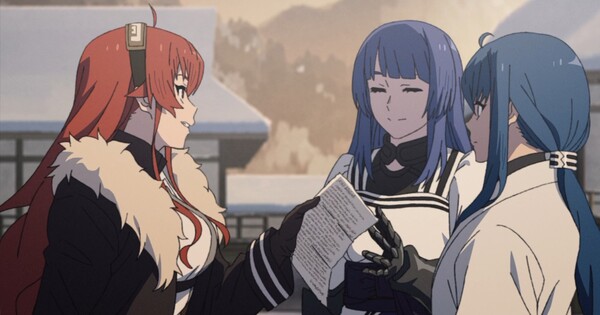
While Rudeus had planned on reaching out to Eris regardless—had even written the first page of his letter—he adds the second page to hedge his bets. Rudeus wants as much protection at home as possible—wants everyone possible to be there in case the Man-God tries at Roxy. However, he needs help in his fight against Orsted, and so he cajoles Eris into coming to help him—trusting in his future self’s interpretation of Eris and her desires.
And this scene is actually the best part of the episode. Through both the letter and her friend’s reactions to it, Eris can see three things: 1) that she messed up by leaving as she did; 2) that, while not the ideal she had hoped for, there is still a place for her in his life and in his heart; and 3) that he needs her.
This final part truly motivates her. He recognizes her hard work—that all the time she has spent training has been worth it. She has succeeded in what she set out to do—to be strong enough to stand by Rudeus’ side. And despite the friends and lovers Rudeus has gained in her absence, the person he has chosen to head into danger with is her. The fact that Orsted, the target of her martial obsession, is the man they’re going to fight is just the cherry on top of the whole sundae.
And with that, we end this first half of Mushoku Tensei III with Rudeus and Eris’ rematch with Orsted looming on the horizon. Of course, before we get there, we’ll no doubt have conversations with a loyalty-torn Nanahoshi, Eris meeting the other wives, and numerous unforeseen issues. But to be frank, this is the most excited I’ve ever been for Mushoku Tensei—and the next cour can’t come soon enough.
Rating:
Mushoku Tensei: Jobless Reincarnation III is currently streaming on
Crunchyroll.
The views and opinions expressed in this article are solely those of the author(s) and do not necessarily represent the views of Anime News Network, its employees, owners, or sponsors.
>


©CLAMP, ST/KODANSHA, TMS, TV-Asahi
Over 30 years since the original anime premiered in Japan, Magic Knight Rayearth is returning with an all-new adaptation to entice fans new and old this October. The new series, animated at Sung Hoo Park‘s E&H production and in collaboration with the original anime’s producer TMS Entertainment, is directed by Yui Miura, who hopes to tap into the charm that can only be found in classic anime series.
In this interview, we discuss the current trend of adapting older series featuring the isekai plot device (before the term was widely coined) and how older series focus on growth over wish fulfillment.
Magic Knight Rayearth is a beloved series in Japan, the United States, and abroad. What first attracted you to working on this project?
Yui Miura: As we were optimizing our production structure, the timing and all the necessary circumstances aligned almost miraculously. I was fortunate to be approached about this project at exactly the right moment, and we’re truly grateful for the opportunity to be part of it.
While “isekai” stories have become increasingly popular in the last decade, even in the ’90s, there were many stories where female protagonists get transported to a magical world. What do you think makes Magic Knight Rayearth different from modern isekai? What makes these female-led stories interesting for modern audiences?

MIURA: The biggest difference is that Magic Knight Rayearth is a story about growth and the sacrifices that come with it, rather than one about cheat abilities.
In many modern isekai series, protagonists either begin with—or quickly obtain— cheat abilities that allow them to effortlessly overwhelm their opponents. Much of the appeal lies in the wish-fulfillment of watching an unstoppable hero dominate every battle.
By contrast, Hikaru, Umi, and Fū are simply three ordinary junior high school girls who are suddenly summoned to the isekai (fantasy) world of Cefiro. They take up swords, suffer injuries, shed tears, and gradually awaken both their magical powers and inner strength as they overcome their fears and insecurities. This journey of personal growth is one of the defining charms of 1990s isekai fantasy.
Even today, many stories aimed at female audiences center on romance. In the first arc of Magic Knight Rayearth, however, what drives Hikaru, Umi, and Fū is not romantic feelings for boys, but the powerful bond they share and their promise to make it back to Tokyo together. Their genuine sisterhood—built on mutual respect and supporting one another through their weaknesses—is something I believe modern audiences who appreciate independent relationships can deeply relate to.
In the latter half of the story, they don’t simply carry out the mission they’ve been given. They begin questioning what principles should govern this world and ultimately make the choice that will determine its fate. Rather than waiting for someone else to save them, they take control of their own destiny. I believe this image of strong women choosing their own path embodies exactly the kind of empowerment that resonates with today’s anime fans.
Do you have any history with the original Magic Knight Rayearth anime or manga? Are there any CLAMP stories that are your favorite?
MIURA: It’s embarrassing to admit, but until I was approached about this project, I had never read any of CLAMP‘s works. Magic Knight Rayearth was my first introduction to their work.
When it came time to revisit the character designs with Satomi Watabe-san, what was the approach? Did you want to maintain a retro, shojo-feel, or update certain elements for this new version?
MIURA: Keeping faithful to the original manga as our top priority, I asked her to create strong visuals that would still resonate with modern audiences.
Is there a moment from the manga that you were most looking forward to adapting for the anime series?
MIURA: The ending of the first arc. I hope you’ll look forward to it!
When it came time to cast Hikaru, Umi, and Fuu, what kind of voice were you looking for in each character, and what made Sakura-san, Takahashi-san, and Okubo-san the right fit for their roles?
MIURA: When casting, we were careful to be as faithful as possible to the characters as they were portrayed in the original manga. Interestingly, the entire staff naturally found themselves saying, “This is the one!” for each role.
Can fans of the series expect the new anime to follow the previous anime’s story, the manga’s story, or something entirely different?
MIURA: We based the story on the original manga while incorporating additional episodes that further enrich the audience’s understanding of the original work.
Were you able to use any new technology techniques for this new series’ special effects animation (such as magic spells) and the Legendary Rune Gods?
MIURA: We’re using VFX techniques that simply weren’t possible back in the 1990s. At the same time, we’ve been careful to preserve the atmosphere of the original work.
What’s one message or feeling you hope viewers take away from this version of Magic Knight Rayearth?
MIURA: Many modern isekai stories are set in worlds that closely resemble RPGs, where game-like systems—such as status screens and guilds—provide the framework that keeps the story moving.
At first glance, Magic Knight Rayearth also seems to follow the classic RPG formula, with Clef telling the protagonists to become Magic Knights and save the world. However, at the heart of the story—particularly in the conclusion of the first arc—the audience is confronted with a profoundly bitter truth: the cruelty of fighting to preserve the very system that governs the world. I hope viewers will experience and appreciate the depth of this almost mythic drama.
>

Insuretech Outmarket raises $34.5M just months after prior round

‘Icebreaker’ Netflix Series Casts Daisy Jelley & Connor Simos As Leads

The Most Anticipated Anime of Fall 2026
-

 movies4 months ago
Search For Canadian TV Actor Stewart McLean Now Homicide Investigation
-

 Fashion9 years ago
These ’90s fashion trends are making a comeback in 2017
-
Fashion9 years ago
According to Dior Couture, this taboo fashion accessory is back
-
Fashion9 years ago
Model Jocelyn Chew’s Instagram is the best vacation you’ve ever had
-
Fashion9 years ago
Emily Ratajkowski channels back-to-school style
-
Fashion9 years ago
9 Celebrities who have spoken out about being photoshopped
-

 Anime4 months ago
Rurouni Kenshin: Hokkaido Arc Manga Takes 1-Issue Break – News
-

 Anime3 months ago
HIDIVE to Stream English Dubs for The World Is Dancing, The Forsaken Saintess and Her Foodie Roadtrip in Another World, The Dangers in My Heart: The Movie Anime – News