
Sandra Hüller in Rose.
The Match Factory/Courtesy Everett Collection


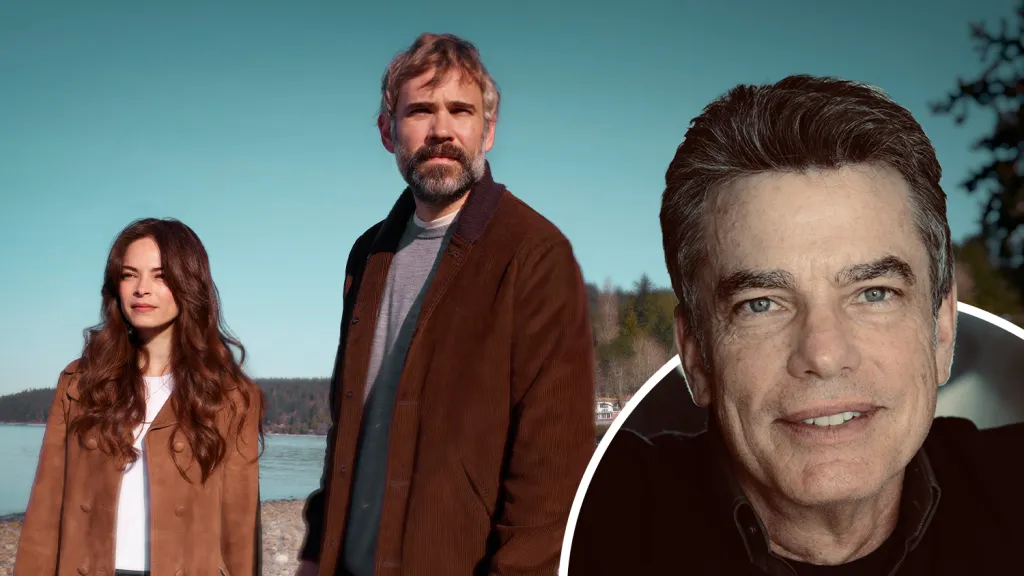
EXCLUSIVE: Fox is staying in the cozy crime space with a Season 3 renewal for Murder in a Small Town. In the new 10-episode installment, returning leads Rossif Sutherland and Kristin Kreuk will be joined by Peter Gallagher (The O.C., Grace and Frankie) who has been tapped as a series regular.
While Murder In a Small Town has been dormant after wrapping its second season in early December, its renewal for another limited run had been expected as the mystery drama has emerged as a reliable utility player for Fox, a sturdy performer at a very appealing price point.
Season 2 of Murder In a Small Town improved on Season 1’s 7-day multiplatform audience by +11%, and saw series highs in both 7-day total multiplatform and streaming with solid showing in Hulu and a rare year-to-year linear viewership increase.
Additionally, the Canadian-made series, produced by Sepia Films in association with Fox Entertainment and Future Shack Entertainment, is made under a lower-cost production model, falling under Fox’s cost-effective international content strategy.
Based on the nine-book series by L.R. Wright, Murder In a Small Town follows Karl Alberg (Sutherland), who moves to a quiet, coastal town to soothe a psyche that has been battered by big-city police work and starts a relationship with the local librarian Cassandra (Kreuk).
In a season-long arc, Gallagher will play Rod Finlayson, a charismatic, uber-independent, capable yet unreliable figure, whose arrival at the Gibsons’ marina on his beloved boat sets up a sequence of upheavals that Alberg and Cassandra will have to grapple with.
Gallagher’s casting is part of a strategy Fox has employed on two of its dramas with a lighter, optimistic tone by bringing a big name each season as a new series regular with a one-year deal to keep viewers’ interest by adding a familiar face and fresh storylines.
Murder In a Small Town did it with Marcia Gay Harden in Season 2; Doc has done it with Felicity Huffman in Season 2 and Blair Underwood in the upcoming third season.
“We love bringing this cozy and delightful mystery to Fox fans, and we’re thrilled Murder in a Small Town has continued to resonate with our audience,” said Brooke Bowman, EVP of Drama Programming & Development, Fox Television Network. “We look forward to continuing our collaboration with Sepia Films and Future Shack on Season 3, alongside our exceptional cast led by Rossif Sutherland and Kristin Kreuk and soon to include the incomparable talent of Peter Gallagher as their newest adversary.”
Murder in a Small Town is executive produced by Ian Weir, Amanda Tapping, Morris Ruskin and Sharon Wisnia (Mojo Global Arts), Tina Pehme and Kim Roberts (Sepia Films) and Jeff Wachtel and Jared Berenholz (Future Shack). Nick Orchard of Soapbox Productions, which originally optioned the book series, also serves as producer on the series.
Gallagher’s feature credits include American Beauty and Short Cuts for which he shared a SAG Award and Gloden Globe Award, respectively. His television work includes Grace and Frankie, Zoey’s Extraordinary Playlist, Grey’s Anatomy, Law & Order SVU, Togetherness, Covert Affairs, New Girl and The OC. He is repped by Gersh.
>
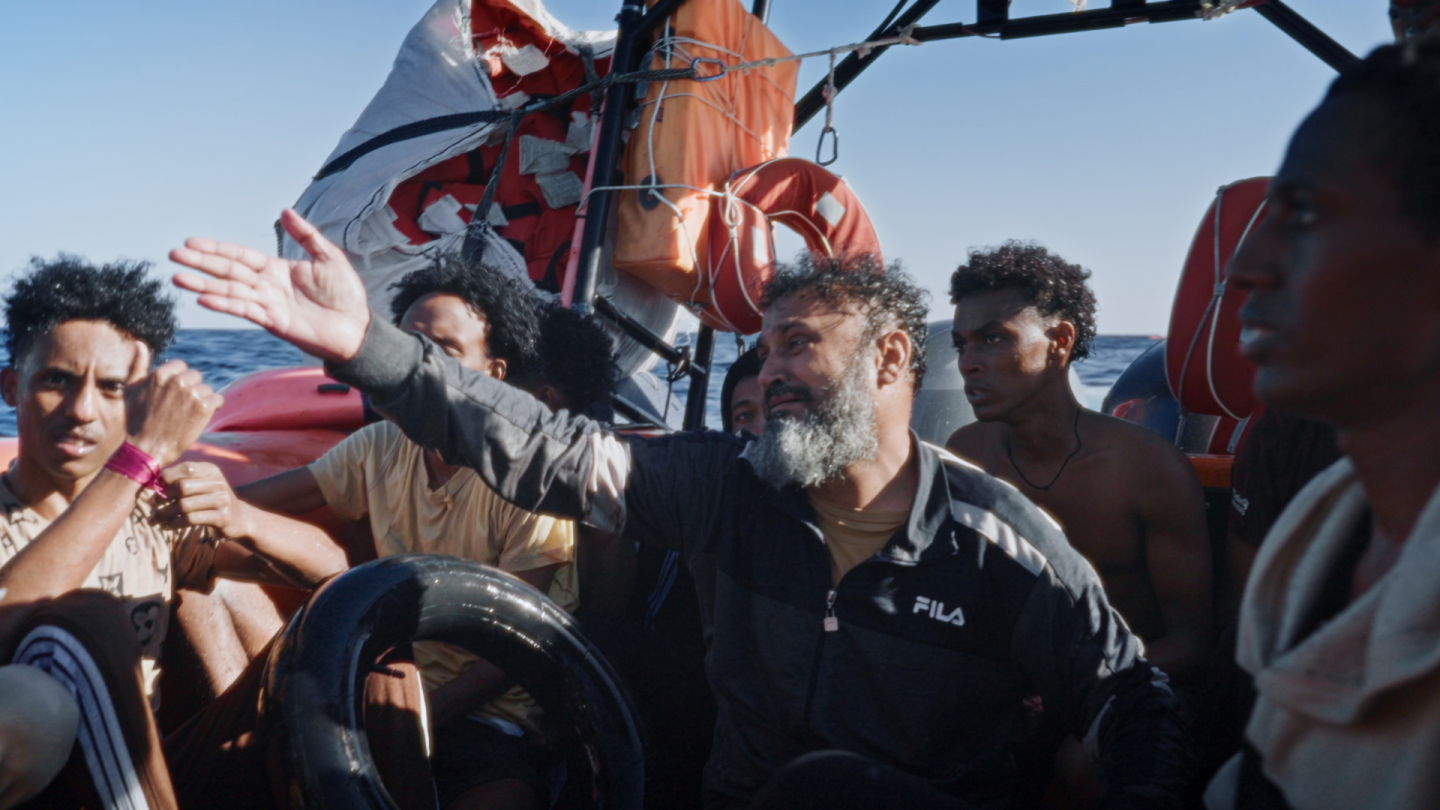
Italy’s Fandango Distribution has acquired Sine Plambech’s Rescue for all rights, including theatrical release, The Hollywood Reporter has learned.
Radio Télévision Suisse (RTS) has come on board as a broadcaster, joining pre-sale partners DR, VPRO, SVT and NRK, in deals negotiated by Vienna-based Autlook Filmsales, which handles worldwide sales on the film.
The agreements land as Plambech, serving as president of the documentary competition jury at the 22nd Zurich Film Festival, presents the European premiere of Rescue in the festival’s Now/Future section this week.
Rescue tells the story of Roro, a Yemeni mother of young children fighting to reunite her family after a Mediterranean rescue operation left her separated from her husband and held in captivity in Libya. Filmed with rare access aboard Doctors Without Borders’ Geo Barents, the documentary examines the fallout of Europe’s “externalization” of migration control to North African countries, tracing one woman’s fight for justice, dignity and the right to be seen amid a broken system.
The film is written by Plambech and Janus Metz, and produced by Elk Film’s Andreas Dalsgaard, Sofie Husum Johannesen, and Tereza Šimíková. Troels N’koya Jensen is the cinematographer, with editing by Per K. Kirkegaard and Marion Tuor and music by Uno Helmersson. Running 80 minutes, the film is in Arabic, English and French with English subtitles.
Rescue had its world premiere at TIFF and screens in Zurich’s Now/Future section, which this year features nine films exploring human rights, social conflict and sustainable development. Presented in collaboration with the EurAsia Heart Foundation and Dementia Research Switzerland, the section highlights figures committed to equality and social justice alongside perspectives on ecological, social and economic questions for the future.
Plambech is currently heading up the doc competition jury in Zurich. She is an award-winning director, anthropologist and senior researcher at the Danish Institute for International Studies (DIIS). Among other things, she directed Mission Trafficking (2010, in collaboration with Judith Lansade) and Becky’s Journey (2014), and provided the research foundation for From Thailand to Thy (2008) and From Thy to Thailand (2008), both directed by Janus Metz.
Her major breakthrough, Heartbound (2018), which built upon the two films from 2008, had its world premiere at TIFF, was selected for IDFA, and won the Golden Eye Award for best international documentary at the Zurich Film Festival that year.
>
If you pay any attention to the BBC, you will know Britain’s national broadcaster is on the horns of a funding crisis.
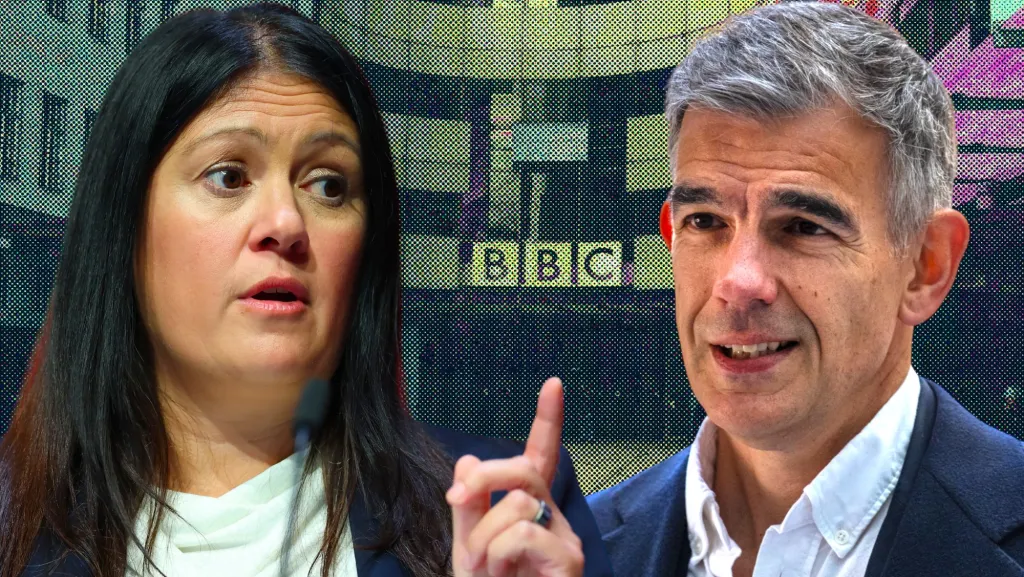
We know this because the BBC keeps telling us. Director-general Matt Brittin has told staff that the “cupboard is bare.” He has told Parliament that the BBC’s current funding model, the licence fee, is a “busted flush.” He told BBC viewers on Sunday that the corporation is in a “tight financial situation.”
And when the BBC is not telling us, it is showing us by cutting thousands of jobs, canceling shows, and threatening to close services. The drip-drip of cuts announcements is like a marketing campaign counting down to BBC doomsday.
Luckily for the BBC, there’s a potential solution: It’s called charter renewal. Every decade, the broadcaster sits down with the government and thrashes out its future, agreeing its funding for the years ahead, and making detailed decisions about its governance and operating guardrails.
And it just so happens that the BBC and the government are in the thick of charter renewal negotiations as you read this. Behind-closed-doors meetings between the BBC’s policy team and Department for Culture, Media and Sport (DCMS) officials are happening every week. Brittin is engaging regularly with Lisa Nandy, the culture secretary. There is lots of talking going on.
In public at least, the BBC and new Prime Minister Andy Burnham’s administration are singing from the same hymn sheet. The BBC wants to ensure that the 94% of Brits consuming the BBC are actually paying for it. Nandy told BBC News this month that she wants to put the corporation on a “sustainable footing.”
But here’s the rub: Neither the government nor the BBC have wholeheartedly set out their preferred way of achieving this ambition, leading to what Deadline hears is growing unease on both sides about a lack of vision for the BBC’s future.
We can rule out some things pretty confidently, including full ad or subscription funding. Never going to happen. What about a household levy? This would basically involve adding a tax to a utility or broadband bill. The BBC quite likes this idea, but ministers have explicitly ruled it out on the grounds that a new tax would be unpalatable (not to mention politically toxic) in a cost of living crisis.
This shrinking field of options increasingly points in the direction of tinkering with the £180 ($240) licence fee. There is an old joke in UK media that reviews of BBC funding nearly always result in the same conclusion: The licence fee is the least worst option.
But quite what this tinkering looks like, and whether it will achieve the shared aim of safeguarding the BBC, remains to be seen. The main idea under discussion is extending the licence fee to include non-live content on commercial streaming services.
What does that mean in practice? Well, at the moment, you can watch The Gentlemen on Netflix without being legally obliged to pay the licence fee. Ministers and the BBC are now discussing plans that could incriminate you for watching MobLand on Paramount+ without paying your cut to the BBC. Shows not made by Guy Ritchie would also be included.
Closing the streaming loophole may seem an elegant solution in theory, but it is complicated in reality. The BBC is struggling to enforce payment of the licence fee as it is, and the tools at its disposal, including pursuing convictions, are regressive, hitting lower-income households and women hardest. Netflix carrying pop-up ‘PAY YOUR LICENCE FEE’ notices (a genuine BBC suggestion) is not going to cut it.
To get around this, Nandy has floated the idea of charging consumers extra for their subscription streaming services. A BBC levy on your monthly Disney+ bill, if you like. She acknowledges, however, that this is unlikely to be popular with U.S. streamers, who are quick to make noises about pulling back their UK investment when they see barriers to growth.
Nandy has also spoken about allowing the BBC to top up its public funding with commercial revenue, including monetizing archive content or enabling the corporation to carry ads around its podcasts on platforms like Spotify or YouTube. But again, Nandy has been reluctant to fully embrace these proposals.
Ultimately, it will likely be the Treasury, rather than the DCMS, that calls the shots on funding questions, but time is running out to push through the thorny reforms under discussion.
It means that, with 15 months until the current BBC charter expires, the broadcaster has no clarity about its finances beyond next year. During the last round of charter negotiations, the BBC struck a funding deal with David Cameron’s government 18 months before its operating agreement ended. Nandy recently described that deal as “appalling,” but has declined to commit to an alternative.
Instead, we have a vacuum. Private talks and a paucity of public information. We may hear more from BBC boss Brittin at the Royal Television Society London Convention on Tuesday, but no minister will speak at the important industry gathering because of the Labour Party conference in Liverpool. And so the limbo lingers.
As one BBC watcher in Westminster puts it, both sides have been “as bad as each other” in their approach to the charter process. “As much as this government isn’t the best when it comes to making decisions about anything, it’s not clear to me what the BBC’s vision is for itself,” the lawmaker explains. “It’s a longstanding problem, and in the past the BBC usually stood to benefit, as the result would be status quo. The danger now is that the status quo just accelerates [the BBC’s] decline.”
Nandy has promised to publish the government’s position “soon.” For the BBC, which is gearing up to announce another gruelling round of cuts over the coming days, it can’t come soon enough.
>
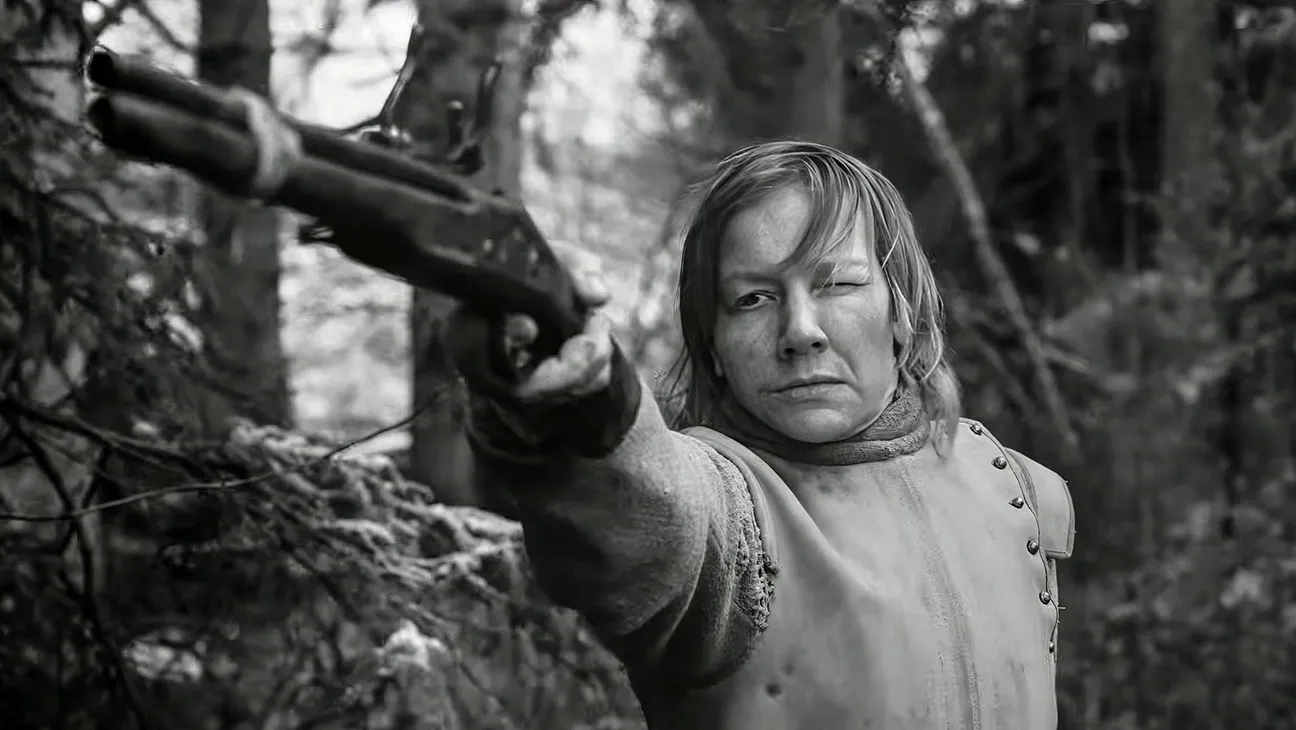
In their conversations leading up to the making of Rose, star Sandra Hüller and director Markus Schleinzer worked hard at fine-tuning their eponymous 17th-century hero. Hüller was to play a woman disguising herself as a male soldier in the aftermath of the Thirty Years’ War, ingratiating herself in a small Protestant village. She considered preparation routines like strength training, before setting them aside as anachronistic; she agonized over keeping things as believable as possible. “She was wondering, ‘What should I do with my voice — should I lower it?’” Schleinzer recalls. “Then we started to laugh because then we found out that my voice, as a man, is higher than her voice as a woman. It would be a weird thing for her, to lower her voice to pretend to be a man, for a male director who has a much higher voice than hers.”
The anecdote offers some amusing insight into the dynamic between Schleinzer and Hüller, which remained deeply playful and collaborative over the years it took to get Rose made. Yet it also speaks to the ultimate mastery of Hüller’s portrayal here, which never goes for the easy or obvious choice. In a career full of decorated performances, this ranks among Hüller’s very best, a moving, wondrously strange embodiment of a survivor in constant, subtle hiding. Below, you can watch the exclusive trailer for the film for a first look.
Rose premiered at the Berlin Film Festival in February, where Hüller won the Silver Bear for best lead performance. The star then went on to receive a Tribute Medallion in Telluride earlier this month, where the movie made its North American premiere; now, it’s making the rounds in New York. “Rose is another extraordinary showcase for her gifts and a master class in the art of acting with rigor, honesty, physicality and zero showiness,” wrote THR chief film critic David Rooney of Hüller in his review.
Schleinzer first had the idea for Rose on his birthday, when a friend told him that 250 years ago to the day, a woman had been executed for being caught living her life as a man. The Austrian filmmaker and former casting director, who came up under the legendary Michael Haneke, became obsessed with the story and researched hundreds of other examples, from decades before and after. He saw them speaking to the current climate of fear felt by various marginalized communities. “Every life, every day is a political act — so we cannot hide,” says Schleinzer, who is queer. “We have to change things if we want to have a better life as a community.”
Already at work on the script, Schleinzer then met Hüller on the set of the 2023 German black comedy Sisi & I — as her co-star. “I was really bad in this movie because I was so keen to watch Sandra firsthand — I already had started writing Rose and started stalking her, watching all the things she was ever in, even the tiny television spots she had at the beginning of her career.” He later sent her the script, which was written in prose, more akin to a novel; she jumped at the challenge.
Sandra Hüller in Rose.
The Match Factory/Courtesy Everett Collection
When asked what surprised him about Hüller’s approach to the role, Schleinzer points to a viral red-carpet clip of the star describing her process in straightforward terms — “I really have to disappoint you, it’s not so much: I learned the lines” — in noting that what results from that is anything but simple.
“I was a casting director for 17 years and I always had the feeling that my main job was to get people out of being afraid, of having fear or discomfort — there is this type of actor who loves to talk, because talking means that they do not have to act, they can just talk, talk, talk, talk,” the director says. “Sandra is the complete opposite. She is someone who gets easily bored, so no take is the same: ‘Now I’ll become a little more boyish,’ ‘Now I’m the soldier.’ I had the big problem of choosing how to build up a character for the audience, then — but this was surprising, to see such life come alive in front of your eyes on the set every day.”
Shot on location near the East German border with original sets, scouted by Schleinzer through hours of hiking, the film boasts a handmade quality in Gerald Kerkletz’s black-and-white cinematography, the exacting makeup and costume work and the dry humor that allows the absurdity of certain situations to breathe — even as Rose hurtles toward profound tragedy. “My intention was to make something more about these days we are in than just a museum piece with some nostalgic images,” Schleinzer says.
Rose premiered this past weekend to more raves at the New York Film Festival, and will be released in North American theaters by Mubi on Dec. 11. The project started shooting less than two weeks after the end of Hüller’s campaign for Anatomy of a Fall, which netted her a best-actress Oscar nomination — and shot in small increments over many months from there. This could be the project that brings her back to the Oscars, although her greatest competition may be herself: She’s also terrific as the lead of Cannes-winner Fatherland, also a Mubi release, and plays key supporting roles in Project Hail Mary and Digger.
But within the scope of Hüller’s filmography — really, any actor’s — Rose feels special. “Sandra said I should not threaten people, but I have watched her career for the last 20 years and I’ve seen so many prizes taken away from her,” Schleinzer says with a grin. “If she’s not going to be nominated for this one, I’m going berserk.”
Check out the official poster below.
Rose poster.
Mubi
>


Search For Canadian TV Actor Stewart McLean Now Homicide Investigation


These ’90s fashion trends are making a comeback in 2017
According to Dior Couture, this taboo fashion accessory is back
Model Jocelyn Chew’s Instagram is the best vacation you’ve ever had
Emily Ratajkowski channels back-to-school style
9 Celebrities who have spoken out about being photoshopped


Rurouni Kenshin: Hokkaido Arc Manga Takes 1-Issue Break – News


HIDIVE to Stream English Dubs for The World Is Dancing, The Forsaken Saintess and Her Foodie Roadtrip in Another World, The Dangers in My Heart: The Movie Anime – News