
Tech
Elon Musk’s lawsuit is putting OpenAI’s safety record under the microscope

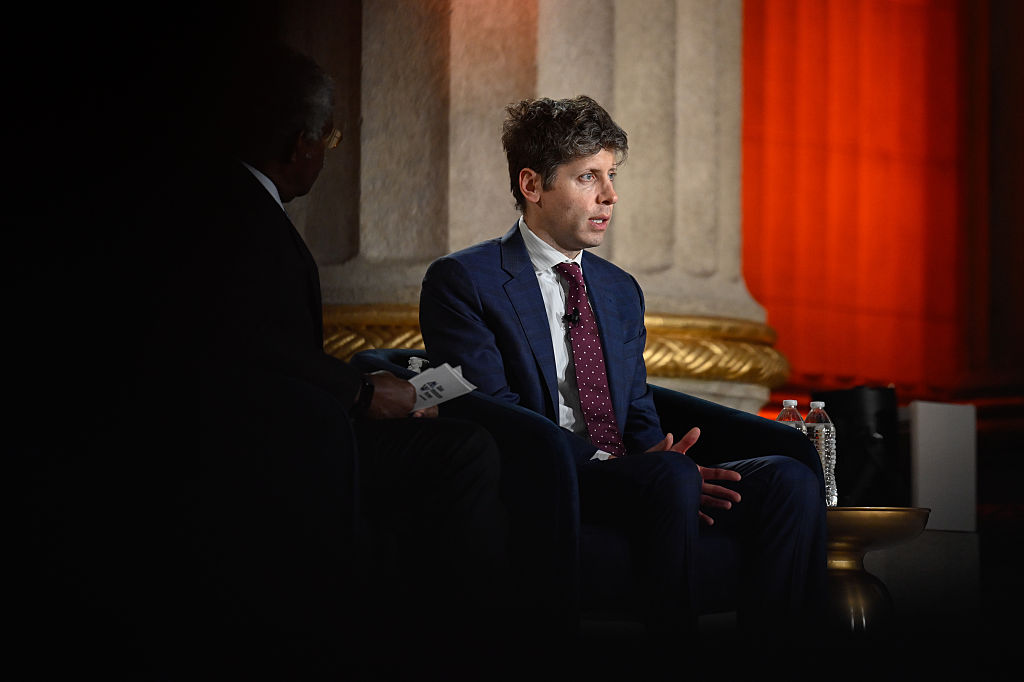
Elon Musk’s legal effort to dismantle OpenAI may hinge on how its for-profit subsidiary enhances or detracts from the frontier lab’s founding mission of ensuring that humanity benefits from artificial general intelligence.
On Thursday, a federal court in Oakland heard a former employee and board member say the company’s efforts to push AI products into the marketplace compromised its commitment to AI safety.
Rosie Campbell joined the company’s AGI readiness team in 2021, and left OpenAI in 2024 after her team was disbanded. Another safety-focused team, the Super Alignment team, was shut down in the same time period.
“When I joined it was very research-focused and common for people to talk about AGI and safety issues,” she testified. “Over time it became more like a product-focused organization.”
Under cross-examination, Campbell acknowledged that significant funding was likely necessary for the lab’s goal of building AGI, but said creating a super-intelligent computer model without the right safety measures in place wouldn’t fit with the mission of the organization she originally joined.
Campbell pointed to an incident where Microsoft deployed a version of the company’s GPT-4 model in India through its Bing search engine before the model had been evaluated by the company’s Deployment Safety Board (DSB). The model itself did not present a huge risk, she said, but the company needed “to set strong precedents as the technology gets more powerful. We want to have good safety processes in place we know are being followed reliably.”
OpenAI’s attorneys also had Campbell admit that in her “speculative opinion,” OpenAI’s safety approach is superior to that at xAI, the AI company that Musk founded that was acquired by SpaceX earlier this year.
Techcrunch event
San Francisco, CA
|
October 13-15, 2026
OpenAI it releases evaluations of its models and shares a safety framework publicly, but the company declined to comment on its current approach to AGI alignment. Dylan Scandinaro, its current head of Preparedness, was hired from Anthropic in February. Altman said the hire would let him “sleep better tonight.”
The deployment of GPT-4 in India, however, was one of the red flags that led OpenAI’s non-profit board to briefly fire CEO Sam Altman in 2023. That incident took place after employees including then-chief scientist Ilya Sutskever and then-CTO Mira Murati complained about Altman’s conflict-averse mangement style. Tasha McCauley, a member of the board at the time, testified about concerns that Altman was not forthcoming enough with the board for its unusual structure to function.
McCauley also discussed a widely-reported pattern of Altman misleading the board. Notably, Altman lied to another board member about McCauley’s intention to remove Helen Toner, a third board member who published a white paper that included some implied criticism of OpenAI’s safety policy. Altman also failed to inform the board about the decision to launch ChatGPT publicly, and members were concerned about his lack of disclosure of potential conflicts of interest.
“We are a non-profit board and our mandate was to be able to oversee the for-profit underneath us,” McCauley told the court. “Our primary way to do that was being called into question. We did not have a high degree of confidence at all to trust that the information being conveyed to us allowed us to make decisions in an informed way.”
However, the decision to boot Altman came at the same time as a tender offer to the company’s employees. McCauley said that when OpenAI’s staff started to side with Altman and Microsoft worked to restore the status quo, the board ultimately reversed course, with the members opposed to Altman stepping down.
The apparent failure of the non-profit board to influence the for-profit organization goes directly to Musk’s case that the transformation of OpenAI from research organization into one of the largest private companies in the world broke the implicit agreement of the organization’s founders.
David Schizer, a former Dean of Columbia Law School who is being paid by Musk’s team to act as an expert witness, echoed McCauley’s concerns.
“OpenAI has emphasized that a key part of its mission is safety and they are going to prioritze safety over profits,” Schizer said. “Part of that is taking safety rules seriously, if something needs to be subject to safety review, it needs to happen. What matters is the process issue.”
With AI already deeply embedded in for-profit companies, the issue goes far beyond a single lab. McCauley said the failures of internal governance at OpenAI should be a reason to embrace stronger government regulation of advanced AI—”[if] it all comes down to one CEO making those decisions, and we have the public good at stake, that’s very suboptimal.”
When you purchase through links in our articles, we may earn a small commission. This doesn’t affect our editorial independence.
>
Meta launches Enterprise Platform, bringing Muse, Business Agent and AI tools to companies as it takes on Microsoft and Salesforce.
The post Meta Wants to Run Your Business With AI — Microsoft and Salesforce Have a New Rival appeared first on TechRepublic.
>
OpenAI introduced new capabilities for its software engineering agent Codex, making it more useful beyond a developer’s laptop with reusable cloud development environments that can be accessed from any device.
The update, announced at OpenAI’s Dev Day on Tuesday, is one of several for Codex. OpenAI also announced a refreshed Codex CLI, a new code review experience, tools to harden infrastructure, and other API enhancements.
While Codex could already spin up cloud tasks to do work remotely, today’s announcement shows that OpenAI is making those cloud environments more persistent and configurable, rather than treating each cloud task as an isolated remote sandbox.
As the company explains, developers will now be able to run Codex wherever they need it, whether that’s on a computer, remotely from a phone, or in the cloud. The reusable development environments are designed to help tasks start more quickly and give teams a shared workspace with approved settings and permissions, OpenAI said.

Meanwhile, the Codex CLI is getting an update that allows developers to start and direct tasks using their voice.
A new /agents view is meant to make it easier to delegate work and track multiple tasks at the same time. Other changes include improvements to everyday tasks such as editing prompts, resuming sessions, and using worktrees. OpenAI is also rolling out a “cleaner” terminal user interface designed to make longer sessions easier to read.

Codex can also be pulled into a new code review experience within the ChatGPT desktop app, where users can read summaries, explore code changes, or ask Codex about potential issues before sharing feedback on GitHub pull requests or GitLab merge requests.
Automatic code reviews also let Codex perform an initial review while users step away from their computers.

On the security side, OpenAI is rolling out a new set of tools called Codex Security Cloud, designed to help developers secure their infrastructure. Developers can use the tools to scan entire GitHub repositories on demand or on a regular schedule, as well as whenever new commits arrive. Codex will then investigate findings, remove duplicates, and prepare fixes in the cloud — even when the user isn’t active and their laptop is closed.
Notably, the toolset includes access to the models offered through OpenAI’s cybersecurity initiative Daybreak Blue, without requiring developers to submit a separate application.

OpenAI also announced several API updates, including a new Decisions API for real-time decision-making. The API uses Luna to answer a set of user-defined questions with predefined answers. The company also introduced an updated a version of the Agents API that now supports computer use and the ability to use Amazon’s Bedrock Managed Agents to build OpenAI agents that run entirely on AWS.
When you purchase through links in our articles, we may earn a small commission. This doesn’t affect our editorial independence.
>
Tech
OpenAI takes on Microsoft with the launch of what feels a whole lot like ChatGPT’s own office suite

OpenAI has been a close partner of Microsoft from the jump, but the AI lab is increasingly going after the company’s bread and butter, workplace software, with new features that closely resemble an office software suite like Microsoft’s.
At its Dev Day developer conference in San Francisco on Tuesday, OpenAI announced several new ChatGPT features designed for office workers.
Most notably, OpenAI launched a feature called Space, a shared workspace inside ChatGPT where coworkers can collaborate with the chatbot and with their own Dots, OpenAI’s newly launched AI agent personas (that can carry out tasks on a user’s behalf), on a range of work tasks.
“Your pages and files all live together in Space, like they would in a drive,” said CEO Sam Altman during Tuesday’s presentation. “But spaces feel alive.” Altman said users can give a page specific instructions, such as checking a team channel and updating the page with what it finds.
OpenAI also announced Pages, a companion word processor that the company describes as “a new type of document, built for human and agent collaboration.” It appears to be OpenAI’s answer to Google Docs and Microsoft Word. Users can “write, research, generate charts, create images, or visualize information” in it, OpenAI says.
OpenAI has also launched its answer to PowerPoint with what it calls collaborative slides. These slides can be created by merely talking about them within ChatGPT. Once generated, multiple workers and agents can work together within them and will have the ability to leave comments and edit them.
As OpenAI edges into the territory of Microsoft, Microsoft and other software companies like Salesforce are busy trying to become more like OpenAI. Over the past year, both companies have released a slew of AI products as the software industry attempts to keep up with the shifting landscape.
When you purchase through links in our articles, we may earn a small commission. This doesn’t affect our editorial independence.
>
Olivia Miles, Caitlin Clark among WNBA stars who attribute hoops skills to soccer background

How ‘Primetime’ Pulled Off Its Insane Cinematography

2026 AFI Fest Full Lineup Revealed
-

 movies4 months ago
Search For Canadian TV Actor Stewart McLean Now Homicide Investigation
-

 Fashion9 years ago
These ’90s fashion trends are making a comeback in 2017
-
Fashion9 years ago
According to Dior Couture, this taboo fashion accessory is back
-
Fashion9 years ago
Model Jocelyn Chew’s Instagram is the best vacation you’ve ever had
-
Fashion9 years ago
Emily Ratajkowski channels back-to-school style
-
Fashion9 years ago
9 Celebrities who have spoken out about being photoshopped
-

 Anime4 months ago
Rurouni Kenshin: Hokkaido Arc Manga Takes 1-Issue Break – News
-

 Anime3 months ago
HIDIVE to Stream English Dubs for The World Is Dancing, The Forsaken Saintess and Her Foodie Roadtrip in Another World, The Dangers in My Heart: The Movie Anime – News