
Anime
Studio Ghibli Receives Spain’s Princess of Asturias Award for Communication and Humanities – News

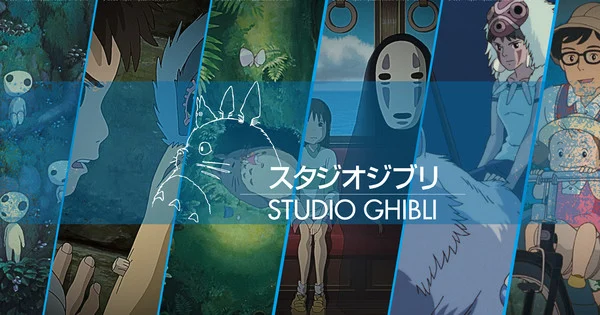
Award honors studio “for having exceptionally transformed creativity into knowledge and communication”

© Hayao Miyazaki/Studio Ghibli
Spain’s Princess of Asturias Foundation awarded Studio Ghibli (Spirited Away, My Neighbor Totoro, Kiki’s Delivery Service, Princess Mononoke, The Boy and the Heron) with the 2026 Princess of Asturias Award for Communication and Humanities on Wednesday “for having exceptionally transformed creativity into knowledge and communication.” The award honors works that foster and advance humanistic activities and social communication.
The foundation and award’s jury praised the studio’s “highly imaginative artisinal process” and “universal stories brimming with sensitivity and humanistic values: friendship, empathy and tolerance, as well as respect for people and nature.” The foundation also said that Ghibli’s films “transcend generations and border,” serve as references for “globalized society and the protection of the environment,” “celebrate the beauty of the everyday,” and feature “moments of silence and contemplation.” The foundation also recognized the studio’s films and founders Isao Takahata, Toshio Suzuki, and Hayao Miyazaki, who directed many of Ghibli’s works.
This year, there were 48 candidatures comprising 20 different nationalities for the Communication and Humanities Award.
The Princess of Asturias Awards overall honor “the scientific, technical, cultural, social and humanitarian work carried out at an international level by individuals, institutions or groups of individuals or institutions.” Studio Ghibli‘s award is the second of eight awards for foundation’s 46th year. There are also awards for Arts, Technical and Scientific Research, International Cooperation, Social Sciences, Sports, Literature, and Concord
There will be a ceremony for the Princess of Asturias Awards in October presided over by Their Majesties The King and Queen, accompanied by Their Royal Highnesses The Princess of Asturias and Infanta Sofía.
Other Japanese recipients of the foundation’s awards include the 2023 Literature award for author Haruki Murakami and the 2012 Communication and Humanities award for Nintendo‘s game designer Shigeru Miyamoto (Super Mario Bros., The Legend of Zelda).
The 77th Cannes International Film Festival awarded Studio Ghibli with the Honorary Palme d’Or in 2024. Time Magazine named Studio Ghibli director Miyazaki as one of the top 100 people in its list of the world’s most influential people of 2024.
Miyazaki rose to prominence in the 1970s on such television anime series as Lupin III, Future Boy Conan, and Sherlock Hound. He directed his first feature film, Lupin III: The Castle of Cagliostro, in 1979. He then adapted the beginning of his Nausicaä of the Valley of the Wind manga into an anime film in 1984, before he and fellow director Takahata founded Studio Ghibli. With Ghibli, Miyazaki helmed the feature films Laputa: Castle in the Sky, My Neighbor Totoro, Kiki’s Delivery Service, Porco Rosso, Princess Mononoke, Spirited Away, Howl’s Moving Castle, Ponyo, and The Wind Rises. He also co-produced Takahata’s directorial efforts and directed smaller projects such as the “experimental film” On Your Mark and Ghibli Museum Shorts such as Mei and the Kitten Bus and Mr. Dough and the Egg Princess.
Source: Princess of Asturias Foundation (link 2, link 3)
>
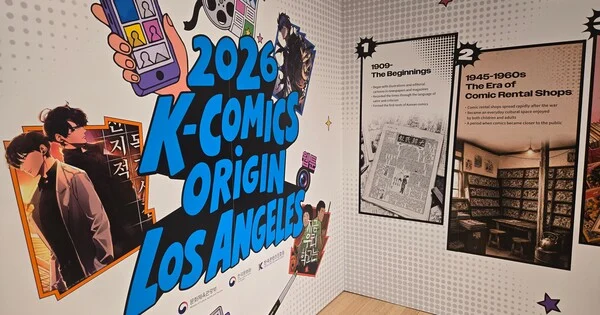

The Korean Culture Center Los Angeles, in partnership with the Korea Creative Content Agency (KOCCA), is hosting the 2026 K-Comics Origin Los Angeles – Korean Webtoon Experience Exhibition from September 11 through October 17. The exhibition explores the 100-year history of Korean comics, the evolution of webtoons as a distinct format, and their growing role as a source of IP for Korean content.
The exhibition focuses on three internationally popular Korean webtoons: All of Us Are Dead, Omniscient Reader’s Viewpoint, and Solo Leveling. Visitors can encounter characters and scenes from the works in person and explore their worlds through interactive kiosks. The exhibition also showcases examples of webtoon IP being adapted into dramas, animation, and games, offering a look at how a single story can expand across different media and genres.
A Visit to the Exhibition
Webtoons are rarely presented as a formal exhibition rather than a pop-up event. With three of the most widely recognized Korean webtoon properties featured, including works adapted into multiple forms of media, I visited the exhibition with fairly high expectations.

Visitors first encounter a staircase leading to the second-floor exhibition space, with the Korean titles of the featured works already visible along the way. At the top is a brief introduction to the history of Korean comics, fitting the exhibition’s K-Comics Origin title, followed by displays dedicated to the three featured works.
As an experience-focused exhibition, the displays are broadly divided into two sections. One recreates locations and scenes from the webtoons as photo spots and interactive spaces, while the other takes an archival approach to showing how the original webtoons have expanded into other forms of media.
Examples include the classroom blackboard from All of Us Are Dead, the Oksu Station setting from Omniscient Reader’s Viewpoint, and life-size character displays from Solo Leveling.

There are also several interactive exhibits. Visitors can play a Solo Leveling game and speak Korean lines into a microphone to trigger corresponding video clips. One of the most memorable displays for me was a machine that allowed visitors to draw Solo Leveling character photo cards. As a fan of Sung Jinwoo, I tried several times until I got the character I wanted.
Although the exhibition space isn’t particularly large, it makes good use of what it has. The emphasis on participation rather than simply viewing the displays makes the experience more engaging. Given that admission is free, the exhibition also offers a lot for visitors to experience.
I saw visitors taking photos at the Omniscient Reader’s Viewpoint photo spot, and they appeared to be enjoying themselves. In that sense, the exhibition succeeds in both introducing the global reach of Korean webtoons and giving fans a chance to interact with the properties they already love.

There are, however, a few areas where I wanted more.
Given the title K-Comics Origin, I would have liked to see a broader selection of webtoons alongside the three major properties. As a longtime webtoon reader and one of the few journalists in North America who regularly cover the Korean webtoon industry, I was also hoping to see more displays focused specifically on what makes webtoons unique as a medium.
Instead, much of the exhibition explains webtoons’ influence through their adaptations into animation, games, and live-action series. These properties have been successfully adapted across multiple forms of media for a reason: the strength of the original webtoons themselves.
Still, the exhibition could have been even stronger with displays exploring the production process of webtoons or other elements that highlight the medium’s appeal.

Exhibition Information
The Korean Culture Center Los Angeles and KOCCA’s 2026 K-Comics Origin Los Angeles – Korean Webtoon Experience Exhibition runs from September 11 through October 17 at the Korean Culture Center’s second-floor Art Gallery.
Admission is free. The exhibition is open from 9:00 a.m. to 5:00 p.m. on weekdays and from 9:00 a.m. to 1:00 p.m. on Saturdays.
>


© 2026 by Salami Studios.
Audio/video post-production company Salami Studios announced on Monday that it is closing.
Salami Studios worked on multiple anime and animated series over the course of its 30+ years. The recording studio most recently did work on the Cyberpunk 2077: Edgerunners and the upcoming Cyberpunk 2077: Edgerunners 2 anime. The company also did ADR production for the Kekkaishi, Monster, The Prince of Tennis, Star Wars: Visions, Buso Renkin, and Honey and Clover anime. The studio also handled audio post production and dialogue recording for the Castlevania: Nocturne animated series. It worked on audio for other animated series such as King of the Hill, Jackie Chan Adventures, He-Man and the Masters of the Universe, SpongeBob SquarePants, Avatar: The Last Airbender, The Boondocks, and Monsuno.
Cyberpunk: Edgerunners, the anime series by Studio Trigger based on CD PROJEKT RED‘s Cyberpunk 2077 game, debuted on Netflix in September 2022. The Cyberpunk: Edgerunners 2 anime will debut on October 20 on Netflix. The first episode had a premiere screening at Anime Expo on July 3.
Source: Salami Studios‘ Instagram page
>
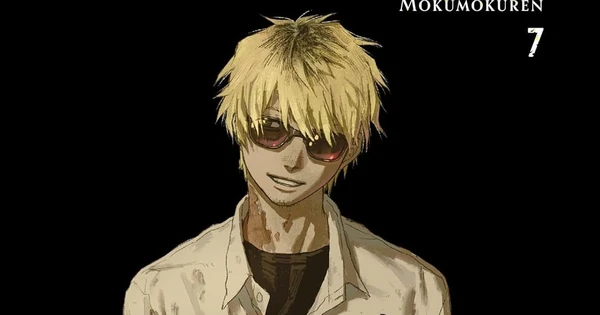
The Summer Hikaru Died is one of Yen Press‘ best-selling manga series for a reason. The journey through these six volumes takes readers from one side of existence into the next as “Hikaru” and Yoshiki attempt to reconcile what “Hikaru” is with how Yoshiki feels about his relationships with both versions, how “Hikaru” affects Yoshiki’s other relationships, and whether the boy is damning himself to cling to a monster. Slowly, the narrative then shifts away from the central relationship to a village-wide mystery rife with old wounds and a race to prevent a mass-death event.
The story moves from the “Daily Life” and “Mystery-Solving” arcs that comprise the first season of the anime into “The Hole-Closing Arc,” so if you want to avoid spoilers for the upcoming anime season, read this later!
It’s best to look at these three arcs as the “Who/What,” the “Why,” and the “How” of the overarching story. The earlier arcs are concerned with what “Hikaru” is: a dangerous creature, a being outside social morality, or a human facsimile worthy of love (if not all of these simultaneously). Yoshiki and “Hikaru” grapple with these unknowns throughout the early volumes. However, both are reluctant to truly face the mutually abusive nature of their relationship, even when it culminates in attempted murder. There are blatant signs, of course. Yoshiki is marked with permanent bruising in the shape of “Hikaru’s” hand, similar to marks common in a domestic abuse situation. “Hikaru” also displays unhealthy attachment styles that, in earlier volumes, are classic characteristics of a possessive partner. Meanwhile, Yoshiki decides to follow “Hikaru” even after discovering he has instigated a murder, permanently spiritually-affected a classmate, and committed sexual assault.
This is a dark love story, in the same vein as other “toxic love” fiction where the danger within the relationship is part of the appeal. Mokumokuren does an excellent job of keeping readers on a knife’s edge, where each terrifying moment is coupled with its tragedy. It’s difficult to judge “Hikaru”, whose actions are more in line with a wild animal than a thoughtless abuser. For a brief time, Yoshiki thinks he can domesticate “Hikaru” to protect him from himself, but that endeavor is quickly proven foolish until “Hikaru” willingly disarms himself.
There’s also Yoshiki, whose poor choices are understandable when he’s looked at as a whole person. This is a teenage boy who hasn’t been set up to navigate the emotional quagmire of his daily life. He’s withdrawn, uncomfortable with himself, and evasive. He’s subjected to judgment of his community, whether it’s about his parents’ marriage problems, his sister’s truancy, or his hair. His best friend is dead, and his parents might as well be absent. I thought his dad had walked out until he makes a full debut in later volumes; the man holes up in his room and seems to have checked out of his family obligations. It’s still unexplained why his sister doesn’t attend school, or whether it’s because his parents simply don’t have the resources to get her the help she needs.
While there has yet to be a denouement, the queer elements of the story are ever-present and feed into much of the supernatural aspects. Much has been said about the “chicken cutlet” moment, but it’s important to note that “Hikaru’s” status as a being beyond social morality gives him a freedom that Yoshiki lacks and a way for Yoshiki to test his sexual feelings without being judged. We see that Yoshiki knows about homosexuality when he discusses how a member of the village isn’t actually “sick”; he’s just gay, thus also illustrating that he knows what happens when someone comes out: the villagers treat it as an illness that can jeopardize familial inheritance. When “Hikaru” point-blank asks Yoshiki if he loved Hikaru, he declines to answer the question. Several bonus chapters also show Yoshiki toying with different looks, including using hair accessories, which likely relates to Mokumokuren‘s statement that he’s “concerned about his gender.”
It’s all of these character elements in conjunction with each other that make The Summer Hikaru Died more than just a toxic love story. There are questions about what defines humanity, what draws people into unhealthy ride-or-die relationships, and hope against hope that somehow these two kids, one a monster and one a boy, can find happiness somehow.
There is a sense of intimacy that gets lost in favor of the larger plot shift, but it gives creator Mokumokuren a chance to flex their monster-design skills and use the story’s ever-present tension differently. The “Daily Life” and “Mystery-Solving” arcs are the blood-pumping heart of the story, while “The Hole-Closing Arc” in volumes 6-7 is the start of the larger resolution. The story shifts to finding a way for “Hikaru,” Yoshiki, the medium Rie, classmate Asako Yamagishi, and hired spiritual fixer Tanaka to work together to close the “holes” that allow so many entities to descend on the village. The Summer Hikaru Died had featured evil entities before, but they are more grotesque and threatening now.
If early volumes are a creeping sense of dread, volumes six and seven are a full-sprint into horror. Mokumokuren had already shown their ability to fill pages with overwhelming text, shocking page spreads, and eerie details. The later volumes also show they can expertly craft action scenes as characters are thrown, dodge, and run while horrific monsters pursue them. I can’t overstate how skilled Mokumokuren is. Even outside the work as a genre piece, the panel and perspective drafting is top-notch. There are plenty of comics satisfied with a straightforward, middle shot regardless of whether a character is talking, jumping, fighting foes, or delivering an emotional declaration. In comparison, The Summer Hikaru Died is cinematic, and I can see how it directly inspired its anime team.
I want to close out this review with a special mention for translator Ajani Olowe for deftly representing a casual, rural speech pattern for the characters without ever taking on a mocking tone. People around the world speak in similar dialects, and plenty of stereotypes already exist when small-town folks appear in media. It was a pleasure to read these volumes and hear characters who remind me of family members, with nary a comment about their supposed intelligence.
As The Summer Hikaru Died approaches its conclusion, who can say where it will take “Hikaru” and Yoshiki? The monster already ripped his heart out; will Yoshiki be next?
Disclosure: Kadokawa World Entertainment (KWE), a wholly owned subsidiary of Kadokawa Corporation, is the majority owner of Anime News Network, LLC. Yen Press, BookWalker Global, and J-Novel Club are subsidiaries of KWE.
>

Graham Norton On ‘The Claudia Winkleman Show’ & Future Talk Shows
In Jalen Hurts' evaluation against Bears, NFL followed its concussion protocol correctly

Tom Cruise Is Not Quite What Makes ‘Digger’ an Oscar Contender
-

 movies4 months ago
Search For Canadian TV Actor Stewart McLean Now Homicide Investigation
-

 Fashion9 years ago
These ’90s fashion trends are making a comeback in 2017
-
Fashion9 years ago
According to Dior Couture, this taboo fashion accessory is back
-
Fashion9 years ago
Model Jocelyn Chew’s Instagram is the best vacation you’ve ever had
-
Fashion9 years ago
Emily Ratajkowski channels back-to-school style
-
Fashion9 years ago
9 Celebrities who have spoken out about being photoshopped
-

 Anime4 months ago
Rurouni Kenshin: Hokkaido Arc Manga Takes 1-Issue Break – News
-

 Anime3 months ago
HIDIVE to Stream English Dubs for The World Is Dancing, The Forsaken Saintess and Her Foodie Roadtrip in Another World, The Dangers in My Heart: The Movie Anime – News