
movies
Summer Box Office Crossing $4B Thanks to ‘Spider-Man’, ‘Odyssey’


Forget the woes of a potential Paramount-WBD merger, the summer domestic box office is on fire, just $14.8M away from crossing $4 billion. This is all according to Rentrak.
For for the period of May 1-Aug. 9, the summer B.O. stands at $3.985B. The last time the North American box office crossed $4B was 2023 with $4.095B. This year will rep the second time post Covid it’s shot past that threshold, and the 14th time in box office history to cross $4B. Summer 2013 holds the all-time record for the best the season has ever seen with $4.755B, that’s when Iron Man 3 led with $409M followed by Despicable Me 2 with $367.7M.
It takes a village: not only have the tentpoles like Sony/Marvel Studio’s Spider-Man: Brand New Day, Disney/Pixar’s Toy Story 5 and Universal’s The Odyssey delivered with a combined $1.58 billion, but the new school of filmmakers as well, and we’re talking YouTube natives Curry Barker and Kane Parsons whose respective The Obsession and The Backrooms grossed a grand total of $460.7M stateside. Those five films account for $2B of North American ticket sales or 50% of summer.
Brand New Day and Odyssey will continue to carry the torch through August. The hope is that August has another tentpole in Bad Robot’s Anne Hathaway-Ewan McGregor dinosaur movie The End of Oak Street, which right now is looking like a $30M start when it opens on Aug. 14. This weekend, with Spidey and Odysseus leading the way, it wasn’t a marketplace where all boats rose with wide counterprogramming One Night Only, Super Troopers 3 and The Ice Cream Man underperforming with low single digit starts. That said, 2026 saw its third best weekend for all titles at the U.S./Canada box office with $205M (after last weekend’s all-time record $437.1M and Toy Story 5‘s opening frame of June 19-21 which drove $231.6M).
>
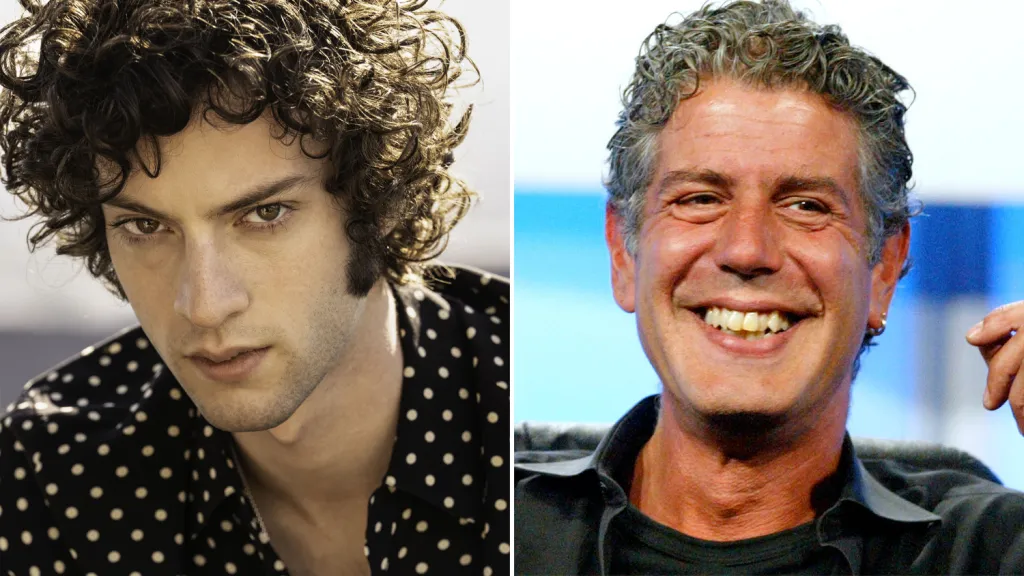
Independents posted impressive numbers this weekend, another good one for moviegoing but competitive with blockbuster commercial films in the marketplace. Tony and Teenage Sex and Death at Camp Miasma are notable newcomers with CatVideoFest 2026 landing in the top 10 and a sweet debut for doc Cookie Queens.
A24’s Tony cooked with the highest per screen average and the best limited opening of the year, grossing $349k on just 6 screens in New York and LA for a $58k PSA with sold out shows in both markets all weekend.
Director Matt Johnson‘s take on the beloved late chef, author and TV host imagines the transformative summer when a 19-year-old Bourdain discovered his passion for food while working in a Provincetown seaside kitchen. The film is Certified Fresh at 95% on Rotten Tomatoes, with Dominic Sessa receiving raves for his star turn as the young Bourdain. The ensemble includes Emilia Jones, Stavros Halkias, Leo Woodall and Antonio Banderas as Bourdain’s mentor. With exits showing excellent word-of-mouth, Tony expands into top markets next week ahead of a nationwide break Aug. 21.
A24’s The Invite, meanwhile, is eyeing a $717k weekend on 342 screens and the no. 9 spot at the domestic box office in week 7 with a cume of $24.2 million. The film by Olivia Wilde opened to a $54k PSA.
Mubi’s release of Teenage Sex and Death at Camp Miasma, the anticipated third film from indie favorite Jane Schoenbrun (I Saw The TV Glow, We’re All Going To The World’s Fair), opened on five screens in New York and LA to an estimated $251.5k. That’s a PSA of $50.3k, one of the year’s best. Stars Hannah Einbinder as a young director seeking to resurrect the Camp Miasma slasher franchise and Gillian Anderson as the star of the original films, a now-reclusive actress shrouded in mystery.
Magnolia Pictures’ Late Fame starring Willem Dafoe as a forgotten, then rediscovered, New York poet debuted on two screens in NYC for an estimated $38k. The distributor’s I Want Your Sex by Gregg Araki grossed $167k in week 2 on 260 screens (down from about 700) for a $1.27 million cume.
CatVideoFest gathers more steam each year with Oscilloscope’s feature-length compilation of cuteness by Will Braden debuting to $586k on 255 screens.
Documentary Cookie Queens from Roadside Attractions, Alysa Nahmias’s deep dive into Girl Scout Cookie season, had a nice $328k debut on 446 screens. The film performed well in specialty venues that traditionally play documentaries, Roadside noted, as well as some mainstream multiplexes, where strong support from Girl Scouts and alumnae helped drive attendance, including troops buying out screenings for girls to experience the film together. “We’re encouraged by the response and believe the film has a long life ahead as it continues to reach its many audiences.”
TIFF-premiering Olmo from Greenwich Entertainment, by Mexican filmmaker Fernando Eimbcke, debuted to $30k at 51 theaters.
Yoga horror satire Namalay by South Asian filmmakers Rish and Kanish Junghare grossed $11.3k on two screens in NY and LA.Forston Consulting handled theatrical booking. Self distributed.
Holdovers: In its second weekend, Janus Films’ release of Kiyoshi Kurosawa’s The Samurai And The Prisoner began a national expansion on 44 screensgrossing an estimated$174.1k for a cume of $274.5k.
Wild Inside, Penny Lane’s documentary of the adventures of Flaco the Owl, is estimated to gross $37.4k in in week 2 on 33 screens. The Sandbox Films Release, with a cume of $107k, is playing a mix of standard and alternative engagements.
>

When it comes to Paramount’s legal wrestle with the AG’s antitrust case over the Melrose lot’s possible merger with Warner Bros, the key is to divide and conquer with exhibition.
Deadline knows that Paramount has made a written commitments with at least one of the top two circuits, specifically, Regal for for 30 films annually over three years with an exclusive 45-day theatrical window and a 90 day window to streaming.
There’s buzz that AMC has also has a written commitment from Paramount, but the circuit’s boss Adam Aron emphasized to Deadline this afternoon, “AMC has no comment on this story, period. Nor have we ever had any comment on this story.”
Aron has waved the flag publicly in support of a Paramount-Warner Bros merger, while Deadline told you first that Regal Boss Eduardo Acuna was also a champion for the union.
When it comes to the big chains, it matters for them to be on the right side of history with Paramount, especially when it comes to future terms on a 30 film slate.
However, the rest of Cinema United (formerly National Association of Theatre Owners) remains firmly against the Paramount-Warner Bros merger and its potential negative financial outcomes in regards to long-term box office, feature film output and loss of jobs. Cinema United has been trying to meet again with Paramount CEO David, Ellison, but there’s nothing on the books yet, we understand.
Acuna told Deadline that in regards to Paramount’s future promise to exhibition, “(Paramount CEO) David (Ellison) is sincere in making these commitments, and he has offered to execute a consent decree to the State AGs to that effect. These are tangible and important commitments that will benefit the industry and which can be measured.”
Paramount insiders tell us that no written commitments have been given to exhibitors yet, but Ellison is willing to make non-bespoke one to any theater chain wanting them. And such deals will come with financial penalties to Paramount should they break such agreements with theaters. Again, this is all about Ellison standing behind his promises made at CinemaCon to maintain a hefty theatrical output and excellent windows to theaters.
The trial with the AGs isn’t until March 2027. Currently, Paramount has 16 films scheduled for 2027 and seven for 2028. Warner Bros has 19 for 2027 and 15 for 2028 in Rentrak. Had the merger gone through this fall, the marriage would have wound have had 35 organically for 2027. Right now for 2028, a combined studio would have 22.
Here’s the reality — promise or no promise, written commitment or none: marketplace will determine whether there’s an output and a need for one studio to push out 30 films annually. If most of the films fall short of profit, what’s to stop a studio from cutting back on supply and cost? The intention is well and good, but there are core issues and history which cannot go ignored.
The stigmata that has burned upon the industry is, hello, the fallout of the Disney-Fox merger, which major studio executives tried to yell at the Justice Dept at that time as a monopoly, but the government regulators wouldn’t listen.
In 2016, Disney and 20th Century Fox separately released 26 new titles opening in more than 2,000 locations. In the wake of that merger, in 2025, their combined output fell to 14 wide releases, a -46% decline. The box office went for them combined went form $4.29B in 2016 to $2.4B in 2025, -44%. Cinema United as asserted that they don’t believe how a union between two landmark studios, Paramount and Warner Bros, would be any different. Cinema United has argued that there will be fewer films made ultimately, leading to theaters closing their doors, which would have a ripple effect on local Main St. and mall economies.
Supposedly, with written commitments to theaters chains, the hope for Paramount is that their PR war against the AGs strengthens, unraveling the antitrust lawsuit filed by 12 state AGs over the merger.
And we’re not even getting into jobs lost yet if there’s a Paramount-Warner Bros merger.
All of this melodrama occurs when the domestic box office is bound to surge to double digits, the best post Covid with an estimated $10 billion domestic, in addition to summer crossing the $4 billion mark this weekend.
>
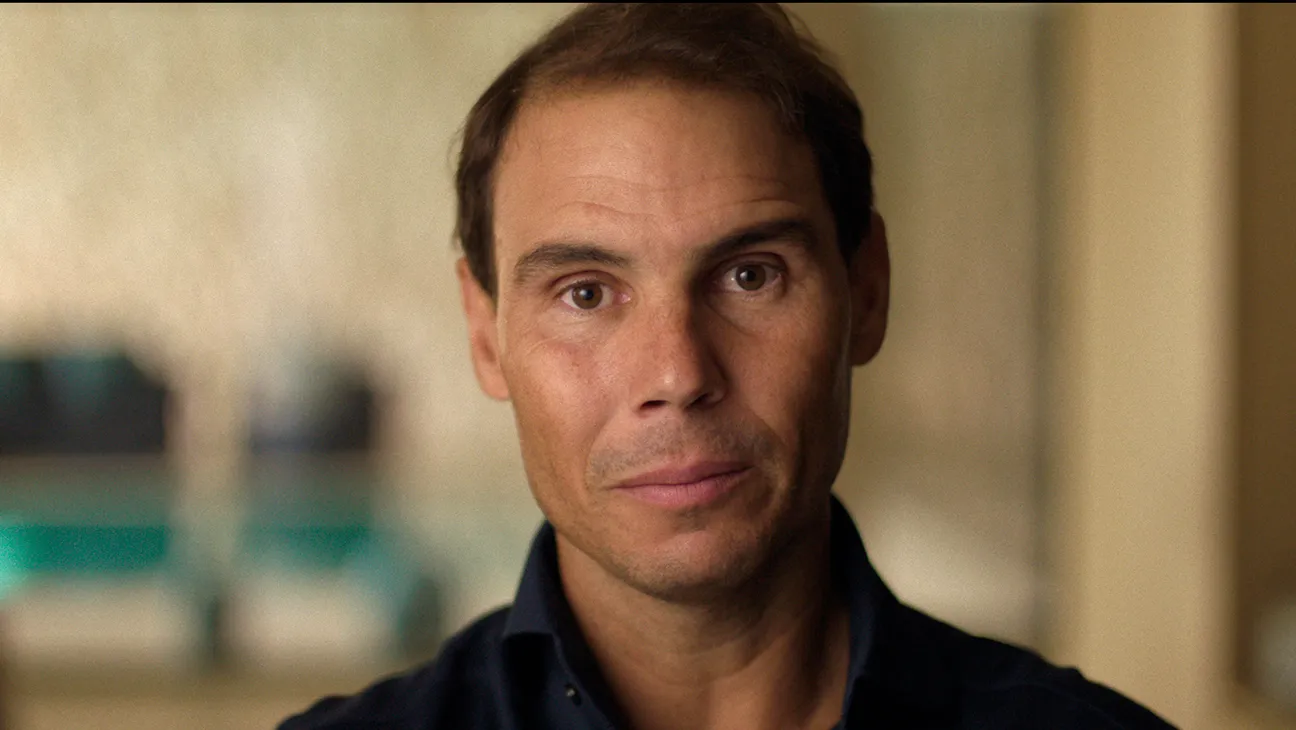
Rafa, the four-part Netflix series directed by Zach Heinzerling, chronicles Rafael Nadal’s difficult decision to retire from tennis at the end of the 2024 season, after an astounding 22 Grand Slam wins — and also several injuries and a painful foot condition that plagued him throughout his career.
The doc weaves together archival footage of Nadal’s intense training sessions with his coach, Uncle Toni; interviews with rivals Roger Federer, Novak Djokovic and more; and glimpses of his home life to show what has motivated the former No. 1 pro to compete for more than two decades, as well as the mental and physical toll it has taken.
“I enjoyed doing what I was doing,” Nadal tells THR. “Of course, I paid the price of suffering. But I always put everything on the balance, and that’s why I was always able to keep going. I said, ‘OK, I’m having pain every day, but on the other hand, I have been enjoying all these amazing and unforgettable moments of my life.”
“I was doing it for the people next to me, team, family, fans. It’s not [just] a way to talk. That’s true. That’s the way that I approached that,” he added.
Nadal was not a producer on the doc, which was made by Skydance Sports, and also meant the tennis star had to give over some degree of control. Before this, Nadal had long been resistant to doing a documentary, because he was worried about showing a more personal side of his life and having cameras around his family and team. Skydance head David Ellison convinced him to do this project with the idea that this was, at the very least, the last stage of Nadal’s career.
Going into the 2024 season, Heinzerling was not entirely sure of the narrative for the doc, as Nadal was returning to tennis after a hip surgery. “I was in that phase of trying to come back, but without the security that the [comeback] is going to go well,” Nadal says. Within days of filming, he reinjured his hip, but continued to press on, giving Heinzerling a new narrative.
“Rafa usually wins by outlasting his opponents. That’s what makes him so great. So, if he is so determined and the person who never quits, what’s actually going to make him quit? That became the new story, as opposed to the last comeback or Rafa’s last dance,” Heinzerling says.
Heinzerling adopted a fly-on-the-wall position throughout the tennis eason, largely staying silent as he captured Nadal’s practices and his daily routines. He returned for look-back interviews with Nadal and others after the tennis pro made the difficult decision to announce his retirement, a moment that Heinzerling also captures.
While filming, Heinzerling also bore witness to many sensitive moments, including a car ride in which Nadal learns he has reinjured his hip and softly says, “I’m destroyed. I’m destroyed.”
The process required a delicate “dance” between filmmaker and subject, in which Heinzerling tried to capture what was needed without being intrusive.
“It’s moments like those that actually build a relationship, and you feel even more of an obligation to protect that vulnerability because you feel more connected to that person and you want to shepherd their image and legacy in as delicate a way as you can,” Heinzerling says.
To help build that picture, Heinzerling and team got on court with Nadal, with camera operators dodging tennis balls and sliding and capturing moments of Nadal with his young son and wife at home. On the other side of it, the doc also shows a particularly shocking image of the prominent bump on Nadal’s foot as a result of years playing with a degenerative bone disease and delves into the anxiety that he faced throughout his career. Most of the interviews are done in Spanish, to allow Nadal, team and family to better express themselves.
Even now, it’s tough for Nadal to watch a film about himself.
“It’s very difficult to look at yourself and sit on the sofa and just enjoy the documentary,” he says. “You know, you are analyzing things all the time.” But he said that he’s relied on positive reviews from friends and family to get a sense of how others view it.
It wasn’t easy to have Heinzerling document his tough journey through the season, and Nadal noted there were some moments he asked not to film so as not to skew the overall picture: “I missed plenty of Grand Slams because of injuries, but on the other hand, I was able to have very successful and long career. So I don’t want to only look like ‘OK, I am injured, injured, injured.’”
But ultimately, he says he trusted him to tell his story.
“I always felt lucky, even though I went through a lot of injuries. I always felt I am a privileged guy for living the life that I was living,” says Nadal. “I was living from a work that I love a lot. So I never took it like work. Tennis for me was never a job.”
This story first appeared in an August stand-alone issue of The Hollywood Reporter magazine. To receive the magazine, click here to subscribe.
>

AI Dog Ad for ‘End of Oak Street’ Draws Backlash for Warner Bros.

Indie Film Box Office: Bourdain Biopic ‘Tony’ 2026 Top Limited Opening

How to watch Reds vs. Nationals: TV channel and streaming options for August 9
-

 movies3 months ago
Search For Canadian TV Actor Stewart McLean Now Homicide Investigation
-

 Fashion9 years ago
These ’90s fashion trends are making a comeback in 2017
-
Fashion9 years ago
According to Dior Couture, this taboo fashion accessory is back
-
Fashion9 years ago
Model Jocelyn Chew’s Instagram is the best vacation you’ve ever had
-
Fashion9 years ago
Your comprehensive guide to this fall’s biggest trends
-
Fashion9 years ago
9 Celebrities who have spoken out about being photoshopped
-
Fashion9 years ago
Emily Ratajkowski channels back-to-school style
-
Fashion9 years ago
A photo diary of the nightlife scene from LA To Ibiza