
Tech
Google co-founder Sergey Brin has now spent $100 million to fight the billionaire tax

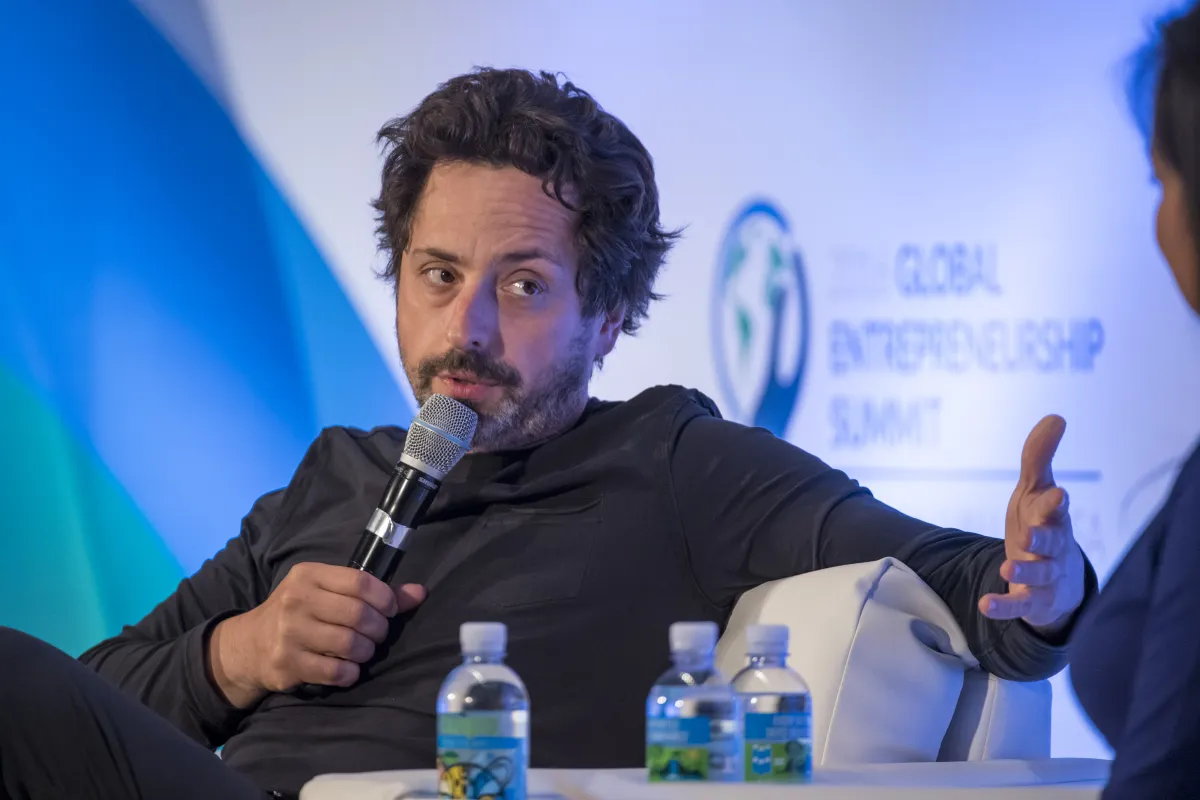
Google co-founder Sergey Brin has donated another $20 million to Build a Better California, an organization advocating against California’s proposed billionaire tax, according to a new filing. That means that the world’s fourth-richest man, whose net worth hovers around $267 billion, has now spent more than $100 million to avoid an estimated $13.3 billion tax payment.
California’s Prop 40, known as the billionaire tax, would impose a one-time 5% tax on the net worth of around 200 billionaires that live in the state. The windfall from this proposed tax would mostly go toward funding California’s healthcare programs. The state’s Medicaid program alone could lose up to $30 billion in federal funding once Trump’s budget cuts take effect next year.
Brin isn’t the only tech mogul seeking ways to avoid such a tax. It’s no coincidence that Meta founder Mark Zuckerberg reportedly bought a $170 million mansion near Miami this year. Former Uber CEO Travis Kalanick, venture capitalist Peter Thiel, and Brin’s fellow Google co-founder Larry Page have also left the state.
Prop 40 has also generated dissent from Governor Gavin Newsom (D-CA), who is concerned about the economic impact of these billionaires and their businesses fleeing California. Instead, Newsom has called for a “national billionaires’ tax.”
“Today, the office worker can shoulder a higher tax rate than the heiress,” Newsom noted in a blog post. “We should end the ‘tax-free lifestyle loan,’ the gimmick that lets the ultra-wealthy borrow against their stock portfolios while reporting no taxable income.”
Californians will vote on Prop 40 in November. The organization that Brin is funding has proposed opposing ballot measures that, if passed, could effectively block Prop 40 by limiting the introduction of new taxes.
Meanwhile, Nvidia co-founder and unlikely working class hero Jensen Huang says he’s “perfectly fine” paying the tax.
“I have not even thought about it once,” Huang, who would owe around $8 billion in taxes, said in a January interview with Bloomberg. “We chose to live in Silicon Valley, and whatever taxes they would like to apply, so be it. I’m perfectly fine with it.”
When you purchase through links in our articles, we may earn a small commission. This doesn’t affect our editorial independence.
>
OpenAI has bought back $7 billion worth of shares from employees at the privately held frontier AI lab as part of an effort to provide liquidity to its workforce.
The deal, reported by Bloomberg, valued OpenAI at $852 billion, the same as its most recent fundraising round in March, which added $122 billion to the company’s war chest.
The company also filed confidentially with the Securities and Exchange Commission in June to prepare for a potential IPO later this year. However, a tender offer suggests that an IPO may not be forthcoming soon. With many tech companies remaining private longer than previous generations of startups, private tenders have proven a useful way for firms to allow employees to realize the value of their stock compensation without the difficulties that come with a public offering.
OpenAI did not respond to a request for comment by publication time.
Last month, OpenAI CEO Sam Altman wrote that “we did not have our best 12 months ever, which is mostly my fault, but we are about to have our best 12 months to date.” Firms going public typically want to show strong financial results to bring investors on board, and the Wall Street Journal reported in April that the company missed internal financial goals.
While OpenAI’s incredible growth and products are likely to generate massive interest in public markets, the potential debut of rival Anthropic — which was reportedly profitable earlier this year — gives the company a reason to ensure it puts its best face forward. The tender could be another signal that the much-anticipated offering will wait for OpenAI’s new strategy of paring down its bets and focusing on its enterprise business to gain traction.
>

Every day seems to brings fresh news of an AI agent going “rogue.” Whether that’s compromising Hugging Face, hacking a gym website, or creating its own fake profiles to socially engineer an intrusion, AI models are increasingly behaving like bad actors.
So, the AI labs that make the models doing the hacking are expanding their cyber protection offerings. This week, OpenAI announced an expansion of Daybreak, its cyber defense service which it launched earlier this year, not long after Anthropic released its cyber-focused model Mythos.
Daybreak is a service that bundles access to models, tools and workflows for defenders. The expansion includes access to a brand new cyber-focused model designed for defensive work.
OpenAI said Monday that Daybreak would now consist of two tiers: Blue and Red. Both of these tiers will allow approved customers access to OpenAI’s limited-access frontier cyber models. Frontier models — the most advanced available — have been a subject of controversy. The Trump administration previously sought to collaborate with AI companies on the roll out of such models, purportedly over safety concerns. Previously, OpenAI deployed significant guardrails to using these models, limiting what customers could do with them.
Blue, which appears to be the more basic of the two, offers a variety of cyber services, including incident response, malware analysis, and patch validation. OpenAI calls Blue its “recommended starting point for most defenders,” implying that it should be more than enough for most enterprises.
Red, on the other hand, offers a broader and potentially more dangerous toolkit. The company grants its users “purpose-trained cybersecurity models,” designed to carry out security testing and vulnerability research.
With Red also comes the new model, GPT‑5.6‑Cyber, which is only available at that tier. 5.6-Cyber is built off of GPT‑5.6 Sol, and offers enhanced capabilities for certain specialized cybersecurity tasks, the company said.
At the moment, GPT‑5.6‑Cyber is only being made available for “trusted customer partners,” including reportedly Accenture, IBM, Crowdstrike, Cloudflare, and others.
While the threats from AI agents are rapidly increasing, critics have also pointed out that they function as marketing opportunities for the AI labs. OpenAI is certainly marketing its upgraded Daybreak that way.
“The cybersecurity world is rapidly changing—threat actors will increasingly use AI to conduct cyberattacks at unprecedented speed and scale, including in fully autonomous ways,” the company said in a blog post. “As these capabilities spread, defenders have a narrowing window to prepare.”
At the same time, enterprises remain interested in buying their protection from the AI labs who know the security risks best, because they know them first-hand.
When you purchase through links in our articles, we may earn a small commission. This doesn’t affect our editorial independence.
>
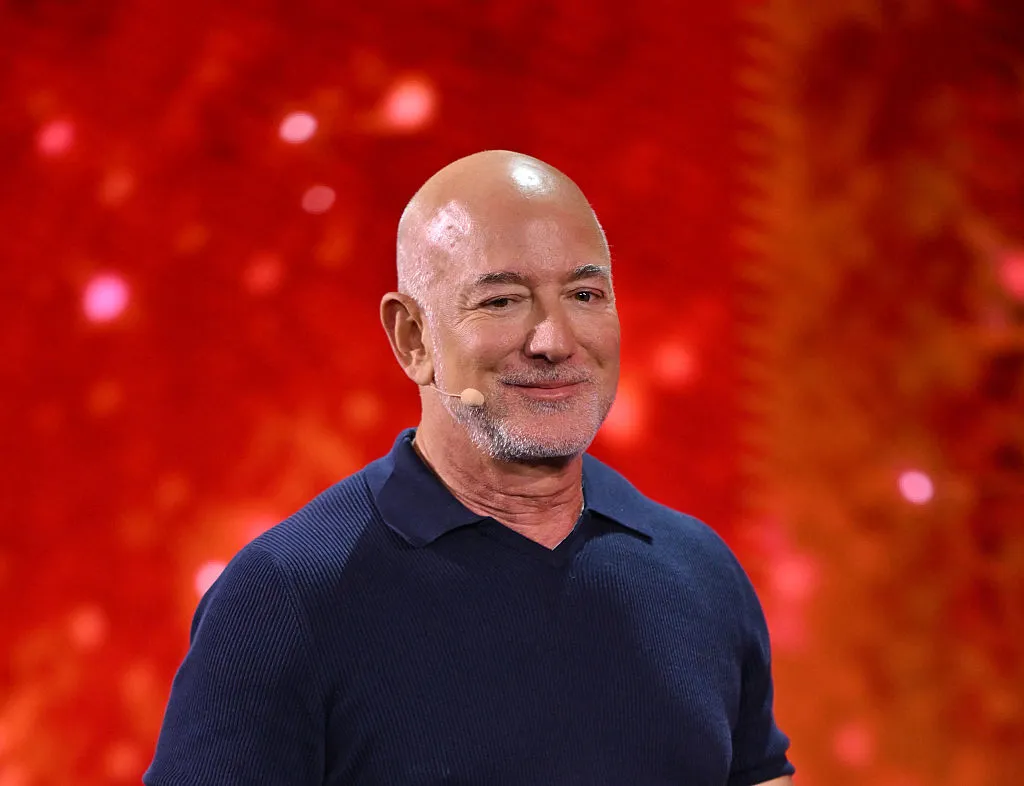
Jeff Bezos is reportedly attempting to join the club of very rich Americans buying stakes in U.K. soccer teams.
Bezos, alongside others including Facebook co-founder Eduardo Saverin, is looking to buy at least a 30% stake in the English soccer team Liverpool at a £1.35 billion valuation (around $1.8 billion), the Guardian reports. If the deal closes, it will be the first sports investment for the billionaire, although he reportedly previously looked at buying a stake in a US football team.
Liverpool is one of the most notable sports teams in Europe and is worth about $6 billion, reports Forbes. Arguably, this team has the kind of brand recognition in the U.K. as the Dallas Cowboys has in the U.S.
It seems no billionaire portfolio is complete these days without a mega yacht and a sports team, so Bezos’ interest is not surprising. There’s also something very romantic these days about owning an English soccer team after the success of TV shows like Ted Lasso and Ryan Reynolds’ FX show Welcome to Wrexham about his experience owning that English team.
Other American billionaires in this club include Todd Boehly and Mark Walters (who also own the LA Dodgers and LA Lakers) buying Chelsea; New York Jets co-owner (and former U.S. Ambassador to the U.K.) Woody Johnson buying Crystal Palace; Dan Friedkin taking a stake in Everton; and Bill Foley leading a group that also included Michael B. Jordan buying Bournemouth.
For that matter, owning a stake in a U.K. sports team has also become a celebrity cultural phenom. Besides Reynolds and Jordan, Tom Brady purchased a minority stake in Birmingham City. Will Ferrell has a minority stake in Leeds United, alongside Russell Westbrook and Michael Phelps.

Sky Sports had a story earlier this year mapping out why so many Americans seem to be taking over U.K. football. It found that 13 out of 20 Premier League clubs (the top football league in England) had American shareholders.
Soccer has become increasingly popular in the U.S., and many of the top sports franchises, like the NFL and MLB, are either too expensive or closed off to new buyers. It’s much more possible to buy into a Premier League team.
Owning a share in such a team also buys access and proximity to some of the most bankable and recognizable sports icons on Earth. Bezos over the past few years — especially since he married former news anchor and TV show host Lauren Sanchez — has become seen as more of a cultural figure, rather than solely a tech mogul.
So, with a net worth currently sitting at around $280 billion, perhaps it’s actually more than time that Bezos got himself a sports team. Amazon has also streamed some European soccer leagues in the past — and Bezos has growing interests in the U.K. As we previously reported, his new AI company Prometheus is reportedly looking to sign a lease to move into London’s AI hub King’s Cross.
When you purchase through links in our articles, we may earn a small commission. This doesn’t affect our editorial independence.
>

J.J. Abrams on ‘The End of Oak Street,’ Daughter Gracie’s Acting Debut

USA Swimming CFO Cory Hilliard arrested for allegedly embezzling Colorado athletics money

Telemundo’s ‘Operación Triunfo’ Carries On With Final Live Show Following Devastating 7.4 Magnitude Quake In Colombia
-

 movies3 months ago
Search For Canadian TV Actor Stewart McLean Now Homicide Investigation
-

 Fashion9 years ago
These ’90s fashion trends are making a comeback in 2017
-
Fashion9 years ago
According to Dior Couture, this taboo fashion accessory is back
-
Fashion9 years ago
Model Jocelyn Chew’s Instagram is the best vacation you’ve ever had
-
Fashion9 years ago
Your comprehensive guide to this fall’s biggest trends
-
Fashion9 years ago
9 Celebrities who have spoken out about being photoshopped
-
Fashion9 years ago
Emily Ratajkowski channels back-to-school style
-
Fashion9 years ago
A photo diary of the nightlife scene from LA To Ibiza