
Sports
Mykolas Alekna, the record-breaking son of an Olympic champion: ‘I wasn’t the most talented kid’

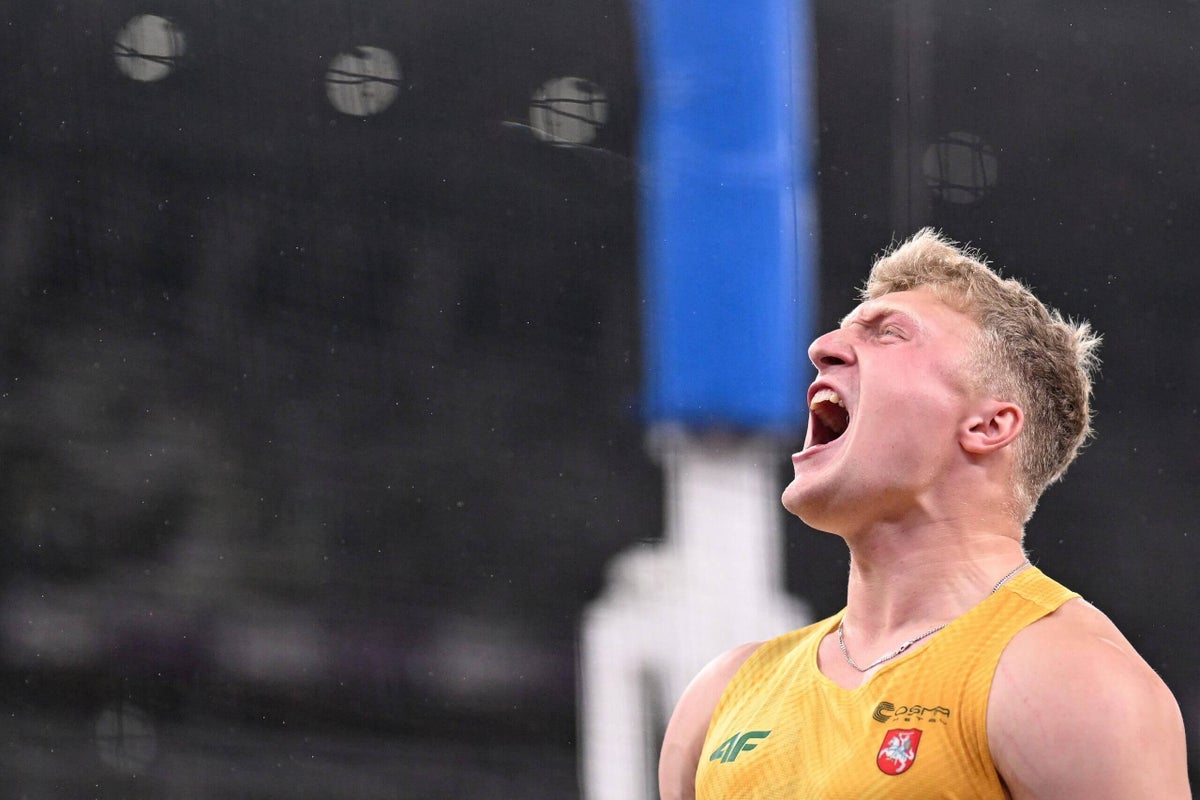
In a sport written about in ancient Greek literature, no one has thrown a discus as far as Mykolas Alekna. Not even his father, a two-time Olympic champion and a former Olympic record holder in the event, nor anyone in The Odyssey and The Iliad.
It was in April 2025 that Alenka became the first man to throw further than 75 meters in the discus, brilliantly twice breaking his own world record in Ramona, Okla., a small town known as ‘Throw Town’ because of its propensity to produce favorable conditions for throwing.
The event was not without controversy — a Swedish commentator said “weather doping” was a contributing factor to five men clearing 70m, such was the strength of the wind. But, as Alekna says, it was “all according to the rules” in event that has “no way to measure the wind.”
“I don’t really care what people say. I’m still happy with the record, and people still go there to try to set a new record, but no one has done it after me yet,” he says over a video call from his home in Lithuania.
Although Alenka, whose world record stands at 75.56m, is following in his father Virgilijus’s footsteps, he is carving his own path. His achievements certainly put him in the sporting prodigy category: At 19, he became the youngest men’s European discus champion; at 22, he broke a discus world record which had stood since 1986.
In winning silver at the Paris Olympics, he surpassed his father’s Olympic record of 69.89m by eight centimeters. And this week, the two-time world silver medalist competes at the European Championships in Birmingham, England, hoping to do something else his father never achieved — retain his European title.
Virgilijus’s Olympic record had stood for 20 years before his son and eventual 2024 Olympic gold medalist Roje Stona surpassed the mark in Paris. Has his success surprised his father, the 2000 and 2004 Olympic champion?
“For sure,” says Alekna. “I don’t think anyone expected me to do this well because I started a little later. I wasn’t maybe the most talented kid at the start, but then later, I progressed really fast.”

Mykolas Alekna competing at last year’s World Championships in Tokyo, where he won silver. (Kirill Kudryavtsev / AFP via Getty Images)
Born in Vilnius, the capital city of Lithuania, the 23-year-old idolized his father, but as a young teenager he mostly played soccer, his favorite sport.
“I wasn’t the tallest kid,” he explains. “Discus athletes are usually really tall and strong, but I started maturing a little later. When I was 13 or 14, I was still short, so I never had a plan to become a discus thrower.
“Later, I started growing, and at 15 or 16 I switched and tried discus for the first time. My brother (Martynas) was already throwing, so I joined him.
“My dad is really happy that my brother and I are doing well and continuing our family’s tradition.”
His sister, Gabriele Aleknaite, has recently taken up the sport, too. He credits his father’s influence for helping provide him with a solid technique which, he says, is the “biggest part” of the sport.
“The first two years are the most important for discus throwers because that’s when you learn all the basics and technique,” he says.
“You need to have a really good base, and then you can add power, add strength. But as long as you have technique, you should be fine. So the first couple of years is when I did the most work.
“My dad would always help me out when I had questions. I had another coach, which was my main coach. But my dad would always be next to them when I started.”

Mykolas Alekna won silver at the Paris Olympics. (Christian Petersen / Getty Images)
Alenka was two when his father won his second Olympic gold with a record-breaking throw in Athens. Athletes these days throw further — in 2026, nine men have already broken the 70m-mark, as opposed to two having done so in 2004 — but Alekna says the technique in the two eras is “almost the same.”
“The key part that has changed through the years is that training involves a lot of explosive work,” he says.
“I lift way less. I do fewer Olympic lifts than my dad and the other throwers used to because we do a lot more specific strength rotational exercises. They used to train for maximum strength, but now we try to develop explosive power instead of just strength in general.”
Despite appearing at the ancient Olympics and being part of modern games since the first edition in 1896, discus is not regarded as a box-office sport. He spends his summers and Christmases in Lithuania, where he is a four-time Sportsperson of the Year and often recognized.
But away from home, life is quite different. He mainly lives in the U.S. — he transferred to Oregon from the University of California, Berkeley in 2025 — and goes largely unnoticed.
Field athletes don’t tend to profit from Name, Image and Likeness (NIL) deals to the same extent as their peers in other sports, but Mykolas, without disclosing figures, says “there are ways to benefit.”
“Because there are so many athletes, I’m just a regular student that does athletics. No one really notices me, so I actually enjoy it because when I go back to Lithuania, people recognize me and my lifestyle is a little different compared to a regular student-athlete in America,” he says.
“In other countries, everyone forgets about smaller sports or events like discus. I’m fine with it. I find that it’s a niche sport, but I still enjoy doing it.”
Sports is filled with stories of sons and daughters trying to emulate or surpass the achievements of their parents. Some have done so successfully, others have struggled to reach such heights.
“I think I have my own story, so I don’t feel that much pressure. I just try not to think about it, not compare myself to him, and I think that helps a lot,” he says.
As he enters his third senior season, Alenka is aiming to add more titles to the family name. Despite spending the last few months in Lithuania recovering from surgery in March on a torn pectoral muscle, he made an impressive return to competition at the Lithuanian championships on July 25, throwing 72.65m — the third-longest throw of the year.
“I want to win again,” he says. “I want to win as many medals as I can, and the European Championship is the main goal this year, so I’ve been training hard to win it. It’s always exciting to win a medal because it shows how much work you’ve put in and you are finally recognized for it.”
>
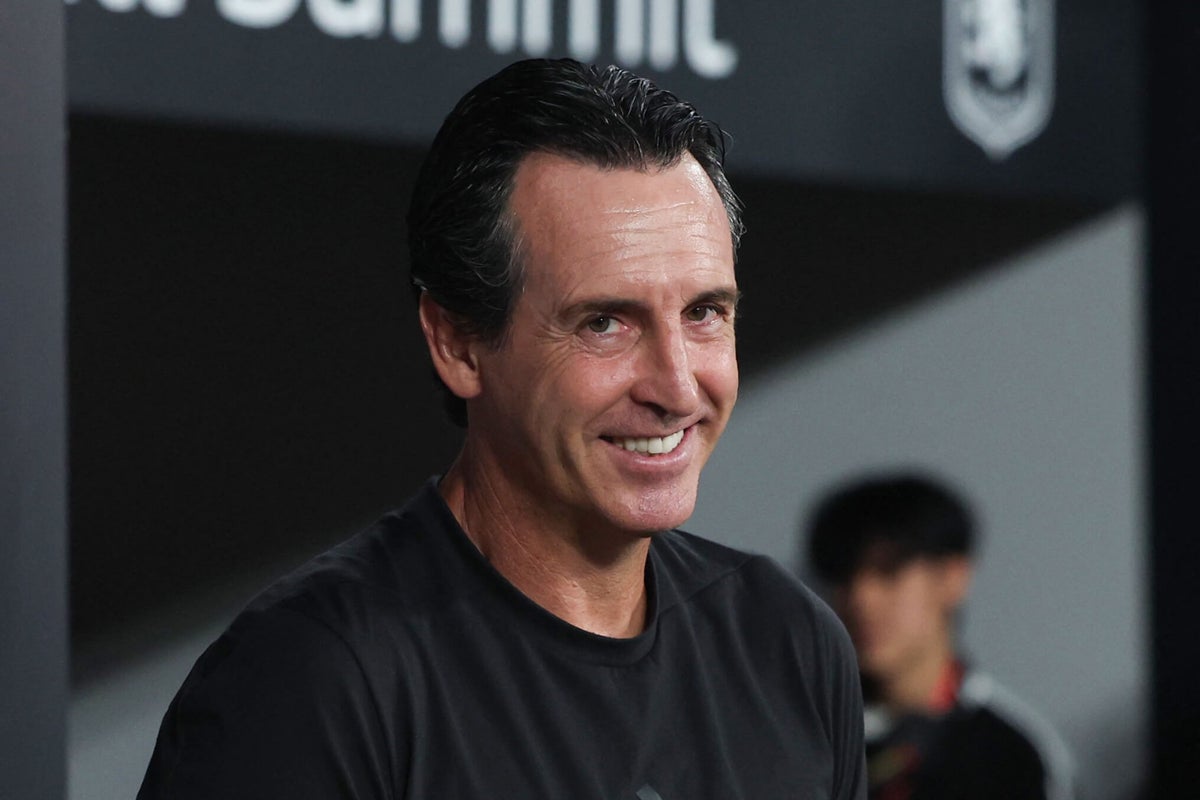
A hallmark of longevity in football management is seeing seasons come and go and familiar faces move on.
Unai Emery is now the second-longest-serving manager in the Premier League. This will be his fourth full season, following Aston Villa’s most successful, which ended with a second Champions League qualification within three years and, most gloriously, Europa League triumph.
Emery joined in October 2022, revolutionising Villa’s standing. He achieved this through solid foundations, a sound structure and a nucleus of a squad that remained the same. Even last season, Emery would field starting XIs comprising eight or nine players who predated his arrival.
For nearly four years, Villa have represented reliability, emphasised by what has come of direct rivals who have floundered under the weight of change.
This squad broke records for fielding the oldest average team in their Premier League era last season. Age is not just the reason behind change in football, but also the necessity to refresh and find a new stimulus. If you do not evolve, you stand still.
Wednesday evening marks the second iteration of Emery’s Villa. This summer has seen great change in playing personnel and within his staff, with the Super Cup final in Salzburg the first competitive match of the campaign.
Against Emery’s past employers, Paris Saint-Germain, the two teams sit at contrasting ends of the scale in relation to squad evolution. Whereas PSG can proactively revitalise nearly any time they like, financial regulations tend to compel Villa into doing so.
Ideally, Villa would not have sold Morgan Rogers or Youri Tielemans, yet they received a record fee for a British player with the former and, as a consequence of signing the latter as a free agent, reluctantly included a release clause which Manchester United met.
This is one aspect of Villa’s squad evolution. They had to sell some key players, but they also had to know the right time to move others on. It was why several sources close to Villa, speaking at the start of the summer on the condition of anonymity, believed the most imperative part of their transfer business had to be the ability to sell well and in timely fashion.

Youri Tielemans and Morgan Rogers have been sold (Stu Forster/Getty Images)
Despite Villa reaching their zenith under Emery in May, there was a growing argument to undergo a stable transitional phase, providing youthful impetus and appearing proactive, rather than reactive, in lowering the age of the squad.
The acquisitions of Johan Manzambi, 20, Joao Gomes, 25 — and potentially Matteo Ruggeri, 24, who is set to replace Lucas Digne, 33 — are examples of preferred renewal.
Manzambi’s club-record transfer was viewed as a significant coup. The attacking midfielder offers youth, dynamism and drive. It is hoped that Manzambi, during a transitional period as Villa reshape their squad, will serve as the paragon of how to spend the money they do have in the right way.
Villa endeavour to move others on, including Leon Bailey, 29, who remains in a prolonged period of negotiation with his current club and Hull City, who have long agreed a fee for the winger. While Arsenal and Villa remain apart on valuation for Ezri Konsa, who has entered the final two years of his contract, he serves as another case of a long-standing core figure who could end up departing.
Previously, Villa have missed the market peak of some of their players, including Emiliano Martinez and Ollie Watkins. If either or both had left this summer, Villa would not have received the level of fee they would have got 18 months to two years ago. However, Villa would rightly say that in keeping Martinez and Watkins last season, they proved instrumental in the defining stage of their campaign, critical in finishing fourth and winning European silverware.

Ollie Watkins proved critical at times last season (Darren Staples/AFP via Getty Images)
Their respective value, therefore, cannot be judged on transfer fee, with their presence in the squad far outweighing that. It is why they wanted to keep Martinez from the outset this summer and batted away small, incremental offers from Juventus.
Too much change would increase the risk of instability, particularly running through the core of the team which has already seen Tielemans and Rogers leave. If Watkins was to go, for example, that would overhaul an attacking system which was built around him and Rogers.
Tielemans, Rogers and Digne were three of Emery’s most trusted players, in performance and professionalism. Tielemans called Emery out of respect to his manager before beginning negotiations with United. Rogers gave Emery one more season after they sat down last summer and maintained a close relationship, with the England international regarded as one of his favourite sons.
Digne, who lived in London throughout his time at Villa, would return from scheduled days off following international duty early, stay overnight at the training ground and apply himself to every aspect of Emery’s training to convince the Spaniard that he was worthy of staying. Instilling those same principles in their replacements are fundamental in the new era.
Villa’s squad is not yet fully constructed, with more incomings expected. But the match against PSG both symbolises past achievements — winning the Europa League in May meant they played in this — as well as an insight into the future.
>
Club football is only just back underway after the World Cup and summer break, yet we might have already seen the assist of the season.
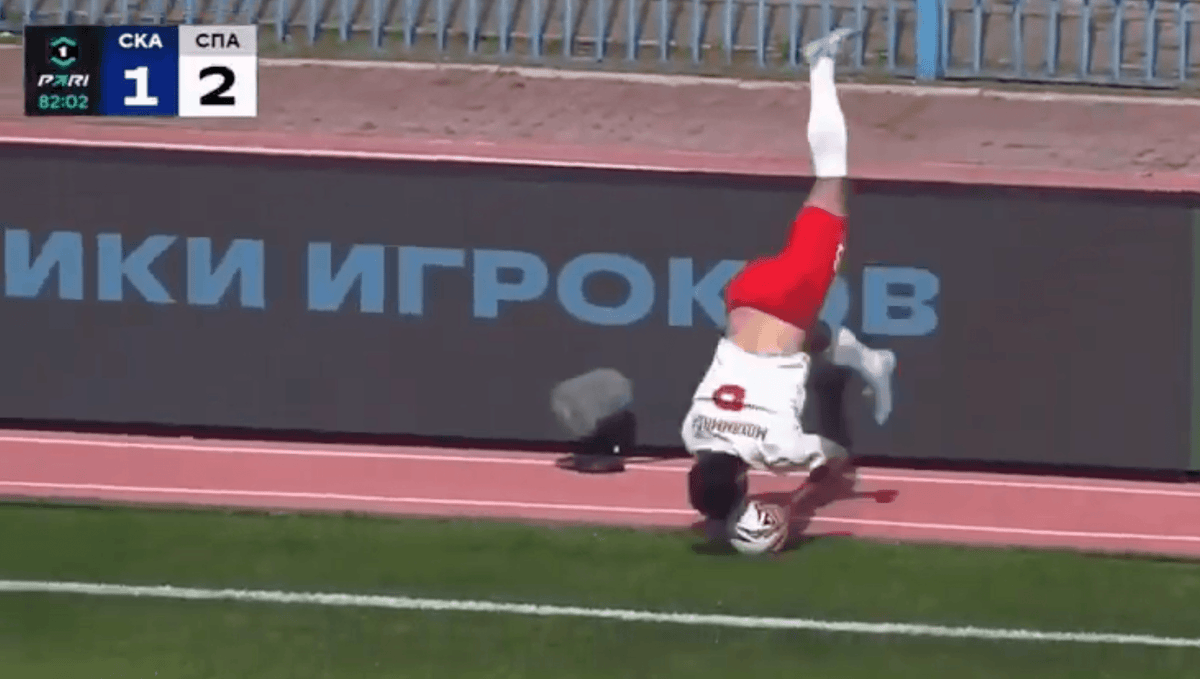
In a largely empty stadium during a match in the Russian second tier, 29-year-old centre-back Nader Mohammadi performed a move that wouldn’t look out of place in a gymnastics competition.
In just his second appearance for his new club, the Iranian defender, known back home for his somersault throw-ins, set up a team-mate on Sunday with his speciality move.
🇮🇷🇷🇺Iranian defender Nader Mohammadi produced a spectacular assist for Spartak Kostroma against SKA-Khabarovsk — using a somersault throw-in to launch the ball into the box. 🤸♂️⚽
The flip throw was famously used by Estonia’s Risto Kallaste and Newcastle’s Steve Watson in the… pic.twitter.com/kPUrT6OJNa
— EF (@EURASIAFOOTBALL) August 9, 2026
Front-flip throw-ins are not new, but are rarely seen — and even less frequently lead to goals.
Voga Wallace, a soccer player at the University of Virginia, was one of the first proponents in 1982. In English football, Newcastle United’s Steve Watson used the technique in the early 1990s, while Estonia’s Risto Kallaste took it to the international stage.
While the flip provides greater momentum to fling the ball further, it is a high-risk, high-reward manoeuvre — great when it works, but slightly embarrassing when it doesn’t. Cue Iran’s Milad Mohammadi, who did the roll but didn’t release the ball in added time during a 1-0 loss to Spain in the group stages of the 2018 World Cup.
But Nader Mohammadi has showed it can still be an effective skill. He even scored from one of his throw-ins in the Iran top tier in 2020 when a goalkeeper tipped the ball into his own net.
So how does he do it?
Mohammadi had spent his entire career in Iran’s top division, the Persian Gulf Pro League, before moving to second-tier Russian team Spartak Kostroma in July.
On Sunday, Spartak, who are third after five games, played bottom-of-the-league team SKA-Khabarovsk. Mohammadi came off the bench in the 67th minute with his team 2-1 up after coming back from going a goal behind.
When the ball goes out for a throw-in, the defender takes the ball and backs up as far as possible.

He puts his right leg forward and falls onto the ball head-first, using it to spring back up as his head narrowly avoids contact with the ground.

After he’s flipped, he swings the ball from behind his head and releases it when his arms straighten, using the momentum of the flip.

It does appear that, when he lands, one of his feet is close to being over the touchline and entering the field of play.
It’s worth remembering that for a throw-in to be legal, each foot should be on the ground either on the touchline or behind it when the ball is released. So, if the officials had taken a closer look, it could have been ruled out.
Lucky for Mohammadi, there is no use of VAR in the Russian second tier.

The ball flies about 40 yards (36 metres) into the opposition’s box.
Mohammadi’s jersey ends up over his head, adding a comical touch, but the effectiveness was not a laughing matter for the SKA defenders as Sergey Bugriev was left with a free header and glanced it past the keeper to extend Spartak’s lead to 3-1 in the 83rd minute.

The SKA defenders don’t cover themselves in glory. They outnumbered the attackers two to one in their box, but their non-existent marking meant Bugriev was first to the ball.
Front-flip throw-ins have been, and still are, probably too risky to be used more routinely, even with the recent rise in set-piece importance.
But Mohammadi can consider himself an expert in what is one of football’s hardest skills.
>
Sports
Hayden Hackney interview: What Carrick taught him, first thoughts on Moyes and making the ‘step up’
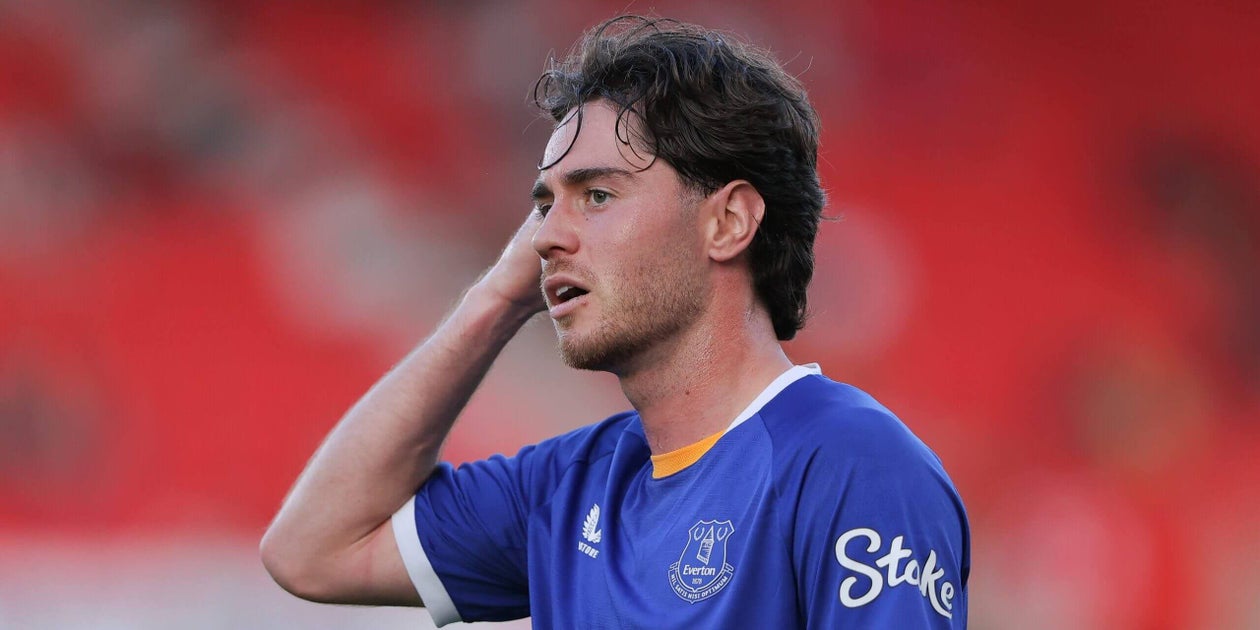
It was during Michael Carrick’s time as Middlesbrough manager from 2022-2025 that Hayden Hackney really started to come into his own.
For a promising talent like the Redcar-born midfielder, Carrick’s mentorship proved invaluable. The former England international and future permanent Manchester United manager helped teach him the intricacies of their shared position, kick-starting a process that saw Hackney finally achieve his dream of becoming a Premier League player this summer.
“I can’t thank him enough, really,” says Hackney, who joined Everton from his boyhood club last month in an initial £16.5million ($22m) deal, in an exclusive interview with The Athletic.
“We would do unit work and he was always with the midfielders. It was just different things that I would never have thought of: positioning, knowing when to jump and stuff.
“As a kid, I was taught to take your first touch out of your feet. He was saying take it into your feet and you can pass it straight forward without the other midfielders being ready for it.
“He brought out (the idea) to pass forward as much as possible and not be worried about giving it away because if you keep doing that, the pass that you make that the forward breaks the lines (with) will be the one that opens something up or creates the goal. He almost doubled down on that, which I’ve put into my game.”

Michael Carrick with Hayden Hackney in 2022 (Mike Egerton/PA Images via Getty Images)
Speaking from Everton’s Black Forest pre-season training base in Germany, Hackney also credits current Middlesbrough manager Kim Hellberg for helping him reach the next level.
“He was very good at allowing the players to do what they were best at,” the 24-year-old explains. “And putting everyone in the position, for example, for me to be able to pass forward or to run with the ball, get into the box to score a goal, or be in the right position for the counter-press.”
Hackney was named Championship player of the season and was destined for a move the minute Middlesbrough missed out on promotion in May’s play-off final against Hull City at Wembley. That Premier League transfer eventually came at the start of July, following protracted talks between Middlesbrough and Everton.
Leaving his hometown side was clearly a wrench, but he feels he is in the best place to continue his development.
Hackney attracted widespread interest from Premier League clubs this summer, holding discussions with around eight potential suitors. But Everton were always his preference.
“There was a little bit of something (in terms of interest) last summer,” he says. “Nothing really happened and then more or less straight after the season, there was something again.
“I know everyone would say it but it really was my first choice and I did want to come here. I’m just so glad that it happened.”
Everton manager David Moyes’ record with players signed from the Championship was a big draw. Under the Scot, Phil Jagielka, Leighton Baines, Joleon Lescott and Jarrod Bowen (during Moyes’ time at West Ham United) were all taken from the second tier and became England internationals.
Hackney also sought advice from his former England Under-21s team-mate and Everton defender Jarrad Branthwaite before joining, while he sees similarities with the club he left behind.
“It was speaking to the manager, Jarrad and stuff like that,” he says. “He (Moyes) has been really good with me. I know what he wants from me in the games and training. And he’s got a past record with Championship players, so it’s drawn me in even more. Jarrad only had good things to say.
“Obviously it’s a massive club and I also think it’s what I’m used to. It’s got similar things to Middlesbrough. The people — everyone’s friendly, everyone speaks. It was the next step for me.”

Hayden Hackney and Middlesbrough were beaten in May’s Championship play-off final at Wembley (Julian Finney/Getty Images)
Hackney has quickly settled in at Everton.
His downtime in camp was largely spent playing golf with a group that included Branthwaite and Scotland right-back Nathan Patterson, while he also praises de facto captain James Tarkowski for “making me feel welcome on the first day”.
“All the lads did, to be honest,” says Hackney. “It was very easy to settle in.”
The pre-season games so far have shown his versatility.
Against Stoke City and Hamburg, Hackney often dropped deep to take the ball off the defence and “overload” the opposition, as he puts it. But there have also been times when he has surged forward impressively and broken the opposition lines, another trait from his time at Middlesbrough.
On the midfield roles he can play, he says: “I can do them all. I would personally say No 8 is my best position where I can do a bit of everything, but I can play 6 and probably 10 as well.
“That (ball carrying) is one of my biggest strengths. Mixing up the play as well, passing forward and running with the ball as well to break a line. Someone (an opposition player) having to come to me creates more space for the higher players.”

Hayden Hackney says ball-carrying is ‘one of my biggest strengths’ (Christian Kaspar-Bartke/Getty Images)
Moyes has tasked him with coming forward from a deep position and “trying to get in behind the opposition midfield as we move higher up the pitch, so then I can make those forward passes”, which Hackney thinks “will come” in time.
Hackney is confident in his ability. But there is an acceptance there is a jump from the Championship, and that competition in his new team’s midfield will be fierce.
On the day we speak, Denmark international Christian Norgaard has joined from Arsenal in a £7million deal, further reinforcing Moyes’ options.
“That is what I want, because every day in training you’re going up against each other,” says Hackney. “It’s a good test, probably just as good as in a game, and healthy competition.
“It is a step up. There’s some unbelievable players. Even in training, if you lose the ball, you’re probably not going to get it back for a while. Or if someone gives the ball away, it’ll probably end up in a goal. That’s probably the difference.
“It will take some time, but that’s not an excuse. I want to play as much as I can and to chip in with as many goals and assists as I can as well to help the team.
“I feel like I’m ready to make the step up.”
>

Welcome to Unai Emery’s Aston Villa, Mark II

Is this the greatest throw-in? The sideline somersault that became a spectacular assist

Sonic the Hedgehog Teases Fortnite Season Collaboration – Interest
-

 movies3 months ago
Search For Canadian TV Actor Stewart McLean Now Homicide Investigation
-

 Fashion9 years ago
These ’90s fashion trends are making a comeback in 2017
-
Fashion9 years ago
According to Dior Couture, this taboo fashion accessory is back
-
Fashion9 years ago
Model Jocelyn Chew’s Instagram is the best vacation you’ve ever had
-
Fashion9 years ago
Your comprehensive guide to this fall’s biggest trends
-
Fashion9 years ago
9 Celebrities who have spoken out about being photoshopped
-
Fashion9 years ago
Emily Ratajkowski channels back-to-school style
-
Fashion9 years ago
A photo diary of the nightlife scene from LA To Ibiza