
Tech
An unreleased Anthropic model made progress on one of math’s biggest unsolved problems


For more than 150 years, the Riemann hypothesis has stood as one of the major unsolved problems in mathematics, a long-running mystery about the distribution of prime numbers. There is currently a $1 million bounty for a working general proof of the hypothesis, which remains unclaimed.
Contemporary AI models still can’t solve it either — but they can make a lot more progress than you might expect, a finding that’s likely to reopen long-standing questions about contemporary AI’s ability to discover new scientific and mathematical ideas.
On Monday, Anthropic announced that an as-yet-unreleased model had made significant progress on the Riemann hypothesis, significantly increasing the lower bound of solutions for which the hypothesis holds true.
Even more impressive is how the progress was made: An Anthropic staff member without significant mathematical training prompted the model to “take a real stab” at proving the hypothesis, then left the model to coordinate the task across the following day and a half.
All told, the model tested 650 different ideas for solving the problem, coordinating across 60 sub-agents and spending 31 million in total.
“Out of the 60 subagents, two were responsible for developing the key mathematical ideas,” a footnote to the paper explains, “13 contributed ideas to these agents, 30 attempted (but were unable) to develop new ideas, 13 served as validators to check the correctness of the arguments, and the final two helped to write the initial paper.”
The finding was confirmed by two of Anthropic’s in-house mathematicians, and formalized using the open-source proof assistant Lean.
This is the latest in a string of mathematical breakthroughs led by Large Language Models, or LLMs. A number of Erdos problems have been solved by AI models over the course of this year, and the release of more powerful models has led to more impressive results. OpenAI recently released a set of ten major results proved by its internal “Astra” model, while a separate effort from Anthropic disproved the long-standing Jacobian conjecture.
The growing body of results has caused both excitement and concern in the mathematical field. In a public declaration signed in June, a group of prominent mathematicians raised concerns that AI could undermine critical values of the field — particularly the standard that true mathematical proofs should be “attributable to specific authors who take credit for their discovery and assume responsibility for their correctness.”
But the field is still split on how mathematicians should approach the new research techniques. In a blog post responding to the declaration, Fields Medal winner Timothy Gowers questioned whether the influence of AI might change mathematics in a more complex and positive way.
“If we arrive at a world where mathematical theorems are no longer associated with mathematicians, maybe that won’t be any more problematic than the fact that stars aren’t named after astronomers and most aren’t named at all,” Gowers wrote.
When you purchase through links in our articles, we may earn a small commission. This doesn’t affect our editorial independence.
>
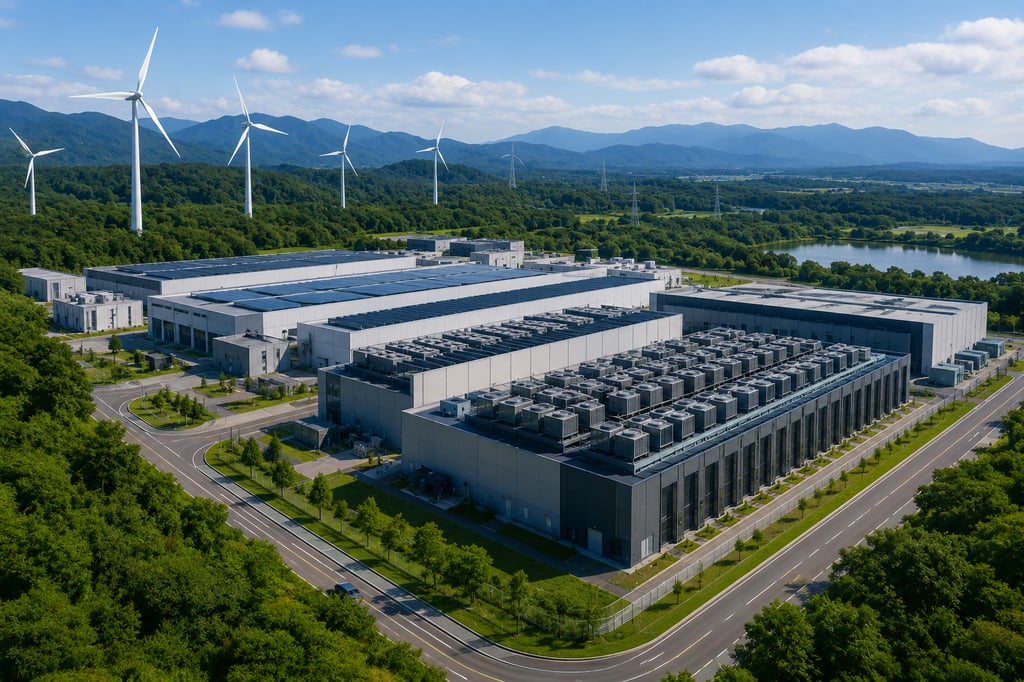
Japan could gain one of its largest AI data centers under a project in Akita now expected to cost more than ¥2 trillion, or roughly $12.6 billion, with Abu Dhabi sovereign investor Mubadala considering an investment.
If completed, the 300–500 MW project would add substantial AI compute capacity outside Japan’s established data center hubs.
For enterprises planning future Japan-based workloads, however, the useful capacity will depend on whether organizers can secure financing, grid connections, and enough deliverable power to support the proposed scale.
A ¥2 trillion project could expand Japan’s AI capacity map
Japan Today reported that expected construction costs now exceed ¥2 trillion and that Mubadala Investment Co. is considering backing the project. No final investment commitment has been announced.
The financial scope being discussed is considerably larger than earlier figures. JETRO reported in November 2025 that planned investment could reach ¥400 billion.
The figures are not directly comparable because the earlier number described expected investment while the new figure is reported as construction cost. Still, the latest estimate establishes Akita as a much larger infrastructure project than its initial public outline suggested.
Akita City signed a cooperation agreement with S2 and Bitgrit in October 2025. Organizers say they have secured 50 hectares in a renewable-energy industrial park in northern Akita City and are targeting full operation around 2033.
That scale could broaden where enterprises source Japan-based AI infrastructure. Most current capacity remains concentrated around established markets, although providers are expanding, including Alibaba Cloud with its fifth Japan data center.
Akita would offer a different proposition: large-scale AI infrastructure built around access to regional renewable generation rather than proximity to an existing metropolitan data center cluster.
Power and financing will decide how much capacity arrives
The project’s official site describes 300–500 MW of renewable-energy potential, including offshore wind. That does not mean the data center has already secured 500 MW of usable IT load or the grid connections required to deliver it.
That distinction directly affects future customers. A planned 500 MW campus does not create 500 MW of bookable compute capacity if electricity connections, substations, or generation cannot arrive on the same timetable.
Similar constraints are already affecting data center expansion elsewhere. US grid capacity constraints are slowing some proposed projects, while Australia is preparing for additional pressure from AI data center demand.
Akita therefore remains a long-term capacity prospect rather than infrastructure enterprises can include in near-term deployment plans. A Mubadala investment could strengthen the financing side, but customers will also need evidence of grid interconnection, construction milestones, operating partners, and committed capacity before the project becomes a realistic sourcing option.
Also read: Uptime Institute found 57% of major data center outages now cost more than $100,000, even as overall outage frequency declines.
>
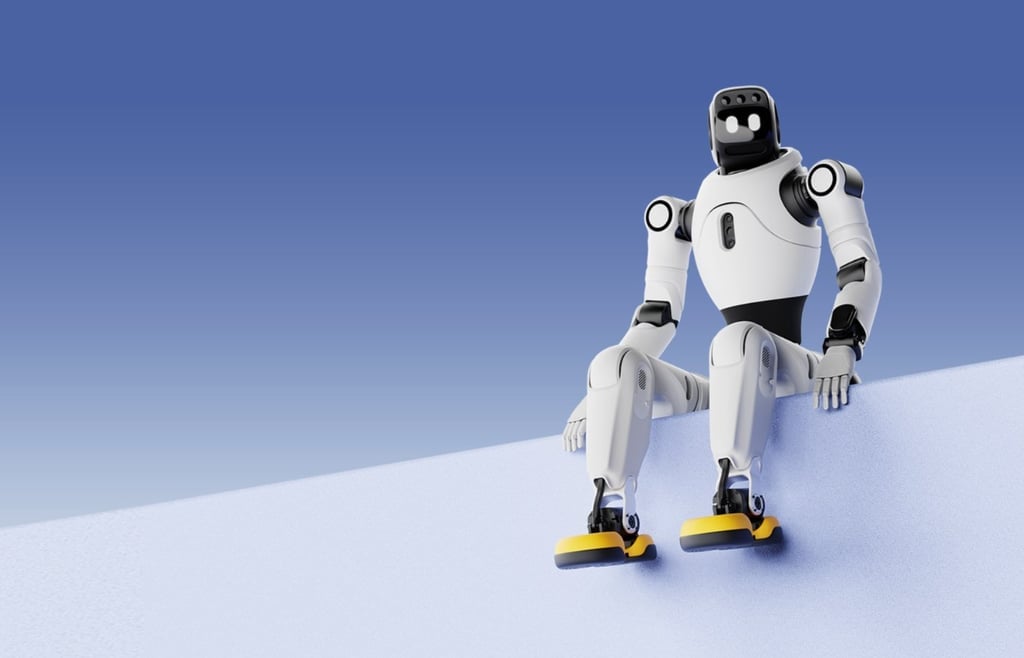
Humanoid robots are no longer just dancing for the cameras; they are starting to clock in for work.
Smart Analytics Global (SAG) estimates that global humanoid robot shipments reached about 19,100 units in the first half of 2026, up 272% from a year earlier.
The growth is also reshaping the market’s leadership. Shanghai-based AGIBOT shipped about 8,400 robots, giving it 44% of global shipments and pushing it ahead of Unitree Robotics, which shipped about 5,900 units for a 31% share. Together, the two companies accounted for roughly three-quarters of worldwide shipments.
China’s lead extends beyond its biggest manufacturers. Chinese vendors accounted for more than 97% of global humanoid robot shipments during the period, while Chinese customers represented more than 85% of global demand, SAG said.
SAG expects worldwide shipments to approach 60,000 units for all of 2026, with industry revenue reaching about $1.6 billion. It forecasts shipments could reach 500,000 units by 2030.
Robots are moving into the workplace
The most important change may not be the number of robots sold, but where they are being used.
Industrial and commercial applications represented more than 70% of shipments in the first half, compared with about 50% a year earlier, SAG said. Manufacturing, logistics, warehousing and other controlled environments are emerging as the industry’s main route to commercial scale.
“Global humanoid robot shipments nearly quadrupled in 1H 2026, but an equally important shift is taking place in how these robots are being deployed,” Linda Sui, founder and principal at SAG, said in the report.
AGIBOT’s broader product lineup has helped it target industrial and commercial customers, while research, education and performance applications continue to represent a meaningful portion of Unitree’s deployments, according to SAG. Other Chinese manufacturers are also pursuing wheeled designs, which may prioritize stability and cost in structured workplaces.
China’s manufacturing advantage
China’s dominance reflects more than government support. The country has a large manufacturing base, domestic suppliers and a huge pool of industrial environments where robots can be tested and refined.
That combination could create a powerful feedback loop: more robots deployed in factories and warehouses can generate more operational experience, while domestic manufacturing can help companies improve designs and lower costs. But shipment numbers alone do not prove that humanoid robots are ready for widespread use. SAG said challenges remain around training data, AI models, reliability, manipulation accuracy, safety and cost.
The volume race has limits
The industry’s biggest question is whether rapid hardware production can keep pace with improvements in the software and AI controlling these machines.
SAG does not expect general-purpose humanoid robots for household tasks to reach meaningful mass-market scale within the next five years. More human-like robots designed for interaction and companionship also face questions around cost, consumer acceptance and regulation.
Geopolitics adds another complication. Recent US restrictions generally prevent new foreign-produced advanced robotic devices from receiving the FCC authorization needed for importation or sale. Previously authorized models remain unaffected, and conditional approvals are possible, but the rules could still make U.S. expansion harder for Chinese manufacturers.
For now, China’s shipment lead is undeniable. But the next stage of competition will depend less on how many robots leave factories and more on whether those machines can reliably perform useful work at an economically viable cost.
Read more: Chinese EV makers are racing Tesla to mass-produce humanoid robots, further expanding China’s lead in the global robotics industry.
>
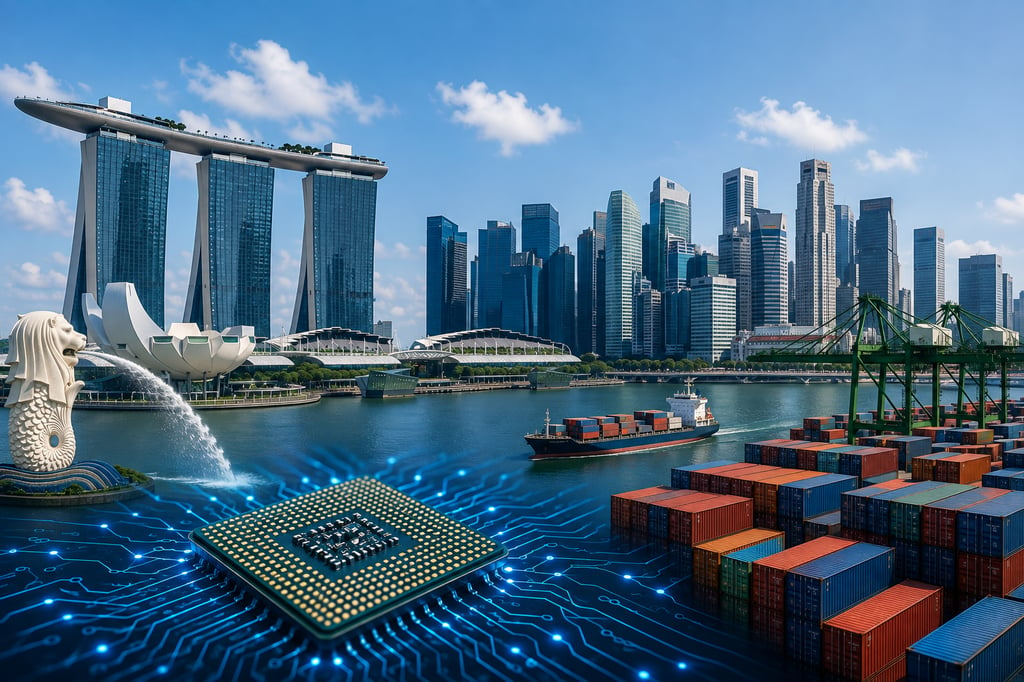
Singapore has raised its 2026 economic growth forecast to 4.5%–5.5% after stronger-than-expected global AI investment helped lift semiconductor demand, exports, and manufacturing output.
The upgrade turns the AI spending boom into something more concrete than rising tech valuations. For hardware manufacturers and suppliers across APAC, Singapore is showing how global AI capital spending can feed through into national growth. It also leaves those businesses more exposed if that spending cools.
AI demand is lifting Singapore’s exports and manufacturing
The new forecast is Singapore’s second upgrade this year. The Ministry of Trade and Industry raised its outlook from 1%–3% to 2%–4% in February before moving it to 4.5%–5.5% in August.
Singapore’s economy grew 5.9% year over year in the second quarter, pushing first-half growth to 6.1%. MTI said global AI investment had been stronger than expected, supporting producers and exporters of AI-related products such as semiconductors.
That connection is already visible in trade data. Singapore’s non-oil domestic exports grew 27.4% year over year in the second quarter, after rising 9.6% in the first.
Electronics exports grew particularly quickly as demand increased for integrated circuits, storage products, and other hardware used in AI systems. The same demand pressure is driving investment elsewhere in the supply chain, including SK hynix’s $38 billion memory expansion.
Singapore also sits close to the infrastructure side of the spending cycle. APAC operators are already dealing with larger AI data center fleets and tighter power constraints, while Singapore-based DayOne raised $2 billion earlier this year for its AI infrastructure expansion.
For technology suppliers, continued AI investment supports demand for chips, storage, semiconductor equipment, and the trade services surrounding them. Singapore’s revised forecast provides a measurable indication of how far that spending is reaching beyond the companies building AI models and data centers.
Singapore’s gains also reveal an AI concentration risk
The stronger AI contribution also increases the downside if investment slows.
The ASEAN+3 Macroeconomic Research Office estimates that roughly half of global AI-related trade passes through ASEAN+3 and that AI-linked exports generated around two-thirds of the region’s export growth in the first quarter.
AMRO raised its 2026 regional growth forecast to 4.1%, citing stronger AI-related demand. But it also modeled what happens if the cycle weakens: if global AI investment growth falls back to its 2024 pace, ASEAN+3 growth could slow to 2.5% in 2027, its weakest rate outside the pandemic years since the Asian Financial Crisis.
For manufacturers, semiconductor suppliers, and enterprise procurement teams, that makes global AI capital expenditure a useful signal alongside Singapore’s headline GDP numbers. Capacity plans built around today’s electronics growth still depend heavily on continued investment in the infrastructure and hardware supporting AI workloads.
Singapore’s upgraded forecast captures both sides of the cycle: AI investment is already strong enough to lift exports, manufacturing, and national growth, while greater dependence on that demand increases the exposure if spending changes direction.
Also read: Japan’s planned Akita AI data center is now estimated at $12.6 billion, with Mubadala considering an investment in the renewable-powered project.
>

Possession Remake: Callum Turner, Margaret Qualley Movie Sets Release

Rhythm Heaven Groove Game Review – Game Review

The Hundred Women: Manchester Super Giants vs Sunrisers Leeds Highlights
-

 movies3 months ago
Search For Canadian TV Actor Stewart McLean Now Homicide Investigation
-

 Fashion9 years ago
These ’90s fashion trends are making a comeback in 2017
-
Fashion9 years ago
According to Dior Couture, this taboo fashion accessory is back
-
Fashion9 years ago
Model Jocelyn Chew’s Instagram is the best vacation you’ve ever had
-
Fashion9 years ago
Your comprehensive guide to this fall’s biggest trends
-
Fashion9 years ago
9 Celebrities who have spoken out about being photoshopped
-
Fashion9 years ago
Emily Ratajkowski channels back-to-school style
-
Fashion9 years ago
A photo diary of the nightlife scene from LA To Ibiza