
Sports
Why Spurs selling Romero and Spence would signal a big shift in their transfer policy

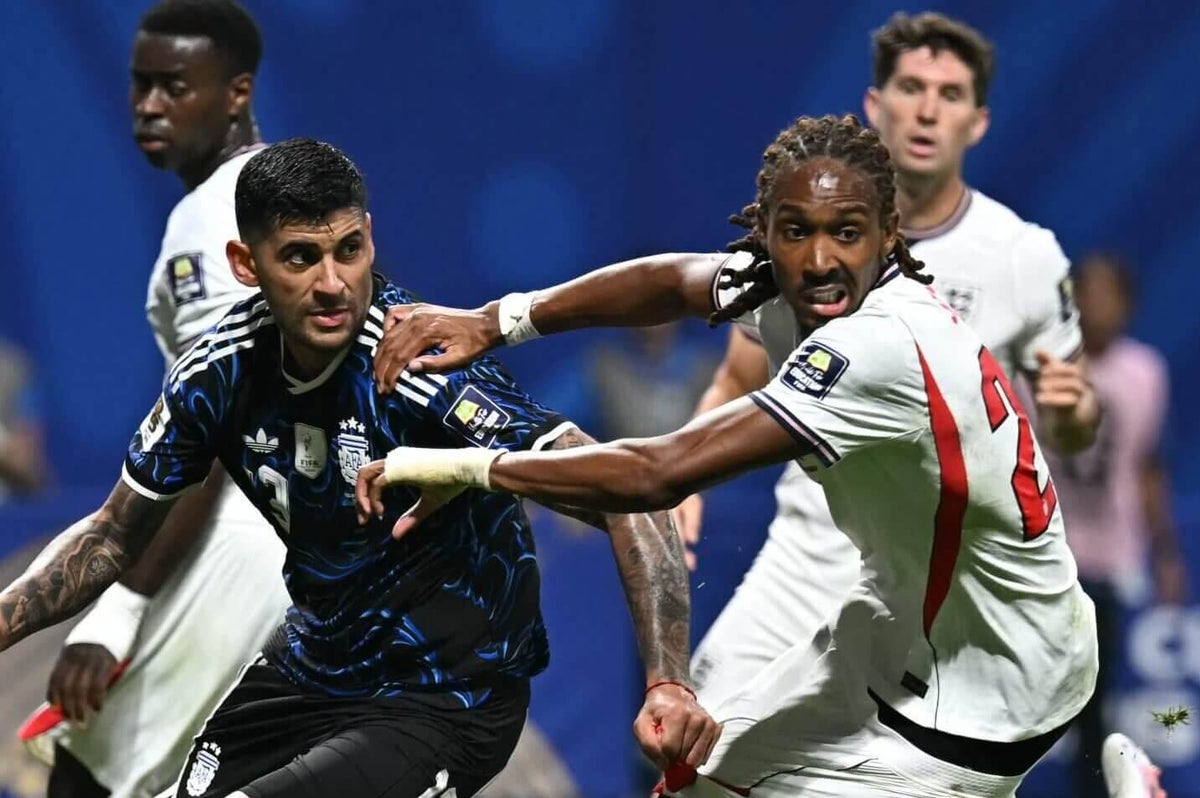
It was only four weeks ago that Djed Spence and Cristian Romero were on opposing sides in the World Cup semi-final in Atlanta, competing on behalf of their countries for the right to face Spain in the final.
Both men played well, Romero shackling Jude Bellingham for much of the evening, Spence producing a famous recovery tackle on Giuliano Simeone when England were 1-0 up.
While it was Argentina who made it through to the final — and Pedro Porro’s Spain who won the whole thing — both Spence and Romero clearly had good World Cups, helping their respective countries get to the business end of the competition. Both players flew home with different colour medals from the gold that they dreamed of, but with reputations enhanced.
But now, in the middle of August, with the new Premier League season just around the corner, both Spence and Romero find themselves in the same position. It is an unusual one for a Tottenham Hotspur first-teamer to be in as the club decides whether to sell them before the start of the new season.
There has been speculation about the duo’s futures for some time. That in itself is nothing new. But with Spurs’ first Premier League game — away at Brentford — coming up on Saturday week, it is coming up to decision time for these two players.
Inter moved into pole position to sign Spence this week, entering into talks with Spurs over a €30million deal. Inter were also in for Romero — The Athletic reported last week that they even verbally agreed the principle of a €40m fee with Tottenham — but they have now been joined in competition by Atletico Madrid. Romero has also been of interest to Arsenal.

(Gareth Copley/Getty Images)
As it stands, nothing has been agreed in either case but it has increasingly felt this week that the direction of travel has been towards a sale for both players.
If that turns out to be so, and if Spence and Romero are sold this month, then it would be one of the most significant moments of the post-Daniel Levy era. Not simply for the importance of the departing players, or what the money would allow Spurs to do, but for the strategic pivot it would imply.
We have already seen this month that Tottenham have changed their attitude to buying players. That much is clear from the fees that they spent on Mateus Fernandes and Sandro Tonali. They have also changed their attitude to salaries, as proven by the big wages to attract those players, as well as to get established ones like Porro and Micky van de Ven to re-commit to new contracts.
If Romero and Spence are sold this month, it will show that Tottenham have transformed their attitude to selling too.
The club have traditionally had a complicated relationship with selling. They were never going to be the apex predator of the football food chain. And yet while some clubs of similar size were happy to keep selling players to re-invest, Tottenham generally only sold first-team players in very specific circumstances.
If they had a top player who was sought after by a bigger, richer club than Spurs, that is to say, if Spurs had all the leverage in the negotiation, then Levy would exploit that position and sell the player for a big fee. Dimitar Berbatov to Manchester United, Luka Modric and Gareth Bale to Real Madrid, Kyle Walker to Manchester City, Harry Kane to Bayern Munich and so on.
The fees that Levy was able to extract in part justified the policy. Real Madrid paid a world record €100m (£85m) for Bale in September 2013. Four years later Walker became the joint most expensive defender of all time when he moved to City. And three years ago Spurs got a fee equivalent to the Bale fee for Kane, even though he only had one year left on his Tottenham contract.

(Denis Doyle/Getty Images)
The problem for Spurs was not the big deals. It was everything else. While they were generally happy to sell top players for top money, Levy did not want to do deals just to get players out of the door. There was a limit to how much Tottenham wanted to be seen as a ‘selling club’. There was a degree of status-anxiety here, as Spurs tried to prove to the world they would not be pushed around.
This reluctance to sell players beyond the big-ticket deals — Bale, Walker, Kane — had a profound strategic impact on Spurs. It meant that the process of refreshing Mauricio Pochettino’s team, moving on tired old players, replacing them with new ones, was so hard to do. There was no space nor money for new recruits. Staff said privately that it was like a swimming pool that needed to have the water refreshed. Without change, it would go stale.
During the course of those years, so many opportunities were missed to sell players — beyond Walker — to generate money to refresh the team. Manchester United wanted Eric Dier in 2017, the same summer that Chelsea wanted Danny Rose, and would have paid £50m for him. Jose Mourinho wanted Toby Alderweireld at Manchester United the following year. Napoli wanted Lucas Moura in the summer of 2019 after his Ajax hat-trick. Big fees could have been generated for Dele Alli or Christian Eriksen if Tottenham had played their cards right.
But in almost every case, Tottenham failed to sell at the right time. They missed the opportunity to move players on when they were at their peak and when there was a genuine market for them. It felt as if Tottenham would only sell under what you might call ‘Gareth Bale conditions’. They would never compromise to move someone on apart from that. (Kieran Trippier going to Atletico in 2019 is a rare counter-example.)
This meant that a whole generation of Spurs players — Walker and Kane aside — stayed far too long, and left for practically nothing. Rose and Lucas on free transfers, Dier on an initial loan made permanent, Dele on a performance-related move to Everton, Alderweireld for Qatar, Eriksen for Inter on a cut-price deal with only six months left on his Spurs contract, Erik Lamela in part-exchange with Bryan Gil. Hundreds of millions of pounds of potential market value was allowed to diminish to practically nothing.

(Dan Mullan/Getty Images)
Ever since Levy’s dismissal as chairman, one of the key points for improvement that the club hierarchy have spoken about has been the importance of selling players, especially in the new era of financial regulation.
There was some consternation when Spurs sold Brennan Johnson to Crystal Palace in January for £35m, but this was precisely the sort of deal that Tottenham never used to do. Johnson was not in the team, the money was on the table, and his valuation was probably likelier to go down rather than up. It made sense to do the deal. And when CEO Vinai Venkatesham spoke to the Fans Advisory Board in June, he pointed to that transfer as an example of the new approach to sales the club wants.
If Romero and Spence are sold — and nothing has happened yet — you could look at those deals as comparable to Johnson’s departure in January. There will be a lot of people who will say that Spurs should keep the players, or push for more money, rather than letting them go so easily.
But that attitude — allowing the perfect to be the enemy of the good — has been precisely Tottenham’s problem over the years. Sometimes the right answer is just to shake hands, take the money and use it to refresh the squad.
This was the part of the transfer market Spurs struggled with for so long. Maybe, depending on what happens to Spence and Romero, they have found a new approach.
>
Welcome to our Who am I? game.
The rules are simple. Each day there’s a new footballer and the challenge is to guess who they are in as few attempts as possible.
After each wrong guess you unlock a new clue. The fewer clues you need to get the right answer, the more points you score.
Three is a good score, four or five points is exceptional.
So take part and return for more tomorrow.
Today’s player and clues set by BBC Sport’s Flora Snelson.
After more quizzes? Go to our dedicated Football Quizzes and Sports Quizzes pages and sign up for notifications to get the latest quizzes sent straight to your device.
>
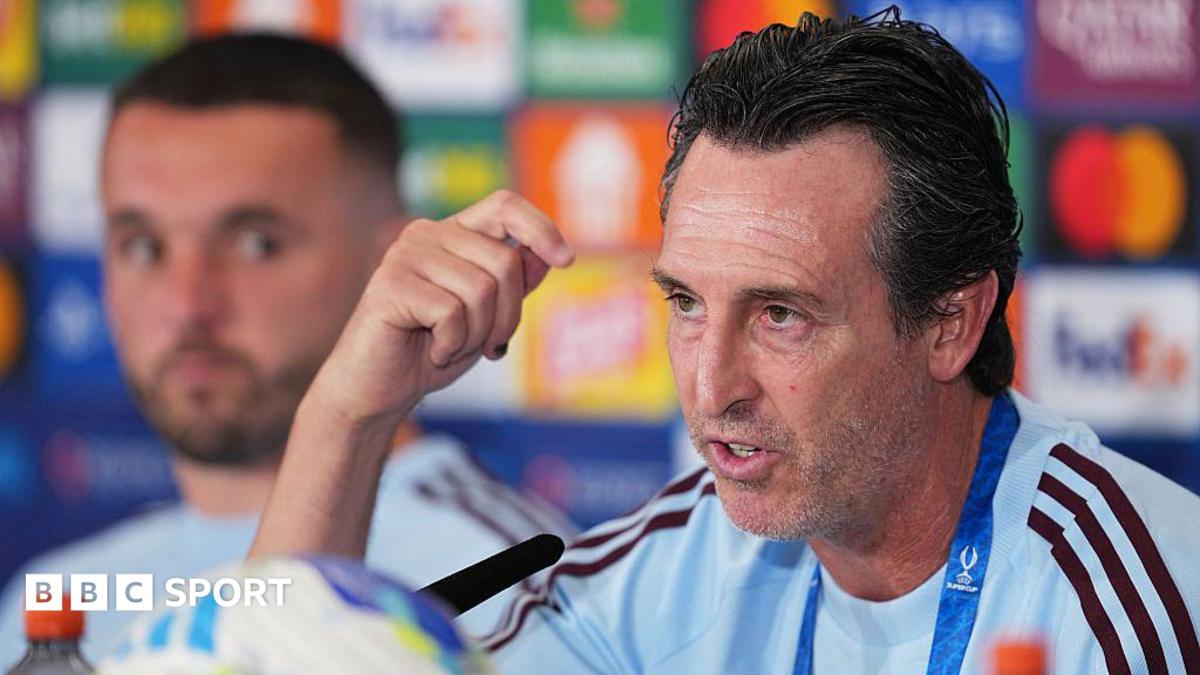
Wednesday’s game between Villa and PSG is a repeat of the Champions League quarter-final from 2024-25.
Trailing 3-1 from the first leg at Parc des Princes and falling 5-1 behind on aggregate in Birmingham, Villa were so close to pulling of a huge shock.
They roared back from 2-0 down to win 3-2 on the night, eventually bowing out 5-4 on aggregate, and it was one of the biggest signs Emery had turned them into a side which could compete with Europe’s best.
It is something which has stuck in the minds of the PSG players, with Vitinha wary of Villa’s threat.
“It was such a difficult test, especially the second half,” said Vitinha.
“We’ll be ready but we’re conscious of how difficult it’s going to be.”
Villa’s line-up in Austria will have a drastically different look, just 484 days since that game.
Morgan Rogers, Lucas Digne and Youri Tielemans have been sold while Amadou Onana is out injured until next year.
Fellow midfielder Boubacar Kamara is in the squad, but is only just returning from a serious knee injury he suffered in January.
Emi Martinez, Ezri Konsa and Ollie Watkins have not travelled after playing at the World Cup, with Emery giving them a month off.
It means there is a chance just four of the starters who faced the French champions 18 months ago will start for Villa. Five of the substitutes that night are also no longer at the club.
For a team so settled and consistent as Villa under Emery that is a drastic change.
“A lot has changed in the eight years I’ve been here,” said skipper McGinn.
“When you are signing the best young English talent and players are performing at the highest level there will be interest.
“We have a structure in place, standards and rules which have made us a success. I’m really excited about the new Aston Villa.
“We have our main core, the same manager, same methods and same desire to achieve more. A lot of people thought we reached a ceiling a couple of seasons ago and we proved them wrong.”
>

Welcome to our special cricket edition of our Who am I? game.
The rules are simple. Each day of The Hundred there’s a new cricketer, taking part in the tournament, who we want you to guess in as few attempts as possible.
After each wrong guess you unlock a new clue. Guess the answer after as few clues as possible to score more points.
Three is a good score, four or five points is exceptional.
So take part and return for more tomorrow.
Today’s player and clues set by BBC Sport’s Henry Cowling.
After more quizzes? Go to our dedicated Sports Quizzes page and sign up for notifications to get the latest quizzes sent straight to your device.
>

BBC Sport quiz: Who am I? Guess Premier League footballer No 23

Andy Cohen Confronts ‘Hacks’ Creator Over Season 5 Dig at His Expense

Aston Villa: Unai Emery chases his first Super Cup
-

 movies3 months ago
Search For Canadian TV Actor Stewart McLean Now Homicide Investigation
-

 Fashion9 years ago
These ’90s fashion trends are making a comeback in 2017
-
Fashion9 years ago
According to Dior Couture, this taboo fashion accessory is back
-
Fashion9 years ago
Model Jocelyn Chew’s Instagram is the best vacation you’ve ever had
-
Fashion9 years ago
Your comprehensive guide to this fall’s biggest trends
-
Fashion9 years ago
Emily Ratajkowski channels back-to-school style
-
Fashion9 years ago
9 Celebrities who have spoken out about being photoshopped
-
Fashion9 years ago
A photo diary of the nightlife scene from LA To Ibiza