
Entertainment
WHCA Meets With Trump Officials After Decoy Flight Raises Press Safety Concerns

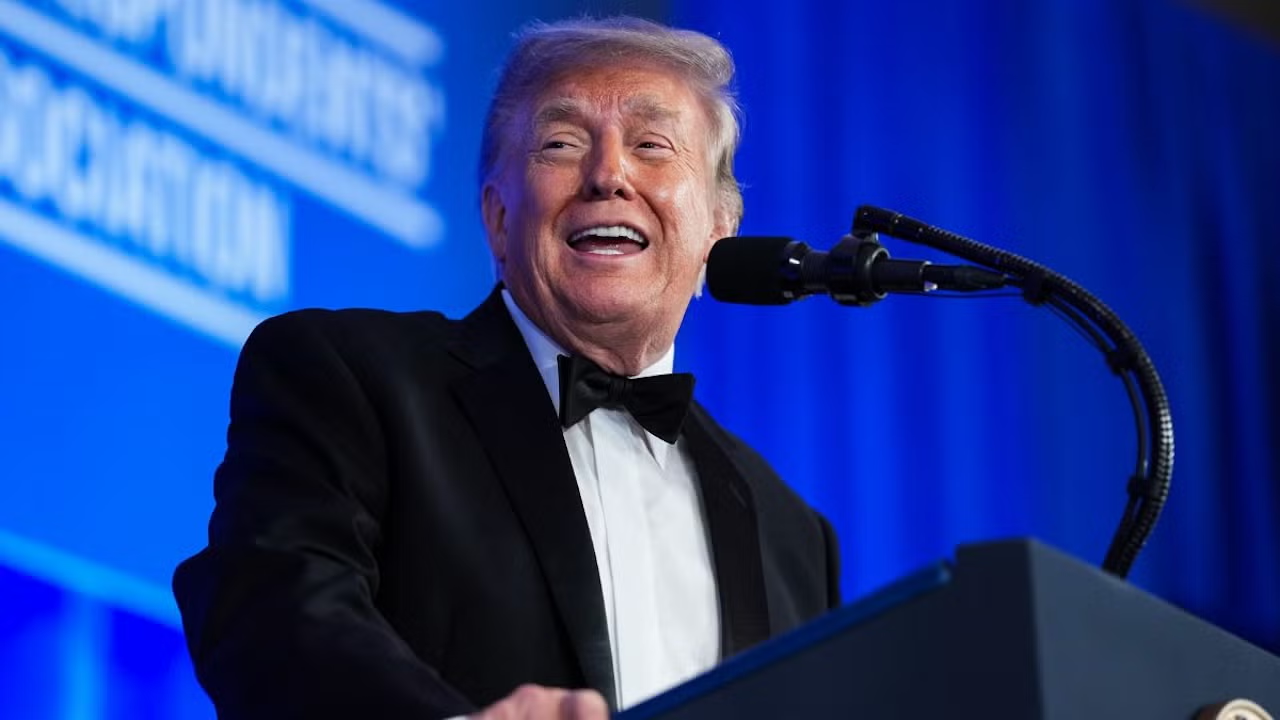
White House Correspondents’ Association President Jacqui Heinrich shared Tuesday that she met with Trump White House officials after the decoy Air Force One flight to protect the president raised concerns over press safety.
The reports, first confirmed by the Washington Post on Monday, found that the president boarded Air Force One to leave the Turkey-held NATO Summit in July before covertly leaving in a catering truck to board another plane. Members of the press and some of the president’s own staff were unwittingly left behind on the old Air Force One amid an assassination threat from Iran.
“I emphasized that WHCA recognizes the paramount responsibility of the Secret Service to protect the president and that genuine security threats can require extraordinary measures, including circumstances in which operational security limits what can be shared with reporters in real time,” Heinrich, a journalist for Fox News, said in a Tuesday memo to WHCA members. “At the same time, I advocated strongly for the importance of maintaining independent press coverage of the president and an accurate historical record of his movements.”
Heinrich’s memo, shared by CNN journalist Brian Stelter, noted that she held a “candid and productive meeting with senior administration officials” on Tuesday afternoon, discussing the July incident. This conversation addressed concerns stemming from the Washington Post reporting, including “press safety, the ability of the pool to maintain an independent record of the president’s movements and the integrity and credibility of pooled reporting.”
“More broadly, I stressed that undermining confidence in the reliability of pool reports carries risks beyond any single incident,” Heinrich added. “In an already conspiratorial information environment, uncertainty about whether independent reporting can be trusted can be exploited by bad actors seeking to sow confusion and undermine confidence in journalism.”
You can view the full statement via Stelter below.
Heinrich went on to say she asked the White House to develop a protocol for future incidents, aiming to avoid threats to both press safety and credibility. The statement drew criticism online as people pointed to journalists being used as a “decoy target” in the plane switch operation.
“We went thru two big wars traveling into hot zones with VIPs knowing how to communicate threat risks and safety to each other,” said Kevin Baron on X. “War correspondents on the ground got better OPSEC.”

>
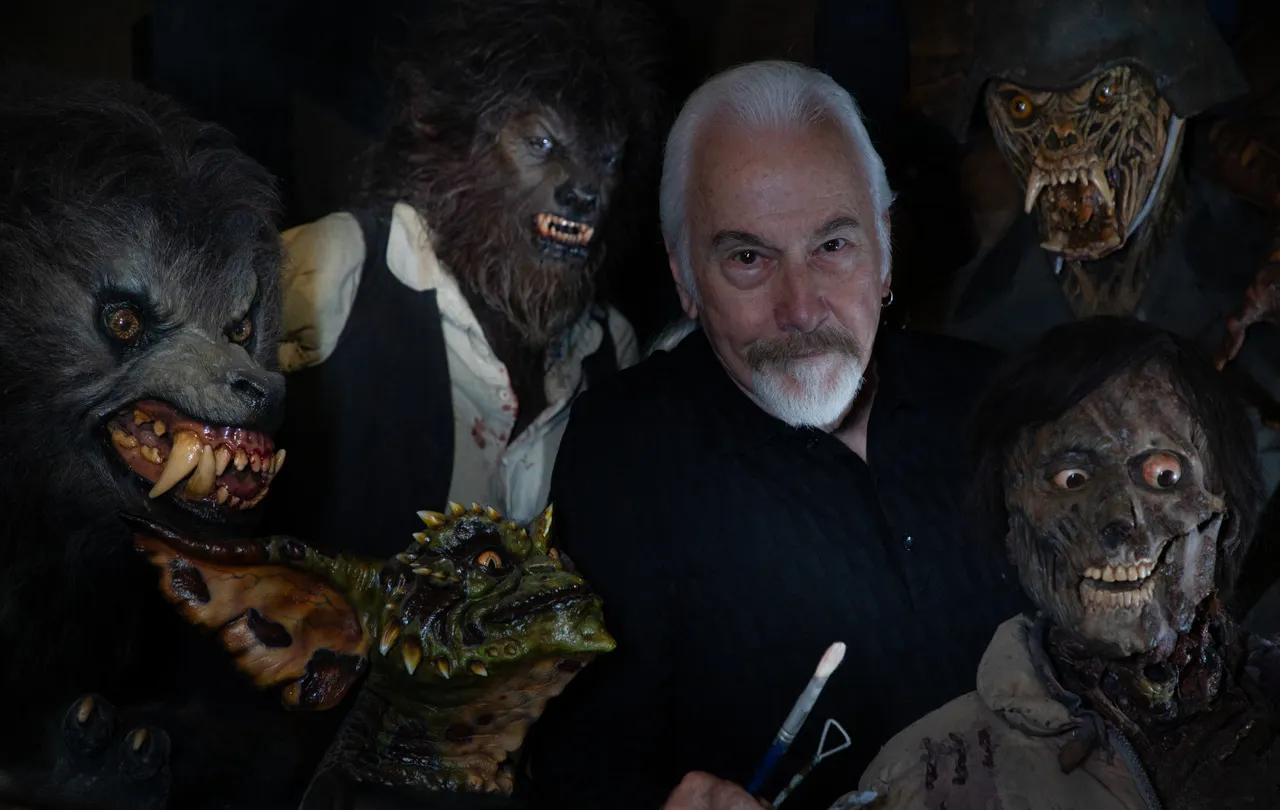
The 79th edition of the Locarno Film Festival will have Oscar royalty in the house on Wednesday evening – well, on its big 8,000-seat square, the Piazza Grande, to be precise. It will bestow its Vision Award, presented by Ticinomoda, upon Rick Baker, a seven-time Oscar winner, a record in the makeup and hairstyling field, and the creator behind some of cinema’s most fantastical creatures.
While at the Swiss festival, Baker is also presenting two key films from his career, namely An American Werewolf in London (1981) and The Nutty Professor (1996). The former marked his first Oscar win in 1981, followed by Harry and the Hendersons (1987), Ed Wood (1994), The Nutty Professor (1996)
Men in Black (1997), How the Grinch Stole Christmas (2000) and The Wolfman (2010).
You also know Baker’s work from Michael Jackson‘s famous Thriller video, in which he also played an on-screen role.
“From his early make-up work on genre films in the 1970s to his sophisticated creature and character designs for large-scale studio productions, Rick Baker has forged a new visual grammar for cinematic metamorphosis, earning him a record number of Academy Awards for best makeup and cementing his status as a reference point for generations of artists,” said Locarno organizers when they first unveiled his honor.
“Rick Baker was responsible for a Copernican revolution in cinema: visionary and revolutionary, he opened new paths for the imagination of entire generations, showing what it truly means to witness physical transmutation on the big screen,” highlighted Locarno artistic director Giona A. Nazzaro. “His filmography includes collaborations with George Lucas and David Cronenberg, Brian De Palma and Joe Dante, Tim Burton and Peter Jackson, John Carpenter and Mike Nichols, among many others.”
Before arriving in Locarno for his festival honor, Baker, 75, talked to THR about some of his best-known creations and some of the wacky experiences he had during his career.
Why did you end up wanting to work in the fields of makeup and transforming the look of actors and other performers?
I grew up in front of the TV. It was that first generation of kids to grow up in front of a TV. I loved those monster movies, and I loved the makeups. In Frankenstein, Boris Karloff just blew me away. Before I realized that makeup artist was what I wanted to be, I used to think I wanted to be a doctor because I wanted to be Doctor Frankenstein. I wanted to be a doctor, and I was going to have a basement laboratory, and I was going to make monsters. But then I grew up a little bit and also found out that I’m extremely squeamish – I don’t like the sight of real blood.
Also, my dad was kind of a ham. He’s actually in Schlock. In the first of the banana murders, there’s a dead guy on the ground. That’s my dad. But [director and star] John Landis redubbed his voice with his own voice.
How did you go about creating the look of a character, especially since you would work with all these made-up characters, such as the Grinch? Does the personality of the actors play into how you create a look at all?
When I got a call from Brian Grazer who said, “We’re going to do How the Grinch Stole Christmas, and we want Jim Carrey to be the Grinch.” I thought that’s great because Jim can make a lot of faces. I almost immediately visualized what it ended up being.
So that was all smooth sailing?
Well, the studio kept saying, “We just want Jim to be painted green.” And I went, “No, that’s going to ruin the movie.” You know, it’s not called How the Green Jim Carrey Stole Christmas. It’s the Grinch, so he should be this recognizable character. It is hard turning a 2D drawing into something. But I took what I could from that and added some Rick Baker to it. But to convince them to go with what I thought was the right way, I did the makeup on myself, filmed it and sent it to them. They went: “Well, it doesn’t look like Jim Carrey!” And I said: ‘Well, it will look more like Jim when it’s on Jim.” I mean, our face is very different. You’re not paying him for the look but for his acting, and he’s going to make this thing a really cool character.
We prepared for 10 different tests – from painting Jim Carrey green to what we eventually ended up with. I eventually felt I had to save these guys from themselves and from making a wrong decision here. I contacted Ain’t It Cool News, and they wrote a post along the lines of: “Rick Baker did this really cool makeup on himself as the Grinch, and Universal wants to paint Jim Carrey green.” And there were thousands of responses. So, two weeks before filming, they decided, okay, we’ll go for it.
Was there any other challenge with the Grinch movie?
Actually, the bigger problem I saw was the Whos, the people in Whoville. In the book, they look almost like insect people, which is going to be too weird. And as Cindy Lou Who, they cast a six-year-old Taylor Momsen. And I said: We can’t put a little girl into a three-hour makeup [session]. So we came up with a whole way that we thought it would all work. I rationalized a lot on the Whos, saying: When they’re little, their nose is more human-like, but as they grow, it moves up their face. So we could just paint her nose a little different color and give her these big teeth and give Cindy the long eyelashes.
Now, she’s a kick-ass rock star. I don’t know if you know. She’s in a band called The Pretty Reckless as the lead singer. She opens for AC/DC. She opened for the [Rolling] Stones. She’s really great. She’s got an incredible voice, and we became friends because I had daughters of the same age, and my daughters are in the Grinch movie too in a couple of scenes.
How did you come up with the ideas for Michael Jackson’s Thriller?
Thriller wasn’t as hard as a lot of other things I’ve done. It was kind of a no-brainer. I had done zombies before. Michael saw American Werewolf, and that’s why he hired John [Landis] as the director. He wanted to transform into a werewolf. Personally, I didn’t think he should be a werewolf. I thought he was much more feline. So I suggested we make him a werecat. I just thought the feline structure fit him much better.
The thing with Thriller was that we had no time and very little money on my end, and it was really just me working my butt off for weeks. Also, the dancers weren’t cast until the very end, and I said to John: “I can’t do what I normally do in a few days with this many people. Normally, we’d take a live mask of the people, sculpt custom appliances for them, mold them, cast them.”
So, he suggested a different solution: “I said I think what I can do is make some generic pieces that really are just in this area of a bandit mask, so you don’t have to deal with the proportions of the nose. We could make big teeth that we could put in them with some denture-like material, but I said that’s not going to be cool enough. So I said we should have featured zombies that are much cooler than the others. My crew and I all had our life casts already. I also had my body cast. So we started doing very cool zombies that we knew would be much more exciting than the dancer zombies. So, I’m in Thriller. My whole crew is also in Thriller. I am the bearded zombie who opens the crypt with my eyes rolled up.
Does it help with your makeup choices that you have put makeup on yourself?
I think it’s important. I think a makeup artist should have been made up, so they know what it’s like on the inside.
And beyond your cameo in Thriller, you have acted a few more times, right?
Yes, I played King Kong in the 1976 King Kong, directed by Federico De Laurentiis and produced by [his father] De Laurentiis, for which I made the suit. And I was determined not to be a whiny, complaining actor in that, like some people are when you put makeup on them. I didn’t have a dressing room. So, I would have to take my street clothes off on the stage and put this bear hide suit on and then sit there and sweat my brains out.
I read that you stepped in to play King Kong late in the process and that there was some debate about whether to use your gorilla suit or another one?
When I was younger, all the information I had about what a gorilla was came from movies, especially the original King Kong, and from any movies in the ’40s. I thought a gorilla was a real-life monster, and I started looking at films with gorilla suits in it and finding books and National Geographics and other things with gorillas in them. When I was younger, I thought I could make a realistic gorilla costume and fool people with it. So I was set on that path. The problem was I grew up very lower-middle-class. So to make a gorilla suit was a really hard thing, but I figured out ways to do it on a budget.
Years later, John Landis and I had become friends, and one day he goes, “Hey, did you hear some Italian guy is going to remake King Kong?” Somehow they got my number and knew that I had made a gorilla costume, and I thought this would be my only opportunity to really have a budget and make a real gorilla suit. This was in the era of disaster movies, and Kong was just another disaster. And they wanted to make him more like a primitive man.
I was 25 years old and went in there. I don’t have a filter. So, I brought in these mechanical gorilla hand extensions so you could have longer arms. They said: “We don’t need that shit. It’s going to be more man-like.” I thought these guys were fucking crazy. If anything, it should be a super gorilla. It should not be less of a gorilla. Kong is the greatest gorilla ever. They would rag on the original movie, and I just said: “You’ll be lucky if you can make anything near that film.” But I was still interested, and I thought I could convince them to change their mind.
But I didn’t hear from them, so I took another film. And as soon as I took the other film, they called me and said, “Yes, we want you to do this.” So I told them need six weeks to complete this other thing. When I came back, in the meantime, Dino had hired his friend from Italy, Carlo Rombaldi. They said he was a genius and wanted us to work together. But he didn’t speak English, and I don’t speak Italian. How’s that going to work? And it’s not a good thing to have two bosses.
They wanted us both to make a test suit, we had six weeks. I think I had something like $10,000, which to me was a lot of money back then, so by myself, basically in my garage, I threw away the drawings they gave me, and I made a gorilla suit.
I showed up on the day with my suit, and they were furious. “This looks nothing like what the drawings we gave you. What the hell?” Carlo didn’t have enough time to get the suit done, but he convinced them he could make a 40-foot robot that would do the whole movie. I thought he was delusional.
But they wanted to do some tests, and they only had my suit and me. It fit me, so they, regretably, were using me as King Kong for the test. But they started to get used to me and the costume and look of the suit. A month later or more, Carlo got his suit done, and it was much more like the drawings they gave us, but it was a disaster. For example, my suit had a mechanism where I could control the mouth with my own jaw movements. His suit didn’t have any such mechanism.
And John Guillerman, the director, said, “Rick, put your suit on.” And he looked at Carlo’s suit. And then he was pointing at mine and said, “Yeah, this is better.” So they picked mine. From there, it was a team effort, but I designed it. And I played King Kong, but the publicity was about a giant robot, so they didn’t want anybody to know that it was this 25-year-old kid in a gorilla costume.
You are retired, but do you still do any acting or so?
I have done a few things, but just for friends, mostly. My wife and I are in the latest Anthrax video. I don’t know if you’re familiar with Anthrax. The name of the song is “The Edge of Perfection,” and my wife plays my magician’s assistant. The video was directed by Joel Harlow, who’s a makeup artist that I had work with. He’s one of the new makeup artists who do some great stuff. And it’s fun for me. I like dressing up and being somebody else.
>
Can a major Hollywood film and television studio operate out of Middle America? If David Ellison’s threat to move out of California is for real, we may find out.
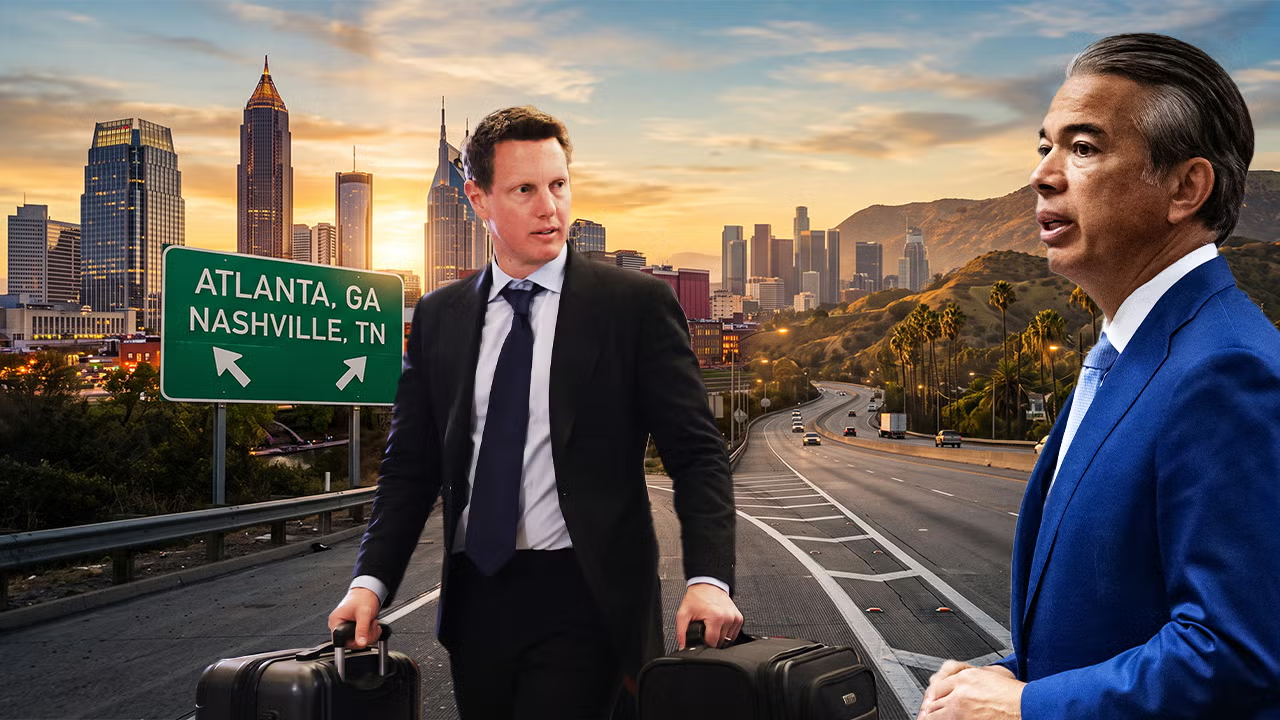
Under increasing pressure as his $110 billion deal to merge Paramount Skydance with Warner Bros. Discovery faces an antitrust trial, Ellison told his 12-person leadership team last week – including the heads of his film and TV divisions – that if California Attorney General Rob Bonta continues to ignore his efforts to negotiate a settlement, he will begin the process of moving the entire company out of the Golden State starting in October.
A lot of people were upset when the meeting ended, which included film studio chiefs Dana Goldberg and Josh Greenstein, streaming chief Cindy Holland and CBS leader George Cheeks, according to multiple insiders who spoke to TheWrap.
But Ellison is increasingly frustrated that Bonta has declined to negotiate with him as an Oct. 1 date when a $7 million/day ticking fee begins draws closer. His team has told TheWrap that “resolutions” have been offered to Bonta since May 19.
And while many reactions on Tuesday dismissed Ellison’s gambit as grandstanding or worse — a “hissy fit” as one wrote on X, “shameful” as a rival studio leader said — one Paramount executive insisted Ellison is “dead serious.” He would prefer to stay in California, the insider said, but he feels his hand is being forced by the state AGs and their lawsuit.
If Bonta won’t engage, Ellison would potentially sell both the Paramount and Warner Bros. lots for $4 billion to $5 billion each, leave a “creative hub” behind and set up shop likely in Nashville or Atlanta, both red states with lower taxes, another Paramount insider told TheWrap.


Ellison justified the move by saying it would save hundreds of millions of dollars in taxes, but it poses practical challenges for Paramount. In an industry where so much business is conducted at industry watering holes, on the golf course and during spontaneous on-the-lot meetings, much of Paramount would be absent. The remote nature would seem to put the studio at a major disadvantage in dealmaking.
And what about keeping all the talent Paramount worked to curate over the last year? Who’s to say the Duffer Brothers or Jon M. Chu, who struck first-look deals last year, wouldn’t be wooed by another suitor who’s in closer proximity?
Several industry insiders also pointed out that it contradicts Ellison’s core argument that the merger will support the entertainment industry and demonstrates his deep commitment to Hollywood.
Is this a tantrum or a fist slamming on the table with the force of “ENOUGH”? What is the viability of moving Paramount and Warner Bros. out of Hollywood? Some Paramount staffers who spoke to TheWrap feel like Ellison is merely posturing to get Bonta to the negotiating table. Others said confusion abounds as they wonder how much production would be forced to move and where those left behind would set up shop. Is it really cheaper to sell the lots and pay to lease soundstages, they ask? And with layoffs looming should the merger go through, Paramount could face a wave of resignations from those who would rather enter the job market now than move thousands of miles away only to be laid off anyway. Ellison’s threat is a shot aimed squarely at Bonta, who thus far is unwilling to bend.
“(Ellison) is negotiating against himself. It’s embarrassing,” a top media mogul told TheWrap of Ellison’s threat. “They’re f–king pissed off.”
During an appearance at a conference hosted by Politico on Tuesday, Bonta claimed that Paramount was trying to blackmail the state and regulators into allowing an illegal deal to go through. He also said he doesn’t see AMC Theatres and Regal’s support of the merger undercutting the states’ legal case and that, like a sale of CNN, Ellison’s theatrical release pledge is a behavioral remedy, not structural.
“I think they’re eager to enter those talks and we are very happy with where we are,” Bonta added when asked about a possibility of a settlement. “We’re confident in our case. We will prepare and be ready to go to trial. And if they, in good faith and sincerely, want to talk about settlement with us, of course we will be open to any proposals they want to propose to us. But right now, we’re focused on litigation and going to trial.”
At the same conference, Paramount’s Chief Legal Officer Makan Delrahim characterized Ellison’s potential move as a financial necessity.
“His intent is to be committed to California. There’s a point at which you have a fiduciary duty to your shareholders, and those are all the factors you consider. But our goal is to be here. I heard the attorney general say that this was some kind of blackmail attempt before the lawsuit. It is not,” he said. “You have to take a look at the business environment and look to see what’s best for not only the community, but the business ultimately, and go to a place where you’re wanted.”
Delrahim added, “We’ll go through the trial. We’re confident we will win, but it’s unnecessary.”

Is Ellison’s threat a winning legal strategy?
When looking at the threat from the legal strategy angle, experts are mixed on whether this puts Paramount in a better position.
“I don’t see this threat as an effective negotiating strategy to get the California AG to back down,” Morningstar Research analyst Matthew Dolgin told TheWrap. “In my view, the optics and political angle are the reason for the lawsuit as much as anything, and this would make it more likely for Bonta to dig in. A middle ground that is palatable for each will be difficult, in my view, and a threat doesn’t make finding one more likely.”
Paul Nary, an M&A strategy professor at University of Pennsylvania’s Wharton School of Management argued Ellison’s threat is “only somewhat objectively credible” without real costs or barriers to reversing it.
“Whether sincere or strategic, knowing how strong and savvy the Paramount team are as dealmakers, it’s something that may both move the needle, even if slightly, tomorrow, as well as something that can be reversed or used as a bargaining chip in the future,” Nary added.
Los Angeles-based trial lawyer and former federal prosecutor Neama Rahmani said Paramount leaving California could be a real blow to the state, but at the same time, he didn’t rule out it simply being a negotiating tactic to settle.
“The vast majority of cases do settle, so I would expect this case to settle as well. But you never know,” Rahmani said.

Ellison and Delrahim have sent a list of possible concessions to Bonta, the specifics of which have not been made public, to no avail. If Ellison’s latest chess move is designed to finally get Bonta to blink, so far it’s not working. Hours after the news broke, he slammed Ellison’s plan to leave as an attempt to “blackmail” regulators.
“If you have a business model that relies on acting unlawfully, I don’t know that that’s a particularly good business model,” he said. “They attempted to blackmail the regulators on the eve of our filing of our complaint. Maybe they thought that we wouldn’t file the complaint if we heard this blackmail threat. We did file the complaint. It didn’t work. It won’t work. It will never work.”
Ellison’s options
Ellison has already received an invite from Tennessee to set down roots in the Volunteer State. Nashville is notably home to Oracle, the software giant co-founded by David’s father Larry Ellison, which is building a new headquarters in the state. Tennessee is openly wooing Paramount with its low taxes and “a steadfast belief that government should be a partner in private-sector growth.”
The other location under consideration is Atlanta. A Georgia Film Office spokesperson declined to comment on private correspondence, but said it “welcomes any such conversations” with Paramount as a major film production hub with long-term relationships with industry partners.
Andrew Mahaleris, Texas Gov. Greg Abbott’s press secretary, has also thrown the Lone Star State’s hat in the ring, arguing it offers “the best business climate in America” with no corporate or personal income taxes. It is also, of course, the production hub of Paramount’s popular Taylor Sheridan suite of shows.
“Companies that leave high-tax, high-regulation states like California will find opportunity and success here,” Mahaleris told TheWrap.

If Paramount ultimately decides not to move, the March trial doesn’t go its way and Bonta won’t come to the table on settlement talks, Ellison & Co.’s other option is to fight all the way to the Supreme Court. While the Paramount legal team has telegraphed as much, Rahmani warned that such an endeavor would be both time-consuming and expensive and would likely require an extension past the merger’s final deadline of June 4, 2027.
“You’re not going to get to the Supreme Court probably until 2028,” Rahmani said. “I think it is more likely than not that the Supreme Court takes this case, but the timing matters a lot. In 2028, there may be a Democratic president and Democratic Department of Justice, they may have a very different view of this merger. So, time is not your friend.”

What does a move mean for California, Paramount and Hollywood as a whole?
The entertainment industry contributes over $115 billion annually to California’s regional economy. In addition to Paramount’s contribution to local spending, around 17% of its total workforce calls Los Angeles home, according to an analysis by CVL Economics ordered by the LA County Board of Supervisors. That includes 35% of its studio workforce, 15% of its streaming workforce and 10% of its TV/media workforce.
Milken Institute senior fellow and Melcene Advisory principal and managing director Kevin Klowden told TheWrap that completely moving Paramount’s production would be “devastating” for the LA entertainment community at a time when it has already faced cutbacks from the strikes and the end of the peak-TV era post-pandemic. He added that it would take years to execute and is “extremely dangerous” for Paramount from both an optics and financial standpoint.
“If Paramount does that, then they’re no longer connected to the studio apparatus, the talent agencies, all the different things that they draw benefits from being in LA. [Outsourcing productions] could be thousands of jobs just on its own. It reduces the number of productions and it puts more pressure to essentially attract productions from everybody else just to make up for the gap,” Klowden warned. “That could just tip things even further and cause more people to basically leave the industry.”
Klowden said that Paramount would face a “massive credibility loss” because most of the decision-makers in Hollywood are based in Los Angeles and New York, adding that historically, corporate relocations can lead to “major talent bleed.”
Klowden continued: “The bigger threat, as far as Hollywood is concerned, is that more back office jobs will be lost from the merger than they would be from a move. If that is [state AGs’] calculation, then the threat of a move from Ellison isn’t really enough to overcome that bigger consideration.”
But on the Paramount side, it sounds like they’re still willing to do whatever it takes to get this deal done.
“Everything is on the table,” Delrahim said Tuesday. “We would be delighted to engage and discuss any resolution to get to this closing after all this time, in order to repair the industry, create more jobs, bring more jobs and production back.”
Sharon Waxman and Jose Bastidas contributed to this report

>
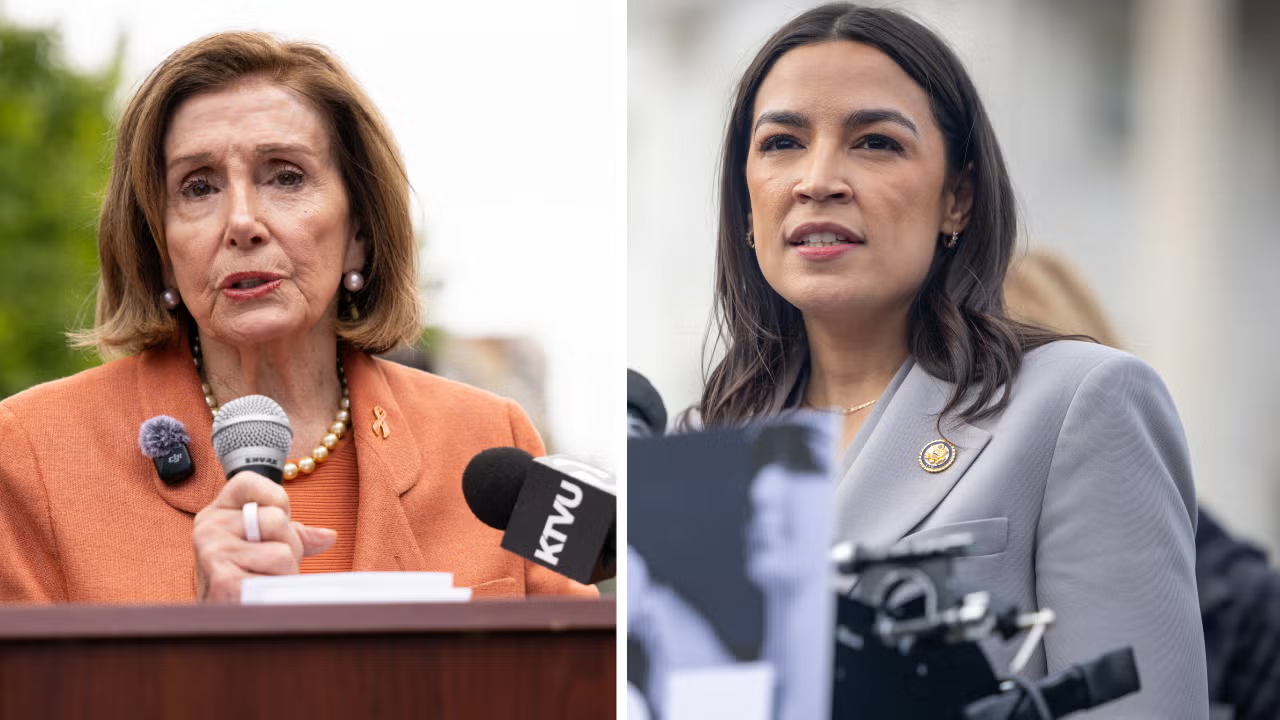
There’s been a lot of reporting on the rocky political relationship between former House Speaker Nancy Pelosi and Rep. Alexandria Ocasio-Cortez (D-N.Y.). According to Pelosi, Ocasio-Cortez’s camp needs to take partial blame for that characterization.
Pelosi attended Politico’s Sacramento Summit on Tuesday, chatting with senior political columnist Jonathan Martin about the current political landscape. There, Martin brought up Pelosi’s relationship with AOC, saying he’s “sort of curious about your view of her career.”

“Obviously, you had a bit of a rocky start at the outset, but you have a good relationship with her now,” Martin said. “Who does she remind you of, and how do you assess her trajectory in the House over the last eight years?”
“Well, that would be up to her,” Pelosi responded. “When she came, we didn’t have a rocky relationship. Press liked to say it that way, some of her folks — in fact, one of them ran for Congress in San Francisco and lost.”
“You just didn’t mention him, yeah,” Martin responded. You can see the full clip below.
Pelosi is seemingly referring to Saikat Chakrabarti, AOC’s former campaign manager and chief of staff. Chakrabarti went on to run for election to the House of Representatives in California’s 11th District in 2026, seeking the seat held by Pelosi, who announced in 2025 that she would not seek reelection. Democrats Connie Chan and Scott Wiener advanced to the general election, while Chakrabarti did not.
While Pelosi denied that there was a rocky relationship between herself and AOC, she went on to explain how her political outlook differs from Ocasio-Cortez’s more outwardly progressive platform.
“All we’re saying to folks: Look, this is a legislative place. It’s not a rally. If you have a rallying cry, take it to the rally, but don’t expect it to become the legislative agenda for people who represent completely different districts,” Pelosi said.
“She learned that, didn’t she?” Martin interjected.
“I say to them, ‘I have those signs in my basement from 30 years ago. All this stuff that you’re talking about, I have those signs in my basement. You want to come see my basement? I have those signs there. All this stuff,’” Pelosi continued. “But the fact is, that was appropriate for me to run for office on and the rest, but when it came to legislation, I didn’t say, ‘This is what I campaigned on, and so if you don’t agree with me, I’m coming after you.’”

>

Rybakina to meet Gauff in semis after Osaka fightback

Myles Lewis-Skelly and what we’re hearing about his future

European Athletics Championship: A look inside the camp behind Keely Hodgkinson’s success
-

 movies3 months ago
Search For Canadian TV Actor Stewart McLean Now Homicide Investigation
-

 Fashion9 years ago
These ’90s fashion trends are making a comeback in 2017
-
Fashion9 years ago
According to Dior Couture, this taboo fashion accessory is back
-
Fashion9 years ago
Model Jocelyn Chew’s Instagram is the best vacation you’ve ever had
-
Fashion9 years ago
Your comprehensive guide to this fall’s biggest trends
-
Fashion9 years ago
9 Celebrities who have spoken out about being photoshopped
-
Fashion9 years ago
Emily Ratajkowski channels back-to-school style
-
Fashion9 years ago
A photo diary of the nightlife scene from LA To Ibiza