
Tech
French Publishers Challenge Google AI Search Over Content Licensing


French publishers have escalated their dispute with Google over AI search, asking France’s competition watchdog to decide whether AI Overviews and AI Mode require separate licensing negotiations. The Alliance de la Presse d’Information Générale, or APIG, filed the complaint on Aug. 11.
Google launched both features in France on July 22. APIG argues the rollout conflicts with commitments requiring Google to negotiate separately over new services, putting the treatment of publisher content in generative search back before French regulators.
The complaint joins other legal and regulatory challenges surrounding AI Overviews, including disputes over publisher compensation and responsibility for generated answers. Google says AI Overviews and AI Mode help users explore complex questions while continuing to provide links to websites.
Google’s publisher commitments face an AI test
France adopted a related-rights law in 2019 that gave press publishers and news agencies protections over certain digital uses of their content. The Competition Authority ordered Google in 2020 to negotiate with publishers in good faith and fined it €500 million the following year for failing to comply with those interim measures.
In June 2022, the Authority made Google’s publisher commitments legally binding. They require good-faith negotiations based on transparent, objective and nondiscriminatory criteria, with a remuneration proposal due within three months of the start of negotiations.
The commitments also require separate negotiations over Google Showcase or any other new Google service, apart from existing uses of protected press content. APIG argues AI Overviews and AI Mode fall under that provision.
Generative AI has already figured into enforcement of the agreement. In March 2024, the Authority fined Google €250 million after finding, among other violations, that Bard, now Gemini, had used publisher and news-agency content to train its foundation model without adequately informing them. The regulator also said it had not determined whether AI uses of press publications fall within France’s related-rights protections.
Publisher controls remain disputed
APIG says Google introduced its AI search features without first opening a separate negotiation with publishers. The complaint follows concern that Google’s AI search expansion could reduce publisher visibility as generated answers occupy more of the search experience.
Google says a Search Console control available in France lets site owners exclude content from generative AI search features without using that decision as a ranking signal for conventional search results.
Pressure over AI content use extends beyond France. The European Commission opened a formal antitrust investigation in December 2025 into whether Google imposes unfair terms on publishers whose content is used for AI Overviews and AI Mode. Separately, publishers have sued Google over Gemini training, alleging existing agreements did not authorize the use of copyrighted works to train its AI models.
The French authority has not announced how it will respond to APIG’s complaint. Any eventual ruling could help determine whether generative search becomes a separate licensing channel or remains part of the long-standing exchange of publisher content for search visibility and traffic.
Read more: Similar tensions are emerging outside traditional news publishing as Reddit reportedly reconsiders parts of its Google AI partnership while AI search changes how users reach source websites.
>
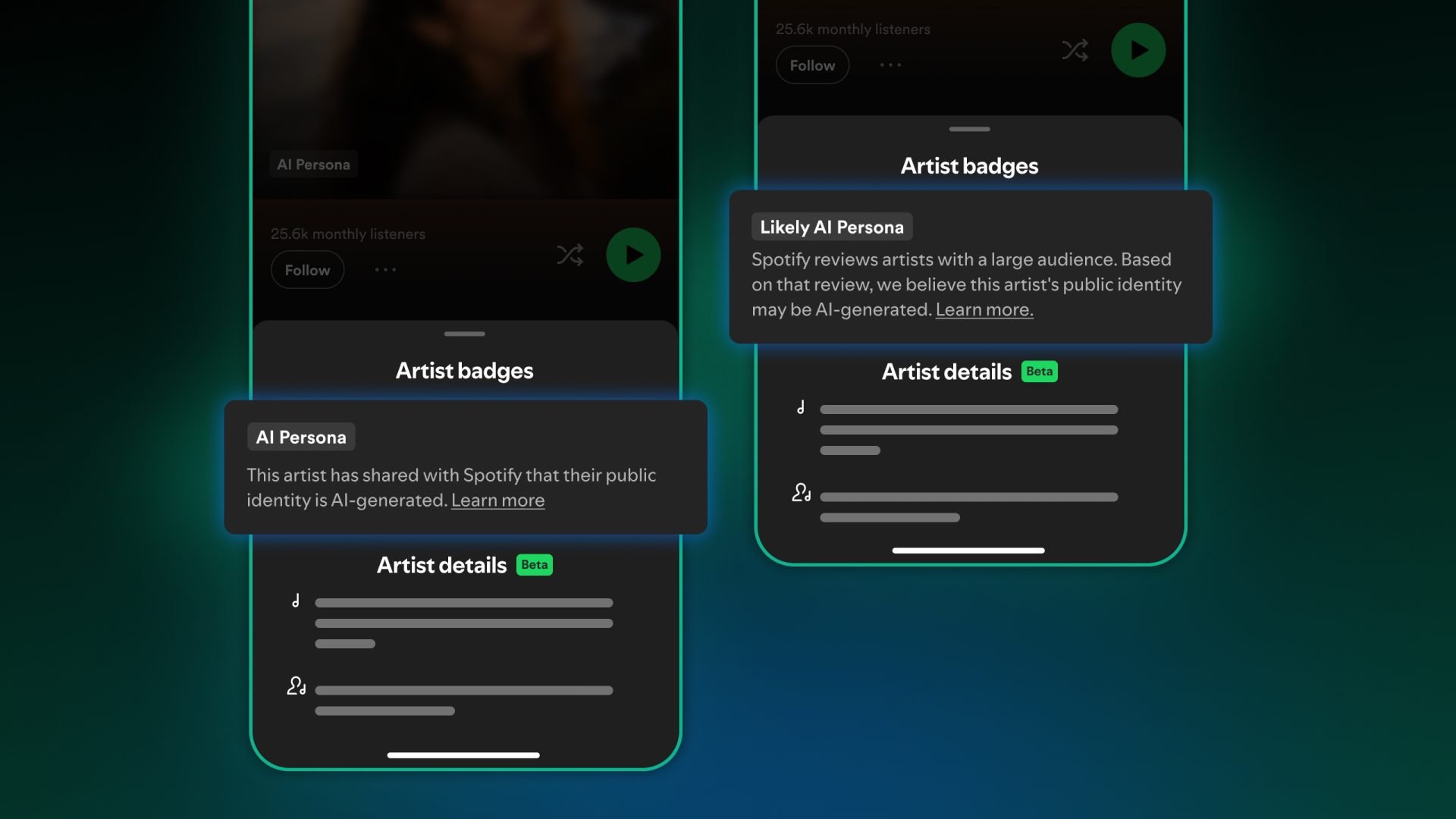
Virtual bands are about to get a reality check on the world’s largest music streaming platform.
The streaming giant announced Tuesday that it will begin adding “AI Persona” badges to artist profiles that appear to represent AI-generated identities rather than human performers. The labels will start appearing in mid-September across artist pages, search results, and playlist track listings.
Spotify said the move is meant to improve transparency as AI-generated artists become more common on streaming platforms. “Listeners have been clear in telling us that they don’t like seeing an artist profile that seems human, only to find out that the persona is AI-generated,” the company said.
Artists will be able to voluntarily disclose that their profile represents an AI Persona through Spotify for Artists, but the company said it will not rely on self-reporting alone. Spotify will also review profiles whose names and images appear to depict photorealistic AI-generated identities, beginning with artists that have reached certain audience thresholds.
AI artists will lose algorithmic promotion
The biggest change is that Spotify will stop including AI Persona accounts in its editorial and algorithmic recommendations by default.
That means AI-generated artists will not appear in personalized features such as recommendation feeds unless a listener has already chosen to follow them. Users can still search for, listen to, and follow those artists. Spotify said the policy is focused on how artists present their identity, not whether AI was used during the music-making process.
“This badge is about the artist’s public identity, not about how the music was made,” Spotify said. The company will continue using separate tools, including AI Credits and SongDNA, to provide information about how songs were created and what role AI played in production.
The challenge of AI music discovery
The change comes as streaming platforms deal with a flood of AI-generated music and concerns that synthetic artists could compete with human musicians for attention and revenue.
Spotify has already introduced several transparency features, including Verified by Spotify for authentic artist identities and AI Credits that allow musicians to disclose AI involvement in their songs.
The company is also trying to balance AI innovation with concerns about low-quality, mass-produced content. Spotify has invested in AI-powered features such as AI DJ and other personalized tools while attempting to prevent recommendation systems from being overwhelmed by automated music uploads.
A new trust layer for streaming
Spotify’s approach creates a middle ground between banning AI artists and allowing them to compete equally for discovery. Instead of removing AI-generated performers, the company is limiting how easily they can be surfaced to listeners who did not actively seek them out.
That strategy could help protect human artists from losing visibility, but it also places pressure on Spotify to accurately identify AI personas. False labels could affect legitimate creators who use AI tools creatively, while missed detections could continue the same transparency problems the company is trying to solve.
The policy also highlights a growing divide in the music industry: AI itself is becoming less of the issue than whether listeners understand what they are hearing and who they believe they are supporting. Spotify said users will eventually be able to report artist profiles they believe represent AI Personas but have not been labeled, adding another layer of community oversight to the system.
Also read: YouTube is taking its own approach to synthetic content with new monetization limits for repetitive AI-generated videos and synthetic personas while still allowing creators to use AI as part of original work.
>
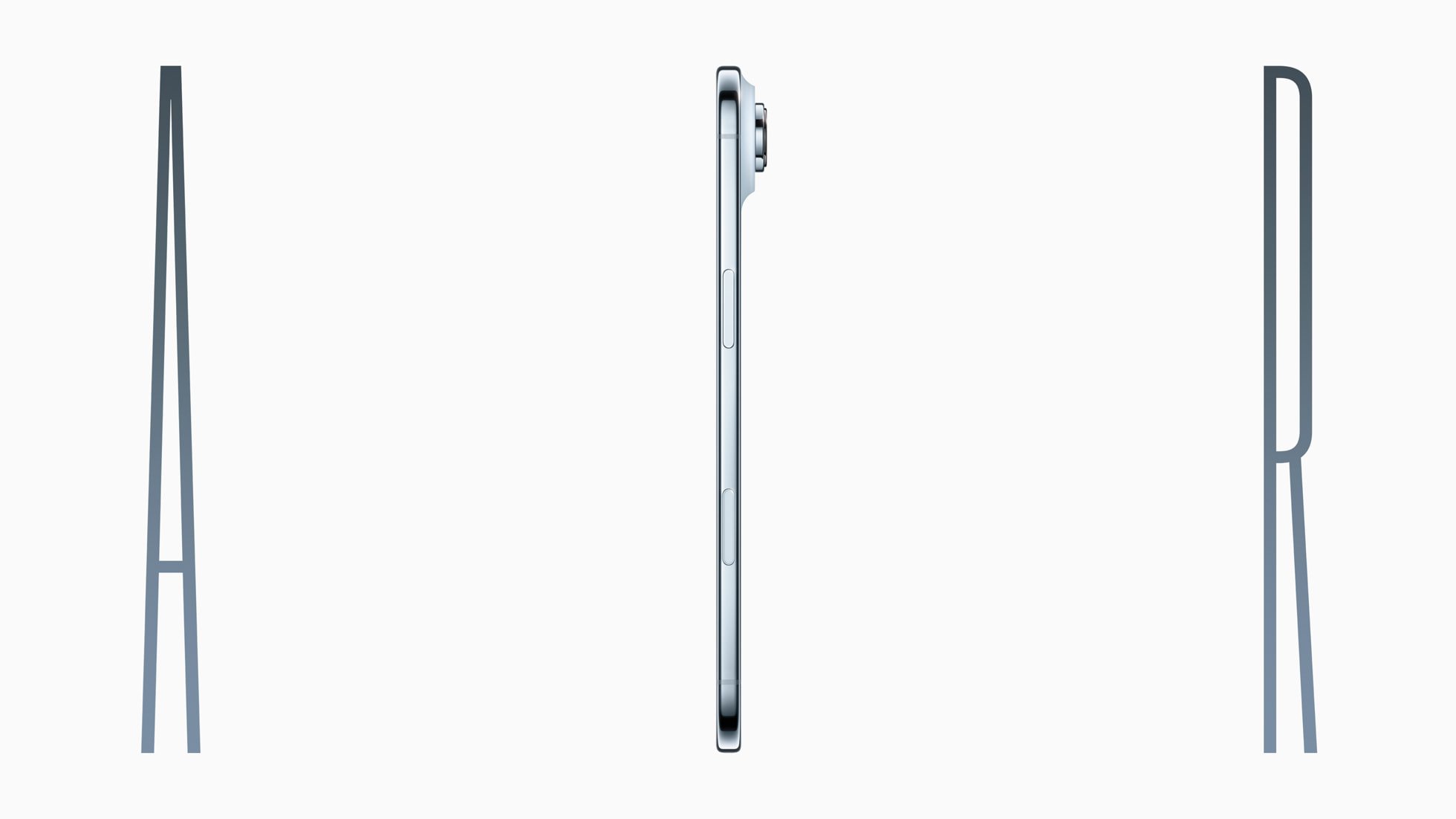
Apple’s iOS 27 beta 5 reportedly contains internal references to six unreleased iPhone models, offering an unusually broad glimpse at hardware the company has yet to announce. Macworld first reported that the identifiers appear in battery-related system files alongside references to existing iPhones.
The codes align with previous reporting that has linked them to the iPhone 18 family, a second-generation iPhone Air, and Apple’s expected foldable iPhone. They also fit reports that Apple may be preparing a wider lineup with launches spread across fall 2026 and spring 2027. The beta does not reveal final product names, specifications, prices, or release dates, and Apple has not announced any of the devices.
Six codes map Apple’s expanding iPhone lineup
The identifiers are said to be V62, V63, V64, V67, V68, and V69. The Information’s reporting on Apple’s iPhone roadmap previously linked them to these planned devices:
- V62: second-generation iPhone Air
- V63: iPhone 18 Pro
- V64: iPhone 18 Pro Max
- V67: iPhone 18
- V68: foldable iPhone
- V69: iPhone 18e
Macworld’s analysis of the beta found the identifiers in Battery Intelligence and battery-driver files. Their presence suggests the projects remain represented in Apple’s software development, although internal references do not establish whether every device will ultimately ship.
V68’s retail name remains uncertain. Reports use both “iPhone Fold” and “iPhone Ultra,” but Apple has confirmed neither. TechRepublic has been tracking Apple’s expected foldable iPhone as multiple reports have pointed to a 2026 launch window for the company’s first folding handset.
The foldable could also broaden the range of screen sizes and form factors that developers and enterprise IT teams support within Apple’s mobile ecosystem. Applications that behave differently across screen configurations or multitasking modes could require additional validation once Apple publishes specifications and developer guidance.
The codes seem to reinforce a changing release strategy
Battery-related software offered an earlier clue about Apple’s foldable plans. On July 20, iOS 27 beta 4 introduced system strings referring to multiple batteries in an iPhone. Foldable phones commonly divide battery capacity between sections of the device, although Apple has not confirmed that the strings refer to its unannounced handset. Earlier TechRepublic coverage also examined foldable-related clues found in iOS 27.
The six identifiers also align with reports that Apple may stagger its next iPhone release cycle. Current reporting points to a fall 2026 launch for the iPhone 18 Pro, iPhone 18 Pro Max, and foldable, with the standard iPhone 18, iPhone 18e, and redesigned second-generation iPhone Air reportedly targeted for spring 2027. Apple has not confirmed those launch windows.
TechRepublic previously reported that the standard iPhone 18 could shift to 2027, a change that would break from Apple’s usual practice of concentrating major numbered iPhone launches in the fall.
A split rollout could spread device testing, mobile device management validation, app compatibility checks, and procurement across separate release windows. Organizations that standardize employee iPhones could also face different evaluation and purchasing cycles for mainstream and premium hardware.
Until Apple announces the devices and publishes compatibility requirements, the six identifiers remain an early view of its development roadmap rather than a firm fleet-planning timetable.
Read more: Apple’s lineup could expand further after this cycle, with reports pointing to an even broader iPhone family in 2027 as the company reshapes how and when it introduces new models.
>
Tech
After Microsoft threatened legal action, a security researcher publishes a new Windows zero-day bug

A security researcher has published details of a new vulnerability in the latest versions of Windows that allows hackers to gain system-wide access to the user’s device and data, despite facing a legal threat from Microsoft weeks earlier over the release of previously unknown software flaws.
The new bug, dubbed ShieldBreak, is the latest disclosure by security researcher Nightmare Eclipse, who in recent months has published details of several bugs affecting Microsoft’s products, including Windows.
According to Nightmare Eclipse’s post, ShieldBreak takes advantage of a flaw in Windows Defender, the anti-malware and security engine built into Windows. A successful attack allows the hacker to escalate their permissions from a low-level user to full access to the device and its data.
Nightmare Eclipse published the proof-of-concept exploit as a Windows app, requiring the user to run the app to exploit the bug. The bug works on Windows 10, Windows 11 (including the latest 25H2 version), and Windows Server 2025, the researcher said.
Security researcher Will Dormann verified that the bug works and that Windows Defender must be enabled for the exploit to work.
The latest exploit builds on an earlier exploit that Nightmare Eclipse developed dubbed RoguePlanet. Microsoft rolled out a patch for RoguePlanet, but Nightmare Eclipse implied that Microsoft’s fix was not sufficient and that their latest exploit demonstrates a full bypass of the earlier patch.
Microsoft has not yet released a patch for the ShieldBreak bug. A spokesperson for Microsoft did not immediately comment when contacted by TechCrunch. The bug is considered a zero-day because the software maker — in this case, Microsoft — was given no time to patch the bug before it was publicly disclosed.
The release of this new zero-day is the latest in a long back-and-forth between the security researcher and the software giant over the company’s alleged handling of their bug reports.
In a series of blog posts, the security researcher claimed that Microsoft mistreated them and did not handle their bug reports sufficiently, with the implication that the researcher had no other choice but to publicly disclose the bugs online. Nightmare Eclipse previously released several other bugs in Windows that were later exploited in real-world attacks to hack into organizations.
In May, Microsoft published a blog post threatening to take legal action against security researchers, like Nightmare Eclipse, if they released details of zero-days outside of the company’s disclosure policies. The company faced heavy rebuke from the security community, many of whom described similar experiences with Microsoft’s handling of their bug reports. Microsoft later walked back the comments in a social media post. Its original blog post remains published and unchanged.
ShieldBreak lands a day after Microsoft’s regularly scheduled monthly security patch releases, dubbed Patch Tuesday. This is the second month in a row where the number of patches has reached around 500 or so bugs driven by the company’s growing use of AI to find and weed out security flaws.
When you purchase through links in our articles, we may earn a small commission. This doesn’t affect our editorial independence.
>

Spotify to Flag AI ‘Personas’, Keep Them Out of Recommendations

The End of Oak Street Review: The Best Dinosaur Movie Since 1993

‘Reacher’ Spinoff ‘Neagley’ Trailer: Maria Sten Is Out To Snare A Killer
-

 movies3 months ago
Search For Canadian TV Actor Stewart McLean Now Homicide Investigation
-

 Fashion9 years ago
These ’90s fashion trends are making a comeback in 2017
-
Fashion9 years ago
According to Dior Couture, this taboo fashion accessory is back
-
Fashion9 years ago
Model Jocelyn Chew’s Instagram is the best vacation you’ve ever had
-
Fashion9 years ago
Your comprehensive guide to this fall’s biggest trends
-
Fashion9 years ago
9 Celebrities who have spoken out about being photoshopped
-
Fashion9 years ago
Emily Ratajkowski channels back-to-school style
-
Fashion9 years ago
A photo diary of the nightlife scene from LA To Ibiza