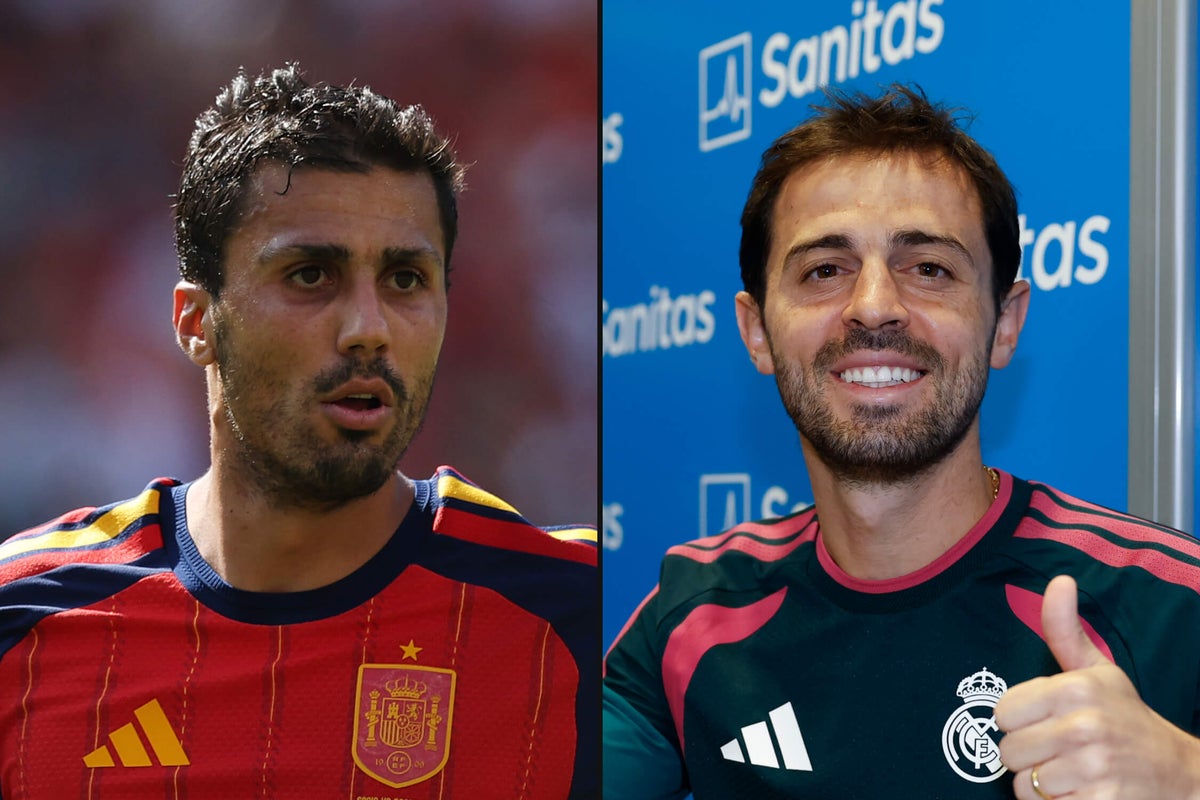
In a summer in which Real Madrid have spent €240million ($277m) on six new signings, one of the players they missed out on could end up defining their season.
After The Athletic reported that Madrid were working on a deal to sign Rodri from Manchester City last month, it then became clear the 30-year-old prefers a move to their fierce rivals Barcelona. They have not yet secured a deal for the World Cup-winning Spain captain, but he will not be moving to the Bernabeu anytime soon.
For Madrid, it is a blow in a position which has caused them a headache since Toni Kroos’ retirement in 2024. So, should we expect any other midfield signings? And what is being said behind the scenes?
Why is midfield a problem position for Real Madrid?
On the face of it, it is unclear: Real Madrid have seven midfielders vying for three positions in the 4-2-3-1 formation returning manager Jose Mourinho will be using. Those three roles are the two in holding midfield and one playmaker.
Real Madrid’s senior midfielders
| Midfielder |
Year they joined club |
Appearances |
|
2022
|
195
|
|
2018
|
373
|
|
2021
|
223
|
|
2023
|
140
|
|
2023
|
112
|
|
2023 (academy)
|
16
|
In certain moments during Madrid’s pre-season matches, Mourinho has deployed Trent Alexander-Arnold in midfield when the team have possession — the right-back is no stranger to that role after his time at Liverpool. But it seems unlikely he will be used there as his primary position.
The board have pointed to the team having so many midfielders and the variety of profiles on offer, from the box-crashing Jude Bellingham to the versatile new signing Bernardo Silva.
But, going back to the exits of Kroos two years ago and Luka Modric in 2025, it is clear Madrid have lacked a midfielder who can consistently dictate the tempo of matches.

Real Madrid have missed a tempo-setting midfielder since Toni Kroos’ retirement in 2024 (Angel Martinez/Getty Images)
During those past two seasons, Madrid have failed to win any major title and an increasing number of voices within the club have highlighted the need to sign a player capable of dominating the centre of the park.
The most notable figures to call for that have been two of the previous three coaches before Mourinho, Carlo Ancelotti and Xabi Alonso. Both the Italian and the now-Chelsea manager highlighted the need to strengthen midfield, which did not happen.
Alonso’s replacement Alvaro Arbeloa, now in charge of Fulham, was a different case — he was promoted from the reserve team Castilla in January and had to adapt to the squad he had until the end of the campaign.
But the idea remained on the table after Mourinho’s appointment in June. From the very first meetings to plan the season with the club’s sporting direction, the Portuguese made clear he wanted a “creative” midfielder.
The club fulfilled that request, just not exactly how he wanted…
What has the club done about it this summer?
In June, Madrid announced the signing of Bernardo until 2028, with the Portugal international joining on a free transfer after not renewing his deal with Manchester City. He is a midfielder but often plays further forward or even on the wing — and is certainly not a No 6 in the Rodri mould.
The club beat competition from suitors such as Barcelona and Atletico Madrid thanks to a change of stance on his signing. Bernardo had previously been offered to Real by his agent, Jorge Mendes — who also represents Mourinho — but Madrid had ruled him out.

Bernardo Silva is a versatile midfielder but not one in the Rodri mould (David Balogh/Getty Images)
That suggests Madrid did not see the 32-year-old as the solution to their recurring problems in midfield, given they had rejected his signing, even without a transfer fee. Mourinho personally requested his arrival but continued to ask for another midfielder after he signed.
It all takes on greater significance in light of the failed attempt to sign Rodri from City.
How big a blow was missing out on Rodri?
In terms of the image and excitement among supporters, it was a big blow in a window which had otherwise drawn rave reviews from Madridistas.
You only needed to see the reactions on social media to Madrid’s announcements last Thursday around the signing of Yan Diomande from RB Leipzig — expected to become the club’s record arrival in a deal worth up to €140million — and Vinicius Junior’s extension until 2032 in the face of interest from Arsenal, to see that positivity.
After Rodri’s starring performances at the World Cup, where he won the award for best player at the tournament, the fanbase insisted the board should try to sign him. When they entered the race for him, their hopes soared.
There was widespread expectation that the deal could be finalised and a unanimous view that Rodri was the missing piece for this new project — until Barcelona scuppered it all.
Many at Madrid’s Valdebebas training ground were closely following the saga and were delighted at the prospect of Rodri’s arrival because of the influence he was expected to have on the dressing room and on the pitch. The same was true of several senior players in the squad, according to voices close to them.

There was excitement over Rodri’s possible arrival after his World Cup performances (Odd Andersen/AFP via Getty Images)
Mourinho, however, did not see Rodri as a priority. The 63-year-old preferred a different type of midfielder with greater mobility and a wider range of possible roles, even if signing Rodri would still have been seen as a positive step.
The blow of potentially losing him to Barca and not signing anyone else in that position — as is the message from the club at present — is likely to be the biggest disappointment.
Should we expect another signing?
The club’s stance is there will be no signings in that position unless players leave, arguing that the 25-man squad is complete and that there are at least two players in each position.
That is the message being mentioned in internal discussions and was what the club were saying in July — until The Athletic revealed the club were working on signing Diomande. Shortly afterwards, news of their Rodri pursuit also emerged.
Some behind the scenes have also pointed to the fact that nobody of the current squad wants to leave.
Why Barcelona is a better fit than Real Madrid for Rodri
Thom Harris
What does our data say about who they should target?
By data writer Thom Harris
If Real Madrid were to delve into the market for another midfielder, it would make sense to target a profile similar to Rodri, a player who can control the flow of games with his composure on the ball, and help bolster their defensive shape with his sense of anticipation without it.
The Athletic’s player roles analysis uses nearly 40 metrics to analyse players across Europe’s top five leagues, identifying patterns that can help to bucket those who perform similarly in their style. As we can see, Rodri is classified as the ‘Tempo Controller’ that Madrid so desperately need.

According to the model, Bayern Munich’s Alexander Pavlovic is the most similar in style, blending assured passing with athleticism and physicality without the ball, but he would be tough to prise away from the German champions at 22.
Rodri’s City team-mate Nico Gonzalez is another player who combines long-strided recovery running with considered work on the ball, although whether he would make the move to Madrid after rising from La Masia to Barcelona’s first team from 2013 to 2023 is another question altogether.
Bayer Leverkusen’s Aleix Garcia is an interesting option and was one of La Liga’s standout performers as Girona mounted an unlikely title charge in 2023-24. He would bring some of the expansive distribution that Madrid have missed since Kroos’ departure, as a player who loves to sweep the ball from side to side and who has gained some experience of the more frenetic, end-to-end Bundesliga.
The list also throws up some familiar names — Stuttgart’s Angelo Stiller has long been touted as the next great tempo-setter at the base of midfield, while Exequiel Palacios of Bayer Leverkusen combines combative defensive work with the ability to fizz the ball through the lines with his passing.