
Tech
OpenAI introduces ‘Ultrafast,’ a new mode that makes GPT 5.6 Sol work at 14x the speed


If you’ve ever found yourself wishing that ChatGPT was a little bit quicker on the uptake, OpenAI seems to be answering your prayers.
The AI lab has rolled out a new mode called Ultrafast, which it says is designed to seriously accelerate the pace at which its latest and most powerful model, GPT 5.6 Sol, accomplishes its work.
The company says that Ultrafast can work at 14x the speed of standard processing, delivering up to 750 output tokens — such tokens represent the distinct pieces of text generated by an LLM when it interacts with a human — per second.
“Until now, getting real-time speed typically meant choosing a smaller or more specialized model,” the company said in a blog post on Thursday. “Ultrafast points to progress in a new direction: more useful work per second.”
OpenAI’s competitors, like Anthropic, have similarly launched accelerated versions of their models. Claude has fast mode, although it doesn’t deliver the kind of speed that OpenAI is offering here.
OpenAI suggests that this high-octane version of GPT 5.6 Sol can be deployed across a number of different corporate workflows, most notably incident response, customer service and support, financial market analysis, and e-commerce, among other relevant areas.
Ultrafast, which is currently being released in preview, is being powered by OpenAI’s partnership with chipmaker Cerebras. Currently, that preview is only being made available to a small group of customers, although OpenAI says that it will expand access to the feature as “capacity grows.”
>
Aurora Innovation and Kodiak AI, two companies developing self-driving trucks, have received permits from the California Department of Motor Vehicles to test their autonomous vehicle technology on public roads. And Kodiak has already started.
Kodiak said it is starting with a handful of test trucks in California, primarily around its Mountain View office.
Both companies applied for testing permits this spring under updated rules approved by the California DMV, the agency that regulates autonomous vehicles in the state. Those rules, approved April 28, lifted a ban on driverless vehicles weighing over 10,000 pounds from testing on public roads and provided a regulatory path for companies to test, and eventually deploy, autonomous heavy-duty vehicles.
Kodiak and Aurora met the DMV’s permitting criteria, including safety, insurance, vehicle registration, safety driver qualification, and other requirements, according to the agency. The testing permits require a human safety operator to be behind the wheel and prohibit companies from operating on roads where the posted speed limit is 25 miles per hour or less, unless they are on a “direct route” between destinations.
Despite those restrictions, the prospect of self-driving trucks on California’s highways continues to fuel opposition.
Last week, Teamsters California sued the state’s DMV, alleging that the agency circumvented laws requiring it to study and publicly disclose the possible economic impacts of allowing self-driving trucks on public roads. The lawsuit, filed in the state’s Superior Court in Alameda County, also accused the DMV of failing to consider the safety risks to motorists.
For autonomous vehicle developers, the new rules allow them to test and eventually deploy in their home territories.
Aurora and Kodiak are both are based in California, but until recently focused their testing and deployment activities in Texas because of their home-state’s ban on autonomous heavy-duty trucks. Aurora launched a self-driving truck service in Texas in May 2025, starting with a Dallas-to-Houston route. The company has added more routes since, including between Fort Worth and El Paso, El Paso and Phoenix, Fort Worth and Phoenix, and Laredo and Dallas.
Kodiak began commercial driverless truck operations in January 2025 in an off-road environment in West Texas’ remote Permian Basin. Kodiak has since expanded to on-highway operations, including a route between Dallas and Houston.
When you purchase through links in our articles, we may earn a small commission. This doesn’t affect our editorial independence.
>
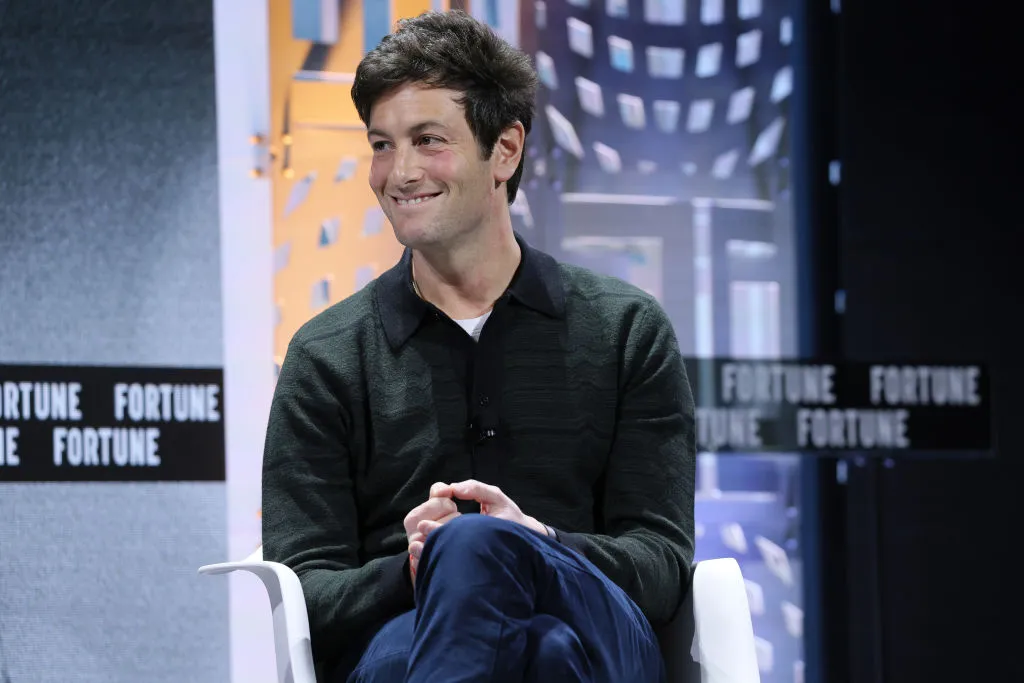
In Thrive Capital’s first-ever investor letter, founder Joshua Kushner has some unexpected things to say about his venture capital rivals on the West Coast.
“It is difficult to overstate the magnitude of the opportunity,” Kushner wrote about AI in the letter, leaked to Bloomberg. “It would also be a grave error in our minds to let excitement weaken our investment discipline. … Within Silicon Valley in particular, the industry can become fixated on hyperincremental technological turns rather than where the technology ultimately leads.”
While his secretive New York-based firm, just like those in Silicon Valley, is betting heavily on AI, Thrive is doing so differently, he argues. There’s no so-called spray-and-pray investing. Thrive tends to goes big on the companies it backs. Bloomberg estimates about 90% of its capital is poured into the top 15 investments in each fund.
That makes Thrive, he contends, a company of independent thinkers. “We are independent because markets move between fear and enthusiasm, and neither is a substitute for judgment.”
His comments are in direct contrast to one of the basic premises of Silicon Valley venture capital: that it is a business of “outliers” as espoused by Marc Andreessen.
In the “outlier” view, a VC firm makes a lot of bets prepared to lose money on many — even most — of them. The few big hits will be so lucrative that they will cover the losers and much, much more. That philosophy leaves VCs forever looking for the next OpenAI or another mega hit. It can also lead to, as we saw during the post-pandemic lean years, cutting ongoing support for startups not deemed to be on track to be the biggest winners.
In contrast, Kushner writes, “We believed an investment firm could be opportunistic across stage, sector, and geography, while remaining deeply concentrated in a small number of people and ideas.” The idea is to “build Thrive to concentrate our time, capital, and energy on the people and ideas we believe in most.”
He also dismisses Silicon Valley’s idea that VCs are in the business of disrupting incumbents.
“Unlike many of our peers, our conviction was not only that these industries would be disrupted from the outside in but also that many would be transformed from the inside out,” he wrote about AI’s impact.
Thrive has largely stuck to this thesis. Its deepening relationship with OpenAI is its biggest example. The VC firm is a major investor in the AI lab. But in December 2025, the roles switched when OpenAI took an ownership stake in Thrive Holdings, the VC firm’s spinout. Thrive Holdings buys companies and then works with OpenAI to give them an AI makeover. Part of the deal involved OpenAI dedicating employees to work with Thrive’s companies.
Thrive Holdings has bought more than 70 businesses and has a team of 35 engineers. Kushner says its accounting platform uses agents to produce tax returns 30% faster with 98% accuracy, and its IT services firm has agents independently solving half of its help desk tickets.
Still, Thrive’s strategy is working in part because it nabbed stakes in some of the industry’s best-performing startups ever. Its $516 million 2022 early-stage fund, for instance, made early bets on OpenAI, Anduril, and SpaceX, and is now worth more than $3.7 billion as of the end of June, Bloomberg reports. Thrive has, over its 15 years, increased its stakes in all of them (and also had a sizeable stake in Cursor, which just closed its sale to SpaceX).
It has also backed Wiz, Ramp, and Stripe, to name a few other big names. Plus, it has led seed investments in new labs like Essential AI, founded by former Google Brain researcher Ashish Vaswani, the lead writer of the famed “Transformers” paper that spawned today’s AI industry.
All told, Thrive has $60 billion of assets under management, Kushner revealed in the letter. He reports impressive profits: a gross internal rate of return (IRR) across all funds of 41% and a net IRR of 33%. Thrive has returned more than $1 billion of liquidity to its investors in the last 12 months alone, he said.
“There may be an opportunity for billions of dollars in additional liquidity in the coming quarters,” he promises.
He doesn’t specify which companies are headed for their exits but obviously, the SpaceX IPO was a start, and OpenAI is working toward its own public debut.
It should be pointed out that both Kushner’s and Andreessen’s approaches obviously work in terms of making money. Andreessen Horowitz returned $25 billion to its investors between 2009 and 2025, according to the last leaked returns, reported by Eric Newcomer.
Thrive’s philosophy of concentrating capital may not even be possible for most smaller, scrappy emerging seed funds, whose founders weren’t born into the kind of access that the son of a billionaire New York real-estate family has.
That said, Kushner’s general premise of how overheated Silicon Valley’s AI investing has become isn’t wrong either. As he puts it: “Not every fast-growing business is exceptional. And not every exceptional company is a great investment at every price. Our responsibility is to maintain those distinctions.”
When you purchase through links in our articles, we may earn a small commission. This doesn’t affect our editorial independence.
>

More Information
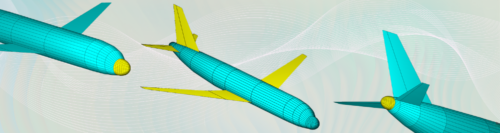
Aircraft, ships and vehicles now carry many radio systems in a small space, so designers must know how much energy leaks from one antenna into another before any hardware is built. This leakage is described by the mutual s-parameters between the antenna ports, and it decides whether two systems can operate at the same time on the same platform. Measuring it by trial and error at every candidate position is slow and costly. Predicting it by simulation is difficult for two reasons. First, the platform is electrically large, which means that its dimensions span several hundreds of wavelengths, so the model needs a large number of unknowns. Second, the coupling levels of interest are very low, in some cases down to -100 dB, which leaves little margin for numerical error. This White Paper addresses both problems with a full-wave solution based on the Method of Moments applied to the Surface Integral Equation, using higher-order basis functions to keep the number of unknowns low. Two examples are studied in detail: a metallic cube carrying two quarter-wavelength monopoles, and a realistic airliner carrying five monopoles at 1.06 GHz, where the fuselage is about 140 λ long. Three modelling techniques for obtaining accurate low-level results are compared in terms of accuracy and the number of unknowns each one requires, and the complete geometry of each model is documented so that every result can be checked independently.
>

Indie Films Opening Aug. 14: ‘Rivals Of Amziah King’, Green Day Comedy ‘Nimrods’

Audrey Werro breaks European Championship record to beat Keely Hodgkinson to 800m gold

‘Teenage Sex and Death at Camp Miasma’: IndieWire Craft Newsletter
-

 movies3 months ago
Search For Canadian TV Actor Stewart McLean Now Homicide Investigation
-

 Fashion9 years ago
These ’90s fashion trends are making a comeback in 2017
-
Fashion9 years ago
According to Dior Couture, this taboo fashion accessory is back
-
Fashion9 years ago
Model Jocelyn Chew’s Instagram is the best vacation you’ve ever had
-
Fashion9 years ago
Your comprehensive guide to this fall’s biggest trends
-
Fashion9 years ago
Emily Ratajkowski channels back-to-school style
-
Fashion9 years ago
9 Celebrities who have spoken out about being photoshopped
-
Fashion9 years ago
A photo diary of the nightlife scene from LA To Ibiza