
The first shot from production of ‘Murder In the Dark’
Prime Video


When I was a lad, American cartoons were … let’s be generous and say “crappy.” There were always exceptions, of course, but if you sat down in front of the TV on Saturday morning you’d have to sift through a lot of “Snorks” and “Get Along Gangs” and “Turbo Teens” before anything halfway decent came on. By the time “Jem and the Holograms” finally began your standards were so low that a TV series about tricking your boyfriend into cheating on you with your own hologram alter ego was like heroin and Shakespeare, all rolled into one.
So when “Robotech” debuted it felt revolutionary. It was like eating flavorless food for years until someone finally invented seasoning. “Robotech” was the Americanized version of “Macross,” created by Shōji Kawamori, who also created the Diaclone toyline (which we know as “Transformers”). It was a completely serialized anime series about an intergalactic war where the heroes died, tragically and permanently, and pop music was celebrated as a life-altering art form, capable of converting warlike aliens into feeling creatures capable of redemption. All that and the animation kicked ass. There was nothing like it on American television. Even the shows that were kinda like it were nothing like it.
“Robotech” took a lot of liberties with Shōji Kawamori’s creation but it was his work that shined through, and now — over 40 years later — he’s finally releasing his first feature film (unless you count some of the “Macross” specials, which you probably should). As exciting as that is, it’s important to remember not everything a great artist produces can be a game changer. And it’s especially important to remember that right now, since his new movie “Labyrinth” is a mixed bag.
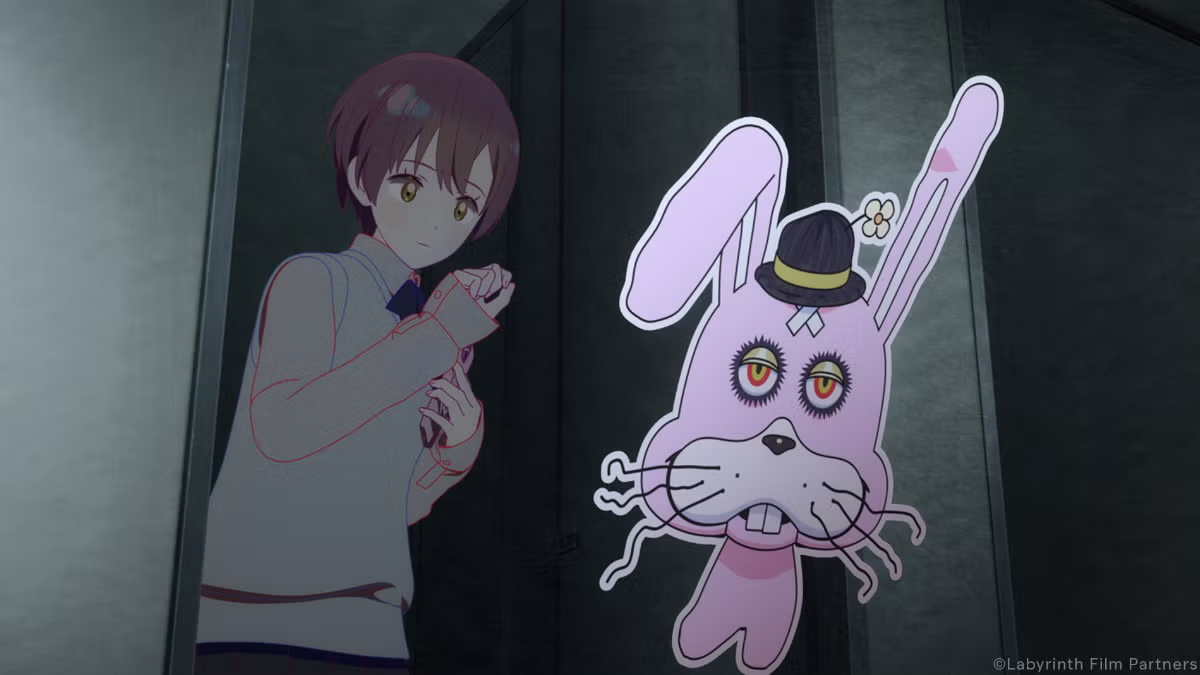
“Labyrinth” is a sci-fi story about an insecure teenage girl, Shiori Maezawa (Suzuka), who wants to be a social media influencer. When Shiori makes a dance video with her popular friend Kirara (Aoi Itō), she falls down a staircase and Kirara posts it anyway, leaving Shiori exposed to waves of public ridicule. The mental strain becomes so unbearable that her phone cracks, seemingly by itself, and Shiori gets trapped inside her own device: an empty, depressing dimension populated almost entirely by soulless stickers.

What’s worse, another version of Shiori has broken into the real world and is finally living her best life. “Labyrinth” takes place in a universe where people put so much of themselves online — their private thoughts, passions, personal data — that it creates an electronic doppelgänger. The new Shiori, posting as “Shiori@Revolution,” is a rainbow-haired extrovert everybody loves. And if she can get 100 million likes, the external validation will make her the “real” Shiori, while the original, unpopular Shiori languishes in cell phone purgatory, reduced to nothing more than a sticker — visual shorthand for having nothing to say. It’s like being trapped in “The Emoji Movie” but not remotely as scary.
The concept of accidentally creating our own electronic alter egos, who can hack our real lives like trolls would hack our BlueSky accounts, is on the nose but it’s effective, dramatic symbolism. Where “Labyrinth” gets caught up is in the minutiae of smartphones. Watching Shiori turn into a cutesy sticker is too absurd to be suspenseful, even though that’s how it tries to play out, and while it’s abundantly clear Shōji Kawamori is being playful — especially when the giant mechs show up — the absurdity of “Labyrinth’s” execution usually undercuts the intensity of the premise. It’s hard to think of “100 million likes” as the most important thing in the world, even to teenagers, when you make it completely literal. I know you’re all kids and you think this is all very, very important but seriously, put down the phone.
“Labyrinth” does, of course, get around to the idea that needing the validation of others is unhealthy, but that message is muddled by the plot, which can only be resolved when Shiori receives the validation of her close friends. That’s better than seeking attention from millions of strangers, I suppose, but her personal journey is still a lot less personal than “Labyrinth” seems to think. It scrolls past thoughtful ideas, too quickly to fully process them, and the experience is as cacophonous on the typical social media feed. I’ll grant you it’s thematically appropriate but it’s not cohesive filmmaking.
Shōji Kawamori’s film tries to explore youth culture, and maybe he gets some of it right. I’m not a teenager anymore and I’ve never been to Japan, so I can’t pretend I can recognize or critique all of “Labyrinth’s” intricacies. And of course it’s more exciting for a film to have too many ideas than too few. But even so, “Labyrinth” never entirely gels in a larger dramatic context. It’s whimsical and superficial, but critical of whimsy and superficiality. It’s fast-paced, youthful and bright, but half the time it’s a dreary slog. You could argue it’s a film of many contrasts but by the end it doesn’t feel like those contrasts have fully explored the modern social media experience. Or even the plot, which gets opaque, and quickly.
By the end we get the distinct impression that Shōji Kawamori was wandering aimlessly. You know, like in a labyrinth. Except this labyrinth never gets solved. The movie reaches the end because after a while there was nowhere left to go. Sure, we can marvel at the sights along the way. We can even appreciate the winding roads and unexpected turns. But we were still lost, dang it, and it was the filmmaker’s job to guide us.

>
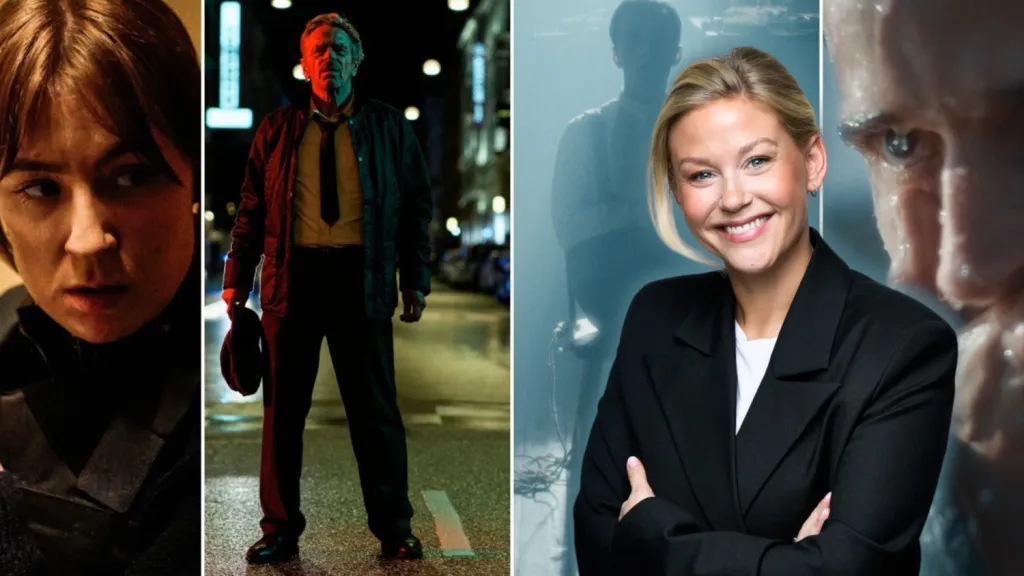
Prime Video‘s push into Danish originals began this year with Pilou Asbæk-starring Snake Killer, which is now serving as a milestone in a charge across the Scandinavian region, according to Amazon MGM Studios Nordics originals chief Emilia Widstrand.
“We’re really trying to build on that psychological thriller and crime vibe, doing it with strong creators and within established Nordic genres,” she told Deadline in an interview. Looking further ahead, Widstrand will be seeking to more directly target women and younger viewers too, as the service expands.
Snake Killer launched in January, with the four-parter followings a notorious Copenhagen narcotics police unit, Uropatruljen, a heavy-handed force that operated with relative autonomy between 1965 and 2001. The story sees Brian “Smiley” Petersen (Asbæk) leading his unit in a desperate war against a brutal heroin baron. Anders Ølholm is the writer and director.
Over in Norway, drama series Rinnan, about the infamous Norwegian traitor and Gestapo agent Henry Rinnan, is also set to launch. A co-production with Norwegian broadcaster TV2, the Miso Film show points to how Amazon is willing to share rights and window originals to bolster budgets.
Both series appeal to men, who have formed the backbone of viewing on Prime Video in the Nordics, but recent successes with unscripted shows will see the content mix changing in the future.
“Moving forward, we’ll have a more feminine point of view,” said Widstrand. “When we started out, we had a very broad audience, and we’ve really seen the appeal of female-led stories through global hits like The Idea of You and Pretty Little Liars, as well as unscripted shows like LOL: Last One Laughing. We’re really building on that, alongside our crime audience.”
As such, new original out of Denmark, Murder in the Dark, a four-part series from SAM Productions and Amazon MGM Studio based upon influential Danish literary icon Dan Turèll’s book series, is designed to appeal to a broad audience. It follows a retired and hard-bitten “nameless journalist” played by Michael Falch and his daughter Sophie (Katinka Lærke Petersen), who is an ambitious police detective.
The first shot from production of ‘Murder In the Dark’
Prime Video
Widstrand became Prime Video and Amazon MGM Studios Head of Nordic Originals in August last year, as we revealed at the time, to replace Karin Lindström, who later joined HBO Max. The two are credited internally with building Prime Video’s local originals team from scratch, making her the natural choice for the top post when it came available.
In May, this year, she added acquisitions duties following a restructure that saw the departure of Prime Video Nordics head Andreas Hjertø, and recently ordered a Swedish original, Sarek, a four-part psychological thriller based Ulf Kvensler’s debut novel about a group of friends on a hiking tripe that takes a dangerous turn.
That, Widstrand said, talks to a desire to age down the audience, with a cast led by Felix Sandman, Kitt Walker Johansson, Alva Bratt and Nora Rios, and to focus on well-known IP. “It really speaks to that strategy,” she added.
We sat down with Widstrand to pick her brains on the future for Prime Video Nordics and its originals slate.
DEADLINE: Emilia, you spoke at the Copenhagen TV Festival in August. What was your message to producers and the industry about what Amazon needs and is looking for from the Nordics?
Emilia Widstrand: We’ve been expanding our drama slate. It takes a long time to develop, and we wanted to take that time. Our first Danish original was Snake Killer, which was very successful, so we’re really trying to build on that psychological thriller and crime vibe, doing it with strong creators and within established Nordic genres.
Moving forward, we’ll have a more feminine point of view. When we started out, we had a very broad audience, and we’ve really seen the appeal of female-led stories through global hits like The Idea of You and Pretty Little Liars, as well as unscripted shows like LOL: Last One Laughing. We’re building on that, alongside our crime audience.
DEADLINE: Can you give us an example?
EW: We have Murder in the Dark, which is based on 1980s cult movies and books that we’re bringing back for Christmas Day. That has a much more female point of view than previous drama series. We’re leaning into both the female young-adult genre, looking for local versions of the kinds of stories that have found an audience globally, as well as Nordic crime, suspense and psychological thrillers. We’re trying to find strong local IP. Sometimes, we do co-productions where we sell international rights, but the focus is very much local right now.
DEADLINE: What kinds of international co-productions are you looking at and how flexible can you be?
EW: We’re very flexible. It’s a case-by-case decision about how we can get something done, but IP is important. We’re building on existing IP or true stories, which also helps us connect locally. Obviously you work with the best local talent, and the Nordics is such an amazing place to do that – It’s really special.
DEADLINE: Sarek is based on IP and with big producers. That feels like an example of what you’re talking about.
EW: Definitely, it really speaks to that strategy. I was just back on set on the show. It’s spectacular because it’s so Nordic. We’re shooting it up in Kiruna, and the environment is really a character in the story. There, we also decided to go a bit younger with the cast.
DEADLINE: In terms of your own role, Emilia, you’ve added some responsibilities, taking on unscripted along with scripted. How has that changed what you’re doing and has it impacted the overall shape of Prime Video Nordics?
EW: Strategy and programming are still separate, but I took on the overall responsibility for our Nordic local originals. I’ve found looking after the unscripted slate, which I wasn’t familiar with before, very intriguing. We work with very talented people across both unscripted and scripted, so we can really see synergies in both the talent and the content. It’s a big responsibility, but you get a fantastic overview.
DEADLINE: What would you say you’ve learned so far? It’s been a few months since you’ve taken on the expanded role.
EW: There are differences between the territories, both in Norway and Denmark, and there are different focuses in scripted and unscripted. Denmark, for example, is very strong in comedy, and it’s very easy to find strong unscripted comedy formats there.
Norway has really surprised me with the amount of great talent. We’ve found so many strong and interesting projects that we’re developing with local talent. That’s been overwhelming in a good way, with some really good projects coming out of Norway.
‘Snake Killer’
Prime Video
DEADLINE: With that in mind, what’s a realistic number of shows that will make it onto the screen?
EW: We have a slate of around 20 to 25 local originals per year, scripted and unscripted. It’s big, but we’re still trying to grow sustainably and not take on too much, while making sure we compensate the audience for the production.
DEADLINE: When we’re looking at LOL, which has been popular in the Nordics and pretty popular all over the place, is there any difference in how it’s received across the territories you’re overseeing?
EW: LOL works really well across territories. It’s a format that’s worked in so many countries across the world, huge in Mexico and Germany. It kind of works everywhere. The local versions are very different. We have local creatives on each project, because comedy is so local – it’s very hard for someone from another territory to develop it. We have other examples of programs that work better in one territory than another, but LOL is really delivering across the region, which I’m happy to see.
DEADLINE: When you’re looking at the Nordic region at the moment, what’s the biggest challenge for you as a commissioner? Obviously, you have the Amazon machine behind you, which means there is money, but it’s not an endless pot. Is it a case of funding, or talent identification?
EW: I would say both. Talent has had a few tough years, and I think it’s hard for talent to navigate what commissioners want to commission and what their creative vision is. I’m really interested in working with creators who have a strong vision and fight for that – they don’t just deliver everything you ask for. I really value creators who want to tell you something, because that delivers the best projects.
The other thing is, of course, funding. Budgets have been kind of the same, even though there’s been inflation, so it’s really hard to adapt to that. It’s also been a challenge with the tax rebates locally, and a lot of production is shooting abroad.
‘Rinnan’
Prime Vide
DEADLINE: Where are people shooting?
EW: Eastern Europe. It’s tougher to finance locally. That’s why we try to be open. If we’re going to get something big made, we need to be collaborative with local broadcasters and find synergies.
We’ve had a fantastic collaboration with TV2 in Norway with Rinnan, a project we’re launching this fall. It’s a World War II series we’re doing with Kenneth Karlstad, and it is a fantastic example of what we can do with a local broadcaster.
They benefit from their deep understanding of the local audience, while we bring the Amazon package and the premium feeling of doing high-end drama. We do it together. We’re in the room together and we’re reacting together.
DEADLINE: It comes to you first and then TV2?
EW: Yes.
DEADLINE: Is that always the case when you do those partnership shows? I see this in lots of different territories – it tends to be the streamer goes first with an exclusive window, and then the broadcaster takes it however many months later.
EW: Yes, that’s always how we do it, because we’re also much smaller than a TV2, so it makes sense for us to go first.
DEADLINE: Broadcasters and distributors have become more and more open to these types of collaborations. That probably wasn’t the case a few years ago.
Amelia: I think we’re moving into a much more collaborative space with financing.
>

>

>


Search For Canadian TV Actor Stewart McLean Now Homicide Investigation


These ’90s fashion trends are making a comeback in 2017
According to Dior Couture, this taboo fashion accessory is back
Model Jocelyn Chew’s Instagram is the best vacation you’ve ever had
Emily Ratajkowski channels back-to-school style
9 Celebrities who have spoken out about being photoshopped


Rurouni Kenshin: Hokkaido Arc Manga Takes 1-Issue Break – News


HIDIVE to Stream English Dubs for The World Is Dancing, The Forsaken Saintess and Her Foodie Roadtrip in Another World, The Dangers in My Heart: The Movie Anime – News