
Widow’s Bay town exterior
Apple TV


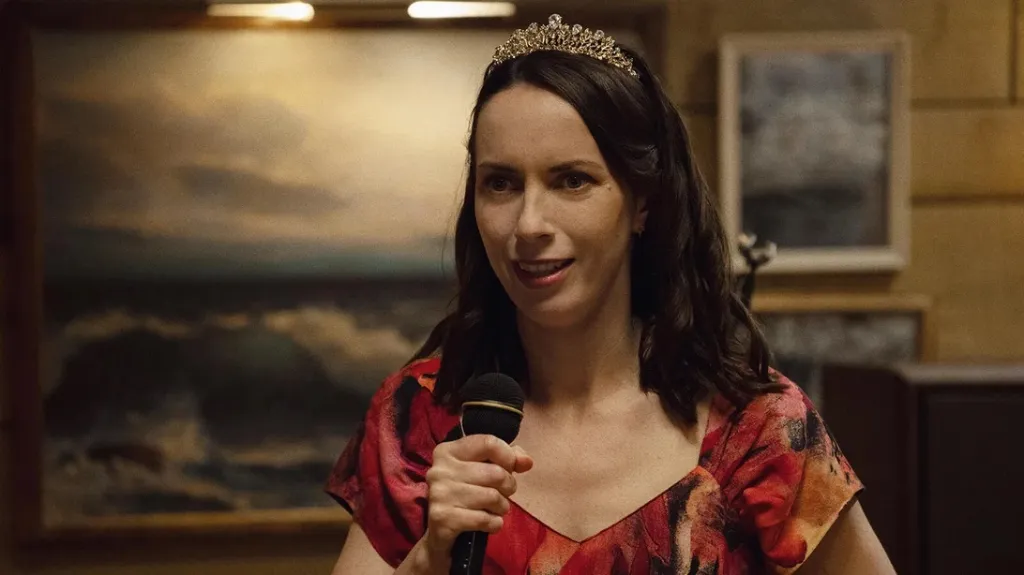
On Widow’s Bay, a show currently decorated with 19 Emmy nominations, the line between cozy New England charm and creeping dread is often found in the details.
Set against the remote, insular world of its titular island, production designer Steve Arnold and set decorator Jennifer Engel created a lived-in, slightly stuck in time and, when necessary, deeply unsettling environment. Arnold and Engel had to build a visual language that could accommodate the series’ peculiar blend of horror and comedy without tipping too far in either direction. That meant creating spaces that could feel warm and inviting one moment and ominous the next, from the inn’s welcoming parlor infused with haunted crawl spaces to the nautically-themed The Salty Whale restaurant and the period-accurate environments of the colonial-era town in Episode 6’s “Our History”.
Below, Arnold and Engel reveal the fun, creative challenges of filming on location in Massachusetts, hidden details and collaborating with creator-showrunner Katie Dippold and director/EP Hiro Murai to establish the show’s distinctive visual language.
Widow’s Bay town exterior
Apple TV
DEADLINE: You shot in Massachusetts to really capture the vibe of the island. What were some creative challenges that this introduced or satisfied?
STEVE ARNOLD: Both Jennifer and I had used the studios in Devens, which are proper studios. There are four stages and all of that. The producers may have thought, “We’ll find a whole bunch of locations that are going to work perfectly,” and that usually doesn’t work out the way they hope [laughs]. Trying to do something that looks like it’s on a remote island when you’re on the mainland is always a bit tricky. So we ended up building a lot more interior sets than we thought we were going to. And because we were shooting on stages but also had to be near the water for the swimming, the ferry boat, and a few other things, that meant driving a long way to get to the coast, and that eats up a lot of production time. So that was minimized as much as possible.
We did have some locations for the little town places that were nearby where the stages were, like the shot of the Driftwood Diner interior and the exterior of the church was an existing church. The interior of the Historical Society was in the small town of Shirley, which was farther away.
We were extremely lucky to find the exterior of Richard Warren’s house. That house exists, and it is proper from the period, 1600-something, and hadn’t been changed or messed with very much. People actually live in that house.
Steve Arnold, production designer.
DEADLINE: I want to talk to you both about three episodes specifically. First, Episode 2, “Lodging”. The inn feels charming and a little ominous. What were some visual rules you established to create that balance between comfy and spooky?
ARNOLD: We had trouble finding a proper exterior. So, we built the captain suite, the corridor and hallway, which was pretty straightforward. We had some elements that Jennifer had to come up with, like a working TV that was from the ’70s or ’80s or whatever, and that’s always a tricky situation. But Katie [Dippold] was very specific about a lot of things – for example – the fact that there were paintings on the wall that told part of the story. We had to go around quite a bit to get the right tone and feel.
I wanted the parlor area, where they play the games, to be slightly warmer and a little more inviting, so they’re spending a little more time there. But those rooms, the captain suite corridor and everything leading to that, are a little bit on the cooler side. And then, of course, we did the basement of the inn and the crawl space, which had to be pretty creepy and pretty scary. We ended up building all of that. The crawl space had to do certain things, and the actor had to move in a certain way, so it was engineered pretty carefully. It was built in forced perspective, so it seemed bigger than it was.
But I’m glad that we did get to see the games pretty clearly because she was specific about those games. It was a very fun element that harkens back to a time when people would pass the time doing things other than looking at their phone.
DEADLINE: What were some props or set dressing that were designed to hint at the town’s mythology before viewers understood their significance?
JENNIFER ENGEL: I think we were trying very carefully not to be the source of ominousness or the source of comedy. We were really trying to be the quiet infrastructure for the actors and the script to really shine. There were definitely pieces of furniture that we introduced that later on had to serve a very specific function. But for the most part, we kept things quiet, avoided distractions, and did not give anything away.
The Breakwater Inn’s parlor room
Apple TV
DEADLINE: Right. I’m sure trying to walk that tightrope of horror-comedy couldn’t be too outlandish because it might make the show a little too cartoony or silly. Can you talk a bit more about the parameters or difficulty of that? You do have to play the straight man while all of this stuff is happening, don’t you?
ENGEL: Exactly. There was also this nebulous, ill-defined sense of time because we were trying to show how this place is very remote and it’s not up-to-date. They don’t have great Wi-Fi; all their technology is “primitive”, like tube TVs and dial phones on the wall and clunky desktop computers. We were trying to tell the story that these New England thrifty people try to preserve and keep stuff going as long as they can because of their thrifty New England styling and the incredible inconvenience of the distance and remoteness of this island, and tried to tell that part of the story without being too, like you said, the straight man in the joke.
People really loved the key fobs at the inn; those were prized. And the stick figure sculptures at Patricia’s party. Those were amazing.
Jennifer Engel, set decorator.
DEADLINE: Now, over to Episode 4’s “Beach Reads”, which starts relatively fine and then becomes a descent into madness. Where was the ocean part of it filmed?
ARNOLD: We shot part of it in Rockport in Bearskin Neck. It’s a little area where we first see Patricia’s (Kate O’Flynn) bookmobile and the book is introduced and all of that. We ended up trying to do the ocean thing at night, which is a really tricky situation. The fire was a combination of a lighting effect that we did at the location, and then we did filming of the actual fire in the parking lot. And the post-production people married that together to make it seem realistic.
And then, of course, props had gotten very involved in the book when it morphs into this horrific, scary book. A lot of effort went into researching different mystical, strange calligraphy and all kinds of diagram stuff that are in that.
DEADLINE: How fun was it to add the little flourishes? Was there anything that wasn’t in this restaurant before that you guys threw in specifically for this episode that didn’t exist before or after in the restaurant?
ARNOLD: A buffet table, some flowers… There were a couple of things that were specified. We needed this mirror against the wall so we could actually see these [character] reaction shots. And there’s also in the kitchen area, where a towel dispenser or something has a reflective surface on it so that Patricia can see, when she turns, that she’s got this horrific headdress on her head. The director [Sam Donovan] specifically said to do something for that in the kitchen. So, we tried to make something that seemed like it should be there because the printing on it says, “Wash Your Hands” or “Smile As If Your Tips Depended On It.”
We did go through several different versions of something shiny that she could see a reflection of herself in in the kitchen that would always be there, but solely be used for just this moment. And specifically, I had put that window in the back for the smoking scene where Rosemary [Dale Dickey] is smoking, and you can get the sense that there’s a window that looks out to where the beach would be and all of that. That was all done on a stage.
Kate O’Flynn as Patricia on Widow’s Bay
Apple TV
DEADLINE: I was obsessed with the sixth episode, “Our History”. It takes us back to the colonial era, and we get to see the origins of the island. Massachusetts is chock-full of history from that time, I’m sure. How did you go about picking the right set for this?
ARNOLD: We were extremely lucky to find the exterior of Richard Warren (Hamish Linklater)’s house. That house exists, and it is proper from the period, 1600-something, and hadn’t been changed or messed with very much. People actually live in that house.
DEADLINE: Oh, wow.
ARNOLD: So when we found the inside, we did take a lot of notes from it because it has not been changed much since it was built. We took a lot of notes on the way the fireplaces were built, the way the walls were done, the way the floors and the ceilings and all that was right there in front of us.
So we didn’t have to go through the libraries or things like that to find actual examples of what the door hardware looked like and what the fireplace accouterments were or the potholders and the pots and pans and everything that they used to cook with. We had a good historical reference right there.
ENGEL: And Massachusetts is rich with places and items from that period specifically. So, there was a lot available for us to do research and look into. A lot of it has been saved and cherished and not knocked down for the latest new whatever is in vogue now. It’s been kept very, very historically accurate. So, very helpful.
Betty Gilpin and Hamish Linklater in Widow’s Bay
Apple TV
DEADLINE: Yeah, I always think about my trip to England, and I went to the Tower of London and noted that there was a Starbucks within like a 5-minute walking distance. That shouldn’t be.
ENGEL: It’s so disorienting [laughs].
ARNOLD: Well, we did end up having to build the town. We built the dock where the family in that episode escaped in the rowboat. We had to build the graveyard and all that, the top of the well, the tunnels and passages under the well she climbs the ladder to get out of. All that we built at the various spots where we found something that was right, and then we just augmented it.
DEADLINE: If someone was to pause any frame from any Widow’s Bay episode, what details would you hope they notice that might not register on a first viewing?
ARNOLD: When they’re playing the game, “Daddy’s Home”, in the inn, you’ll notice that the pieces that they move around the board are all things that are not nice. There’s a bat, there’s a belt, there’s a newspaper rolled up, and they’re things that when Daddy is mad, Daddy could slap you around with something. And that is a very subtle little thing that you might not notice, but if you look carefully, you’ll see them.
DEADLINE: That’s lowkey scary. Was there a prop on set that everyone on the crew became unexpectedly attached to?
ENGEL: People really loved the key fobs at the inn; those were prized. And the stick figure sculptures at Patricia’s party. Those were amazing.
DEADLINE: What was your favorite set design?
ARNOLD: I loved the way the town hall came out. We were able to find old glass that has the slight waveriness that old glass has. Little detailed stuff like that separates it from ordinary sets. The Salty Whale set came out very well too, and we based it on a place in Marblehead that I think Katie had been to. She really liked it. We never saw pictures of the place, but what we came up with, like Jennifer’s little sconces with the ship wheel and the shades of red on them… we also changed the lighting at the last minute because it just wasn’t working. I think it came out well for the feel that Katie was looking for.
ENGEL: I was really excited about Patricia’s house; Steve and the art directors presented me with the drawing for that set and I thought, “Wouldn’t it be fun if I got in your business?” [laughs]. We had some built-in bookshelves. Steve was very amenable. Thank you, Steve. And we got to have built-in bookshelves at Patricia’s in her living room, which I was really pleased with.
I thought it really warmed up that space and made it feel more real, or just helped with giving it a life texture. I loved how it worked out. And I really appreciate the trust that Steve gave me, and he lets me go crazy. I really appreciate the trust that Steve gives me to collaborate, and it makes my job so much more rewarding and fun that way.
>
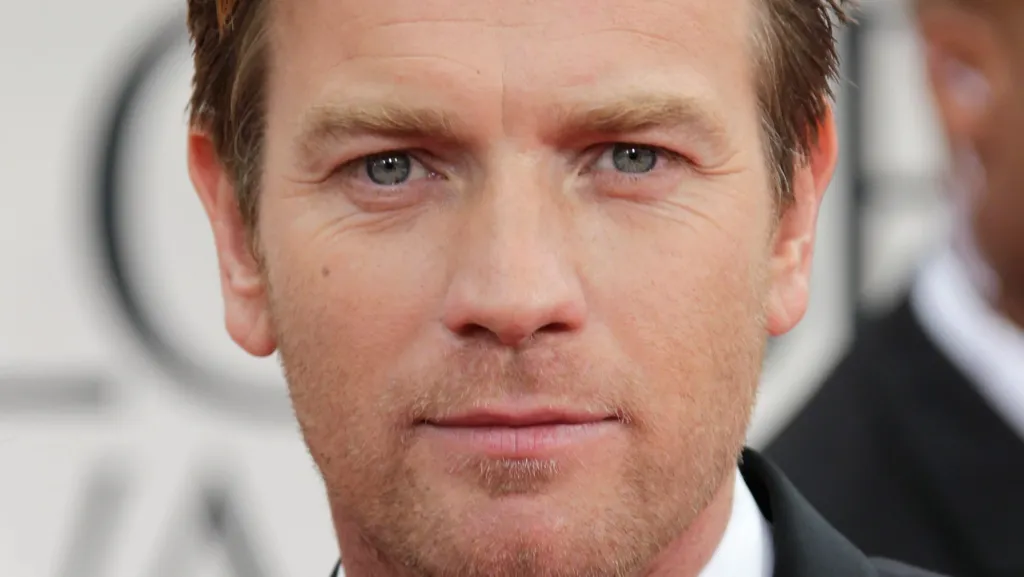
Ewan McGregor brought the house down at Edinburgh’s Central Hall las night with a once-in-a-lifetime re-enactment of his 1992 performance in Joe Orton’s play What the Butler Saw at Salisbury Playhouse. Fully clothed, the actor gave an athletic display of what occurred that fateful night, when, naked but for a policeman’s helmet over his groin, McGregor not only tripped and fell, he dropped the helmet and gave the audience a very intimate view of his private parts. Despite an unusual number of shocked elderly ladies present, the result was “the biggest round of applause I’ve ever had in my life.”
The anecdote followed a frank discussion of the actor’s once-fearless approach to nudity, which saw him stripping off in films as varied as Velvet Goldmine, The Pillow Book and Young Adam. Now 55, McGregor admitted that, if he were starting out today, in these times of intimacy coordinators, he might not be so bold. “We didn’t have social media in those days,” he mused. “It was much better. Nobody was screen-grabbing your naked ass.”
McGregor was in town partly to present a live commentary of his 1994 breakthrough film, Danny Boyle’s Trainspotting, but mostly because Scotland is where he lives now. Speaking to the Berlinale’s Artistic Director Tricia Tuttle, McGregor explained that his career had come full circle; though he continues working in the States, he has largely relocated to Perthshire where he hopes, like James McAvoy, to stimulate the arts scene in his home country. One of the first fruits of this endeavor will occur next year at the nearby Pitlochry Festival Theatre, where he will take to the stage with Alan Cumming for a version of Harry Macqueen’s 2020 film Supernova.
Discussing his passion for biking, McGregor revealed plans for more adventures in the Long Way Round documentary series, as well as a spinoff show following his attempts to cross the Atlantic in a renovated yacht. Though he accepted that he has probably “missed the boat” when it comes to playing James Bond in the rebooted Eon franchise, McGregor expressed his affection of the often-maligned Star Wars trilogy he appeared in and dropped heavy hints that he wasn’t done with his character, Obi-Wan Kenobi.
Surprisingly, he said, he hadn’t jumped at the chance when Lucas first came to him. “Deciding to do it was hard,” he said. “I mean, it does sound like that’s not true, but it was. I remember phoning Danny [Boyle]. I phoned my uncle Dennis [Lawson]. I spoke to anybody that I respected about it, asking, ‘What do you think?’ Because at that point I was already doing these [artier] films in the early part of my career. I didn’t think of myself as being somebody in that kind of thing. And then the closer I got to it, the more I wanted to do it. But still, I did them, and they were hard because they’re not indie.
“It’s a different experience,” he continued. “You’re not really trying to find [the character’s interior life]. The job of an actor in those films is a very different one than The Pillow Book or something, when you’re really trying to discover someone’s emotional life. It’s different. So, I did them, and I enjoyed them, and they were not well received. And so that was weird and hard — to sort of put yourself into something like that, and then for them to be really dragged through the month by the critics. But I learned a lot about not giving a sh*t.”
McGregor, however, was pleasantly surprised, many years later, to find out that there actually is a passionate fanbase out there for his three Star Wars movies. “The truth is, I didn’t know that when we made the series [Disney+’s Obi-Wan Kenobi]. I found that out later when they premiered the series. They showed it at a Star Wars convention in California. And I’d never been to one. I never went to conventions, or anything like that. But then when we went to the premiere, they played the first two episodes. I had many thousands of people behind me, and I felt a rush there. When I started signing autographs, I started meeting people who we made those films for: They were children when we made them. And then I started realizing that [those films] were loved.”
The actor still thinks fondly of Obi-Wan, partly because he is now getting closer to the age Alec Guinness was when he played the part in the first Star Wars movie, A New Hope. “He was in his 60s when he played that role, where I was doing it when I was 25, 26 or something like that. It was hard to make that work. But when I went back, I was in my late 40s.”
“I’d really like to do it again,” he added, “because at the end of the original series, me and Liam [Neeson] just wander off. There’s got to be a great story, or maybe two, or maybe three.” He laughed. “Or a series…”
>
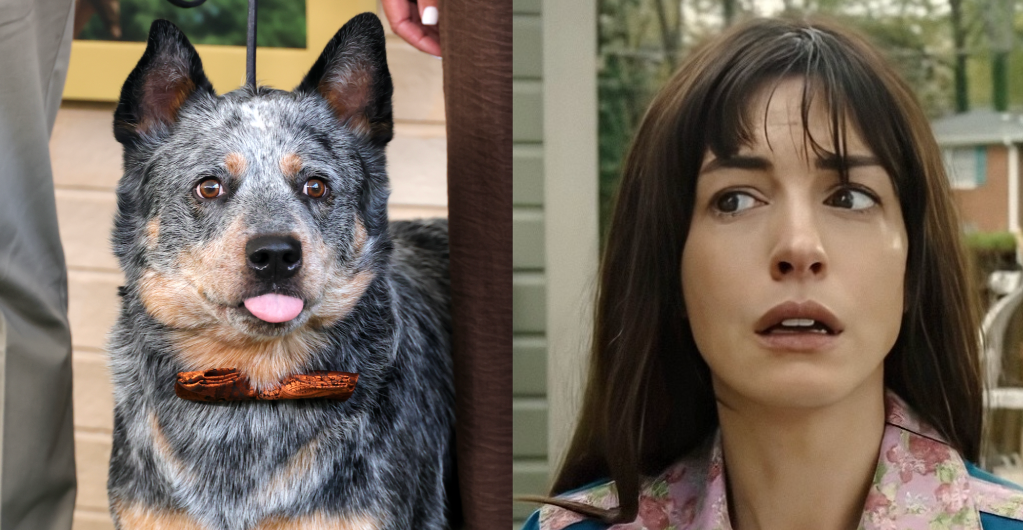
Worried about the dog in the sci-fi apocalypse thriller The End of Oak Street? Star Anne Hathaway has just the spoiler for you.
In a new interview with Complex – watch a clip below – Hathaway talks about the online chatter she’s been reading expressing concern for Starbuck, the camera-ready canine belonging to the film’s Platt family. While an entire neighborhood (or more) is threatened with extinction-by-dinosaur, the fate of Starbuck (real-life dogs Buzz and Brisket share the role), featured prominently in the movie’s trailer, seems to have stirred up the most internet agita.
Hathaway has some comforting words.
“Somebody was, like, can you just let the audiences know that, like, it’s all gonna be OK?’” Hathaway says in the video interview, winking repeatedly. “We break rules in this movie [but] that might not be one of them. Don’t worry.”
Hathaway admits to being surprised by the concern, not because she doesn’t share it but because she’s unsure where the idea came from.
“I’m like, ‘Which movies are out there killing dogs that everybody’s scared that we’re just casually doing it in movies now?’,” she says, theorizing that the blame might fall on 2014’s John Wick, which left folks “traumatized” when Daisy, Wick’s beagle puppy, is beaten to death by an especially villainous mobster.
“I feel like movies that kill dogs should automatically be rated R,” Hathaway told Complex. “It doesn’t matter if anybody curses, doesn’t matter if there’s violence – if a dog dies, R-rated.”
Watch both the trailer from Warner Bros. below and the Complex clip below.
>

Spider-Man: Brand New Day continues to fly high in its third weekend at the box office as it fends off newcomers The End of Oak Street and PAW Patrol: The Dino Movie.
Sony Pictures‘ Brand New Day pulled in $19 million on Friday as it heads to $67 million, which will top the domestic box office for its third consecutive frame. This would bring the Tom Holland-led feature’s North American total to $782.8 million for its first 17 days to stand at No. 5 on the all-time domestic chart, just behind Avatar at $785.2 million and topping the No. 6 total of $718 million for Top Gun: Maverick.
Warner Bros.’ dinosaur-centric sci-fi survival feature The End of Oak Street grossed $8.1 million on Friday, including Thursday previews, as it eyes an opening weekend around $20 million. Earning a B CinemaScore from audiences, David Robert Mitchell‘s film launched in 3,400 North American theaters and carries an $80 million production budget.
Anne Hathaway and Ewan McGregor star in the movie about a family in the early 1980s whose suburban neighborhood has landed in a place teeming with prehistoric predators. It holds an 85 percent Rotten Tomatoes approval rating from critics, while its audience score stands at 77. In his review of The End of Oak Street for The Hollywood Reporter, chief film critic David Rooney called the movie “mindlessly entertaining in a big-dumb-fun kind of way.”
PAW Patrol: The Dino Movie chased down $7.3 million on Friday, including previews on Thursday and last Saturday, as Paramount Pictures now expects it to also land in the vicinity of $20 million domestically for its opening weekend. Earning an A CinemaScore from audiences to match what the previous sequel PAW Patrol: The Mighty Movie received, Dino Movie opened in more than 3,500 locations in North America and has added $38.3 million from 52 overseas markets. It has a $39.5 million production budget.
Carter Young, Mckenna Grace, Terry Crews, Jennifer Hudson and Snoop Dogg are among the voice stars for director Cal Brunker’s film that brings the Paw Patrol canine heroes to a world containing dinosaurs. The previous sequel, 2023’s The Mighty Movie, opened to $22.7 million domestically in late September. That project’s $205 million global run improved upon the $144 million worldwide total for 2021’s original PAW Patrol: The Movie, which adapted the series that first launched on Nick Jr. in 2013.
PAW Patrol: The Dino Movie holds an 84 percent critics score on Rotten Tomatoes. THR critic Frank Scheck wrote that, “while the material is thoroughly juvenile, the films impart valuable messages to their impressionable viewers.”
With Oak Street and Dino Movie battling it out for third place, Universal’s The Odyssey will remain at No. 2 for its fifth weekend as it looks to collect $23 million to bring its domestic cume to $504.4 million.
During the week, Spider-Man: Brand New Day added to its array of records as director Destin Daniel Cretton‘s movie became the fastest title to swing past the $700 million mark at the domestic box office.
More to come.
>


Search For Canadian TV Actor Stewart McLean Now Homicide Investigation


These ’90s fashion trends are making a comeback in 2017
According to Dior Couture, this taboo fashion accessory is back
Model Jocelyn Chew’s Instagram is the best vacation you’ve ever had
Emily Ratajkowski channels back-to-school style
Your comprehensive guide to this fall’s biggest trends
9 Celebrities who have spoken out about being photoshopped
A photo diary of the nightlife scene from LA To Ibiza