
Tech
Apple in Talks to Pay Publishers for Siri AI Content


Apple is discussing multiyear deals with publishers that would let Siri AI use their content for current news and information, according to The Wall Street Journal. Apple has proposed variable compensation, with publishers paid when their content is used, and has discussed a possible nine-figure budget.
The publishers involved and exact payment terms remain undisclosed.
The talks arrive as Apple prepares a broader Siri AI rollout later this year. Apple has confirmed that the assistant can retrieve up-to-date information from the web, but it has not publicly explained how publisher sources would be cited or linked in those answers. Apple declined to comment on the reported negotiations.
Siri AI is being built around current web information
Apple says Siri AI can combine web retrieval with onscreen awareness, personal context, and broad world knowledge to answer questions on virtually any topic. The assistant is available for developer testing across iOS 27, iPadOS 27, macOS 27, and visionOS 27, with a user beta planned for later this year.
Siri AI will work across iPhone, iPad, Mac, Apple Watch, and Apple Vision Pro, although supported devices and regional eligibility vary.
The Wall Street Journal reported that Apple’s proposal differs from common AI licensing agreements, which offer publishers guaranteed fees for broad access to content. Apple’s model would instead compensate participating publishers when their content is used. The company previously paid publishers in agreements that included AI training rights and has commercial relationships through Apple News+.
The Journal also noted a source-quality concern from Apple’s past. In late 2024, Apple tested AI-generated news summaries that produced erroneous headlines, prompting the company to disable the feature.
Publishers are negotiating as AI changes referral traffic
Apple’s discussions enter a market where publishers are reconsidering how AI companies use their work.
Reddit has reportedly reviewed parts of its Google AI partnership as AI-generated search answers change the economics of web traffic, while Google AI Overviews have faced legal and regulatory scrutiny over publisher content, attribution, and traffic.
Brookings research published in June describes an AI licensing market split between direct deals with major publishers and an intermediary layer offering content marketplaces, bot controls, and pay-per-use models. It found that publishers with direct licensing agreements initially received a click-through advantage from AI interfaces, but that premium had largely disappeared by the fourth quarter of 2025 amid a sixfold decline in AI click-through rates.
For publishers, unresolved terms include attribution, linking, usage reporting, and how variable payments would be calculated. IT and AI-governance teams have a separate concern: whether policies for AI-assisted research account for assistants that retrieve and synthesize live web content across managed devices.
Apple’s planned user beta may provide more visibility into Siri AI’s citation and source-link behavior. It is less likely to reveal the private commercial terms behind any publisher agreements.
Also read: Apple’s iOS 27 beta 2 adds Write with Siri, RCS upgrades, and other changes ahead of the full software rollout.
>

The White House is preparing to bring powerful open AI models into its secretive safety-review framework.
The administration’s current framework applies to closed models from leading AI companies, including OpenAI and Anthropic. But White House officials are now expected to expand it to open models once they reach frontier-level capabilities, according to WIRED.
A White House official told WIRED that open models could face prerelease testing when their capabilities reach the level of Anthropic’s Mythos-class models and OpenAI’s GPT-5.6.
The framework remains voluntary and has not been publicly released. Axios reported that the administration has generally viewed models with frontier capabilities and national security risks as requiring some form of government collaboration, regardless of whether they are open or closed.
That puts the administration in a difficult position. Open models can be downloaded and modified after their weights are released, making them fundamentally different from proprietary systems that their developers can update, restrict or shut down.
A balancing act for Washington
The potential policy shift comes after growing pressure to keep open models competitive in the US AI market. Companies including Meta, Microsoft and Palantir have backed efforts to protect open-weight development. Nvidia CEO Jensen Huang has also argued for maintaining both open and closed frontier models.
“Open models strengthen safety and cybersecurity, accelerate innovation and diffusion, and enable sovereignty,” Huang said. “The world needs both frontier closed models and frontier open models.”
The administration also faces a practical concern: If government approval becomes associated primarily with closed models, businesses could view open models as riskier, potentially hurting US developers working on them. At the same time, officials worry that highly capable open models could be misused for cyberattacks and other national security threats.
More must-read AI coverage
A new test for open-weight AI
The emerging debate highlights a growing reality for AI companies: the distinction between open and closed models may matter less to regulators than the capabilities of the systems themselves.
For businesses building AI products, broader oversight could provide greater confidence in the safety of advanced models. For developers of open-weight systems, however, additional reviews could slow releases and increase compliance costs.
The challenge for policymakers is finding a middle ground. Open models have become a critical part of the US AI ecosystem and are increasingly viewed as a strategic response to China’s advances in the field. Yet the same accessibility that fuels innovation also raises concerns about misuse.
As frontier AI capabilities continue to spread beyond a handful of closed providers, the administration appears to be moving toward a capability-based approach rather than one defined by whether a model is open or closed.
Why this matters
For businesses adopting advanced AI, the White House’s approach could become another signal for evaluating model risk. If open and closed models undergo similar safety reviews once they reach frontier capabilities, enterprises may have more information to weigh alongside performance, cost, and deployment flexibility.
For open-model developers, however, broader oversight could introduce new friction. Prerelease testing may slow launches, increase compliance costs and make it harder for smaller developers to compete with companies that have larger legal and policy teams.
The bigger shift is regulatory. Rather than treating open and closed AI as separate categories, Washington appears increasingly focused on what a model can do and the risks those capabilities create. If that approach takes hold, capability thresholds could become a much more important factor in how advanced AI is developed, released and adopted.
Also read: For another example of how openness can create security trade-offs, 77 counterfeit Open VSX extensions recently exposed developer and CI/CD environments to supply-chain risk.
>
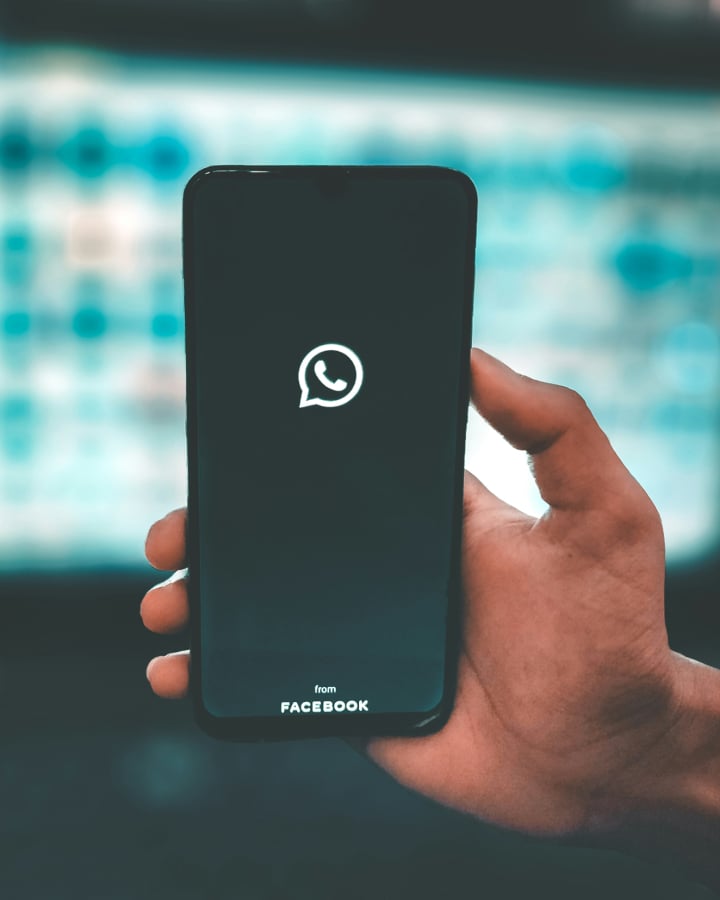
WhatsApp is adding a new layer of protection that could stop some scams before users even respond.
WhatsApp is rolling out Scam Alert, an optional feature that uses an on-device machine learning model to identify potential scams in messages from people who are not in a user’s contacts. The feature is currently available in a limited beta as Meta tests it with security researchers and gathers feedback before a broader launch.
The model looks for linguistic and conversational patterns associated with known scams. If it detects a likely scam, WhatsApp displays a warning that only the recipient can see. Users can then block or report the sender, continue the conversation, or mark the chat as trusted.
If a warning is wrong, marking the conversation as trusted removes the alert and prevents Scam Alert from flagging that chat again. Users can also voluntarily share the last five messages from a trusted conversation with WhatsApp to help improve the model.
Privacy remains central
Meta says Scam Alert was designed to work without giving WhatsApp access to users’ encrypted conversations. The detection model runs locally on the device, and message content is not automatically sent back to the company.
The company says it also cannot use the system to send a particular AI model to an individual user selectively. Each model version is recorded on a third-party transparency ledger before distribution, while devices verify published signatures and file hashes before loading a model.
WhatsApp also collects limited performance data, such as how often warnings appear and what users do afterward. According to Meta, those figures are aggregated and protected using confidential computing and differential privacy rather than exposing individual conversations.
Users will eventually be able to inspect Scam Alert activity in WhatsApp under Account > Request Info > Scam Alert Activity, including which messages were analyzed, the result, and the model version involved.
Must-read security coverage
A response to a growing scam problem
The feature arrives as scammers increasingly use messaging platforms to build trust, pressure victims and solicit money or personal information. The Federal Trade Commission said consumers reported $2.1 billion in losses from social media scams in 2025, including $425 million tied specifically to WhatsApp, according to CNET.
That makes the phone-based approach particularly significant: WhatsApp is trying to add an automated layer of protection without requiring its servers to inspect private conversations.
The tradeoff behind the warning
Scam Alert could give users a useful second opinion before they respond to an unfamiliar sender, but it is not a guarantee that a message is safe or fraudulent. Machine learning can miss sophisticated scams or incorrectly flag legitimate conversations.
Scam Alert remains an experiment, not a finished security feature. Meta says it will continue testing the system with security researchers, expand bug-bounty coverage, and refine the model before deciding whether to make it broadly available.
If the approach works, WhatsApp could gain an additional layer of scam protection without abandoning the privacy model that has defined the service — but users will still need to treat any automated warning as guidance rather than proof.
Other News: DentaQuest has disclosed a data breach affecting nearly 15 million people, with exposed information potentially including names, Social Security numbers, and health insurance details.
>

Microsoft has spent years retreating from China. AI may be a reason it does not leave entirely.
Reuters reports that the company has closed at least 15 offices and joint ventures in China and came close to executing a complete exit in 2023, as geopolitical tensions, tighter Chinese technology policies, and U.S. export controls have made the market increasingly difficult to serve.
However, Microsoft has found a narrower opportunity in the same market: selling Azure cloud and AI services to Chinese companies with international operations, including ByteDance.
That shift changes what Microsoft’s China strategy looks like. Rather than trying to remain a major foreign software provider in China’s domestic market, Microsoft is increasingly using its cloud platform and access to Western AI models to serve Chinese companies that need technology for their businesses outside the country.
That business model, too, isn’t entirely immune to the problems that led the company to want to leave, leaving Microsoft in an unusually sensitive spot.
Microsoft is facing pressure from two sides
Microsoft’s office closures are not just about reducing physical presence; they reflect a business that has become harder to justify as Microsoft’s traditional software market in China shrinks.
The country accounted for only about 1.5% of Microsoft’s global revenue in 2024, according to Reuters. That means Microsoft is being asked to bear significant geopolitical, regulatory, and operational risks for a relatively small share of its worldwide business.
Beijing already has a growing preference for domestic technology. Chinese government agencies have been encouraged to replace foreign software with Chinese alternatives. Microsoft’s own attempt to build a China-specific version of Windows for government customers also did not translate into measurable adoption.
What is equally important is the squeeze from Washington. U.S. export controls on advanced chips and AI technology have restricted what Microsoft can provide to Chinese customers and what its China-based engineers can access.
Reuters says those restrictions have also affected Microsoft’s research operations, with the company having to move some researchers outside China.
The problem is that U.S. restrictions can also strengthen the very domestic technology push that is hurting Microsoft. Beijing has also tightened restrictions to foreign businesses.
In other words, U.S. controls may directly limit Microsoft’s business in China while also giving Chinese companies and policymakers another reason to reduce their dependence on foreign technologies like Microsoft’s.
More Microsoft news
AI gives Microsoft a narrower path in China
AI and cloud services give Microsoft a reason to preserve part of its China business, but analysts have questioned how durable that opening is.
Microsoft relies on third-party AI providers, meaning a change in U.S. or AI providers’ access-to-China policy could quickly weaken one of the reasons customers use Azure.
There is another problem: the same push for domestic technology that hurt Microsoft’s traditional software business also applies to AI. Chinese companies have increasingly capable homegrown models, giving them another reason to avoid foreign providers.
That is where companies such as ByteDance and Shein become particularly important. They operate internationally and often require AI and cloud infrastructure to serve global markets. That makes Microsoft’s Azure and access to Western AI models an attractive alternative.
The old global tech playbook is breaking down
Microsoft’s China strategy shows how geopolitical tensions are moving beyond policy documents into corporate operating decisions. The company has reduced its footprint while keeping selected businesses alive, even as a Reuters source stressed there are no definitive plans to leave China.
For other multinationals, that could become the new playbook: Stay where the business still works, reduce exposure where politics raises the cost, and build around a technology environment that is increasingly split along national lines. How that plays out in the long run remains to be seen.
Other Microsoft News: The company is merging its separate Microsoft 365 Copilot and Copilot apps into a more unified experience as it continues consolidating its growing lineup of AI tools.
>

Frozen 3 D23 Footage Description, Plot Details

Curt Cignetti says he wants Indiana to play Notre Dame … on certain conditions

White House AI Safety Reviews Could Expand to Open Models
-

 movies3 months ago
Search For Canadian TV Actor Stewart McLean Now Homicide Investigation
-

 Fashion9 years ago
These ’90s fashion trends are making a comeback in 2017
-
Fashion9 years ago
According to Dior Couture, this taboo fashion accessory is back
-
Fashion9 years ago
Model Jocelyn Chew’s Instagram is the best vacation you’ve ever had
-
Fashion9 years ago
Emily Ratajkowski channels back-to-school style
-
Fashion9 years ago
Your comprehensive guide to this fall’s biggest trends
-
Fashion9 years ago
9 Celebrities who have spoken out about being photoshopped
-
Fashion9 years ago
A photo diary of the nightlife scene from LA To Ibiza