
Tech
Foxconn AI Server Demand Drives 35% Profit Jump

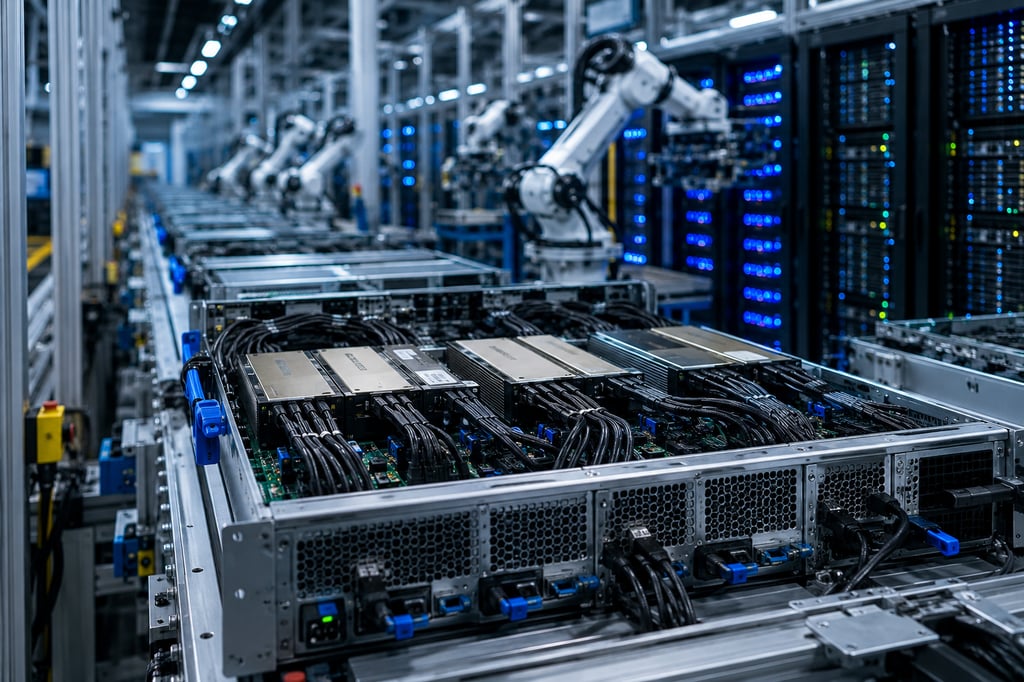
Foxconn’s AI server business is now large enough to reshape the company’s financial results.
Second-quarter net profit rose 35% year over year to NT$59.97 billion, or about $1.86 billion, while revenue jumped 41% to NT$2.526 trillion. Cloud and Networking products, including AI servers, accounted for more than half of revenue for the first time.
The manufacturer expects AI server rack shipments to grow by a high double-digit percentage sequentially in the third quarter and more than double for the full year.
For infrastructure and procurement teams, Foxconn’s results confirm that hyperscaler spending is already reaching manufacturing lines, but stronger production does not guarantee that every rack configuration will be readily available.
AI servers push Foxconn beyond its iPhone-era revenue mix
Once best known as Apple’s largest device assembler, Foxconn now gets a meaningful share of its business from AI hardware.
The Wall Street Journal reported that Foxconn’s NT$59.97 billion quarterly profit also beat the NT$58.22 billion expected by analysts surveyed by FactSet.
Chairman Young Liu said in July that AI infrastructure demand is coming from model developers and cloud providers as well as governments and enterprises. He expects the infrastructure build-out to continue for at least another three to five years, according to the Journal.
Cloud providers remain the largest near-term driver. TrendForce’s latest AI server forecast projects that Google, Amazon, Meta, Microsoft, Oracle, ByteDance, Tencent, Alibaba, and Baidu will spend more than $886.7 billion combined in 2026, roughly 90% more than a year earlier.
The five North American hyperscalers are expected to account for nearly 90% of that spending. TrendForce also raised its forecast for global AI server shipment growth from 28% to nearly 31% this year.
Foxconn’s earnings put a manufacturing result beside those cloud infrastructure spending projections. The capex number measures what major buyers expect to invest; Foxconn’s revenue and profit show that AI hardware demand is already translating into supplier sales.
Procurement pressure moves beyond GPUs
The next wave of racks will not all use the same hardware. TrendForce expects Google to continue expanding its own TPUs, while AWS combines Nvidia systems with its in-house ASICs and Meta uses Nvidia and AMD racks alongside proprietary silicon.
That diversification increases the number of configurations manufacturers such as Foxconn must integrate. It also shifts some of the procurement pressure beyond GPUs to advanced chip packaging, high-bandwidth memory, networking, and other rack components.
Power and cooling are another constraint. New rack-scale AI systems require substantially different facilities than conventional servers, making power and liquid-cooling capacity part of the purchasing decision rather than an afterthought.
Before treating rising production as proof that supply will be easy to secure, buyers should confirm:
- Production status: Is the exact rack configuration already in volume production?
- Component exposure: How dependent is delivery on HBM or advanced packaging capacity?
- Facility readiness: Can the data center provide the required power and liquid cooling?
Foxconn’s latest quarter provides stronger evidence than a spending forecast alone that the AI infrastructure boom is reaching hardware manufacturers.
For enterprise buyers, that also means competition is moving from GPUs toward complete rack capacity, memory, packaging, cooling, and power.
Also read: SpaceX’s exclusive Nvidia chip strategy could simplify AI infrastructure deployment while concentrating supplier and supply-chain risk.
>

Stripe has finalized a deal to acquire OpenRouter, according to a new report in Bloomberg.
OpenRouter helps customers to select different AI models to perform different tasks, depending on their specific needs and budget. The company announced in May that it had raised a $113 million Series B, at a reported $1.3 billion valuation. (Investors include Sequoia, Andreessen Horowitz, Menlo Ventures, and Alphabet’s Capital G.)
At the time, OpenRouter CEO Alex Atallah described the company as the equivalent of Stripe for AI, because it provides customers with a single access point for different systems and prevents lock-in. The startup also claimed to have 8 million global users and to provide access to more than 400 models.
The Wall Street Journal reported last month that Stripe and OpenRouter were in acquisition talks. Now, Bloomberg said those discussions have led to a deal price of more than $7 billion.
A Stripe spokesperson told TechCrunch that the company does not comment on rumors or speculation.
>
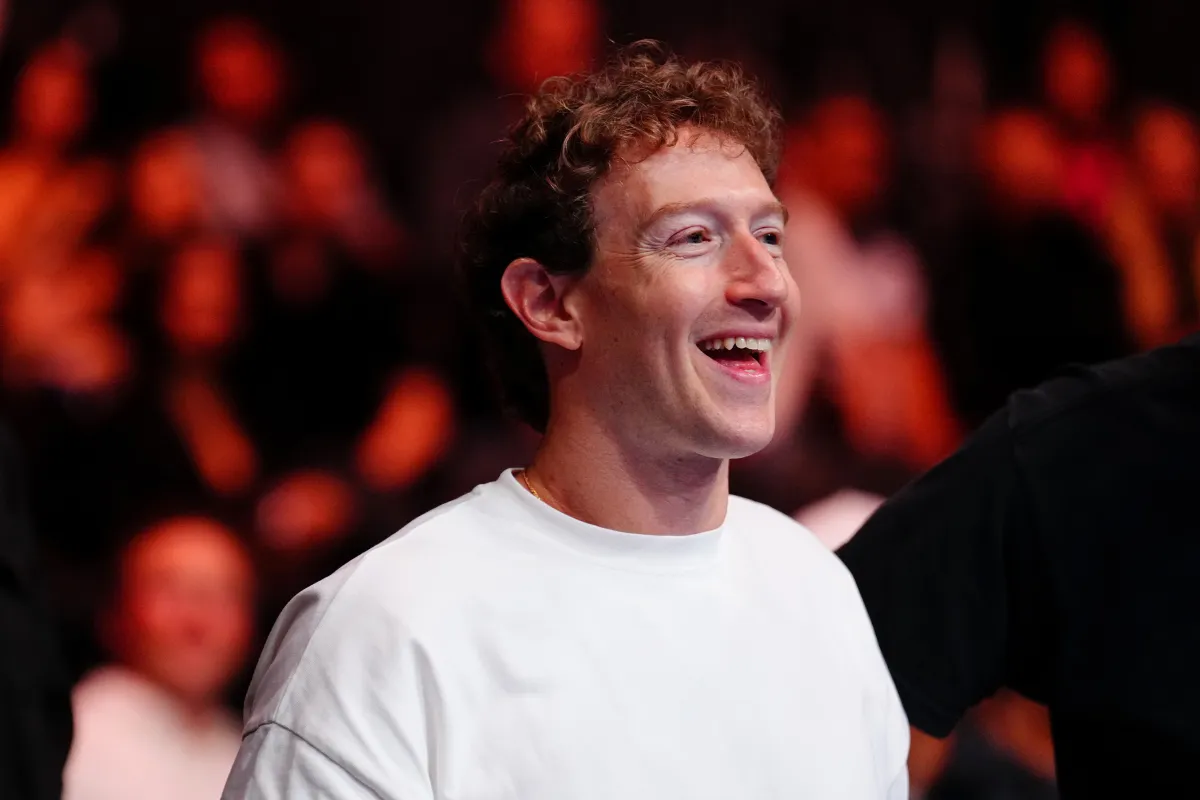
Meta CEO Mark Zuckerberg published a 6,500 word essay this week declaring that “The Future is for Everyone” and painting an optimistic picture of a future powered by AI, where “everyone will have an exceptionally capable personal agent that understands you, your goals, and everything you care about.”
On the latest episode of TechCrunch’s Equity podcast, Kirsten Korosec, Rebecca Bellan, and I discussed why not everyone is buying Zuckerberg’s vision — including our colleague Russell Brandom, who wrote that the manifesto is “exactly why people don’t like AI.”
Comparing Zuckerberg to Anthropic CEO Dario Amodei (who spent the weekend pushing back against the idea that he’s an AI doomer), Rebecca said the Meta CEO seems to be positioning himself “almost like an anti-Dario.” The problem, however, is Zuckerberg and Meta’s history.
“You look back to the social media days, [Zuckerberg] was saying that he wants to make sure that everyone has an outlet for talking to their friends and having a social network,” Rebecca said. “And what do we have instead? We have ragebaiting and advertisements, and not connection.”
Keep reading for a preview of our conversation, edited for length and clarity.
Rebecca Bellan: Cynically, I think that this is an attempt for Meta to win in a different way. They’re not winning in the frontier, closed-model space. They’re not necessarily even winning in the open space. But when it comes to personal empowerment, as Mark Zuckerberg talks about in his letter, “The Future Is for Everyone,” that’s where he’s trying to win. He’s trying to provide the models that people will use for their own personal AI on their own personal devices.
I think last year, when he published a [similar] “Futures for Everyone” letter, [the promise] was that a lot of that AI would go onto the glasses, the wearables, but it’s not really clear what the final hardware form factor for this would be, and I guess he’s like leaving it up to the individual to choose.
So his idea is that you’re using [Meta’s new AI model] Glimmer for managing your schedule, drafting messages, organizing files, it’s always on, it can operate anytime, anywhere, with or without an internet connection.
But then there is still Muse Spark, so that maintains a way for them to have some level of control over, still, its most capable models, and provide a revenue outlet for people who want to scale their compute, and people who want to like do larger projects, or companies that might want to do larger projects.
Anthony Ha: I imagine the part of the context here is also — Meta has made some very serious investments in AI, last year there [were] also all these stories about how much money they were trying to pay for AI scientists, but in terms of who we think of as the leading companies, the frontier labs, Meta doesn’t tend to come up in the conversation.
Another way it doesn’t come up in the conversation is in, you know, what are the popular consumer AI chatbots? Certainly, people are interacting with Meta AI tools in Instagram, in Facebook, but it’s not a company that you think of when, “I’m going to go use my personal assistant.” Meta isn’t that yet, and so it feels, to a certain extent, this is an attempt to reposition them and try to claim space that they really haven’t been that successful at before. Is that fair?
Rebecca: I think that is really fair to say. And I would take it with a grain of salt because Mark Zuckerberg loves to put out a vision of what his companies will do for people and how they will empower people. And so far, what that looks like for Meta — I mean, of course, Llama is great; it’s a great tool and open source, but I think that on a consumer level, how are people using Meta AI? Well, there’s like a lot of creepy-ass chatbots.
My TLDR is: I think that [Zuckerberg’s] letter and his idea of personal empowerment is putting a bad taste in a lot of people’s mouths because it’s him who’s saying it. Russell Brandom, our AI editor, wrote about this this week. You look back to the social media days, he was saying that he wants to make sure that everyone has an outlet for talking to their friends and having a social network. And what do we have instead? We have ragebaiting and advertisements, and not connection.
Kirsten Korosec: Yeah, I think that the manifesto didn’t strike the right note for a lot of people. And to Russell’s point, which he makes in this column, is it’s what’s making people hate AI or hate on AI — because, to your point, it is coming from Zuckerberg, and I do think also it feels very Pollyannish in a way. He’s put these thoughts out there in the past, and it really doesn’t provide what I think is a more realistic picture, but instead casts AI as this great tool for humanity. That might be the case, but there will also be extreme costs to that, and I think that’s why the negative reaction to it has been so widespread.
Rebecca: It feels like he’s positioning himself as almost like an anti-Dario. I don’t know. There’s a lot of talk among the frontier labs: “We’re pacing the frontier, pulling back, focus on safety. We need to slow down development.” They’re not doing any of that, of course, but they’re talking about it, and because of all these recent cybersecurity incidents that we’ve had.
Whereas Mark Zuckerberg, on the other hand, is like, “No, no, we do not slow down. We cannot afford to give an inch to China, and slowing down would only hurt the individual, who can be empowered by this technology.”
But I mean, I was like, “Oh, maybe I’ll try to download Muse Glimmer and see what I can do with it.” Can I download it to my MacBook? No. You need specific hardware. I forget what the hardware is — it’s not actually that accessible to the average person.
Kirsten: It’s not for everyone. Not yet.
Anthony: The one positive thing I will say for this very long manifesto — 6,500 words, longer than almost anything that’s been published on TechCrunch — is that there is one sentence where he says, “If you are an AI doomer and you believe that that’s the future that AI is going to bring, why are you building this stuff?”
Which I think is fair. Although my big takeaway from that is not that the AI future is great, but it makes you wonder about people who are making these predictions and then pushing ahead anyway.
I also wanted to talk a little bit about Russell’s point, which I think is totally a fair one, about how part of it is the messenger. For a variety of reasons, I think that people are suspicious of Mark Zuckerberg, of Meta, arguably that could become amplified over the next few months as this new Facebook movie is coming out.
But it’s also about the future that is being promised by these AI companies, and often why we see these viral pile-ons whenever Sam Altman or Mark Zuckerberg or somebody is making a prediction about this AI future and people essentially say, “Who wants this?” One of the more famous recent examples was Sam Altman talking about the idea of like, “You could use ChatGPT to make podcasts about your kids’ interests to listen to while driving to school,” And of course everyone is like, “Why don’t you just talk to your kid?”
Part of the manifesto was — half of it was just stuff where it is just, “It’s going to unleash all this creativity and invention,” and it’s so abstract. If you’re skeptical about AI, none of that is going to convince you, because it seems unreal. And then the stuff that is more concrete, about these personal coaches and assistants, there’s some aspects that appeal, but a lot of [them] that don’t.
When you purchase through links in our articles, we may earn a small commission. This doesn’t affect our editorial independence.
>
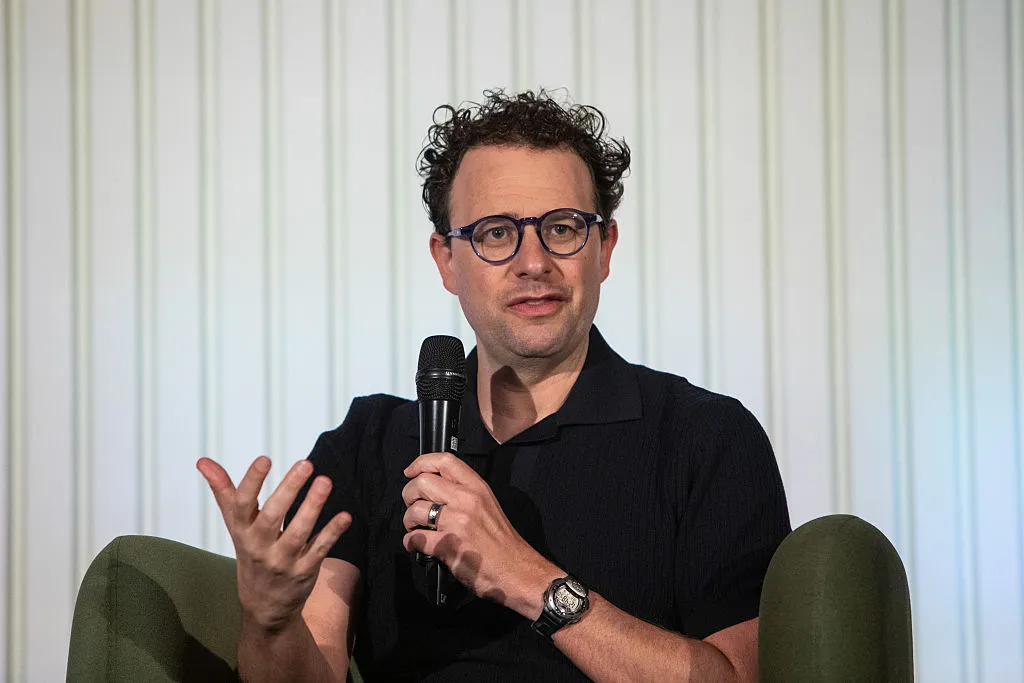
Anthropic CEO Dario Amodei recently pushed back against the idea that he’s been painting an overly pessimistic picture of artificial intelligence and how it might shape the future.
Amodei’s comments came in response to investor Gavin Baker, who argued — both on the All-In podcast and on X — that Amodei’s warnings about the dangers of AI have helped to fuel a backlash in the United States, particularly against data centers.
Claiming that Amodei has “lost the argument” when it comes to AI regulation (Anthropic has advocated for some regulations, including a California bill that imposes transparency requirements on large AI companies), and given that “he is about to be the CEO of one of the most important companies in the world,” Baker wrote, “I respectfully think he should make an effort to be a more positive advocate for his own industry.”
Baker is far from the only one arguing that AI skepticism and even government crackdowns stem in part from simply taking the dire warnings of some AI executives seriously. But in his response, Amodei disagreed with the idea that his “messaging has been disproportionately negative.” Instead, he said that his writing has been “about equally balanced between risks and benefits,” and that he wrote his essay “Machines of Loving Grace” because he “didn’t feel the AI industry was painting an inspiring enough picture of how the technology could radically transform the world for the better.”
Nonetheless, Amodei acknowledged that “the public has a negative view of AI” and he agreed that “this is a big problem.” Where he disagreed was with the idea that this is “primarily caused” by Amodei “or any other AI leader warning about AI’s risks.”
“I think it is fundamentally a crisis of trust,” Amodei said. “I think that ordinary people don’t trust companies, governments, or the tech industry and always suspect that we are cooking up some new way to screw them over.”
Indeed, “trust” is a word that often comes up in debates about the AI industry, especially around OpenAI CEO (and Amodei’s rival) Sam Altman. In Amodei’s telling, however, this is a crisis that’s been decades in the making, with the AI backlash “just the latest iteration of it.”
“I think by far the most accurate criticism of AI companies including Anthropic is that we haven’t yet delivered on our big promises to benefit the world,” Amodei said. “That is totally on us, and I think it’s the criticism you should be making, instead of all this stuff about messaging and marketing.” (Naturally, he also said Anthropic is “doing our best to fix this.”)
As for regulation, Amodei argued that Baker was painting “a false choice” between distributing AI widely without regulation, or concentrating the technology in the hands of a few companies through regulation.
“I know that there’s a sort of Silicon Valley shorthand where regulation = regulatory capture = concentration of power, but I’ve always found this to be an overly simplified picture of the world,” Amodei said. “Many people outside this bubble think of regulation as something that constrains corporate power and benefits ordinary people.”
Amodei added that he doesn’t “necessarily agree with that perspective either,” but he said that’s “why Anthropic has always made its policy proposals very carefully.”
“We try very hard to make proposals that disadvantage (slow down) frontier AI companies while *advantaging* smaller competitors,” he said.
When you purchase through links in our articles, we may earn a small commission. This doesn’t affect our editorial independence.
>

European Athletics Championship: Jazz Sawyers takes long jump silver for Great Britain

Stripe will reportedly acquire AI gateway startup OpenRouter for $7B+

Rodri: Watch midfielder’s defining Manchester City moments as move to Barcelona announced
-

 movies3 months ago
Search For Canadian TV Actor Stewart McLean Now Homicide Investigation
-

 Fashion9 years ago
These ’90s fashion trends are making a comeback in 2017
-
Fashion9 years ago
According to Dior Couture, this taboo fashion accessory is back
-
Fashion9 years ago
Model Jocelyn Chew’s Instagram is the best vacation you’ve ever had
-
Fashion9 years ago
Emily Ratajkowski channels back-to-school style
-
Fashion9 years ago
9 Celebrities who have spoken out about being photoshopped
-
Fashion9 years ago
Your comprehensive guide to this fall’s biggest trends
-
Fashion9 years ago
A photo diary of the nightlife scene from LA To Ibiza