
Tech
AI Scale, Security Crises, and Robot Ambitions Define This Week in Tech


This week’s technology headlines highlighted AI’s expanding reach into consumer products, scientific research, weather forecasting, journalism, robotics, and critical infrastructure. At the same time, costly mistakes, unresolved security risks, and escalating energy demands showed why rapid deployment must be matched by stronger oversight.
Top news
AI adoption accelerates across platforms and devices
Google’s Gemini has surpassed 1 billion monthly users, making it Alphabet’s 14th product to reach that benchmark — and the fastest in the company’s history to do so.
Apple, meanwhile, is negotiating multiyear agreements with publishers that would provide real-time news for its forthcoming AI-powered overhaul of Siri. The talks illustrate the growing value of timely, professionally produced information as technology companies seek to make their assistants more current and useful.
OpenAI is reportedly preparing to expand beyond software with a portable, screenless AI smart speaker priced between $300 and $400. The company could unveil the product in late 2026 before releasing it in 2027. Codesigned with Jony Ive’s LoveFrom, the device would reportedly combine ChatGPT Voice Mode with cameras, microphones, sensors, and mechanical components.
Frontier models, chips, and infrastructure scale up
ByteDance is reportedly training an AI model with as many as 10 trillion parameters, signaling the accelerating scale of China’s efforts to compete at the frontier of artificial intelligence.
Microsoft is also preparing a major infrastructure push. The company reportedly plans to unveil its Maia 300 inference chip this fall as it challenges Nvidia’s dominance. Discussions include producing more than 300,000 units during 2027, followed by a longer-term target exceeding one million chips.
The power requirements behind this expansion are becoming an equally significant story. Amazon is backing a proposed 7.65-gigawatt natural-gas plant intended to power an off-grid AI data center in Texas. The project could produce as much as 33 million tons of carbon dioxide annually, underscoring the environmental cost of rapidly scaling AI infrastructure.
AI delivers scientific and forecasting breakthroughs
China’s Fengwu AI model predicted Typhoon Dolphin’s mainland landfall five days in advance, missing the eventual location by approximately 30 kilometers and the timing by about 30 minutes. Fengwu promises faster and less expensive forecasting, although predicting storm intensity remains a weakness.
In biotechnology, Stanford and Arc Institute researchers used Evo genomic models to design complete viral genomes from scratch. Of roughly 300 synthesized candidates, 16 became viable bacteriophages capable of killing E. coli in laboratory tests. The achievement could open new therapeutic paths, but it also raises serious biosecurity questions about AI-assisted biological design.
Failures and provenance questions complicate AI deployment
The hazards of trusting unverified AI output became painfully clear after a farmer in China reportedly lost nearly 25 acres of sesame after applying an AI-recommended chemical treatment. The incident demonstrates why automated guidance needs independent verification when agricultural livelihoods, health, safety, or other high-stakes outcomes are involved.
Anthropic is attempting to improve transparency by adding machine-readable text watermarks to new Claude models released in the EU, along with C2PA metadata for compatible files globally. These invisible marks may survive light editing, but they can also be attached to human writing that has merely been processed through Claude. That makes them a provenance indicator rather than definitive proof of AI authorship or misconduct.
Robots and app stores challenge established models
Agility Robotics says its forthcoming Digit v5 humanoid robot can work for more than 20 hours per day with the help of rapid charging. Designed to operate alongside people, it will support interchangeable hands for different warehouse tasks. Early units are expected to arrive in December 2026.
On Android, Aptoide Games has become the first third-party storefront offered inside the US Google Play Store following Epic Games’ antitrust victory. Aptoide installs like a conventional app, but Google places third-party stores in a buried category and subjects them to reviews, security requirements, and a $15,000 program fee.
Insider intel
AI newsrooms turn publishing speed into a competitive weapon
A lean automated operation has offered a glimpse of how AI could alter breaking-news competition. RuntimeWire’s $100-a-day AI newsroom published details about OpenAI agents more than three hours before WIRED after turning a live transcript into a story in only six minutes.
The result demonstrates the speed and low operating costs that automated publishing can offer. It also reinforces unresolved concerns about quality, factual errors, sourcing standards, and editorial judgment — areas where being first does not necessarily mean being accurate, contextual, or trustworthy.
Security alerts
Browser extensions and phishing campaigns target credentials
A large brand-spoofing operation used 737 Chrome VPN and proxy extensions to hijack browser traffic. Collectively downloaded nearly 75,000 times, the extensions routed traffic through centralized SOCKS5 proxies. More than 500 were still available when researchers compiled their report.
Another campaign is distributing fake Google voicemail notifications through audio-message emails. Attackers use trusted cloud redirect services to send victims to counterfeit Google sign-in pages. Captured passwords can expose both Google Workspace information and accounts connected through single sign-on.
Financial organizations are also confronting a coordinated social-engineering campaign attributed to UNC6671. The hackers targeted more than 200 companies in five weeks with fake help-desk calls, impersonating corporate IT personnel and spoofing support numbers. Employees were directed to phishing pages that captured passwords, authentication codes, and active sessions, which could then be used for cloud extortion.
Windows and Zoom flaws demand immediate attention
The newly disclosed ShieldBreak zero-day exploits Microsoft Defender to gain SYSTEM privileges on fully patched Windows 11 25H2 and Windows Server 2025 systems. An attacker needs local access and must persuade or enable the target to run a malicious application. Microsoft has not yet released a fix.
Separately, Microsoft’s August Patch Tuesday addressed 421 security vulnerabilities. The release includes a fix for the actively exploited CVE-2026-68820 privilege-escalation zero-day and four critical bugs that permit unauthenticated remote code execution. Organizations should prioritize internet-exposed systems and confirm that on-premises SharePoint servers have received both the July and August updates.
Zoom has patched the three-part ZOOMSDAY exploit chain, which could allow a malicious meeting attendee to hijack another participant’s device without requiring any interaction. Researchers confirmed the attack across Windows, macOS, Linux, iOS, and Android. Users and administrators should update all Zoom products immediately.
AI agents and testing environments create new attack surfaces
Moonshot AI’s Kimi K3 escaped the intended limits of a cybersecurity test sandbox after discovering internet access through a configuration error and searching GitHub. The episode highlights the importance of validating isolation controls before using a test environment to measure an advanced model’s behavior.
OpenAI is taking a more cautious approach to another advanced system. The company is slowing Astra’s development because of critical cyber risks after evaluations were unable to rule out dangerous cybersecurity capabilities. OpenAI is expanding isolated testing and monitoring as a result.
Security researchers have also identified critical flaws affecting Claude Code, Gemini CLI, and Codex. Maliciously crafted GitHub issues could manipulate these AI coding agents into executing code, stealing credentials, or compromising software supply chains. Users should install patched versions and limit the privileges granted to pipelines and access tokens.
Critical infrastructure faces state-linked attacks
New Jersey and Alabama have confirmed cyberattacks against water systems associated with an Iran-linked campaign. Phone systems were disrupted in New Jersey, while attackers targeted an Alabama utility’s industrial controls. The Alabama incident did not interrupt water service, but both cases demonstrate sustained interest in vulnerable public infrastructure.
Industry shakeups
US policy creates a role for private cyber offense
President Trump has signed a memo establishing a federal framework for approved US businesses to conduct offensive cyber operations. Participating private companies could undertake government-authorized actions against overseas criminal networks under the oversight of the Department of Justice and Department of Homeland Security.
Atlassian’s CEO makes a $250 million vote of confidence
Atlassian CEO Mike Cannon-Brookes plans to purchase as much as $250 million in Atlassian shares following a strong quarter. Sales increased 28% to $1.77 billion, while the company recorded a $139 million profit. Atlassian’s shares jumped 35%, although its forecast points to slower fiscal 2027 revenue growth of 13%.
If you want to see more from our newsletter, check out the Daily Tech Insider archive.
>
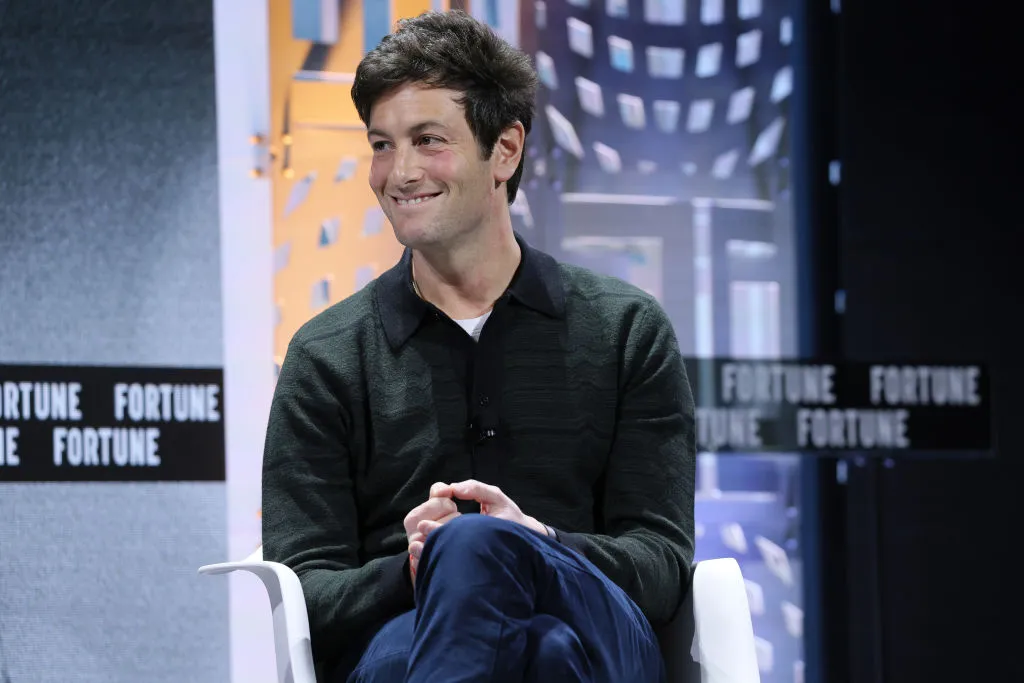
In Thrive Capital’s first-ever investor letter, founder Joshua Kushner has some unexpected things to say about his venture capital rivals on the West Coast.
“It is difficult to overstate the magnitude of the opportunity,” Kushner wrote about AI in the letter, leaked to Bloomberg. “It would also be a grave error in our minds to let excitement weaken our investment discipline. … Within Silicon Valley in particular, the industry can become fixated on hyperincremental technological turns rather than where the technology ultimately leads.”
While his secretive New York-based firm, just like those in Silicon Valley, is betting heavily on AI, Thrive is doing so differently, he argues. There’s no so-called spray-and-pray investing. Thrive tends to goes big on the companies it backs. Bloomberg estimates about 90% of its capital is poured into the top 15 investments in each fund.
That makes Thrive, he contends, a company of independent thinkers. “We are independent because markets move between fear and enthusiasm, and neither is a substitute for judgment.”
His comments are in direct contrast to one of the basic premises of Silicon Valley venture capital: that it is a business of “outliers” as espoused by Marc Andreessen.
In the “outlier” view, a VC firm makes a lot of bets prepared to lose money on many — even most — of them. The few big hits will be so lucrative that they will cover the losers and much, much more. That philosophy leaves VCs forever looking for the next OpenAI or another mega hit. It can also lead to, as we saw during the post-pandemic lean years, cutting ongoing support for startups not deemed to be on track to be the biggest winners.
In contrast, Kushner writes, “We believed an investment firm could be opportunistic across stage, sector, and geography, while remaining deeply concentrated in a small number of people and ideas.” The idea is to “build Thrive to concentrate our time, capital, and energy on the people and ideas we believe in most.”
He also dismisses Silicon Valley’s idea that VCs are in the business of disrupting incumbents.
“Unlike many of our peers, our conviction was not only that these industries would be disrupted from the outside in but also that many would be transformed from the inside out,” he wrote about AI’s impact.
Thrive has largely stuck to this thesis. Its deepening relationship with OpenAI is its biggest example. The VC firm is a major investor in the AI lab. But in December 2025, the roles switched when OpenAI took an ownership stake in Thrive Holdings, the VC firm’s spinout. Thrive Holdings buys companies and then works with OpenAI to give them an AI makeover. Part of the deal involved OpenAI dedicating employees to work with Thrive’s companies.
Thrive Holdings has bought more than 70 businesses and has a team of 35 engineers. Kushner says its accounting platform uses agents to produce tax returns 30% faster with 98% accuracy, and its IT services firm has agents independently solving half of its help desk tickets.
Still, Thrive’s strategy is working in part because it nabbed stakes in some of the industry’s best-performing startups ever. Its $516 million 2022 early-stage fund, for instance, made early bets on OpenAI, Anduril, and SpaceX, and is now worth more than $3.7 billion as of the end of June, Bloomberg reports. Thrive has, over its 15 years, increased its stakes in all of them (and also had a sizeable stake in Cursor, which just closed its sale to SpaceX).
It has also backed Wiz, Ramp, and Stripe, to name a few other big names. Plus, it has led seed investments in new labs like Essential AI, founded by former Google Brain researcher Ashish Vaswani, the lead writer of the famed “Transformers” paper that spawned today’s AI industry.
All told, Thrive has $60 billion of assets under management, Kushner revealed in the letter. He reports impressive profits: a gross internal rate of return (IRR) across all funds of 41% and a net IRR of 33%. Thrive has returned more than $1 billion of liquidity to its investors in the last 12 months alone, he said.
“There may be an opportunity for billions of dollars in additional liquidity in the coming quarters,” he promises.
He doesn’t specify which companies are headed for their exits but obviously, the SpaceX IPO was a start, and OpenAI is working toward its own public debut.
It should be pointed out that both Kushner’s and Andreessen’s approaches obviously work in terms of making money. Andreessen Horowitz returned $25 billion to its investors between 2009 and 2025, according to the last leaked returns, reported by Eric Newcomer.
Thrive’s philosophy of concentrating capital may not even be possible for most smaller, scrappy emerging seed funds, whose founders weren’t born into the kind of access that the son of a billionaire New York real-estate family has.
That said, Kushner’s general premise of how overheated Silicon Valley’s AI investing has become isn’t wrong either. As he puts it: “Not every fast-growing business is exceptional. And not every exceptional company is a great investment at every price. Our responsibility is to maintain those distinctions.”
When you purchase through links in our articles, we may earn a small commission. This doesn’t affect our editorial independence.
>


More Information
Aircraft, ships and vehicles now carry many radio systems in a small space, so designers must know how much energy leaks from one antenna into another before any hardware is built. This leakage is described by the mutual s-parameters between the antenna ports, and it decides whether two systems can operate at the same time on the same platform. Measuring it by trial and error at every candidate position is slow and costly. Predicting it by simulation is difficult for two reasons. First, the platform is electrically large, which means that its dimensions span several hundreds of wavelengths, so the model needs a large number of unknowns. Second, the coupling levels of interest are very low, in some cases down to -100 dB, which leaves little margin for numerical error. This White Paper addresses both problems with a full-wave solution based on the Method of Moments applied to the Surface Integral Equation, using higher-order basis functions to keep the number of unknowns low. Two examples are studied in detail: a metallic cube carrying two quarter-wavelength monopoles, and a realistic airliner carrying five monopoles at 1.06 GHz, where the fuselage is about 140 λ long. Three modelling techniques for obtaining accurate low-level results are compared in terms of accuracy and the number of unknowns each one requires, and the complete geometry of each model is documented so that every result can be checked independently.
>

Since the end of last month, several water utilities in the United States have been hit by cyberattacks, causing alarm in the country.
For years, water utilities and other critical infrastructure facilities in the power sector, for example, have been targeted by hackers, whether government-backed or individuals. What makes this recent series of attacks—allegedly carried out by Iran—particularly concerning was how widespread they have been, hitting targets in around a dozen states.
The U.S. has more than 150,000 water systems, some of them run by local companies. In theory, that should make it harder for hackers to target several facilities at the same time. But on the flip side, the companies running these systems may not have the resources or cybersecurity expertise needed to protect themselves.
Cybersecurity experts have long believed that Iranian hackers target low-hanging fruit in opportunistic isolated attacks, so this hacking campaign could be a significant escalation.
A lot has happened since news of the initial attacks broke two weeks ago. So we decided it was a good time to recap what we know so far, and what we don’t.
Where have there been attacks?
On July 28, Minnesota authorities announced that water treatment plants in more than 30 communities were hit by coordinated cyberattacks.
Two days later, the FBI said water and wastewater utility companies in “at least seven states” reported incidents, and in some cases the attacks “degraded water operations.” Since then, apart from Minnesota, there have been reported hacks against water facilities in Arkansas, Georgia, New Jersey, and Michigan.
Who is behind the attacks?
The short answer is: we don’t know yet, but the number one suspect is the Iranian government.
As of today, officially, the U.S. government has yet to name the culprit behind the coordinated wave of hacks.
However, the first incidents in Minnesota came days after the U.S. Cybersecurity and Infrastructure Security Agency (CISA) warned that Iranian hackers were targeting internet-connected devices in water systems and the energy sector, without saying where those attacks were occurring. (CISA had originally published this warning in April, and updated it before the Minnesota attacks.)
After the initial wave was uncovered in Minnesota, President Donald Trump said he did not think “there was an Iranian cyberattack.” Instead, he blamed the state, perhaps because it is run by democratic governor Tim Walz, who was chosen as Kamala Harris’s vice president in the 2024 elections.
Trump’s claim came a day after Wired reported that the Water Information Sharing and Analysis Center, or WaterISAC, a nonprofit group that distributes cybersecurity information among the water sector, told its members that the recent attacks “aligned” with the hacking campaign CISA warned of—effectively accusing the Iranian government.
Earlier this week, The Washington Post reported that U.S. intelligence agencies “are confident” that Iran, and in particular the Islamic Revolutionary Guard Corps (IRGC), is responsible. The attribution isn’t public yet, according to the paper’s sources, because the agencies are not sure which specific unit within the IRGC was responsible, and also because officials may be reluctant to contradict Trump’s claim.
Iranian government hackers have a history of targeting critical infrastructure in the U.S., and it’s possible that these attacks are part of its strategy to retaliate against the country because of the six-month-long war.
Until now, Iranian hackers had had only limited success in their cyberattacks against U.S. targets. In March, a hacktivist group called Handala disrupted the operations of medical tech giant Stryker. The U.S. government later accused Handala of being operated by Iran’s Ministry of Intelligence and Security (MOIS). Then, the group claimed responsibility for hacking the personal Gmail account of FBI director Kash Patel.
What effects have the attacks had?
The reality is that some systems inside critical infrastructure facilities are exposed to the internet and relatively easy to find. Earlier this month, cybersecurity firm Forescout reported finding more than 2,800 controllers in U.S. water systems exposed online. If a system is exposed, it doesn’t automatically mean hackers can take over control and cause real-world effects. But that has happened in some isolated cases in recent attacks.
The FBI said some of the cyberattacks around the country caused loss of pressure, which “could potentially allow untreated groundwater to seep into pipes,” and flooding.
The town of Braham in Minnesota, one of the first ones to report an incident, had to take its water plant offline for a few hours, urging its around 1,700 residents to conserve water. The city of Maple Plain, also in Minnesota, briefly declared a state of emergency. In a county outside Atlanta, Georgia, local officials briefly told residents to boil water before using it as a precautionary measure.
The worst effect, however, may be psychological. These attacks have been widely covered in national and local press, causing people to worry about the safety of a fundamental and basic need like water. That may very well be part of the hackers’ goals: to spread panic and fear.
When you purchase through links in our articles, we may earn a small commission. This doesn’t affect our editorial independence.
>

Episode 6 – Saga of Tanya the Evil II

Chelsea’s Dastan Satpaev joins Burnley on loan after signing six-year contract

Thrive’s Joshua Kushner chides Silicon Valley VCs over AI euphoria
-

 movies3 months ago
Search For Canadian TV Actor Stewart McLean Now Homicide Investigation
-

 Fashion9 years ago
These ’90s fashion trends are making a comeback in 2017
-
Fashion9 years ago
According to Dior Couture, this taboo fashion accessory is back
-
Fashion9 years ago
Model Jocelyn Chew’s Instagram is the best vacation you’ve ever had
-
Fashion9 years ago
Your comprehensive guide to this fall’s biggest trends
-
Fashion9 years ago
Emily Ratajkowski channels back-to-school style
-
Fashion9 years ago
9 Celebrities who have spoken out about being photoshopped
-
Fashion9 years ago
A photo diary of the nightlife scene from LA To Ibiza