
Entertainment
Ralph Bakshi’s ‘Lord of the Rings’ Is the Best Spiritual Sequel Ever


On Friday nights, IndieWire After Dark honors fringe cinema in the streaming age with midnight movies from any moment in film history.
First, the BAIT: a weird genre pick, and why we’re exploring its specific niche right now. Then, the BITE: a spoiler-filled answer to the all-important question, “Is this old cult film actually worth recommending?”
Note: This is the finale of IndieWire After Dark‘s three-part animated “Lord of the Rings” series! Have you watched 1977’s “The Hobbit” yet? What about 1980’s “The Return of the King”?
The Bait: Return of the “Cool World” King
The first midnight movie IndieWire After Dark ever recommended was Ralph Bakshi’s “Cool World.” This column’s co-founder Christian Zilko and I appreciated the cult classic then as a sticky, spectacular, artistic… disaster. In fact, we called it the kind of movie you could “safely pick for parts”: a clever-enough description that, when I reread it today, actually inspired a full-body shudder.


Suffice to say, even as an objective fan of bombshell Holli Would (Kim Basinger) and tortured cartoonist Jack Deebs (Gabriel Byrne), I was understanding Bakshi backward when I picked that film three years ago. By pegging our programming to the cinematic wonder of “Who Framed Roger Rabbit?,” After Dark unknowingly announced itself through an article that relegated the cult filmmaker — now 87 — to the margins of a creative landscape he himself had helped carve out decades prior. Woof.
Sadly, that’s the strange fate so much of Bakshi’s filmography has met over the years. A singular talent, the animator/director followed his enormously successful 1972 debut, “Fritz the Cat,” with movies that ranged from profitable provocations to compromised commercial flops. “Heavy Traffic” performed respectably, while “Coonskin” was effectively buried amid distribution chaos and protests from the Congress of Racial Equality. (Notably, the NAACP recognized its use of racist stereotypes as satire and supported it.) Later films — including “American Pop,” “Fire and Ice,” and, yes, our beloved “Cool World” — struggled to find audiences before building their reputations through home video and late-night TV.

Bakshi remained something of an underdog even when his work succeeded. And yet, filmmakers and cartoonists across the industry kept returning to him for inspiration anyway. Peter Jackson credited Bakshi’s “The Lord of the Rings” with introducing him to Tolkien, while Quentin Tarantino became such a vocal champion of “Coonskin” that he later wrote the foreword to 2008’s “Unfiltered: The Complete Ralph Bakshi” biography — for whatever that’s worth. And during a 2011 Hollywood Reporter roundtable, director Gore Verbinski pointedly asked his fellow filmmakers, “What happened to the Ralph Bakshis of the world?” when the group discussed why American animation had become synonymous with family entertainment.
“Æon Flux” creator Peter Chung called Bakshi a greater early influence than Disney, and John Kricfalusi developed his creator-driven approach under Bakshi on “Mighty Mouse: The New Adventures.” The list goes on. Hollywood spent nearly half a century picking Bakshi’s films for parts — to borrow some, uh, ill-advised phrasing — effectively repurposing the collisions that kept him suspended between mainstream and underground art. Despite winning nearly every argument he made back then about what animation would ultimately become, Bakshi rarely got credit for the cinematic future he helped make.
Born into a Krymchak Jewish family in Haifa and raised poor in Brownsville, Brooklyn, Bakshi entered the animation industry at just 18, polishing dirt from cels at Terrytoons. He worked his way up to director, learning both how the American cartoon factory operated and, more importantly, that he wanted to break its cultural machinery. By violating the boundaries between illustrative storytelling and supposedly adult subjects, Bakshi created work that could be volatile, offensive, and conspicuously unfinished — but was too often reduced to those traits in spite of the exceptional skill beneath them. (I said, I’M SORRY!)
From a distance, 1978’s “The Lord of the Rings” might look like an outlier in Bakshi’s career. But the pioneering director and lifelong Tolkien fan approached Middle-earth with the same appetite for invention that drove everything else he made. In the process, he accidentally created the definitive spiritual sequel — not just to Rankin/Bass’ animated “The Hobbit,” but in the broadest sense of the concept itself. It’s a continuation capable of inheriting another film’s emotional stakes without seeking its artists, aesthetics, or approval. The result is a wonderfully misshapen (and weirdly noble?) adaptation that resembles the heroes of its story almost as much as the filmmaker who fought to finish it.
Bakshi had supposedly loved “The Lord of the Rings” for decades, and he pursued the project after learning that United Artists had abandoned John Boorman’s proposed live-action adaptation. Fiercely rejecting the idea that Tolkien’s trilogy could be compressed into a single movie, Bakshi initially considered three animated installments before settling on two that would, in his view, still preserve the original tale’s immersive fantasy.

But rather than getting back to basics to ensure that second at-bat would actually happen, the production that followed saw Bakshi changing techniques with such abandon that the finished film sometimes resembles a reel mutating in front of you. Traditionally animated figures collide with rotoscoped performances, painted backgrounds, and live-action war footage processed into seething masses of shadow and pigment. Bakshi was indeed using every tool he could find here, sometimes out of artistic inspiration, sometimes out of budgetary necessity — all of it in a ferocious attempt to give the literature he so admired the sense of cinematic scale it deserved.
The plan was always to make that second movie, but even deemed a success financially, “The Lord of the Rings” just didn’t move audiences enough to secure a follow-up at the studio. Worse still, United Artists had removed “Part One” from the 1978 film’s title fearing that viewers would resist buying tickets to see only half a story. And in the end, many people arrived in theaters without knowing that Bakshi intended to stop after the Battle of Helm’s Deep. The studio declined to finance the ambitious project’s conclusion, and Bakshi’s movie soon cooled into one of history’s most conspicuously unfinished epics.

Bakshi’s film would later be positioned between Rankin/Bass’ 1977 “The Hobbit” and its 1980 “The Return of the King,” with Warner Bros. eventually selling the unrelated productions together as an animated Tolkien trilogy on home video. But Bakshi had already dismissed the Rankin/Bass “Hobbit” as an “awful, rip-off version” of Tolkien and publicly promised that his own adaptation of the books would contain no songs written, as he described it, solely for the sake of selling a companion record album.
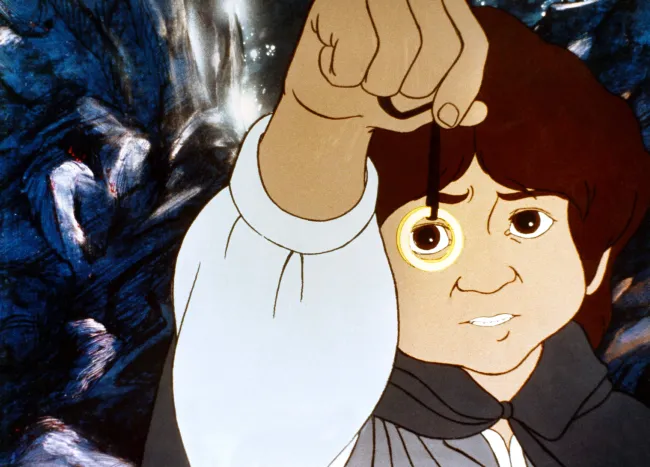
Of course, not even that kind of extreme authorial hostility could prevent a cultural relationship from forming among the three films. And for fringe cinema lovers, that wasn’t a bad thing. If Rankin/Bass’ “The Hobbit” gave children a hand-drawn Middle-earth where danger promised moralistic adventure, then Bakshi returned to that stage after its innocence had long expired for a frightening public demonstration. The magical ring that helped Bilbo escape the goblins had become an instrument of addiction and mass political control. And Tolkien’s once-reassuring words were paired with evocative horror imagery.
The emotion was fundamentally different, and Bakshi designed the visuals to match. As a result, whether he meant to or not, the “Lord of the Rings” director produced the definitive spiritual sequel to his rivals and himself, passionately demonstrating what it might look like for an audience to grow out of one animated Middle-earth and into another.
In retrospect, that’s why “Cool World” remains such a perfect beginning for IndieWire After Dark. Bakshi lost control of the 1992 film during production, when his original psychological thriller premise was extensively rewritten into a fantasy comedy. His name remained on the finished object though, leaving behind a record at once artistically compromised and oddly true to the conditions under which it was made. It’s a story about a cartoonist losing control of his creation, directed by a cartoonist losing control of his creation, and I don’t know that it gets more cult-film-for-the-modern-age than that.
Having come to appreciate Bakshi significantly more since the summer of 2023, I don’t think it was the 100-plus editions of After Dark that taught me how to watch his movies. I always knew I liked “Cool World” for a reason. It just wasn’t until I was staring into the abyss of Mordor that I finally recognized the quality I couldn’t explain then. Only skimming the surface of cinematic gold, my younger self had mistaken Bakshi’s fingerprints for smudges — because she didn’t yet know the hand that made them. —Alison Foreman
The Bite: The Road Goes Ever On
I must admit, I first watched the Ralph Bakshi 1978 “The Lord of the Rings” with the hard, cruel (possibly glowing red) eyes of a middle school girl, obsessed with the Peter Jackson films and desperate to inhale anything vaguely connected to the landscape of Middle Earth. People on the forums of the TheOneRing.Net wrote rhapsodically about the Peter S. Beagle script and the design of the Ringwraiths; and as a pre-teen who was finding it so much easier to make friends with the people who lived in my parents’ computer than my peers, I wanted to love it, too.
But from the first moment I saw what the film had done to my dear, loyal Samwise Gamgee, rendering him as the shortest, fattest, most buffoonish and awkward of the hobbits (who are airheads, all of them), I turned on it hard. Were I still that same short, fat, awkward young girl, I would purposefully mistype the film’s release date as 1878 and would be throwing around snark with abandon, facetiously mourning some characters for the sudden, tragic cases of “rotoscope poisoning” they suffered and taking others to task for flying by the seat of their lack of pants.

Watching it now, over two decades later, I have not only mellowed considerably on the movie’s flaws but have come away impressed with its virtues. Ralph Bakshi loved this story as much as I did, I think. And loving something as hard as a middle schooler does is no easy task.
You can see that love in the experimental animation, first, which does rotoscope-poison some characters and/or objects of power. But it does this to instill a sense of the otherworldly to the telling of the story of the Ring of Power and to make the action feel as big as the Big Folk must look to hobbits. If your mind is more open and curious — and it is; you’re reading After Dark! — and you’re able to hold love for more things in Heaven and Earth than contemporary visual aesthetic trends and tastes, well, then there’s a lot to love about how “The Lord of the Rings” shapeshifts between and starts to blend different media types.

It’s a reminder, as much as anything else, that film can be anything, that movies don’t have to look a certain way or use only a limited set of tools. Bakshi throws absolutely everything at this story, again and again, with the same kind of expressionist abandon that it took me less than a second to fall in love with when “Into The Spider-Verse” did the same thing. There are certain, shall we say more antique conventions to the character design and all the medievalist trappings and the aforementioned lack of pants. But the vividness of the animation’s color, its use of movement, its dynamic compositions… I mean, there’s a reason that the Jackson films take some frames directly from Bakshi.
But there’s also a lot of love shown in letting the story itself be as weird as it is. That Peter S. Beagle script can’t fully translate the travelog nature of Tolkien’s writing — anytime I reread bits of “The Lord of the Rings,” it makes me want to go hiking and a little regretful that I can’t identify more trees — but boy does it get a lot right when it comes to strangeness of Middle Earth as a land of myth and fable, where the cosmos is still mixing and cooling, maybe, before it settles into wax. I adored Anthony Daniels’ Legolas as a grinning little oddball, and somehow the Viking helmet makes the regret of Michael Graham Cox’s Boromir even more poignant when he’s got his head in his hands. Character psychology is a little thin on the ground, sure. But the movie understands itself as a fable, and those fabled ‘turn’ moments really do hit.
And hit, and hit, and hit. If anything shows how much Bakshi’s in love with his source material, it’s the fact that he can’t quite seem to let it go. The film’s story is more heavily weighted towards the events of “Fellowship” but relies on the Battle of Helm’s Deep to act as a finale — IndieWire, send me to LA or Ali to New York for us to joint-live-blog her seeing Jackson’s Helms Deep. I beg you. It’s important for Culture.

The result of that compromise is a thing that has the structure of a film serial but the pacing of a feature. It doesn’t quite gel together, and the contrast is nowhere near as interesting as the ones in the animation. But I do think Ali’s right about “Lord of the Rings” being a great spiritual sequel.
Sometimes, movies catch you at exactly the right time and it feels like those films re-sequence your DNA. But sometimes, you need to wait for the sequel coming to you — a different stage of life, different tastes or preoccupations — in order to appreciate a film and even catch a glimpse of its truth. For anyone who loves the great wide world of Tolkien’s legendarium, do not be surprised if one day you find this roaring mad, wildly ambitious, 70s-tastic boondoggle of a movie waving cheerfully to you on the road. You are indeed walking the same path. —Sarah Shachat
Read more installments of After Dark, IndieWire’s midnight movie club:
>
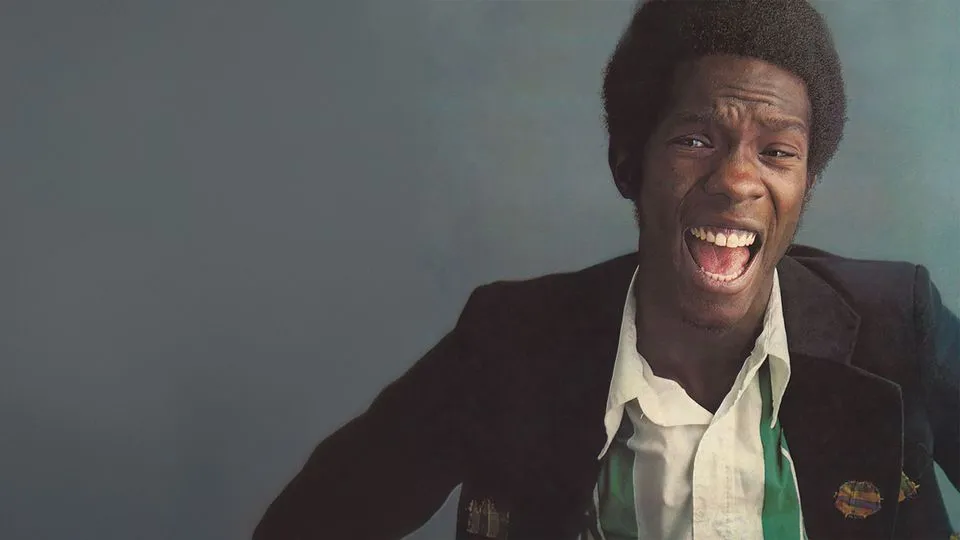
Music is a blessing, but maybe it can also be a curse – especially if you are a famous musician who gets remembered mostly for drugs and other negative narratives. Too Much Music, one of the works-in-progress showcased at the 2026 edition of Open Doors, the Locarno Film Festival‘s co-production platform and talent development program for filmmakers from equity-seeking communities and regions where artistic expression is at risk, wants to explore all these issues.
It comes from director Aseye Fiagbe (short The Gentleman, episode 7 of Bad Mama) and puts a spotlight on a famous keyboardist from Ghana, Kiki Gyan.
The director is also the producer of the doc via her Aseye Fiagbe Creative Studio in Ghana. She presented the project during the second edition of Open Doors with a focus on films from Africa and won one of three Open Doors Grants.
THR has compiled highlights about the movie and insight from Fiagbe about the project and the themes it explores.
Synopsis
Too Much Music is a feature documentary about Kiki Gyan, a Ghanaian keyboard prodigy who rose to international fame as a teenager with Afro-rock pioneers Osibisa. As his musical contributions expanded without recognition, tensions around credit and ownership led him to leave the band and pursue a solo career across London, Lagos and New York, shaping African disco and funk in the process.
Over time, the same system that profited from his brilliance proved indifferent to his vulnerability, and his life became reduced to a singular narrative of addiction and demise. Through archival material and testimonies from family and collaborators, the film reconstructs the forces that shaped his journey and asks how artists are remembered, who controls their stories, and what is lost when brilliance is reframed as failure.
Director’s note
Music is a blessing, and Kiki Gyan had that gift in abundance. His music is joyful, infectious, technically brilliant, and yet his life story often overshadows the work itself. Many people know how he died long before they encounter the music he made. That imbalance is what pulled me into this film. I grew up with Osibisa as the soundtrack of Sunday afternoons in my home. Years later, I discovered Kiki’s solo work and realized how much of his brilliance had been hidden behind a simplified story of addiction and death.
Too Much Music is not about rescuing him or forcing his life into a neat redemption arc. I am interested in complexity: holding brilliance, failure, joy, exploitation, vulnerability, and legacy in the same frame. As a Ghanaian filmmaker, I see this film as part of a larger responsibility to document our cultural history with care. Kiki’s story is about memory and erasure, about who gets remembered for their work and who is remembered only for how they fell.
What was the inspiration for you to want to make this film?
I grew up with Osibisa as part of the soundtrack of life in Ghana, but the story I knew about Kiki Gyan was basically the story of how he died. He was a brilliant prodigy who became addicted to drugs, lost everything and died in a church bathroom. That was the story.
Then, as an adult, I started discovering how much music he had actually made and how little of it I knew. I realized that, like many other Ghanaians, I knew the ending of his life before I really knew the work. That bothered me, and the more I researched him, the more complicated, colorful and human the story became.
How universal are the themes of the film, and why should people outside Mozambique see it?
For me, the film is ultimately about memory and who gets reduced to what. We do this all the time. A whole person can become one mistake, one tragedy, one headline. Kiki’s story happens within a very particular Ghanaian and African music history, but the questions underneath it feel universal.
What happens when talent arrives before someone is ready for everything that comes with it? Who gets credit for creative work? How do we treat people when they fall from the pedestal we put them on? And who gets to decide what remains of someone after they are gone? I don’t think you need to know Kiki Gyan or Osibisa to recognize those questions.
What is the next step for you and your collaborators after Open Doors?
Open Doors gave the project a real push forward, through the conversations we had, the connections forged and the award, which gives us so much room to continue the development work. The writing and research are still ongoing, particularly around London, Lagos and the U.S., and we are continuing our archival research while building the international production structure around the film. A big focus now is following up with the producers, financiers and other partners I met in Locarno and finding the right co-production relationships. We came to Locarno with a Ghanaian film looking for the right international collaborators. I left feeling much clearer about what those relationships should actually look like.
>

The happiest place on earth just got more global. At the D23’s Saturday Parks Panel, host Neil Patrick Harris gave way to several Walt Disney Imagineers who shared the next steps in the mouse house’s billion-dollar expansion.
In the U.S., executives and creative designers showed off a sneak peek of upcoming West Coast attractions at Disney California Adventure. Coming to Avengers Campus to join the likes of Guardians of the Galaxy – Mission: Breakout! and Web Slingers: A Spider-Man Adventure are two new attractions. The first is a flight-spinning ride called Stark Flight Lab, which will see guests take on training trips from returning Avengers cast members Robert Downey Jr., Anthony Mackie and Brie Larson. The second big-ticket attraction will be Avengers Infinity Defense, a ride that puts the fight against Thanos in the hands of park visitors. As they enter, riders will receive special mission orders from Ms. Marvel (featuring a role reprisal from Iman Vellani) and team up with Avengers and their returning actors, Hawkeye (Jeremy Renner), Captain America (Mackie), Thor (Chris Hemsworth) and Iron Man (Downey Jr.). Both attractions will open in 2028.
Meanwhile, near DCA’s Paradise Pier, a Coco boat ride will usher guests through the world of Miguel via a museum-like flowing river that will highlight Mexican and Día de Muertos culture and showcase artifacts of and music by Miguel’s great-great-grandfather Hector. Joining ranks with Walt Disney World, DCA will also become home to the Na’vi via an Avatar Destination to be announced at a later date.
Over on the East Coast, the Walt Disney World resort is breaking ground on its latest attraction, Indiana Jones and the Myth of the Jade Serpent, which becomes the first park to involve titular star Harrison Ford as an animatronic model. Ford, who could not attend in person, sent a video explaining his excitement at being involved in the ride mechanics for the first time. While Tokyo Disney, Disneyland Paris and Disneyland have established Indiana Jones attractions, this will be Walt Disney World’s first.
Director and head of Walt Disney Animation Jared Bush came out to talk about an Encanto ride called Antonio’s Fiesta de Encanto; all of the cast from the film will be reprising their roles. Housed in the film’s iconic Casita, guests are invited to Antonio’s Gifts Day, where he receives the power to communicate with animals. Riders will travel through the Madrigal family’s home on pieces of elaborate, colorful furniture, viewing the story of the house while interacting with more than 50 animals throughout the attraction.
And finally, though Disney remains the number one home for “happily ever afters,” Imagineering has been brewing up a wicked side. Villains Land, which is exactly what it sounds like, is the destination for fans of all baddies. Executives teased that the Walt Disney World attraction will contain a high-thriller roller coaster experience on Maleficent’s thorny briar mountain top featuring “elements never attempted before on a Disney theme park attraction,” and another flume ride will feature the Evil Queen’s Magic Mirror, who might get to tell his side of the Snow White story.
>

The Hollywood Creative Alliance has named this year’s best in television with the 6th Astra TV Awards.
On Saturday, host Lisa Ann Walter presided over the awards show at the InterContinental in Los Angeles, where HBO’s The Pitt was the big winner of the evening with seven trophies, followed by Netflix’s Beef with five, and HBO Max’s Hacks and Apple TV’s Shrinking with four each.
The Pitt took home the Drama Series award, while Hacks won Comedy Series and Beef took home the Limited Series award. Jean Smart, Jason Segel, Hannah Einbinder and Harrison Ford were recognized in the Comedy Series Acting categories, with Noah Wyle, Keri Russell, Patrick Ball and Sepideh Moafi taking the Drama Series Acting awards.
Matt Weiss, EVP of the Astra Awards, said in a statement, “Tonight’s winners represent the extraordinary range of talent and storytelling that continues to make television such a powerful medium. From established icons to exciting new voices, we’re proud to celebrate the artists and creative teams whose work has entertained, surprised and connected with audiences over the past year.”
See all the winners of the 2026 Astra TV Awards below.
COMEDY SERIES
Hacks (HBO Max)
BROADCAST NETWORK COMEDY ENSEMBLE
St. Denis Medical (NBC)
CABLE COMEDY ENSEMBLE
Rooster (HBO)
STREAMING COMEDY ENSEMBLE
Shrinking (Apple TV)
ACTRESS IN A COMEDY SERIES
Jean Smart – Hacks (HBO Max)
ACTOR IN A COMEDY SERIES
Jason Segel – Shrinking (Apple TV)
SUPPORTING ACTOR IN A COMEDY SERIES
Harrison Ford – Shrinking (Apple TV)
SUPPORTING ACTRESS IN A COMEDY SERIES
Hannah Einbinder – Hacks (HBO Max)
GUEST ACTRESS IN A COMEDY SERIES
Christina Ricci – Wednesday (Netflix)
GUEST ACTOR IN A COMEDY SERIES
Michael J. Fox – Shrinking (Apple TV)
DIRECTING IN A COMEDY SERIES
Hacks (HBO Max)
WRITING IN A COMEDY SERIES
The Comeback (HBO)
DRAMA SERIES
The Pitt (HBO Max)
BROADCAST NETWORK DRAMA ENSEMBLE
9-1-1 (ABC)
CABLE DRAMA ENSEMBLE
It: Welcome to Derry (HBO)
STREAMING DRAMA ENSEMBLE
The Pitt (HBO Max)
ACTOR IN A DRAMA SERIES
Noah Wyle – The Pitt (HBO Max)
ACTRESS IN A DRAMA SERIES
Keri Russell – The Diplomat (Netflix)
SUPPORTING ACTOR IN A DRAMA SERIES
Patrick Ball – The Pitt (HBO Max)
SUPPORTING ACTRESS IN A DRAMA SERIES
Sepideh Moafi – The Pitt (HBO Max)
GUEST ACTOR IN A DRAMA SERIES
Macaulay Culkin – Fallout (Prime Video)
GUEST ACTRESS IN A DRAMA SERIES
Tal Anderson – The Pitt (HBO Max)
DIRECTING IN A DRAMA SERIES
The Pitt – “12:00 P.M.” – Directed by Noah Wyle (HBO Max)
WRITING IN A DRAMA SERIES
Pluribus – “We Is Us” – Written by Vince Gilligan (Apple TV)
LIMITED SERIES
Beef (Netflix)
TV MOVIE
Remarkably Bright Creatures (Netflix)
LIMITED SERIES OR TV MOVIE CAST ENSEMBLE
Beef (Netflix)
ACTRESS IN A LIMITED SERIES OR TV MOVIE
Sally Field – Remarkably Bright Creatures (Netflix)
ACTOR IN A LIMITED SERIES OR TV MOVIE
Oscar Isaac – Beef (Netflix)
SUPPORTING ACTRESS IN A LIMITED SERIES OR TV MOVIE
Linda Cardellini – DTF St. Louis (HBO)
SUPPORTING ACTOR IN A LIMITED SERIES OR TV MOVIE
Charles Melton – Beef (Netflix)
DIRECTING IN A LIMITED SERIES OR TV MOVIE
Beef (Netflix)
WRITING IN LIMITED SERIES OR TV MOVIE
Bait (Prime Video)
ANIMATED SERIES
Hazbin Hotel (Prime Video)
ANIME SERIES
Witch Hat Atelier (Crunchyroll)
LEAD VOICE-OVER PERFORMANCE
Seth MacFarlane – Ted (Peacock)
SUPPORTING VOICE-OVER PERFORMANCE
Stephanie Beatriz – Hazbin Hotel (Prime Video)
BOOK TO SCREEN
The Summer I Turned Pretty (Prime Video)
GAME SHOW
Pop Culture Jeopardy (Netflix)
REALITY SERIES
Baylen Out Loud (TLC)
REALITY COMPETITION SERIES
Dancing with the Stars (ABC)
DOCUSERIES OR NONFICTION SERIES
Lost Women of Alaska (ID)
DOCUMENTARY TV MOVIE
John Candy: I Like Me (Prime Video)
STANDUP OR VARIETY SPECIAL
The Muppet Show (ABC)
TALK OR VARIETY SERIES
The Late Show with Stephen Colbert (CBS)
>

Wild celebrations spark as St Helens keep their play-off hopes alive!

Saints keep play-off hopes alive with huge Wakefield win

Australia vs Bangladesh: Visitors stun hosts with historic nine-wicket Test win in Darwin | Cricket News
-

 movies3 months ago
Search For Canadian TV Actor Stewart McLean Now Homicide Investigation
-

 Fashion9 years ago
These ’90s fashion trends are making a comeback in 2017
-
Fashion9 years ago
According to Dior Couture, this taboo fashion accessory is back
-
Fashion9 years ago
Model Jocelyn Chew’s Instagram is the best vacation you’ve ever had
-
Fashion9 years ago
Emily Ratajkowski channels back-to-school style
-
Fashion9 years ago
9 Celebrities who have spoken out about being photoshopped
-
Fashion9 years ago
Your comprehensive guide to this fall’s biggest trends
-
Fashion9 years ago
A photo diary of the nightlife scene from LA To Ibiza