
Tech
Anthropic CEO says AI backlash is ‘fundamentally a crisis of trust’

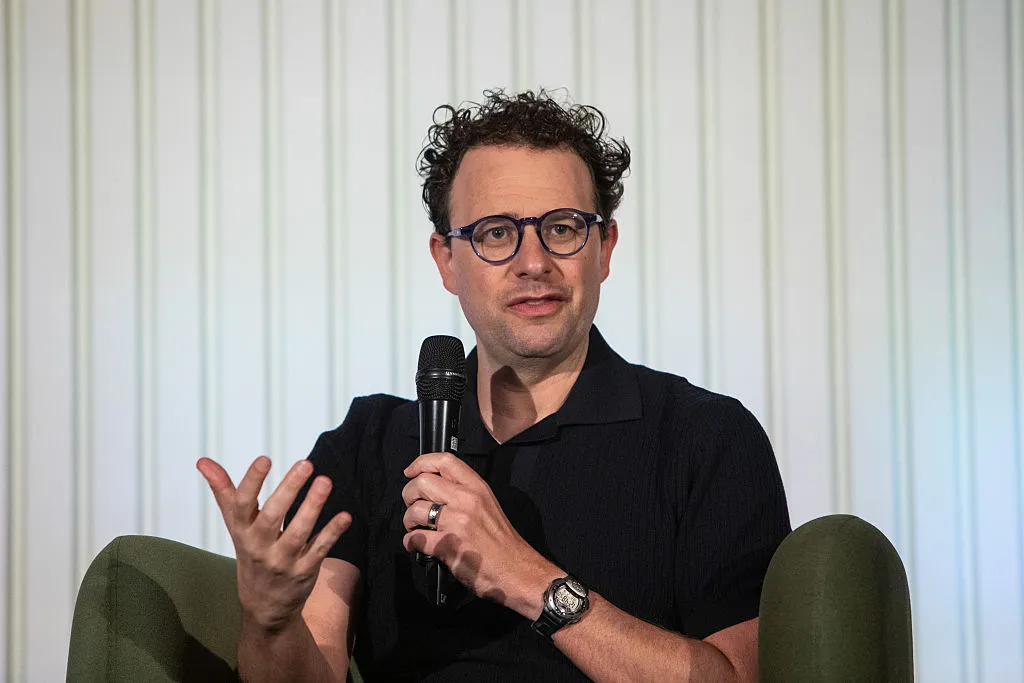
Anthropic CEO Dario Amodei recently pushed back against the idea that he’s been painting an overly pessimistic picture of artificial intelligence and how it might shape the future.
Amodei’s comments came in response to investor Gavin Baker, who argued — both on the All-In podcast and on X — that Amodei’s warnings about the dangers of AI have helped to fuel a backlash in the United States, particularly against data centers.
Claiming that Amodei has “lost the argument” when it comes to AI regulation (Anthropic has advocated for some regulations, including a California bill that imposes transparency requirements on large AI companies), and given that “he is about to be the CEO of one of the most important companies in the world,” Baker wrote, “I respectfully think he should make an effort to be a more positive advocate for his own industry.”
Baker is far from the only one arguing that AI skepticism and even government crackdowns stem in part from simply taking the dire warnings of some AI executives seriously. But in his response, Amodei disagreed with the idea that his “messaging has been disproportionately negative.” Instead, he said that his writing has been “about equally balanced between risks and benefits,” and that he wrote his essay “Machines of Loving Grace” because he “didn’t feel the AI industry was painting an inspiring enough picture of how the technology could radically transform the world for the better.”
Nonetheless, Amodei acknowledged that “the public has a negative view of AI” and he agreed that “this is a big problem.” Where he disagreed was with the idea that this is “primarily caused” by Amodei “or any other AI leader warning about AI’s risks.”
“I think it is fundamentally a crisis of trust,” Amodei said. “I think that ordinary people don’t trust companies, governments, or the tech industry and always suspect that we are cooking up some new way to screw them over.”
Indeed, “trust” is a word that often comes up in debates about the AI industry, especially around OpenAI CEO (and Amodei’s rival) Sam Altman. In Amodei’s telling, however, this is a crisis that’s been decades in the making, with the AI backlash “just the latest iteration of it.”
“I think by far the most accurate criticism of AI companies including Anthropic is that we haven’t yet delivered on our big promises to benefit the world,” Amodei said. “That is totally on us, and I think it’s the criticism you should be making, instead of all this stuff about messaging and marketing.” (Naturally, he also said Anthropic is “doing our best to fix this.”)
As for regulation, Amodei argued that Baker was painting “a false choice” between distributing AI widely without regulation, or concentrating the technology in the hands of a few companies through regulation.
“I know that there’s a sort of Silicon Valley shorthand where regulation = regulatory capture = concentration of power, but I’ve always found this to be an overly simplified picture of the world,” Amodei said. “Many people outside this bubble think of regulation as something that constrains corporate power and benefits ordinary people.”
Amodei added that he doesn’t “necessarily agree with that perspective either,” but he said that’s “why Anthropic has always made its policy proposals very carefully.”
“We try very hard to make proposals that disadvantage (slow down) frontier AI companies while *advantaging* smaller competitors,” he said.
When you purchase through links in our articles, we may earn a small commission. This doesn’t affect our editorial independence.
>
Welcome back to TechCrunch Mobility — your central hub for news and insights on the future of transportation. To get this in your inbox, sign up here for free — just click TechCrunch Mobility!
Something was in the air this week because we had a heck of a lot of electric aircraft news. Ba-dum-tss.
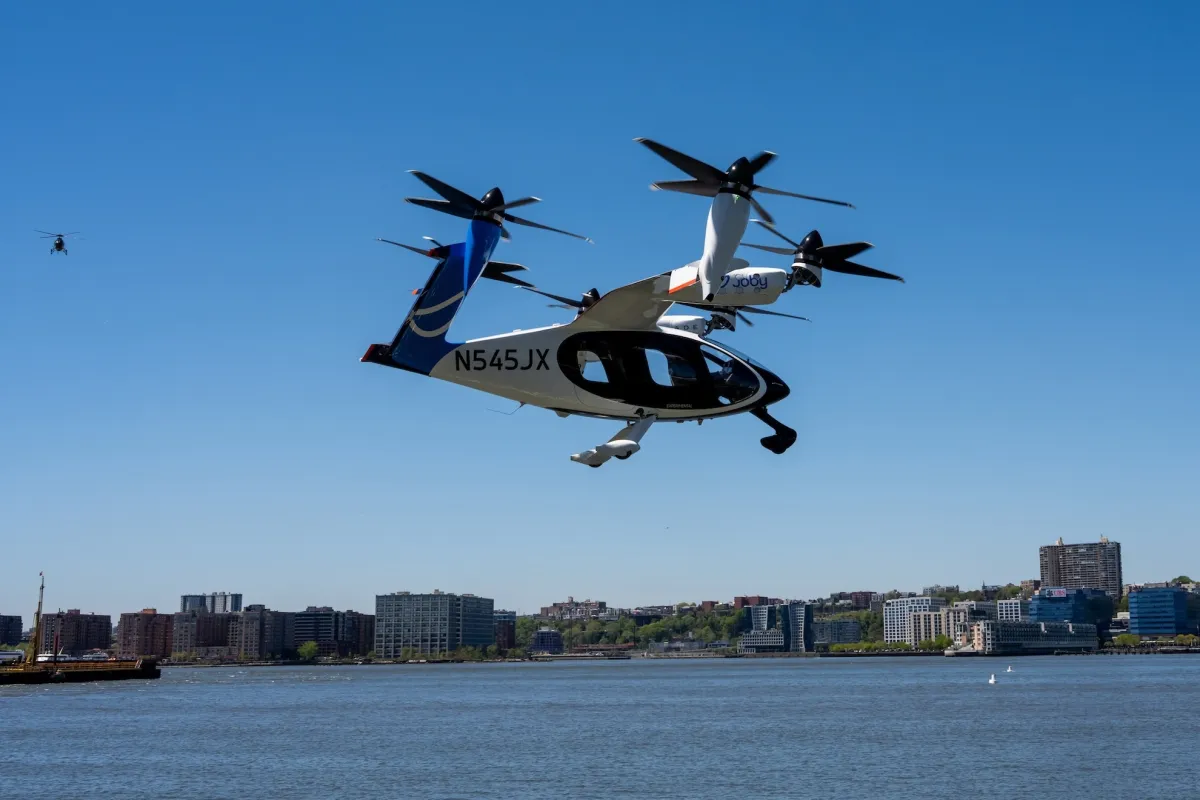
But really, it’s no joke — two of the bigger deals of the week involved companies developing electric vertical takeoff and landing aircraft (eVTOL). Together they illustrate how the burgeoning sector continues to consolidate and seek out near-term revenue streams even as they go through the lengthy regulatory process to eventually deploy electric air taxis.
In one of the crazier twists in the nascent eVTOL industry, Archer Aviation announced that it now owns its former rival Wisk Aero. Under the terms of the deal, Boeing agreed to sell Wisk Aero and two other subsidiaries to Archer in exchange for an ownership stake in the company. Boeing now holds a 16.5% stake in Archer. The other subsidiaries are SkyGrid, a digital airspace and air traffic management software company, and drone maker Insitu.
For those unfamiliar, Wisk sued Archer in 2021 over allegations of the “brazen theft” of confidential information and intellectual property. The case went on for two years before the companies reached an unusual settlement that not only ended the lawsuit and Archer’s countersuit against Wisk seeking $1 billion in damages, but also led to a new collaboration.
Wisk has taken a rather winding path. It started as Kitty Hawk, an electric aviation startup led by Sebastian Thrun, who co-founded the Alphabet moonshot factory X, and backed by Google co-founder Larry Page. Kitty Hawk shut down in September 2022, but its Cora program, which had spun off into a joint venture with Boeing, lived on. That joint venture was renamed Wisk Aero.
Then there’s Joby Aviation, which made a more predictable deal this week. The company acquired Resonant Sciences for $500 million, marking the electric air taxi developer’s push into the defense sector.
Resonant Sciences, which makes radio frequency and sensor systems, will become a dedicated defense business under Joby aptly called Joby Defense.
Joby has been slowly expanding into the defense sector over the past couple years even as it has pursued its original mission to certify and manufacture electric vertical takeoff and landing aircraft for use as urban air taxis. Joby says it is sticking with its mission, but also sees opportunity — not to mention revenue — in the defense sector.
A little bird

For the past two years, Uber has been laser-focused on locking up partnerships with, and even investing in, autonomous vehicle technology companies. But this week Uber did the opposite. The ride-hail company sold off its entire stake in Serve Robotics, the autonomous delivery robot company that spun out of Uber more than five years ago.
Here’s the interesting part. According to some little birds, Serve Robotics was surprised by the sell-off and only learned about it when Uber’s regulatory filing was posted. Uber and Serve are still business partners, and that contract, which puts Serve’s delivery robots on the Uber Eats app, is set to expire in 2027.
Got a tip for us? Email Kirsten Korosec at kirsten.korosec@techcrunch.com or my Signal at kkorosec.07, or email Sean O’Kane at sean.okane@techcrunch.com.
Deals!

Uber is investing in Galgo, a Chilean fintech company that specializes in extending credit to buy motorcycles, Bloomberg reported.
Electric mobility startup Yulu raised $93 million in a Series C round comprising $63 million in equity led by GEF Capital Partners and $30 million in debt financing.
Notable reads and other tidbits

Aurora Innovation and Kodiak AI have received permits from the California Department of Motor Vehicles to begin testing their self-driving trucks on public roads in the state. And Kodiak AI has already started.
Avride said it has surpassed 100,000 autonomous rides on the Uber app in Dallas. There are some caveats here, of course, namely that there is still a human safety operator behind the wheel. Avride wouldn’t supply me with a weekly ridership breakdown, but it has been about two months since the company announced it had reached the 60,000-ride milestone.
Delta Air Lines is investigating a cybersecurity incident in which an unidentified passenger allegedly created a fake Wi-Fi network on a flight, prompting pilots to alert air traffic control.
Flock announced a series of new policies and tools, claiming they will help curb abuse of its automated license plate camera reader systems and help keep its law enforcement customers accountable.
Ford said it’s on track to complete its $2 billion overhaul of its Louisville Assembly Plant in Kentucky, which will use a new assembly system to build its next-generation of EVs, starting with the midsize Fathom truck.
Ground Truth, an art project created to raise awareness about housing affordability in New York, created a gadget that will trigger the brakes on Citi rental bikes, making it harder to pedal through rent-burdened neighborhoods, Wired reported.
Hiroshi Okuda, a longtime Toyota executive who served as president and eventually chairman, died this week, according to the company. Okuda took some big swings during his time at Toyota, notably pushing for the gas-electric hybrid Prius vehicle. Bloomberg has a lengthy writeup on Okuda.
Pony.ai and Uber plan to bring 2,000 robotaxis to four cities in Europe as part of an expanded partnership.
Department of Transportation Secretary Sean Duffy took to X this week to promote the DOT’s effort to recruit video gamers as air traffic controllers. According to Duffy, 2,000 candidates have been hired through this program, although he didn’t say if they were all gamers.
Uber Freight is investigating a cyberattack and data breach that hacking and extortion gang Helix recently took credit for.
Waymo is expanding in California again after the state’s Public Utilities Commission approved terms of its commercial ride-hailing permit. The company’s robotaxis can now commercially operate (i.e., charge for rides) in a broader territory across the San Francisco Bay Area and Los Angeles. The service can also expand to Sacramento and San Diego — although the Waymo folks say this hasn’t happened yet.
Zoox released its safety case framework, a critical document for any company that wants to build trust with the public and show how and why it thinks its technology is safe enough. This framework is particularly important because today there is no federally mandated test, or AV “driver’s license” so to speak.
One more thing …
TechCrunch Disrupt 2026 is just a couple of months away and I wanted to flag one guest who might be interesting to you.
Rivian CEO RJ Scaringe will join me onstage at Disrupt, our annual tech conference that brings together thousands of founders, investors, CEOs, policymakers, engineers, and media. Have a question for Scaringe? Shoot me an email and I’ll take a look.
Disrupt will be held October 13 to October 15 at the Moscone Center in San Francisco.
Check out the programming that’s been announced so far here, and if you don’t already have a ticket, lock in yours before our next price increase on August 22.
When you purchase through links in our articles, we may earn a small commission. This doesn’t affect our editorial independence.
>

A woman identified as Jane Doe 4 has joined a lawsuit filed by three Tennessee teenagers against Elon Musk’s xAI over the role the company’s chatbot Grok allegedly played in creating child sexual abuse material.
According to a report in The Washington Post, the woman alleged that her stepfather used Grok to manipulate a photo taken when she was 11 years old to create more than 7,000 explicit images of her. The woman also said that her stepfather was found dead of suicide two days after the images were uncovered in a law enforcement raid.
“Limitless access to these tools is spreading so quickly,” said the woman. “It is taking everyday life and turning it into child sexual abuse.”
The teenagers who’d filed lawsuit accused xAI (now part of SpaceX) of failing to take basic precautions to prevent Grok from being used to create explicit images of real people, including minors. (X was flooded with millions of Grok-generated sexualized images earlier this year.) They are seeking class action status for their suit.
TechCrunch has reached out to xAI for comment.
If you are in a crisis or having thoughts of suicide, call or text 988 to reach the 988 Suicide and Crisis Lifeline.
>

Anthropic published a blog post Friday seeking to answer some basic questions about how it will watermark the text generated by its chatbot Claude. Such as: How will the watermarking actually work? Can it be hidden with editing? And how does this affect code?
Claude users have been debating the move since the company revealed earlier this week that it would be doing this watermarking to comply with the EU AI Act’s Transparency Code, which requires AI companies to use systems that make it possible to identify AI-generated content.
On Reddit, for example, one poster characterized this as a conspiracy against innocent Claude users, while another claimed, “The only reason you wouldn’t want this is to lie to people.” And Business Insider reports that “dozens” of users on X have claimed to cancel their Claude subscriptions as a result.
Anthropic’s new post starts with a general overview of the watermarking concept, explaining that when making “low-stakes choices” — like choosing between the words “overcast” and “grey” to describe the weather — Claude can create a pattern in its responses that is “undetectable to the reader, but is detectable to anyone who has a key that encodes it.”
“Watermarking does not impact the quality of Claude’s output,” the company said. “To a reader, a watermarked response is indistinguishable from an unwatermarked one.”
More specifically, Anthropic said it will be using the SynthID-Text approach that the Google DeepMind team outlined in 2024, and that it plans to release a watermark detection API. It also noted that watermarking is distinct from the AI detection approaches offered by companies like Pangram that look for “tells” in the writing (like the construction “his isn’t [X], it’s [Y]”) to reveal AI usage: “Picking up on these patterns is fundamentally different from checking for a watermark.”
Could someone just rewrite the text to hide the watermark? Anthropic said it’s possible, but “light editing probably won’t remove the watermark completely,” while “a complete rewrite where every word is replaced will.”
“In the latter case, of course, it’s arguable whether the text can any longer be described as AI-generated,” the company said.
As for whether the watermark will be detectable in text that was only proofread or edited by Claude, Anthropic said that will depend on “the length of the text and how heavily Claude has edited it.” If it’s only been lightly edited, “nearly all the words” will have been written by the human author and “there’s very little (if anything) for the watermark to attach to.”
Code, meanwhile, should have less of a watermark than other text, because the model will need to create working code and won’t have the freedom to choose between a variety of equally valid options.
“Having said that, in areas where there is an arbitrary choice between particular words or terms within the code, the watermark can be used, such as comments within code,” Anthropic said. “But by definition, it will have a negligible effect on the actual code produced.”
Anthropic also said that Claude won’t be the only AI chatbot to generate watermarked text, as “other major model developers have signed the same Code of Practice and will be implementing their own watermarks.”
When you purchase through links in our articles, we may earn a small commission. This doesn’t affect our editorial independence.
>

Man arrested on suspicion of fraud after ‘security incident’ at European Athletics Championships

Anthropic CEO says AI backlash is ‘fundamentally a crisis of trust’

A French first. How a soccer club turned scarves into season tickets
-

 movies3 months ago
Search For Canadian TV Actor Stewart McLean Now Homicide Investigation
-

 Fashion9 years ago
These ’90s fashion trends are making a comeback in 2017
-
Fashion9 years ago
According to Dior Couture, this taboo fashion accessory is back
-
Fashion9 years ago
Model Jocelyn Chew’s Instagram is the best vacation you’ve ever had
-
Fashion9 years ago
Emily Ratajkowski channels back-to-school style
-
Fashion9 years ago
9 Celebrities who have spoken out about being photoshopped
-
Fashion9 years ago
Your comprehensive guide to this fall’s biggest trends
-
Fashion9 years ago
A photo diary of the nightlife scene from LA To Ibiza