
Jack Rowan stars as Vinny in ‘Skintown’
Courtesy of EIFF


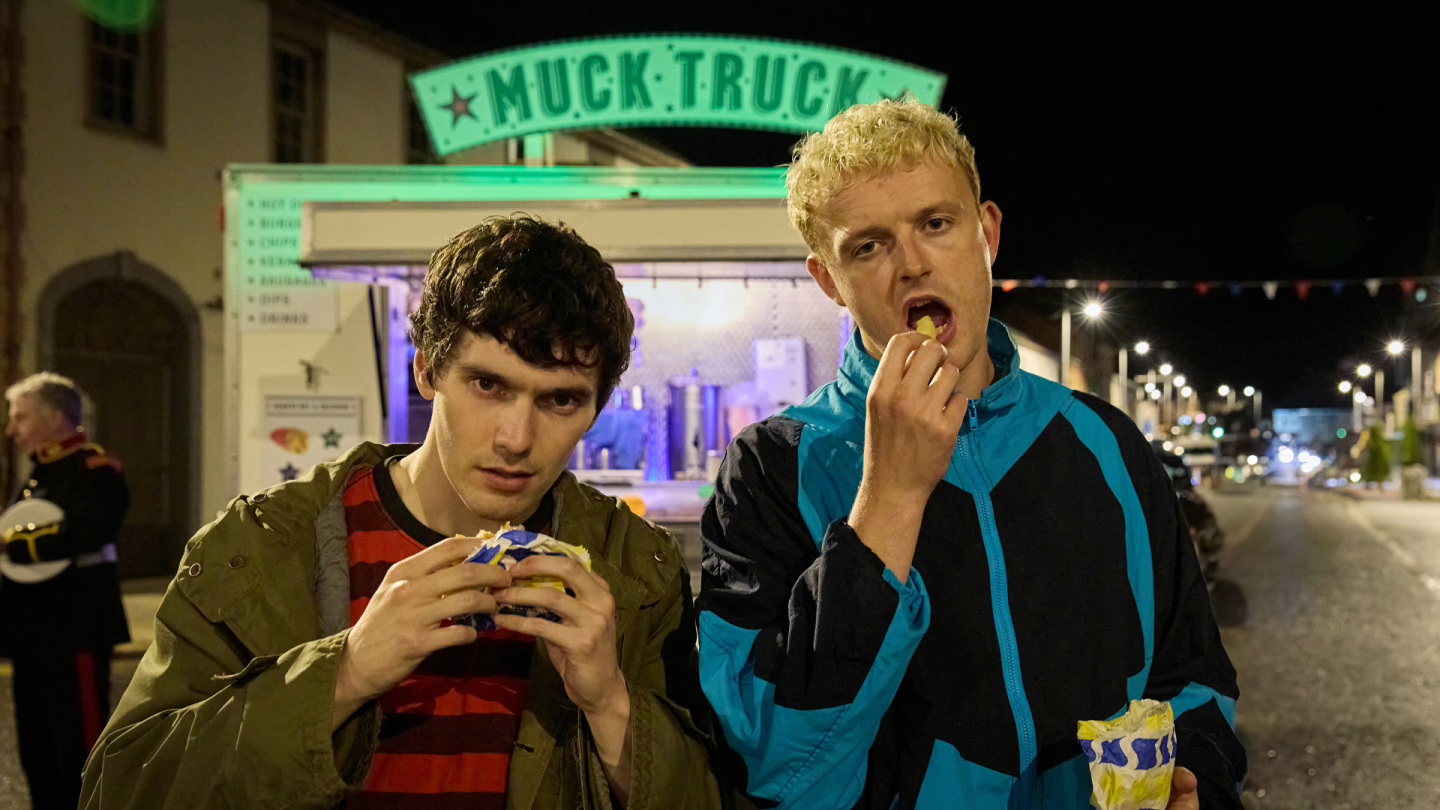
Jack Rowan and director Kieron J. Walsh are hoping for “some buzz” at the Edinburgh premiere of Skintown.
It’s the catchphrase employed by Rowan’s character Vinny and his best friend Jonty (Chris Walley) as they’re just starting to believe there’s life beyond provincial Enniskillen, the Northern Irish town colloquially captured by the film‘s title. Ciarán McMenamin adapts his 2018 novel of the same name, with the movie premiering in competition at the Scottish film festival on Sunday.
Backdropped by the Troubles during the 1994 IRA ceasefire, Skintown follows Vinny and Jonty as the young men party with friends, cut deals, and make plans to escape small-town life — until local shenanigans threaten to blow up the long-held dream. Walsh crafts a vivid portrait of war-weary youth, ’90s rave culture, and Ireland‘s turbulent history. Add to that a brilliant supporting cast of Derry Girls‘ Jamie-Lee O’Donnell and The Day of the Jackal‘s Hope Ikpoku Jr., and you have a real Edinburgh crowd-pleaser — a head-bopping period piece steeped in wit.
But this version of Skintown wasn’t always the plan. “It was a bumpy ride,” begins the Dublin-raised filmmaker about the nine-year journey to make Skintown and its many iterations up to this point. Rowan’s role was once set for Anthony Boyle, who remained committed to the project for two years before production stalled and Netflix’s House of Guinness offer came in. Walsh told him: “‘Mate, you’ve got to go and do your thing. It’s a big role.’” But admittedly, upon Boyle’s departure, Walsh was “bereft.” All it took was English actor Rowan — armed with a spot-on Enniskillen accent — to revive his vision. Skintown was back on.
“The beauty of that is, when Anthony had the part, it was his right. I was never in the picture,” says Rowan, star of Noughts + Crosses and Peaky Blinders. “He didn’t end up doing it, which opened up an opportunity for me to come in. No one loses out.” That includes the audience: His performance is one of the buzziest things about the raucous, roguish Skintown.
Below, Walsh and Rowan have a lot of fun discussing the making of this film (and showcasing the regional nuances of the Northern Irish accent). They talk about a wild, 22-day shoot blessed with brilliant weather, Edinburgh Film Festival being “back with a vengeance” and why a character like Vinny is long overdue: “I think Northern Irish people in particular really wanted to see a story like this on the screen. This hasn’t been explored before: ordinary people, living in the crossfire, [and] young people trying to live normal lives.”
Kieron, how far back did you know you wanted to adapt this story?
KIERON J. WALSH I first met Ciarán McMenamin in 1998, believe it or not. We’ve been pals, and we’ve worked together — I’ve cast him — many times. He started writing stuff and he used to give it to me every so often to have a look at, and I was encouraging. And then he sent me a photocopy of an unpublished manuscript, basically before any publisher had got anywhere near it. He hadn’t even gone out to publishers, and he gave it to me. He said, “Will you have a look at that? It’s a book.” And I was like, “Okay.” So I took it [on my] holidays and read it on the beach. I was halfway through it, and I rang him, and I said, “This is going to make a great movie.” This was nine years ago. That’s how long it takes to get films off the ground now, I’m afraid. So he was a bit kind of like, “I just wanted you to have a look at it as a novel.” And I said, “Well, I’m a director. I have to respond in the way that I see fit, and I think it will make a fantastic film.” I managed to convince him to roll along with it on [the] condition that he’d get to write the screenplay.
Nine years! What work went into that nine years to get Skintown on screen?
WALSH It’s extremely hard, and the older you get, the harder it gets, which is a bit disappointing. C’est la vie. But obviously you’ve got someone who’s written his first novel, and so he’s quite attached to it. Everybody’s attached to their first baby. So it took a while to let him free up from the material and realize that that’s the novel, and the screenplay can be a different thing. And he was actually very forthcoming on that side of things — he was actually pretty cool with that. [He] invented new characters, got new plot lines. But it does take a while. Then getting the various funding bodies lined up was happening at the same time. We were in development with Screen Ireland, Northern Irish Screen… That’s just the length of time it takes. And the script [was] getting better and better and better. It worked out for the best.
Jack Rowan stars as Vinny in ‘Skintown’
Courtesy of EIFF
You had a brilliant cast to bring that script to life. Jack, what was your first reaction reading Skintown? How much did you know about the Troubles?
JACK ROWAN Well, my dad’s from Ireland, so my life’s always been split [between] London and going over to visit my grandparents. It’s always been somewhere that I love and subconsciously you learn the history over time. Actually, my dad’s a good parallel with Vinny because he was pretty much the same age as Vinny in our story, maybe two years later. He was born in ’69, then left in the ’90s. So he knew no different than the Troubles in Northern Ireland. Having this script come my way… I remember reading it for the first time. Obviously, I auditioned. It’s one of those roles where you’re like, “Please, man, please, can this be mine?” Because selfishly, it’s just an amazing part. Then getting the part and reading it again and reading it through the eyes of, “Wow, I’m actually going to be stood there. I’m going to be saying those lines.” Yeah, it was a very proud moment for me. It feels like the earliest acting I did was imitating my dad’s accent. (Laughs.) And it would always make everybody laugh. They’d say, “Do it again, do it again!” To put it on screen and have it out there forever, it’s almost like I’ve got a piece of my dad that’s out there forever.
It is one of the best Northern Irish accents I’ve ever heard on screen. Kieron, you’re the better judge. But I can’t believe [Rowan] did not grow up in Northern Ireland.
WALSH It’s not even [just] a good Northern Irish accent. It’s a really good Enniskillen accent. That’s the difference, and that’s because Jack — apart from being incredibly studious and committed when it comes to his acting — his father was from, what, half an hour from Enniskillen?
ROWAN Probably. He grew up in Cookstown, which is about an hour’s drive.
WALSH Yes. So you were hearing this accent from him and your grandparents, right? Because I remember you imitating your grandfather a couple of times. It’s the smallest little inclinations, the tiniest details. That’s what blew me away. It was so precise, but also completely understandable. It wasn’t like you were going, “What the fuck did he say there?”
ROWAN It was funny at the end when I came back after the shoot, and I was speaking in the accent every day, and I met with my friends and stuff. I’d say the same line. I’d go, “This is a general Belfast [accent]. Boom! This is Enniskillen. Boom!” They’d go, “I can hear it. I can hear the difference.” So it’s subtle, but it means a lot. You wanna put them subtleties in there.
WALSH A car in Belfast is “Car.” A car in Enniskillen is “Kee-yar.”
I want to ask Kieron about the early iterations of this film because I read that it went through a few different casts. Maybe it was a bumpy ride at times. But Jack and Chris, finally, must have been a dream come true.
WALSH It was a bumpy ride. Films have a life, you know? And that life of a film, despite what some producers think, it’s not really in their hands. What festival it gets selected for, what actor is going to be in it, where it’s going to be shot: All of these things are up in the air. Then as soon as one thing lands, it sets the film in a direction, and that direction can be switched a different way. So originally, for Jack’s role of Vinny, we actually had Anthony Boyle, and he stuck with the film for two years. Then he got offered some enormous Netflix thing [House of Guinness], and I said, “Mate, you’ve got to go and do your thing. It’s a big role. It’s well paid. You’ve been with [Skintown] for two years.” So he went off to do that. And I was actually bereft, to be honest. I was like, “What am I going to do?” And between myself and the producer Yvonne Donohoe, we racked our brains. Yvonne had worked with Jack, and I’d seen Jack in a film called The Boys from County Hell which is set… Where was it set, Jack?
ROWAN A fictional Irish county. But Northern Irish [accents].
WALSH Yeah, so I’d seen that film and I couldn’t believe he was English, for a start. I said, “He looks absolutely perfect for it.” So we did a couple of auditions and he knocked it out of the park and I’ve never looked back since that day. I’m blessed.
ROWAN And the beauty of that is, when Anthony had the part, it was his right. I was never in the picture. I never auditioned or anything. If he’d done the part, I would have never had the opportunity. He didn’t end up doing it, which opened up an opportunity for me to come in. But he’s only not doing it because he’s doing something else. So the beauty of that is, everybody only gains. No one loses out.
Did you film in Enniskillen?
WALSH We did a little bit of filming in Enniskillen, towards the end. When you’re making films, the distance from your unit base is very important to the budget. If you’ve got to drive any more than 45 minutes, you incur all sorts of penalties. There’s a possibility of overnights, all of that stuff. So, we had to select certain places and create an Enniskillen. But we did shoot in Enniskillen for three days towards the end of the shoot, with Jack walking about, establishing stuff and a couple of scenes. The rest of the film was shot in Antrim [in Northern Ireland], and actually in the Republic of Ireland in Dundalk. So it’s a proper union of the two jurisdictions.
Director Kieron J. Walsh
Photographer: Steve Langan
How long was the shoot?
WALSH 22 days.
ROWAN An absolutely amazing 22 days.
WALSH It was a lot of fun. It was a lot of, “Oh my god, are we going to get this done? Are we going to be able to do this?” And everybody just jumped on. It was remarkable actually, when I think about it, how the stars lined up. The weather — we were shooting the rave scene in the sand dunes and it was night shoots, loads of supporting artists. If it had rained, it would have been a disaster.
ROWAN But as you say, the stars aligned. I really felt a lot of people had a lot of passion for this project. A lot of people came at it with love. I said, “There’s something in this, man. There’s a reason everything’s on our side here.”
WALSH I think Northern Irish people in particular really wanted to see a story like this on the screen. This hasn’t been explored before. We haven’t seen this side of Northern Ireland before — ordinary people, living in the crossfire, [and] young people trying to live normal lives. It’s hard enough being a young person growing up in any part of the world, but then you’ve got this guerrilla warfare going on all around you in an occupied territory. It’s just an interesting world.
It covers so much: war, friendship, youth, dreams. What do you hope people come away stewing on after watching Skintown in Edinburgh?
ROWAN Firstly, I want them to have a fun ride, right? Just enjoy the film. Come away and go on Spotify and search up some of the songs, maybe be inspired by the clothes. But with the human element, basically no one has a say in where they’re born, right? You’re just born. That’s it, and then you get on with it. We see that in conflicts even now. The media or whatever always try and make us feel different, try and make us feel distant. Actually, everybody’s just the same. Everybody just wants to get on with it. This isn’t necessarily a film about the Troubles. It’s actually just a film about people getting on with their lives… I just would hope people watch it, enjoy it, appreciate it, and have as much fun watching it as we did filming it.
WALSH I would totally agree with that. That’s the primary [hope] — that people go to the cinema to enjoy themselves — and hopefully that will be the case with this. But I think, for me, what’s interesting about the film is there’s a very dark sense of humor in Northern Ireland. Perhaps in other parts of Ireland [too], but particularly Northern Ireland, they have the ability to laugh at their own misfortune and turn it to their advantage. And I suppose what [Vinny and Jonty] have done in this one, they’ve turned an aspect of the Troubles to their advantage and tried to work with it rather than fighting against it. That’s quite interesting.
It’s also interesting to look at what it was like growing up as a young person in Northern Ireland at the time. That’s 30 years now since the Troubles finished. And it’s not really been recorded — what it was like for young people to grow up there. You’ve got all of the ’90s paraphernalia, the music, the clothes, the lifestyle. But it’s different in Northern Ireland. It’s just different, and it’s just skewed a different way because of all the other things that are going on. [You] look at a world that you haven’t seen before. There’s an abandoned cinema. For me, cinema was like a window to the world, a window where you could see what it was like out there. But that’s been shut down, so you can’t even see what it’s like outside of Enniskillen. So [Vinny] wants to get out, and by the end of the film, it’s not about escape. It’s not about running away, because as he says, “Running away never did anybody any good.” You have to face up to things and come to some conclusions about yourself. It’s not really just about running away. It’s about learning. It’s a coming-of-age film, really.
ROWAN I have this memory, before doing this part. As you say, sometimes people don’t know what it was like for people growing up there. And my dad’s a nomad character, very quiet. I was sort of interviewing him without him knowing, and I was telling him some lines, and I was doing the accent, and he was laughing. Again, the dark humor — he understood it straight away. Then there was one line which actually changed in the final script, but the line originally was like, “I’m sort of stressed out…” (Rowan slides into his Enniskillen accent.) “I had Brits pointing guns at me yesterday, cops last night, and then these two!” [Vinny] is basically having guns pointed at him from all directions, and my dad took a drag of his cigarette and he laughed and went, “That’s what it was like.”
WALSH (Laughs.)
ROWAN I was like, “Okay, okay.” You learn a lot, even as a [29]-year-old.
WALSH Is your dad gonna come up to Edinburgh?
ROWAN It actually only hit me recently. I’m probably going to ring him today [to ask].
What can festival runs do for a film like this, with so much love and care put into them?
WALSH Well, obviously Edinburgh had a little bit of a rough patch there a few years back, right? But it’s back with a vengeance, man. It’s great. I did have a short film in it, I think it was my graduation film from the Royal College of Art. There was a film by a friend of mine that was premiering there called I Went Down, an Irish film that also played there, and I was at the premiere of that, and it was just a buzz, an absolute buzz.
ROWAN Some buzz.
WALSH (Laughs.) Some buzz! When the opportunity came round [for Skintown to premiere in Edinburgh], I was like, “Let’s grab it.” Because this festival will get this film. They will get the subtleties in this film. I think a lot of people will get the film anyway. But I think the subtleties of the film, the flute bands, the sectarianism. That exists in Scotland as well. So I think they’ll be able to connect with it. I’m delirious about it. Delirious! Can’t wait to see that in front of an audience there.
This interview has been shortened and edited for clarity. The 2026 Edinburgh International Film Festival runs Aug. 13-19.
>
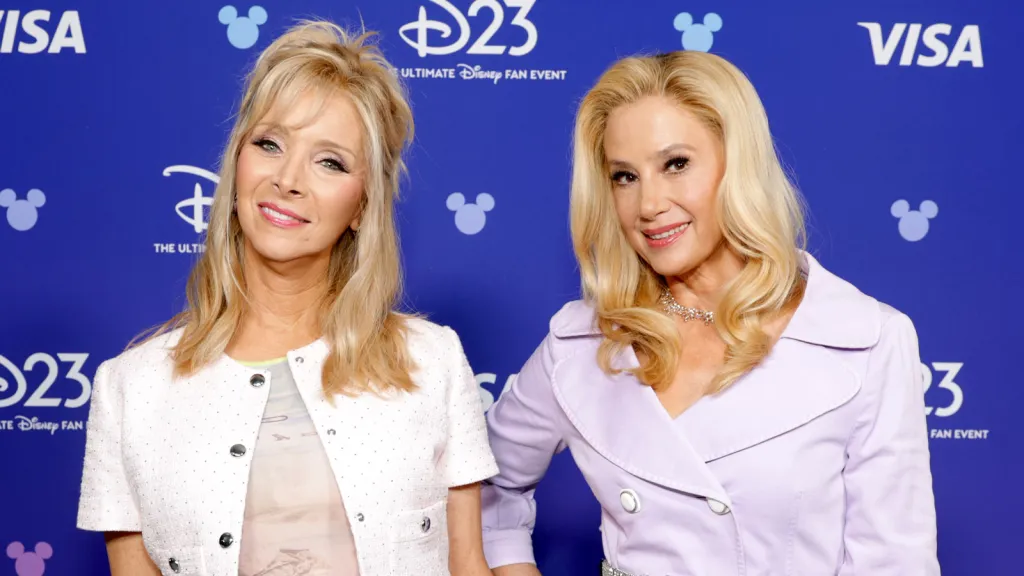
Mira Sorvino and Lisa Kudrow are reprising their roles from Romy and Michele’s High School Reunion for the sequel.
The duo was at D23: The Ultimate Disney Fan Event in Anaheim, California, to preview Romy and Michele 2, which they both executive produce.
With the sequel premiering 30 years after the original was released, Sorvino explained why she thinks the comedy has withstood the test of time.
“People tell me that it means a lot to them. Fans tell me that it’s their comfort movie, or it was the movie that made them feel okay about being themselves in high school, or that it celebrates the love of their best friend,” Sorvino told Deadline at D23. “They relate to the relationship that Lisa and I have, and some people love the fashion, and some people love the dancing, and they’re very human.”
Despite Romy and Michele being “wackadoodles,” as Sorvino described the fictional characters, she says that the duo are “also very relatable in some core way,” adding, “I felt like in the first one, we’re sort of nerd underdog heroes, like when we finally get to have our day in court against the people who’ve tortured us — [the] bullies. Underneath our weird affects and our ridiculous ideas, there are real beating hearts, and I think people connect to them.”
Almost three decades later, Sorvino and Kudrow are reprising their roles in what is a reunion to the cast as well. Sorvino says she stayed in touch with Kudrow over the years and had campaigned alongside her to make the sequel a reality.
“We’ve been in pretty constant contact throughout the years, but it’s a joy to play with her again,” Sorvino said of working with Kudrow on the sequel. “She’s such a great acting partner and just a wonderful person.”
Sorvino said it was great to work with her co-stars like Camryn Manheim, Alan Cummings, Janeane Garofalo and Julia Campbell, adding, “They were all so much fun to see again and to get to know them a little better.”
“I spent almost all of my time with Lisa in the first one, and this time I was like, ‘Wow, Janeane is so great.’ She’s so warm and funny. I feel like in the first one I was so intimidated by her, like Romy was intimidated by Heather Mooney [Garofalo’s character]. And then we have some new friends who came to play: Rob Huebel and Keegan-Michael Key, and they’re so funny. The duo of them together — they are side-splittingly funny.”
Watch Sorvino’s interview in the videos below.
>
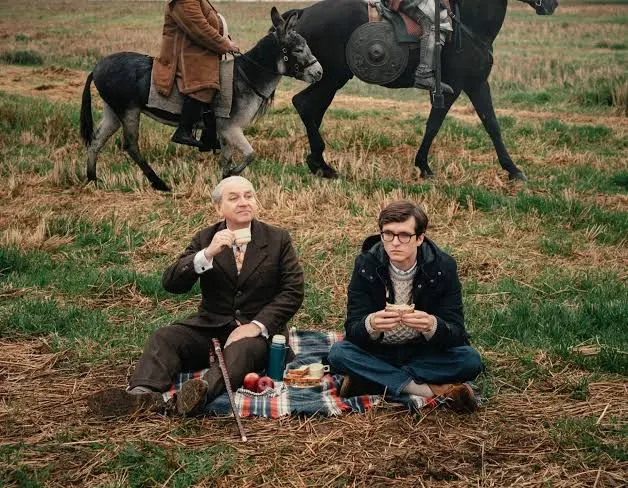
Sometimes it feels like the growing subset of films set in the stuffy British academic world of the early ’70s deserve a genre all to themselves. It’s a very interesting visual paradox; young people going out into the world to discover and further themselves in an environment that’s been stained nicotine-brown by the chain-smokers of their parents’ generation. Beer comes in heavy pint mugs, to be drunk in “snugs”, at pubs that most people get to and from in rickety death-trap cars almost a decade before seatbelts were made compulsory.
This world is the setting for a real-life road trip taken by American writer Jay Parini (played by Fionn Whitehead), who, in 1971, enrolled at the University of St. Andrews in Scotland to fulfil his dream of becoming a poet. Parini is trying to put his old life behind him; on his conscience is the fact that he has inadvertently inspired his younger brother Billy to sign up for service in the Vietnam war. Billy sends him diary-like cassette tapes from the heart of the combat zone that become increasingly bleak, making Parini’s quest to find a mentor — “someone who would help me become a writer” — all the more desperate.
Parini goes through a series of mentors, the first being academic scholar Alistair Reid (Alan Cumming), who agrees to help Parini if he helps his pre-teen son Jasper with tuition in return. Alistair has the Argentinian poet Jorge Luis Borges (Luis Gnecco) coming to stay, but Parini seems oddly unconcerned by the imminent arrival of this master of letters. Instead, Parini is planning, as part of his PhD project, to interview reclusive poet George Mackay Brown (Peter Mullan), who never leaves his hometown in Orkney. In a very plausible exchange, Parini’s tutor is appalled, telling him, “We prefer our poets dead in Scotland,” adding that the aim of the course is “to study writers, not become one.”
In a further blow, Parini’s plans go right off the rails when Alistair has some bad news from London and leaves him in charge of the elderly, ailing Borges, then 72. Saving Parini the bother of canceling the interview, Borges gamely offers to join him on a road trip to Orkney. “I’ve always wanted to see the Highlands,” he says, despite having become totally blind in 1955. “You will be my eyes.”
According to a title card at the end of the movie, almost everything that happens in the film is true, to a degree. That intel would be better placed at the start, since it takes a while to get into the rhythm of this sometimes hallucinatory journey. For a time, there’s a possibility that Borges might not even be real, since he speaks in epigrams such as “I believe in everything”. His childlike enthusiasm is endearing, though, as he imagines Parini as Sancho Panza to his Don Quixote, pausing to visit the Carnegie Library where he horrifies the stuck-up staff by licking a leather-bound copy of the Encyclopedia Britannica. “Some books should be tasted,” he explains, before peeing in the car park.
Curiously, Borges drops out of the story for a while after a trip to Loch Ness, where Parini develops a crush on a well-read hotel worker (Freya Mavor) who, being a fellow poetry aficionado, offers to join him for the Orkney leg of the trip. Up to now, the prospect of the two poets meeting has been an enticing one, but it never happens. By contrast, Brown is in some ways the polar opposite of Borges: Dry, and gnomic, he rejects the romanticization of art, speaking rapturously of beer and saying, of his work, that “a poem is the next best thing to silence”. (Tellingly, he also admits that “I live too much in my own head.”)
When Parini returns to rejoin Borges, the film has lost a little of its steam, perhaps since the road trip has already reached its destination. Nevertheless, in this final stretch, director Marc Turtletaub unexpectedly delivers the film’s most striking scene, in which Parini takes Borges to the site of the Battle of Culloden in 1746, and the pair commune to summon up the brave, rebellious ghosts of the past. It’s the only point in the film in which Parini — a serious fellow, more like a young Michael Foot than the velour-jacketed hippies in his year — seems to bond with his riding partner, and it’s a rare moment in which the film actually bends towards Borges’ metafictional genius. Though it is undoubtedly smart, literary and playful, Borges and Me could do with a spot more of that.
Title: Borges And Me
Festival: Edinburgh (Out of Competition)
Director: Marc Turtletaub
Screenwriters: Oren Moverman, Jay Parini
Cast: Alan Cumming, Fionn Whitehead, Freya Mavor, John Gordon Sinclair, Luis Gnecco, Morven Christie, Peter Mullan, Stuart Bowman
Running time: 1 hr 49 mins
>
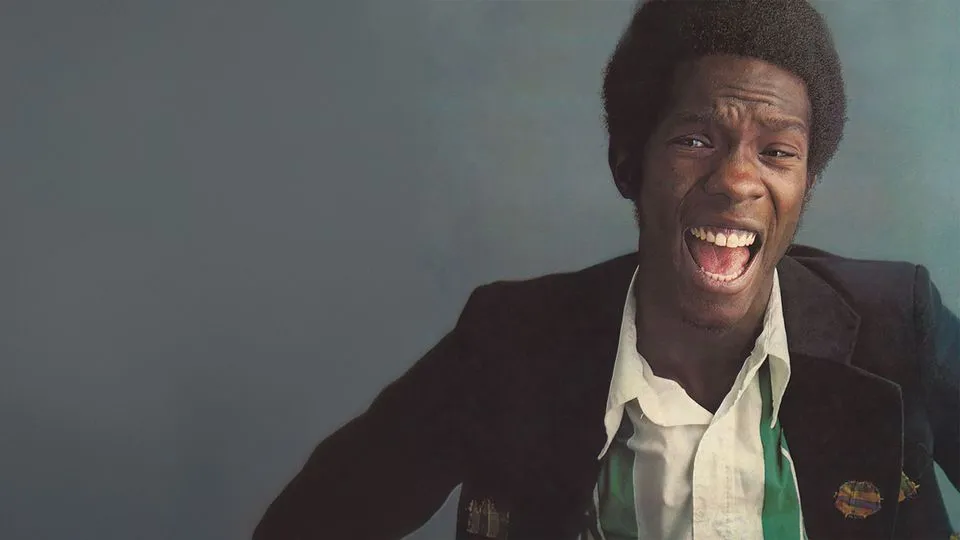
Music is a blessing, but maybe it can also be a curse – especially if you are a famous musician who gets remembered mostly for drugs and other negative narratives. Too Much Music, one of the works-in-progress showcased at the 2026 edition of Open Doors, the Locarno Film Festival‘s co-production platform and talent development program for filmmakers from equity-seeking communities and regions where artistic expression is at risk, wants to explore all these issues.
It comes from director Aseye Fiagbe (short The Gentleman, episode 7 of Bad Mama) and puts a spotlight on a famous keyboardist from Ghana, Kiki Gyan.
The director is also the producer of the doc via her Aseye Fiagbe Creative Studio in Ghana. She presented the project during the second edition of Open Doors with a focus on films from Africa and won one of three Open Doors Grants.
THR has compiled highlights about the movie and insight from Fiagbe about the project and the themes it explores.
Synopsis
Too Much Music is a feature documentary about Kiki Gyan, a Ghanaian keyboard prodigy who rose to international fame as a teenager with Afro-rock pioneers Osibisa. As his musical contributions expanded without recognition, tensions around credit and ownership led him to leave the band and pursue a solo career across London, Lagos and New York, shaping African disco and funk in the process.
Over time, the same system that profited from his brilliance proved indifferent to his vulnerability, and his life became reduced to a singular narrative of addiction and demise. Through archival material and testimonies from family and collaborators, the film reconstructs the forces that shaped his journey and asks how artists are remembered, who controls their stories, and what is lost when brilliance is reframed as failure.
Director’s note
Music is a blessing, and Kiki Gyan had that gift in abundance. His music is joyful, infectious, technically brilliant, and yet his life story often overshadows the work itself. Many people know how he died long before they encounter the music he made. That imbalance is what pulled me into this film. I grew up with Osibisa as the soundtrack of Sunday afternoons in my home. Years later, I discovered Kiki’s solo work and realized how much of his brilliance had been hidden behind a simplified story of addiction and death.
Too Much Music is not about rescuing him or forcing his life into a neat redemption arc. I am interested in complexity: holding brilliance, failure, joy, exploitation, vulnerability, and legacy in the same frame. As a Ghanaian filmmaker, I see this film as part of a larger responsibility to document our cultural history with care. Kiki’s story is about memory and erasure, about who gets remembered for their work and who is remembered only for how they fell.
What was the inspiration for you to want to make this film?
I grew up with Osibisa as part of the soundtrack of life in Ghana, but the story I knew about Kiki Gyan was basically the story of how he died. He was a brilliant prodigy who became addicted to drugs, lost everything and died in a church bathroom. That was the story.
Then, as an adult, I started discovering how much music he had actually made and how little of it I knew. I realized that, like many other Ghanaians, I knew the ending of his life before I really knew the work. That bothered me, and the more I researched him, the more complicated, colorful and human the story became.
How universal are the themes of the film, and why should people outside Mozambique see it?
For me, the film is ultimately about memory and who gets reduced to what. We do this all the time. A whole person can become one mistake, one tragedy, one headline. Kiki’s story happens within a very particular Ghanaian and African music history, but the questions underneath it feel universal.
What happens when talent arrives before someone is ready for everything that comes with it? Who gets credit for creative work? How do we treat people when they fall from the pedestal we put them on? And who gets to decide what remains of someone after they are gone? I don’t think you need to know Kiki Gyan or Osibisa to recognize those questions.
What is the next step for you and your collaborators after Open Doors?
Open Doors gave the project a real push forward, through the conversations we had, the connections forged and the award, which gives us so much room to continue the development work. The writing and research are still ongoing, particularly around London, Lagos and the U.S., and we are continuing our archival research while building the international production structure around the film. A big focus now is following up with the producers, financiers and other partners I met in Locarno and finding the right co-production relationships. We came to Locarno with a Ghanaian film looking for the right international collaborators. I left feeling much clearer about what those relationships should actually look like.
>


Search For Canadian TV Actor Stewart McLean Now Homicide Investigation


These ’90s fashion trends are making a comeback in 2017
According to Dior Couture, this taboo fashion accessory is back
Model Jocelyn Chew’s Instagram is the best vacation you’ve ever had
Emily Ratajkowski channels back-to-school style
9 Celebrities who have spoken out about being photoshopped
Your comprehensive guide to this fall’s biggest trends
A photo diary of the nightlife scene from LA To Ibiza