
Kareem Rahma
Anthony Avellano for Deadline


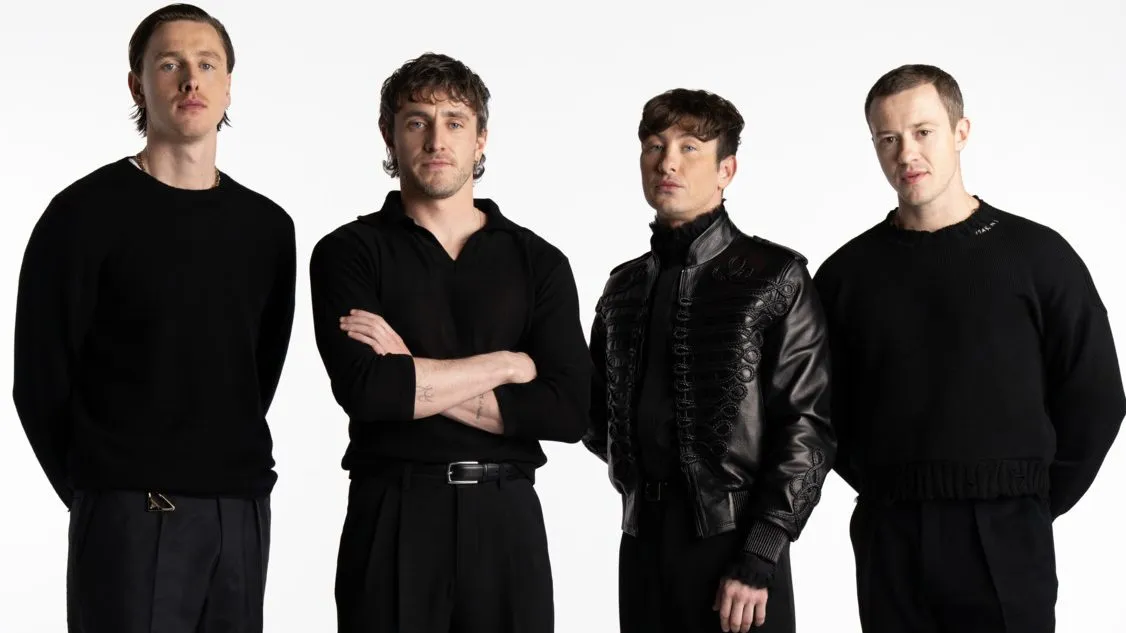
Fans got a sneak peek at Paul Mescal, Joseph Quinn, Barry Keoghan and Harris Dickinson filming a legendary moment from The Beatles‘ career for Sam Mendes’s upcoming films.
The four actors, who are each portraying one of the band members, were recently spotted recreating the group’s iconic Abbey Road album cover. The original photo, taken on Aug. 8, 1969, features John Lennon, Ringo Starr, Paul McCartney and George Harrison walking in single file across a crosswalk outside EMI Studios in London.
Via videos shared on social media, Mescal as McCartney, Dickinson as Lennon, Quinn as Harrison and Keoghan as Starr were seen recreating the cover photo for Mendes’ four-part Beatles biopic, titled The Beatles – A Four-Film Cinematic Event. Each movie will be told from one of the band members’ points of view, with all four films having interconnected narratives.
While specific plot details are being kept under wraps, the movie did get access to The Beatles’ full music catalog when the band’s label, Apple Corps, granted music rights for the scripted films. Fans will just have to wait and see how many songs from 1969’s Abbey Road will be featured in the project.
The films, via Sony Pictures, will also star David Morrissey as Paul McCartney’s father Jim McCartney; Leanne Best as John Lennon’s Aunt Mimi; James Norton as manager Brian Epstein; Harry Lloyd as producer George Martin; Bobby Schofield as road manager Neil Aspinall; Daniel Hoffman-Gill as roadie Mal Evans; Arthur Darvill as press officer Derek Taylor; Adam Pally as controversial music manager Allen Klein.
All four Beatles films are set to hit theaters in April 2028, but the exact date has yet to be revealed.
>
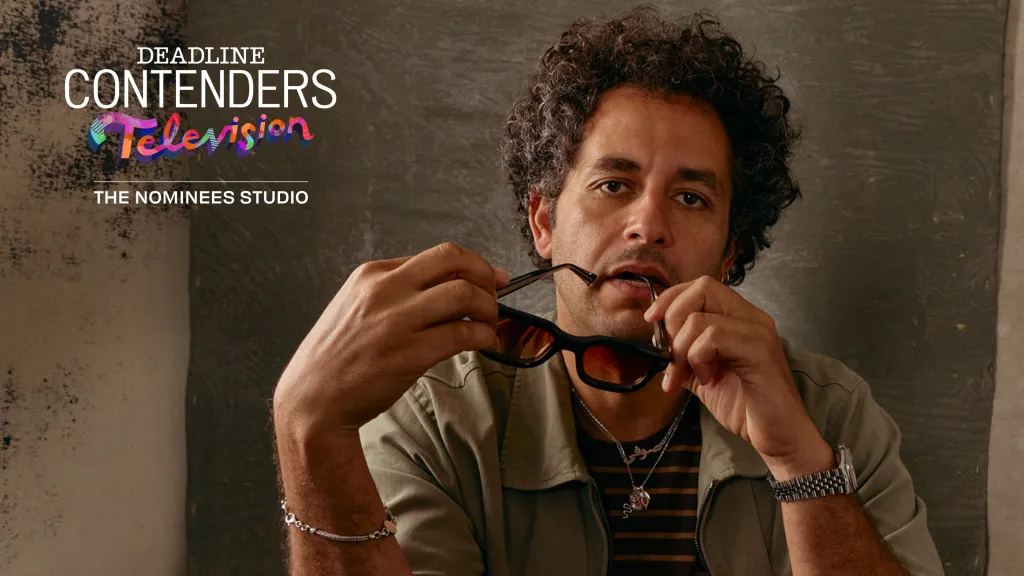
When Kareem Rahma first learned he was Emmy-nominated, he was underground on the New York subway shooting his hit YouTube show SubwayTakes.
“I was interviewing a man named The Rizzler, who is one of my favorite people in the world,” Rahma said at Deadline’s Contenders Television: The Nominees Studio. “On the platform, I got an email forwarded to me from my team that said that we were nominated for the Emmy, and I couldn’t believe it. I did a celebration. I told everyone — even the just passengers that were waiting for their train. And it just felt so amazing.”
Did it change how he sees the show at all?
“I’ve kind of always taken the show really seriously,” he said. “And now I guess I’m taking it even a little more seriously and just I’m really excited about the future and growing the show and expanding the show and just believing in my ideas.”
RELATED: Contenders Television: The Nominees Studio – Deadline’s Complete Coverage
Watch the Contenders conversation below, and scroll down for more photos from the event.
Rahma also recalled booking his very first celebrity guest: Olivia Wilde.
“I had been around her before, so I would’ve considered us friends,” he said, “I don’t know if she would consider me a friend, but I considered her a friend. And she was just a huge fan of the show and would personally comment to me on every episode. And one day she was like, ‘I’m in New York if you want to do this.’ And I said, ‘That sounds great.’ And so that was the first time we did it. She was so cool. I already knew she was cool, but she was so cool. She said, ‘Come pick me up from a hotel.’ No security, Just her. No publicist, no hair and makeup. She was just awesome. And it was such a fun episode and still one of my favorites.”
As for picking a favorite take out of all his episodes, Rahma said: “The takes are like my children, so it’s hard to pick one. I don’t have a specific one that I can really quote. I’m going through them right now. Sometimes out of context, they’re not good to say out loud and those are usually my best ones. They’re usually my favorite ones.”
He also talked about the importance of spontaneity and consistency on the show. “One of the rules is that I don’t allow people to bring their own mics,” he said. “You have to use the Metro card mic. People have said, ‘Can I clip it to something else?’ Or ‘can I clip it to my lapel?” And I’m like, ‘No, you have to hold the mic.’ So that’s one thing. There’s also, I don’t want to practice. So sometimes people want to practice, and they want to do the take with me in advance, if they’re having a hard time developing their take, I can hear it, but I refuse to go beyond the take. Or they’re like, ‘Are you going to agree or disagree?’ I’m like, ‘I can’t tell you. I have to figure it out in the moment because it’s on the fly.’”
Kareem Rahma
Anthony Avellano for Deadline
Looking back on how he and co-creator Andrew Kuo landed on the subway as a venue, Rahma said: “Andrew and I were on our last couple of bucks, and we wanted to make the show. And we had no money. I had already done Keep the Meter Running, which was in the cab. I loved Keep the Meter Running, but it was a little too expensive because the cab itself is cheap, but the ride is not. And he was like, ‘Would it bother you if we did it on the subway?’ And I was like, ‘Well, the subway is technically $2.90, so that’s not too expensive. And we can stay on there as long as we want.’ So it was really based out of this necessity to get studio space for cheap. It was never like, ‘Ooh, this show is going to be great because it’s on the subway.’ I think this show would be great anywhere. I think the name is great. SubwayTakes a good name. But I don’t know if being on the subway — aside from stopping you in your tracks — I don’t know if it is the thing that makes it good. I think it’s the people. I think it’s the guests. I think that’s really what it is.”
Awhile back, Rahma had been working on bringing Keep the Meter Running to CNN, but after being held up in development for months, he pulled out of the project. Rahma recently told Deadline: “I did the whole rigmarole with television, and it was a disaster. I don’t want to wait anymore. I walked away from the deal and decided to do it independently on YouTube.”
Would anything ever change his mind and bring him back to regular TV?
“That specific experience turned me off,” Rahma said. “And I’m having experiences now that are turning me on. It was that specific experience where I did not want to do it anymore. I wanted to make the show. I already knew that the show was good. That’s the difference. It was already a proven concept. So I felt like, ‘Why do I have to prove it more? Why do I have to keep proving myself when I already have a format?’ I already have an audience for this specific show. And at the end of the day, I’m having a lot more fun making it with people that I love. Every time we go on a shoot, it feels like a vacation. And it’s just so much fun. But in the future, I mean, if someone makes it a little bit easier, I’m happy to work in the traditional industry.”
>
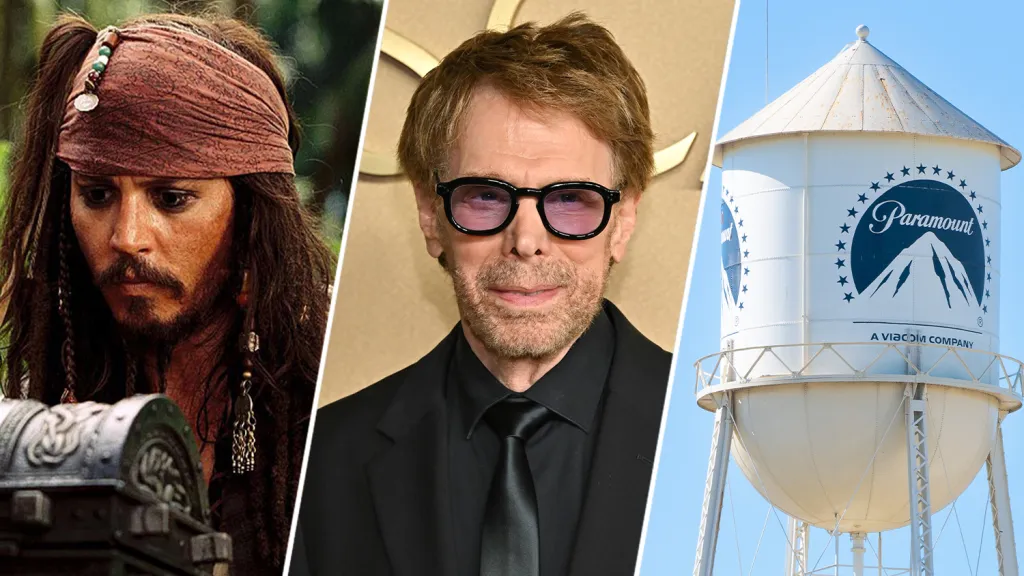
We caught up with producer Jerry Bruckheimer at D23 who tells that when it comes to Pirates of the Caribbean 6 “we’re talking with Johnny (Depp), we’re working on a screenplay, and hopefully we can get this done.”
Separate from Bruckheimer, some solid sources tell us that the continuation won’t feel like just the nth tale of Captain Jack Sparrow, rather the next chapter will focus on Margot Robbie’s protagonist with Sparrow as a side character.
We also got the Top Gun franchise producer’s thoughts on David Ellison’s plans to have Paramount leave the state of California, this planned maneuver in response to the state AGs antitrust case and hold up of the Melrose lot’s yearned merger with Warner Bros Discovery.
Bruckheimer doesn’t want to the see the big mountain top studio in another state.
Says Bruckheimer, “Look, we want to keep ’em here. It’s unfortunate that it’s got this kind of political circle around it, which is a shame, and hopefully they work it all out, they stay here, and the business gets healthier.”
Bruckheimer has been a very vocal supporter of Ellison’s attempted grab of Warner Bros Discovery, believing that the studio titan is a lover of movies, and a supporter of cinema. At a CinemaCon panel last spring with The Odyssey producer Emma Thomas, Bruckheimer said the following in response to not signing a petition against the merger:
“Look, I think the train has left the station. I think this is well on its way. You can sign all the petitions you want, but [the merger is] already being approved by European countries. It’s happening. So there’s not much we can do about it other than take [Paramount’s] David [Ellison] at his word that he’s going to make 30 movies [a year], and that would be fantastic.”
>
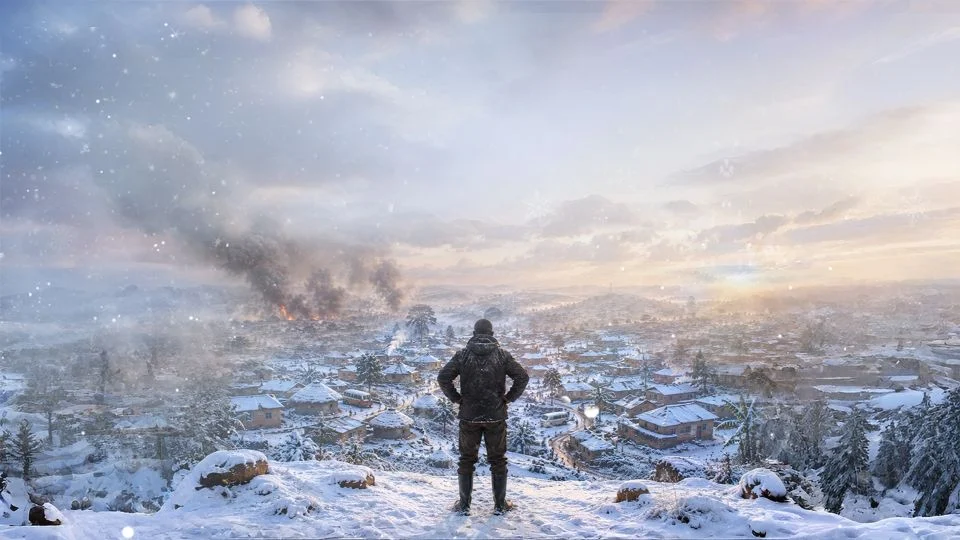
Snowfall in Uganda? Welcome to the world of A Vineyard for A Lobster, one of the works-in-progress film projects presented during the 2026 edition of Open Doors, the Locarno Film Festival‘s co-production platform and talent development program for filmmakers from equity-seeking communities and regions where artistic expression is at risk.
It is in the works from Talemwa Pius (short films Engaito, Rations, Bitingu) and producer Emmanuel Gashumba of Uganda’s Gripmagic Uganda Limited.
The team behind the project, presented during the second edition of Open Doors with a focus on films from Africa, was one of the two main winners of the Open Doors Grant.
THR has compiled highlights about the movie and insight from Pius about the project and the themes it explores.
Synopsis
The equatorial village of Rukumba has endured months of drought when suddenly snow falls overnight, an impossible event blanketing the land in white. Kamuturaki (48), a failed trader once mocked for selling winter jackets under the blazing sun, becomes an overnight success. Byeitaka (40), a disgraced preacher, declares the snow divine and sells melted snowflakes as holy water to frightened followers. Kagoro (38), the timid chairman, watches his authority erode as the village reorganizes itself around the miracle.
When British envoys arrive, promising support for Rukumba’s independence from Uganda in exchange for access to the snow for scientific research, the village committee embraces the deal as progress. As competing ambitions take hold across the village, tensions rise and unrest erupts, forcing Ugandan military forces to intervene. By the time the snowfall melts, Rukumba is no longer a community but a collection of competing interests each convinced the miracle belongs to them.
Director’s note
A Vineyard for a Lobster grows out of my interest in how colonial structures continue to shape authority, belief and communal life in Uganda decades after independence. It begins from a question of what happens when something foreign enters a fragile social order and exposes what was already unstable.
In the film, an impossible snowfall in a Ugandan village becomes a political allegory, echoing colonial intrusion. Its origin is never explained; what matters is what it reveals. As each character assigns the snow’s meaning according to their needs, the village begins to fracture. I explore how collective failure forms through ordinary self-serving decisions. The arrival of outside interests reflects a pattern that has shaped much of Uganda’s history, where promises of advancement often come tied to the erosion of local agency. I want the film to feel grounded and unsettling, immersing the audience in a community breaking under its own contradictions.
What was the inspiration for you to want to make this film?
The film came from a question that has been sitting with me for a while. What really changed after colonialism, and what didn’t.
Growing up in Uganda, you get used to certain things just being the way they are. But at some point you start feeling that a lot of these colonial systems are still there. The way authority works, even how belief is organized. It looks stable on the surface, but there’s always tension underneath it.
The idea of snow falling in a drought-stricken village came as something like a foreign presence entering a place and forcing people to respond to it in different ways. From there, the story became about what that kind of presence would expose in the village. The snow doesn’t break the village. It brings to the surface what was already unstable, so we can finally see it clearly. Almost like putting a face and name to it. And then the question becomes, now what. How do we become responsible to each other? How do we build better systems?
I’m interested in how people react to it. Some try to profit from it. Some turn it into belief. Others try to control it. And in the middle of all that, you start to see how weak the sense of collective responsibility really is.
That’s where the film comes from for me. Not the event itself, but what it reveals about people when something bigger than them enters their world.
How universal are the themes of the film, and why should people outside your home see it?
Even though the film is set in a small Ugandan village, it’s really about colonialism across time. Not just what happened in the past, but what carried forward, and what is still happening now in different forms. You can see it in how resources are controlled and how decisions are made for communities from the outside.
The film speaks to people who have lived through that kind of history, and also to those who are experiencing it in the present, whether they call it that or not. Because at its core, it’s about what happens when something external or foreign enters a system and begins to reshape it, and how people respond to that kind of pressure.
At the same time, it’s also about responsibility. About what happens inside a community when systems are weak, when accountability is not strong, and when people start choosing individual survival over collective responsibility.
We are very conscious of that while developing the film. Even though it has a strong commercial direction, we’re also thinking about how it can create impact beyond the screen. We’re already considering an impact campaign that can engage with communities where these questions are still very present, not just in Uganda but in many parts of the world. So the film is not only meant to be watched but it’s meant to start these kinds of conversations.
What is the next step for you and your collaborators after Open Doors?
Right now the focus is on writing the script. Open Doors helped clarify a lot of things, so the next step is to sit with that and push the project into a solid draft.
At the same time, we’re continuing conversations with collaborators we connected with in Locarno, and looking at how to structure the project for the next stage of development and financing.
We’re also considering a short film version of the project as a way to further explore the world and tone, and to build momentum around it as part of the larger journey of the feature.
So the focus is really just on moving the project forward in a concrete way, both on the page and around it.
>


Search For Canadian TV Actor Stewart McLean Now Homicide Investigation


These ’90s fashion trends are making a comeback in 2017
According to Dior Couture, this taboo fashion accessory is back
Model Jocelyn Chew’s Instagram is the best vacation you’ve ever had
Emily Ratajkowski channels back-to-school style
9 Celebrities who have spoken out about being photoshopped
Your comprehensive guide to this fall’s biggest trends
A photo diary of the nightlife scene from LA To Ibiza