
Sports
Inside the Basque ‘dream team’ that produced Iraola, Arteta and Alonso

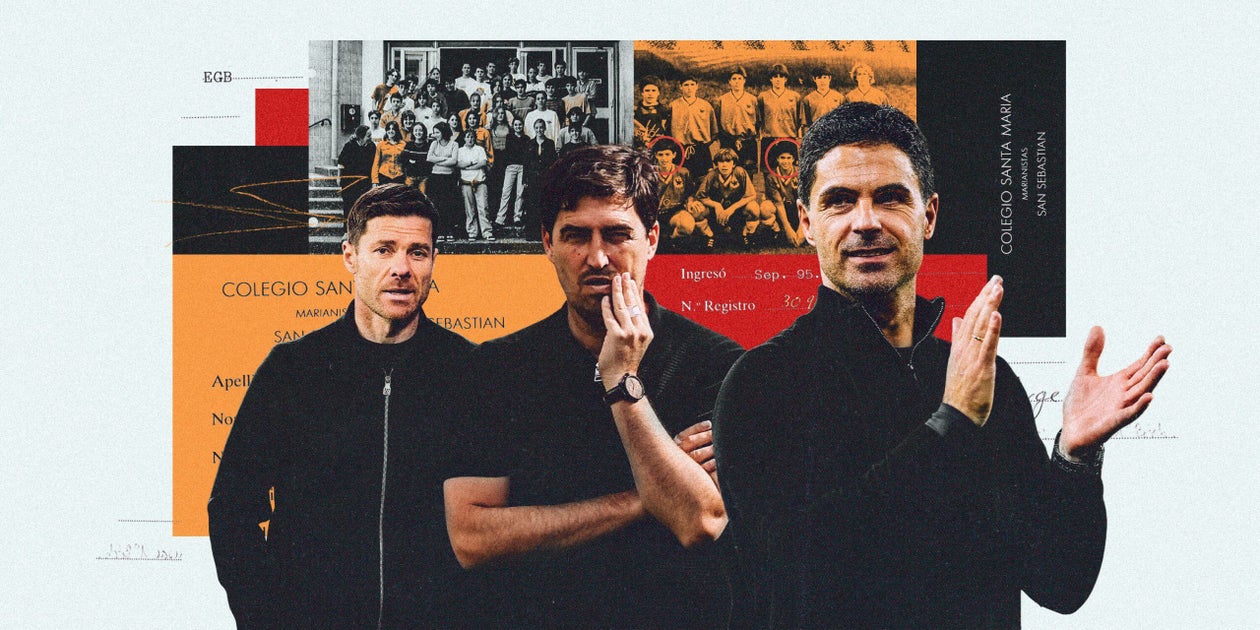
The walk to Plaza Errotatxo takes you past the golden sands and turquoise waters where the three boys at the centre of this story began their football education.
If you are not familiar with this part of San Sebastian in northern Spain, it is easy to miss the entrance to Antiguoko KE’s headquarters, tucked behind a row of moped bays in the shadow of an eight-storey apartment block. The sign above the wooden door confirms this is the right place. And behind that door, who can blame them for showing off a little?
“We now have three Antiguoko coaches in the Premier League,” says Roberto Montiel, one of their long-standing coaches, with a smile to acknowledge how this small area has delivered the managers or head coaches of Arsenal, Liverpool and Chelsea — surely one of the more implausible statistics of modern football or, indeed, any sport.
“At the start of summer, there were only three English coaches in the Premier League,” Montiel adds. “And the three from Antiguoko are at top-tier clubs of the highest level.”
Antiguoko are special: a Basque dream team based a couple of hundred metres from La Concha Bay, with a 40-strong list of alumni who have come through their junior system and gone on to make top-division careers.
It was here that a schoolboy Andoni Iraola set out on the journey that has led to his appointment, 35 years later, as Liverpool head coach.
One of his old No 15 shirts from playing days at neighbouring Bilbao’s Athletic Club is among the many framed on the walls. “Para mis amigos del Antiguoko, que algo me habran ensenada,” reads the message above his signature — For my friends from Antiguoko, they must have taught me something.

Andoni Iraola’s signed shirt at his old club (Daniel Taylor/The Athletic)
Yet that tells only part of the story when it comes to Antiguoko’s influence in England’s top division and why Edorta Salegi, their president, throws out his hands when he is asked how many people attend their youth fixtures. “Two hundred, sometimes,” he says. “Including 50 scouts.”
On the far wall, a pair of Xabi Alonso’s boots are displayed in a glass cabinet — the ones the newly-appointed Chelsea manager wore playing for Liverpool in the iconic 2005 Champions League final against Milan. “They smell of anxiety,” is the joke. Anxious or not, Liverpool fought back from 3-0 down at half-time, won on penalties and Alonso held the trophy to the skies.
A pair of Mikel Arteta’s boots are encased, museum-style, on that same wall, and there are plenty of tales about the Arsenal manager, too. Arteta was the star boy, the special one, the leader, as this pioneering neighbourhood team forged their reputation, travelling to tournaments in Sweden, Italy, the Netherlands, Mexico even, and almost always winning.

Mikel Arteta’s old boots and shirt at Antiguoko (Daniel Taylor/The Athletic)
“I was coaching the under-nines,” says Salegi. “One of the player’s fathers came up to me and said, ‘Hey, there’s a really good player at school, this boy’s a phenomenon’. Lots of parents were saying the same. I said, ‘I’ll go and have a look’. It was Mikel Arteta. And he stood out from everyone. That kid was doing things, at the age of nine, that weren’t normal.”
Around the corner, sitting outside one of the neighbourhood’s pintxo bars, another of Antiguoko’s former players, Alvaro Parra, shares his memories of Arteta. One is that, even as a boyhood Barcelona fan, the young Arteta would always choose to be Arsenal when they were playing the FIFA computer game.
Their school years come to mind. “There was a boy in Mikel’s class with Down’s syndrome,” says Parra. “When they played football, Mikel was so good he would dribble past the whole team to reach the opposition goal. Then he’d stop, pass it to this boy and he’d score.”
Iraola was born in June 1982 — midway through Spain hosting the World Cup — three months and six miles from Arteta’s birth in the March. Alonso was in the next year up at school, with Aritz Aduriz, the future Athletic Club and Spain international striker. All four were often in the same Antiguoko team, which makes it easier to understand why the club have run out of space in their trophy cabinets.
“There’s one particular memory of going to Benidorm for a tournament,” says Parra, then a centre-back. “We all started playing in different positions. For example, Aritz Aduriz was in goal, Xabi Alonso up front, Iraola on the left of midfield.
“We started losing every match, and the organisers gave us a bit of a telling-off, as if to say, ‘Bloody hell, you’ve just won the league, and you’re making a right fool of yourselves’. They put us back in our proper positions, and we ended up winning the final, with a goal from Xabi Alonso from the centre circle.”
Team photographs from the time show the boys lined up in their shiny blue Antiguoko kits, staring back at the camera from beneath mops of dark hair.

A team photo featuring Iraola, bottom left, and Arteta, middle of the front row (Antiguoko KE)
Alonso, everyone agrees, was “very small, very frail” and “not that good”, until he shot up in size at the age of 17.
“In one under-17 final, we left him on the bench,” says Salegi. “We saw more of Mikel Alonso, his brother. But it turns out that Xabi had a growth spurt and took control of midfield.”
As for Iraola, he grew up as an only child in ‘caserio’, to use the Basque term, meaning the countryside around Usurbil, south-west of San Sebastian.
“My first impression was of a very quiet and shy lad,” says Parra, who can joke about being one of the team’s players who did not make it at a professional club. “The real impression came when I saw him play and thought, ‘Wow’. He was slight, not physically strong, but he dribbled very well, and you could immediately see he had a lot of quality.
“He always played as a right-winger for us and, when he joined Athletic, Ernesto Valverde moved him back, dropping him deeper. At first, he was worried, because he didn’t know how to defend. He was thinking they were playing a dirty trick on him. But Valverde told him, ‘You’re going to be the best right-back in Spain’.”
From the age of 13, Iraola was enrolled at the Marianistas school in San Sebastian. It has been knocked down since those days, rebuilt and is now called Summa Aldapeta. But they still have his old registration form and class photographs.

One of Andoni Iraola’s school reports (Summa Aldapeta)

Iraola (circled, back row) at school (Summa Aldapeta)
From here, it is just a short stroll down the hill to the Barandilla de la Concha, the ornate white balustrades for which the city’s seafront is famous. Here, Parra explains, is where Iraoloa’s story was really launched.
“The Antiguoko scouts would always go to the beach. From the promenade, they’d watch and say, ‘Who’s that?’ And that’s where they’d sign them up: La Concha beach. We’d set up portable goals and, instead of playing on real football pitches, we’d play on the sand when the tide was out.”
Locally, they make the point that beach football in northern Spain isn’t always how you might imagine. The sun isn’t always shining in San Sebastian, and the freezing-cold winds whipping in off the Cantabrian Sea can be fierce. Hence the three sculptures at the western end of La Concha Bay known as the Comb of the Wind.
“There were crossbars and posts that we’d set up,” confirms Montiel, who coached Iraola for six years. “You’d mark out the pitch where the beach was driest, and then you’d play your match. Sometimes there were puddles. You had to deal with the puddle, get past the puddle, and any wet patches in the sand.”

The San Sebastian beach where Iraola, Arteta and Alonso learned their trade (Daniel Taylor/The Athletic)
Salegi remembers it, too.
“The beach requires extra physical effort,” the Antiguoko president says, sitting in the clubhouse bar. “That shapes a player’s character. I’ve played on the beach when, as you were about to take a corner, suddenly a wave would come in.”
The stories are wonderful. Another goes back to the time, in the under-14s, when Iraola, Alonso and Arteta used to train on a gravel pitch beside Campo de Futbol Municipal Berio, the pretty little ground where Antiguoko run teams up to under-19s level.
“At that time, we were playing in a league where the other teams were older than us,” says coach Montiel. “We’d win a lot of matches 1-0. So I said to them, ‘Let’s try something. I’m going to kick the ball up to Andoni, he’ll bring it down and three of you, without fouling him, are going to try to take the ball off him. Go at him with everything you’ve got — let’s see how long he can keep possession’.

Roberto Montiel (left) and Edorta Salegi (Daniel Taylor/The Athletic)
“Well, a minute went by, and they didn’t take it off him. Three players were trying to get the ball off him. I said to them, ‘That is what we have to do when there are five minutes remaining. We have to hold onto the ball. And there’s a lad here (Iraola) who’s got God-given quality. What do you have to do? Give the ball to him’.”
Salegi’s association with Antiguoko goes back over four decades. He says there are “no secrets or mysteries” behind their success, just “tremendous passion, character, talent, physical attributes, avoiding injuries, good family environments, many things have to come together”.
Or consider the way Parra sums it up. “Antiguoko is the most famous youth academy in Spain right now — after Barcelona, because they have La Masia, but more so than Real Madrid. And in terms of ratio, probably even more so than Barcelona.”
It is no surprise, therefore, that bigger, professional clubs want to tap into their knowledge, especially when you hear about some of their past victories, scoring five goals against Real Sociedad and putting four past Madrid. Just look at the framed shirts decorating Antiguoko’s walls.
“And we’ve got (midfielder Martin) Zubimendi at Arsenal, as well,” says Salegi, eyes twinkling.

The memorabilia for Xabi Alonso (Daniel Taylor/The Athletic)
Various coaches started here, too. Benat San Jose, for example, who has followed in Iraola’s footsteps in managing Rayo Vallecano, and Lander Garcia, an assistant with Portuguese club Braga.
“The thing is, people don’t listen to me,” says Salegi, laughing. “Once, when I was in Manchester at the house of Txiki Begiristain (Manchester City’s former director of football), he asked me, ‘Who would you sign from Real Madrid now?’ And I replied, ‘Right now, I’d sign Antoine Griezmann for Manchester City — he’s a lad not many people know about, he’s just starting out (at Real Sociedad). Sign Griezmann’.
“Txiki said, ‘I’ll think about it’. And years later, I said to him, ‘Well? What do you think? You don’t listen to me!’”
People should listen. The whole of football should listen, in fact, given Antiguoko’s track record — a story that feels worthy of being turned into a movie.
“It was a local club, a small club, but at the same time it was like a mini national team,” says Parra. “They called it the Dream Team. It was a wonderful time. I was a young lad. You have fun, make friends and, on top of that, you go to tournaments and win everything.”
An hour’s drive away, you will find the sleek, modern San Mames stadium in Bilbao, home of Athletic Club, where the biggest club in the Basque region have a partnership agreement with Antiguoko until 2030.
At the Berio, you can tell the place has benefited financially from its production line. The gravel pitch of old has been replaced with artificial turf. There is a small stand on one side, with the greenery of San Sebastian’s hills as the backdrop. Each dressing room is numbered and painted in the club’s colours.

Facilities have improved as Antiguoko profile has grown (Daniel Taylor/The Athletic)
The old guard here once thought, mistakenly, that Iraola’s family must be involved in the fishing industry because there was one Christmas, Monteil recalls, when “his father gave me a kilo of Glass Eels.”
The boy in question was quiet, studious and ultra-competitive but did not have the natural presence, perhaps, of the team-mate who would lead Arsenal to the 2025-26 Premier League title. “Arteta used to walk home kicking the ball against the wall, playing one-twos with himself,” recalls Parra. “A couple of elderly ladies would pass by and stop to watch him in amazement, saying ‘This boy…’”
Arteta was signed up by Barcelona while Alonso, who would become one of Spain’s 2010 World Cup winners, began his professional career at Real Sociedad, going on to become a serial trophy collector playing for Liverpool, Madrid and Bayern Munich.
Iraola, meanwhile, became a mainstay at Athletic Club and eventually returned from New York City of MLS at the end of his playing career to coach Antiguoko’s youth players.
“He wasn’t the typical passionate coach, like Unai Emery (the Aston Villa manager is another local), Arteta or Pep Guardiola,” says Montiel, his coaching mentor.
“He wanted to stay involved in football and worked as an assistant coach for us. When I tried to renew his contract, I said, ‘Hey, next year you could be the head coach’. But (laughing) he had other offers.”
Iraola still comes back to see his old mates. “He has never been your typical footballer,” says Parra. “He’s never been the sort to drive fancy cars or wear fancy clothes. He’s got his own life, and football is his job. Nothing more.”
A pedant might point out Gary O’Neil’s June appointment at promoted Ipswich Town means there are now four English managers/head coaches in the Premier League. But that will not lessen Antiguoko’s influence on England’s top division in the oncoming season.
The conveyor belt rolls on. And, back where it all began for Alonso, Arteta and Iraola, they will be watching the 2026-27 Premier League with extra interest.
Salebi smiles.
“It just so happened that all three were very quiet, good students with a good head on their shoulders.”
>
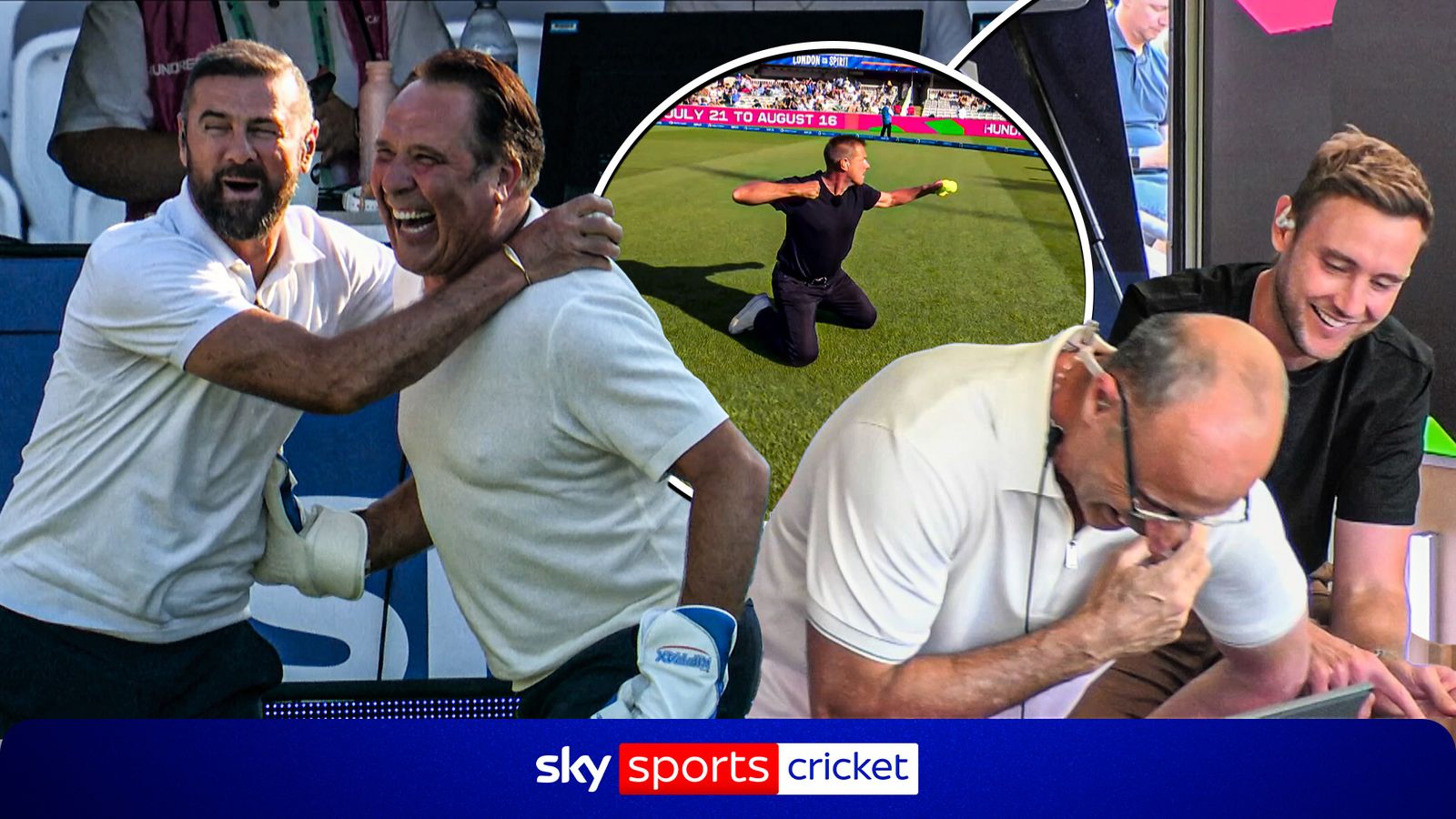
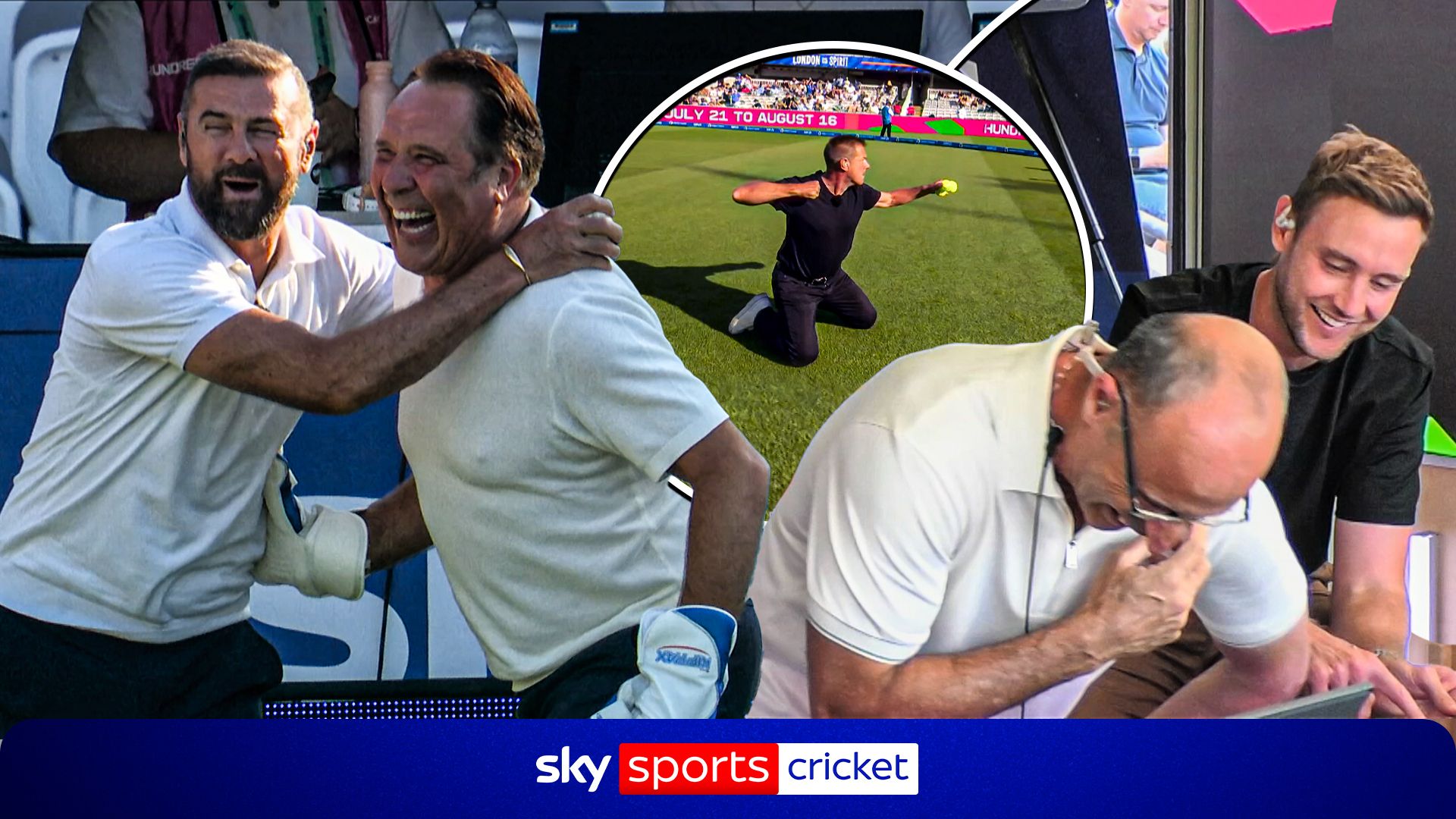
Watch back the funniest and most memorable moments from this year’s Hundred competition.
>
Sports
F1 title race: Assessing rivals to Kimi Antonelli and factors that will decide 2026 fight ahead of Dutch GP season resumption | F1 News
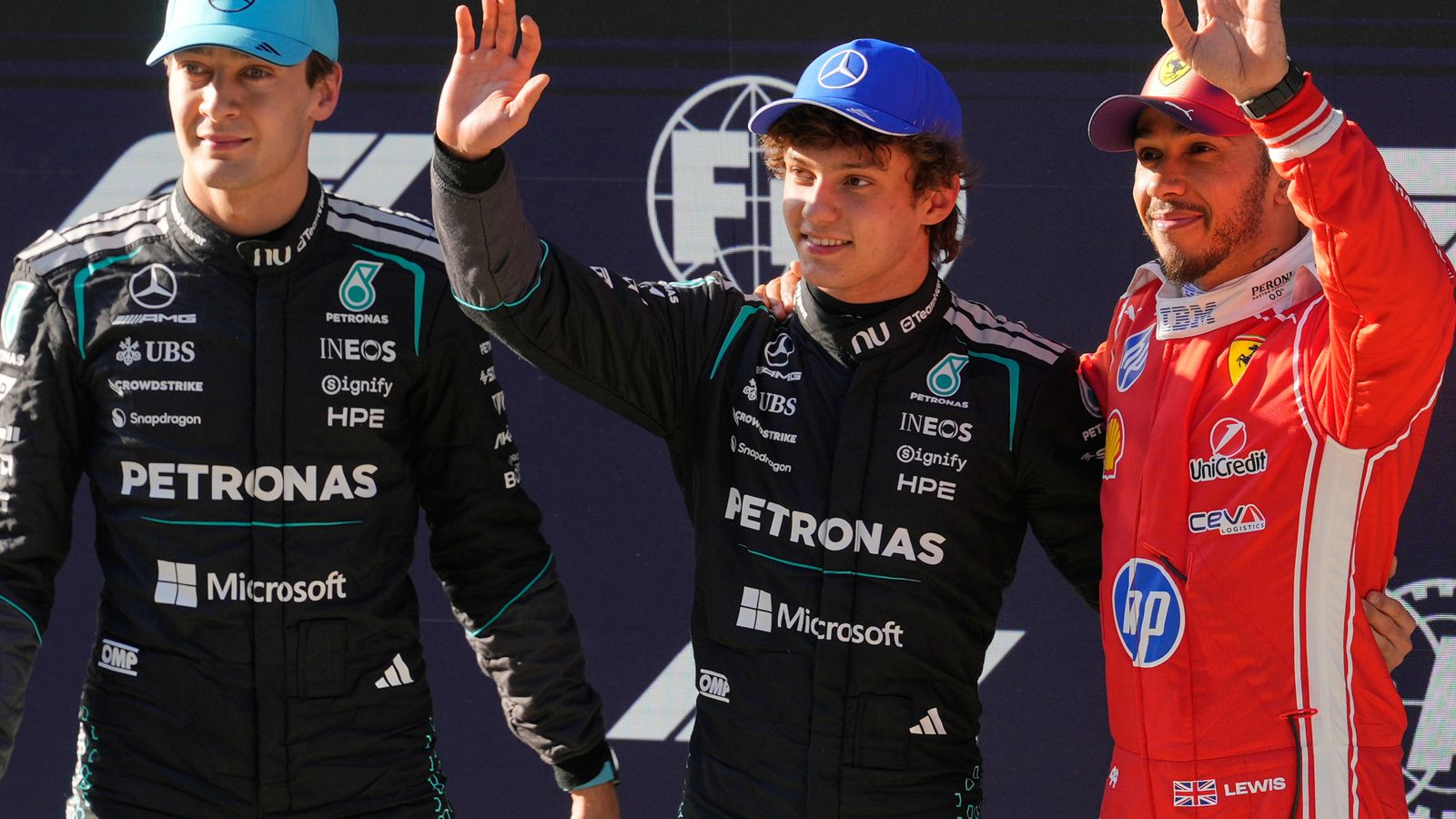
Kimi Antonelli is the clear front-runner in Formula 1’s 2026 title battle, but which drivers retain a realistic chance of catching him, and what will decide whether a comeback can be successful?
Mercedes driver Antonelli, who does not turn 20 until next week, exceeded all expectations to establish a 50-point lead at the top of the standings going into the summer break after the first 11 rounds.
The season resumes live on Sky Sports F1 this weekend with the Dutch Grand Prix, the first of 12 remaining scheduled races, and one of two remaining Sprint events.
Who could catch Antonelli?
Lewis Hamilton, Ferrari – 2nd, 50 points behind Antonelli
The seven-time world champion is Antonelli’s nearest challenger and is driving a Ferrari that has been the car most consistently capable of challenging Mercedes during the first half of the season.
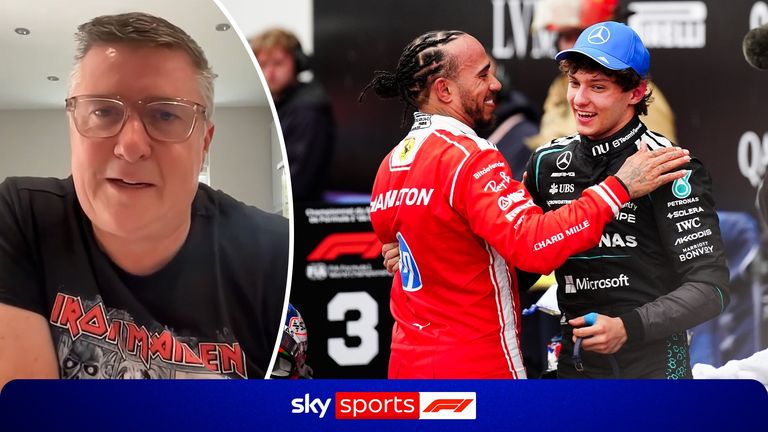
On the F1 Show podcast, David Croft questioned whether Ferrari’s Lewis Hamilton can challenge Antonelli for this season’s world championship
A scrappy run of performances before the break saw the momentum Hamilton had built earlier in the summer fizzle out, but the 41-year-old will no doubt return refreshed and fully intent on rediscovering his best form in Zandvoort.
A strong start in Zandvoort is important for all the drivers chasing Antonelli, but perhaps especially for Hamilton and his Ferrari team-mate Charles Leclerc, who may well need to gain a significant upper hand within the team to have the support required to mount a sustained challenge.
George Russell, Mercedes – 3rd, 59 points behind Antonelli
If there was a driver who needed the summer break, it was Russell.
Luck, and then form, deserted the Brit over the first half of the season, but he still has what was undoubtedly the fastest car on the grid across the first 11 races.
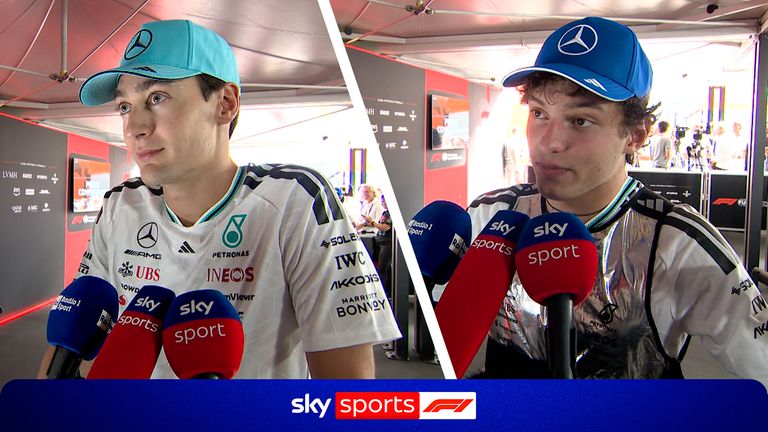
George Russell and Antonelli react to their respective seventh and third-place finishes at the Hungarian Grand Prix
If a refreshed Russell, who had something to smile about over the summer break as he got engaged, can somehow rediscover his best form, he still has plenty of time to re-establish himself as a factor in the title battle.
Charles Leclerc, Ferrari – 4th, 81 points behind Antonelli
After a tough run of races, Leclerc appeared to finally get to grips with the SF-26 over the final month before the break.
The Monegasque won at Silverstone and outscored Hamilton at the last three races.
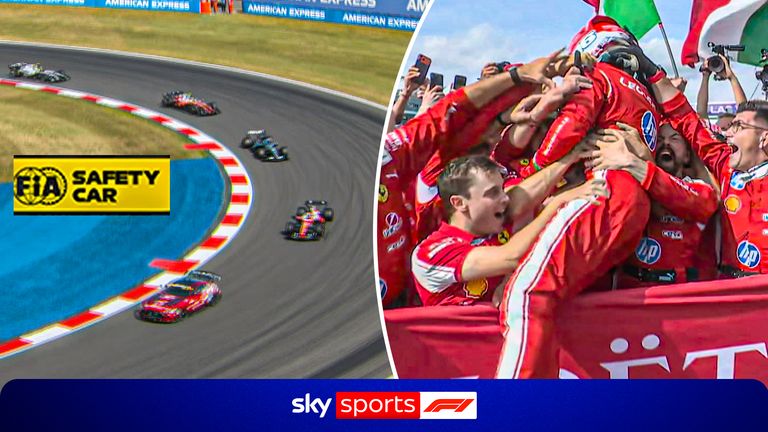
Charles Leclerc won the British Grand Prix after the Safety Car was redeployed at the last moment for the final lap
However, his spring struggles have left next to no margin for error during the run-in, with the challenge of hauling in Hamilton a first hurdle for him to worry about before catching Antonelli.
Lando Norris, McLaren – 5th, 91 points behind Antonelli
The reigning world champion was very much out of this conversation until he produced an absolutely dominant victory at the Hungarian Grand Prix in the final race before the break.
The significant upgrade package McLaren brought to Hungary appeared to work very well, and Norris may well have won by half a minute if it were not for the fact he spent half the race stuck behind his team-mate Oscar Piastri after being overtaken on the first lap.
If McLaren’s car works as well in Zandvoort as it did in Budapest, Norris cannot be discounted.
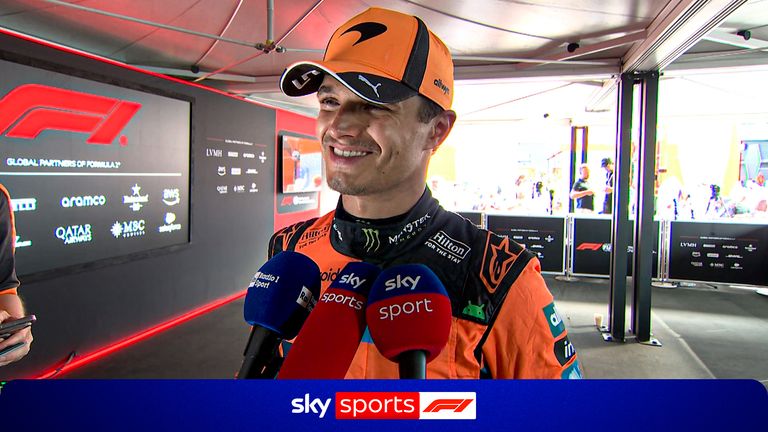
Lando Norris reacts to his first win of 2026 saying he always believed he could win and calling it one of his best personal performances
Which factors will be decisive?
Upgrades – With this being the first season of a new regulations cycle, there remains the possibility of major swings in performance as the teams continue to bring upgrades.
Although there are minor changes to the regulations for 2027, the teams can be expected to keep pushing hard in terms of development, as most of what they bring to their cars now is likely to provide useful knowledge – and potentially performance – next season.
After seeing McLaren leap forward in Hungary, Ferrari boss Fred Vasseur pointed out that his team’s approach has been to bring regular upgrades rather than big packages like the one the Woking squad had in Hungary.
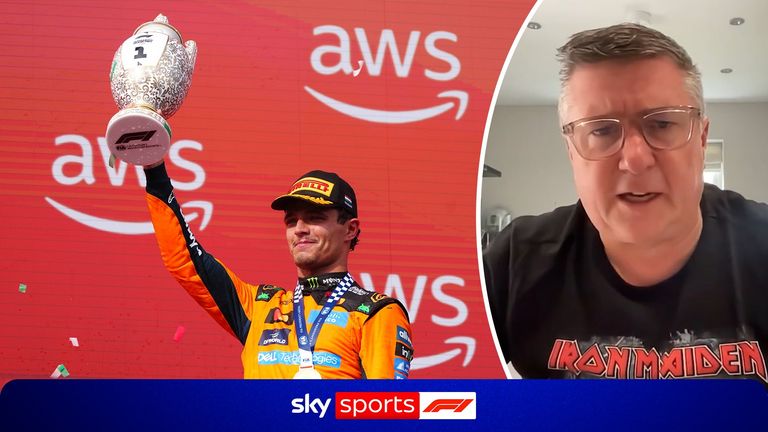
After Norris’ victory last time out in Hungary, David Croft debates whether McLaren are now capable of winning further races or not
Although some of the summer break represents a shutdown where work is not allowed to be done, major upgrades are expected to arrive up and down the pit lane in Zandvoort and for the Italian Grand Prix a week later.
There is also the matter of engine upgrades. The FIA’s Additional Development Upgrade Opportunities (ADUO) system has already allowed Ferrari to bring an update to their power unit.
Another one could bring them closer to the performance of the field-leading Mercedes power unit, which it remains unclear whether they have been able to upgrade after it was initially, highly controversially, adjudged to be less strong than Red Bull’s.
Reliability – While the Mercedes power unit has been the strongest, it has also had far more major issues than Ferrari’s.
Both Mercedes and McLaren, who use their rival’s power unit as a customer, have suffered multiple costly failures.
Despite having less grunt, Ferrari’s power unit has proved highly reliable, which has been a key factor in keeping both the team and its drivers in the hunt for this year’s titles.
Antonelli, who has suffered this season at the hands of a wheel-guard failure as well as an engine blowout, will be left vulnerable if he suffers any more DNFs.
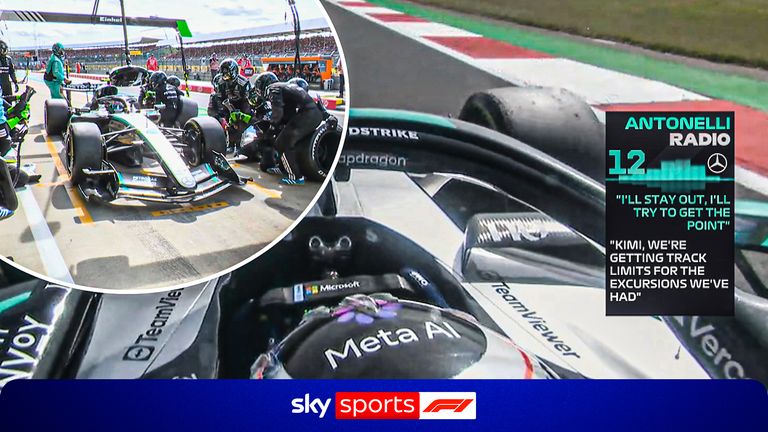
Antonelli suffered damage during the British Grand Prix
Penalties – The cost of poor reliability is not necessarily limited to the weekend it occurs on, with an irreparable power unit potentially leading to penalties later on in the season.
Each driver has a limit of four power units for the season, and both Antonelli and Russell are expected to need to exceed their allowance after losing an engine to reliability earlier in the season.
Top teams usually opt to take the penalty at a circuit where overtaking is relatively easy, allowing them to use the fresh power unit to surge back through the field and minimise the potential damage.
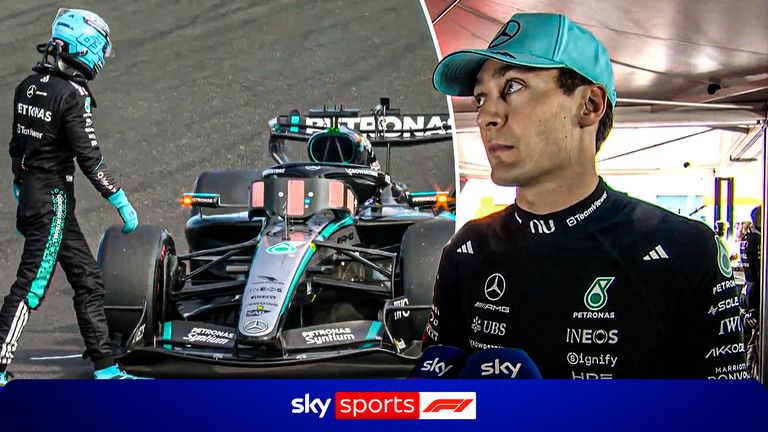
Russell reacts to stopping on track during qualifying at the Hungarian Grand Prix due to a water leak
Driving (styles) – The radical change from last year’s cars to this year’s has required significant adjustment from the drivers.
Russell and Leclerc comfortably outperformed their team-mates last year but have been on the receiving end this season, while Piastri has recently appeared unable to match Norris.
While Leclerc seemed to make some positive adjustments, Russell was still trying to find a method that works in Hungary, and only finding a style that works for the Brit is going to give him a chance.
As for Antonelli, Hamilton and Norris, they all seem to be enjoying the way the nimbler 2026 cars handle.
It could be fascinating to watch three generations of drivers battle at the top of their games over the remaining races.
Highlights from the 2026 Hungarian Grand Prix
Experience – While it will not help in terms of pure speed, experience could be a crucial factor coming down the stretch.
Four-time world champion Max Verstappen was able to apply huge pressure to Norris and Piastri, who were both seeking a maiden title, at the end of last year.
As Antonelli potentially gets closer to the finish line, the pressure on the Italian will ramp up.
It also remains to be seen whether Hamilton, whose last title came in 2020, could feel a similarly extreme level of pressure as he seeks a record eighth championship.
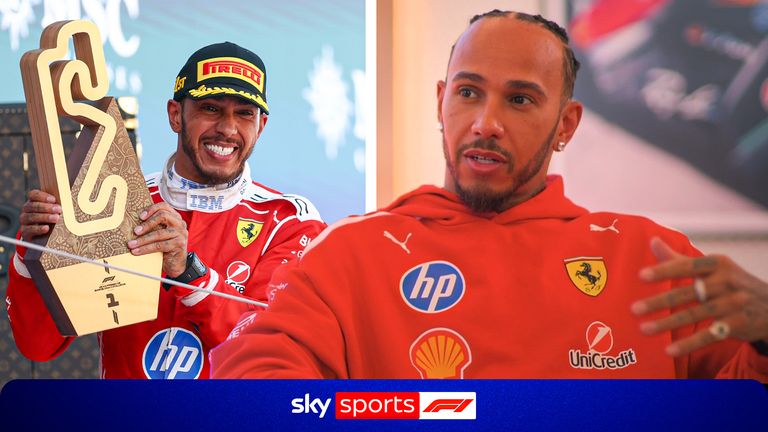
Hamilton explains why Ferrari are performing better this year compared to 2025
One would expect Hamilton to be comfortable in the heat of a title battle, while Norris also holds an edge over Russell and Leclerc having come through the fire 12 months ago.
While Antonelli does not have the experience himself, his team certainly does. His race engineer Peter ‘Bono’ Bonnington was in Hamilton’s ear for six of the Brit’s seven championships, and has already played a crucial role in guiding his young driver throughout the season so far.
Calendar – This element is very much out of the hands of the teams and drivers.
Ongoing conflict in the Middle East means doubt remains over whether the final two rounds of the season can go ahead as scheduled in Qatar and Abu Dhabi.
The Bahrain Grand Prix, which was unable to take place in April, is going to be held in Malaysia in October, while the Saudi Arabian Grand Prix has been lost completely.
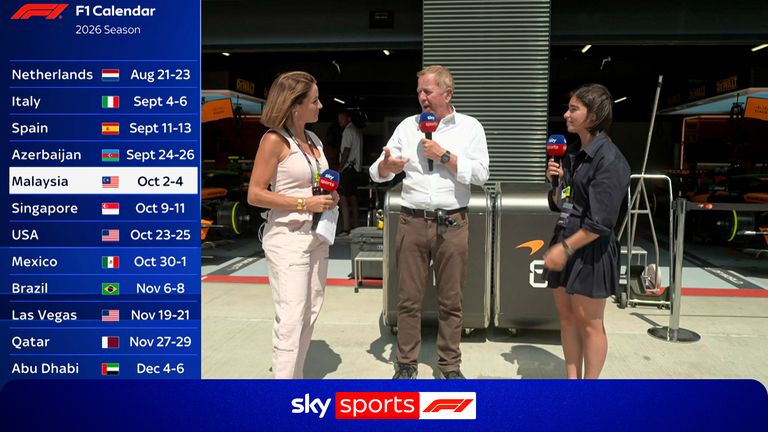
Formula 1 has added Malaysia to its 2026 schedule to host the Bahrain Grand Prix that was postponed earlier in the season
F1 president Stefano Domenicali says contingency plans are in place for the last two races to be held at alternative venues in Europe, with a deadline for a decision coming around the middle of September.
However, gossip in the paddock potentially points towards only one of the two season-ending races being replaced, with Italy’s Imola circuit expected to step in.
All will be revealed on the front over the next month, but one less race would, at this stage, provide a major boost for Antonelli out front, and a blow to those chasing him.
The Formula 1 season resumes after the summer break with a Sprint weekend at the Dutch Grand Prix from Friday, with every session live on Sky Sports. Stream Sky Sports with NOW – no contract, cancel anytime
>
Sports
Amy Hunt: British sprint star enters stardom with quadruple gold at European Athletics Championships
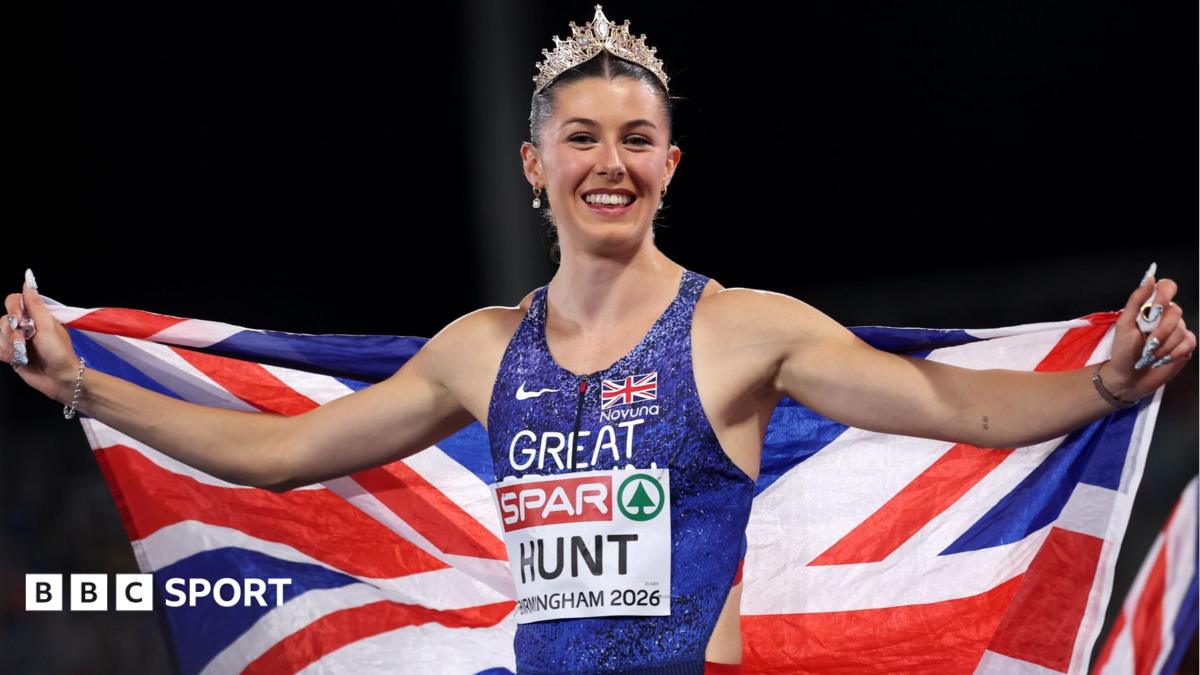
Hunt is not afraid to voice her bold ambitions.
Announcing that she “wants it all” before these championships, Hunt, even in these early stages of her senior career, has demonstrated a propensity to thrive on major stages, and under ever-increasing expectation.
“Four golds was the dream and perhaps dreams do come true,” said Hunt.
“It’s so beyond the bounds of my dreams that I’m just euphoric. I can’t believe it’s happening.
“I think it will sink in later, maybe on the podium. I’m just so proud of myself and the way I’ve handled this week.”
The Briton has already spoken about the big goal: repeating her sweep of the sprint golds at the Los Angeles Olympics in 2028.
Her playlist – she creates one for every major event – is already being built as she begins to visualise how that might feel.
She will be well aware how much work there is to do. So far this year, she ranks 14th-fastest worldwide in the 200m, and 25th in the 100m. Asher-Smith’s British records, at 21.88 and 10.83 seconds respectively, remain untouched since 2019.
The next opportunity for global honours, beyond the inaugural World Ultimate Championships in September, will arrive at next year’s World Championships in Beijing.
And, once the dust has settled on a momentous week, Hunt will set about translating continental domination to glory on the sport’s biggest stages – just as British team-mate Asher-Smith achieved following her European treble in 2018.
“Amy has already won world silver, but she was not a favourite then,” Jackson said.
“Now, it’s a big change. She is a champion and she has to go and take on the best in the world.
“Is it going to be easy? No. But this will fill Amy with confidence. She will be on start lines trusting her ability is great, and I’m hoping that she will go from strength and strength.”
>

Funniest and most memorable moments from the Hundred!

F1 title race: Assessing rivals to Kimi Antonelli and factors that will decide 2026 fight ahead of Dutch GP season resumption | F1 News

Kenneth Branagh On Making The Move From Shakespeare To Action-Comedy In ‘Mayday’
-

 movies3 months ago
Search For Canadian TV Actor Stewart McLean Now Homicide Investigation
-

 Fashion9 years ago
These ’90s fashion trends are making a comeback in 2017
-
Fashion9 years ago
According to Dior Couture, this taboo fashion accessory is back
-
Fashion9 years ago
Model Jocelyn Chew’s Instagram is the best vacation you’ve ever had
-
Fashion9 years ago
Emily Ratajkowski channels back-to-school style
-
Fashion9 years ago
9 Celebrities who have spoken out about being photoshopped
-
Fashion9 years ago
Your comprehensive guide to this fall’s biggest trends
-
Fashion9 years ago
A photo diary of the nightlife scene from LA To Ibiza