
Tech
AME Agent Swarms Quietly Rewrite the Workflow

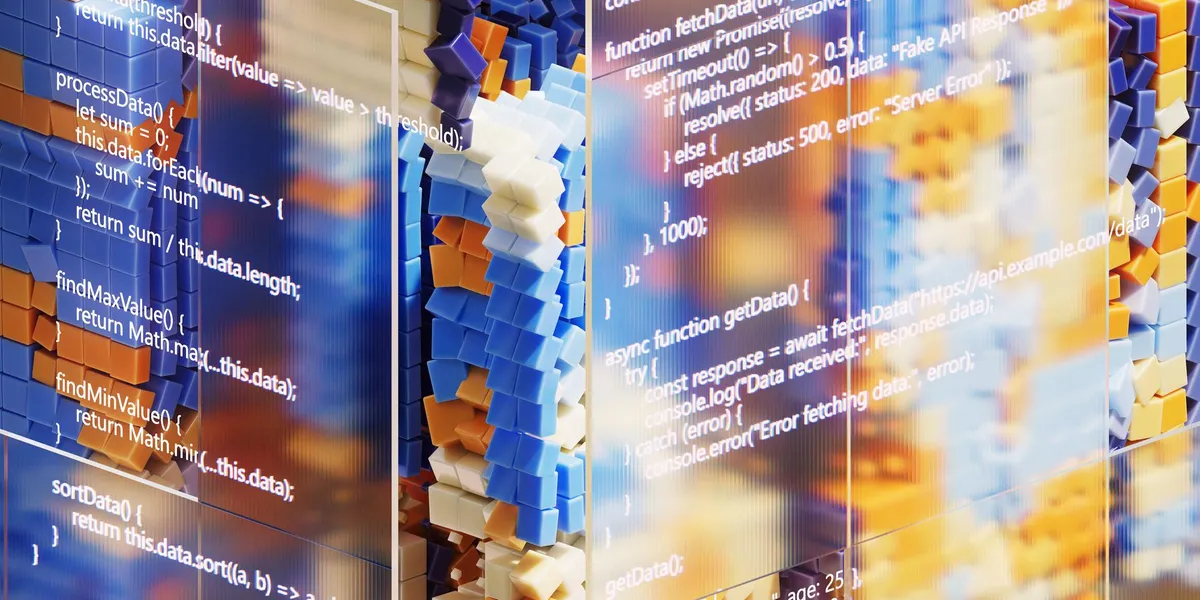
The impact of AI on software development has been both profound and ever-evolving. Last year, I wrote about AMD’s plans to use AI not just for generating new lines of code, but also for other steps in the software development lifecycle (SDLC), such as triaging problems, debugging code, and testing the software. At the time, we were hoping for a 25 percent productivity boost from AI use over the course of two or three years.
But with each new release, the capabilities of Large Language Models (LLMs) improve dramatically—accelerating software development, increasing the quality of AI-generated code, and fundamentally reshaping how software is engineered. Now, just one year later, we have surpassed our productivity target, achieving a 30 percent overall productivity boost through AI. On top of that, we are rethinking not only how we use AI within the SDLC, but the structure of the SDLC itself.
We believe that the biggest AI revolution in software engineering is still ahead. So far, we have largely been teaching AI how we perform tasks and asking it to mimic existing workflows. In many ways, this constrains AI to human patterns of thinking. The next transformation will come from collaborative swarms of AI agents capable of discovering solutions independently.
Agents of today
AMD began developing AI systems for code generation, testing automation, bug analysis, and code review in 2024. At the time, our objective was to achieve 25 percent AI-generated production code by 2027 while gradually automating larger portions of the SDLC.
Measuring productivity is inherently challenging, but from the outset we have consistently tracked one objective metric: the percentage of source code generated by AI. Importantly, we count only code that passes all reviews and testing and is ultimately included in the final product. While AI-generated code is certainly not the only contributor to productivity gains, it is one of the few metrics that can be measured objectively and consistently.
By this metric, we have crossed the 20 percent mark at the beginning of this year and are now progressing toward 50 percent across entire codebase. In some software components, more than 80 percent of the code is now generated using AI.
Agentic AI has enabled us to include AI in every step of the lifecycle: For code analysis and triage, agents are trained to analyze problem reports, identify and group similar requests, and highlight which code snippets are likely to need modification. For debugging and code generation, agents are directed to analyze a bug request and implement required code changes. For testing, the agents generate unit tests, and if those are passed, identify necessary integration and product-level tests. And finally, for the approval and release stage, agents prepare architecture summary, code change review and full test results for engineers’ review and approval and if approved, integrate the changes into the next release.
Agents of tomorrow
Today, engineers create AI agents in their own image: they teach AI what they know about the system, how they would fix an issue, and how they would implement a change. This is already a major technological advancement. Engineers can create multiple “AI versions” of themselves, allowing these agents to work in parallel, scaling their expertise far beyond the limits of individual productivity. The limitation, however, is that these AI agents are still constrained by human thinking and human-defined approaches.
 AMD
AMD
We believe the next major transformation in software engineering will occur when collaborative AI agent swarms can independently identify and develop solutions, guided by humans on what to solve rather than constrained by human assumptions about how the job should be done. Instead of providing detailed instructions on how to solve a problem, engineers will define the issue, the desired outcome and the quality, performance, and system constraints allowing AI agents to determine the optimal path to a solution.
A swarm of AI agents will then work in parallel to generate, evaluate, and refine multiple solution approaches. These agents will automatically validate correctness, measure performance, test trade-offs, and compare alternative implementations against defined success criteria. Finally, AI agents will prepare ranked solution options, along with validation results and performance metrics, for engineer review and approval. The agents won’t be enhancing each step of the SDLC—they will be rewriting the SLDC themselves.
To get to this point, we need to change how agents are trained. Today, improvement occurs one engineer and one agent at a time: an engineer reviews the output, refines the prompt, and repeats the process. To scale beyond this model, agents must continuously learn from one another, reuse successful strategies, and improve collaboratively across projects and teams.
We are already moving in this direction by using multi-agent workflows extensively through agentic harnesses, such as Codex and Claude Code, while simultaneously developing our own internal multi-agent systems to support the next generation of AI-driven software engineering.
A good example is our AI-driven effort to resolve issues in our Radeon Software eXperience (RSX). RSX is a user interface component that allows users to configure and monitor graphics driver behavior. In October 2025, we began using AI agents to automatically debug and fix reported RSX issues. Out-of-the-box AI tools delivered limited results, resolving only 6% of issues.
 The percentage of software issues fixed automatically by AI agents in AMD’s Radeon Software eXperience (RSX) has been growing steadily, reaching 75 percent in June 2026.
As we analyzed failures and identified ways to improve, we built a learning loop—initially a largely manual process—to understand where the agents were falling short and how to improve them. Rather than retraining the underlying models, we refined the objectives given to the agents, allowing them to iteratively explore multiple approaches, evaluate the results against defined success criteria, and converge on better solutions. At the same time, advances in models and agent runtimes further increased effectiveness. Together, these improvements significantly increased our resolution rate from 6 percent to more than 75 percent of RSX issues resolved by agentic loop.
To make agents and agent swarms truly productive, we need a continuous learning loop that feeds errors and human interventions back into future agent workflows. The opportunity is to engineer this loop around clear, measurable goals. Each cycle captures new insights, making the entire AI engineering workflow smarter and more effective. Over time, this self-reinforcing loop—not just the underlying model—will become a key driver of AI progress.
The evolving role of human engineers
At AMD, we view AI as a means of increasing productivity, improving quality, and enabling employees to focus on higher-value work. Our goal is to empower our workforce with AI, not to reduce headcount.
To support this transformation, we are investing heavily in AI education and training across the company. The way we work is evolving rapidly, and we want every AMD employee to be prepared to leverage AI confidently, responsibly, and effectively.
As AI agents continue to improve, engineers will spend less time manually implementing solutions, focusing more on defining specifications, validating outcomes, and making the strategic decisions that drive innovation.
From Your Site Articles
Related Articles Around the Web
>
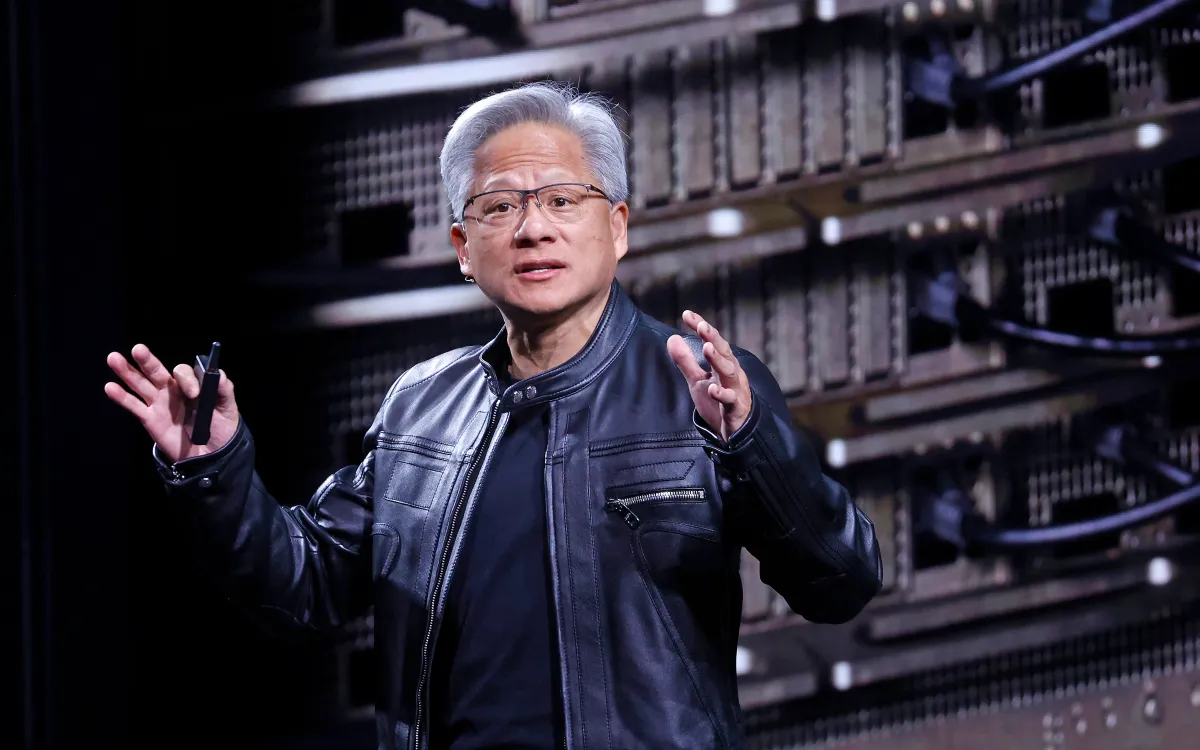
Nvidia said on Monday that it will invest $1.5 billion in SB Energy, a data center linked to SoftBank and OpenAI.
The investment ensures that Nvidia will be the sole supplier of compute infrastructure at OpenAI’s Ports-Pike data center near Cincinnati, Ohio. Nvidia will also provide up to $105 billion in credit to help build the facility, which could scale from an initial 4.25 gigawatts to 8 gigawatts in size, according to documents the company filed with the SEC.
SB Energy’s existing investors include SoftBank and OpenAI. SoftBank had previously held $5.8 billion worth of Nvidia stock, which it sold in November to help fund other AI investments.
The data center and power developer will build a 9.2 gigawatt natural gas power plant on the site, which is land owned by the U.S. Department of Energy. The site previously enriched uranium for the U.S. nuclear arsenal and for U.S. Navy submarines.
The power plant is expected to cost $33 billion. The steep sum reflects the skyrocketing costs of building natural gas power plants, which have risen 66% in the last two years, according to BloombergNEF.
By the time SB Energy’s power plant and others are completed, they’ll be competing for natural gas with export markets, a confluence that could triple natural gas prices in some parts of the country.
>

African defense tech company Terra Industries on Monday announced an additional $18 million in funding, bringing its seed round to $52 million. Investors in the round include Joe Lonsdale’s 8VC, Silent Ventures, and Nova Global.
Since its launch back in 2024, Terra has become one of the hottest names in the African defense tech space, with plans to build autonomous systems and other infrastructure like drones and mine-detecting combat vehicles. The company says it’s on track to book $100 million in contracts — including at least one federal contract — and generate revenue in the tens of millions of dollars by the year’s end.
Earlier this year, Terra announced back-to-back funding rounds of $11.75 million and $22 million, respectively. 8VC is also a backer of U.S. defense heavyweight Anduril, which is said to be in talks to raise funding at a $100 billion valuation, as well as Shield AI.
Terra said its competition right now is any defense company that has won government contracts, especially suppliers from Turkey, China, and the West.
As TechCrunch previously reported, although terrorism remains one of Africa’s biggest threats, many of the countries in the continent depend on the West, Russia or China for security intelligence. Countries in this region often work with numerous international contractors, meaning their defense supply chains are fragmented and therefore easily destabilized.
Terra says it wants to solve that by becoming the biggest player in the ecosystem for equipping countries with military and critical defense infrastructure.
The startup will use the fresh capital to expand manufacturing across the Global South, open a London office, hire more, and accelerate product deployment. It also hopes to open an office in San Francisco and build a presence in Washington, D.C. to better access capital and U.S. partnerships.
>

WordPress.com maker Automattic is expanding into education with a new, free product designed for teachers and their classes called WordPress.com Education. The suite for classrooms includes a full WordPress.com domain for each student, plus free domain names (on the .blog or .art domains) and plug-in support.
Teachers can provide students with access to the program for free for the first year, without having to put a credit card down or enter a trial.
This allows teachers to use the technology in courses that teach students how to build websites, or for other classroom needs such as group projects that incorporate website-building.
Unveiling the product at its annual WordCamp US conference on Monday, the company noted that the new Student plan isn’t a stripped-down version of its product. It includes 6 GB of storage, backups, staging sites, and other tools, as well as support for plugins, SFTP/SSH, phpMyAdmin, and Studio Sync.

Automattic’s best known for its website and blog hosting service, WordPress.com, which runs the open-source WordPress software that powers about 43% of all sites on the Internet. Despite its ubiquity, though, WordPress is not necessarily the go-to platform of choice these days for young people establishing their web presence for the first time. Instead, those users often opt to simply set up social media profiles.
More importantly for Automattic, the student plan will let WordPress be integrated into the classroom to train the next generation of website professionals. And, because it’s free, it can make inroads in underfunded schools as well.
When the first year of use has ended, students can choose to subscribe to the service for $2 per month ($24/year). If they don’t, their work won’t disappear; their site will just drop down to a free WordPress.com site on a free domain. All their web pages, posts, comments, and uploaded media will stay intact.
The company says it piloted the program with 5,000 students across 27 countries, and the majority of educators (88.9%) said access to the program improved their students’ employability. A further 81.5% apparently said the program improved students’ entrepreneurial capacity.
When you purchase through links in our articles, we may earn a small commission. This doesn’t affect our editorial independence.
>

Episode 8 – Mushoku Tensei: Jobless Reincarnation III

Best debut in MLB history? Plus: RIP, Tommy John

HarperCollins to Launch Kazé Manga Imprint for U.S. Market – News
-

 movies3 months ago
Search For Canadian TV Actor Stewart McLean Now Homicide Investigation
-

 Fashion9 years ago
These ’90s fashion trends are making a comeback in 2017
-
Fashion9 years ago
According to Dior Couture, this taboo fashion accessory is back
-
Fashion9 years ago
Model Jocelyn Chew’s Instagram is the best vacation you’ve ever had
-
Fashion9 years ago
Emily Ratajkowski channels back-to-school style
-
Fashion9 years ago
9 Celebrities who have spoken out about being photoshopped
-
Fashion9 years ago
Your comprehensive guide to this fall’s biggest trends
-
Fashion9 years ago
A photo diary of the nightlife scene from LA To Ibiza