
Tech
OnePlus 16 Details Leak: 9,000mAh Battery Could Be Its Biggest Upgrade


Leaks suggest the OnePlus 16 is getting a major battery upgrade, with capacity reportedly jumping to around 9,000mAh.
A battery that size would be roughly 23% larger than the OnePlus 15’s 7,300mAh pack. The rumored phone is also expected to feature a 200MP main camera, a 185Hz BOE display, Qualcomm’s Snapdragon 8 Elite Gen 6 Pro chip, and LPDDR6 RAM. Most details remain unconfirmed, and reports suggest the flagship may initially stay in China.
OnePlus 16 could pack a much larger battery
Notebookcheck reported that the OnePlus 16 is expected to feature a battery of around 9,000mAh, alongside Qualcomm’s Snapdragon 8 Elite Gen 6 Pro processor and LPDDR6 RAM.
That would be a big jump from the OnePlus 15’s 7,300mAh battery. Gadgets 360 noted that the current model supports 120W wired and 50W wireless charging.
The reports do not give charging speeds for the OnePlus 16, so the larger battery tells us little about how quickly it will recharge. Actual battery life will also depend on the display, processor, and software tuning.
A 200MP camera and 185Hz display are also tipped
Notebookcheck also listed a 200MP main camera among the OnePlus 16’s expected specifications, up from the 50MP main camera used on the OnePlus 15.
The report does not support earlier claims of a 200MP telephoto camera, so the sensor’s exact role should not be treated as confirmed until OnePlus provides official details.
OnePlus has provided more support for the 185Hz display claim. Notebookcheck reported that OnePlus China president Li Jie confirmed the refresh rate, while tipster Digital Chat Station said OnePlus and BOE jointly developed a new X4 light-emitting material for the panel.
According to Android Headlines, the X4 material is claimed to use less power, last longer, and outperform Samsung’s M-series display material in internal testing. No independent testing has confirmed those claims yet.
Gadgets 360 also said that the display could have slimmer bezels on all four sides while retaining a flat design.
The OnePlus 16 may stay in China
Notebookcheck said that the OnePlus 16 has received SRRC certification in China under model number PYB110, another sign that the phone may be getting closer to launch. Pricing is expected to start at around $815 for a 12GB RAM and 256GB storage configuration.
Whether it will launch outside China is another question. Notebookcheck and Android Headlines both suggested the flagship could remain focused on the Chinese market.
OnePlus has yet to confirm most of these specs. If the leaks hold up, the OnePlus 16 would push battery capacity, display speed, and camera resolution well beyond its predecessor.
For more on what OnePlus already offers, check out our OnePlus 15 cheat sheet, which covers its features, OxygenOS, pricing, and more.
>
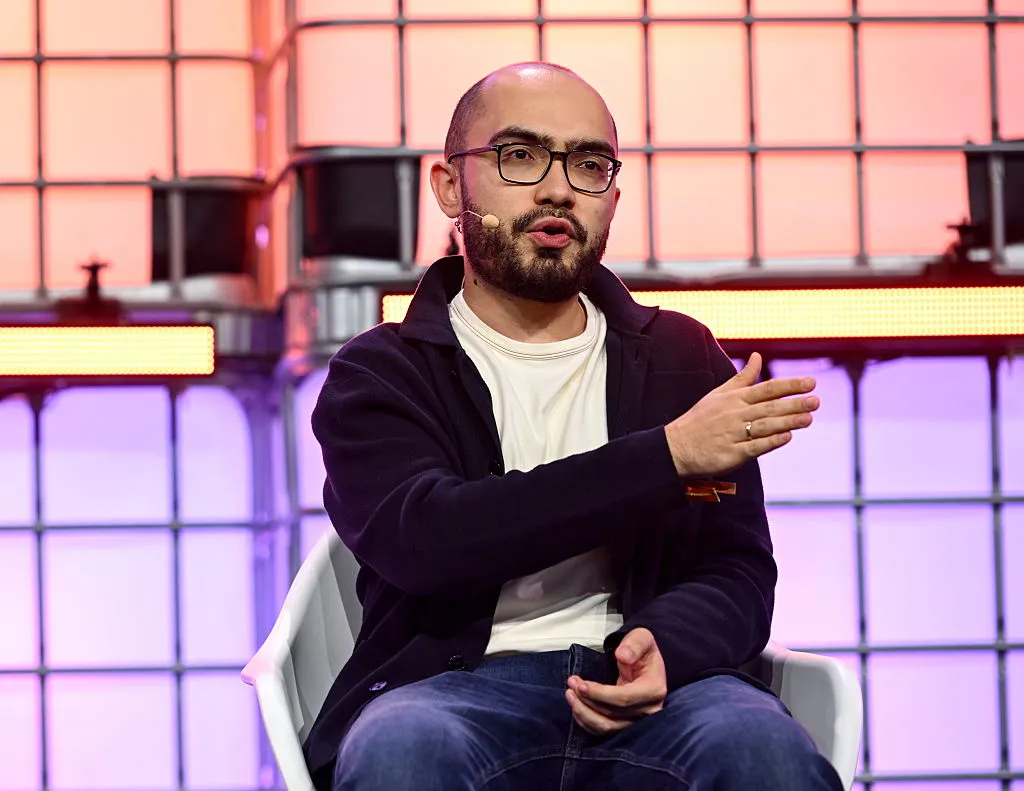
Higgsfield announced Monday that it has raised a $400 million Series B at a $5.4 billion valuation. This new round is just eight months after nabbing a $1.3 billion valuation.
Higgsfield, founded by former Snap exec Alex Mashrabov in 2023, lets users create AI images and videos. It made headlines this past year for premiering AI-generated movies at both Cannes and in New York. It has tools like the Cinema Studio to help filmmakers direct AI films and the Marketing Studio for marketing and advertising teams. In a release announcing the round, the company touted $700 million in annualized revenue and 30 million users across 200 countries.
One growing market for the company has been enterprises. It is now working with 390 of the Fortune 500, it said. Mashrabov told TechCrunch that Higgsfield expects “enterprise adoption of video AI to become much more deeply embedded in everyday marketing and creative workflows.”
The fresh capital will fund the usual business needs like hiring and product development. But it will also help pay for compute. “Video is one of the most compute-intensive domains in AI,” Mashrabov explained. Just one minute of video is like processing 60,000 words. Securing reliable compute capacity has therefore become a necessary expense to remain competitive with others in the industry like Synthesia and Runway.
DST Global led the latest round, with many other investors piling in including Goldman Sachs Alternatives, Valor Capital, and Tribe Capital.
>
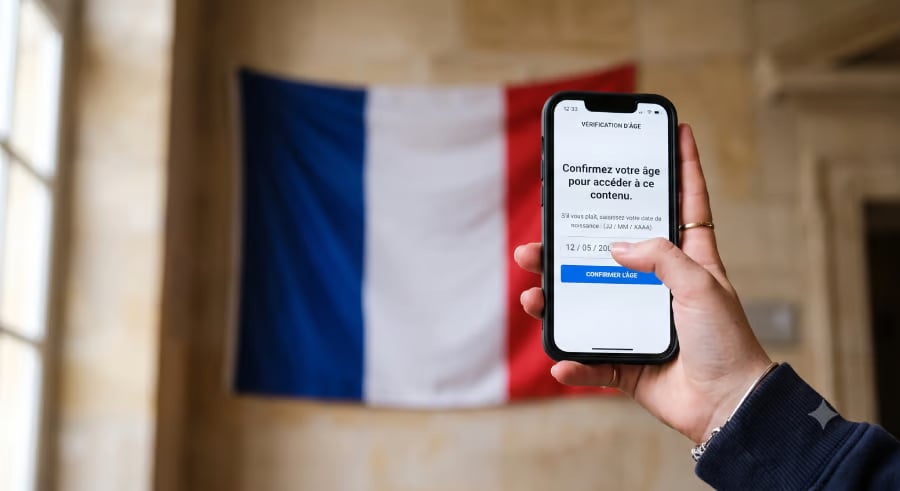
France’s plan to block children under 15 from social media has hit a constitutional roadblock.
The Constitutional Council on Friday blocked the measure, ruling that the restrictions placed an excessive burden on freedom of expression and communication while also raising concerns about how users’ ages would be verified.
The ruling does not end President Emmanuel Macron’s push for tougher social-media rules for children. Instead, it forces the government to rethink how an age ban could be enforced without creating disproportionate restrictions or new privacy risks.
France’s approved bill gets a stop sign
At the center of France’s proposal was a simple rule: children under 15 would not be allowed to access social media.
The measure was due to begin on September 1, 2026. New accounts for under-15s would have been prohibited from that date, while existing accounts would have received a four-month transition period.
For Macron, the restriction was part of a broader effort to reduce what he sees as the harms associated with early social-media use. He has argued that children can be exposed to harmful material, online harassment and social pressure before they are emotionally and psychologically prepared for it, while also losing time that could otherwise go toward sleep, education, reading, sport, and offline relationships.
Why France’s Constitutional Council said no
Parliament may have approved France’s under-15 social media ban, with a Senate vote of 243–2 and National Assembly vote of 279–81, but that was not the final word.
Per Reuters, France’s Constitutional Council concluded that this measure imposed an excessive burden on freedom of expression and communication.
The Council also objected to the safeguards around age verification. A system that prevents under-15s from accessing a service must verify users’ ages, but could create privacy concerns. The ruling therefore challenged the way Parliament designed the restriction rather than the government’s stated goal of protecting children online.
What Australia’s experience means for France and others
Australia’s experience with its own youth social-media restrictions has already illustrated some of the technical challenges France could face when rewriting its proposal. Platforms can identify and remove accounts believed to belong to underage users, but age-assurance systems are not foolproof and can potentially be circumvented.
That suggests that France may face the same basic problem when it tries again.
Macron has already indicated that France will rewrite the proposal rather than abandon the policy, and has instructed the French Prime Minister to draft a replacement with the aim of implementing the ban in the early months of 2027.
France’s ruling could also matter beyond its borders as governments elsewhere consider similar age restrictions. The challenge is increasingly not just whether lawmakers can set a minimum age for social media, but whether they can enforce it without requiring intrusive identity checks, restricting lawful access or creating new privacy risks for every user.
Other News: A cyberattack on France’s tax authority exposed sensitive taxpayer data, with nearly 700,000 records reportedly stolen.
>
The government’s spyware playbook has had one big problem for the public: there has been no reliable count of how often it is used.
That is set to change as U.S. federal courts prepare to track spyware and hacking-based communications interceptions in a new category of the annual Wiretap Report.
The development matters because spyware can put investigators much closer to the source of a person’s communications than conventional network interception can. Yet while the judiciary has published detailed statistics on court-authorized wiretaps for decades, those reports have not separately shown how many specifically involved government spyware techniques.
The figures to come will still leave some questions unanswered. But they will give lawmakers, researchers and the public something they have largely lacked: a number that can be tracked from one year to the next.
What the agreement introduces
According to TechCrunch, the Administrative Office of the U.S. Courts will add a “spyware/hacking” category to the annual Wiretap Report. That will allow courts to separately count cases in which hacking techniques are authorized to intercept communications.
Spyware is a form of malware designed to secretly monitor or collect information from a device, and its capabilities can go far beyond simply reading messages.
Depending on the tool, it can give an attacker access to communications, files, location data, screenshots, and even a device’s camera or microphone. That makes spyware particularly powerful in the hands of threat actors.
The new report category, however, would not create a public record of individual spyware operations and will not necessarily capture every government use of hacking tools, such as a remote search for information already stored on a device. That leaves a significant portion of government hacking activity still outside the public view.
There are also timing and scope limits. The new category will start with 2028 data and will not disclose to the public how extensively government agencies have used spyware in previous years.
Privacy advocates welcome the change
Despite the apparent limitations, government surveillance and privacy advocates have lauded the effort.
In a statement to TechCrunch, Sen. Ron Wyden said he is “thankful that the federal courts agreed to collect and publish data about hacking.” Wyden also suggested that this is the starting point, citing the “Government Surveillance Transparency Act” he and others reintroduced earlier this year.
Eva Galperin, the director of cybersecurity at the Electronic Frontier Foundation, called the use of spyware surveillance a “problem,” while noting that the development will bring greater accountability on its use.
Brett Max Kaufman, senior counsel in the American Civil Liberties Union’s Center for Democracy, said it was a “long overdue” transparency step.
Why this development matters
The decision could give privacy advocates in other regions a stronger case for demanding similar transparency from their governments, particularly as spyware capabilities increasingly become advanced.
But transparency also has a security side: while these aggregate figures should not give hackers a playbook, the development would make government surveillance records — which are already highly targeted — even more valuable to threat actors.
For individuals, however, the more important consequence is what the data could eventually expose about the scale and reach of device surveillance — information that can be used to challenge excessive or unlawful monitoring and push for stronger safeguards.
The consequences of device surveillance can also extend beyond the person being targeted. Access to a compromised device may expose communications involving journalists’ sources, lawyers’ clients, colleagues, relatives and other contacts.
The value of the new reporting category is therefore less about revealing individual government operations and more about establishing a public baseline for how frequently one of the most intrusive forms of digital surveillance is being authorized.
Other News: The White House is pushing for greater scrutiny of AI model safety as the government weighs how advanced systems should be evaluated before deployment.
>

‘Mormon Wives,’ ‘Love Island’ Stars Sign With Select Management Group

Kevin Lamour, key FIFA official who criticised Infantino’s World Cup plans, leaves role

OnePlus 16 Details Leak: 9,000mAh Battery Could Be Its Biggest Upgrade
-

 movies3 months ago
Search For Canadian TV Actor Stewart McLean Now Homicide Investigation
-

 Fashion9 years ago
These ’90s fashion trends are making a comeback in 2017
-
Fashion9 years ago
According to Dior Couture, this taboo fashion accessory is back
-
Fashion9 years ago
Model Jocelyn Chew’s Instagram is the best vacation you’ve ever had
-
Fashion9 years ago
Emily Ratajkowski channels back-to-school style
-
Fashion9 years ago
9 Celebrities who have spoken out about being photoshopped
-
Fashion9 years ago
Your comprehensive guide to this fall’s biggest trends
-
Fashion9 years ago
A photo diary of the nightlife scene from LA To Ibiza