
Tech
6 Best Small Business Email Providers for 2026


Google Workspace is my choice for the best small business email provider because it combines custom-domain Gmail with cloud storage, collaboration tools, security controls, and straightforward administration. Microsoft 365 is a close alternative for Microsoft-based teams, while Zoho Mail offers the best value for businesses on a tighter budget.
A professional address such as name@yourbusiness.com reinforces your brand and separates business communications from personal email. Depending on the provider, it can also offer shared calendars, productivity applications, administrative controls, migration tools, and stronger email authentication and security features.
I evaluated six providers using 27 criteria covering email functionality, security, administration, pricing, integrations, usability, and small-business fit. My recommendations include options for solo business owners, growing teams, privacy-focused companies, and businesses that want email bundled with website hosting.
*Fastmail’s displayed price can vary by term; verify the checkout total before publication.
**Hostinger’s introductory price requires a 48-month term and renews at $1.59 per mailbox per month.
Why you can trust us
At TechRepublic, I evaluate dozens of business software tools each year, including email hosting platforms, productivity suites, and website hosting providers. For this guide, I reviewed multiple business email providers and hosting platforms, comparing pricing, storage, security, and scalability.
I also evaluated ease of setup and day-to-day usability, drawing on my hands-on experience testing tools such as Google Workspace, Microsoft 365, Zoho Mail, and hosted email providers to understand how they perform in real business environments.
Best business email providers at a glance
A business email is a professional email address used for work or business (aka non-personal) purposes. Business emails use custom domains rather than generic ones (e.g., yourname@yourbusiness.com instead of yourname@gmail.com), which makes you look more professional and credible. They also help promote your brand.
Below, I break down each provider in more detail, including pricing, key features, and where each one fits best depending on your business needs.
Google Workspace: Best overall for small businesses

Expert score: 4.53 out of 5
Why I chose Google Workspace
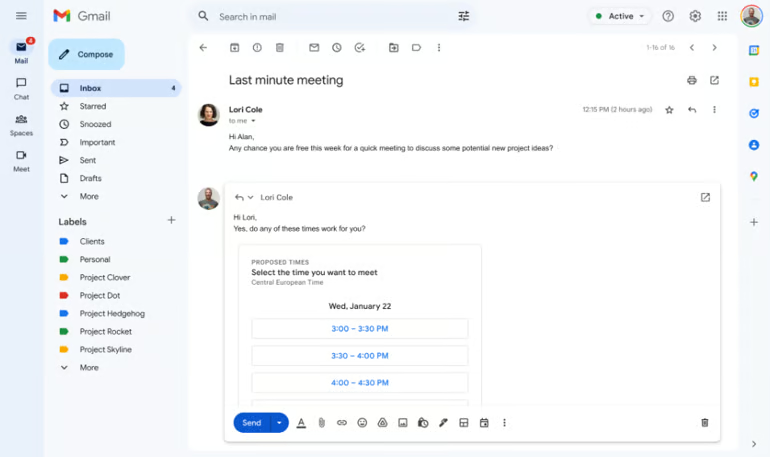
Google Workspace earned the highest score in my evaluation because it offers the best overall combination of usability, email functionality, collaboration, and small-business administration. In my experience, Gmail is one of the easiest business email platforms to introduce to a team because most users already understand its interface. Connecting a custom domain and completing the initial setup are also relatively approachable for a first-time administrator.
I find Google Workspace particularly valuable when email is only one part of the workflow. Gmail connects naturally with Drive, Docs, Sheets, Slides, Meet, and Calendar, allowing a small team to move from an email conversation to a shared document or video meeting without changing platforms. Business Starter also includes Gemini in Gmail, while higher tiers extend Gemini across more Workspace applications.
Google Workspace does not include a domain, and features such as Vault, eDiscovery, and enhanced endpoint management require Business Plus or Enterprise. Microsoft 365 also offers more advanced shared-mailbox and administrative capabilities. However, Google Workspace is easier to manage for most small teams and provides the strongest all-around experience.
Features
- Custom-domain business email through Gmail
- 30GB to 5TB of pooled storage per user
- Google Docs, Sheets, Slides, and Forms
- Google Meet and shared calendars
- Gemini assistance in Gmail
- Email aliases, groups, and administrative controls
- Spam, phishing, and malware protection
- Offline access and automatic synchronization
Google Workspace pricing
- Business Starter: $8.40 per user per month or $7 per user per month with a one-year commitment
- Includes custom-domain email, 30GB of pooled storage per user, core Workspace applications, Gemini in Gmail, and meetings for up to 100 participants
- Business Standard: $16.80 per user per month or $14 per user per month with a one-year commitment
- Includes 2TB of pooled storage per user, shared drives, appointment booking, mail merge, meeting recording, and Gemini in additional Workspace applications
- Business Plus: $26.40 per user per month or $22 per user per month with a one-year commitment
- Includes 5TB of pooled storage per user, Vault, eDiscovery, advanced endpoint management, and enhanced security controls
- Enterprise: Custom pricing
- Adds enterprise identity, security, compliance, data-region, and administrative capabilities
Pros and cons
| Pros | Cons |
|---|---|
|
|
Microsoft 365: Best for Microsoft-powered workplaces

Expert score: 4.51 out of 5
Why I chose Microsoft 365
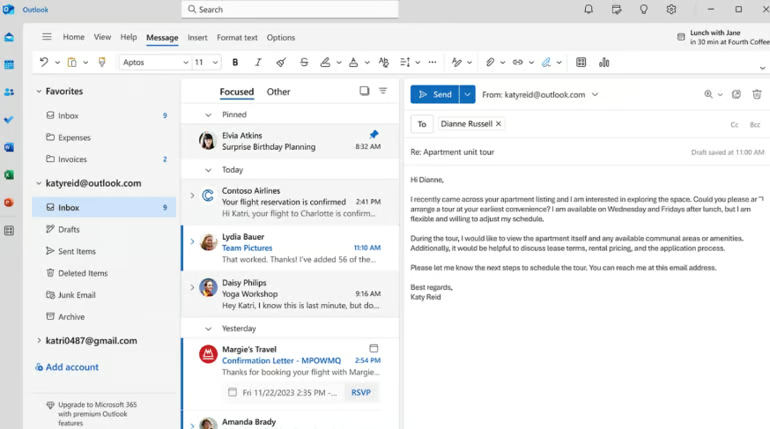
Microsoft 365 finished just behind Google Workspace in my evaluation, but it received stronger scores for mailbox functionality, administration, security, and scalability. It is my preferred option for businesses already working in Outlook, Word, Excel, Teams, and SharePoint because email, files, meetings, and collaborative workspaces operate within the same ecosystem.
I particularly value Microsoft 365’s support for shared mailboxes, distribution groups, calendar delegation, retention policies, and centralized user management. A 50GB shared mailbox generally does not require a separate license, although each person accessing it needs an eligible Exchange Online license. This can make addresses such as support@, sales@, and billing@ more practical for growing teams.
That said, Microsoft 365 requires more configuration than Google Workspace, and I find its administrative tools less approachable for first-time users. Desktop Office applications, advanced threat protection, device management, and some compliance capabilities also require higher-tier plans. However, its deeper controls make it a better long-term choice for businesses already committed to Microsoft applications.
Features
- Custom-domain business email through Outlook
- 50GB mailbox and 1TB of OneDrive storage per user
- Shared mailboxes, distribution groups, and email aliases
- Shared calendars and delegated mailbox access
- Web and mobile versions of Word, Excel, and PowerPoint
- Microsoft Teams, SharePoint, Planner, and Forms
- Spam, phishing, and malware filtering
- Messages and attachments totaling up to 150MB
Microsoft 365 pricing
- Microsoft 365 Business Basic: $7.20 per user per month or $6 per user per month with a one-year commitment
- Includes custom-domain email, a 50GB mailbox, 1TB of OneDrive storage, Teams, and web and mobile Office applications
- Microsoft 365 Business Standard: $15 per user per month or $12.50 per user per month with a one-year commitment
- Adds desktop versions of Outlook, Word, Excel, and PowerPoint, along with expanded collaboration and webinar tools
- Microsoft 365 Business Premium: $26.40 per user per month or $22 per user per month with a one-year commitment
- Adds advanced identity controls, device management, data protection, and enhanced cybersecurity features
Pros and cons
| Pros | Cons |
|---|---|
|
|
Zoho Mail: Best low-cost business email
Expert score: 4.47 out of 5
Why I chose Zoho Mail
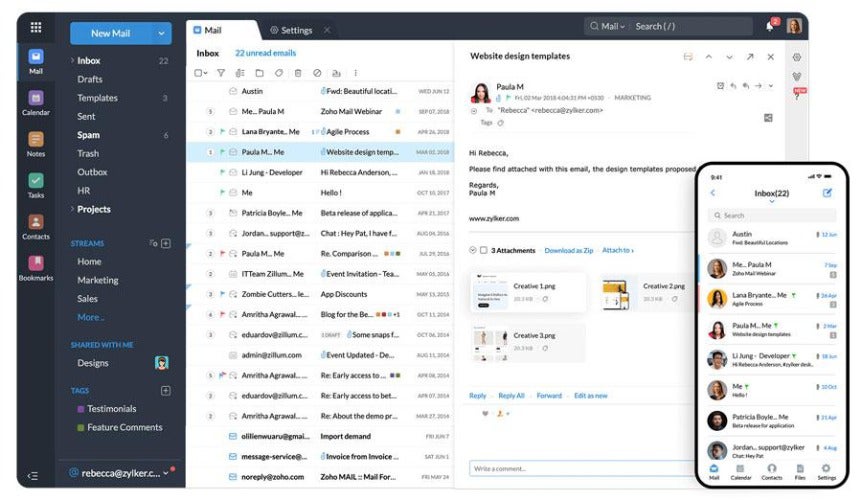
Zoho Mail delivered the strongest pricing and value results in my evaluation. Its paid email plans start at $1 per user per month, making it considerably less expensive than Google Workspace, Microsoft 365, and Proton Mail. A free custom-domain plan is also available for up to five users in eligible regions.
What impressed me most is that Zoho does not sacrifice essential business controls to reach its lower price. The platform supports custom domains, aliases, groups, shared calendars, multifactor authentication, migration tools, and SPF, DKIM, and DMARC configuration. Its security dashboard can also help administrators identify incomplete domain-authentication settings and suspicious sign-ins.
I find Zoho Mail most compelling for small teams already using applications such as Zoho CRM, Books, Projects, or Writer. Its interface is not as immediately familiar as Gmail or Outlook, and the free plan excludes IMAP, POP, and ActiveSync. Even with those limitations, Zoho Mail offers exceptional value for businesses that need professional email without a complete Google or Microsoft subscription.
Features
- Custom-domain business email
- Email and domain aliases
- Shared calendars, tasks, notes, and bookmarks
- SPF, DKIM, and DMARC configuration
- Spam, phishing, and malware protection
- Email migration and administrative tools
- Integration with Zoho business applications
- Mobile applications for iOS and Android
Zoho Mail pricing
- Free: $0 for up to five users in eligible regions
- Includes custom-domain email, 5GB of storage per user, and web and mobile access
- Does not include IMAP, POP, or ActiveSync
- Mail Lite with 5GB: $1 per user per month, billed annually
- Adds IMAP and POP access, aliases, shared calendars, offline access, and larger attachments
- Mail Lite with 10GB: $1.25 per user per month, billed annually
- Includes the same Mail Lite features with additional mailbox storage
- Workplace Standard: $3 per user per month, billed annually
- Includes 30GB of email storage per user, team file storage, Zoho Writer, Sheet, Show, WorkDrive, Cliq, Meeting, Vault, and Zia
- Mail Premium: $4 per user per month, billed annually
- Includes 50GB of mailbox storage plus 50GB of retention storage, email archiving, eDiscovery, backup and restoration, S/MIME, and attachments up to 1GB
- Workplace Professional: $6 per user per month, billed annually
- Includes 100GB of email storage plus 100GB of retention storage per user, expanded WorkDrive storage, advanced security and compliance tools, and the complete Workplace collaboration suite
- Workplace Enterprise: Contact Zoho for custom pricing
- Adds custom limits, endpoint controls, directory synchronization, and other enterprise administration options
Zoho also allows organizations to mix Mail-only and Workplace subscriptions, which can help control costs when not every employee needs the complete productivity suite.
Pros and cons
| Pros | Cons |
|---|---|
|
|
Fastmail: Best standalone business email service
Expert score: 4.26 out of 5

Why I chose Fastmail
Fastmail is my preferred option for businesses that want a dedicated email service without paying for a complete productivity suite. Instead of competing with Google Workspace or Microsoft 365 on documents and video meetings, Fastmail concentrates on email, calendars, contacts, custom domains, and a clean user experience.
I particularly like how Fastmail handles business addresses. Teams can create shared addresses such as support@yourbusiness.com, share calendars and company contacts, and manage multiple addresses from one account. It also supports IMAP, so users can continue working through Outlook, Apple Mail, Thunderbird, or another compatible email client.
Fastmail performed especially well in my evaluation for usability, migration, billing flexibility, and mailbox management. Businesses can mix plan levels among employees, upgrade or downgrade users, and receive prorated credits when their needs change. However, it lacks a document suite, built-in video conferencing, and the extensive administrative controls available from Google or Microsoft. Email retention is also limited to the Professional plan.
Features
- Custom-domain business email
- Shared email addresses and aliases
- Shared calendars and company contacts
- 5GB to 100GB of email storage per user
- Scheduled Send, Snooze, and offline access
- IMAP support for third-party email clients
- Built-in migration and export tools
- Ad-free inbox with no email tracking
Fastmail pricing
- Basic: $3 per user per month, billed annually
- Includes 5GB of mail, calendar, and contact storage plus 1GB of file storage
- Standard: $5 per user per month, billed annually
- Includes 50GB of mail, calendar, and contact storage, 10GB of file storage, custom domains, shared addresses, and third-party email-client support
- Professional: $9 per user per month, billed annually
- Includes 100GB of mail, calendar, and contact storage, 50GB of file storage, and a tamper-resistant email-retention archive
Businesses can mix plans among users, but at least one user must have a Standard or Professional subscription to share a custom domain with the account. Fastmail provides a free trial of up to 30 days.
Pros and cons
| Pros | Cons |
|---|---|
|
|
Proton Mail: Best for privacy-focused businesses
Expert score: 4.06 out of 5

Why I chose Proton Mail
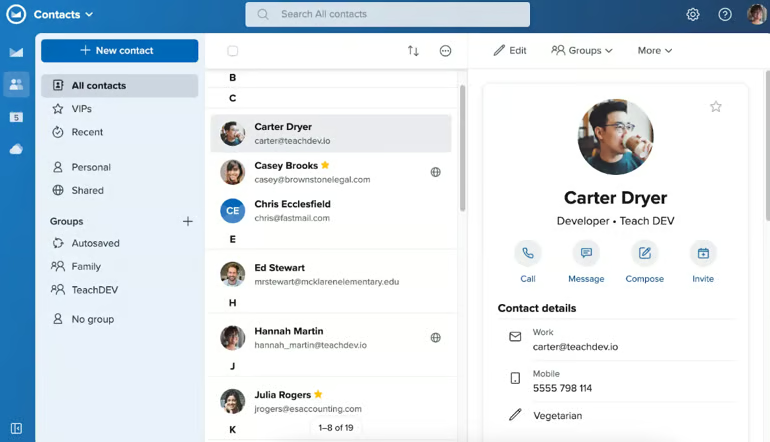
Proton Mail received the highest privacy and encryption scores in my evaluation. Emails exchanged between Proton accounts are automatically end-to-end encrypted, while its zero-access encryption prevents Proton from reading stored message content. Users can also send password-protected messages to recipients outside the Proton ecosystem.
This is why I recommend Proton Mail for businesses handling sensitive client conversations or prioritizing data privacy over extensive third-party integrations. Its business plans include custom domains, administrative controls, secure calendars, catch-all addresses, migration tools, and up to 10 business addresses per user on Mail Essentials. Proton also cites ISO 27001 certification and a SOC 2 Type II audit as independent validation of its security practices.
In my experience, the main trade-off is interoperability. Proton’s encryption model can make connections with conventional email applications and business services less seamless than they are with Google Workspace, Microsoft 365, or Fastmail. The entry plan also provides only 15GB of storage per user, while retention policies and AI writing tools require Workspace Premium.
Features
- End-to-end encryption between Proton accounts
- Zero-access encryption for stored email
- Password-protected messages for external recipients
- Custom business domains and catch-all addresses
- Up to 10 email addresses per user on Mail Essentials
- Proton Calendar and appointment scheduling
- Easy Switch migration tools
- Web, desktop, iOS, and Android applications
Proton Mail pricing
- Mail Essentials: $7.99 per user per month or $6.99 per user per month when billed annually
- Includes 15GB of storage per user, 10 email addresses per user, three custom domains, secure email and calendar, and migration tools
- Workspace Standard: $14.99 per user per month or $12.99 per user per month when billed annually
- Adds 1TB of storage per user, 15 custom domains, encrypted file storage, document tools, VPN access, password management, and video meetings
- Workspace Premium: $24.99 per user per month or $19.99 per user per month when billed annually
- Adds 3TB of storage per user, 20 custom domains, data-retention policies, private AI chat, email-writing assistance, and expanded meetings
- Enterprise: Custom pricing
- Provides a configurable package, dedicated account management, and enterprise support
Proton offers a 14-day business trial and a 30-day money-back guarantee.
Pros and cons
| Pros | Cons |
|---|---|
|
|
Hostinger Mail: Best for bundled website and email hosting
Expert score: 3.96 out of 5
Why I chose Hostinger Mail

Hostinger Mail is my top choice for entrepreneurs who want to manage their website, domain, and business email through the same provider. Hostinger sells email separately, but its web hosting
plans can also include introductory business mailboxes. This makes it convenient for a new business establishing its complete online presence at once.
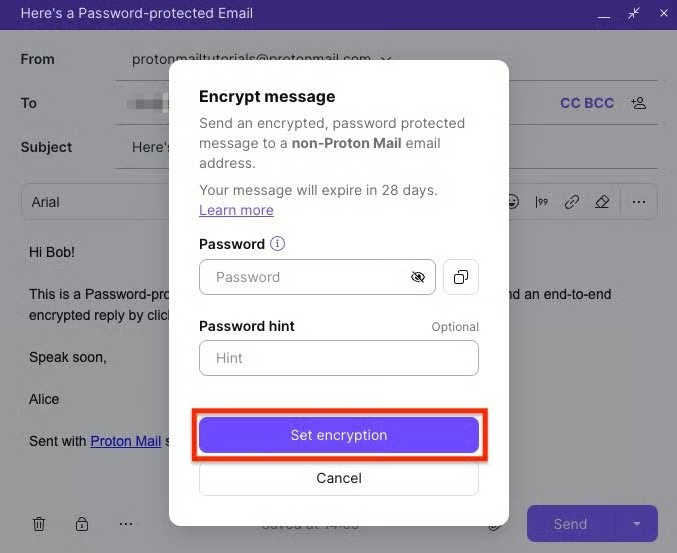
I found Hostinger’s hPanel easier to navigate than many traditional hosting dashboards. It guides users through connecting a domain, creating mailboxes, configuring DNS records, and importing messages from another provider. Mailboxes also work with Hostinger Webmail and compatible applications such as Gmail, Outlook, and Apple Mail.
Hostinger has expanded its email service with AI writing, summarization, search, and reply tools. Its Agentic Mail feature can also provide dedicated addresses and webhook-based triggers for AI agents and automated workflows. However, Hostinger does not offer the shared productivity suite, advanced mailbox administration, or compliance capabilities available from Google Workspace and Microsoft 365.
Features
- Custom-domain business email
- Email aliases and forwarding rules
- Spam, virus, and phishing protection
- Custom DKIM support
- Email migration tools
- AI writing, replies, summaries, and search
- Agentic Mail for automated workflows
- Webmail and third-party email-client access
Hostinger Mail pricing
- Business Starter: $2.99 per mailbox/month on a monthly plan or as low as $0.39 per month with a 48-month term
- Includes 5GB of storage, five aliases, five forwarding rules, and limited AI credits
- Business Standard: $3.99 per mailbox/month or as low as $0.99 per month with a 48-month term
- Includes 20GB of storage, 10 aliases, email tracking, automatic replies, and unlimited AI tools
- Business Premium: $5.99 per mailbox/month or as low as $1.99 per month with a 48-month term
- Includes 50GB of storage, 30 aliases, advanced tracking, unlimited AI tools, and a free domain for one year
Promotional prices require a 48-month term paid upfront. Plans renew at $1.59, $2.79, and $3.99 per mailbox per month, respectively, when renewed for another 48 months.
Pros and cons
| Pros | Cons |
|---|---|
|
|
Methodology: How I evaluated the best business email providers
To identify the best business email providers, I evaluated ten platforms with a focus on essential email functionality, security, administration, pricing, integrations, usability, and how well each service supports a growing team.
I also considered practical differences that may not be obvious from a feature list, such as setup complexity, introductory pricing, migration friction, and whether advanced security or retention tools require an upgrade.
The six evaluation categories were:
- Core email functionality (25%): I evaluated custom-domain support, mailbox storage, attachment limits, aliases, groups, shared mailboxes, spam and phishing protection, SPF, DKIM, DMARC, reliability, and deliverability controls.
- Security and administration (20%): This category covered user provisioning, administrative controls, scalability, multifactor authentication, single sign-on, encryption, privacy, audit logs, archiving, retention, eDiscovery, and compliance-supporting features.
- Pricing and value (20%): I compared the entry price for usable custom-domain email, billing flexibility, renewal terms, free trials, entry-tier storage, included features, and domain or website bundles. I gave less credit to promotional prices that require unusually long commitments.
- Productivity and integrations (15%): I considered calendars, contacts, tasks, office applications, cloud storage, meetings, third-party email clients, integrations, APIs, AI tools, automation, and migration utilities.
- Usability and support (10%): I reviewed domain setup, routine administration, web and mobile access, offline capabilities, support channels, documentation, and migration assistance.
- Expert assessment (10%): I assessed each provider’s overall value, usability, differentiation, and trade-offs based on how its features work together in a practical business environment.
Each provider received a score from zero to five for every criterion. The weighted scores determined the final rankings, but I also used the results to identify which use case each provider serves best.
5 things to consider when choosing an email host
The best business email provider depends on more than its monthly price. Before committing, consider how the service fits your current workflow and what will happen as your company adds employees, storage, domains, and security requirements.
- Your existing business ecosystem: Google Workspace is usually the most natural fit for teams using Gmail, Drive, and Google Docs, while Microsoft 365 works best for organizations centered on Outlook, Teams, Word, and Excel. If you do not need a full productivity suite, a focused service such as Fastmail may provide better value.
- Long-term cost: Compare the standard price, renewal rate, contract length, and cost per mailbox, not just the advertised introductory price. Hostinger offers inexpensive promotional rates, for example, but its lowest prices require a 48-month commitment.
- Security and domain authentication: Look for spam and malware filtering, multifactor authentication, and encryption. Businesses handling sensitive communications should also investigate retention, audit logs, eDiscovery, and access controls. Proton Mail is particularly strong when privacy is the priority.
- Administration and scalability: Consider how easily you can add users, create aliases, manage shared mailboxes, reset accounts, apply policies, and increase storage. Microsoft 365 provides extensive administrative controls, but I found it more complicated to configure than Google Workspace.
- Migration and support: Check whether the provider can import existing email, calendars, contacts, folders, and labels. A low-cost service can become expensive if your team must manually move years of messages or troubleshoot domain records without adequate support.
What is the best email provider for a small business?
I recommend Google Workspace as the best overall business email provider for most small businesses. It combines an approachable Gmail interface with custom-domain email, calendars, cloud storage, video meetings, collaborative applications, security controls, and Gemini tools. Plans start at $7 per user per month with a one-year commitment.
Microsoft 365 is a better fit for businesses that rely on Outlook and Microsoft Office, while Zoho Mail offers the strongest value for budget-conscious teams.
Can I get a free business email address?
Zoho Mail offers a free custom-domain email plan for up to five users in eligible regions. However, the free plan does not include IMAP, POP, or ActiveSync, so users generally need to access their inboxes through Zoho’s web or mobile applications.
You will also need to own a domain unless it is included with another service. Because free-plan availability varies by region, verify that the option is available before purchasing a domain specifically for Zoho Mail.
Is Gmail or Outlook better for businesses?
I recommend Gmail through Google Workspace for businesses that prioritize ease of use, straightforward administration, and browser-based collaboration. Its interface is familiar to many users, and it integrates closely with Drive, Docs, Meet, and Calendar.
Outlook through Microsoft 365 is better for organizations that need shared mailboxes, advanced administrative controls, larger attachment limits, or tight integration with Word, Excel, Teams, and SharePoint. However, Microsoft 365 generally requires more setup and administrative knowledge.
Which business email provider is best for privacy?
Proton Mail is my top choice for privacy-focused businesses because it uses end-to-end and zero-access encryption to protect supported communications. Its business plans also provide custom domains, administrative controls, secure calendars, and migration tools.
How much does business email cost?
The providers in this guide start at approximately $1 to $7 per user or mailbox per month, excluding temporary promotions. Zoho Mail is the least expensive conventional option at $1 per user per month when billed annually. Google Workspace starts at $7, Microsoft 365 Business Basic starts at $6, and Proton Mail Essentials starts at $6.99 per user per month with annual billing.
Hostinger advertises lower introductory prices, but these require a long prepaid term and increase at renewal. Always calculate the total cost over the full contract rather than comparing headline monthly rates.
Bottom line
Google Workspace is my choice for the best overall business email provider because it offers the strongest combination of usability, collaboration, cross-platform access, and small-business functionality. Microsoft 365 is a close second and is the better option for businesses that need advanced administration or already rely on Microsoft applications.
For more specialized needs, I recommend Zoho Mail for affordability, Fastmail for a standalone email service, Proton Mail for privacy, and Hostinger for businesses that want to manage email and website hosting together.
>
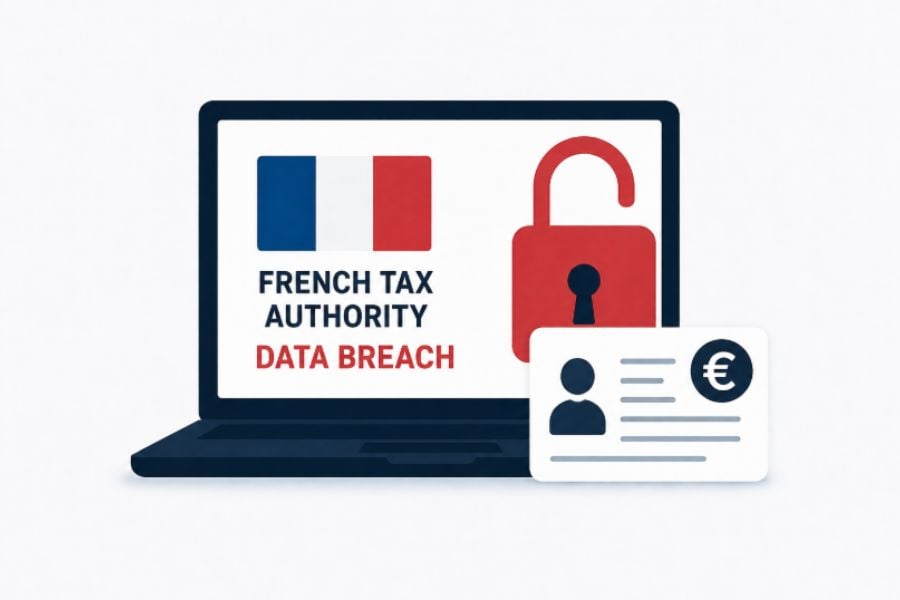
France’s Finance Ministry has confirmed that a cyberattack on the country’s tax authority resulted in the theft of personal and professional taxpayer data, potentially putting the information of hundreds of thousands of people at risk.
The ministry said Thursday that a “malicious actor” claimed to have broken into the Directorate General of Public Finances (DGFiP) in late June. An investigation confirmed that attackers had gained access to the agency’s systems and were able to consult and extract taxpayer information.
French officials are still trying to determine what exact information was taken and how many people were affected, with the precise scope of the breach still under investigation. The ministry said people whose information was compromised will be notified directly and informed about which data may have been exposed and what precautions they should take.
The number of potential victims could be substantial. The specialised cyberattack monitoring platform, FrenchBreaches, said that about 678,000 records were stolen, including roughly 393,000 individuals and 286,000 professionals.
Reuters noted that the French Finance Ministry has not confirmed those figures.
What taxpayer information was exposed?
The reported stolen information could give criminals plenty of material for targeted scams and identity theft.
According to reporting by Brussels Signal, the potentially exposed information includes names, addresses, dates of birth, reference tax income, withholding tax rates, family circumstances and some property-related information. The dataset also allegedly contained internal tax identifiers, information about dependents and records of previous interactions with the tax administration.
That combination is particularly concerning because tax records can provide attackers with a detailed profile of an individual or business. Such information could potentially be used to facilitate identity theft, targeted phishing campaigns or other forms of fraud.
FrenchBreaches also reported that the stolen information was being offered for sale for several thousand euros. Those details came from the alleged attackers and have not been independently confirmed by French authorities.
Attack reportedly went undetected
There are also unanswered questions about how the attackers managed to extract data without the data theft being detected.
Le Monde reported that the unauthorized access was identified and cut off at the end of June during a routine security check. However, the agency apparently did not detect that data had already been extracted at the time. The incident only became public after the alleged attacker claimed responsibility on a cybercrime forum and offered stolen data for sale.
The alleged attacker, operating under the name ZeroBytes, claimed to have accessed an internal DGFiP tool through a virtual private network using stolen professional credentials. The DGFiP has not confirmed the account of the attack.
The DGFiP has since strengthened its access controls, while the French Ministry said it will report the incident to France’s data protection regulator, the CNIL, and file a formal complaint. The investigation is being carried out with help from France’s national cybersecurity agency, ANSSI.
Must-read security coverage
Another cybersecurity challenge for France
The incident is the latest in a growing list of cyberattacks targeting French government institutions in recent months.
In February, the French Finance Ministry disclosed that an attacker had gained unauthorized access to information associated with approximately 1.2 million bank accounts in the country’s FICOBA registry by using stolen official credentials. Authorities said there was no known connection between that incident and the latest DGFiP breach.
Later in April, France’s National Agency for Secure Titles (ANTS), which handles documents such as identity cards, passports and driving licenses, disclosed a breach affecting potentially 11.7 million accounts. That incident prompted Prime Minister Sébastien Lecornu to announce a €200 million ($232 million) cybersecurity initiative funded through the France 2030 investment program.
Lecornu said France had been seeing roughly three data theft incidents per day since the beginning of 2026.
French authorities have not yet established the full scope of the DGFiP breach, meaning the reported figure of nearly 700,000 affected records remains unconfirmed.
Until investigators determine exactly what was stolen, taxpayers notified by the agency may need to treat convincing tax-related emails, calls and other requests with additional caution — particularly when they contain personal information that would normally make a message appear legitimate.
Other Security News: Microsoft is pushing Entra ID users toward passkeys as it moves away from SMS and voice-based authentication methods that are more vulnerable to phishing and interception.
>

An unprecedented number of Apple customers have reported receiving a recent threat notification alerting them to suspected spyware attacks targeting their devices, according to experts who investigate these types of incidents.
Several people publicly and privately reported receiving Apple’s spyware alerts over the weekend, after Apple sent out a new wave of notifications on Friday alerting customers in 110 countries that they had been targeted with powerful spyware.
From time to time, the technology giant sends these types of alerts in batches to customers that it believes have been either targeted or compromised with malware normally used by governments, which the company refers to as “mercenary spyware.” In the last few years, Apple says it has alerted people in more than 150 countries.
The latest batch appears to have been the largest yet, per one of the digital rights groups that Apple suggests victims of spyware reach out for help.
Mohammed Al-Maskati, the director of the Access Now team of investigators who review and investigate reports to the helpline, told TechCrunch that since Friday, they have received a record high number of people reaching out for help. This includes people who had already received threat notifications in the past.
Al-Maskati said the number is around 30% to 40% more than the nonprofit’s investigators usually receive after Apple sends out new notifications.
An unusually large number of people have also publicly reported receiving these notifications over the weekend as well, according to several social media posts.
Contact Us
Have you received a notification from Apple about being targeted with mercenary spyware? Or do you have information about spyware makers? We would love to hear from you. From a non-work device, you can contact Lorenzo Franceschi-Bicchierai securely on Signal at +1 917 257 1382, or via Telegram and Keybase @lorenzofb, or email.
One of them is a Ukraine Armed Forces soldier who said he is fighting the war against Russia. The soldier, who asked to remain anonymous to protect himself, said that he initially thought it was a scam, until he verified it with Apple.
“I was a bit surprised to be honest, I wouldn’t have thought I was important enough for them to target me like this. I am flattered though,” the soldier told TechCrunch.
The soldier also said that he is aware of other people in Ukraine’s military who have received the same notification. “They were a bit worried,” he said.
The Computer Emergency Response Team of Ukraine (CERT-UA) did not respond to TechCrunch’s request for comment, asking whether it was aware of other Ukrainians, particularly soldiers, receiving these notifications.
John Scott-Railton, a senior researcher at The Citizen Lab, a digital rights group that has investigated government spyware attacks for more than 15 years, told TechCrunch that the reports show that spyware attacks may be more prevalent than people realize.
“The scale and geographic diversity of public posts about receiving notifications are pretty unprecedented,” said Scott-Railton. “For every public notification like this, you can imagine there’s a huge notification iceberg that the public will never learn about. This is a clear indication that something bigger is going on.”
Both Al-Maskati and Scott-Railton said that the volume of people receiving the alerts could also be attributed to Apple’s new methods of alerting users.
Starting this year, Apple now notifies users on their iPhone lock screen, in their Settings app, via the email associated with their Apple account, and when users log in to their Apple Account on the web.
“Apple’s new notification method has helped raise awareness of the issue’s importance, making it harder for users to ignore,” Al-Maskati said.
Apple did not respond to TechCrunch’s request for comment.
If you’ve received one of these notifications, take it seriously. If you are not a journalist, dissident, or human rights defender, there are other organizations that can help you investigate.
If you haven’t already, as Apple and experts suggest, turn on Lockdown Mode, a special security feature designed to make it harder to hack iPhones, iPads, and Mac computers. Apple has said that it is not aware of anyone who had Lockdown Mode enabled getting hacked.
When you purchase through links in our articles, we may earn a small commission. This doesn’t affect our editorial independence.
>

Samsung appears to be exploring a new full-size wireless headphone product, potentially expanding its Galaxy audio lineup beyond earbuds. Code and connection icons found in the Galaxy Wearable app reference a device reportedly known internally as Galaxy H1.
SamMobile first reported the discovery on Aug. 14. Samsung has not announced Galaxy H1, but a full-size headset could fill a longstanding gap in its Galaxy device ecosystem; its final name, design, specifications, price, and release date remain unknown.
The app leak suggests a headphone project
The evidence comes from Galaxy Wearable app code and icons that reference “Galaxy H1” and depict headphones with a headband and ear cups. The assets suggest a wireless, full-size design rather than another pair of Galaxy Buds.
Software references can appear before Samsung formally announces hardware. In July, the unannounced Galaxy S26 FE and Galaxy Tab S12 appeared in a Google app, providing another recent example of software surfacing possible products ahead of launch.
The H1 icons are not necessarily renders of finished hardware. The Verge reported that they indicate the general wireless headphone form factor but may not show the final design. “Galaxy H1” also appears to be an internal name rather than a confirmed retail brand.
If H1 reaches the market as a premium product, it could add a Galaxy-branded option alongside high-end headphones from Apple, Sony, and other established audio brands. Samsung has not disclosed its intended price segment or competitors.
Samsung has sold full-size wireless headphones before. Its Level range included the Level On Wireless Pro, announced in August 2015 with Bluetooth connectivity and active noise cancellation.
Samsung later completed its Harman International acquisition in March 2017, adding brands including AKG, JBL, and Harman Kardon to its audio portfolio. More recently, Samsung has continued expanding its wearable ecosystem with devices including the Galaxy Watch9 and Watch Ultra2.
A 2027 launch is possible, but specs remain unknown
SamMobile says the headphones could arrive sometime in 2027, but Samsung has announced no release date. Any narrower launch window or connection to a specific Galaxy event remains speculative.
Core features are also unknown. Active noise cancellation, device switching, Samsung audio codecs, and AI-assistant support would be plausible based on existing Galaxy products, but none has been confirmed for H1. Battery life, charging, Bluetooth version, microphones, and wired-audio support have not been disclosed.
Samsung’s current Galaxy Buds4 series supports Bluetooth 6.1, Auto Switch, and Samsung Seamless Codec UHQ. A future Samsung headset could inherit some of those ecosystem features, but the current leak provides no evidence that H1 will.
If the product reaches commercial release, compatibility, software support, and Samsung-specific features could determine how well it fits managed Galaxy deployments. Samsung’s reported Galaxy Watch9 support expansion shows how update commitments can affect device-lifecycle planning. Until Samsung confirms H1 and provides product and support details, IT teams have too little information to factor it into refresh or purchasing plans.
Read more: Samsung’s premium hardware lineup is expanding elsewhere as well, with the Galaxy Z Fold8 and Fold8 Ultra adding new choices for organizations and buyers evaluating the latest Galaxy devices.
>

Hulu’s ‘Prison Break’ Reboot Adds Six To Cast

How to watch Marlins vs. Phillies: TV channel and streaming options for August 17

Peggy Webber Dead: Radio Actress Was 100
-

 movies3 months ago
Search For Canadian TV Actor Stewart McLean Now Homicide Investigation
-

 Fashion9 years ago
These ’90s fashion trends are making a comeback in 2017
-
Fashion9 years ago
According to Dior Couture, this taboo fashion accessory is back
-
Fashion9 years ago
Model Jocelyn Chew’s Instagram is the best vacation you’ve ever had
-
Fashion9 years ago
Emily Ratajkowski channels back-to-school style
-
Fashion9 years ago
9 Celebrities who have spoken out about being photoshopped
-
Fashion9 years ago
Your comprehensive guide to this fall’s biggest trends
-
Fashion9 years ago
A photo diary of the nightlife scene from LA To Ibiza