
L-R: Megan Gallagher and Deadline’s Katie Campione onstage
Griffin Nagel/Peacock


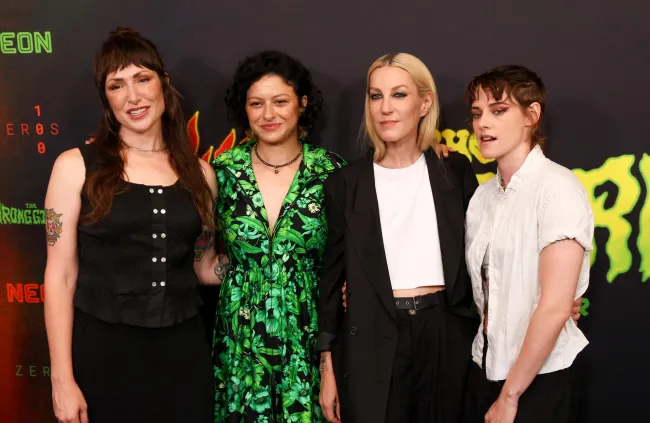
“The Wrong Girls” operates on a very specific frequency, and director Dylan Meyer knows it.
“It’s not for everybody, but the people it’s for, it’s really, really for,” the filmmaker told IndieWire during an impressively cozy Zoom call that saw not one, not two, but three stoner women beaming in from their respective L.A. living rooms. (Of course, there were cats offscreen.)
“I remember sitting in our old back house, broke as shit, when we were 24, 25 years old, just talking about this movie for the first time,” said producer Maggie McLean. “The amount of times I’ve just been on the phone with Dylan where I’m like, ‘Dylan, dude, we’ve got to keep going. We’re going to manifest “The Wrong Girls.” The world needs this movie.’”


In its opening weekend, Meyer and McLean’s proudly imperfect stoner comedy earned just over $406,000 from 520 theaters through distributor Neon. It also received a decidedly mixed critical reception, with 56 percent on Rotten Tomatoes and 59 on Metacritic. But its warmer 3.3-star Letterboxd average suggests the film is already finding the niche audience it was made for.
IndieWire, for its part, hailed “The Wrong Girls” as proof the great American stoner comedy could be saved. Starring Kristen Stewart and Alia Shawkat as best slacker friends Frankie and Molly — two stoner chicks whose hazy corner of Los Angeles isn’t so much a place to hide from adulthood as an alternative vision for surviving it — “The Wrong Girls” took a whopping 14 years to make.
Meyer began developing the concept when she and McLean were living the exact kind of paycheck-to-paycheck existence depicted in their movie. She’d later build an impressive screenwriting career across projects like “XOXO,” “An American Pickle,” and “Moxie,” while McLean worked her way through physical production.
The friends also co-founded Nevermind Pictures with Stewart, creating the independent infrastructure that would eventually help bring Frankie and Molly’s world to the screen. Even still, “The Wrong Girls” repeatedly came together and fell apart.
“We had the money, we lost the money, we had the money, we lost the money,” Meyer said. “We were on such a rollercoaster for such a long time. I was starting to hit a zen acceptance of, ‘Maybe this just isn’t the right thing.’ I did not give up ever, which is very unlike me. I actually love to give up.”
At one point, Shawkat was unavailable after becoming pregnant, leaving Meyer convinced there was no one else who could play Molly. “I cried through the entire TreePeople park,” she said. “I was on a hike with my family weeping because there was no other Molly for me, and there never has been.”
But when that incarnation of the project lost its financing, the delay unexpectedly allowed Meyer to reassemble the team she wanted. Shawkat returned, as did cinematographer Todd Banhazl and costume designer Heidi Bivens, along with other longtime collaborators who might not have been available before.

At another stage, Meyer and McLean scouted New Jersey in search of isolated street corners that might pass for Southern California. The possibility was bleak but financially plausible. They were prepared to fake Los Angeles one carefully restricted camera angle at a time.
Instead, “The Wrong Girls” ultimately began production in L.A. shortly after the January 2025 wildfires. It was among the first projects to start shooting as the local industry attempted to resume work, and the production employed Angelenos displaced by the fires, including crew members who had lost their homes. Those circumstances intensified the communal vibe already embedded in Meyer’s screenplay.
The certainty that someone out there would really want this movie came from recognizing a Los Angeles that mainstream Hollywood rarely puts onscreen. Meyer and McLean are both SoCal natives, and “The Wrong Girls” rejects the glossy mythology of transplants arriving to conquer the entertainment industry. Its heroines aren’t frantically networking at film festivals or plotting their next career moves. They just want enough money to make rent, some weed to maintain their altitude, and the freedom to retreat into the Chill Zone while waiting for another of the modern world’s endless catastrophes to blow over.
“We didn’t come here for anything,” McLean said. “We have no expectations of this city at all. We just love it for exactly what it is.”
Making that Los Angeles legible required more than shooting within city limits. Meyer assembled department heads who recognized themselves as wrong girls and encouraged her people to preserve the film’s tactile, scotch-taped spirit. Production designer Katie Hickman filled Casa de Chill Zone with objects taken from Meyer and McLean’s actual homes, and the pair estimate that at least half of Frankie and Molly’s living room belonged to one of them. Even the cardboard Celine Dion presiding over their kitchen was inspired by a Roy Orbison cutout Meyer and McLean once regarded as a kind of third roommate.
Amid a wild press tour that’s seen Stewart, Shawkat, Meyer, and McLean toking up on both coasts, the two longtime friends and “The Wrong Girls” creative leads spoke with IndieWire about female deadbeats, small-scale dreams, the cinematic value of imperfection, and why the Los Angeles that asks for nothing might have the most to offer.
The following interview has been edited and condensed for clarity and length.
IndieWire: You guys made my whole summer. I had such a good time, and it gave me so much hope to see my living room onscreen. What has this whole process been like for you? It seems like a dream.
Dylan Meyer: Making it rocked. Being allowed to be our weird selves felt like a real gift, and it wasn’t easy to do that. But I think we got there because I made it with all of my favorite people.
My whole crew is girls who are… wrong. I made it with all wrong girls. Even Ty Segall is a wrong girl a little bit. I just distilled everything I really love into one place, and in that sense, it was a total dream. Getting to tour the movie with all the people I love is such a dream.
Putting it into the world is vulnerable and intense, but even that’s pretty fun.
This is such an L.A. movie, and L.A. needs this movie right now.
Maggie McLean: Dylan writing a love letter to L.A. is the dream for me as a producer. We started shooting right after the fires, and it was an honor to make a movie about Los Angeles in Los Angeles while allowing our community to come together and employing a bunch of L.A. locals.
This is the most special city in the world. We got to watch everyone come together in this really unique way after the fires. We’re so much more than people think we are. We all grew up watching L.A. movies, and to be able to add to that — especially with a movie about two best friends and being an L.A. girl — is the dream.
Meyer: It’s a shaggy city in a way people don’t really understand. The perceptions of Los Angeles are glossy, fast-paced, and ambitious. For me, L.A. is a woolly city full of people doing lots of stuff that has nothing to do with the entertainment industry. Because we’re townies, most of our deadbeat friends from growing up don’t have anything to do with that stuff either.
Some movies get underneath that, and I think they’re all weed movies. “The Big Lebowski” is the best movie about L.A. because it isn’t really a movie about L.A. It’s a townie movie. Cheech and Chong made townie L.A. movies. “Repo Man” is a townie L.A. movie.
Those wayward, stoned drifter types seem to congregate here. That isn’t part of the version you see in “I Love LA,” “Entourage,” “The Player,” or “Sunset Boulevard.” Those stories celebrate the dreamer element — the people who came here to do something. Ironically, the people who were already here seem to want to do nothing. I think there’s something beautiful about that.
McLean: Most of our friends are in industries outside entertainment. Those are the depths and layers of this city that are important to remember. All the references Dylan just made are transplant movies and shows. We want nothing except good times and good vibes.
Meyer: I wanted to play the B-sides. We’re a record-crate-digging family. We’re all little treasure hunters, and there are so many treasures here that aren’t ignored so much as hard to find. It’s a city that only works for people who truly have a sense of adventure. I think that’s why it alienates a lot of other people.
There’s something refreshing about seeing people be this comfortably themselves and react to everything authentically. How much came from the script, and how much was group imagination?
Meyer: We were going pretty fast, so we had to lean on the script a good amount. Comedic actors are used to improv being a big part of their lives. We expect comedians to digest new material quickly and spit out jokes as they’re inventing or elaborating on them.
Kristen isn’t really that kind of performer. She addresses the character, world, and scenes in a holistic way. Pushing her to invent new stuff isn’t necessarily how you’re going to get the most out of having her in your movie. But Kristen and Alia have a natural chemistry from being two Southern California people who are kindred spirits. There was such comfort between them that it created room for improvisation in the physical dynamics.
Sometimes people would come in and slam out something much funnier than anything I wrote, and I’d say, “Definitely, let’s go with that.” Other things were born from not having enough money or days and asking, “What can we do to solve this problem quickly?”
I didn’t let myself get bogged down with, “What is the tightest movie I can make?” That wasn’t the goal. I was trying to make something that felt like being high in the world. Things pop out at you and you’re like, “Why is this happening? How did I get here?”
You wouldn’t teach it in a screenwriting class, except that its woolly shagginess is what’s right for it. It sells the girls’ freewheeling, loosey-goosey feeling through the form as well as the content.

Tell me about creating that living room. Nothing about it feels engineered, but everything is so specific. How did you get that level of natural presentation onscreen?
McLean: Katie Hickman, our production designer, absolutely knocked it out of the park. Dylan created all sorts of reference books for her. Then Katie came to my house and pulled things out of my living room, and she went to Dylan’s house and pulled things out of Dylan’s house.
Meyer: There’s a really fucked-up cat pillow next to them the whole time that my mother-in-law gave me. There’s stuff from the house Maggie and I lived in together and the houses we’ve lived in individually.
McLean: It’s very organic to who we are. I have a piece from the set hanging in my office now: the wallpaper, the girls, and Oasis. It belongs in my house. Katie nailed it.
This movie also gets around some fundamental problems facing the stoner genre right now. Legalization makes that imagery easy to flatten, but Frankie lighting a joint in that guy’s driveway still feels like a radical act. What remains transgressive about being a stoner — particularly a female stoner — when weed itself is mainstream?
Meyer: There’s something about being a girl smoking weed in public that still feels really fun. It isn’t illegal and there isn’t as much fear. Now it’s more like a long-haired hippie versus the corporate man.
In the fight for the right to be yourself, there are a lot of barriers to being accepted as a female deadbeat. That isn’t an area we have encouraged. Even now, watching people react to the movie, I’m like, “Oh yeah, some people really don’t fuck with that. For some people, it’s not right.”
I once watched Kristen walk into a restaurant with a lit joint in her mouth by accident. We were standing with the hostess while she stared at us, and I was like, “Oh yeah, totally. Sorry about that.” I also watched Kristen’s best friend Susie offer her a hair from her own head to floss chicken wing out of her teeth.
Writing is patchworking. You’re trying to say something honest. When I reflect on all the squints, stares, and scowls I’ve gotten from more polished individuals because my weed smoke wafted toward them, I’m reminded that this isn’t for everybody. In California, you can get lost in feeling that something is natural or not a big deal. Then you encounter people who really don’t feel that way. The contrast is pretty funny.
Do you think that extends to the tired idea that women can’t be funny? All my stoner-chick friends are the funniest fucking people I know, and there’s still this resistance to allowing women to subvert almost any situation.
Meyer: We don’t let women wear clothes that are comfortable and right for them. We don’t let them be fuck-ups. We don’t let them be dirty or messy. Even when we try to do that in movies, we aren’t really doing it. You can still feel the machine behind the execution.
It was important to commit to those things in this movie. That’s what the movie is about: allowing women to be themselves in a way that, even when we think we are, we often aren’t.

As a woman who reads way too much news, I’m holding very close to my heart the line, “Maybe let’s just go back to the Chill Zone and wait until this whole Kock problem blows over.” In this political moment, do you see it as radical to simply manage being yourself and existing?
Meyer: Being able to chill is something America doesn’t value highly. With social media and the internet, there’s an intense rat-race experience going on all the time. It’s fast-paced, competitive, and intense, and women are always being pitted against each other in that race.
The idea that your house is an oasis where you can hide from the darkness and take a break is kind of radical. They don’t have high-stakes dreams or great financial ambitions. They barely want to run toward anything. They’re fighting for their right to kick it in a chill way and to have their primary partner be their best friend.
We structure adult life around nuclear families, romantic partners, or our regular families. For women, friendships are some of the strongest and most powerful tools we have to survive life and continue. Carving out the way you want to live is important.
McLean: Those are also the women we know. My mom lives with her best friend. They’re in their sixties and seventies, living a very happy platonic life together in Santa Monica. None of us bats an eye at that.
The movie makes you want to believe people will be drawn to Frankie and Molly’s world precisely because they aren’t trying too hard. What’s your take on L.A. being misunderstood? Is that a good thing, a bad thing, or just something the city doesn’t have to worry about?
McLean: There are so many people who come here expecting to achieve their dreams quickly and easily. That has snowballed in the last couple of years with social media and influencers coming here.
When you grow up in this city, you can live with a sense of ease instead of only a sense of ambition. Don’t get me wrong: Dylan and I are both ambitious. But we aren’t sitting here feeling entitled to anyone else’s position. It’s why we started a company together. We decided, “We don’t need any of that. We’re going to carve our own lane, make movies our way, and make the movies we want — not necessarily the movies everyone else wants us to make.”
L.A. is also a very rich, layered city. I live on the east side in Highland Park, and I don’t really leave my neighborhood. I’ve built a community, and that’s what we do in this city. That’s a really misunderstood element of L.A. It isn’t just West Hollywood or the West Side. Go on a food tour in the San Gabriel Valley and you’ll have a really cool time and learn a lot.
Meyer: The girls’ dream is so small-scale. Their dream is just to have this one environment where they get to be in charge, do it together, and have a contained existence.
As a company and as filmmakers, we have a similar philosophy. I’m not trying to make a Marvel movie. That isn’t me. I wouldn’t be good at it, and I wouldn’t have a good time. My dreams are under $15 million so we can achieve creativity and freedom. That’s what the girls are pursuing in their small-scale dreams: the freedom to design your life how you want.
If you aren’t trying to become a billionaire, you can make your life all kinds of ways and be happy and successful on your own terms.
We keep circling this idea of misconceptions. Is there anything about the film itself that you want to clarify or talk about?
Meyer: We’re living in a moment when movies are very shiny and perfect. Some of that is digital, and some is the committee-based, risk-averse mentality that goes into their creation.
I wanted something woolly, textural, tactile, and dirty. I wanted that smoggy L.A. film over it. There are ways you could interpret that as unintentional, and I suppose that’s one way the movie might be misunderstood.
But it’s a celebration of imperfections and an extension of the girls. The best example is the big dance sequence at the end. It isn’t choreographed. It’s the dance that is right for them and feels true to them. If the movie is an extension of the girls, it has to pick up threads and drop them haphazardly because that is their experience and how they navigate the world.
Maybe that gets misunderstood, but it’s the same reason Tony Hale misunderstands Kristen in the driveway. Squares are going to square. There’s nothing you can do about that.
McLean: None of that slick shit was ever the goal. We never wanted this to be one of the slick comedies you see today. No hate on any of those, but this is a different movie.
Meyer: It really is about having a spirit of zen acceptance about dysfunction, a joyful sense of misadventure, and the idea that no experience is wasted on you.
Every bad thing that happens to me still feels useful. I’m like, “This didn’t feel good, but it was interesting.” A lot of wrong girls share that: “God, I didn’t mean to get here. This isn’t what I imagined or wanted, but I feel like I could still have fun under the right circumstances.”
If I can find the right perspective, I can enjoy whatever is weird and fucked up here. That’s absolutely in the DNA of the movie.
>
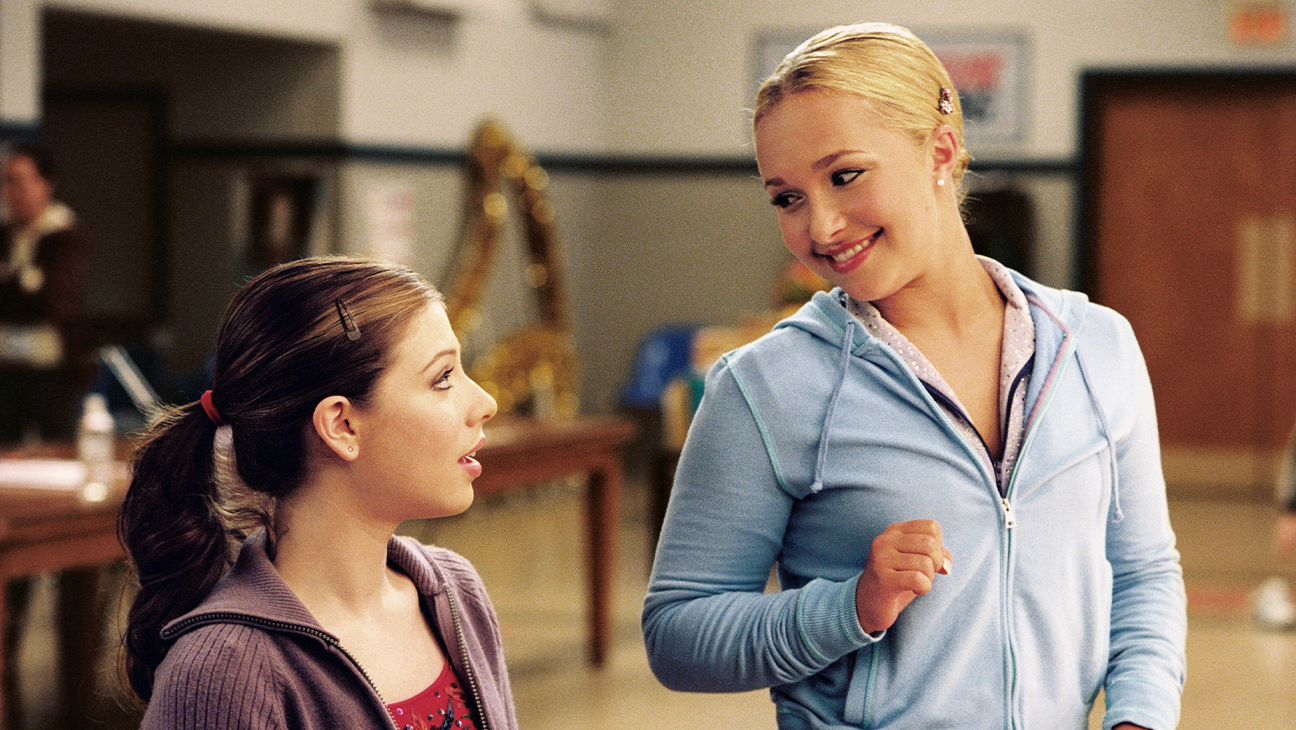
Hayden Panettiere’s most notable roles might have been in Heroes, Nashville and the Scream franchise, but her performance in one small Disney movie also had quite the lasting impact on fans.
Following the news of Panettiere’s death at age 36 on Sunday, fans have flooded TikTok to pay tribute to the actress and her many beloved roles throughout her career. But her 2005 Disney movie Ice Princess, which saw her star opposite Michelle Trachtenberg (who died last year at age 39), appears to have struck a specific chord for many.
Video compilations of Trachtenberg and Panettiere’s characters, Casey Carlyle and Gen Harwood, respectively, have been circulating on social media Monday, with many fans acknowledging the film’s comforting nostalgia amid the tragedy.
“Our ice princesses are together again,” one fan wrote, while another person shared, “RIP to our ice princesses. This is the movie that inspired me to start figure skating and will always hold a special place in my heart.” Another fan also wrote in a video, “Now they will skate together on ice for eternity. RIP queens,” while one person added, “Hayden and Michelle 4ever loved and remembered by the girls who grew up watching Ice Princess.”
Ice Princess followed Casey, a brainy high school student, who gives up her path to Harvard to pursue her newfound dream of being a professional figure skater. Panettiere played Casey’s main rival-turned- supportive ally.
While it underperformed at the box office upon its release in 2005, the recent reactions from fans highlight how the film became a childhood touchstone for many older Gen Zers and younger millennials, especially women. The film’s empowering message about self-discovery and combining academics and athleticism also contributed to its impact on young girls at the time.
Both Panettiere’s and Trachtenberg’s unexpected deaths occurring at a young age and within two years of each other have come as a shock to Ice Princess fans, as they continue to remember both women on social media. “Can’t believe both of our ice princesses are gone,” another person wrote on TikTok.
Kim Cattrall, who played Tina Harwood, the pushy figure skating coach and mom in the film, also took a moment to pay tribute to Panettiere on Instagram, writing on Monday, “Rest in peace sweet Hayden. Gone far too soon.”
>
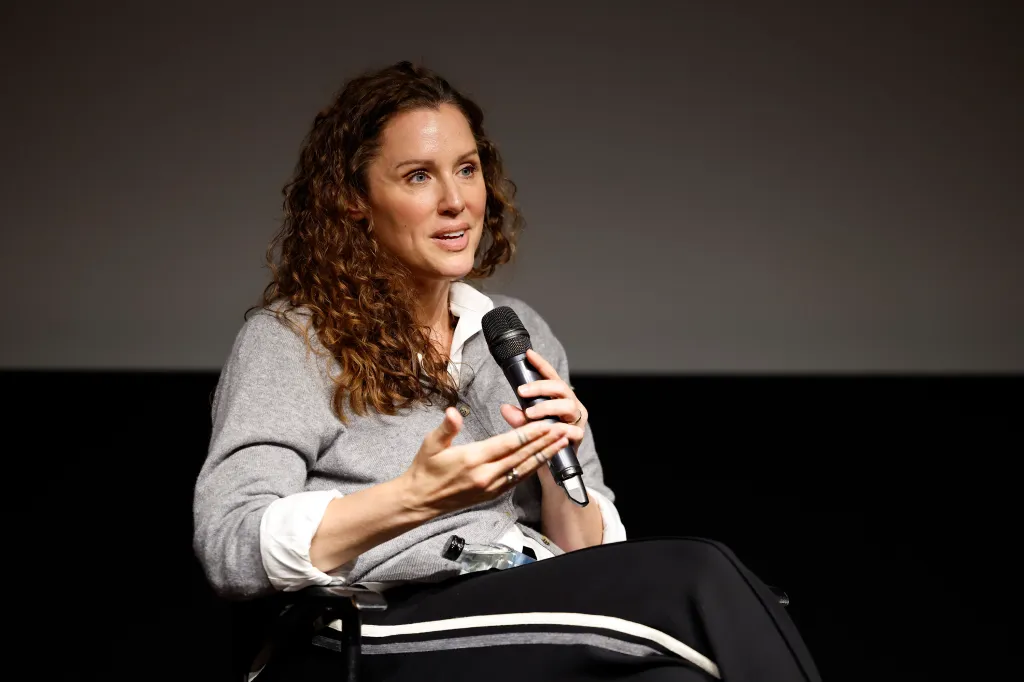
Of all the feedback she’s received on All Her Fault, there is one comment that sticks with creator and showrunner Megan Gallagher: “Those are two of the worst husbands I’ve ever seen on television, and neither one of them were having an affair.”
It certainly would’ve been easy (and predictable) to fuel audiences’ distaste for the spouses of Marissa Irvine (Sarah Snook) and Jenny Kaminski (Dakota Fanning), the two women at the center of the thriller who are brought together by the disappearance of the former’s son, by adding an extramarital relationship to the mix — particularly for Jenny’s husband, Richie (Thomas Cocquerel), whose sins amount to far less than Peter’s (Jake Lacy).
But, it also would’ve undercut the themes Gallagher wanted to drive home with the limited series, which explores the ways that women and mothers often shoulder the brunt of societal responsibility and therefore get the lion’s share of the blame as well.
“I don’t think that that’s the worst thing that you can do to your spouse, necessarily. I really don’t,” Gallagher said during an All Her Fault x Women in Entertainment FYC screening at The London in West Hollywood on Sunday. “The truth is, if you are Jenny Kaminsky, and you are miserable every day and asking for help every day, and the person who’s supposed to love you and be your life partner is doing everything within their power to keep you miserable, that’s so much worse, I think, than having an affair. Like, I’d rather have you sleep with your secretary than do that. It meant something to be able to get that on the screen, that look at marriage.”
It also gave Gallagher an opportunity to dig into the complexities of a woman like Jenny, someone she says “might seem like [a] pushover” but is far from it.
“She’s a people pleaser by nature. She’s very clearly depicted that way, as somebody whose strength is in being empathic and being intuitive and kind of sensing what other people need,” she explained. “And I feel like I know so many people like that, men and women both, but I think that those people often have a very steely core down there.”
Gallagher describes the scene where Jenny finally puts her foot down with Richie as the character finally “finding that moment of no.”
L-R: Megan Gallagher and Deadline’s Katie Campione onstage
Griffin Nagel/Peacock
Jenny’s realization is fueled not only by her husband’s actions throughout the series but also by the revelations about Marissa’s missing son and the part her own husband Peter played in his disappearance. At every turn, Marissa blames herself for Milo’s disappearance, as do others, and Peter lets her bear that undue weight for most of the series without explaining his part in any of it.
Ultimately, Marissa is a devoted mom who had nothing to do with her son’s disappearance and who was fooled by her own husband. Just like with Jenny, Gallagher says she wanted to challenge expectations for the kind of woman Marissa would be.
“I purposefully wrote Marissa as an incredibly accomplished career woman who wasn’t necessarily a lovey-dovey mom,” she said. “She’s got a real edge to her, in a good way, in a way that I find relatable. I’m not a wilting flower. She’s a really strong lady.”
Marissa’s devotion to both her son and her own sense of self was an important component to get on screen, Gallagher said, adding: “It’s one thing when society blames you or the media blames you and all that kind of stuff. It’s another thing when women internalize this guilt and we take it on ourselves. To me, that’s the most heartbreaking part.”
>
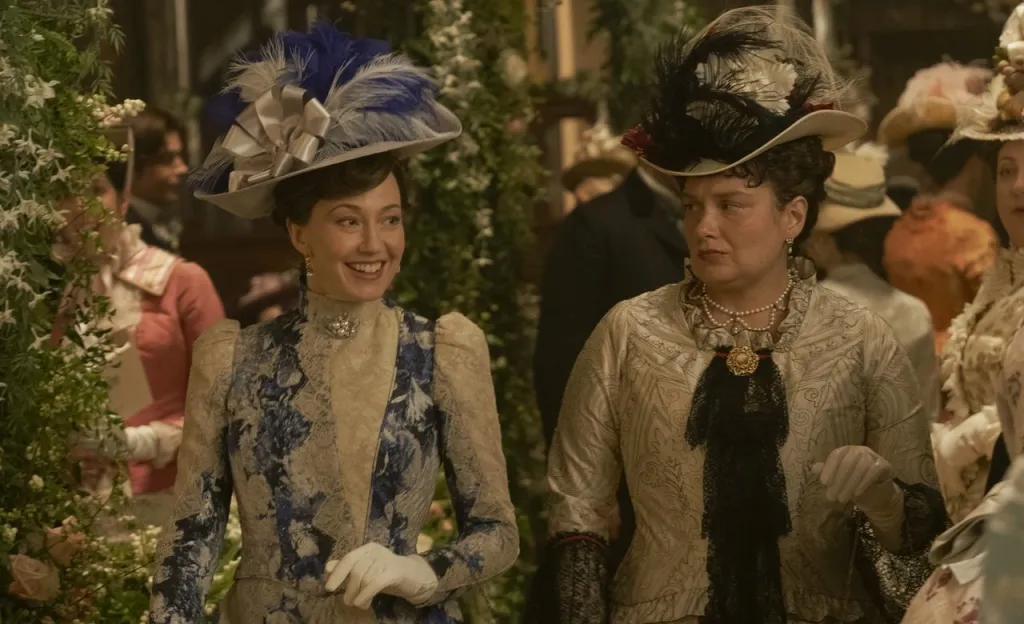
The culture clash will continue in Season 4 of Julian Fellowes’ HBO period drama The Gilded Age, based on the turn-of-the-century time period in America that lasted between 1870 and 1900.
Some familiar faces have been promoted to series regulars since Season 3, and some new faces are joining the cast to play big-name historical characters, among other new roles for the large ensemble.
For everything we know about The Gilded Age Season 4, read on:
When will The Gilded Age Season 4 come out?
In a video promotion released in December, HBO hinted that the newest season of the period drama would arrive in 2026.
Is The Gilded Age Season 4 in production?
The show’s fourth season has wrapped production. Star Carrie Coon posted the news on her Instagram story.
How many episodes of The Gilded Age Season 4 will there be in total?
The Gilded Age’s fourth season will have a total of 8 episodes.
Will there be new characters in The Gilded Age Season 4?
Yes. Deadline broke the news in February that Taylor Trensch (Bat Boy: The Musical), James Scully (You), Dennis Haysbert (24), Maggie Kuntz (John Proctor is the Villain), Neal Huff (Mare of Easttown), and Tony Award-winner Bonnie Milligan (Search Party) would be joining the Season 4 cast in recurring roles.
Jim Gaffigan (Chappaquiddick), Dallas Roberts (Walk the Line), Elizabeth Marvel (Presumed Innocent), and Andrew Burnap (Snow White) have joined as guest stars.
Gaffigan will play Grover Cleveland, the 22nd President of the United States, who comes to New York to curry favor with the elite class. Roberts will portray Daniel Manning, a seasoned politician and Secretary of the Treasury under President Grover Cleveland. Marvel will play Nurse Virginia Saville, a kind nurse who works at the Neighborhood Settlement House in the Lower East Side. Burnap will portray Porter, a young gentleman of Society with an Ivy League education and money to invest in exciting new ventures.
Who else is coming back to The Gilded Age Season 4?
Jordan Donica, who plays Dr. William Kirkland, and Ashlie Atkinson, who portrays Mamie Fish, have been upped to series regulars for the upcoming fourth season. Kelley Curran, who plays Enid Winterton — formerly known as Turner when she served as Bertha’s (Carrie Coon) maid, has also been promoted to series regular.
Denée Benton as Peggy Scott and Jordan Donica as Dr. Kirkland in ‘The Gilded Age’ Season 3
HBO Max
Series regulars since Season 1 include Carrie Coon, Morgan Spector, Louisa Jacobson, Denee Benton, Cynthia Nixon, Christine Baranski, Harry Richardson, Blake Ritson, Taissa Farmiga, and Audra McDonald, who are all set to return.
What happened in Season 3 of The Gilded Age?
Donica’s character, Dr. Kirkland, proposed to Peggy Scott (Benton) in a happy, joyful moment at the end of Season 3. In contrast, George (Spector) and Bertha hit some rough waters in their marriage. This was largely due to Bertha’s rolling full steam ahead by forcing their daughter Gladys (Farmiga) into an arranged marriage. George felt he had no control and was angered by Bertha not wanting her daughter to have a shot at a love match.
It’s worth noting that George is upset on Gladys’s behalf; however, she married the Duke of Buckingham and ended up falling in love with him! Bertha’s sister Monica (Merritt Wever) came to town for the wedding, much to the former’s chagrin.
The Russells’ eldest, Larry Russell (Harry Richardson), courted Marian (Louisa Jacobson) all season, only to have what they built fall apart. After Larry and Marian became engaged, the former secretly spent time at a House of Ill Repute, aka a brothel, with Jack Trotter (Ben Ahlers). Instead of telling his beloved the truth about where he was, he lied and almost irrevocably broke their union.
Meanwhile, Larry and Jack sold the clock patent, allowing the latter to move out of the van Rhijn household and buy a nice home of his own with staff. People both upstairs and downstairs were stunned yet happy about his windfall. Thanks to Larry’s testimony, Marian gets a better understanding of his and Larry’s doings on that fateful night. As a result, Marian attempts to mend fences.
After the loss of a true love, Oscar’s being gay is exposed to his family, whether he was ready for them to know or not. Hey, this was the Gilded Age, after all. Neither his mother, Agnes ( Christine Baranksi), nor his aunt Ada (Cynthia Nixon) dared speak the words out loud, but there was an understanding. He did receive full support from his cousin Marian, who was not shaken by the revelation. It is, however, teased by the end of Season 3 that Oscar is seriously considering taking a wife, Turner.
RELATED: ‘The Gilded Age’ Closes Out Season 3 With Another Series High Viewership For Finale
By season’s end, Bertha was confronted with reality: her husband George was toying with the idea of divorce. You see, his life was forever changed after he was shot and nearly died. No one experiences such a tragic event and is the same person afterward. George seems to have become disinterested in playing a role in Bertha’s schemes, especially as they pertain to their children.
However, Bertha is a smart cookie and she has learned so much since Season 1. At the time when Season 3 was set, divorcees were branded social outcasts. So Bertha, while thinking ahead, helped influence a shift in social norms yet again. She persuaded Mrs. Astor (Donna Murphy), whose daughter Charlotte (Hannah Shealy) had recently uncoupled from her husband, to welcome divorced women like Charlotte and Aurora Fayne (Kelli O’Hara) to galas and high society social events.
Oh, and viewers have probably seen the last of Ward McAllister (Nathan Lane).
What is Season 4 of The Gilded Age about?
The official Season 4 logline reads, “Bertha Russell changed Society at a cost. Now, her family must reckon with the consequences as Agnes van Rhijn seizes an opportunity to regain her position. Meanwhile, Marian forges a new path for herself and Peggy works to be accepted by her future in-laws. In this new era, you must be careful what you wish for.”
RELATED: ‘The Gilded Age’: How The HBO Drama Created A Castle Fit For A New Duchess
Who is behind The Gilded Age?
The Gilded Age is a co-production between HBO and Universal Television, a division of Universal Studio Group. Julian Fellowes is the show’s creator, writer, and executive producer and Sonja Warfield is writer and EP. Gareth Neame, David Crockett, director Salli Richardson-Whitfield, Kate Churchill, Bob Greenblatt, and writer Elaine Aronson also serve as executive producers. Erica Dunbar ishistorical consultant and co-executive producer. Co-exec producers also include writer Davita Scarlett and Holly Rymon. Bernie Telsey and Adam Caldwell from the Telsey Office served as casting directors.
Rosy Cordero contributed to this piece.
>


Search For Canadian TV Actor Stewart McLean Now Homicide Investigation


These ’90s fashion trends are making a comeback in 2017
According to Dior Couture, this taboo fashion accessory is back
Model Jocelyn Chew’s Instagram is the best vacation you’ve ever had
Emily Ratajkowski channels back-to-school style
9 Celebrities who have spoken out about being photoshopped
Your comprehensive guide to this fall’s biggest trends
A photo diary of the nightlife scene from LA To Ibiza