Connect with us

Sports

Walter and Boehly are selling up at Chelsea. Why now, for how much and what does it mean for the club?

Published

on

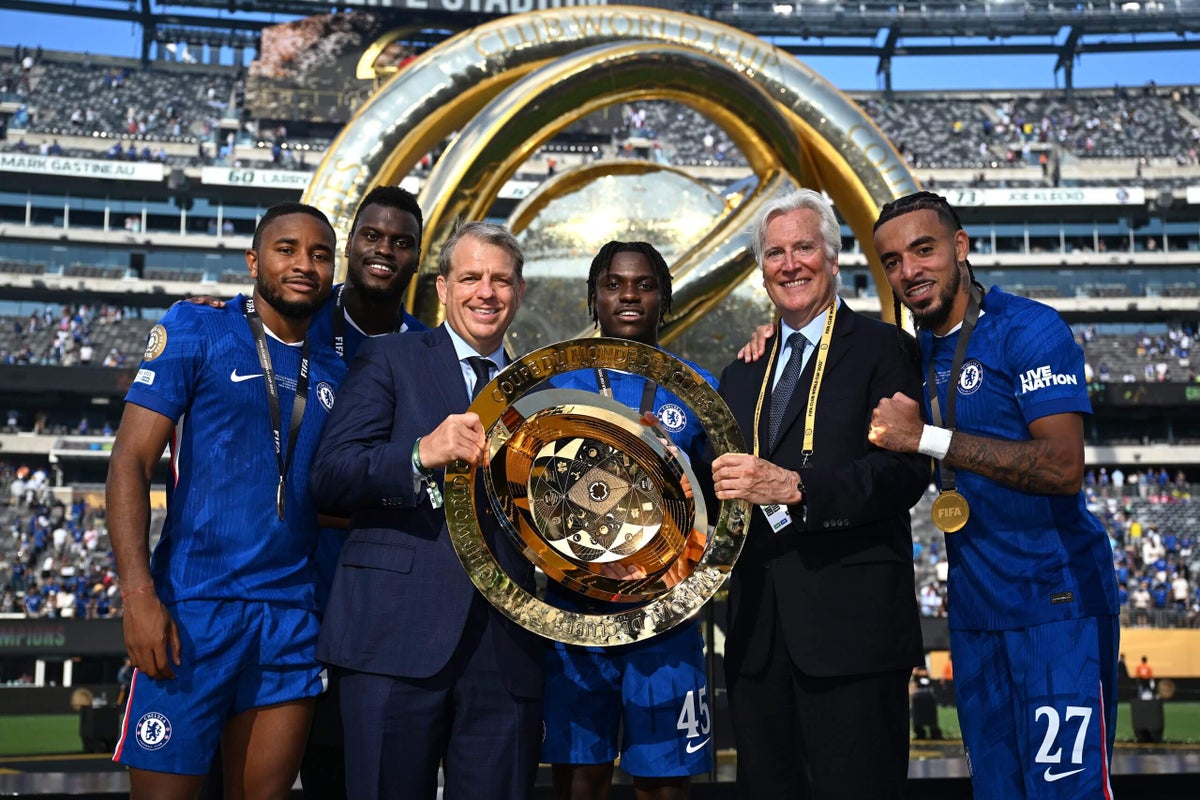
The tumultuous BlueCo era at Chelsea has delivered another momentous twist with the news that Todd Boehly and Mark Walter are in talks to sell their shares in the club to majority owner Clearlake Capital.

No agreement is believed to be imminent, but the sale would provide a form of resolution to long-standing tensions within Chelsea’s ownership group while also potentially easing the regulatory pressure that Walter is facing in the United States.

Here is a look at the key questions surrounding this situation and what it all means for Chelsea, as well as the implications for Walter and Boehly’s flagship sports investment, the Los Angeles Dodgers.


Why is this happening now?

None of the principal parties are commenting, but it is very difficult to view this development as unrelated to Walter’s unexpected sale of the Los Angeles Lakers to Josh Kushner and Bob Iger in a deal that valued the NBA franchise at $12.5billion (£9.2bn) last week. 

That news — just 14 months after Walter had bought a controlling interest in the Lakers from the Buss family at a then-record $10billion valuation — broke against the backdrop of an investigation by the U.S. Department of Justice into the 66-year-old billionaire’s business dealings. 

Bloomberg reported last week that Walter’s sudden sale of the Lakers was sparked by the need to raise cash to pay down loans on the books of his insurance firms at the centre of the federal probe. How much more could be raised by offloading his assumed 12.7 per cent stake in Chelsea? 

Boehly was one of Walter’s partners in his brief Lakers venture, as well as in their hugely successful ownership of the Los Angeles Dodgers. From Boehly’s perspective, this could simply present a good opportunity to exit from Chelsea, an investment that has not panned out as he envisaged when he publicly fronted the BlueCo consortium which purchased the club from a sanctioned Roman Abramovich in June 2022. 

Todd Boehly, left, with Chelsea’s sporting director Paul Winstanley and Clearlake co-founder Behdad Eghbali in 2025 (Robin Jones/Getty Images)

Despite maintaining a public profile with appearances at Stamford Bridge and on stage at various business conferences, Boehly has not enjoyed functional operational control over Chelsea since 2022, with majority shareholder Clearlake Capital directing the club’s strategy and the firm’s co-founder Behdad Eghbali actively involved in all major decisions. 

Boehly’s four-year stint as chairman is also set to conclude next year with Clearlake empowered to pick his successor, potentially making it a natural endpoint for his presence at the club.

Liam Twomey


Who is Mark Walter and what is being investigated?

For a man who built a portfolio of some of the world’s most famous sports teams, Mark Walter has spent most of his 66 years on this planet flying well under the radar.

But then he sold one of those teams, the Los Angeles Lakers, in a stunning deal that took 48 hours to agree, without any of the usual armies of banks and brokers involved, and his name has not stopped popping up on screens since.

Walter at a Lakers game this year (Allen Berezovsky/Getty Images)

An Iowa native, Walter got degrees in business and law before starting a career in a relatively sleepy part of the financial services industry in Chicago in the 1990s.

His big break, although nobody noticed at the time, came in 1999, when he met a member of the uber-wealthy Guggenheim clan and co-founded Guggenheim Partners, a global investment and financial advisory firm based in New York.

There, he was among the first to spot the huge, steady but unsexy amounts of money being kicked out every month by America’s massive insurance market, particularly after the 2008 financial crash, when the valuations of state-based insurance firms plummeted.

Walter and his Guggenheim protege Todd Boehly also realised that you could borrow large sums of money, secured against the dependable flow of policyholder premiums, and then invest that cash in cooler, sexier assets, such as media companies, real estate and sports teams.

The first sports team came in 2012, when, in trademark fashion, he took advantage of then-owner Frank McCourt’s financial difficulties to buy baseball’s Los Angeles Dodgers for $2.15billion. And in another move that he later repeated, he did this as the lead investor in a large syndicate of big names, including Boehly, Earvin “Magic” Johnson and tennis star Billie Jean King.

Stan Kasten, Mark Walter, Magic Johnson, Peter Guber, and Todd Boehly at the Dodger Stadium in 2012 (Chris Williams/Icon SMI/Corbis/Icon Sportswire via Getty Images)

Two years later, Walter led another all-star syndicate in a failed bid for the NBA’s Los Angeles Clippers, losing out to Microsoft boss Steve Ballmer.

But he was not to be kept out of basketball for long, as he led a group that bought the WNBA’s Los Angeles Sparks later in 2014 and then, in 2021, he bought just over a quarter of the Lakers.

A year later, he teamed up with his buddy Boehly to buy into Chelsea, another distressed asset, and in 2025, he bought majority control of the Lakers in a deal that valued the team at $10billion.

At this point, the quiet man from America’s Midwest owned stakes in three of the most famous teams in the world’s biggest leagues, plus the Sparks and North America’s professional women’s ice hockey league, the PWHL. And he had barely given a single media interview in his 40-year career.

He still hasn’t but everyone wants to talk to him now because the whispers about his complex web of insurance companies, secured loans and high-profile investments, which have always been there for those who were listening closely, have become blaring sirens.

Bloomberg and the Financial Times reported that last year the Federal Bureau of Investigation seized Walter’s phone and laptop as part of a probe into his empire. A spokesperson for the FBI declined to comment.

In February, two of his insurance firms received subpoenas from the U.S. Attorney’s Office for the Southern District of New York, which specialises in white-collar crime. The firms had to confirm this news in regulatory filings in March, when they also revealed they were under a parallel investigation by the Securities and Exchange Commission.

The issue Walter faces, and has already acknowledged by his actions, is that the money that regular folk pay to insurance companies is meant to be safe, which is why the sector is more highly regulated than others. There have been too many examples in the past of disreputable types just stealing people’s premiums.

So, insurance firms are not meant to put too much of their money in any single pot — they must diversify their own risks. Likewise, they must declare if any of their investments are with affiliated companies, as that would increase the risk of a problem elsewhere in the wider group impacting the insurance firm.

Walter with President Trump at the White House after the Dodgers won the 2024 World Series (Kevin Dietsch/Getty Images)

Delaware Life, one of Walter’s companies, has already been forced to reclassify nearly $17billion of its investments as they were clearly with “affiliated” businesses in his empire, most notably a $4.1billion loan to the Dodgers’ ticketing subsidiary.

All in all, it is estimated that Walter has needed to reclassify about $20billion worth of affiliated deals, mostly loans he has secured through his insurance businesses to invest in his sports properties.

The various investigations are looking into whether he did this illegally.

In the meantime, whether he acted illegally or not, he is in a race to refinance those loans and maintain the credit ratings of his companies. As there are not many buyers for loans under investigation, he has only one real option. He needs cash and fast.

So, he has already sold the Lakers and his 12.7 per cent stake in Chelsea will be next. The big question is whether that will be enough. Nobody that The Athletic has spoken to in American sports finance circles believes it will be, so, at the very least, a stake in the Dodgers is almost certainly available, too.

Walter did not respond to messages from The Athletic seeking comment for their reporting around the story, and federal officials at the agencies conducting the probe declined to comment.

Matt Slater


Who owns what at Chelsea?

Chelsea went from a one-man kitchen to a many-cheffed banquet in early 2022, when the Russian oligarch Abramovich was jettisoned and a merry band of private equity folk took up the reins.

The £2.5billion takeover which completed in May of that year granted a majority shareholding to Eghbali and Jose E Feliciano’s Clearlake Capital which, today, owns 61.85 per cent of the shares in 22 Holdco Limited, the UK-based holding company which oversees both Chelsea and Ligue 1 side Strasbourg.

The remaining 38.15 per cent is held by Blueco 22 Holdings LP, a UK-registered limited partnership. Six partners make up that partnership: CFCB, LLC, controlled by Boehly; SME FC Holdings, LLC, controlled by Walter; Hansjorg Wyss as an individual, and two further entities affiliated with him; and Greenelite CFC, LLC, a Delaware-registered business whose controlling owner is unknown.

That 38.15 per cent is not split evenly, with only Boehly and Walter, along with Eghbali and Feliciano on the Clearlake side, listed as having a ‘significant interest’ in Chelsea under Premier League rules. It means each of Boehly and Walter beneficially own at least 10 per cent of the club, while Wyss and whomever heads Greenelite split the rest.

On the assumption Boehly and Walter own a third each of Blueco 22 Holdings LP, each would own a 12.7 per cent beneficial stake in Chelsea. In other words, a little over a quarter of the club might be about to change hands.

Chris Weatherspoon


How much might Walter and Boehly’s shares be worth?

Beauty is in the eye of the beholder and never more so than at Chelsea, where that £2.5billion purchase of four years ago has been followed up with enormous spending, most of it on players.

In total, as previously reported by The Athletic, funding of the BlueCo project hit £4.2billion by the end of June 2025, and more has gone in since. That June 2025 figure was split £2.9bn in equity and £1.3bn in external borrowings, including a payment-in-kind loan which is accumulating interest at heady rates.

Reporting from The Telegraph on Monday evening stated Boehly and Walter were searching for a stake sale that would value Chelsea overall at north of £5billion, a sum which seems fanciful given how things have regressed on the field in recent years and the massive costs that have been incurred in the process. Several industry valuers have recently pegged Chelsea’s worth at a little over £3bn, or not much more than the to-date equity commitment of the current owners.

There’s naturally an incentive on behalf of the sellers to pump up the price, but so, perversely, might Clearlake be reluctant to snaffle up more shares at too low a cost. Doing so would signal to the market that Chelsea aren’t worth anywhere near what the current owners hoped they would be, even just over four years into their premiership. Clearlake have no immediate desire to sell but there is a need for Chelsea’s value to appreciate sooner rather than later.

Chelsea fans protesting against the owners before a Premier League match against Southampton last year (Justin Setterfield/Getty Images)

What is clear is that today Chelsea are worth nowhere close to what Clearlake and other prospective buyers were told they soon might be when the club was up for sale back in spring 2022. Then, Joe Ravitch, co-founder of Raine Group, the merchant bank tasked with selling the club, said: “My guess is that Chelsea and all of the top Premier League clubs will probably be worth in excess of $10billion (£7.7bn then, £7.4bn today) in five years.”

Short of oil spurting out of the Stamford Bridge centre circle inside the next 12 months, that guess will be falling some distance south of accurate.

Chris Weatherspoon


What’s the relationship been like between Clearlake and Boehly and Walter?

The Athletic went into great detail two years ago on how both sides (Boehly and Clearlake) were looking to buy each other out as disagreements over how to run Chelsea increased tensions behind the scenes

This just feels like an inevitable conclusion as Clearlake have always maintained they were not going to cash in and they are the majority shareholder. 

Walter has always been more of an investor than someone heavily involved, albeit his connection is with Boehly due to their time together with the LfA Dodgers and investment firm Guggenheim Partners. 

Another member of the board representing the Clearlake side is Feliciano, but he is rarely seen at Chelsea now and he has headed the investor group which has just bought MLB side San Diego Padres.  

Jose E Feliciano watching the San Diego Padres earlier this year (Meg McLaughlin / The San Diego Union-Tribune via Getty Images)

It has been made clear that the relationship between Clearlake and Boehly has remained a professional one despite any difference of opinion. However, when Boehly and Eghbali attend matches at Stamford Bridge, it is noticed by observers how they do not watch them together and stay in their own boxes in the West Stand.   

Simon Johnson


Hasn’t Walter just sold the LA Lakers? What does this mean for the LA Dodgers?

The news that the Lakers were being sold shocked several within the Los Angeles Dodgers organization – after all, Walter was in the process of integrating the two iconic franchises and even having two notable figures in the baseball side’s rise to dominance (president of baseball operations Andrew Friedman and special assistant Farhan Zaidi) consult on the overhaul of the basketball operation.

Dodgers president and CEO Stan Kasten addressed the sale on Wednesday, saying, “This is a Lakers story. It’s not really a Dodgers story.” The executive said nothing is expected to change with the Dodgers and that there are no plans for the organization to sell. In that same conversation with reporters, however, Kasten said he didn’t have any information about the status of the ongoing federal investigations into Walter’s insurance companies. That can change things.

Major League Baseball’s labor strife, which likely will culminate in a lockout this winter, could be another factor as the league’s owners seek to implement a salary cap. The Dodgers are the target for much of the league’s marketing push heading into negotiations, with MLB arguing that the organization’s extreme spending and more than $1billion in deferred contracts disrupted the league’s competitive balance.

Walter welcomes Shohei Ohtani to the Dodgers in 2023 (Meg Oliphant/Getty Images)

The Dodgers have been successful in Walter’s tenure but have hit new peaks on the field (with back-to-back World Series titles) and financially (earning an estimated $1billion in revenue in 2025) since the arrival of Japanese two-way superstar Shohei Ohtani. For what it’s worth, Ohtani – whose contract contains a rare “key man clause” tying him to Walter and Friedman – is not expected to go anywhere even if Walter does wind up selling the club.

Fabian Ardaya, LA Dodgers writer


What does this mean for how Chelsea operate?

Not a great deal will change to be honest. While Boehly has had a sign-off on all decisions, his input into how things are run has reduced dramatically over the years. 

Boehly had a big influence on the first transfer window following the takeover in May 2022 when he was interim sporting director. But he has taken much more of a back seat since full-time sporting directors were put in place. There are five now in Paul Winstanley, Laurence Stewart, Joe Shields, Sam Jewell and Dave Fallows. They run the sporting side of the club while Jason Gannon heads the business aspect as the president and chief operating officer. 

Out of all members of the consortium, it is Eghbali that you will see at most games and is often seen heading to the dressing room after matches at Stamford Bridge. He is a fairly regular visitor at the training ground, too. 

On buying the club, clauses were put in place that shares could not be sold to those outside the consortium for 10 years. This means only Clearlake and Wyss can buy Boehly’s or Walter’s stake. Should Clearlake increase their share from its current 61.85 per cent, it will just further cement the fact that they are the ones running the show.

Simon Johnson


>

Continue Reading

Sports

Richard Masters on… Chelsea payments, FIFA’s fiasco and the arrival of Jeff Bezos

Published

on

“There’s a lot of new about it,” is Premier League chief executive Richard Masters’ sales pitch for the new season, which starts on Friday evening when Arsenal, the newish champions, host Coventry City, the newish competitors.

With Pep Guardiola on sabbatical again, Manchester City are one of nine teams under new management. Mohamed Salah, one of the league’s icons, has moved to Turkey, but Premier League sides have already spent more than £2billion ($2.7bn) on new talent, with more sure to come.

Aston Villa and Crystal Palace enter the season as champions of European competitions, Palace for the very first time, Villa for the first time in a long time, while Bournemouth can look forward to their first set of European club fixtures.

This will also be the first season played under a fully operational Independent Football Regulator, which partly explains why the league’s 20 clubs will also be following new financial rules and we may even get a new financial settlement between the Premier League and the English Football League.

New, new, new… that was certainly the word of the day when Masters hosted a scribble of football writers at the Premier League’s London HQ this week to answer as many questions as we could squeeze into half an hour of his busy schedule. And as he seemed not to completely hate the experience, we managed to get seven minutes of added time.

Given the fact that opportunities to get the boss of the world’s most popular domestic football competition on the record for this long do not happen very often, we thought we would share pretty much all of it with you, bar a few snips here and there for readability and to avoid repetition.


The forever war: Manchester City v Premier League

However, we are going to start with some very obvious repetition, as Masters has given a version of this answer every year for what seems like most of my adult life.

When asked, without any hope of receiving a fresh response, if there will ever be an outcome to the Premier League’s case against Manchester City, the small matter of those 100-plus charges for a decade of alleged cheating, Masters said: “Yes, there will be an outcome, but I literally can’t say anything about it.

“There’s only one available outcome, which is to allow the process to reach its natural conclusion. I can’t talk about the substance of the case. I can’t talk about the timing of the case. I’ve always been very clear about that. I accept it’s taken longer than anyone expected and obviously people are eager to know what the outcome is, but the process is the process.”

For those of you still counting. It is now eight years since German outlet Der Spiegel published the hacked emails at the centre of the controversy, six years since Manchester City overturned its two-year ban from European competition at the Court of Arbitration for Sport, three and a half years since the Premier League charged the club and two years since an independent panel started a 12-week hearing to assess those charges.

(Michael Regan/Getty Images)

Has something gone wrong? Does this delay suggest something needs to change?

“No,” he said. “We’ve always said the commission needs the time and space to do their work.

“It’s the league’s job, providing the evidence is there, to put serious allegations in front of an independent commission to let it establish the truth. That process shouldn’t be qualified by the amount of time it takes.”

But the commission has been mulling it over since December 2024?

“I just have to accept the fact that people are frustrated and want to know (the result),” he said. “The process is independent. It will take as long as it takes.”

And those frustrated people include the other clubs in the league?

“I talk to clubs all the time and it’s not top of the list,” he said. “There are lots of other things to talk about.”


Chelsea’s hidden payments 

We can imagine, we all nodded, like how they feel about the £10million fine and suspended transfer ban the league gave to Chelsea earlier this year after they admitted making £47million worth of off-the-books payments to agents and third parties between 2011 and 2018?

For some added context, those payments helped Chelsea recruit the likes of Samuel Eto’o, Eden Hazard and David Luiz. Players you would think provide a team with a sporting advantage.

The Premier League, however, like UEFA before and the Football Association after, was in a difficult spot, as it had to balance the undoubted seriousness of the offences — and their impact — against the equally undisputed fact that these organisations only knew about the offences because Chelsea’s new owners discovered them during the due diligence they did when they bought the club from Roman Abramovich in 2022 and promptly fessed up.

“In the end, a sanction agreement was reached and it was the largest fine in Premier League history by quite some distance, and it was also the only sporting sanction, albeit a suspended one, that’s been given outside the PSR cases,” said Masters, when asked a question that suggested the sanction was a tad too generous.

The mention of PSR was a reference, of course, to the points deductions Everton, Leicester City and Nottingham Forest have been hit with for breaching the league’s old financial rules, the prof and sustainability regulations.

“(The Chelsea) sanction had to go to an independent commission and part of their job is to opine on whether the sanction is unduly lenient,” Masters added. “They did not in this case.”

(Steve Bardens/Getty Images)


Other people’s problems, the best kind

Having spent at least until the first hydration break of our allotted time with him on parochial matters, we started to branch out into more global issues.

As you may have gathered, there was a football tournament in North America this summer. Lots of people really liked most of it, but there were a few issues that caused a bit of a flap there and elsewhere.

What impact will all of that have on the Premier League?

“I’m a big fan of the World Cup,” said Masters.

“It’s a great recruiting sergeant for bringing new people into the game. Normally, everyone gets a little lift post a World Cup or Euros, as there are just more people interested in the game or who want to follow players they’ve met along the way.”

Indeed, we nodded, but what about those less savoury moments? The rows about certain teams being favoured by the referees, inconsistencies with new pieces of technology or, dare we say, the world’s most powerful politician calling a football official to have a star player’s ban suspended?

“I do scroll through social media every now and then, (and) I bump into some of the stuff that people are saying out there,” he said.

“But I believe that when our fans turn up — we’re 99 per cent sold out — and they look at what’s on the pitch, it’s everything it should be. Everyone is trying their best. The referees are trying their best. There’s lots of controversy but it is what it says it is.”

Speaking of football officials and lots of controversy, we were all eager to hear his take on the recent travails of FIFA boss Gianni Infantino. A touch of schadenfreude, perhaps?

Gianni Infantino has had a testing few weeks (Carl Recine/Getty Images)

“I don’t think the (short-lived FIFA Forward Enterprise) concept is the only thing that has contributed to the split in the confederations,” he observed sagely.

“It’s an accumulation of things over a period of time — the expansionism, the taking football in a particular direction — that has led to this situation where we have a split FIFA.”

To be fair to Masters, he has been talking about FIFA’s arrogance and overreach for some time.

“This proves what we’ve been talking about for five years: the calendar, competitions, decisions that impact on domestic football competitions,” he continued.

“The Premier League has been the same size since 1994. It begins in August and ends in May. All the new football is either at regional or global level, and the amount of football that players play now… we’re at saturation point.

“Leagues don’t have a meaningful seat at the table at all. We’re not consulted on the big decisions. We think that’s wholly wrong and that’s why we’ve regrettably had to put in a complaint at the European Commission. We’ve all seen what’s happened over the summer, but it feels like more of the same.”

That complaint was lodged in October 2024 by European Leagues, the umbrella group that represents the interests of Europe’s leading domestic leagues, and FIFPro, the global players’ union. They want the Brussels-based body to investigate FIFA for potential breaches of European Union competition law, namely the abuse of a dominant market position.

Surely this summer’s FIFA drama is all the grounds the commission needs to open an investigation?

“The European Commission moves at its own pace,” said Masters, pumping the brakes.

“The European Leagues team is in pretty regular dialogue with the people there and at some point a decision will be made. We’re not going to put pressure on that process today.”

And while we wait for that, whither FIFA?

“What needs to happen is for another candidate to emerge with a new, different offer that can unify the confederations,” said Masters.

“Part of that offer should be to look at governance reform. That’s not to say it should be Europe dictating that reform — that’s not what this should be about. But, given what’s happened, it would be right to look at those governance structures and the role of the president.”


New money, great returns

While we were on the subject of FIFA, one of our number asked if any exciting, new private-equity fund had ever offered him a large cheque for a small slice of the league’s future revenues.

“We’ve never had those discussions with anybody,” he said firmly.

Really?

“Perhaps we don’t give out the right signals,” he said. “Even during Covid, when people had big problems in front of them, we didn’t go near a solution like that. The Premier League model works very well. We have a very strong media rights business, we’re number one in that market, and there’s no need for us to access that sector.”

That does not mean the league is against any of its clubs bringing in new investment, though. On the contrary. Asked how he feels about the prospect of Amazon founder Jeff Bezos being involved with Liverpool, Masters said: “That is proof positive that people still look at the Premier League and think it’s a strong investment.

“It’s also a testament to the job (current owner Fenway Sports Group) has done. Think about the club they bought all those years ago, the position it was in then and the position it’s in now, the progress they’ve made and all the trophies they’ve won.”

Jeff Bezos is part of a consortium that has bought 38 per cent of Liverpool for $2.7bn (Michael M. Santiago/Getty Images)

Quantity, not quality? 

And Masters is right — nobody could accuse Premier League clubs, of all sizes, of not investing in new talent. No other league gets close to the Premier League’s net spend these days.

But that does not mean all the best players in the world play in the Premier League. Far from it. In fact, some might say almost none of the world’s best players play in the Premier League. Is that true? If so, is it a concern?

“I don’t think the Premier League has ever been led by stars — it’s the whole league offer, the competition,” said Masters.

“If this season has a title race, a race for European spots, a relegation battle and another few surprises along the way, that’s its inherent beauty. You never quite know what you’re going to get.

“It’s different in other leagues where they only have a couple of teams who can potentially win it, and they have star-studded line-ups. Of course, you’d like as many big names as you possibly can, but the Premier League has just under 50 per cent of the world’s top 100 players, so there is no shortage of quality within the league. And while we have a few big names leaving the stage, new stars will emerge.”

Fair points, all of them, but another of the Premier League’s great strengths was that it might not have been home to all of the world’s best players, but it was where the planet’s top coaches wanted to be. Is that still the case?

“I think you’ve got to give (the new managers) a chance,” he said.

“There are nine new managers and to get into a Premier League technical area you’ve got to be at the top of your profession. It’s a chance for the Premier League to look slightly different this season. One era finishes, another one starts.”


New deal or no deal

The English Football League will be hoping that sense of renewal applies to the topic of how English football shares its wealth. After all, the Premier League used to be known as Division One until the country’s biggest clubs realised that pay-TV channels were going to revolutionise sport and it would be nice if they got to keep more of that money for themselves.

Fair enough, you might think. That’s capitalism. All fine until you remember the Premier League remained connected to the rest of the game, with three teams coming up from the EFL each season and three teams going the other way.

Those broadcast billions do not belong solely to whichever 20 teams are in the top division in any given season. The Premier League has become a global sensation because it sits atop the world’s deepest and most vibrant professional football pyramid. That pyramid deserves a fair share of the credit and annual revenues.

So, how are talks going on between the Premier League and EFL to replace a financial distribution model that has been in place since 2019 and nobody thinks is fit for purpose anymore?

“Two weeks ago, our clubs unanimously approved a new proposal,” said Masters, encouragingly.

“It includes all the financial elements you’d expect: an increase in solidarity funding, a phased reduction in parachute payment and a whole bunch of other things.

“But we’ve agreed not to talk about it in public while we’re still negotiating how to make a deal work.”

Oh. And he meant it.

When asked if he was confident a deal can be done without needing the IFR’s involvement, he added: “We’re very much in favour of an industry-led solution and not having to use what could be a very damaging backstop process to find a resolution.

“I’m very optimistic. We think the proposal is fair to both sides.”


Any other business? 

By this point, we had entered added time and we could hear the whistles from the league’s media team at the back of the room. It was time to fire random questions at him, speed-dating style.

When are we going to scrap the domestic TV blackout on Saturday afternoons?

“It’s not just our decision,” he sidestepped. “It’s us, the EFL and FA, and we’re all backing it for the next three seasons. In about 12 to 18 months, we’ll think about whether we’ll continue that. It’s an all-football decision and it’s quite a big one. But it’s a decision for the future.”

The Premier League keeps taking teams to North America for summer friendlies. Have you given up on China?

“No, we’re looking at it for next summer,” he said. “Our Asian fans are very important to us. We may end up there next summer.”

Like Manchester City, Liverpool, Chelsea and the rest, the United Kingdom has a new gaffer in the dugout. What do you make of him?

“I haven’t spoken to (British Prime Minister and huge Everton fan Andy Burnham) since he’s taken over — he’s obviously a very busy man,” said Masters. “But we know he’s a big football fan, and he’s going to talk about football.

“But the Premier League is politically neutral; we have to get on with all governments and we think we can help. We will produce £33billion (in gross value added) over the next three years, with billions going to the exchequer. We support 110,000 jobs, all over the country, and we’re a fantastic global export, rooted in our communities.

“There’s so much good work that can be done with the whole of English football. We’re talking to the government about how we can help young people, how we can help with regional regeneration. We can be a real asset.”

And how about you, Richard? You have run the Premier League for seven years (which makes Burnham his sixth counterpart in No 10) — are you getting sick of our questions yet?

“It’s eight, actually. I include the interim year (in 2018),” he said, with a smile.

“No, I really enjoy it. It’s a privilege and opportunity to be involved in this incredible league.”

A positive note on which to finish and a good starting point for the new campaign. Good luck, everyone.

>

Continue Reading

Sports

Blue Jackets’ Elvis Merzlikins sidelined indefinitely following shoulder surgery

Published

on

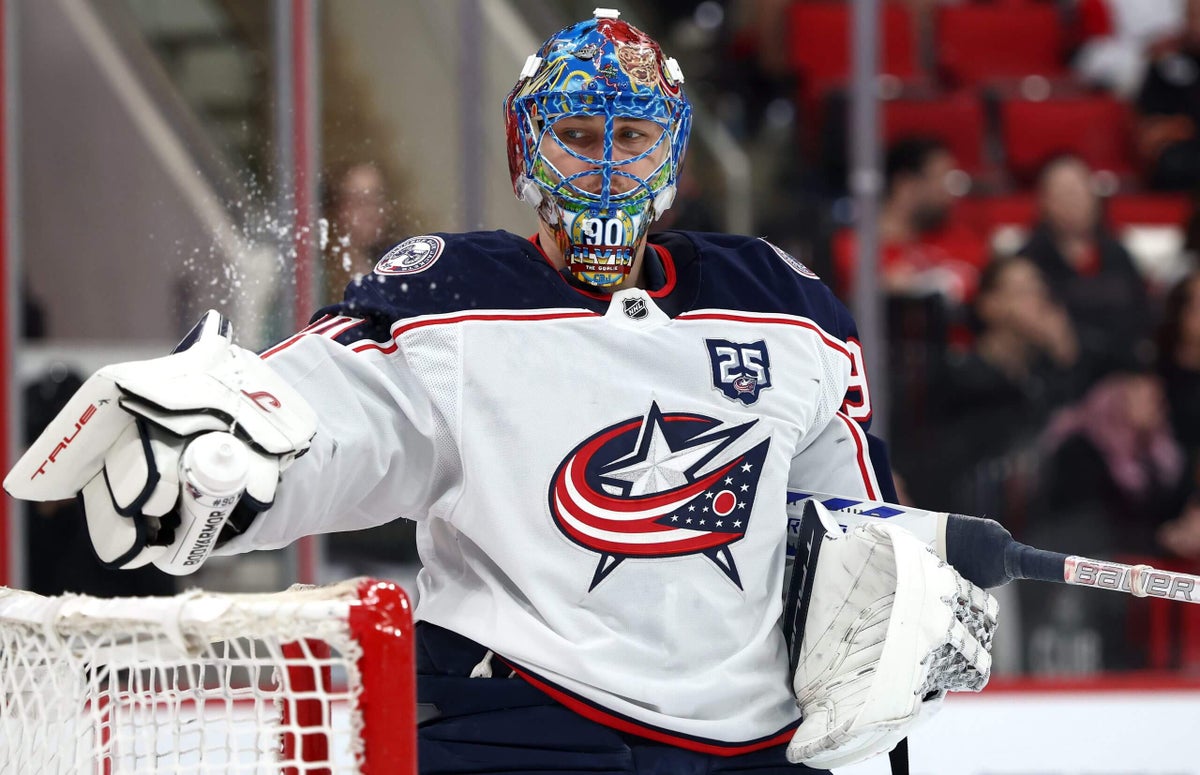
Elvis Merzlikins stands in front of the net during a game against the Carolina Hurricanes in April.

Elvis Merzlikins first mentioned feeling pain in his shoulder last month. Jared C. Tilton / Getty Images

COLUMBUS, Ohio — The Columbus Blue Jackets may be without goaltender Elvis Merzlikins when the 2026-27 season starts.

Merzlikins, who complained to the club last month about discomfort in one of his shoulders, had surgery to fix the problem Monday, according to a team news release. The Blue Jackets said there is no established timetable for Merzlikins’ return.

“Elvis informed us a few weeks ago that he was experiencing some discomfort in his shoulder during his offseason workouts,” Blue Jackets GM Don Waddell said in the statement. “Following an MRI, it was determined that surgery was the best course of action.

“He’ll be evaluated again in a few weeks, at which time we’ll have a clearer idea on when he will be back on the ice.”

The Blue Jackets did not specify which procedure was done on the shoulder. The recovery time can vary dramatically depending on the procedure.

Columbus opens training camp Sept. 16, with the regular-season opener set for Oct. 1 against Buffalo.

Merzlikins lost the starter’s job to Jet Greaves last season, and is entering the 2026-27 season in the final year of a contract that pays him $5.4 million per season. If he’s sidelined, look for Pheonix Copley, who was signed as a free agent in early July, to play in support of Greaves.

Last season, Merzlikins went 14-11-3 with a 3.40 goals-against average and an .883 save percentage.

Connections: Sports Edition Logo

Connections: Sports Edition Logo

Connections: Sports Edition

Spot the pattern. Connect the terms

Find the hidden link between sports terms

>

Continue Reading

Sports

Why are Arsenal signing Konsa and how strong could the Gunners be?

Published

on

Many Arsenal fans are wondering if Konsa will play regularly when Saliba and Gabriel are fit.

Arteta’s first-choice backline of Timber, Saliba, Gabriel and Calafiori appears hard to break into, on paper.

But the Gunners played 63 games in all competitions as they won the title, reached the final of the Champions League, the final of the Carabao Cup and the quarter-final of the FA Cup.

Arsenal were plagued by injuries during the campaign and Arteta is trying to avoid those issues this time.

In the aftermath of the Champions League final, Arteta was quick to say that the Gunners need to be “very ambitious, very fast, and very smart” to build on their Premier League win.

Arsenal spent £250m last summer. The arrival of Konsa will take this summer’s outlay to over £150m.

Arteta has some of the best depth of quality in Europe to call on, in a squad worth £1.19bn according to Transfermarkt.

When asked about the perfect number of players in his squad, Arteta said there are variables he takes into account.

“It depends on the ability and the history of those players,” Arteta said.

“I think there is a lot of factors that count. Twenty two outfield players and three goalkeepers of what is enough, or maybe you know more.

“You need to understand what happened in the previous season, the injury record of those players, the versatility of certain players.

“But I’m sure we’re going to hit the right number to have a bit of both a lot of competition with the right level of cooperation in the team and everybody feeling important.”

>

Continue Reading

Trending

Copyright © 2017 Zox News Theme. Theme by MVP Themes, powered by WordPress.