
Sports
Ranking the 50 best players in the Premier League before the season begins

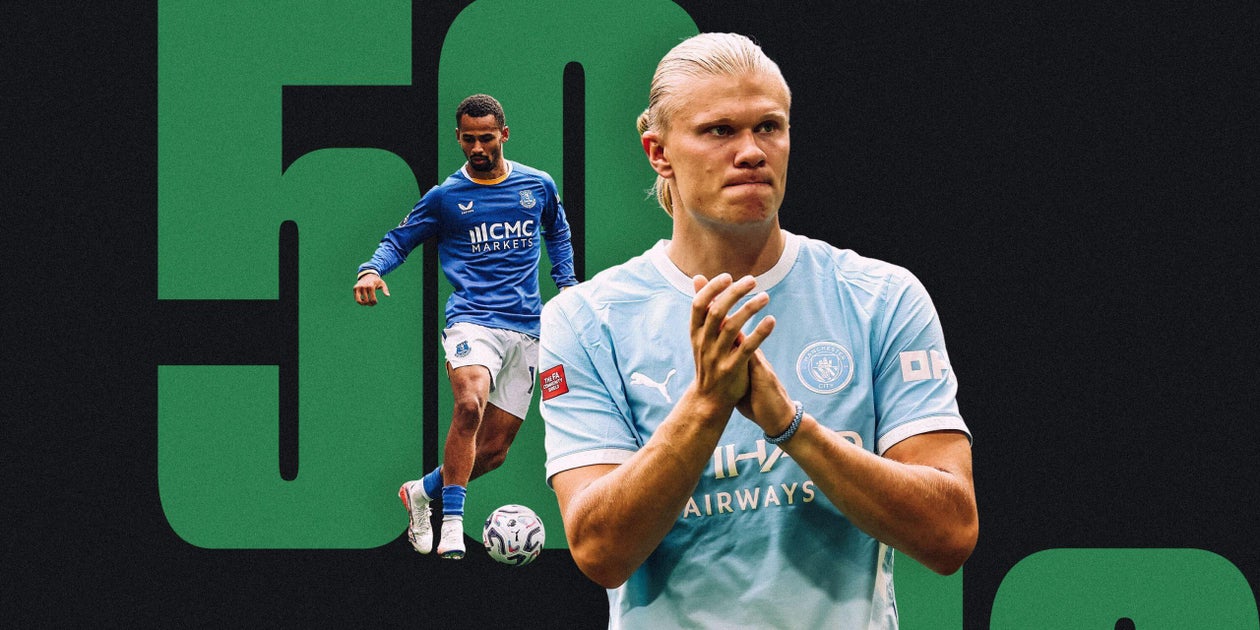
Who is the best player in the Premier League?
It’s a simple question with a complicated answer, one that The Athletic will attempt to answer throughout the 2026-27 campaign. We’re launching our Premier League Player Rankings, with the aim of using form, data and the eye tests of Phil Hay and Tim Spiers to assess exactly who the league’s top 50 footballers are.
Our list will be updated every month and we start in August with one eye on last season’s performances while looking ahead to what we might expect from these gifted players in 2026-27.
Mohamed Salah and Rodri have gone, diminishing the league’s superstar power and pushing a couple of unexpected names into our top 10. Despite those departures, it’s a sign of the league’s strength that a £55million midfielder who won the Premier League and the World Cup last season doesn’t make the list, and neither does a gifted £73million striker who plays for Manchester United. Then there’s the World Cup-winning goalkeeper who, if he doesn’t get a move, may not even get a game.
If that outrages you, by all means, head to the comments, but have a gander at the list first and tell us who should miss out instead, because the competition is fierce.
Right, to the rankings!
50. Jordan Pickford (Everton)
One of the most consistent goalkeepers in England and across international football. The temperament of a goalkeeper is incessantly under the microscope and Pickford, who is a huge personality in Everton’s dressing room, has proved time and again that he can handle the big occasion.
49. Iliman Ndiaye (Everton)
Only Jeremy Doku completed more dribbles last season than Ndiaye (73), whose inventive methods of taking on defenders were a highlight of Everton’s campaign. His unpredictable changes of direction and close control via a low centre of gravity make him one of the Premier League’s best wide attackers, although he can also play centrally too.
48. Marcus Rashford (Manchester United)
What to make of this guy? He withered at Manchester United before meandering through a loan at Aston Villa. Then he tipped up at Barcelona, claimed a Liga title, impressed in the Champions League and scored 14 times across all competitions. Does this mean United should reintegrate him? Does it mean Spanish football isn’t so strong? Does it mean that Rashford is back? Whatever the right answer, we certainly haven’t finished talking about him.
47. Alex Scott (Bournemouth)
After the highest league finish in their history, Bournemouth supporters voted Scott as their player of the year ahead of Rayan, Junior Kroupi and Marcos Senesi, which speaks volumes of the 22-year-old’s contribution in midfield. With his floppy hair and his Alice band, he was never going to be a no-nonsense right-back and the look suits him better as a stylish, forward-thinking, progressive, passing, ball-carrying midfielder. One more good season at Bournemouth and a huge move will surely await.

Alex Scott celebrates scoring against Arsenal in April (Robin Jones/AFC Bournemouth via Getty Images)
46. Youri Tielemans (Manchester United)
The signing of the season? For £35million ($47m), United are buying a 29-year-old ready-made creative genius who makes complicated football look straightforward and very pretty. Whether he’s threading passes or firing off inch-perfect 40-yard pings, Tielemans is very enjoyable to watch and will add another dimension to United’s attack this season.
45. Matheus Cunha (Manchester United)
Went from a big, grinning, maverick fish in a small pond at Wolverhampton Wanderers, where he was barely even required to run but would still win matches with one unruly swish of his right boot, to more of a supporting role at Old Trafford in what felt like a year of learning. In that year, he scored 10 goals and showed glimpses of his best form, with Michael Carrick’s challenge being to find his best role and position in their front line.
44. Micky van de Ven (Tottenham Hotspur)
Without being unkind, Tottenham’s 17th-placed finish last season didn’t make Van de Ven look like a top-tier Premier League player (quite honestly, who did it paint in a good light?) He definitely is, though, and the nine months ahead should be far more flattering. Much as sprinting speeds are fun to record, Van de Ven is a lot more than epic pace. There’s a good reason Usain Bolt didn’t make it as a footballer.

Micky van de Ven scored twice against Everton in October (Carl Recine/Getty Images)
43. Eberechi Eze (Arsenal)
Like a few on this list, you’d expect Eze to kick on and rise up the ranks this season. A joyous footballer in so many ways who lived the dream last season, winning the Premier League title and looking like just about the happiest man in the country. When he receives the ball on the half turn, something eye-popping at best and interesting at worst is about to happen.
42. Rayan (Bournemouth)
Be honest: what did you really know about this lad before he pitched up at Bournemouth from Vasco da Gama? Bournemouth have an eye for talent, so we could take it as read that they might have uncovered another little gem in January, but they evidently went after Rayan with total confidence because come January next year, a £130m release clause will become active in his contract. And you know what? The glimpses of the 20-year-old almost justify it.
41. Mateus Fernandes (Tottenham Hotspur)
Only 22, but capable of running a Premier League midfield on his own. He was tremendous for West Ham United last season in a god-awful team and it was only by virtue of Portugal (allegedly) having the best midfield in world football that he somehow didn’t go to the World Cup. Spurs have signed a heck of a player: technically gifted, press-resistant, energetic and sublime, with a long-range stunner up his sleeve.
40. Viktor Gyokeres (Arsenal)
One of the most difficult Premier League players to judge. How good is he? Yes, he’s a battering ram; yes, he’s got a foot like a traction engine; yes, his goalscoring prowess can be phenomenal — but he’s yet to consistently produce the good against elite opposition and, let’s be honest, as a footballer, there is a lot to be desired. The goal numbers at Sporting CP were absurd (97 goals in 102 appearances) and 14 for the champions last season represented a fine start. Now for more.
39. Sandro Tonali (Tottenham Hotspur)
Say this for Spurs: they took this latest near-miss with relegation very seriously. The club’s owners piled £100m into the club in June and they’ve gone at the transfer market like a shopping addict on payday. Tonali was fairly easy pickings from Newcastle United, who seem incapable of hanging out ‘not for sale’ flags, and his arrival massively enhances Tottenham’s line-up at a stroke. There’s a bit of a wild streak in Tonali, which Roberto De Zerbi will love.
38. Ollie Watkins (Aston Villa)
An underused player for England at the World Cup (aside from the third-place play-off, he was on the pitch for just six minutes against Panama), Watkins has become one of the Premier League’s most reliable goalscorers in recent years, with tallies of 16, 16, 19 and 15 in the past four seasons for Villa. He’s not the flashiest, not the most elite striker, but his movement and work rate are a nightmare for defenders and his consistency in front of goal is there for all to see.
37. Adam Wharton (Crystal Palace)
Thomas Tuchel’s decision not to take Wharton to the World Cup, even as an insurance card, is still pretty baffling. Wharton’s passing warms the soul: breaking the lines, intent on playing forward and progressing attacks with pleasing rhythm. Far be it from The Athletic to start a bidding war for him, but if you were putting money on the next centre-mid to move for £100m-plus, the 22-year-old would be a sensible bet. Footballing intelligence is Wharton all over.

Adam Wharton pings a pass against Nottingham Forest in August 2025 (Sebastian Frej/Getty Images)
36. Bryan Mbeumo (Manchester United)
Plenty of eyebrows were raised when a 26-year-old forward who had spent the previous six years with Brentford set Manchester United back £71million last year, but the likeable Cameroonian pretty much lived up to expectations at Old Trafford with hints of more to come. In terms of energy, intelligence, speed and direct attacking in behind defences, there are few better in the league.
35. Marc Guehi (Manchester City)
If you asked artificial intelligence to build the archetypal Premier League central defender, it would come out with something along the lines of Guehi. He’s a classy all-rounder and you wonder how Liverpool would have fared last season had his proposed transfer there not fallen through while he was lying in a scanner in London — because he’s precisely the sort of foil Virgil van Dijk was crying out for alongside him. England will need a new captain when the day comes for Harry Kane to retire. Guehi has the right credentials.
34. Phil Foden (Manchester City)
The best player in the country in the 2023-24 season has endured a fallow couple of seasons, with his indifferent form costing him a place in England’s 2026 World Cup squad. Aged 26, this is the year to prove that class really is permanent. Foden is surely too good a player not to start bending matches to his will again.
33. Igor Thiago (Brentford)
The 25-year-old made a Brazil squad that had no room for Joao Pedro but if Carlo Ancelotti is regretting anything about his choices, it’s probably the thought that he could squeeze a few more drops of magic out of Neymar. Brentford lost two big players in 2025 — Bryan Mbeumo to Manchester United and Yoane Wissa to Newcastle — but their exits allowed Thiago to become the main man, and a haul of 22 league goals in 2025-26 was ridiculously good. He’s tailor-made for the way Brentford play and a prime example of a forward who fits a certain tactical model.

Igor Thiago broke into the Brazil squad, scoring in May’s pre-tournament friendly against Panama (Wagner Meier/Getty Images)
32. Ezri Konsa (Aston Villa)
He almost goes under the radar due to his unruffled, no-nonsense, uncomplicated defending, rarely requiring the need for a highlight-grabbing last-ditch sliding tackle because he has already read and cleared the danger before the need for heroics. His calmness in possession and versatility across the back line are other reasons champions Arsenal have targeted him this summer.
31. Reece James (Chelsea)
It sounds ridiculous but 20 league starts in the Premier League last season was a big step forward for James. He was losing years to injury, and the fact that he turns 27 in December is a reminder of how quickly time catches up with a player. Injuries seem destined to stalk him to some degree, but there aren’t many better right-backs in England. You’ll just find a whole load with more reliable fitness records.
30. Gianluigi Donnarumma (Manchester City)
The man has the wingspan of a dragon and it’s hard to think of anybody more physically suited to playing in goal. He’s an undeniably quality goalkeeper, yet the odd thing is, Paris Saint-Germain were happy to move him on a year ago — a big call vindicated by their second Champions League trophy in a row — and City signed him despite the suspicion that his distribution might not be quite good enough for Guardiola’s tactics. As it turned out, perceived weaknesses in his passing range weren’t a huge problem and Donnarumma pulled off some blinding saves during his first year at the Etihad. The bottom line here: he’s elite in his position.

Gianluigi Donnarumma flies into action against Liverpool in February (Carl Recine/Getty Images)
29. Alexis Mac Allister (Liverpool)
The Athletic published an article in February in which the headline asked, ‘What’s going on with Alexis Mac Allister?’ It doesn’t take Einstein to deduce that he was in a bit of a rut, making errors and struggling to exert the levels of influence that helped Liverpool win the title in 2024-25. His defensive stats sagged and he was another negative reflection of Slot’s passive, underwhelming tactics. An on-song Mac Allister is so much better than last season made him look, and Iraola will want to light a fire under him.
28. Ruben Dias (Manchester City)
Occasionally beautiful, occasionally brutish, Dias remains a classy defender whose greatest asset is his anticipation. He’s got a fire extinguisher ready before a match has even been lit. “Ruben is not playing just his game, he is playing the game for everyone, he has the ability to see and solve problems for many things,” Pep Guardiola once said. Remains City’s and Portugal’s best defender.
27. Morgan Gibbs-White (Nottingham Forest)
Back when Tottenham thought they had Gibbs-White’s signature in the bag last summer, Forest did the footballing equivalent of locking him in a basement — and no wonder. All-action midfielders are worth their weight in gold (just look at the fees they’re commanding), and as Gibbs-White moves through his 20s, he seems more and more sure of himself. It remains to be seen how new head coach Oliver Glasner approaches life at the City Ground but if Gibbs-White isn’t front and centre in his blueprint, it would be a huge surprise.
26. Granit Xhaka (Sunderland)
Officially the best signing of the 2025-26 Premier League season (well, officially in The Athletic anyway), Xhaka didn’t just transform a team or a squad or a club, but an entire city. An unexpectedly astute leader and still a heck of a player, too, aged 33. Sunderland’s on-pitch manager can control a game with that left foot and provide assists and tackles by the bucketload. No wonder Chelsea and Xabi Alonso wanted to sign him, but for once they didn’t get their way.

Granit Xhaka celebrates at the final whistle of Sunderland’s 2-1 win against Chelsea in May (Stu Forster/Getty Images)
25. Martin Odegaard (Arsenal)
Would be much higher without the injuries. He was restricted to just 16 Premier League starts last season but still provided six assists, the joint-highest in the squad alongside Leandro Trossard. However, his game isn’t really about assists; Odegaard plays the pass before the pass, manipulating defenders by rearranging attacking lines in which others can thrive. If the Norwegian can stay fit this season, not only should Gyokeres hugely benefit, but Arsenal could go up a level from last year.
24. Hugo Ekitike (Liverpool)
Of all the big-money deals done by Liverpool last summer, none began repaying the debt more rapidly than Ekitike. He found his feet, he found the net with regularity and when he ruptured his Achilles tendon in April, that must have been the point at which a besieged Slot feared he was toast. Ekitike will do well to hold onto a top-25 place because we won’t see him again until Christmas or beyond but if Iraola can get Liverpool back on the straight and narrow, the forward returning for the second half of the campaign is a nice bonus to look forward to.
23. Morgan Rogers (Chelsea)
How much?! It’s hard to say if the £117million fee Chelsea paid Aston Villa will be money well spent, because that’s a humongous fee for someone who wasn’t even Villa’s best player last season. However, we should look past the English/Premier League/Chelsea tax and concentrate on Morgan’s many qualities, which centre on athleticism, technique, ball carrying and, increasingly, end product. He should (and as ever with Chelsea, the word “should” is important) shine this season.
22. Alisson (Liverpool)
As Alisson gets older, his body gets a touch less reliable. We all know that feeling. Hamstring problems have been an issue for him but it’s notable that his stints out of Liverpool’s line-up don’t threaten to oust him permanently. In March, the club extended his contract to the end of 2026-27 and they weren’t in any way interested in talk of a bid from Juventus — probably because their alternative, Giorgi Mamardashvili, is far from proven as the Brazilian’s successor. Prime Alisson was a top-10 Premier League star but even now, he’s still among the best goalkeepers in the game.
21. Alexander Isak (Liverpool)
Wouldn’t have made the top 100 Premier League players on form last season, given the utterly disastrous opening year he endured at Anfield; four goals from 22 appearances amid fitness, form and injury issues. It couldn’t have gone any worse. However, Isak is a class act, unusually elegant for a big lad (6ft 3in/190cm), he can drift, glide and sashay past defenders and score spectacular goals from unlikely angles and ranges. In his final Newcastle season, he was only behind Salah in the scoring chart and you’d expect a similar return (23 goals) this season.

Alexander Isak scored against Southampton in September but his season never kicked on from there (Stu Forster/Getty Images)
20. Ismaila Sarr (Crystal Palace)
The highest-ranked player not playing for a ‘Big Six’ club (if that’s even still a thing) on our list, and with good reason. Sarr scored 21 goals in all competitions from right forward last season and was Crystal Palace’s best player as they lifted a European trophy. Guehi and Michael Olise have left Selhurst Park in recent years, so why hasn’t Sarr been prised away? It’s a mystery. He was exceptional at the World Cup with four goals and two assists from four matches for Senegal, including an absolute scorcher against Belgium. He’s always had pace, but the added maturity and end product have elevated his game considerably.

Through on goal, beating the goalkeeper — a familiar sight for Ismaila Sarr (Julian Finney/Getty Images)
19. Jeremy Doku (Manchester City)
You know what you’re going to get from Doku: take-on after take-on, some of them effective, some of them less so, but never a temptation to abandon his natural game. City will cross their fingers that Enzo Maresca replacing Guardiola as head coach doesn’t result in too much of a sea change at the Etihad but every player there is going through a period of readjustment, as the club move on from the most successful first-team boss they’ll ever employ. Perhaps it will be good for Doku: 30 Premier League goal contributions in three seasons isn’t exactly a blow-you-away stat.
18. Joao Pedro (Chelsea)
When Brazil desperately sent on a fairly washed-up Neymar in a futile attempt to save them from another early World Cup exit (yes, he scored a penalty, but still), Ancelotti must surely have been regretting his peculiar decision to leave Joao Pedro at home. The 24-year-old flourished in his first season at Stamford Bridge with 20 goals and nine assists from 50 matches for an inconsistent and wayward team. With his link play, combativeness and dribbling and finishing ability, Joao Pedro is part No 9, part No 10 and increasingly accomplished at both.
17. Enzo Fernandez (Chelsea)
Booooo! A different season, a new head coach at Stamford Bridge but stand by for a few inevitable, 25-yard bangers from Fernandez (his well-established trademark). Truthfully, we wondered if he might have moved on by now but it seems that Xabi Alonso wants to keep him. When he’s in the mood, the midfielder’s energy shines through, and Alonso will be onto a good thing if he can harness Fernandez’s spark. The Argentina international is far too big a character to willingly take a back seat.

Enzo Fernandez wheels away after his late equaliser against Manchester City in January (Shaun Botterill/Getty Images)
16. Rayan Cherki (Manchester City)
If you were a scientist designing a footballer in a laboratory, you’d come up with Erling Haaland, with his perfect physique and machine-esque scoring ability. If you were an artist imagining a footballer via the medium of a painting, or music, or a poem, you’d dream up Rayan Cherki. A beautiful, enrapturing player whom any true football lover would pay to watch. What that guy can do with a football should be banned in at least 48 states. He defies physics. We could throw some stats at you to back up how good he is, but Cherki’s genius isn’t about numbers. Just enjoy him.
15. David Raya (Arsenal)
It’s coming to something when Spain didn’t have to use Raya for a single minute at the World Cup. Between him, first-choice Unai Simon and Barcelona’s Joan Garcia, Luis de la Fuente had three top goalkeepers to pick from — and he said quite openly that he’d have been perfectly happy with Raya between the sticks. The consternation when Mikel Arteta brought Raya in from Brentford to replace Aaron Ramsdale has long since dissipated, and there’s very little the 30-year-old doesn’t do well. He’s one of those players whose reflex saves are guaranteed to earn you points at regular junctures.
14. Antoine Semenyo (Manchester City)
One of last season’s standout players. Ten goals for Bournemouth, followed by seven for Manchester City after his big move in January, and, aged 26, there’s more to come. One of the many things to admire about Semenyo is just how relentlessly direct and positive he is, capable of bulldozing past any defender, but as he showed in the FA Cup final with his gorgeous winning goal, he can be deft and intuitive too.
13. Cole Palmer (Chelsea)
Get ready for Palmer and Rogers both rolling out the ‘cold’ celebration (assuming that Rogers isn’t scared off by Palmer having it trademarked). We got used to seeing it constantly from Palmer but now he’s under pressure to move through the gears again. One Premier League assist last season was an abysmal record by his standards, and his form ultimately cost him a place in England’s World Cup squad. Still, it gave him more time to launch a new brand of ice cubes. Every cloud.
12. Virgil van Dijk (Liverpool)
We know what some of you are thinking: 12th is slightly charitable. Time was when Van Dijk was a centre-back without peers, but time was also when the Roman Empire stretched across half of the planet. He was more exposed than ever last season but it has to be said that Slot’s tactical plan at Liverpool didn’t help, and nor was the defence around Van Dijk adequate. If the club can source a high-calibre partner for Van Dijk, he can avoid looking at all of his 35 years. One way or another, make the most of a class act — with his contract up in under 12 months, this might be his final year in the Premier League.
11. Florian Wirtz (Liverpool)
No, the first year didn’t go to plan, but given his undoubted quality, you’d imagine that a season getting used to the intensity and physicality of the league, while hitting the gym, will benefit him greatly in year two. Wirtz is a footballer who knows what he wants to do with the ball when it’s still two passes away from reaching him. Vision, touch, exquisite movement and technique, the German is a conductor in a world of musicians and should be protected at all costs. Stick him in the No 10 role with a consistent attack around him and watch him thrive in the coming months.
10. Elliot Anderson (Manchester City)
In years to come, Anderson can tell his grandkids that he was the most expensive English footballer for all of about 19 days (a plague on the house of Morgan Rogers). Would the midfielder be ranked 11th in this list without his £116m transfer to Manchester City? Possibly not, but he wouldn’t be far off either. Some at Nottingham Forest — the post-Brian Clough fans, presumably — spoke about him as the finest player they could remember wearing the Garibaldi Red, and he has the skill set of a complete centre-mid. This is where we find out if Anderson can do it at the very top.
9. Bukayo Saka (Arsenal)
Arsenal’s sweet ‘Starboy’ who went from academy graduate to Premier League title winner, becoming one of north London’s all-timers along the way. And he’s only 24. To reach the elite level, his goals and assist numbers need to pick up again, but there is no doubting Saka’s havoc-creating abilities down that right flank. Full-backs know exactly what he’s going to do when he drifts inside onto that magic-making left peg, but the end result often can’t be prevented. When Arsenal need to press the emergency button, it’s Saka they turn to.

Defenders know what Bukayo Saka is likely to do, but stopping him is another story (Glyn Kirk/AFP via Getty Images)
8. Dominik Szoboszlai (Liverpool)
It wasn’t so much a case of Szoboszlai keeping Liverpool afloat last season as stopping the general mutiny at Anfield from getting completely out of hand. The Hungary captain was the star man in a weird year that cost Slot his job as head coach and made some of the most expensive signings ever seen in British football look like rash crypto investments (though surely Isak and Wirtz will come good). Szoboszlai has cast himself as a master of free kicks, both in the quality of his ball-striking and his level of imagination. He’s excused from the must-do-better chat.
7. Moises Caicedo (Chelsea)
There’s a case for saying Caicedo is one of the most underrated players in the Premier League. Well, not by us. The Ecuadorian is a world-class midfielder who has been Chelsea’s most important player for the past two seasons. Gary Neville called the 24-year-old the best midfielder in the Premier League last season. Via his immense tackling and interception numbers, he’s the guy who allows Palmer and Fernandez to flourish.
6. Bruno Guimaraes (Arsenal)
When Guimaraes joined Newcastle in 2022 (for a modest-looking £40m), anything seemed possible at St James’ Park. All we’re seeing in that neck of the woods now is a steady exodus of valuable assets but while Newcastle are drifting, Guimaraes’ stock isn’t — hence why Arsenal marked him down as a key target for the summer transfer window. He’s dynamic, he’s good for a wedge of goals and assists each season and if you’ve seen anything of Arsenal, it doesn’t take a genius to work out why Arteta thought he might fit.
Did you know Arsenal nearly signed Bruno Guimaraes in 2022?
Tifo Football
5. William Saliba (Arsenal)
If Gabriel is The Brain of Arsenal’s centre-back pairing, then Saliba is undoubtedly the far more endearing Pinky, whom 19 other Premier League fanbases would openly love to have themselves (OK, 18 — Spurs fans, we hear you). In terms of effectiveness, it’s almost impossible to separate the pair, so we tossed a coin, and Saliba was tails (not tails as in Sonic and Tails, we’re done with the duo comparisons). A defender who possesses class and brute strength in equal measure, with his current injury offering an early season challenge to the title holders.
4. Gabriel (Arsenal)
Not everybody’s cup of tea, but if your team signed him, you’d do cartwheels through the Amazon rainforest. He’s a vital cog in Arsenal’s attacking set-piece machine (we’ll watch with interest to see how officiating this season helps or hinders his ability to threaten in those scenarios) but aside from any of that, he’s a hugely consistent, world-class defender, aerially and on the ball. Paired with Saliba, they’re the gold standard for centre-back partnerships.

Gabriel and Saliba with the Premier League trophy (Michael Regan/Getty Images for Premier League)
3. Declan Rice (Arsenal)
One of the few £100m-plus Premier League signings to actually justify their fee (Isak, Wirtz and Fernandez, we’re looking at you – and best of luck to Anderson and Rogers) after playing such an influential role in Arsenal’s long-overdue title success in 2025-26. In a parallel universe, Rice would be playing for Chelsea and the Republic of Ireland, but instead his career trajectory took him to Arsenal and England, both of whom look set to benefit from his expanding skill set and, now aged 27, his prime years.
2. Bruno Fernandes (Manchester United)
The best player in England last season, the 31-year-old Portuguese maestro plays with slumped shoulders due to the hefty weight of carrying Manchester United for at least a couple of years now. His 21 assists in 2025-26 broke the Premier League record previously jointly held by Thierry Henry and Kevin De Bruyne, so it was a good job for United’s sake that he rejected money from the Saudi Pro League a year ago. During six years in Manchester, he has blossomed into one of the best attacking midfielders in the world and matured into a captain worthy of the name of Manchester United Football Club™.
1. Erling Haaland (Manchester City)
Haaland brought a taxidermy raccoon home from the World Cup. Much more of his gunslinging and he’ll soon be mounting a collection of stuffed centre-backs. England at the World Cup and Arsenal in the Premier League last season proved that Haaland can’t carry a team to the ends of the earth but with 112 goals from 132 Premier League games, there’s no poacher like him anywhere. Remember Real Madrid presidential hopeful Enrique Riquelme saying he’d buy Haaland if he were elected? Which bank was Riquelme planning to rob?

(Lewis Storey/Getty Images)
>
Speaking of Haaland, Ibsen says last season’s highest-scoring player was “pretty much constantly” in his team last year.
The City forward is currently the most expensive FPL player of all time at £15.5m, but Ibsen is still planning on including him.
“There’s no-one else like Haaland,” said Ibsen.
“Yes there’s no-one as expensive as him, but you can still make a great team around him because everyone else is so cheap.
“I don’t have to sacrifice a lot. A team with Haaland, Florian Wirtz, Dominik Szoboszlai, Joao Pedro, a good keeper and a good defence is possible.
“Plus, he makes the game really straightforward. If you’re in doubt about who to captain, you always have him. He’s a really nice player to have.”
>
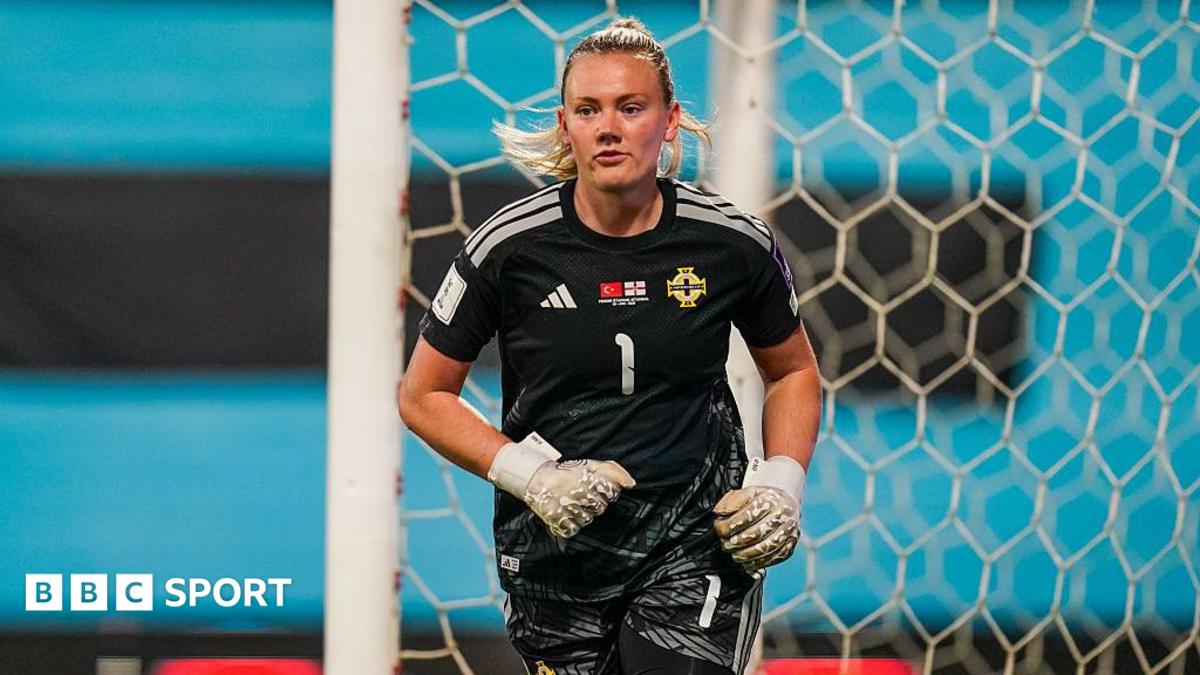
Northern Ireland goalkeeper Jackie Burns is the number one for her country and has just signed for Burnley – but she is already thinking about her next steps.
At some point, the 29-year-old will leave football and she is doing what she can now to prepare herself for a new career.
Across 15 years so far, Burns has built experience playing in leagues across the world, including Iceland, Canada and Sweden.
Along the way she has faced challenges off the pitch, as well as on it, and wants to help players in the future in similar situations.
Speaking about life after football, Burns said: “I have definitely thought about it. I still want to be a part of football in whatever aspect that may be.
“It will probably be in more of a player-care role, just helping players as they progress through a team, and not so much on the football aspect.
“It’s just making sure they are comfortable so it’s not a challenge for them coming in. They are a player in a team – but a person too.”
Burns chose to join newly-promoted Women’s Super League 2 club Burnley this summer having left Bristol City.
She hopes to use her experience to help others settle in and said a big part of her decision to join was Burnley’s willingness to support her post-career ambitions.
The goalkeeper feels that support from Burnley puts “value on her” as a person.
“[I want to] feel heard as a person and they really inspire me in that aspect,” said Burns.
“I’ve been to a few places and while you’re always excited to go, sometimes it can be a challenge. You don’t know what way things work.
“It’s basic stuff like getting a house or a car which can be quite complicated if you’re not from that country.
“If you have someone in a club who can help take that stress off you, it just makes the experience a lot easier.
“It can go unseen sometimes. For a lot of players, as soon as they feel valued, it just turns into an easier experience.”
>
Sports
Breaking down Erling Haaland’s unique running style: 35.5 km/h top speed, curves and acceleration mode
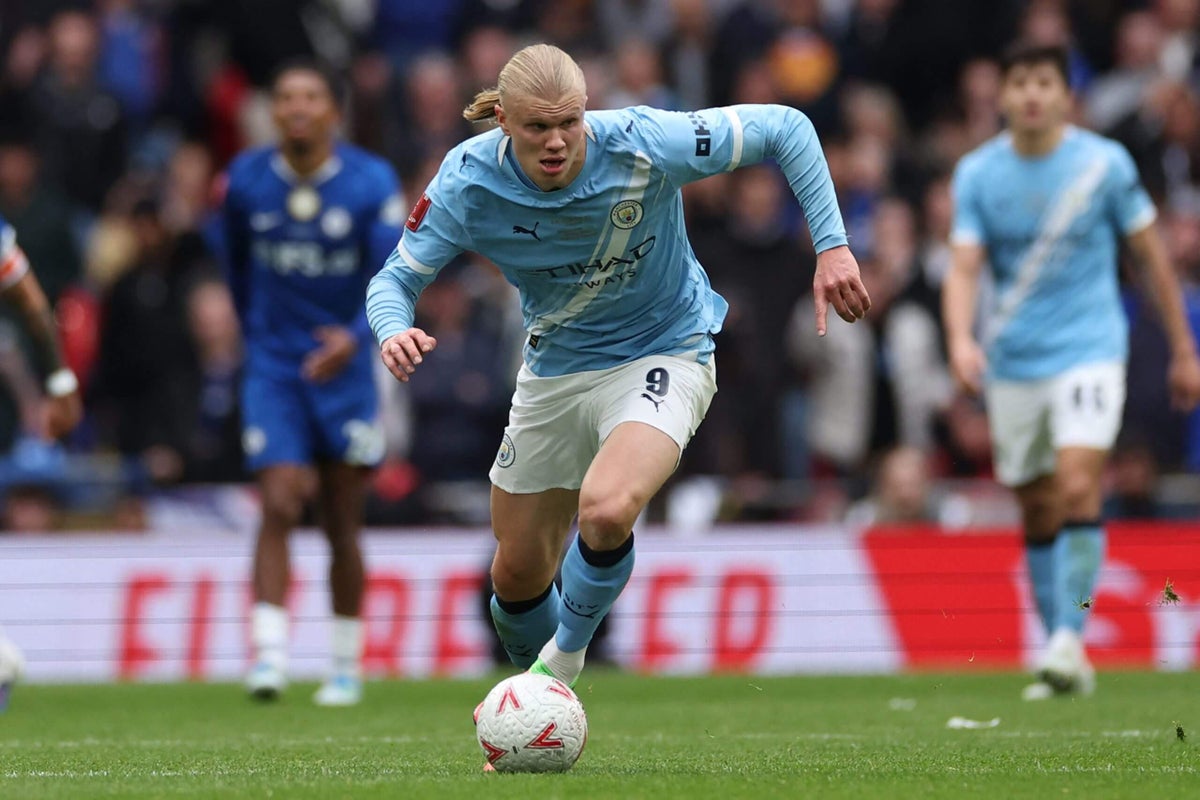
Thierry Henry curved away from defenders, Cristiano Ronaldo attacked their blind side and Kylian Mbappe outran them. But Erling Haaland has a claim to football’s perfect run that borrows from all three.
Haaland is 195cm (6ft 5in), but the Manchester City and Norway striker’s best movement begins before the sprint, with a glance, a drift away from danger and one step that changes his direction. He then opens his stride and turns a few yards of space into a route to goal.
The Athletic spoke to Archit Navandar, assistant professor of biomechanics at the Technical University of Madrid, who compared Haaland with eight-time Olympic champion and 100m and 200m world-record holder Usain Bolt, who is the same height.
“Unlike Bolt, who relied a lot on stride length over stride frequency to accelerate to max velocity, Haaland uses a combination of both to generate speed and control the ball at the same time,” Navandar says.
The 26-year-old scored 38 goals and provided nine assists in 52 appearances for City last season, including 27 Premier League goals to claim his third Golden Boot in four years. He then scored seven times at his debut World Cup as Norway reached the quarter-finals for the first time, surpassing their previous best finish of the round of 16 in 1998.

Opta tracking data shows the scale of the work Haaland does between touches. The distance covered by regular Premier League starters can vary by almost four kilometres per 90 minutes according to position and role, with midfielders generally covering more ground than centre-backs or centre-forwards.
Across City’s opening seven league matches last season, Haaland covered 66.3km, around 9.5km per game, while averaging only 24.2 touches per 90 minutes. He ranked 10th among Premier League forwards and wingers for distance covered despite having the third-fewest touches of any player to complete at least 300 minutes. That equates to roughly 390 metres covered for every touch recorded.
When Haaland accelerates, those metres disappear quickly. His average across his three highest speeds last season was 35.5km/h, joint-sixth in the Premier League data and the highest figure among recognised centre-forwards. Benjamin Sesko was the next-fastest striker at 34.7km/h.

“Tall and big athletes always draw attention when running at high speeds, like Usain Bolt,” Navandar says.
But the comparison only goes so far. Bolt could devote every stride to reaching maximum speed in a straight lane. Haaland has to stay onside, read a pass, evade defenders and retain enough control to change direction or shoot.
His most common high-speed off-ball runs show the difference. Defined as movements averaging at least 25km/h for 0.7 seconds, several begin around halfway before travelling diagonally or bending towards the penalty area rather than taking the shortest route.
Those curves allow Haaland to change the angle from which he attacks the defence while continuing to build speed, rather than committing immediately to a straight-line race.

Navandar analysed one example from City’s 2-1 win over Newcastle United at the Etihad Stadium in February.
Haaland had already crossed for Nico O’Reilly to head what proved to be the winner and, despite not scoring himself, had 43 touches, his most in a Premier League game, and contested a career-high 12 duels.
Pep Guardiola later called it a performance he would “never forget”, praising his striker for having to “run, run, run and fight”.
The sequence came in the 72nd minute, with City protecting their lead. Haaland is almost stationary on the right, waits for the ball and turns infield. Little more than four seconds later, he is approaching Newcastle’s penalty area at speed.
Navandar broke the movement down step by step. The first is deliberately short and lands beneath Haaland’s centre of mass, essentially the point around which his weight is balanced.
He says that positioning helps rotate the shoulders and trunk before his entire 6ft 5in frame commits to the new direction. His second step is much wider and remains on the ground for longer. It produces the sideways force required to turn while still driving him forwards.
Navandar adds that the step generates the turning force needed for Haaland to lean into the turn, comparing the movement to a motorbike taking a corner. Rather than slowing, changing direction and then rebuilding speed, his body can lean through the curve while continuing to accelerate.
The third step comes further inside the bend, allowing a greater lean and a sharper turn without significantly compromising his speed.
“He uses his arms to stabilise the movement, like a speed skater on a curve,” Navandar says.

Once Haaland completes the bend, his mechanics change. The sideways lean becomes a forward one, the gap between his legs increases, and his feet begin landing beneath or slightly behind his centre of mass as his stride lengthens.
Navandar says he shows “all the characteristics of a good acceleration technique, similar to a sprinter”, including a forward trunk lean that gradually reduces as his speed rises, a large arm swing and significant movement through the hips.
But Haaland never quite becomes a conventional sprinter. A 100m runner gradually becomes more upright approaching maximum velocity. Haaland remains inclined forwards because he is still accelerating, allowing a quicker change of direction if the defender or the ball moves.
“It is more like sustained acceleration mechanics, rather than max velocity sprinting mechanics,” Navandar says.
In other words, Haaland is still in the process of speeding up rather than settling into the body position required to run at top speed.
The ball forces another adjustment. Haaland’s stride continues to lengthen, but when a touch is required, he changes where his foot lands before returning to his running pattern. Navandar found his step frequency — how rapidly his feet hit the ground — beginning to settle after around his 12th stride.
Before shooting, he adjusts once more. A wider step gives him greater hip extension and more room for his striking leg to swing, while his upper body contributes to the power of the shot.
A Newcastle defender catches him as he strikes and Haaland ends up on the turf, but Navandar believes it was through no fault of his own.
“He falls down because of the tackle, not loss of balance,” he says.
The move does not produce a goal, but in little more than four seconds, Haaland has changed direction, accelerated, controlled the ball and reorganised his body to shoot. Bolt’s perfect run had a fixed finish line 100 metres away — Haaland’s keeps moving.
>

Fantasy Premier League: Five tips from last season’s FPL champion

Northern Ireland GK Jackie Burns on plans for life after football

Breaking down Erling Haaland’s unique running style: 35.5 km/h top speed, curves and acceleration mode
-

 movies3 months ago
Search For Canadian TV Actor Stewart McLean Now Homicide Investigation
-

 Fashion9 years ago
These ’90s fashion trends are making a comeback in 2017
-
Fashion9 years ago
According to Dior Couture, this taboo fashion accessory is back
-
Fashion9 years ago
Model Jocelyn Chew’s Instagram is the best vacation you’ve ever had
-
Fashion9 years ago
Emily Ratajkowski channels back-to-school style
-
Fashion9 years ago
9 Celebrities who have spoken out about being photoshopped
-
Fashion9 years ago
Your comprehensive guide to this fall’s biggest trends
-
Fashion9 years ago
A photo diary of the nightlife scene from LA To Ibiza