
‘Spades: The Play’ Cast


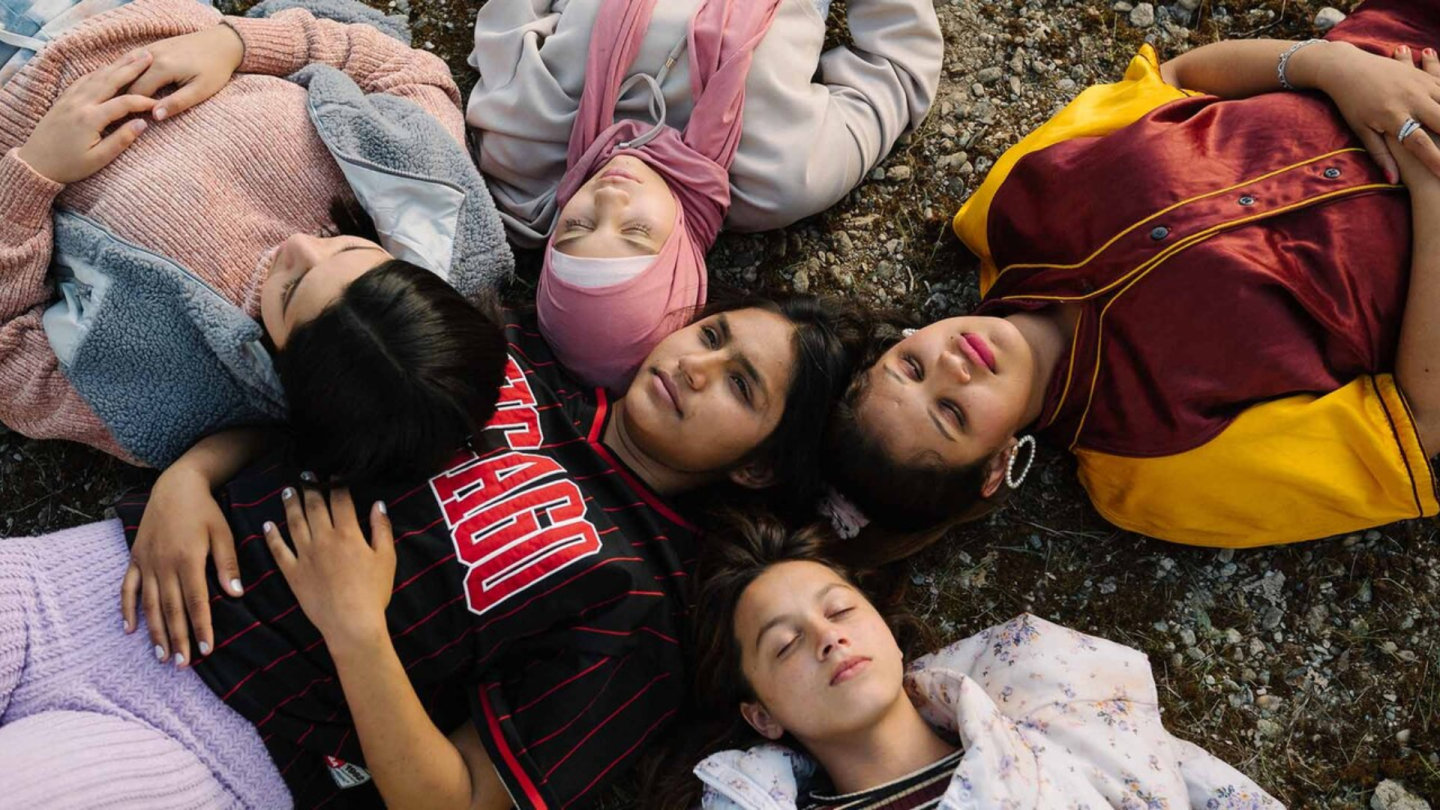
In 2022, Macedonian filmmaker Dina Duma came to the Sarajevo Film Festival with a script.
That script — about a young girl empowered by her skateboard — was so impressive that it won her the Female Voices CineLink Award during the fest’s industry program, a feat that would come with a prize of 20,000 Euros to help kickstart production.
Four years later, Duma is back in the Bosnian capital with the finished film in tow. Skateboarding Is Not for Girls is competing in the feature film selection, and Duma is still in disbelief. “It feels very full circle,” she tells The Hollywood Reporter from Sarajevo’s National Theatre on Wednesday, where we’ve sat down to discuss the making of this powerful, poignant project.
In Skateboarding Is Not for Girls, 11-year-old Adela (Efkjar Abaz) is devoted to her elder sister, 15-year-old Zara (Dzefrina Jashari). But after their father leaves for Switzerland, the girls’ mother, Esma (Simonida Selimovic), can’t make ends meet. After exhausting all options, including selling their car and moving in with a relative, Esma makes the painful decision to wed Zara for the dowry. It tears Adela apart, and she decides to enter a skateboarding competition in the hope of winning the cash prize for her family.
Inspired by a young girl she saw skateboarding in traditional Islamic dress as well as an old-school friend who was married by the age of 14, Duma’s movie is about much, much more than just skateboarding. “Even when you don’t see the man, you can feel the patriarchy,” says Duma about depicting women without agency in Skopje, Macedonia, where the film was shot. “While Adela is riding in these skate parks, this is the only space where she can be free.”
Skateboarding Is Not for Girls had its world premiere just a couple of months ago at Tribeca, but its director hopes that the “Balkan mentality” will come in handy when screening for a Sarajevo audience — where those themes of liberation, autonomy and female independence will resonate enormously.
Below, Duma discusses feeling drawn to writing characters from a female perspective, sounding the alarm on child marriage in Macedonia and feeling just a little nervous about her Sarajevo premiere: “I hope it stays with them, and they don’t forget [it] after they drink their first drink!”
Talk to me about when this idea struck you, and why you wanted to put it up on screen.
I was riding my bike on a riverbank in Skopje. I don’t know if you’ve ever been [to] Skopje. It has a beautiful river in the middle. It was a regular day, and I saw a girl who was on her skateboard, but she was dressed in Shalwar, a traditional [Islamic] dress. And she looked so interesting because she was on her skateboard dressed like that. I was amazed when I saw this image. And after some time, I kept thinking about it. She was so interesting. She was somehow very young, but also, she was very mature in a way. I didn’t start writing immediately. I started thinking, ‘How can I make this into a [film]?’ Because it’s so powerful.
A while [later], I opened my primary school yearbook and saw a picture of my friend. And I realized I haven’t seen her since then, since we were studying. And she was actually married at the age of 14, and then [fell] pregnant. I started looking for her on Facebook, just to reconnect, and I couldn’t find her anywhere. I started asking my friends, “We haven’t seen her in [such a long] time. Is she around? Is she in Skopje?” And no one knew where she was. Basically, she disappeared out of our lives. When you’re a child, you don’t think about these things. But this is the moment I thought, ‘Okay, this is worth looking up.’
Is it common in Macedonia, child marriage?
Well, we don’t know because we don’t have statistics. But I think it is. I researched. I spent a lot of time in the community.
This film is about skateboarding, but it’s also not. We follow Adela’s sister Zara and the pressure she’s under, the girls’ mother and their financial insecurity as well. It’s about these three women who have been abandoned by the family patriarch. Did you want this story centered around women?
I always want to talk about female characters. When I start writing, it’s natural for me to start speaking — even in my previous films — from the perspective of women. And in this case, it was very important to see that there are strong women in this community, who are powerful [and] who are fighting every day. But even when you don’t see the man, you can feel the patriarchy. This is something that is really true, that is really happening [in Macedonia], and it is very important for me to have it in the film. I’m glad that when you watch the film, you see it, because it’s there and it’s happening and we need to speak about it.
Was that a big motivation for you, making this film — to encourage people to talk about the issues raised?
Yes, yes. I wanted to open the conversation, especially in Macedonia, because I feel that no one is bothered by this. This place where we shot the film in Skopje, it’s 15 minutes away from the city center. It’s not on Mars, you know? It’s very close to us, but everyone ignores it. It’s just really important for me to have it out there. We need to be open to this.
Is the skateboarding symbolic? I know you mentioned seeing that young girl, but why did it feel like the right sport to use as a narrative vehicle?
Obviously, I was inspired by [the girl]. But then I started thinking [that] when you skateboard, you fall a lot, and then you have to get up. Then you repeat that. That’s very strong because it’s also like life, and in a symbolic way, it definitely works for the whole [film]. Especially for young people. Also, it was symbolic in the way that while Adela is riding in these skate parks, this is the only space where she can be free. Where she can have agency over her own body, because soon she will lose this agency — as we see with what’s happening with her sister. So she takes control of her body. She moves differently [on the skateboard]. She’s empowered.
And Efkjar Abaz is just so good. You must have known immediately she was right for Adela.
(Laughs.) Well, yes and no because she’s not a professional actress. She’s a girl from Skopje. We were doing a long process of looking for Adela and her sister. It took us one year! But when we met her, we immediately connected. You can see she’s very rebellious, [a rebel] with and without a cause. (Laughs.) Her energy is like Adela’s in real life. It was a bit of a challenge to find Zara, mostly because she’s a bit older, she’s 15. Then the girl that plays Adela tells us that she has a cousin this age, and can she come? And she came, and when we saw them together, we [thought], ‘These are our girls.’ They immediately had that connection.
They’re family, and that really translates on the screen. How hard is it to make a film in Macedonia, do you get government funding?
We are a very small filmmaker community in [Macedonia]. We make and produce three [or] four films a year. We have government funding — it’s the North Macedonian Film Agency. We have to start there, then go abroad with co-productions.
This was a co-production, right?
Yes. With Slovenia, Croatia and Belgium.
How has it been coming to a film festival like Sarajevo? Are you nervous?
Yes, I’m very nervous because we were with the film in Tribeca [Festival] and now we’re coming here, so it’s a completely different audience, and I feel that this audience is more close to the Balkan mentality. So I think they will get every detail. And also, I was here before with this script. We were doing the CineLink Industry Days [program], and we got an award here. The Female Voices [CineLink Award].
How full circle.
It feels very full circle. We’re here again. It’s obviously very awesome.
What do you hope people come away with after watching the film?
I hope it stays with them, and they don’t forget [it] after they drink their first drink. (Laughs.) I hope they’re curious. It opens curiosity for other experiences and other communities.
The 2026 Sarajevo Film Festival runs Aug. 14-21.
>
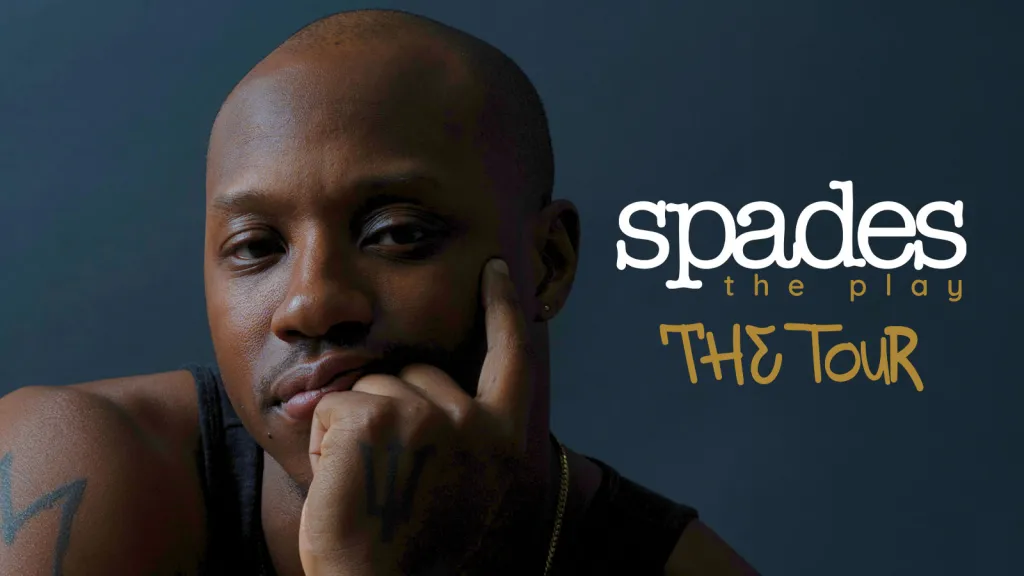
EXCLUSIVE: Marcus Callender, best known for starring in Power and Wu-Tang: An American Saga, is taking his Spades: The Play on a national tour.
The stage play is set to run 76 performances across Washington, D.C., Los Angeles, Atlanta, New Orleans and Miami this fall, following a four-week debut run in Harlem last November.
“I consider Spades: The Play a love letter to us and to the culture. I spent ten years writing this play, with love, care and intention poured into every word,” the director and playwright says. “Taking it on tour and bringing it directly to the people is exactly what it was created for.”
He continued, “Great theater doesn’t have to exist within the walls of traditional confines — it comes from raw storytelling and relatable experiences that can live anywhere. I had the exciting opportunity to shape what theater looks and feels like for the culture, on our own terms and to me, that’s the future of theater.”
Set in 2013 Harlem, and based on true events in Callender’s life, Spades: The Play follows a close-knit group of twenty-somethings as they gather for their weekly spades game at a friend’s house. As the cards are dealt, playful banter turns to honest conversation about love, friendship, and the blurred lines between the two. The production stars Broderick Clavery (Extrapolations) as “Gill” and Akilah A. Walker (The Chi) as “Cori,” with Derrick Alexander as “Andre” and Erin Nicole Washington as “Nefertiti.”
‘Spades: The Play’ Cast
The tour kicks off with an exclusive one-night-only performance at the historic Studio Museum in Harlem on September 3.
Each stop on the tour is hosted at a culturally centric venue. The run includes Culture House DC, a former Black church dating to the 1800s; Cam Kirk Studios in Atlanta; Wendy Raquel Robinson’s Amazing Grace Conservatory in Los Angeles; and Fire House Loft in New Orleans. It closes in Miami during Art Basel.
Spades: The Play Tour Dates
September 9-20: Washington, D.C. (Culture House DC)
September 23-October 18: Los Angeles, California (Amazing Grace Conservatory)
October 21-November 15: Atlanta, Georgia (Cam Kirk Studios)
November 18-29: New Orleans, Louisiana (Fire House Loft)
December 2-6: Miami, Florida
Tickets are available exclusively through Posh.
>
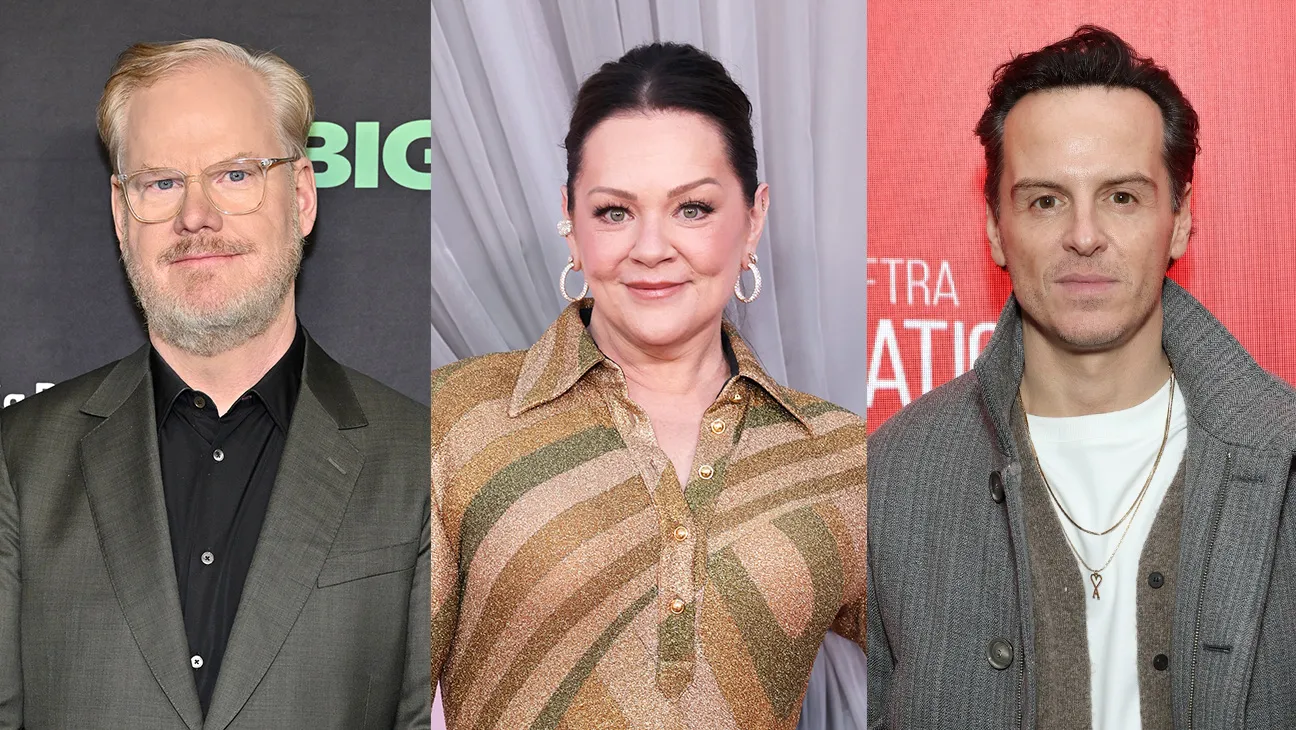
Melissa McCarthy is getting into the holiday spirit with Margie Claus.
Warner Bros. Pictures Animation announced Thursday that director Kirk DeMicco’s animated feature will hit theaters Nov. 12, 2027, shifting a week later than its previous release date. The studio also announced that Jim Gaffigan will voice Santa, while Andrew Scott is set as Jack Frost. Annie Mumolo, Georgette Falcone, Octavia Spencer, Gary Farmer, Luis Gerardo Méndez, Cedric Yarbrough and Maria Bakalova also join the film alongside previously announced castmembers McCarthy and Cole Escola.
Margie Claus centers on McCarthy as Santa’s loving wife, who must venture to the dangerous South Pole to rescue her husband and save Christmas.
Also hitting theaters that weekend is Paramount Pictures’ adaptation of Tomorrow, and Tomorrow, and Tomorrow starring Daisy Edgar-Jones. With shifting back a week, Margie Claus will no longer go head-to-head with Olivia Wilde’s holiday comedy Naughty starring Jennifer Aniston and Peter Dinklage, which Universal releases in theaters Nov. 7, 2027.
DeMicco helms Margie Claus from a script by Ben Falcone and Damon Jones. Meghan Trainor will write and produce original songs, as will Falcone and Jones. Producers for Margie Claus include McCarthy and Falcone for On the Day Productions, alongside Michelle L.M. Wong
“I love Christmas so much, and so does Margie Claus,” McCarthy said in a statement. “Our story is about showing up for the people you love the most at the holidays, and it’s a reminder that you don’t have to be perfect to be lovable. It’s been so special to make this movie with Ben, Kirk, Michelle, Damon and are you kidding me? We got Meghan Trainor, Chef’s kiss! Ben and I can’t wait to get on our sleigh next November and throw Christmas cookie and ugly sweater parties at theaters across the globe. We’ve always wanted to tour the amazing movie theaters all over the world, and this is the perfect way to do it. We can’t wait to see you there! Ho Ho Ho!!”
>
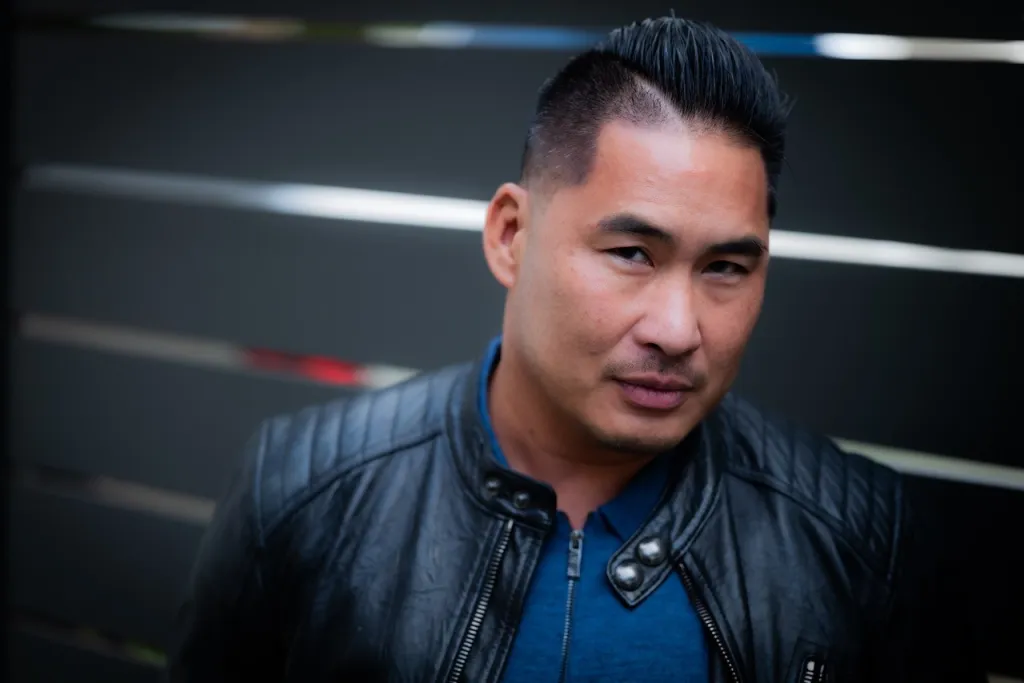
EXCLUSIVE: Jonathan Eusebio, the stunt coordinator and second unit director who made his feature directorial debut with the recent Universal action comedy Love Hurts, has signed with Independent Artist Group.
Starring Academy Award winners Ke Huy Quan and Ariana DeBose, Love Hurts follows Marvin Gable (Quan), a mild-mannered Milwaukee realtor whose former life as an assassin resurfaces when his presumed-dead ex-partner, Rose (DeBose), returns — putting him back in the crosshairs of his criminal brother.
The film, from David Leitch and Kelly McCormick’s 87North Productions, was released last February.
Prior to making the leap to directing, Eusebio spent more than two decades helping shape the language of modern action filmmaking, drawing on a lifetime of martial arts training. A founding member of 87Eleven Action Design, his credits as a second unit director include Deadpool 2, Birds of Prey, Violent Night and Obi-Wan Kenobi, while his stunt and fight coordination work includes Black Panther, John Wick: Chapter 3 — Parabellum, The Fate of the Furious, The Fall Guy, The Matrix Resurrections, Doctor Strange, The Avengers and the original John Wick.
>


Search For Canadian TV Actor Stewart McLean Now Homicide Investigation


These ’90s fashion trends are making a comeback in 2017
According to Dior Couture, this taboo fashion accessory is back
Model Jocelyn Chew’s Instagram is the best vacation you’ve ever had
Emily Ratajkowski channels back-to-school style
9 Celebrities who have spoken out about being photoshopped
Your comprehensive guide to this fall’s biggest trends
A photo diary of the nightlife scene from LA To Ibiza