
Tech
SpaceX will build a second, $100B ‘Starbase’ spaceport in Louisiana


SpaceX has announced it will build a second spaceport for future launches of its Starship mega-rocket at a former Exxon property in Louisiana, ending what the company says was a seven-year search for a suitable location.
The new launch site will sit along the Gulf Coast in Vermilion Parish, west of New Orleans and roughly 10 hours from the company’s existing Starbase complex in South Texas. SpaceX says it is investing $100 billion, with construction starting in 2027. SpaceX claims the first Starship launch will take place in 2029.
Louisiana Economic Development (LED), the state agency that oversees business development, offers a slightly more conservative timeline. It says construction will start by the end of 2027 with “initial operations expected to come online in 2030.”
Before any of that happens, SpaceX is still trying to prove that it can fly Starship into low-Earth orbit and make the rocket reusable, like its existing Falcon 9 and Falcon Heavy rockets. SpaceX has performed 13 test flights of Starship since 2023, and while the company has ticked off a lot of development boxes, it still has a lot of work to do.
An upcoming 14th test flight could see SpaceX send Starship’s upper stage to orbit for the first time. But the company has yet to return both the booster and the upper stage to the launch pad on a single flight, a basic necessity if Starship is to become truly reusable. Even then, SpaceX must show that it can bring the vehicle back and refurbish it quickly enough to reach its own aggressive goal of sending up multiple Starships per week.
That isn’t stopping SpaceX from betting almost everything on Starship. This past week, SpaceX founder and CEO Elon Musk said he will retire the Falcon rockets once Starship is flying multiple times per week. His comments confirmed earlier reporting from Bloomberg News that the company was already telling prospective customers about the impending end of the Falcon program.
SpaceX has spent more than $8 billion developing Starship, according to filings submitted to the Securities and Exchange Commission. The rocket — which is the largest and most powerful ever built — is crucial to maintaining and growing the only profitable part of SpaceX’s business, its Starlink satellite internet service. SpaceX is also planning to build an entire network of satellites dedicated to AI processing, which it needs Starship to launch.
The new Starbase site will create 3,000 direct new jobs over 10 years, with an average annual salary of $92,600, according to LED. More than 30,000 construction jobs are expected at the peak of the buildout.
It’s not immediately clear if SpaceX intends to create a company town around the new Starbase site, like the one it has architected in Texas. The Texas municipality, once called Boca Chica and renamed Starbase, has its own ZIP code and volunteer fire station, and is building its own police force and community library. It is run by a local government filled with SpaceX employees (or family members of SpaceX employees).
SpaceX did say in its announcement that it wants to make the new site a “self-sustaining spaceport” with “propellant production, power generation, deep-water shipping capabilities, vehicle processing facilities, and an airport.”
As a mix of a launch complex and active construction zone, the Starbase site in Texas has also seen extremely high injury rates over the last decade. It’s the most dangerous site SpaceX operates and the company has reported hundreds of injuries to the Occupational Health and Safety Administration. In May, a construction worker employed by a third-party contractor fell to his death at Starbase.
“We are very excited to be in this position to receive one of the best opportunities of a lifetime which will bring not only a variety of jobs to our Parish but will offer opportunities to our grandchildren allowing them to stay home for employment,” Vermilion Parish Police Jury President Chad Vallo said in a statement.
SpaceX, which has for years faced criticism for — and fought legal battles over — how it treats the local ecosystem around its Texas site, has “already engaged the Louisiana Department of Wildlife and Fisheries, Coastal Protection and Restoration Authority and other appropriate state agencies to proactively address potential impacts to wildlife, fisheries and their supporting habitats,” according to LED.
The company also says it is “partnering with state and federal agencies to expand Louisiana’s Coastal Master Plan and Coastal Wetlands Planning, Protection and Restoration Act projects, including Gulf shoreline protection breakwaters designed to reduce wave energy” and reduce shoreline erosion in the area.
When you purchase through links in our articles, we may earn a small commission. This doesn’t affect our editorial independence.
>
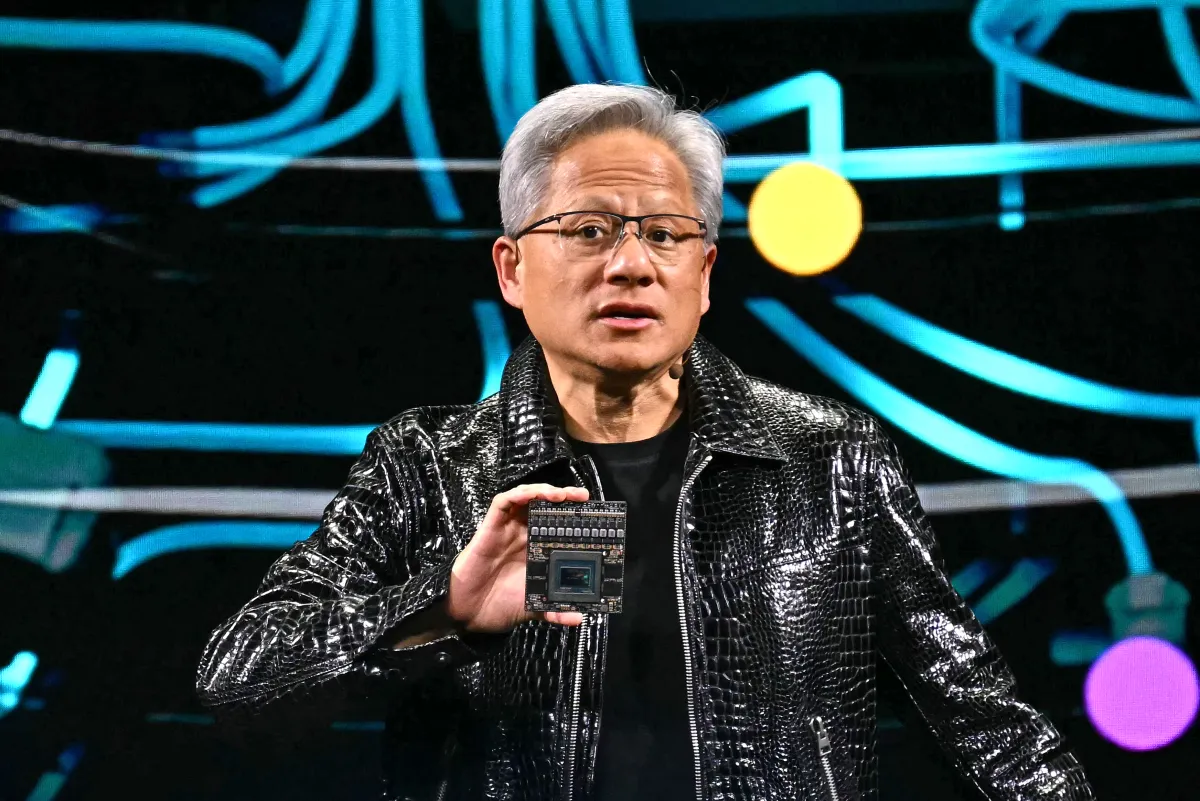
Nvidia has agreed to buy Hugging Face for $12.9 billion, The Information reported Wednesday night, citing a source familiar with the matter. Business Insider, which first reported over the weekend that Hugging Face was fielding takeover interest, reported Wednesday night that the talks — which would value the company at more than $13 billion — had not yet produced a signed agreement and could still atomize.
TechCrunch reached out earlier to both Nvidia and Hugging Face for comment, and neither has yet responded. (Nvidia’s silence is particularly noteworthy here as the company has moved quickly in the past to address reports it considers inaccurate.)
Maybe it was destined from the start. Hugging Face, founded in 2016, is one of the most popular hubs where developers share and download open-source AI models. Buying it would give Nvidia a strong foothold in the world of open-source AI, right as open-source developers are doing their level best to catch up to closed AI systems from companies like Anthropic and OpenAI.
Why would Nvidia want that? Most obviously, it comes down to protecting its dominance in AI chips, which, from the outside at least, appears increasingly at risk, even with Nvidia’s aggressive chip-release schedule. Pretty much all of the biggest closed-source AI labs (OpenAI, Google, Amazon, and Anthropic) are now in the process of building their own AI chips to lessen their reliance on Nvidia. A thriving ecosystem of open-source AI models gives customers more alternatives to those closed labs, which in turn keeps more of the market dependent on Nvidia’s hardware. That’s also why Nvidia has already poured tens of billions of dollars into building its own open-source AI models.
Should we be surprised that Hugging Face’s days as an independent outfit appear numbered? Not really. Hugging Face CEO Clem Delangue has spent much of this year publicly aligned with Nvidia’s open-source push, amid a debate that has been building for months, as Washington officials reportedly weighed restrictions on open-weight models. (After Chinese labs like Moonshot AI released systems like its Kimi K3 model that matched leading U.S. models on benchmarks while costing a lot less to run, talk of competitive and national-security concerns appeared to grow in Washington, with some critics of closed labs — like White House advisor David Sacks — suggesting the fears were being fanned by the “duopoly” of Anthropic and OpenAI.)
In an appearance on CBS’s “Face the Nation” earlier this month, for example, Delangue said Hugging Face used an Nvidia-modified version of a Chinese open-source model to defend itself after a cyberattack and pointed to a recent letter — signed by Nvidia CEO Jensen Huang and 24 other companies, including Hugging Face — urging the U.S. government to support open models rather than restrict them. In a separate CNBC interview in late July, Delangue made similar points, citing that same letter while warning that China is “clearly dominating” open-source AI.
The deal would also mark something of a comeback for Nvidia in cloud computing. Nvidia reportedly scaled back its own cloud business, called DGX Cloud, about a year ago. But according to The Information, owning Hugging Face — which already helps developers run their AI models using rented computing power — could give Nvidia a way back into that market without starting from scratch.
There’s also a financial safety net at play. Nvidia has promised to help cover the cost of tens of billions of dollars in cloud computing deals for its customers. If those customers end up not using all the computing power they signed up for, Nvidia could get stuck with it. Owning Hugging Face would give Nvidia the ability to sell that unused capacity to Hugging Face’s customers.
The price marks a huge jump from Hugging Face’s last known value. The company raised $235 million in 2023 in a funding round that valued it at $4.5 billion. That round was led by Salesforce Ventures, with money also coming from Alphabet’s GV, IBM Ventures, and Nvidia itself, among others.
This wouldn’t be Hugging Face’s first brush with an Nvidia offer, either. Hugging Face turned down a $500 million investment offer from Nvidia late last year that would have valued it at $7 billion, the Financial Times previously reported. Hugging Face said at the time it didn’t want a dominant investor that could sway its decisions.
As for why it would say yes now, one could argue that a buyout is different from taking on one giant backer — a scenario that often means ceding control while being pressured to continue growing.
Hugging Face is also still a comparatively small business by revenue in the world of AI. The Information reported it was recently generating about $150 million a year in revenue, up from roughly $100 million just two months earlier.
That growth has enabled the company to get “close to profitability,” as Delangue told TechCrunch last month. Still, a price near $13 billion would be a massive multiple for a company this size and hard to resist.
Not last, the deal would give Hugging Face access to Nvidia’s much deeper pockets just as other, AI infrastructure competitors start to get pulled into other outfits, as suggested by Stripe’s recent deal to acquire OpenRouter, a startup founded in early 2023 that helps customers select different AI models to perform different tasks depending on their needs and budget.
OpenRouter was valued at just $1.3 billion back in May during its Series B round. Stripe reportedly paid more than $7 billion to make it its own earlier this month.
When you purchase through links in our articles, we may earn a small commission. This doesn’t affect our editorial independence.
>

ChatGPT Plus users got a taste of fewer restrictions, but OpenAI has now put the clock back on Codex and ChatGPT Work.
OpenAI restored a usage allowance that resets every five hours for ChatGPT Plus subscribers using Codex and ChatGPT Work on Aug. 25, ending a temporary period when only the weekly quota applied.
Thibault “Tibo” Sottiaux, an OpenAI engineering lead working on Codex and ChatGPT, announced the change on X after the company temporarily removed the five-hour restriction in July. The move gave Plus users more freedom to use the tools during individual sessions, but that period has now ended.
Sottiaux said the five-hour window helps OpenAI spread computing demand more evenly while preserving a relatively generous weekly allowance.
He also said some newer and more casual Plus subscribers were unintentionally consuming their entire weekly allowance in a single stretch, leaving them confused when they could no longer use the tools.
What happens when users hit the limit
The five-hour restriction works alongside the weekly quota. Once a Plus subscriber exhausts either allowance, the user must wait for the relevant reset or purchase additional credits to continue using Codex.
OpenAI had temporarily removed the five-hour window in July, while also resetting weekly allowances early on some occasions as Codex and ChatGPT Work reached usage milestones. That gave developers and other heavy users a short period of greater flexibility before the restriction returned.
For now, Sottiaux said the five-hour restriction will remain disabled “for the upcoming months” for users on the plans he identified as the $100 and $200 tiers. Enterprise and Edu accounts use a separate credit-based system and are not covered by the Plus-plan change.
More must-read AI coverage
A less predictable experience for developers
For frequent Codex users, the restored five-hour window reduces flexibility. A developer working through a demanding project could exhaust that window’s allowance even when weekly usage remains available.
But there is a practical reason for the restriction. AI coding tools can consume significant computing resources, and allowing users to concentrate large amounts of usage into short periods can make demand harder to manage. Spreading that usage across five-hour windows gives OpenAI more control over its infrastructure while preserving a larger weekly pool.
Plus subscribers working on demanding projects now need to monitor both their five-hour and weekly allowances. Before beginning a long coding session, users should check their remaining capacity and plan for a reset or additional credit purchase if either allowance is running low. The change gives OpenAI more control over computing demand, but it also makes usage less predictable for developers who rely on Codex throughout the workday.
Read more: OpenAI’s Codex Windows app brings its AI coding workspace to more developers, with tools for managing multiple coding tasks from a dedicated desktop interface.
>

Instinct, a startup founded only last year and helmed by a 23-year-old, has managed to ride the wave of AI enthusiasm toward a gargantuan valuation over the course of the summer.
The company, which offers an AI assistant that has inspired enthusiasm among its early users, told the Wall Street Journal on Wednesday that it had raised $250 million in a recent Series B funding round. That new round brings the company’s total funding to $350 million and gives the startup a valuation of $2.5 billion.
That new funding round was co-led by Index Ventures and Benchmark, the Journal reported.
Instinct, which is offered by the company Spear Street Technology and led by founder Noah Shinn, is an agent that the company says can efficiently organize your life. Users connect it to their apps and devices and can communicate with it via texts and calls.
“I’m thrilled with everything our early users are doing with Instinct,” Shinn wrote in a tweet on Wednesday. “They’ve told us they’ve planned cross-country road trips, bought weekly groceries and concert tickets, and cancelled hundreds of dollars of subscriptions. Someone’s even planning their wedding with Instinct.”
Instinct, which rocks a decidedly lo-fi website, is currently in private beta, but it has already inspired a certain amount of controversy due to privacy concerns. Online, users have worried about the overly generous permissions that the app requires as well as its terms of use that has disturbed some users because of their invasive potential.
>

US Open: Czech duo Karolina Muchova and Jakub Mensik win mixed doubles championship and scoop cool $1m | Tennis News

Ander Herrera: Why midfielder is playing for free at Real Zaragoza

Mayer vs Cameron winner cements status in top five women’s boxers of all time, says Nakisa Bidarian | Boxing News
-

 movies3 months ago
Search For Canadian TV Actor Stewart McLean Now Homicide Investigation
-

 Fashion9 years ago
These ’90s fashion trends are making a comeback in 2017
-
Fashion9 years ago
According to Dior Couture, this taboo fashion accessory is back
-
Fashion9 years ago
Model Jocelyn Chew’s Instagram is the best vacation you’ve ever had
-
Fashion9 years ago
Emily Ratajkowski channels back-to-school style
-
Fashion9 years ago
9 Celebrities who have spoken out about being photoshopped
-
Fashion9 years ago
Your comprehensive guide to this fall’s biggest trends
-

 Anime3 months ago
Rurouni Kenshin: Hokkaido Arc Manga Takes 1-Issue Break – News