
Sports
Joakim Noah is done fighting ghosts — LeBron, Cleveland, even his own last name


CLEVELAND — This is not vacation for Joakim Noah.
For months, he dreaded the prospect of these few January days. But here he sits, amid a Cleveland Cavaliers crowd he long taunted and provoked, just another spectator watching LeBron James, his most famous NBA contemporary, defy mortality yet again.
He begrudgingly agreed to wade into these uncomfortable waters, carrying the assumption that he came to reconcile his long-frosty relationship with Clevelanders. Instead, he finds himself in awe of his greatest tormentor and staring at greater, internal repairs.
Over 13 NBA seasons, Noah embodied an intense persona: defensive anchor and irritant, enforcer and antagonist. A teammate worth charging through a brick wall for. He psyched himself into needing enemies. Faces to pin on his imaginary dartboard, cities to draw jeers from.
“It was disrespectful at times,” the 2014 Defensive Player of the Year says. “I didn’t care. People loved me for it.”
Why Joakim Noah took a vacation to Cleveland
Joel Lorenzi and Jeshua Kidd
Now 41 and six years removed from the game, Noah hopes to succeed that image. He can’t claim to move on, to ditch this cocoon, without revisiting who he was.
“It doesn’t serve me anymore to have this me-against-the-world mentality,” he says, his burly, 6-foot-11 frame poorly concealed beneath a fur-lined zip and scarf.
The way Noah sees it, he became so entrenched in competition that it turned his view black and white. He was either winning or losing, either bleeding or not trying. Once, during an offseason scrimmage with other pros, he targeted a young Devin Booker, who took exception to Noah’s summertime calls for double-teams. It was a point of pride that those who encountered Noah identified him by that intensity. He thought that fervor would bring him an NBA title.
That feeling is most poignant here, at Cleveland’s Rocket Arena, where he can touch the most consequential chapter of his life — the 25-year-old who reveled life as a villain with the Chicago Bulls. Sixteen years earlier, amid his second-career playoff series, he told TNT that the view from his Cleveland hotel room was so depressing that he never left.
Once the town caught wind, the beef between Noah and Cleveland seared. He doubled down after a Game 2 loss.
“You like it? You think Cleveland’s cool?” Noah asked reporters then. “I mean, I never heard anybody say, ‘I’m going to Cleveland on vacation.’”
It’s all coming back. The animosity, the obstruction, the territorialism, the chase, the routine — everything he lived for.
“Do you know the feeling that you get when you dunk in front of 25,000 people? Or you make a shot and the whole crowd goes quiet? All those feelings that you get?” Noah says. “You never get them again.”
When it disappeared, he quietly hated all of it. Hated the distance he felt as a spectator. Despised that the only purpose he ever knew expired. For the first several years that followed his retirement in 2021, he recoiled at the thought of basketball. Bitterness built. He refused to watch games.
Those who know Noah know his volatility. He is free-spirited and frenetic, explosive and compassionate. He is also dissociative yet sentimental.
The positions Noah wants to play — and that are left to play — are father, friend and traveler. An enjoyer of his fruits. He wears the years he’s spent soul-searching since retirement. Here in Cleveland, facing a faint connection to his NBA past, he’s threatened by traces of resentment and longing. But his impending growth lies here, too.
The past tugs at him as soon as the first day, when he gets a text message from former teammate Derrick Rose.
“I’m really proud of you for doing this,” it reads.
Basketball is taking Noah places again. He’s in Cleveland as part of his new aptly titled, Anthony Bourdain-style travel series, “Nomad,” in which he’s surfed the globe to showcase cities and absorb new cultures with the game as his guide. Tours of Morocco, Serbia, Chicago and Jamaica all prefaced this trip.
But Cleveland, he knows, is different. Here, he’s unraveling his own history.
“I lived the American dream,” he says. “My dream as a kid was to play in the NBA, and I got to play against the best of the best. I don’t live those moments anymore.
“I can’t be the same person. I have to grow.”
Growth requires tracing his past. It leads him to a family legacy that forever echoes.
In his 10 years with the Bulls, Noah never saw Chicago’s O’Hare International Airport as stuffed as he did when he flew back in March. He waded through a congested terminal before a custodian spotted him. The man fell to his knees, tears erupting from his eyes.
The stranger was from Cameroon, the African country from which Noah’s family hails. He was raised in Chicago but could retell Noah’s family history, from his father Yannick, an International Tennis Hall of Famer, to his grandfather Zacharie, a professional Cameroonian soccer player in the 1950s and ’60s.
Noah sat down in embarrassment. He sensed one man’s adulation evolve into 400 pairs of eyes goggling at them in the airport.
“It felt like ‘Coming to America,’” Noah says, likening it to a scene in the 1988 comedy starring Eddie Murphy. “That part when the guy is like, ‘Oh, the prince is here,’ and he’s trying to go to the bathroom, and he’s like, ‘Stop, stop.’”
Sometimes, elderly people approach Noah to pinpoint where they were and what they were doing when his father won the French Open in 1983. As a child in France, Joakim watched helplessly as dinners were spoiled and strolls with his father were interrupted.
Nothing soured him more than when they’d recite Yannick’s M&M’s French commercial from the mid-1990s. In the ad, Yannick lay atop a pillow, gushing about the chocolate to the animated yellow and red M&Ms, flashing the inviting gap-toothed smile he passed along to his son.
“I like the yellow ones,” Joakim says in a whiny voice, imitating the fans who’d approach. “What about the red ones, Yannick?”
After the first handful of instances on any given day, young Joakim grew exasperated. As the encounters approached double digits, Joakim just wanted his father to himself.
Noah learned early about the burden of a surname. The men in his family represented countries and cultures. They crafted legacies through sport. Competition, in the Noah family tree, is an heirloom.
“This was here since I was born,” Joakim says. “I felt that.”

Fifteen years ago, Noah celebrated with his father, International Tennis Hall of Famer Yannick Noah, after France’s EuroBasket 2011 semifinal victory over Russia. (Janek Skarzynski / AFP via Getty Images)
He was raised Parisian and privileged. His mother, Cécilia Rohde, a model who was named Miss Sweden in 1978. His father a tennis star and later a recording artist who toured Europe. His mother knew it as well as he did: France was not where Joakim would escape his father’s shadow.
“Being the son of Yannick Noah was a real privilege, but a privilege that you had nothing to do with,” Joakim says. “You’re just a son of Yannick Noah.
“A lot of my motivation was to have my own name.”
His father left Cameroon for France as a boy to chase a dream that brought global stardom. He created a seemingly impossible shadow for his children to shake. He subconsciously taught his son that ego was necessary to fend off the world.
When his son reached the public eye, he was loud and naive, doing things that drew attention but feeling blitzed when he received it. To live in Joakim’s world, humility was all but worthless. Arrogance helped combat detractors.
“There was a lot of sacrifice that went into being around somebody that was that popular,” Noah says. “You’re held in this different social class; people look at you a different way because of what my dad did.”
It is not just the derision he subjected himself to, but the age at which he entered the spotlight.
“My father was the most famous person in France,” Noah harps. “All the ego bulls—, I grew up in that. I was still a kid, and that was what I wanted to be, somebody who had his own name.
“And as you get older, it’s like, ‘You know what? I have my own kids. I want them to be proud of who they are and what the Noah name represents.’”
As Yannick’s son, he knew the lengths he’d need to travel to forge his own path. At 13, Joakim’s mother moved him to Hell’s Kitchen. There, no one would pin his privilege on him, not while he mopped floors and served concessions at the famed ABCD Camp, the same preps showcase where a teenage LeBron James put the world on notice. No one would impede his thirst, not on the blacktops of a basketball hub as insatiable as New York City.
No one, not Yannick or LeBron or New York, would rob him of his pursuit.
As a player, Noah weaponized spite. He harbored conflict.
He surveyed Cleveland for three days while they shot “Nomad,” hoping to find those affronted by his 16-year-old comments, only to realize no one remembers his own words better than him.
He is perplexed, walking these streets without the motivation he had as a player.
The summers, the closest sense of irrevocability before retirement, should’ve been the indicator of how difficult closing that chapter might be. The offseasons when he drowned himself in whiskey to fall asleep and numb the sting of losing.
Noah never played into June. His summertime memories are not of Cancun and decompression, but of James and Kevin Garnett, the Cavaliers and Boston Celtics.

Noah faced some of the great NBA players throughout the late 2000s and the 2010s, including San Antonio Spurs guard and four-time NBA champion Manu Ginobili. (Jonathan Daniel / Getty Images)
Golden State Warriors coach and former player Steve Kerr said in a recent ESPN story that in retirement, athletes miss structure and routine most. Noah plotted everything. Every meal, every chance to sweat, every ounce of sleep. And when his season ended, those close to him understood what he lost. They let him tear himself apart, because as long as he had something to pursue, he’d repair himself.
He was always chasing something in Cleveland.
Competition to him featured “light energy and dark energy.” He preferred to see red. Enjoyed when it felt adversarial.
“This is our side, and f— your side,” he says.
Nowhere felt more contentious than Boston and Cleveland. Losing there sent him into his deepest spirals.
“Do you know what it feels like to lose a f—ing playoff series and the season is over with?” Noah says. “And deep in your heart, you felt like you could win a championship? It’s very deep emotions that you go through. It’s depression. It’s real pain. And it’s not something that everybody’s gonna understand, because for a lot of people, what I said about Cleveland is a joke.”
Just as basketball enhanced the emotions that came to define him, it also intensified the ones that sank him. He couldn’t watch the playoffs once eliminated. He couldn’t comfortably walk the streets. He couldn’t sleep at all, much less peacefully. His goals, and the championships that eluded him, fogged his brain.
Routine either saved him or destroyed his quality of life. No in between.
“The whole summer was based on getting better on my weaknesses, right? My jump shot, being able to be more effective off Derrick Rose getting double-teamed,” Noah says. “These were all things that I was thinking about. Even if I was with my girl having dinner, I wasn’t even thinking about what she was asking me. My mind was going … it was more important than being in the moment with my people.”
Noah never came closer to a title than Chicago’s 2011 run, a five-game Eastern Conference finals defeat to James’ Miami Heat. Rose, fresh off becoming the youngest MVP in NBA history, suffered a torn ACL the following postseason, the first of his devastating injuries.
Over the next few seasons, Noah ran into similar struggles. In 2013, his Bulls limped into the playoffs, beating the Brooklyn Nets in a seven-game series. They met James again, though without guard Kirk Hinrich, All-Star Luol Deng or Rose.
His final act came in 2020, a brief stint on the end of the bench for the LA Clippers in the Orlando bubble. Had he won with Kawhi Leonard’s Clippers, viewed then as a contender, he swears it wouldn’t have held the merit of what he envisioned with the Bulls.
But he always thought he’d be rewarded with a ring in Chicago. The souring reality was an unceremonious, unfulfilling end to a career for a player whose goals and pride dictated his spirit.
This past year, he’s taken a step in redefining what those 13 seasons represented.
In late January, the old Bulls crew — Noah, Tom Thibodeau, Taj Gibson and Deng — gathered in the back halls before raising Rose’s jersey to the United Center rafters. It was bittersweet; Noah can’t recall which man started crying first.

Noah was at the United Center in January 2025 for Derrick Rose Night, celebrating his teammate of eight seasons, seven of which were in Chicago. (Geoff Stellfox / Getty Images)
Gibson admits he isn’t close to the public speaker Noah is, liquor included. But he needed to address the crowd anyway. Noah, the way he always did, refocused Gibson.
It was bare and reassuring. Noah and his Bulls did not win it all, but this night felt like the closest thing. Noah was always who his teammates needed him to be. It took time to realize that would bleed into life after retirement.
“It was a moment where it put closure on a chapter that was important to all of us,” he says. “It wasn’t a championship moment, but it was an acknowledgement of the effort and the time and the sacrifices that went in.
“It was a powerful moment that I think that we all really cherished.”
A championship moment. He’s been swishing that phrase around to see if it tastes the way he envisioned during the height of his career.
A couple hours before the Cleveland game, Noah posts near an alley and pinches a joint, smoking his way down memory lane. How Chris Bosh should’ve joined him in Chicago. How he yearned for the chance to defend Dirk Nowitzki in the NBA Finals. How he wished to win a title for Rose.
On the ride to Rocket Arena, he winces at the prospect of bodying up Shaquille O’Neal in the post. He enunciates like a PA announcer when he hyperbolizes James’ measurements in his prime: “six-EIGHT, two-EIGHTY.”
During a first-quarter timeout, the Cavaliers showcase a video tribute — the belief being at the time that this might be the final time James plays in Cleveland — that leaves James teary. The prevailing, accepted sentiment is that finality might actually be on the horizon.
Everyone seems to believe that but Noah, six months before James indeed decided to prolong his NBA career by joining the Philadelphia 76ers.
“He’s still got juice,” Noah says, his eyes tracing James’ movements.
They’re the same age, though LeBron started his NBA career four seasons before Joakim. Noah shakes his head at James’ continued capabilities. He reasons that James should push the boundaries, that he could take $10 million and play for a contender (James instead agreed to play in Philadelphia for two years and $8 million). “Why shouldn’t he return to Cleveland?” Noah argues. Or go anywhere while his body still agrees.

Noah is roughly two months younger than LeBron James, but he marvels at how James, at 41, continues to play at such a high level. (Jonathan Daniel / Getty Images)
Noah seems to marvel at the agency James still owns over his fate. He watches James, but the Cleveland crowd best frames the distance between Noah and his playing days: For the final quarter, the clamors are for “Bronny,” aka LeBron James Jr., a 21-year-old second-year guard.
Noah would read things about Bronny like everyone else. He knew that Bronny was derailed during his lone season at USC after going into cardiac arrest. That Bronny was a celebrity in his own right since being a teenager, and a bearer of expectations from birth.
Bronny James knows the burden of a surname.
“When you’re that famous, it’s almost like you’re not human,” Noah says.
There was no way for him to be cognizant of 10-year-old Bronny when he called the father expletives that James labeled “a little far” after Game 3 of the 2015 Eastern Conference semifinals.
“I’m a father with three kids, you know?” James told reporters then. “It got very disrespectful.”
It took Noah a decade to empathize.
“I can’t imagine how that must feel for LeBron,” Noah says. “This isn’t just like, ‘I’m playing with my friends. My son almost died on the court, and he’s out there playing with me.’”
Perhaps surprisingly, Noah finds himself using the word “enjoyment” to describe his viewing experience of LeBron and Bronny James. He looks like a fan.
“You can appreciate it different when you’re not a competitive guy,” Noah says. “The truth is, five years earlier, a couple years earlier, I probably couldn’t have.”
On his final day in Cleveland, Noah studies a vinyl record he knows far too well. He inspects the tracklist on “Legend: The Best of Bob Marley and the Wailers” — which he gravitated toward from the vast collection inside the Rock & Roll Hall of Fame. He flips it over and examines Marley’s face. His locs. His jewelry.
“You know who gave him that ring?” Noah says.
Marley was Noah’s Sunday music, his gospel. He needed it before every game to empower the rebel inside him. Go anywhere in the world where turmoil exists, he says, and you’ll hear Marley’s voice.
Bob Marley’s music was one of the earliest things Yannick passed on. Joakim learned and lived by the lyrics. When he went to Jamaica for “Nomad” late last year, the late legend’s son Rohan Marley showed him around the island.

Joakim and Yannick Noah taking in a UEFA Champions League semifinal in April. (Franck Fife / AFP via Getty Images)
There, listening to Rohan detail his father’s aura and treading the sea with his infant son, Noah learned legacy is meant to be thoughtfully passed along like an inheritance, not shouldered strenuously as a burden. In Japan, he resonates with the sumo wrestlers and the nobility of competition. In Seoul, he questions whether vitriol should’ve been the driving force of his career.
In Cleveland, Noah is comfortable watching the game again, even in the face of everything that embittered him.
“He’s much more patient,” Gibson says. “A lot wiser. Been through a lot of s—. A lot of pain in this game, brother. When I talk to him now, he’s just on a different path as far as seeing the other side of life.”
Patient in facing Clevelanders who didn’t forget, who understandably questioned his presence and shot fierce scowls his way. He’s patient with himself, too. Prepared to debunk and think aloud about his own wiring, to walk the streets of the places that either forged or scarred him.
He trudges through the street, his eyes cutting through the snowfall and pointing toward Jim, his security detail. He reads his cap. Stares at it.
He reads two words: “Cavaliers” and “champions.”
“2016 NBA champs,” Noah says. “There was a time I couldn’t even say that comfortably. Like, ‘Damn, I can’t even look at that.’”
He pauses.
“I wish it was us, but I’m happy you guys got it,” Noah says. “Well deserved. Respect, man.”
Noah extends his hand.
“Respect.”
Before leaving the city, Noah buys a portable speaker and unwraps it in his van. On his final ride through Cleveland, he shuffles through songs dearest to him.
He sings like he’s alone. Marley’s “Coming in From the Cold” plays, and Noah is shouting adlibs in a van full of people.
Nothing awaits him on the other side of the song, so he just sings.
Don’t you know, when one door is closed …
When one door is closed …
Many more is open?
>
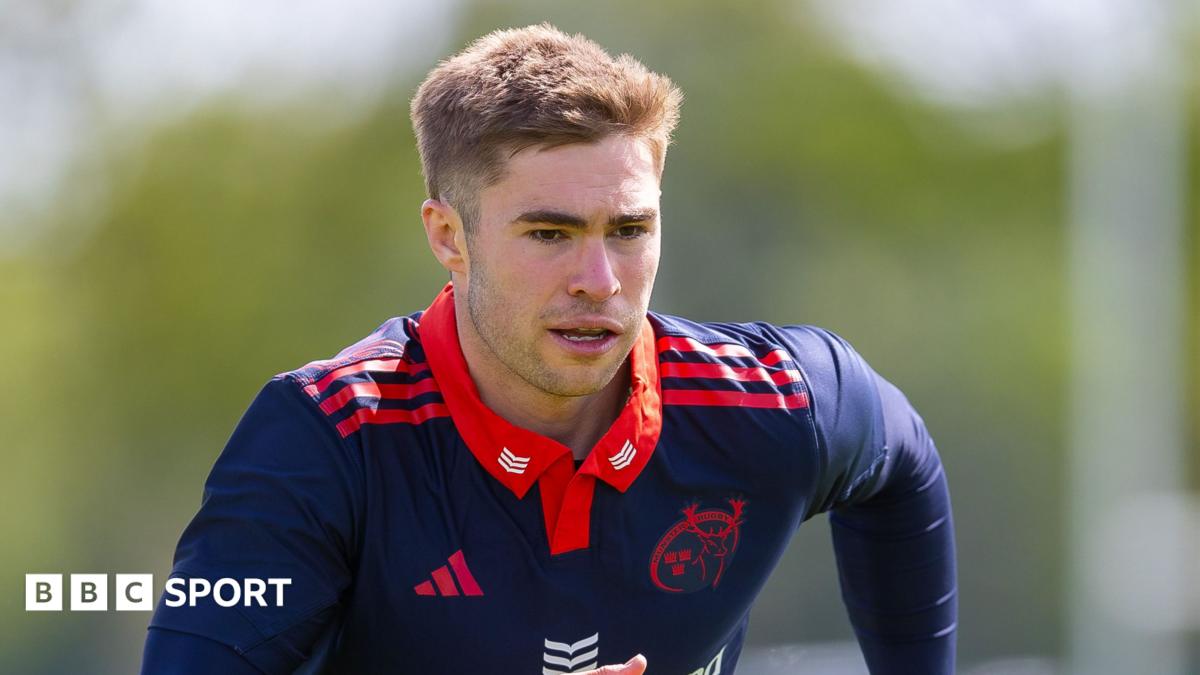
Munster have confirmed that Ireland fly-half Jack Crowley is not expected to return from injury until the new year.
Crowley has been sidelined since April after being diagnosed with a blood vessel issue in his leg.
Having sat out Ireland’s Nations Championship games against Australia, Japan and New Zealand last month, the 26-year-old will miss the competition’s second block of games against Argentina, Fiji and South Africa in November.
“Jack Crowley is a very important player for Munster and Ireland with a big future in the game and ensuring he gets back to 100% is the priority,” said Munster head coach Clayton McMillan.
Crowley made his Ireland debut in 2022 and has earned 35 caps, playing every minute of the 2024 title-winning Six Nations campaign.
While Sam Prendergast started the first two games of this year’s Six Nations, Crowley reclaimed the 10 jersey and steered Ireland to wins over England, Wales and Scotland to deliver the Triple Crown.
>
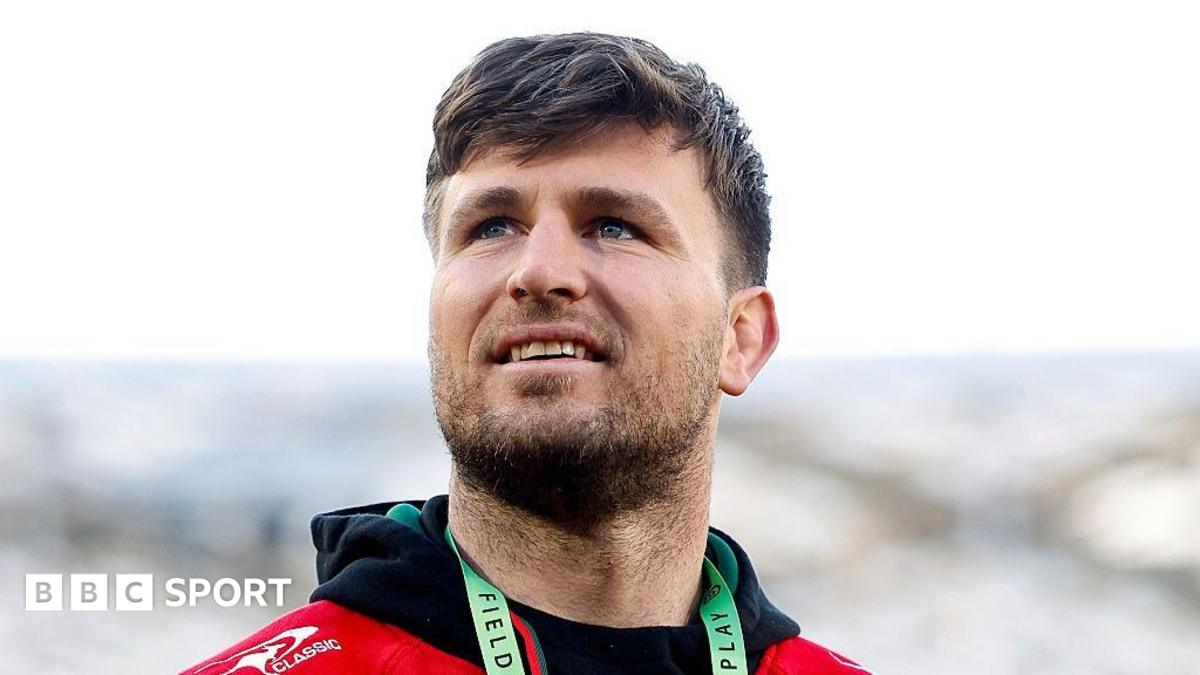
A rugby league player diagnosed with motor neurone disease will be allowed to play the opening seconds of two forthcoming games so he can reach the milestone of 100 matches for his club.
South Sydney Rabbitohs have been given special dispensation to include Jai Arrow in their team despite his retirement after being diagnosed with MND earlier this year.
Australia’s National Rugby League is making an exception to its rules to allow Arrow to take part in the Rabbitohs’ final two fixtures of the regular season.
The 31-year-old, who announced his immediate retirement in May following his diagnosis, will lead the team out in full kit before leaving the field as the Rabbitohs’ first interchange of the match and taking his place on the bench.
The NRL has approved one-off rule changes which will allow the club to have an additional player for team lists and interchanges.
Rabbitohs face the Gold Coast Titans away on Saturday, followed by a home fixture against Sydney Roosters on 4 September.
Arrow played 178 NRL games for the Brisbane Broncos, the Titans and the Rabbitohs across a 10-year career, as well as making 12 State of Origin appearances for Queensland.
He made his debut for the Rabbitohs in 2021 and played in 98 NRL fixtures for the club before his retirement.
Blake Solly, Rabbitohs chief executive officer, said the club was “very grateful” to everyone who helped accommodate the request.
“We believe this will provide great inspiration for everyone watching the game from the stadium or at home, showing that MND will not hold Jai, or anyone else, back from achieving what they want to achieve in life,” Solly added.
“His fight against MND has already been inspirational, and we can’t wait to welcome Jai back on to the field for two more games to inspire everyone connected with rugby league and in society in general.”
MND affects nerves in the brain and spinal cord, which tell your muscles what to do.
This leads them to weaken and stiffen over time and usually affects how you walk, talk, eat and breathe.
Scientists are not sure what causes MND, but it is likely to be a combination of the genes – or biological traits – you get from your parents when you are born, and other lifestyle factors.
Fellow former Queensland player Carl Webb died of MND at 42 in 2023, while former Leeds Rhinos and England half-back Rob Burrow died in 2024, five years after diagnosis.
Former Scotland rugby union international Doddie Weir died in November 2022, and World Cup-winning former England international Lewis Moody was diagnosed in September 2025.
>
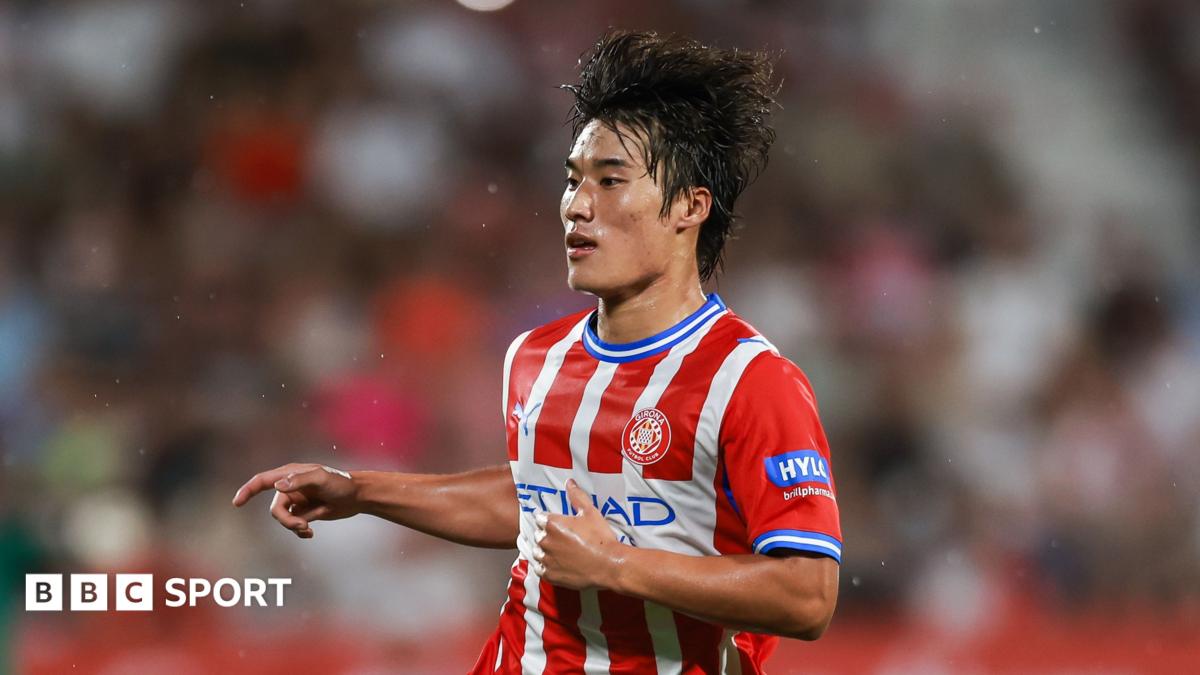
Rangers have bolstered their wide options with the arrival of Kim Min-Su from Girona for an undisclosed fee.
The South Korean, 20, has signed a four-year contract, with the option of a further year, becoming Rangers’ 12th signing of the summer.
The Ibrox outfit have been chasing new wingers, with Kim joining Djeidi Gassama, Findlay Curtis and Ross McCausland, as well as another summer recruit in Daisuke Yokota.
Rangers had been poised to buy PSV Eindhoven’s Couhaib Driouech earlier this month, but the 24-year-old had been carry a minor injury.
Brighton then rejected a £7.5m offer from Ibrox for Amario Cozier-Duberry, 21.
“We are delighted to welcome Min-su to Rangers,” boss Derek McInnes said.
“Strengthening our options in the forward areas has been a real target and focus for us throughout this window and we believe he will add another exciting dimension to the squad.
“Min-su is a talented young player with excellent technical ability, energy and a real desire to develop and we are looking forward to working with him.”
Kim was loaned to second-tier Andorra last term and leaves Girona after their relegation from La Liga.
He scored 19 goals in 84 appearances for Girona B and played eight times for their senior team. At Andorra, he netted six times in 40 games and provided four assists.
>

BBC Presenter Amol Rajan: Broadcaster “Screwed” Amid Funding Crisis

Jack Crowley: Ireland and Munster fly-half ruled out until new year

Jai Arrow to reach 100 South Sydney Rabbitohs games after NRL make one-off rule change
-

 movies3 months ago
Search For Canadian TV Actor Stewart McLean Now Homicide Investigation
-

 Fashion9 years ago
These ’90s fashion trends are making a comeback in 2017
-
Fashion9 years ago
According to Dior Couture, this taboo fashion accessory is back
-
Fashion9 years ago
Model Jocelyn Chew’s Instagram is the best vacation you’ve ever had
-
Fashion9 years ago
Emily Ratajkowski channels back-to-school style
-
Fashion9 years ago
9 Celebrities who have spoken out about being photoshopped
-
Fashion9 years ago
Your comprehensive guide to this fall’s biggest trends
-

 Anime3 months ago
Rurouni Kenshin: Hokkaido Arc Manga Takes 1-Issue Break – News