
Tech
Tiny Mechanical TV Drum Delivers Shockingly Sharp 4K

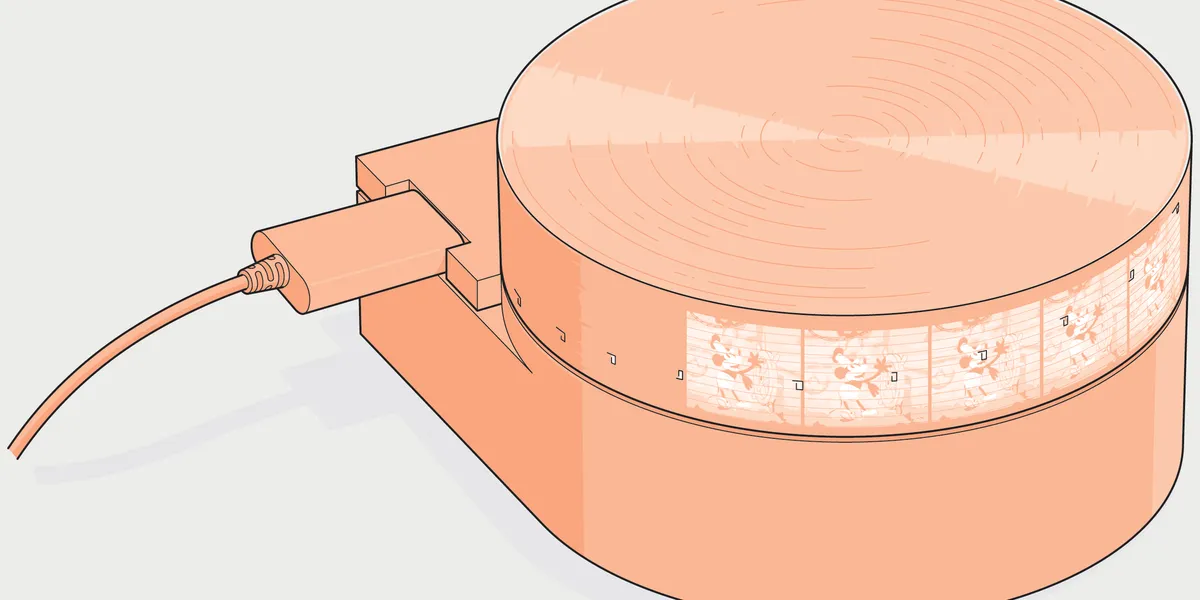
I never intended to join the cutting edge of electromechanical television. I just wanted to make a nice clock. But sometimes you have to go where the engineering takes you, and in my case it took me to the Scanwheel, a pocket-size wide-screen electromechanical TV with a resolution of 4,096 by 20 pixels. Yup, that’s 4K by 20.
 The 3D-printed drum [top] is spun by a motor controlled by a driver board [second row, from top]. The driver board, in turn, is controlled by a Raspberry Pi Pico [middle], which also controls the LEDs [second row, from bottom], which are mounted in the 3D-printed casing [bottom] so that the holes pass over them as the drum turns.James Provost
Electromechanical television was the first form of practical television, developed by John Logie Baird in the 1920s. He used a so-called Nipkow disk, which has a spiral of holes punched through it. As the disk rotates, the holes pass one by one in front of a light source. By varying the brightness of the light as a hole travels across it, you can draw one scan line of a video frame. Spin the disk fast enough, and persistence of vision makes it look like an entire frame is being displayed simultaneously. Commercial electromechanical TV sets were produced in the United Kingdom, with regular broadcasts provided by the BBC in the 1930s.
Although cathode-ray tubes replaced electromechanical televisions in the 1940s, hobbyists have continued to build them and even improve on the original technology. For example, in the June 2022 installment of IEEE Spectrum’s Hands On, Markus Mierse presented a desktop-size 3D-printed color version.
I built an electromechanical display myself some years ago, but it had a traditional design with a Nipkow disk made from a vinyl record with holes drilled in it. Recently I started tinkering with electromechanical TV again as an outgrowth of my YouTube channel. There I’ve been focusing on developing volumetric displays, which create 3D pixels floating within a volume of space. In particular, I was interested in borrowing some ideas from plenoptic cameras, which use pinholes and lenses to capture multidimensional light fields of samples.
I wondered if I could run the process in reverse, to create light fields rather than capture them. I often explore ideas in two dimensions before expanding to the third, so I thought I’d first demonstrate a 2D display. I decided to make an electromechanical device into a clock. After all, you don’t need high resolution to display digits.
How Does the Scanwheel Display Work?
Thinking about the display as a clockface pushed me toward some key ideas. First, instead of having just one display area, I would use five light sources to create multiple areas—four to represent hours and minutes, and a central area for a separator that would blink each second. Second, to align the digits in a readable row rather than have them spread around an arc, I swapped the Nipkow disk for an established alternative: a Nipkow drum.
With a drum, the holes run along the curved cylindrical surface in a stair-step pattern. This means they always trace a straight line from the perspective of a viewer looking from the side, so the clock’s digits would be horizontally aligned.
“In tests, I’ve pushed the horizontal resolution to more than 8,000 pixels.”
These two decisions turned out to be key to achieving both miniaturization and high horizontal resolution. A disk needs a fairly wide diameter so that the scan lines aren’t ridiculously curved. But curvature isn’t a problem with a drum. A drum can be much smaller than a disk that has the same number of scan lines. (And unlike in the 1920s, packing multiple light sources close together inside a small drum isn’t a problem with modern LEDs.) I settled on a 6-centimeter-wide drum, turning the device from desktop-size to something you could carry in your pocket.
I then realized my five display zones could work in concert to create one single wide screen. Because it’s possible to modulate the brightness of an LED at very high rates, the horizontal resolution can also be very high. My system currently has 4K horizontal resolution, and this is primarily limited by the amount of onboard memory I have available. This memory holds the buffer that stores pixel data for each frame before it is read out to the LEDs and displayed. In tests, I’ve pushed the horizontal resolution to more than 8,000 pixels.
Despite the Scanwheel’s low vertical resolution—at 20 pixels, it has fewer scan lines than Baird’s 30-line televisions—its high horizontal resolution makes the legibility of the display surprisingly good: I can display not just crude digits but video streamed into the frame buffer.
Using the RP2040 Chip’s Special Silicon
That frame buffer lives on a Raspberry Pi Pico microcontroller board, based around the RP2040 microcontroller. The RP2040 is ideal for this project because of the chip’s dedicated PIO silicon. PIO stands for programmable input/output, and it’s a block of four coprocessors that uses a very limited instruction set. Each coprocessor can be set up to chew through input/output streams completely independently of the RP2040’s two CPU cores.
 The first mechanical TVs used disks, which had to be wide to minimize image distortion but allowed bulky light sources. With small, modern light sources, a smaller drum can create images with minimal distortion.James Provost
It’s thanks to the PIO that I’m able to keep up with the spinning drum and modulate each of the five LEDs simultaneously as holes pass over them, a task complicated by the fact that the center LED is not a monochrome LED, but a color LED with separate red, green, and blue channels. In fact, the PIO does nearly all the work, pulling data from the frame buffer and controlling the LEDs and the spinning of the drum. The code running on the CPU (written in MicroPython) is primarily responsible for setting up the PIO and then leaving well enough alone.
A stepper motor connected to a driver board spins the drum, with power provided by the USB jack on the Pi Pico. All the Pi Pico has to do controlwise is send the board a pulse to incrementally advance the drum’s position once every millisecond. Video data is streamed into the Pi Pico via a network interface. You can set up the Scanwheel to mirror a portion of your computer’s screen, or to act as a separate display.
The casing, including the drum, is 3D printed. Now for a neat bit: In the Scanwheel’s GitHub repository at https://github.com/AncientJames/Scanwheel/tree/main, alongside all the other files you’ll need to make this project yourself, there’s an OpenSCAD file that generates the 3D-print file for the drum based on adjustable parameters. This means you can easily make a taller drum and add more scan lines, or try other customizations for your very own portable electromechanical display. You can even use it as a clock!
From Your Site Articles
Related Articles Around the Web
>

An old phone can still work in 2026, but age alone does not determine whether a carrier will activate it. A hand-me-down smartphone from several years ago may work perfectly, while an older 4G phone can fail because it lacks the right voice support or carrier compatibility.
Four checks matter most: the phone needs current network support, VoLTE, a compatible IMEI result, and an unlocked status. Software support matters too, especially if you’ll still use the phone for apps, payments, email, or other sensitive tasks.
T-Mobile’s current BYOD guidance recommends checking the IMEI, the phone’s unique device identifier, and unlock status before activation. Its compatibility tool can return fully compatible, partially compatible, incompatible, or blocked.
2G and 3G phones are effectively out
The major US networks have moved beyond the technologies many older phones were built around.
T-Mobile’s Network Evolution page says its 2G GSM network was retired on August 3, 2026. Its 3G UMTS network was retired in July 2022, following the shutdowns of Sprint’s 3G CDMA and LTE networks earlier that year.
AT&T phased out 3G in February 2022. Verizon completed the retirement of its 3G CDMA network at the end of 2022 and says 4G devices without VoLTE also lost calling, texting, and data service.
That means a 2G- or 3G-only phone is no longer a practical option on the major US networks. A 4G label alone is not enough either. The phone still needs VoLTE and carrier support.
Run these four checks before activating an old phone
| Check | Pass | Warning or failure |
|---|---|---|
| Network | Supports the carrier’s LTE or 5G bands | 2G/3G-only or missing important bands |
| Voice | Supports VoLTE on the destination carrier | LTE data works, but voice support is missing |
| IMEI | Carrier reports fully compatible | Partial, incompatible, or blocked |
| Unlock | Device is unlocked | Still locked to another carrier |
Network support depends on the exact model. Phones sold for different carriers or countries can support different frequency bands, so an imported phone may connect to LTE while still missing bands needed for reliable US coverage.
VoLTE, or Voice over LTE, is just as important. A phone can support LTE data without supporting the carrier’s LTE voice service. Verizon’s shutdown guidance specifically says 4G non-VoLTE devices are no longer supported.
Run the IMEI through the destination carrier’s compatibility checker rather than relying only on the specifications. A fully compatible result is the safest sign that activation should work, while a partial or incompatible result deserves a closer look before buying a SIM or switching service.
The phone also needs to be unlocked if it is moving to another carrier. Unlock requirements vary, but carriers commonly require eligible devices to be paid off and in good standing.
Software longevity belongs in the decision too. Recent Samsung and Google phones now receive much longer software support windows, while older models may already have stopped receiving security updates.
A new SIM cannot fix an incompatible phone
Once the phone passes those checks, activation itself is usually straightforward.
A compatible device can use either a physical SIM or eSIM if the phone and carrier support it. Changing the SIM type cannot add missing LTE bands, VoLTE support, or carrier approval.
T-Mobile says many smartphones released since 2020 support eSIM, although availability varies by model and region. With eSIM, activation can often complete within minutes.
After activation, test voice calls, texts, and mobile data. If data or MMS does not work, check the APN settings. Some older and imported devices may require manual configuration.
If you’re transferring an existing phone number, keep the old service active until the port finishes. T-Mobile says number transfers can take from a few minutes to several hours.
A phone can connect and still be too old to use safely
Carrier compatibility is only one part of keeping an old phone useful.
Older devices may no longer receive security patches or current app versions. More than a billion older Android devices were estimated to be outside Google’s current security-update coverage earlier this year, making unsupported Android phones a separate concern from whether they can connect to a cellular network.
Apps can impose their own cutoffs too. WhatsApp, for example, is ending Android 5 support in September 2026.
Before putting an old phone back into regular use, check whether it still receives security updates and whether the apps you rely on still support its operating system.
If the phone supports the carrier’s LTE bands and VoLTE, passes the IMEI check, is unlocked when necessary, and still receives acceptable software support, it can remain perfectly usable in 2026. If one of those checks fails, a new SIM is unlikely to rescue it.
Also read: If replacement is unavoidable, our guide to the most repairable phones in 2026 compares current models by repairability, parts access, and software support.
>

A supposed expert institute publishing academic-looking research was actually part of a covert influence operation supported by ChatGPT, according to OpenAI.
The company said Tuesday it banned a cluster of accounts originating in Russia that were used to promote the International Burke Institute, a self-described Israel-based expert community. OpenAI’s investigation uncovered copied academic research, misleading author attributions and a “sovereignty index” that portrayed Russia favorably while criticizing Western governments.
The operation shows how generative AI can support more than mass-produced social posts. It can also help operators build the surrounding infrastructure — research, branding and coordinated accounts — needed to make an influence campaign look more legitimate.
A fake institution with real-looking research
The operation centered on the International Burke Institute, whose website was registered in February 2025 and presented itself as an Israel-based “expert community.”
OpenAI reviewed 36 articles published on the site between September 2025 and May 2026 and found that 34 appeared to have been copied from elsewhere, sometimes with incorrect authors. One article on the China-Pakistan Economic Corridor, for example, appeared to originate from Cambridge University Press but was attributed to a different academic.
The site also claimed connections to prominent figures including Francis Fukuyama and Noam Chomsky, according to OpenAI.
The institute’s most distinctive feature was its “sovereignty index,” which rated countries across political, economic, technological, information, cultural, cognitive and military measures. OpenAI said the index was used to praise Russia and attack Western governments.
Must-read security coverage
AI was the amplifier, not the whole operation
The ChatGPT accounts generated promotional posts and replies designed to push people toward IBI content. One operator also produced German-language material for a Telegram channel called “Lahme Ente,” which criticized Ukraine, the EU and Germany while advocating closer relations with Russia.
Another created logos for about a dozen Telegram channels focused on countries including Germany, the U.S., France, Poland and Türkiye and used ChatGPT to summarize their activity in Russian.
OpenAI said the campaign’s immediate reach was modest. Most posts received few views, while the associated Telegram channels generally had 10,000 to 20,000 followers each.
That limited reach does not make the operation insignificant. The more important development is the way AI was used as one component of a larger credibility-building system. OpenAI said, “The significance of the operation lies less in the audience it reached, however, than in the infrastructure it had built.”
That distinction matters for platforms, businesses and consumers. Generating a convincing post is increasingly easy; building an apparently independent institution around that content could also make coordinated messaging look more credible and therefore harder for users to recognize as part of an influence operation.
OpenAI said activity involving ChatGPT also gave investigators signals that helped connect parts of the wider campaign. That creates an unusual dynamic for influence operators: the same AI tools that make coordinated activity easier to scale can also leave patterns that platforms can use to uncover it.
More news: Microsoft Teams is rolling out a new policy that lets IT administrators automatically block detected external meeting bots, giving organizations more control over third-party AI assistants in sensitive calls.
>
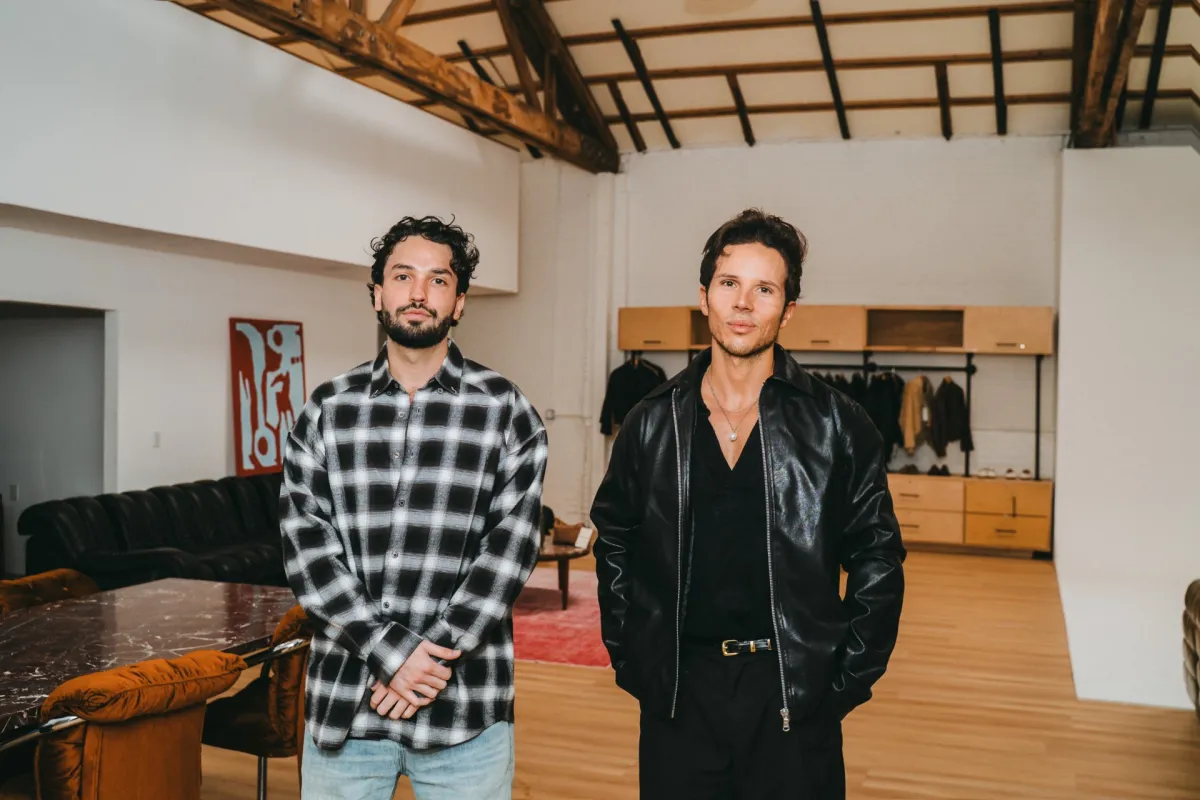
Fashion startup Atorie announced Thursday a $9.5 million seed round with investors, including a16z speedrun, Night Capital, and Lightspeed Ventures’ Jeremy Liew.
Shoppers can visit the Atorie website and buy handbags or clothes made from the same material — and coming from the same factory — that manufacturers use in high-end goods. The items are reasonably priced, too, with an Italian leather handbag costing just a few hundred, compared to the thousands a brand like Prada or Louis Vuitton would sell it for.
The startup arrives at a time when dupe culture has become increasingly popular, while the luxury sector has faced backlash from consumers in the post-pandemic era due to swift price hikes.
As a result, young consumers especially have sought cheaper, near-identical replications of these high-end goods; doing so has become almost a status symbol itself.
On Atorie, the items sold are mostly not dupes, says co-founder and serial entrepreneur Redouane Ramdani.
“It’s the same material, same craftsmanship,” he said. “It’s coming from the same factories.” He doesn’t consider Atorie fast fashion either. “It’s slow,” he clarified.
Before Atorie, Ramdani built the creator platform Snipfeed, which was acquired in 2024. Having grown up in France with a family that worked in luxury manufacturing, the founder always had an idea in the back of his mind that he would one day do something in the industry he grew up loving as a kid.
By the time he sold Snipfeed, however, the luxury manufacturing industry was quite different.
The biggest shift he noticed was that luxury factories were no longer just manufacturing goods. Traditionally, a brand like Ralph Lauren would bring its own designs and materials to a factory, which would then produce them. The problem was that brands had to commit to large minimum orders, which often pushed them to overproduce inventory. At the same time, a lot of these factories depend on working with a small number of large brand customers. If a brand pulled out at the last minute or not enough of that overproduced inventory sold, the factories faced financial and inventory risk.
“What’s changing is that the best factories increasingly have their own design and product-development capabilities,” Ramdani told TechCrunch. “Instead of simply manufacturing someone else’s designs, they can develop products themselves, adapt them quickly, and produce in smaller batches.”

AI also helps these factories by pulling data that helps them identify which products are likely to sell out before committing to large production runs.
“That reduces overproduction and allows factories to diversify beyond a handful of large customers,” he said.
These changes also gave Ramdani an idea, leading him to team up with Luis Angulo to launch the startup, which is now an AI-powered fashion brand that connects luxury manufacturers directly with consumers.
He compared his company’s approach to the retailer Quince, which is known for selling high-quality, low-priced items.
“We are talking to a different generation who is coming back for things that are trendy but well-made,” he continued, adding that consumers are getting tired of pure fast fashion, especially because of the harmful impact it’s having on the environment.
AI, of course, is used. Ramdani sees AI agents changing the entire shopping experience, where, in the future, people just instruct AI agents to buy things for them.
Ramdani said the company uses AI to analyze fashion trends and test what colors might look good on a product. It also uses AI agents to estimate consumer demand and trains the agents to predict when a material might start running short so factories can stock up in time.
On the consumer side, the Atorie website offers an AI agent that can build an outfit based on whatever — or whoever — inspires the customer. Over time, Atorie uses AI to learn shoppers’ habits to suggest what to buy next.
Ramdani said Atorie is already seeing an increase in sale referrals from platforms like ChatGPT and Claude.
The company said its goal is to become an alternative to Zara and offer something “very high quality for a price point that’s very affordable.” The company ended last year with around $5 million in sales and is expected to reach an annualized run rate north of $55 million this year.
“We are growing super fast,” Ramdani said, adding that the team is working with over 40 factories across the world right now.
The fresh capital will fund logistics, build more AI tools, and support production. The company also plans to release its own in-house line, like Amazon Essentials, and will work with creators and influencers to help them launch their own clothing lines quickly.
When you purchase through links in our articles, we may earn a small commission. This doesn’t affect our editorial independence.
>

New Edinburgh TV Event Confirmed; Richard Gadd Attends Launch Event

Manchester City analysis after Champions League draw: No Real Madrid but Barcelona and PSG await

Can You Still Use an Old Phone in 2026? What You Need to Know
-

 movies3 months ago
Search For Canadian TV Actor Stewart McLean Now Homicide Investigation
-

 Fashion9 years ago
These ’90s fashion trends are making a comeback in 2017
-
Fashion9 years ago
According to Dior Couture, this taboo fashion accessory is back
-
Fashion9 years ago
Model Jocelyn Chew’s Instagram is the best vacation you’ve ever had
-
Fashion9 years ago
Emily Ratajkowski channels back-to-school style
-
Fashion9 years ago
9 Celebrities who have spoken out about being photoshopped
-
Fashion9 years ago
Your comprehensive guide to this fall’s biggest trends
-

 Anime3 months ago
Rurouni Kenshin: Hokkaido Arc Manga Takes 1-Issue Break – News