
Tech
Google’s AI Mode can now track flight prices, help book hotels, and more


Google is adding new ways for users to plan and book trips through AI Mode, its conversational search experience, the company announced on Thursday. Users will now be able to ask AI Mode to track flight prices, book hotels, and see the cost of flights and hotels in points or miles.
The updates indicate that Google is looking to position AI Mode as an AI travel agent of sorts, as it’s moving beyond simply helping users find information to actually handling parts of the trip-planning and booking process itself.
Users can now describe to AI Mode when and where they want to fly, and the tool will display the best options available with the latest prices from more than 300 airlines and travel sites. If they’re ready to book, they can go ahead and build their itinerary in AI Mode. If they want to wait and see if prices drop, they can ask something like “track these flight prices for me.”

They’ll then get an email if prices change for the destination and dates they entered. Flight price tracking in AI Mode is now available in more than 180 countries.
As for hotel booking, users will be able to discover and book their next hotel through a conversation with AI Mode. Users can tell AI Mode about their upcoming trip and their hotel preferences to get a list of options alongside reviews and key factors.
Once they’ve found a hotel they like, they can ask AI Mode to help complete the booking. Then, they need to select the “Continue on Google” option that will appear alongside Google’s integrated partners, which includes hotel chains and travel sites.
From there, they can choose their room, review details such as the cancellation policy, and complete the booking with Google Pay. The tech giant notes that the hotel or booking platform will handle the booking and any customer service.

Hotel booking in AI Mode has started rolling out in the U.S. in English and will be available over the coming weeks with offerings from Booking.com, Choice Hotels International, Expedia, Hilton, Hotels.com, IHG Hotels & Resorts, Marriott International, Priceline, Trip.com, and Wyndham Hotels & Resorts.
Google also announced that AI Mode can now display the cost in points or miles for flights and hotels by asking something like “I want to travel from Atlanta to Miami using my AA miles. Help me find some options for nonstop flights departing Oct 9 and returning on Oct 12”.
Users will then see how many miles they need to book matching flights. The update is now available globally.
When you purchase through links in our articles, we may earn a small commission. This doesn’t affect our editorial independence.
>
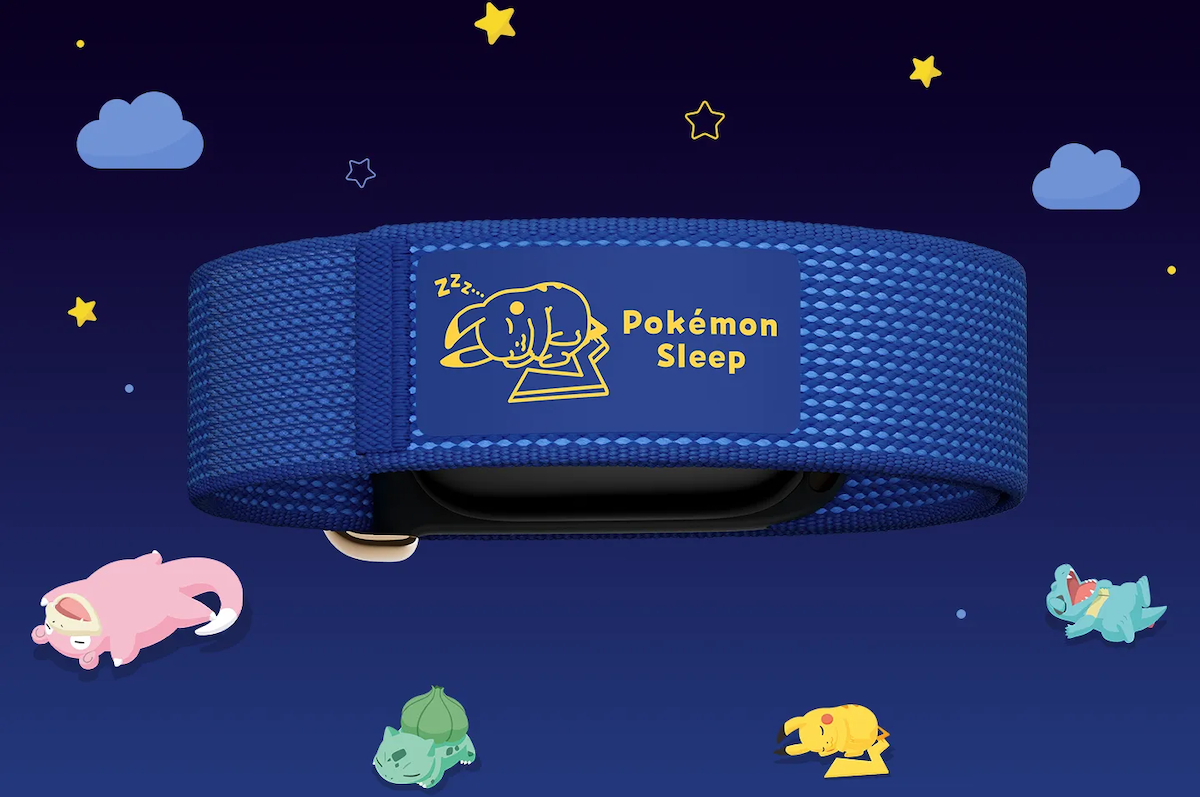
Google is giving Pokémon fans a new reason to wear a Fitbit. The company announced Thursday a special-edition Fitbit Air that works with Pokémon Sleep, combining Fitbit’s health and fitness tracking and the sleep-focused Pokémon game. The announcement comes as Pokémon celebrates its 30th anniversary this year.
Pokémon Sleep first launched in 2023, turning something as ordinary as going to bed into a Pokémon game. Players can earn in-game rewards for getting to sleep before their set bedtime, while the amount and quality of sleep they get helps drive their progress. You start with a big, sleepy Snorlax. The more you sleep, the more “Drowsy Power” your Snorlax builds up, which in turn attracts more Pokémon for you to discover.
The Fitbit Air adds another layer to that experience. It can sync with both the Google Health app and Pokémon Sleep, allowing users to track metrics including daily movement, heart rate, and cardio load during the day, then use the device to record sleep duration and quality overnight.
This isn’t the first wearable that can connect with Pokémon Sleep. The app already supports several wearables including Apple Watch, the Fitbit series, Galaxy Watch, and Google Pixel Watch. Players can also use Pokémon Sleep without a wearable at all.
For Pokémon’s 30th anniversary, however, it’s a particularly clever crossover. It turns something people already do every night into another opportunity to engage with the franchise, while giving Google a playful way to make wearable health tracking feel more fun. Google has also recently teamed up with athlete Stephen Curry for a special edition of the Pixel Watch for $579, featuring an exclusive design built for workouts.
The special-edition device is available to preorder for $129 and starts shipping September 15. It will be sold online and in stores through the Google Store and Target.
The standard Fitbit Air, meanwhile, costs $99. Google introduced its new Fitbit Air in May, featuring a slimmer design, improved health and fitness tracking, and an AI-powered coach that provides personalized guidance based on users’ activity, sleep, and wellness data.
When you purchase through links in our articles, we may earn a small commission. This doesn’t affect our editorial independence.
>

Fashion startup Atoire announced Thursday a $9.5 million seed round with investors including a16z Speedrun, Night Capital, and Lightspeed Ventures’ Jeremy Liew.
Shoppers can visit the Atoire website and buy handbags or even clothes made from the same material — and coming from the same factory — that manufacturers high-end goods. The items are reasonably priced, too, with an Italian leather handbag costing just a few hundred, compared to the thousands a brand like Prada or Louis Vuitton would sell it for.
The startup arrives at a time when dupe culture has become increasingly popular, while the luxury sector has faced backlash from consumers in the post-pandemic era due to swift price hikes.
As a result, young consumers especially have sought cheaper, near-identical replications of these high-end goods; doing so has become almost a status symbol itself.
On Atoire, the items sold are mostly not dupes, says co-founder and serial entrepreneur Redouane Ramdani.
“It’s the same material, same craftsmanship,” he said. “It’s coming from the same factories.” He doesn’t consider Atoire fast fashion either. “It’s slow,” he clarified.
Before Atoire, Ramdani built the creator platform Snipfeed, which was acquired in 2024. Having grown up in France with a family that worked in luxury manufacturing, the founder always had an idea in the back of his mind that he would one day do something in the industry he grew up loving as a kid.
By the time he sold Snipfeed, however, the luxury manufacturing industry was quite different.
The biggest shift he noticed was that luxury factories were no longer just manufacturing goods. Traditionally, a brand like Ralph Lauren would bring its own designs and materials to a factory, which would then produce them. The problem was that brands had to commit to large minimum orders, which often pushed them to overproduce inventory. At the same time, a lot of these factories depend on working with a small number of large brand customers. If a brand pulled out at the last minute or not enough of that overproduced inventory sold, the factories faced financial and inventory risk.
“What’s changing is that the best factories increasingly have their own design and product-development capabilities,” Ramdani told TechCrunch. “Instead of simply manufacturing someone else’s designs, they can develop products themselves, adapt them quickly, and produce in smaller batches.”

AI also helps these factories by pulling data that helps them identify which products are likely to sell out before committing to large production runs.
“That reduces overproduction and allows factories to diversify beyond a handful of large customers,” he said.
These changes also gave Ramdani an idea, leading him to team up with Luis Angulo to launch the startup, which is now an AI-powered fashion brand that connects luxury manufacturers directly with consumers.
He compared his company’s approach to the retailer Quince, which is known for selling high-quality, low-priced items.
“We are talking to a different generation who is coming back for things that are trendy but well-made,” he continued, adding that consumers are getting tired of pure fast fashion, especially because of the harmful impact it’s having on the environment.
AI, of course, is used. Ramdani sees AI agents changing the entire shopping experience, where, in the future, people just instruct AI agents to buy things for them.
Ramdani said the company uses AI to analyze fashion trends and test what colors might look good on a product. It also uses AI agents to estimate consumer demand and trains the agents to predict when a material might start running short so factories can stock up in time.
On the consumer side, the Atoire website offers an AI agent that can build an outfit based on whatever — or whoever — inspires the customer. Over time, Atoire uses AI to learn shoppers’ habits to suggest what to buy next.
Ramdani said Atoire is already seeing an increase in sale referrals from platforms like ChatGPT and Claude.
The company said its goal is to become an alternative to Zara and offer something “very high quality for a price point that’s very affordable.” The company ended last year with around $5 million in sales, and is expected to reach an annualized run rate north of $55 million this year. “
We are growing super fast,” Ramdani said, adding that the team is working with over 40 factories across the world right now.
The fresh capital will fund logistics, build more AI tools, and support production. The company also plans to release its own in-house line, like Amazon Essentials, and will work with creators and influencers to help them launch their own clothing lines quickly.
When you purchase through links in our articles, we may earn a small commission. This doesn’t affect our editorial independence.
>
Tech
Hoomanely’s building a smart feeding bowl and an AI platform to help owners spot when their pup is sick

Dogs are amazing. But as many pet parents will tell you, they can be remarkably good at hiding when something is wrong. My Labrador-Great Dane mix, for example, contracted tick fever several times over his 14 long years, and it was always at least a couple of weeks before I suspected something was off. It nearly gave me anxiety ulcers a few times.
Hoomanely, a new startup out of Palo Alto, thinks it can help people like me spot health problems in their dogs (beyond those two struggling brain cells) much sooner with an AI platform that gathers data using a sensor-laden feeding station. Dubbed the EverBowl, the station measures dogs’ food and water consumption and eating speeds, and records chewing and swallowing sounds, facial thermals, oral motions, and a few other signals.
The company’s AI platform analyzes that data to establish a baseline and then builds a health record. Any subsequent and prolonged departures from that baseline are shown to the pet owner via an app and in long-term reports, which the company says can provide more useful data to veterinarians if and when they get involved. The app also accepts information from the user, so the baseline can be kept updated with information outside the sensors’ scope.
“Practically, the bowl is the best capture environment in a pet’s life: same place, same posture, same routine, twice a day, for years,” Sai Supriya Sharath, co-founder and CEO of Hoomanely (pictured above, in the middle), told TechCrunch. She added that appetite, hydration, and oral comfort are among the first things to be disrupted by pain, dental disease, tummy issues, endocrine changes, and illness.
“Dogs are evolved to mask lethargy and limping. They are far less able to mask how they eat and drink … reduced or altered intake and changed drinking are presenting signs across a wide range of conditions.”
Hoomanely says its platform was built after an 18-month beta testing phase during which the company gathered about 5 million data points across more than 80 dogs.
During testing, the platform detected changes in one dog’s eating patterns, which were eventually tied to a chipped tooth that was starting to become infected. In another case, the company’s app showed a sustained change from the dog’s regular eating and temperature baselines, which prompted the owner to take their dog to the vet and get a diagnosis for tick fever.
While this sounds useful, there are some caveats. The cohort for this beta was quite small, and the company seems to have shipped only about 50 devices so far. It currently offers the EverBowl and the app reports through $29-per-month subscription service.
Sharath also said the company does not yet have independent sensitivity, specificity, or false-positive rates for clinical events, as that would require a study comparing the system’s alerts against actual diagnoses. Hoomanely admits that its platform is not a replacement for a veterinary diagnosis, but is instead meant to help owners and vets to identify potential issues faster.
The company is using its data for formal veterinary studies to find out whether its system works across a larger group of dogs. “The veterinary studies being designed will measure sensitivity, specificity, positive predictive value and false positives for each alert category, and we intend to report results by use case rather than as one headline number.” Sharath said.
Along with those studies, Hoomanely plans to build more devices to gather data. EverSense is planned to be a wearable that will measure movement and rest information, and EverHub will be able to accept inputs from third-party devices such as smart collars, feeders, or home devices to record environmental data.
Sharath said the long-term plan for Hoomanely is to eventually become an animal health data company by using the data gathered from its devices to support research and serve nutrition and insurance companies. Because the data capture system isn’t specifically designed for dogs, she said it may eventually expand to other animals, such as cats, livestock, or horses.
The startup has raised $1.8 million in pre-seed funding so far and says it’s starting conversations for a seed round.
When you purchase through links in our articles, we may earn a small commission. This doesn’t affect our editorial independence.
>

Google’s new Fitbit Air brings Pokémon Sleep to your wrist

Aquamarine Sequel Series Brings Back Jake McDorman as Raymond

Watch ‘Outlander: Blood Of My Blood’ Season 2 Trailer
-

 movies3 months ago
Search For Canadian TV Actor Stewart McLean Now Homicide Investigation
-

 Fashion9 years ago
These ’90s fashion trends are making a comeback in 2017
-
Fashion9 years ago
According to Dior Couture, this taboo fashion accessory is back
-
Fashion9 years ago
Model Jocelyn Chew’s Instagram is the best vacation you’ve ever had
-
Fashion9 years ago
Emily Ratajkowski channels back-to-school style
-
Fashion9 years ago
9 Celebrities who have spoken out about being photoshopped
-
Fashion9 years ago
Your comprehensive guide to this fall’s biggest trends
-

 Anime3 months ago
Rurouni Kenshin: Hokkaido Arc Manga Takes 1-Issue Break – News