
Tech
Best Sales Analytics Software for Revenue Teams

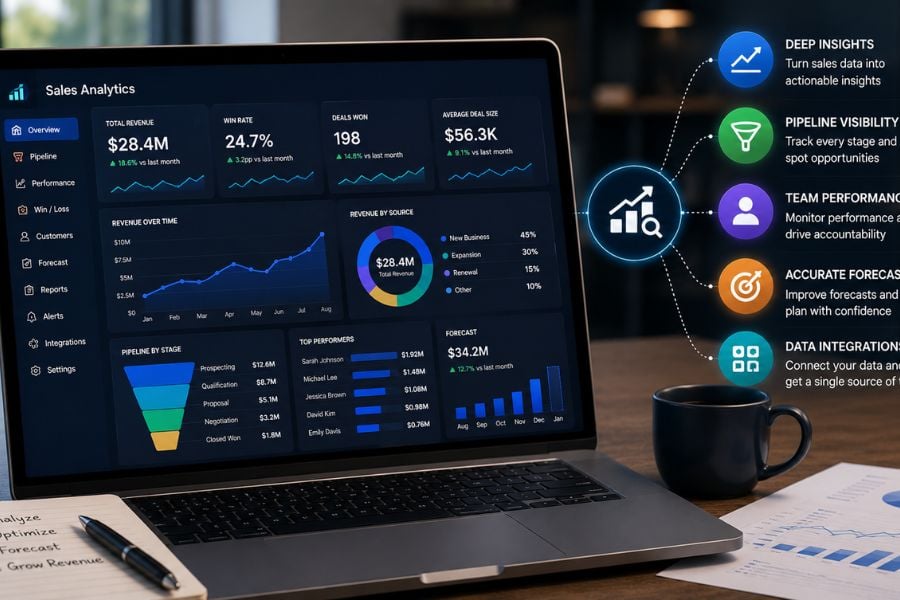
Sales teams rarely have a shortage of data. The harder problem is turning CRM records, pipeline activity, forecasts, buyer engagement, and rep performance into information revenue leaders can actually use.
The right sales analytics software can help RevOps and sales leaders identify pipeline bottlenecks, compare performance across teams and segments, monitor conversion, assess forecast risk, and determine where sellers should focus. The best choice depends on what needs analyzing: CRM performance, account and buyer signals, forecasts, customer conversations, or data spread across multiple business systems.
My picks for the top sales analytics tools include ZoomInfo for account intelligence and buyer signals, Salesforce for CRM-native analytics, Clari for forecasting and pipeline analysis, Gong for conversation-driven insights, and HubSpot CRM for growing teams.
ZoomInfo combines company and contact intelligence with enrichment and buyer signals to give revenue teams more context for account prioritization and sales analysis.
| ZoomInfo | ||
| Salesforce Analytics | ||
| Clari | ||
| Gong | ||
| HubSpot CRM | ||
| Salesloft |
Best sales analytics software at a glance
Why you can trust TechRepublic
|
To ensure we provide readers with the best answers, the TechRepublic editorial process adheres to strict standards, including rigorous research, assessment, and provider scoring. In this review, I evaluated the most important aspects of sales analytics software for revenue teams, including pipeline and forecasting capabilities, account and buyer intelligence, conversation analytics, integrations, ease of use, and pricing. My methodology also considered how well each platform supports distinct revenue use cases, along with product usability and feedback from real users. Furthermore, I leverage the following work experiences when carrying out software reviews:
|
 Bianca Caballero
Methodology: How I evaluated the best sales analytics tools
I compared these sales analytics tools based on the capabilities that matter most to sales leaders and RevOps teams, with an emphasis on how effectively each platform turns sales and revenue data into actionable insights.
- Pipeline and conversion analytics: How well the platform tracks pipeline value, movement, coverage, stage conversion, win rates, sales cycles, and potential bottlenecks.
- Sales performance analytics: The depth of reporting across reps, teams, territories, products, accounts, and customer segments.
- Forecasting and revenue visibility: The ability to monitor expected revenue, forecast changes, pipeline risk, deal progression, and performance trends.
- Account and buyer intelligence: The depth of company, contact, intent, engagement, and other buyer signals available for account analysis and prioritization.
- Data integration and enrichment: How easily the platform connects with CRM and other revenue systems, synchronizes relevant data, and enriches existing records where applicable.
- AI and automation: How effectively the platform uses AI and automation to surface patterns, risks, signals, summaries, or recommendations that reduce manual analysis.
- Customization and usability: How easily RevOps and sales leaders can configure reports, dashboards, metrics, and workflows, investigate performance changes, and get useful answers without excessive technical support.
I also evaluated each platform according to its strongest use case rather than assuming all six solve the same problem equally well. This approach helps buyers identify the platform that best addresses their revenue team’s priorities instead of looking for a single product that does everything equally well.
What makes ZoomInfo the best for account intelligence and sales prioritization?

Pros
- Strong B2B company and contact intelligence
- Useful intent and engagement signals for account prioritization
- CRM enrichment can improve segmentation and downstream reporting
Cons
- Pricing is not publicly listed
- Not a dedicated sales forecast-management platform
- May be more platform than smaller or lower-volume sales teams need
Why I chose ZoomInfo
ZoomInfo is strongest when the analytics problem starts with the quality of the underlying account and buyer data. Its combination of company and contact intelligence, CRM enrichment, intent signals, account segmentation, and conversation intelligence provides RevOps with more context to decide which accounts deserve attention and to analyze performance across meaningful customer segments.
The main trade-off is forecasting: ZoomInfo is not primarily designed as a forecast-management platform. For teams focused on account quality, buyer activity, segmentation, and prioritization, though, its intelligence layer can strengthen the data feeding CRM, analytics, prospecting, and sales workflows.
Also read: Revenue Intelligence Platforms: Key Features to Know
Key features
- Company and contact intelligence: ZoomInfo provides B2B company and professional data that helps teams research accounts, identify decision-makers, and add organizational context to CRM records.
- CRM data enrichment: Enrichment can fill missing account and contact fields and refresh existing records, improving the data used for routing, segmentation, and reporting.
- Buyer intent signals: Intent data helps surface accounts with increased research activity on relevant topics, giving sellers another signal to prioritize outreach.
- Account segmentation and prioritization: Firmographic, contact, and behavioral data can help RevOps organize accounts by ICP fit, territory, company attributes, or buying activity.
- Conversation intelligence: ZoomInfo’s broader platform includes conversation-intelligence capabilities that can provide additional context from sales calls and buyer interactions.
ZoomInfo pricing
ZoomInfo does not publish standard monthly or annual list prices. Contact ZoomInfo for a customized quote based on the included users, data allowances, add-on costs, and any usage-based fees.
What makes Salesforce Analytics the best for CRM-native sales analytics?
Pros
- Deep analytics tied directly to Salesforce CRM data
- Highly customizable dashboards and analytical models
- Strong forecasting and broader analytics ecosystem
Cons
- Advanced analytics can require additional licenses
- Configuration and administration can become complex
- Best value depends on an existing Salesforce ecosystem
Why I chose Salesforce Analytics
Salesforce Analytics makes the most sense for organizations that already treat Salesforce as the operational center of the sales process. Pipeline analysis, forecasting, configurable dashboards, CRM Analytics, and the broader Salesforce analytics ecosystem give mature teams substantial flexibility while keeping sales insights close to the underlying CRM records.
Complexity is the tradeoff. Advanced deployments can involve additional products, licensing, and administration. For organizations already deeply invested in Salesforce, however, keeping opportunity data, workflows, forecasting, and analytics within the same ecosystem can outweigh that overhead.
Key features
- CRM-native analytics: CRM Analytics works directly with Salesforce data, helping teams analyze sales performance without having to routinely export data to a separate system.
- Pipeline and opportunity analysis: Revenue teams can examine opportunity progression, pipeline changes, sales performance, and other CRM-based measures.
- Sales forecasting: Salesforce supports forecast management and expected-revenue analysis, with additional purpose-built revenue capabilities available through Revenue Intelligence.
- Custom dashboards and metrics: RevOps can create tailored dashboards, filters, models, and analytics applications around its sales processes and reporting requirements.
- AI-powered analytics: Higher-tier offerings add capabilities such as Einstein Discovery for predictions, automated data discovery, explanations, and scoring.
Salesforce Analytics pricing
- CRM Analytics Growth: $140/user/month
- CRM Analytics Plus: $165/user/month
- Revenue Intelligence: $220/user/month
- Industry Cloud Intelligence: $220/user/month
- Service Intelligence: $220/user/month
Free trial: 30 days
What makes Clari the best for forecasting and revenue predictability?

Pros
- Strong forecasting and pipeline-inspection capabilities
- Purpose-built for CRO and RevOps workflows
- Helps connect deal risk with forecast and pipeline reviews
Cons
- Pricing is not publicly listed
- May be excessive for teams with simple forecasting needs
- More specialized than general CRM reporting
Why I chose Clari
Clari excels when forecasting and pipeline inspection are formal operating disciplines rather than occasional reporting exercises. Its revenue forecasting, pipeline analytics, deal-risk capabilities, and trend visibility map closely to the questions leaders ask during forecast calls and pipeline reviews.
That specialization can be more than smaller teams need. For larger revenue organizations with structured forecasting processes, however, the narrow focus becomes an advantage because Clari is built around revenue predictability rather than generic dashboard creation.
Key features
- Revenue forecasting: Clari supports structured forecasting workflows that help sales leaders monitor expected results and forecast movement.
- Pipeline inspection: Teams can analyze pipeline coverage, changes, opportunity progression, and other signals that may affect future revenue.
- Deal risk analysis: Deal-level signals help managers identify opportunities that require closer inspection or intervention.
- Revenue trend reporting: RevOps can monitor patterns across forecast periods, pipeline movement, and historical performance.
- Revenue data integration: Clari brings information from CRM and other revenue systems into its forecasting and pipeline workflows.
Clari pricing
Clari uses custom pricing and does not publish standard monthly or annual per-user rates. Contact Clari to request a custom quote based on user count, modules, integrations, and deployment scope.
What makes Gong the best for conversation and deal analytics?

Pros
- Strong conversation intelligence capabilities
- Connects buyer engagement with deal and pipeline context
- Supports forecasting alongside conversation and deal analytics
Cons
- Pricing is quote-based
- Broader platform may be unnecessary for dashboard-only needs
- Value depends on consistently capturing buyer interactions
Why I chose Gong
Gong adds a layer of evidence that conventional CRM reporting often misses: what buyers and sellers are actually discussing and doing within an opportunity. Conversation intelligence, buyer engagement, deal analytics, forecasting, and coaching insights can help managers interpret whether a deal is genuinely progressing rather than relying only on manually maintained CRM fields.
The platform’s breadth can be unnecessary for teams that need only standard dashboards. When calls, meetings, stakeholder engagement, and rep behavior materially influence deal outcomes, though, Gong’s interaction data provides context that traditional sales reporting may not capture.
Also read: What Is Sales Intelligence? Tools, Benefits, and Use Cases
Key features
- Conversation intelligence: Gong captures and analyzes calls, meetings, emails, and other buyer interactions to surface patterns and important moments.
- Buyer engagement insights: Teams can examine stakeholder participation and engagement to understand whether opportunities have meaningful buyer involvement.
- Deal analytics: Gong combines CRM data and interaction signals to help managers evaluate opportunity health and progression.
- Sales forecasting: Forecast functionality supports revenue projections, pipeline review, and manager forecasting workflows.
- Coaching analytics: Conversation and activity data can help managers identify seller behaviors and coaching opportunities.
Gong pricing
Gong does not publish fixed monthly or annual list prices. Contact Gong to obtain a custom quote based on user licensing, included products, and implementation expenses.
What makes HubSpot CRM the best for growing revenue teams?

Pros
- CRM, sales execution, and reporting are closely integrated
- Lower starting price than many enterprise-focused platforms
- Monthly and annual billing are available on key tiers
Cons
- More advanced analytics require higher tiers
- Professional and Enterprise carry onboarding fees
- Less flexible than dedicated BI software for complex modeling
Why I chose HubSpot CRM
HubSpot CRM strikes a useful balance between capability and accessibility. Pipeline reporting, activity analytics, forecasting, conversation intelligence, and CRM workflows give growing teams a path beyond spreadsheets without immediately requiring a separate analytics stack.
The limitation is that the strongest reporting and analytics features become increasingly tied to higher subscription tiers. Even so, the integrated CRM experience and comparatively lighter administration can make that tradeoff worthwhile for teams prioritizing adoption and speed.
Key features
- Pipeline reporting: HubSpot CRM provides pipeline and deal reporting that helps teams monitor opportunity stages and sales performance.
- Sales activity analytics: Managers can analyze emails, calls, meetings, tasks, and other activity alongside deal results.
- Forecasting: Professional and Enterprise support more advanced forecasting and team-level revenue visibility.
- Conversation intelligence: Enterprise includes conversation intelligence capabilities for recording, transcription, and coaching insights.
- Sales automation and reporting: Higher tiers add customizable workflows and deeper reporting for more complex sales processes.
HubSpot CRM pricing
What makes Salesloft best for sales engagement and revenue execution analytics?

Pros
- Connects analytics directly with seller workflows
- Combines engagement, conversation, and deal insights
- Includes reporting and AI-powered workflow capabilities
Cons
- Pricing is not publicly listed
- Broad platform can be excessive for teams with simple reporting needs
- Less suited to standalone BI and highly customized analytics
Why I chose Salesloft
Salesloft is most compelling when analytics need to drive direct seller action. Its engagement workflows, conversation intelligence, deal management, analytics, and CRM synchronization make it particularly useful for teams that want reps and managers to act on insights inside their day-to-day sales process.
The downside is breadth: organizations that only need lightweight reporting may not need a full sales execution platform. For teams already investing heavily in structured sales engagement, however, bringing analytics and execution together can reduce the need to move between disconnected tools.
Key features
- Conversation intelligence: Salesloft can capture and analyze customer conversations to give reps and managers more context around interactions and deals.
- Deal management: Deal-focused workflows help teams inspect opportunities, identify risks, and determine appropriate next actions.
- Reporting and analytics: Salesloft includes reporting capabilities for monitoring seller activity, engagement, and performance across sales workflows.
- AI-powered workflows: AI can help guide seller actions and reduce manual work by using signals and workflow context.
- CRM synchronization: Bi-directional CRM sync helps keep engagement and sales data connected with the organization’s system of record. Salesloft lists reporting and analytics, AI-powered workflows, coaching, and bi-directional CRM sync among its platform capabilities.
Salesloft pricing
Salesloft does not publish monthly or annual list prices. Contact Salesloft to request a custom quote based on included platform capabilities, number of user licenses, implementation services, and add-ons.
Sales analytics software vs revenue intelligence software
Sales analytics software primarily helps teams measure and analyze sales performance. Revenue intelligence platforms typically go further by combining pipeline information with buyer activity, forecasting, and risk or opportunity signals.
| Primary purpose | Measure sales performance | Improve revenue execution |
| Typical outputs | KPIs, dashboards, trends, conversion analysis | Forecasts, deal risk, buyer signals, recommended actions |
| Common inputs | CRM, pipeline, sales activity | CRM plus calls, emails, meetings, and engagement data |
| Core question | What happened and where? | What is likely to happen and what needs attention? |
| Typical users | RevOps, sales leaders, analysts | RevOps, CROs, managers, sellers |
The categories increasingly overlap. Salesforce provides analytics and revenue intelligence capabilities, while Clari and Gong combine analytics with forecasting and execution workflows. Buyers should focus on the capabilities their teams need rather than the category label alone.
What features matter most in sales analytics tools?
The strongest sales analytics tools do more than create dashboards. They let revenue teams move from a high-level performance change to the accounts, opportunities, activities, or segments behind it.
CRM and data integration
Determine which systems the platform connects to and what data actually moves between them.
Verify supported CRM objects, custom fields, historical data, sync frequency, and external data sources. A long integration list has limited value if the fields required for your reports cannot be synchronized.
Pipeline and conversion analytics
Look for the ability to analyze pipeline coverage, stage conversion, win/loss performance, sales cycle length, deal slippage, and pipeline trends.
Managers should be able to move from a company-wide change to the team, segment, rep, or individual opportunities responsible for it.
Forecasting and trend analysis
If forecasting matters, determine whether the software merely displays current pipeline or helps explain changes in expected revenue.
Look for historical comparisons, pipeline movement, forecast categories, risk indicators, and drill-down capabilities appropriate to your sales process.
Custom dashboards and metrics
Your reporting model should match your sales motion.
Check whether RevOps can define custom metrics, filters, segments, and dashboards without repeatedly depending on engineering or vendor support.
Segmentation
Useful sales analysis should allow teams to compare performance by dimensions such as rep, team, territory, product, customer segment, source, and deal size.
This is also where account data quality matters. Incomplete company and contact records can limit the usefulness of otherwise sophisticated reporting.
AI-assisted insights
AI should reduce analytical work rather than simply add a summary box to an existing dashboard.
Ask vendors to demonstrate how AI identifies anomalies, surfaces risk, explains changes, prioritizes accounts, or recommends what a manager should investigate.
Governance and metric consistency
Analytics become less useful when different teams create competing definitions of the same KPI.
Look for permissions, standardized metrics, controlled dashboard access, and sufficient transparency so users can understand where reported numbers originate.
How to choose the best sales analytics software
The best sales analytics software is the product that answers your team’s most important revenue questions without creating unnecessary data or administrative complexity.
- List the questions your current reporting cannot answer.
Document the decisions that are difficult to make today before evaluating software.
Example: If managers can see total pipeline but cannot identify why stage conversion is falling, prioritize tools with conversion and pipeline diagnostics instead of simply adding more dashboard templates.
- Decide whether you need CRM-native or cross-system analytics.
CRM-native analytics may be simpler when most relevant sales data already lives in one system. Broader analytics platforms become more valuable when RevOps needs to combine CRM data with finance, marketing, product, or other sources.
Example: A Salesforce-centric organization may be able to answer most operational questions with native analytics, while a RevOps team combining CRM, billing, profitability, and product usage data may need a broader BI layer.
- Test the platform with your own sales data.
Vendor demo environments are designed to look clean. Your production data may not.
Example: Ask each vendor to reproduce your current win rate, pipeline, sales cycle, and forecast reports using representative records. Compare the results with your existing numbers and investigate discrepancies.
- Check metric flexibility.
Determine whether RevOps can adapt calculations to your organization’s definitions.
Example: If your company calculates pipeline coverage differently for enterprise and SMB teams, verify whether the platform supports both definitions without exporting data to a spreadsheet.
- Evaluate drill-down capabilities.
A dashboard should help explain changes, not merely report them.
Example: When win rate falls, test whether a manager can move from the company-wide KPI to segment, territory, rep, stage, and individual opportunity data without building a new report.
- Measure administrative overhead.
Consider what happens after implementation.
Example: Ask who needs to modify a dashboard when the sales organization adds a segment or changes opportunity stages. If every adjustment requires technical resources, include that dependency in the buying decision.
- Compare the total analytics stack.
Do not evaluate a platform in isolation.
Example: Map the analytics products you already pay for against the proposed platform. Identify which functions it replaces, which it complements, and where reporting would remain duplicated.
Common sales analytics software buying mistakes
Revenue teams can add sophisticated analytics without improving decision-making if they choose software before defining how it will be used.
- Buying dashboards instead of answers: More visualizations do not necessarily help teams diagnose performance or make better decisions.
- Ignoring CRM data quality: Analytics cannot fully compensate for inconsistent stages, missing fields, duplicate accounts, or stale close dates.
- Choosing based on vendor demos: Test products against real sales questions and representative company data.
- Overlooking adoption: Managers and reps need to understand and trust the metrics if analytics are going to influence behavior.
- Creating duplicate reporting layers: Another analytics platform can worsen metric inconsistency when data ownership and KPI definitions are unclear.
- Ignoring administration costs: Licensing is only part of the investment. Factor in implementation, integrations, data modeling, governance, training, and dashboard maintenance.
>
Well, the day many Apple users have dreaded has come. Apple Maps is no longer entirely ad-free.
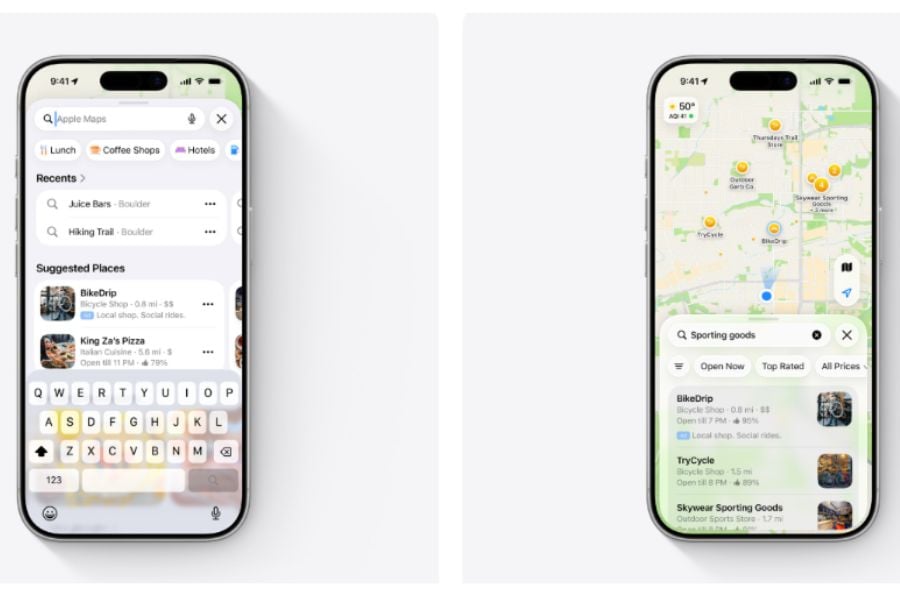
Apple has begun rolling out sponsored business listings to Maps users in the U.S. and Canada, following plans announced earlier this year to expand its advertising business. Ads can appear before a search and at the top of relevant search results, with a broader rollout expected over the coming weeks.
For iPhone users, the biggest change is simple: sponsored listings are now part of the Maps experience, and there is currently no option to pay to remove them — even for iCloud+ or Apple One subscribers.
Where Apple Maps ads will appear
Fortunately, Apple isn’t flooding Maps with ads everywhere. Instead, the ads can appear in two places within the Maps app.
Before users search, an initial advertisement can appear in the “Suggested Places” section of the search screen. After a user enters a search, a second ad can also appear at the top of relevant search results.
Users will see at most one ad per location, according to 9to5mac. Paid listings are designed to look similar to other business results but carry a blue “Ad” label to distinguish them from organic listings. So while the ads may look similar to regular business listings, watchful users should be able to tell when a business has paid for placement.
Google Maps has offered promoted business listings for years. For Apple Maps users, however, the rollout removes one distinction between the two services: Apple Maps had previously offered an ad-free search experience.
Apple emphasizes privacy
This represents another step Apple is taking to expand advertising beyond traditional placements in services such as the App Store. The company has framed advertising as a business opportunity while attempting to differentiate its approach from competitors by emphasizing privacy.
Naturally, introducing advertising in a mapping app is going to raise some important privacy questions. After all, Maps has access to information about what users search for and where they are while using the app.
Fortunately, the company says Maps advertising will not associate a user’s location or the ads they see and interact with their Apple Account. Apple also says personal data stays on the user’s device and isn’t collected or stored by Apple or shared with third parties.
Users may still see ads based on their approximate location, current search terms, or the part of the map they’re viewing. But Apple says that this advertising information isn’t linked to users’ Apple Accounts.
Some Apple Maps users are unhappy
Of course, the ads have already attracted some criticism from Apple Maps users.
Initial reactions reported online have included complaints that advertising makes Maps less appealing and comparisons with Google Maps, particularly among users who previously preferred Apple Maps for its ad-free design.
Some responses have even included users saying they will switch to Google Maps, while others have questioned why they should continue using Apple Maps now that it has ads.
Another important thing: unlike some paid digital services, users cannot currently pay to remove the Maps advertisements. That means even users who pay for services such as iCloud+ or Apple One can’t remove the sponsored listings, either.
Now, does this really mean that Apple Maps is about to lose a huge number of users? Well, the impact on the app remains unclear. While some users might consider switching, ads alone are unlikely to determine everyone’s choice. Furthermore, Apple Maps is also deeply integrated into the iPhone and Apple’s broader ecosystem, which could make a wholesale switch less likely.
Still, the move for Apple is a risk. Ads might generate another stream of revenue for the company, but they also significantly change an experience that many users had come to expect.
What the ads mean for businesses
On the flip side, the rollout creates an immediate new advertising channel for businesses. For them, Maps ads could be a useful new way to reach potential customers.
A restaurant, retailer, or other local business can pay for a prominent position when people are looking for places to visit. Appearing near the top of a Maps search could allow advertisers to reach potential customers when they are actively looking for a particular type of business.
Apple has already opened Maps ad booking and is offering a promotional deal for businesses interested in trying the new placements, helping them compete for attention at the top of local search results.
Must-read Apple coverage
Apple’s growing advertising business
As the rollout continues, it points to Apple’s broader push to integrate advertising across its ecosystem. The company already sells ads across various parts of its business, including the App Store. Maps gives it another place to generate advertising revenue.
It will be interesting to see whether Maps advertising will remain relatively limited or eventually become a much larger part of the experience, and how this will impact customer response.
For now, the rollout remains relatively limited: sponsored listings are clearly labeled and appear only in specific parts of Maps. The bigger question is whether Apple keeps that footprint small as its advertising business expands — or whether ads gradually become a more visible part of using an iPhone.
Other News: Google has introduced pay-as-you-go pricing, spending caps, and savings plans for Gemini Enterprise to help businesses better control the unpredictable costs of AI agents.
>

Ring has a new answer to a difficult security-camera trade-off: keeping cloud-powered intelligence without retaining long-term access to the keys that unlock customers’ videos.
The Amazon-owned company announced TAKE, or Throw Away the Key Encryption, on Aug. 26. A phased rollout begins in September 2026, with Ring planning to make the system its default encryption worldwide while retaining cloud-dependent features such as intelligent alerts, video descriptions, and search. End-to-end encryption will remain optional.
How Ring TAKE limits access to video
Under Ring’s TAKE system, recordings use unique, rotating encryption keys. Ring temporarily holds a copy inside a secure cloud enclave so enabled services can process footage, then deletes that copy.
Ring already encrypts video in transit and at rest. Its privacy documentation says TAKE limits retention of video encryption keys to 24 hours. After deletion, the customer and authorized Shared Users retain the keys on enrolled devices.
Optional end-to-end encryption goes further by preventing Ring from accessing encrypted content. It also disables Shared User video access and numerous cloud-dependent features, including Video Search and Video Descriptions.
The tension between encryption and cloud processing extends beyond home cameras. Organizations face similar questions around encrypted cloud data and lawful access, while flaws in cloud-connected security cameras have highlighted the risks attached to remotely managed video.
TAKE also affects what Ring says it can provide to authorities. The company responds to legally valid government demands, including search warrants, subpoenas, and court orders. Ring’s privacy policy says that when TAKE or E2EE protects footage, the company can provide non-video information but not the protected recordings. Users can still choose to share footage themselves.
Ring Verify and Ring Pro add another layer
TAKE arrives as Ring expands the intelligence attached to its cameras. The company’s 2026 subscription changes renamed AI Pro as Ring Pro. Intelligent features include Video Descriptions, Familiar Faces, Unusual Event Alert, Active Warnings, Single Event Alert, and Video Search.
Availability varies by device, subscription, language, and location. Amazon said Aug. 26 that Video Descriptions expanded to more regions, while some intelligent features remain restricted in certain jurisdictions.
Ring Verify addresses the integrity of exported footage rather than who can decrypt it. Ring’s verification documentation says downloaded or shared cloud videos carry a digital security seal. A verified result means the file has not changed since download.
A failed check does not prove a clip is fake. Cropping, trimming, brightness changes, filters, or compression can break verification. Videos recorded with E2EE are also incompatible with Ring Verify and return “not verified.”
Organizations using Ring footage for investigations or evidence should account for both controls when setting encryption, export, and retention policies.
Read more: Ring’s evolving privacy posture also includes its decision to drop a planned Flock Safety integration after concerns over surveillance and access to camera footage.
>

Snapchat says it is suitable for teens as young as 13, but Pennsylvania now alleges the app’s content and design tell a very different story.
The state’s attorney general has sued the social media company, alleging Snapchat uses disappearing content, Snapstreaks, notifications, and other engagement features that encourage compulsive use among children. Pennsylvania says these mechanics can create a cycle in which young users return repeatedly because they fear missing content, losing a streak or falling behind socially.
The lawsuit also challenges Snapchat’s 13+ age rating, alleging that the company does not accurately reflect how often younger users encounter mature material.
Together, the claims put both sides of Snapchat’s teen experience under scrutiny.
Why Pennsylvania says Snapchat’s teen safeguards fall short
App store ratings and labels are intended to be a quick way potential app users, and in this case, parents, can check how suitable an app aligns with their needs and preferences. That means such labels should always be accurate.
However, the Pennsylvania judiciary has found that Snapchat’s age ratings and the app’s actual behavior are miles apart.
According to the court filing, an investigator working with the Pennsylvania attorney general’s office created a Snapchat account for a fictional 13-year-old and tested the content a minor could encounter on the platform. According to the complaint, the investigator encountered frequent and intense profanity, drug and alcohol references, sexual content and other mature material despite Snap maintaining a “T for Teen” rating in Google Play and Microsoft’s store and a 13+ rating in Apple’s App Store, The Next Web reports.
But Pennsylvania’s case does not stop at what Snapchat shows children. The case also aims to show how the platform keeps them coming back.
The complaint alleges that disappearing content, infinite scrolling, push notifications, autoplay, Snapstreaks and Snapscores create repeated-use loops that can encourage compulsive behavior among young users.
Snapchat has a defense; the courts have the decision
A Snapchat spokesperson told Fox Business in a statement that Snapchat was designed differently from the beginning, opening to a camera rather than a content feed and focusing on self-expression and connections between friends.
The statement also noted that Snap shares the attorney general’s goal of protecting young people online but is disappointed that Pennsylvania chose to pursue litigation rather than work with the company.
The dispute will now move forward in the Philadelphia Court of Common Pleas. Pennsylvania is asking the court to declare the alleged practices unlawful, impose temporary and permanent injunctions, and levy civil penalties for willful violations, along with legal costs and other relief.
The court will ultimately determine whether Snap’s practices violated that law and whether the state is entitled to the remedies it is seeking.
Earlier this month, a US appeals court allowed more than 3,000 lawsuits against Meta, Google, TikTok and Snap over alleged addictive platform design to proceed. Separately, a recent Meta settlement with dozens of states could force sweeping changes to how the company handles young users.
Australia has gone even further, imposing a ban that prevents children under 16 from holding accounts on social-media platforms.
The policy, which took effect in December 2025, has since helped trigger a wave of regulations and proposals aimed at limiting children’s access to social media across age groups. Governments are increasingly targeting features such as endless feeds, feedback systems and disappearing content that can encourage prolonged or repeated use.
What this means for Snapchat users and parents
For parents and younger Snapchat users, the Pennsylvania case is worth watching because its impact could extend beyond warning labels and app-store ratings. If the state succeeds, Snap could face pressure to change how it presents Snapchat to younger users, how it handles mature content, or how some of its most popular engagement features work for teen accounts.
That could put features such as Snapstreaks, disappearing content, autoplay, and frequent notifications under greater scrutiny. These are familiar parts of the social media experience, but regulators are increasingly questioning whether platforms should be allowed to use the same engagement mechanics for children as they do for adults.
The case could also contribute to a broader shift in how social-media companies verify ages and design accounts for younger users. Parents and teens may eventually encounter stronger age checks, expanded parental controls, different default settings, or restrictions on features intended to encourage repeated use.
For now, Snapchat’s existing features remain in place, and Pennsylvania’s allegations must still be tested in court. But the outcome could help determine how much responsibility social-media companies have for designing a fundamentally different experience when the person behind the screen is a child.
Also read: Meta was ordered to pay $567 million and overhaul teen protections as courts put more pressure on social media companies over how their platforms affect young users.
>

Colts take Alec Pierce off PUP list; WR to rejoin practice

Best Sales Analytics Software for Revenue Teams

‘Adults’ Season 2 Review: Hulu Series Gets a Much-Needed Growth Spurt
-

 movies3 months ago
Search For Canadian TV Actor Stewart McLean Now Homicide Investigation
-

 Fashion9 years ago
These ’90s fashion trends are making a comeback in 2017
-
Fashion9 years ago
According to Dior Couture, this taboo fashion accessory is back
-
Fashion9 years ago
Model Jocelyn Chew’s Instagram is the best vacation you’ve ever had
-
Fashion9 years ago
Emily Ratajkowski channels back-to-school style
-
Fashion9 years ago
9 Celebrities who have spoken out about being photoshopped
-
Fashion9 years ago
Your comprehensive guide to this fall’s biggest trends
-

 Anime3 months ago
Rurouni Kenshin: Hokkaido Arc Manga Takes 1-Issue Break – News