
Anime
Director of Live-Action Look Back Dives into Ultraman’s Origin in New Doc


As an anime fan, you’ve probably heard of Ultraman at least once. His cross-armed Ultra Beam became a symbol of justice for Japanese children everywhere, many of whom grew up to shape the anime industry. Hideaki Anno, the creator of Neon Genesis Evangelion, submitted his own fan-film in university and essentially made TV original anime viable with his take on a darker Ultraman. I myself got into the franchise formally with Shinji Higuchi‘s Shin Ultraman, a feature-length reimagining of the original series written by Anno. But who came up with the original idea, and what made him so influential? While making the live-action adaptation of Look Back, director Hirokazu Kore-eda was tasked with finding out in an upcoming documentary by Tsuburaya shown at Japan House LA: The Origin of Ultraman.
 |
 |
Koreeda was admittedly an odd choice to head this project. He’s never done tokusatsu before, and he’s only recently dabbled with sci-fi in his recent feature, Sheep in the Box. His bread and butter has been humanistic stories exploring found family (Shoplifters), poverty (Nobody Knows), and memories (After Life). That’s why I’m personally excited for his version of Look Back, which creator Tatsuki Fujimoto has praised for being “able to bring out the atmosphere that the original had while giving it a real sense of authenticity.” But it turns out Ultraman might have instilled those values in the first place. As a kid of the 60s, he was there from the beginning, and it shaped much of his childhood. What really struck him was how the series tackled complex issues in a way kids could understand. The creators would describe this as sneaking vegetables into chocolate.
His favorite kaiju, Gomora, was actually a peaceful creature forcibly dragged out of its natural habitat to be displayed as a trophy for the Japan World Exposition. When they break free out of anger, and Ultraman has to fight, he couldn’t help feeling sorry for the kaiju. This story brought to light the Expo’s contradictory mission of representing human progress while actively polluting the earth. He would continue to follow the franchise as it got more morally complex, with his favorite entry being Ultraseven. One episode where Atlanteans get mistaken as aliens depicts humans as the invaders instead, leading to a pretty bitter victory.

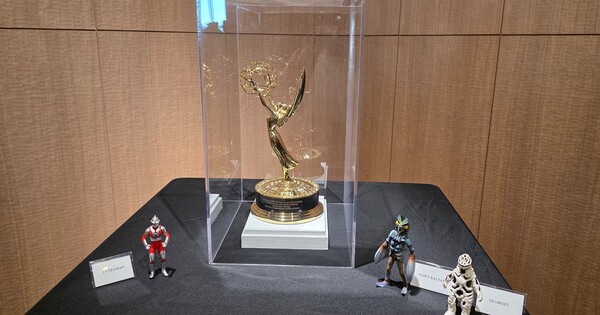
Koreeda wasn’t the only one who rated Ultraseven highly: Shannon Tindle and John Aoshima (Co-Directors of Ultraman: Rising) based their protagonist Kenji Sato on Dan Moroboshi. Whereas previous Ultramen were inherently selfless, Dan had to let go of his selfishness to grasp his power. This character arc being more similar to American superhero origins made it easier to pitch in their own film, but even they didn’t expect to be offered an official entry in the franchise. While the two directors grew up watching Ultraman Tiga, they tried to write a story that was inspired by it without coming off as a rip-off. But Netflix recognized they were fans when reading their script, as they were already producing a CG Ultraman anime. With a pre-existing relationship with Tsuburaya, they instead suggested making an official Ultraman film. The result was an American-Produced entry that won the franchise an Emmy.
Plenty of other famous names show up in this documentary. Hideaki Anno famously cast himself as Ultraman in his student film, and his studio, KHARA, incorporates his transformation sound into its logo. Unlike animation, where he accepts that it’s all drawings, the way tokusatsu creates fantastical worlds physically has always enamored him. This also fascinated Drive director Nicolas Winding Refn. The skintight costumes, makeshift props, and pyrotechnics over miniature sets gave it a stagey appeal reminiscent of a glam rock concert. Hideo Kojima, the creator of Metal Gear Solid, links its creation to the space race and anti-war military otaku. To him, a giant astronaut that shoots lasers scratched the same itch that planes and tanks did to his parents’ generation.
But the one that gushed most was someone Koreeda talked to in person: Pacific Rim Director Guillermo del Toro. Being the one who formally introduced the term Kaiju into Hollywood, he had a lot to say regarding its role as TV’s first Kaiju franchise. What makes Kaiju fascinating as movie monsters is their depiction as forces of nature. Godzilla was famously an allegory for the atomic bomb, but the destruction caused by many kaiju was quite familiar to a country prone to natural disasters like Japan. He explains there’s something divine to a Kaiju’s towering presence. When something that large is right at your doorstep, all your daily concerns go away. So which visionaries made Kaiju the face of natural disasters, and who conceived of our alien protector? We have 3 names to thank: Eiji Tsuburaya, Tetsuo Kinjo, and Tohl Narita.
Much like Osamu Tezuka is to manga, Eiji Tsuburaya is considered the “Father of Tokusatsu”. An early adopter of film compositing and miniatures, he made a name for himself in the 50s and early 60s as the special effects director for TOHO‘s Kaiju films, including the first 3 Godzilla films. Monster movies were already a staple in Hollywood after King Kong, but they often relied on time-consuming stop motion animation. While personally a fan of the original King Kong, he knew that a film industry like Japan’s would take years to achieve the same result. So instead, he pioneered suitmation, where actors in rubber suits would walk on miniature sets. Rubber Dinosaur Suits were used in early sci-fi films (One Million B.C.), but they were considered a cost-cutting measure because of how goofy they looked. By filming from lower angles at a higher framerate and compositing real crowds running on sets similar to the miniatures, what was once considered a cheap effect suddenly became more convincing than any monster movie before.
For over a decade, more and more Japanese audiences came to see which new Kaiju film was in theaters. But even when the first Godzilla came out, TV had already become a staple of their media diet. By the 1960s, Japan became the first country to develop an HDTV system. Tsuburaya knew that if he could bring his kaiju spectacle to kids at home, it could change Japan’s entertainment industry forever. His first attempt at this was Ultra Q, a sci-fi anthology similar to The Twilight Zone. While initially committing to more supernatural stories, executives at Tokyo Broadcasting System sensed the potential to embrace a monster-of-the-week approach. The resulting series brought monsters from the movies to the silver screen. There was a new kaiju every week that children memorized and pretended to be at the playground. There was just one question: can we make the heroes just as marketable as the monsters?
This is where writer Tetsuo Kinjo comes in, pitching the idea that would later become Ultraman. It started with a more practical concern: how many times can regular folks encounter monsters before it gets silly? Rather than regular people meeting monsters week to week, he suggested a disaster response team proactively seeking out kaiju threats: the SSSP (Science Special Search Party). Also, since the Space Race was all the rage during the 60s, their protector would come from across the stars. An alien as tall as the kaiju would fuse with a human host, learning about humanity as one of them. The result was a more marketable Kaiju series to kids. Godzilla might fight a meaner kaiju if needed, but Ultraman was unequivocally the hero. Kids didn’t just wait for the new monsters, but also the towering defender and the cool adults by his side. So who do they have to thank for how he looked?
Enter the last member of our trio: Tohl Narita. He conceived Ultraman‘s design as a deity from outer space. His shining silver color scheme was reminiscent of astronauts: a symbol of hope during the space race. But his minimalist features feel beyond human. Kairi notes that his father found the human nose and ear to be visually unappealing, so he used a single vertical line to symbolize both. Meanwhile, his half-formed smile was inspired by both Greek and Buddhist statues: a stoic smile that emphasizes composure over enthusiasm. Part of this was also based on how Miyamoto Musashi smiled in the face of danger, but the layer of restraint in his permanent smile combined with his overall size channels the aura of religious monuments.
In contrast, Narita’s philosophy when creating kaiju was that they had to be presented as something natural rather than mutated. Children could tell when an animal looked too big or seemed to be in pain. So he laid out three design rules: “Don’t simply make existing animals bigger. If combining animals with humans, they mustn’t deform. And lastly, don’t make kaiju look unpleasant with blood or injuries.” The idea was to create creatures that were threatening yet majestic. As his son, Kairi Narita, says in the documentary, “Children must be shown something real.”
The combined work of these three creatives and dozens of crew members that followed led to a franchise that’s lasted 6 decades. Hiroko Sakurai, the actress for SSSP’s sole female officer, Akiko, recounted how Hajime Tsuburaya, Eiji’s eldest son, comforted her after she missed a date to shoot that night, saying they’d still be celebrated 30 years from now. 60 years later, she still works at Tsuburaya Productions. That kind of enduring love isn’t created in a lab, but earned over generations. The results speak for themselves, as that love is visible in other mediums like anime. From DAN DA DAN and 20th Century Boys to Gintama and School Rumble, they all in some way, repay the love they felt growing up with Ultraman through parody or basing part of their lore on it. And with Ultraman: Rising winning an Emmy, hopefully it continues to inspire future generations.
>
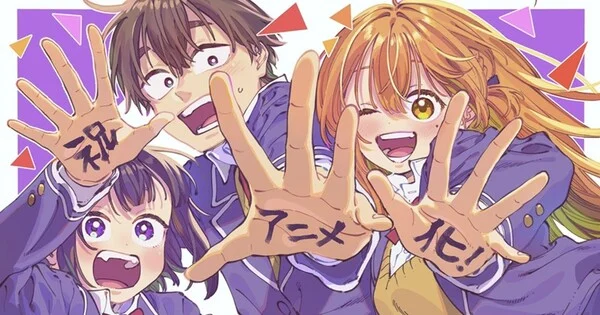
Writer Sekina Aoi and artist Ryō Tsuzura‘s My Crush’s Crush (Boku no Suki na Hito ga Suki na Hito) manga is getting a television anime adaptation. Tsuzura shared an illustration to commemorate the announcement:


Yen Press licensed the manga, and it describes the story:
When Sora Akizuki confesses his feelings to Miya Fuwa, he gets rejected outright. As it turns out, she likes Asahi Suzukaze, the president of the mysterious “Clinical Trials Club.” When he joins the club to learn more about Asahi, he discovers that she also has a crush on someone else! Could this chain of crushes get any more complicated…?
Aoi (Gamers! light novel series) and Tsuzura debuted the manga in Hakusensha‘s Young Animal Zero magazine in November 2022. The seventh compiled book volume shipped in Japan on Friday.
Aoi and Sabotenn launched the Gamers! novel series in 2014. Tsubasa Takahashi launched a manga adaptation in Kadokawa‘s Monthly Shōnen Ace magazine in October 2016. The series inspired a television anime adaptation that premiered in July 2017. Crunchyroll streamed the anime as it aired in Japan. Funimation streamed an English dub and released the series on home video.
Aoi’s previous Seitokai no Ichizon light novel series inspired The Student Council’s Discretion television anime series in 2009, and the Student Council’s Discretion Lv. 2 television anime series in 2012. Sentai Filmworks released the first anime on home video in March 2015, and released the second anime in May 2015.
Source: Comic Natalie
Disclosure: Kadokawa World Entertainment (KWE), a wholly owned subsidiary of Kadokawa Corporation, is the majority owner of Anime News Network, LLC. Yen Press, BookWalker Global, and J-Novel Club are subsidiaries of KWE.
>


LeftField Media announced on Thursday the launch of KPEX: Korean Pop Culture Expo, a new three-day convention celebrating Korean entertainment and culture in New York City.
KPEX will take place from May 29-31, 2027, at the Javits Center and will feature programming spanning K-Pop, K-Dramas, K-Comics, K-Games, K-Food, and K-Beauty. The event will include panels, screenings, workshops, autograph sessions, shopping, and nightly concerts featuring artists from South Korea.
The event is being led by Greg Topalian, co-creator of New York Comic-Con; Robert Khoo, co-creator of PAX; and Peter Tatara, founder of Anime NYC. LeftField Media, which operates Anime NYC and several other major U.S. fan conventions, is producing the event.
KPEX will launch with partners including the Korea Creative Content Agency (KOCCA) and Ize Press, with additional participants and special guests to be announced. The convention will also feature a business-to-business component connecting Korean content companies and creators with industry professionals in the U.S.
Tickets will go on sale September 18 at 12:00 p.m. EDT.
Those interested can check more detailed information on the event’s official website.
LeftField Media’s Anime NYC event was held from August 20-23, and the company stated the event hosted 172,000 people. Next year’s Anime NYC will be held from August 26-29.
Source: Press release
>
Blue Box‘s balancing act of sports series, slice of life drama, and romantic comedy is leaning towards the slice of life drama throughout this arc. As Hina starts progressively becoming more open and forward with her feelings towards Taiki, that puts this adorable teenager in a very interesting position. Love triangles are always really difficult to write, and there’s a reason why many people, myself included, don’t particularly like them. They come off as a very cheap narrative device for the sake of elongating a series or generating unnecessary drama when the appeal should be in how it communicates the fluctuating emotions that come with developing feelings for other individuals. Someone can waver or reassess their feelings for multiple individuals at the same time. The problem is that a lot of series do a very bad job of fully assessing that balancing act, often making it very obvious that the person who is supposed to feel conflicted about these feelings really only has one choice to go with.
That is what’s tricky about these volumes, as they primarily go into the throes of the love triangle between Taiki, Hina, and Chinatsu. While they are still prepping for nationals with other conversations being had about Taiki developing skills as a badminton player, most of the conversations center strongly on who Taiki is going to choose as a partner. The writing is very careful and smart about communicating Taiki’s state of mind during this complicated time by highlighting that he is still a teenager who genuinely wants to build strong relationships while being unsure about how to feel about affection targeted towards him. Unlike Chinatsu, who has been very passive about everything except basketball, it’s implied that this is the first time Taiki has ever had someone directly pining for him, which causes his feelings to swirl around a bit. I particularly like the visual metaphor that is often used with his feelings being represented by a coffee cup that is having different things mixed inside of it.
There is a precedent for him to have an affection for Hina. The two were childhood friends; they arguably have way better chemistry than Taiki does with Chinatsu, whose relationship is still developing. In a different story, I could see Taiki and Hina getting together, and Taiki seems to acknowledge the fact that if it wasn’t for his strong attachment to Chinatsu, even he could see a reality where that would happen. He admits that she is very attractive, he enjoyed spending time with her, and the two do look out for each other. I do love the conversations and chemistry between all the characters, which is undoubtedly one of the strongest elements of this entire series because they all feel like teenagers who think they know what’s best for everyone. They are immature in a very believable way, which is why the drama never really feels forced and is accompanied by this sense of levity. However, while there are so many nice moments here, none of that changes the fact that it feels like any real sense of momentum has come to a halt.
These volumes stop just shy of the cast going on an extended training trip where it’s implied that major development and confrontations will happen there. Therefore, these volumes feel very much like they are all about setup and transition rather than getting to anything genuinely juicy or enriching. The love triangle angle is the main focus of these volumes. While Taiki slowly wrestles with these new affections, the fact that he keeps ending any thought process about Hina with either a conversation with Chinatsu or him reaffirming his feelings for Chinatsu makes the story feel a little bit like it’s wasting my time. Taiki makes it clear that his feelings will not waver multiple times, and the problem is that I believe him.
I could be proven wrong in later volumes, but unless there is a major change that could recontextualize everything that is being done in these volumes, I’m not really given a lot of reason to believe that Taiki and Hina will not develop a relationship that surpasses the one that Taiki is trying to pursue with Chinatsu. There can be an appeal in that, like slowly waiting for a train wreck to happen, but I also really like these characters and don’t want to see any of them hurt each other. I also don’t know how this relationship dynamic between the three of them really alters the status quo outside of maybe furthering Chinatsu’s feelings? Chinatsu is definitely the least developed character in the main cast, which is frustrating considering she is the target of Taiki’s affection and the dual protagonist. While I appreciate the fact that the story is finally getting into her, contextualizing how she actually feels about Taiki and how some of that might be tied to her unconventional way of going about things compared to the rest of the extended cast, it still feels like the story takes too long to get to the point.
None of this is helped by the fact that the side characters, who do all have really strong, genuine moments of comedy and insight, have just as many moments of dragging out this love triangle with their meddling. Whether it’s Ayame trying to help Hina snag Taiki, or upperclassmen trying to work their way in on dating Chinatsu only to be met with her complete lack of interest, I do feel like a lot of what was covered in these four volumes could’ve been cut in half. While that does mean that I could potentially miss out on some gorgeous scenery shots like at the fireworks festival or some really strong dynamic paneling that creates intimate parallel moments between characters, I think that would be worth the loss if it meant that the story could get to the point faster.
I appreciate a slow burn and understand that certain developments need time to feel fully fleshed out or satisfying. That’s why I’m a big fan of the rather slow opening that this series has in its first few volumes. However, this love triangle doesn’t mesh well with everything else. The love triangle is taking too long; it doesn’t feel like it is adding anything significant to the development of the characters outside of just having them reaffirm feelings that I could’ve already inferred, and ultimately, I worry that none of it is going to amount to anything in the end. There is still time for the series to surprise me, but unfortunately, this feels like a low point in the series that I hope gets rectified soon.
>

‘Trust Me, I’m a Doctor’ Trailer Teases Life & Death of Anna Nicole Smith

Trump’s Latest Financial Disclosure Shows Significant Sales Of Netflix

My Crush’s Crush Manga Gets TV Anime – News
-

 movies3 months ago
Search For Canadian TV Actor Stewart McLean Now Homicide Investigation
-

 Fashion9 years ago
These ’90s fashion trends are making a comeback in 2017
-
Fashion9 years ago
According to Dior Couture, this taboo fashion accessory is back
-
Fashion9 years ago
Model Jocelyn Chew’s Instagram is the best vacation you’ve ever had
-
Fashion9 years ago
Emily Ratajkowski channels back-to-school style
-
Fashion9 years ago
9 Celebrities who have spoken out about being photoshopped
-
Fashion9 years ago
Your comprehensive guide to this fall’s biggest trends
-

 Anime3 months ago
Rurouni Kenshin: Hokkaido Arc Manga Takes 1-Issue Break – News