
Tech
This Refurbished Apple Watch SE Just Dropped to $89.99


TL;DR: Get a 40mm Apple Watch SE 1 (2020) for $89.99 (reg. $249), with GPS, heart rate monitoring, fall detection, and 18-hour battery life.
An Apple Watch has become one of the most useful pieces of tech for professionals who need to stay connected but don’t want to be tethered to their phone all day. The Apple Watch SE, Apple’s entry-level model, provides the core functionality the platform is known for, IE: notifications, health tracking, GPS, and Apple Pay, at a fraction of the cost. Right now, a Grade B refurbished Apple Watch SE 1 (2020) 40mm is available for $89.99 (reg. $249), a 63% discount.
Stay connected without reaching for your phone
When paired with a compatible iPhone (6s or later), the Apple Watch SE can handle calls, texts, navigation, and Siri directly from your wrist. For anyone who spends a lot of time in meetings or away from their desk, the ability to receive notifications without picking up your phone is a massive productivity boost. Apple Pay is built into the device, and so is Apple Music, so you can leave your phone behind entirely during workouts.
Health and fitness tracking built for daily use
The optical heart sensor monitors heart rate continuously throughout the day, while Activity Rings track movement, exercise, and standing time. Workout tracking helps you monitor your walking, running, cycling, swimming, yoga, and HIIT, and the watch is water-resistant up to 50 meters. Fall Detection and Emergency SOS are also included, both of which are increasingly valued in workplace safety, particularly for employees in physically active environments.
Hardware worth knowing about
Under the hood, Apple’s S5 chip keeps things running, and the Retina OLED display is bright enough to read clearly outdoors. It connects via GPS, Wi-Fi, Bluetooth, and NFC, and covers the basics without any setup headaches. The aluminum case is light enough that you’ll forget you’re wearing it, and with up to 18 hours of battery life, it can easily make it through a full workday on a single charge.
What to know about the refurbished grade
This watch has a Grade B rating, meaning it may have light scuffing on the bevel or case and minor cosmetic wear on the body, but nothing that would affect performance. The screen has no scratches, and battery health is a minimum of 70%. A 30-day parts-and-labor warranty is included, with optional 1-year ($19.99) or 2-year ($24.99) extended coverage available at checkout. For under $90, the Apple Watch SE delivers a well-connected, capable wearable that holds its own for both professional and personal use.
Get a refurbished Apple Watch SE 1 (2020) for $89.99 (reg. $249).
StackSocial prices subject to change.
>
AI agents can work around the clock, but their bills can run just as freely. Google is giving businesses more ways to keep those costs under control.
Google introduced pay-as-you-go pricing, spending caps and new savings plans for Gemini Enterprise on Wednesday. The options are designed to help IT and finance teams manage unpredictable agent workloads without relying entirely on fixed per-user subscriptions.
For businesses experimenting with AI agents, the changes provide more control over how usage is funded, monitored and stopped before an unexpected workload turns into an unexpected invoice.
Gemini Enterprise adds pay-as-you-go pricing
Organizations can now combine Gemini Enterprise’s existing per-user subscriptions with a consumption-based option that charges according to agent and model usage.
The pay-as-you-go edition does not require an upfront commitment or base subscription fee. Charges vary with model and agent usage, allowing costs to rise or fall with demand instead of requiring businesses to pay for unused seats.
Google said the option is available to select customers and will roll out more broadly. The company did not provide a date for general availability.
Per-user subscriptions will remain available for organizations that want predictable monthly costs. Those subscriptions include daily quota pools shared across a Google Cloud project.
Businesses can also allow workloads to move automatically to pay-as-you-go billing after the pooled quota is exhausted. This could help teams avoid interruptions, although administrators would need to monitor the resulting overage charges.
The approach gives organizations a choice between fixed costs for employees who use AI consistently and consumption billing for developers or agents with less predictable workloads. It builds on Google’s broader effort to position Gemini Enterprise as a central platform for building and governing workplace AI agents.
Spending caps can pause AI agents
Google is also introducing project-level monthly spending caps through the Google Cloud Billing Console.
When a project reaches its limit, Gemini Enterprise agent activity will pause without affecting other workloads in the Google Cloud project, according to Google. Administrators can increase or remove the cap when they are ready for the affected agents to resume operating.
Automated emails notify administrators when a project reaches 50%, 80% and 100% of its budget. Google said its billing tools can also flag unusual spending patterns and identify the three stock-keeping units, or SKUs, contributing most to an increase.
A pricing calculator will allow teams to estimate costs across licenses, developer tools and agent runtimes before deploying a project.
These controls address a growing enterprise problem because AI agent workloads can vary substantially in token consumption, making their final cost difficult to predict before a task begins.
Google offers discounts for committed spending
Organizations with steadier workloads can use Gemini Enterprise Flexible Savings Plans to reduce token costs.
Google is offering a 10% discount for a one-year commitment and a 20% discount for a three-year commitment. Businesses select a monthly spending amount, with no stated minimum or maximum, and the committed spending can count against an existing Google Cloud enterprise agreement.
The savings plans are available to self-service customers and organizations with enterprise agreements, according to Google.
Google also plans to introduce deferred-execution pricing for certain workloads. Eligible tasks that do not need to run immediately could be scheduled during off-peak periods for discounts of up to 50%.
That option is not yet generally available. Google said it is coming soon for select workloads but did not announce a rollout date.
More Google coverage
Developer AI usage moves under one subscription
Access to Google Antigravity and AI features in Android Studio will also be included with Gemini Enterprise subscriptions for eligible customers.
Usage across Gemini Enterprise, Antigravity and supported developer tools will appear in a consolidated view rather than being divided among separate licenses and billing systems.
Daily allowances will be pooled across a project, meaning unused quota from business users can be applied to developer tools and custom agents. Google said access is available to select customers and will roll out more broadly.
The new choices represent a different approach from when Google incorporated Gemini into its Workspace subscriptions, which gave businesses a predictable per-user cost. Agent workloads can run for different lengths of time and consume varying numbers of tokens, making consumption harder to forecast.
IT and FinOps teams should establish project-level caps, decide whether overages will be permitted and monitor token use before scaling an agent beyond a limited deployment. They should also determine whether pausing an agent at its spending limit could interrupt a business-critical workflow.
Google’s changes make it easier to start using Gemini Enterprise without paying for unused seats. Whether they reduce AI spending will depend on how closely organizations monitor consumption once their agents begin working at scale.
>
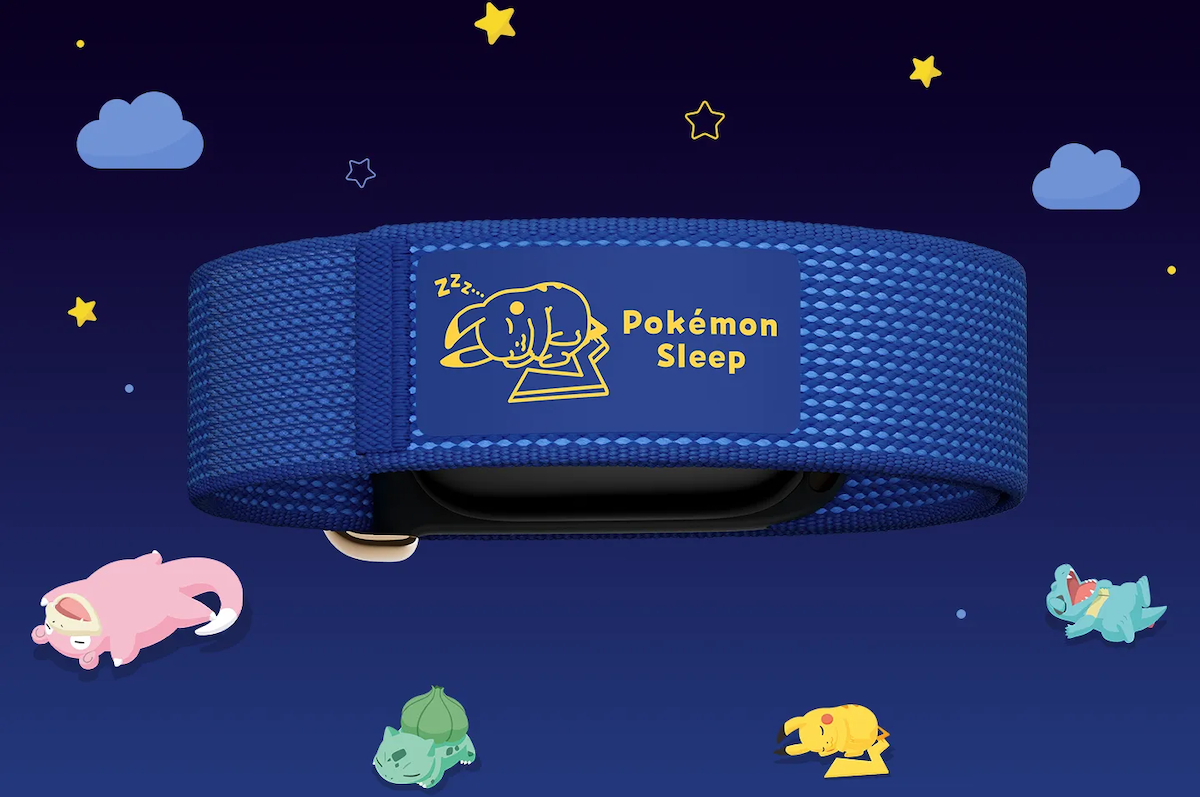
Google is giving Pokémon fans a new reason to wear a Fitbit. The company announced Thursday a special-edition Fitbit Air that works with Pokémon Sleep, combining Fitbit’s health and fitness tracking and the sleep-focused Pokémon game. The announcement comes as Pokémon celebrates its 30th anniversary this year.
Pokémon Sleep first launched in 2023, turning something as ordinary as going to bed into a Pokémon game. Players can earn in-game rewards for getting to sleep before their set bedtime, while the amount and quality of sleep they get helps drive their progress. You start with a big, sleepy Snorlax. The more you sleep, the more “Drowsy Power” your Snorlax builds up, which in turn attracts more Pokémon for you to discover.
The Fitbit Air adds another layer to that experience. It can sync with both the Google Health app and Pokémon Sleep, allowing users to track metrics including daily movement, heart rate, and cardio load during the day, then use the device to record sleep duration and quality overnight.
This isn’t the first wearable that can connect with Pokémon Sleep. The app already supports several wearables including Apple Watch, the Fitbit series, Galaxy Watch, and Google Pixel Watch. Players can also use Pokémon Sleep without a wearable at all.
For Pokémon’s 30th anniversary, however, it’s a particularly clever crossover. It turns something people already do every night into another opportunity to engage with the franchise, while giving Google a playful way to make wearable health tracking feel more fun. Google has also recently teamed up with athlete Stephen Curry for a special edition of the Pixel Watch for $579, featuring an exclusive design built for workouts.
The special-edition device is available to preorder for $129 and starts shipping September 15. It will be sold online and in stores through the Google Store and Target.
The standard Fitbit Air, meanwhile, costs $99. Google introduced its new Fitbit Air in May, featuring a slimmer design, improved health and fitness tracking, and an AI-powered coach that provides personalized guidance based on users’ activity, sleep, and wellness data.
When you purchase through links in our articles, we may earn a small commission. This doesn’t affect our editorial independence.
>
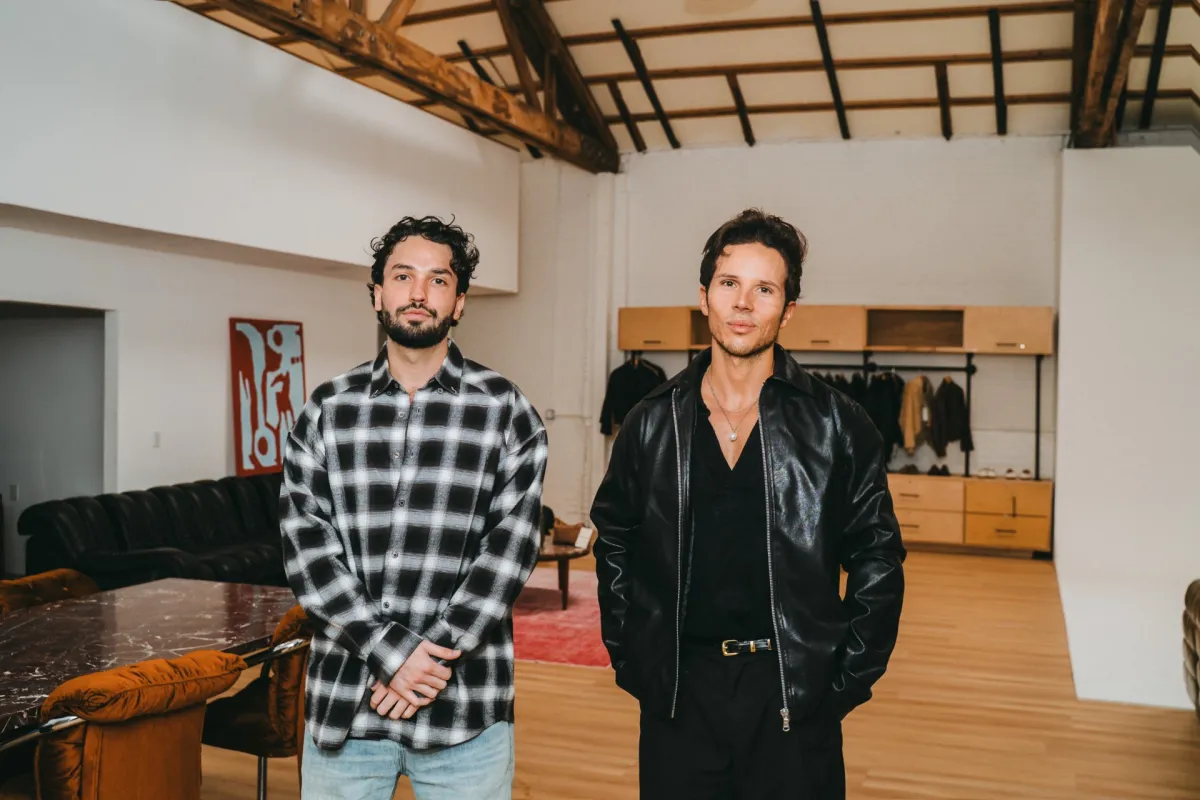
Fashion startup Atoire announced Thursday a $9.5 million seed round with investors including a16z Speedrun, Night Capital, and Lightspeed Ventures’ Jeremy Liew.
Shoppers can visit the Atoire website and buy handbags or even clothes made from the same material — and coming from the same factory — that manufacturers high-end goods. The items are reasonably priced, too, with an Italian leather handbag costing just a few hundred, compared to the thousands a brand like Prada or Louis Vuitton would sell it for.
The startup arrives at a time when dupe culture has become increasingly popular, while the luxury sector has faced backlash from consumers in the post-pandemic era due to swift price hikes.
As a result, young consumers especially have sought cheaper, near-identical replications of these high-end goods; doing so has become almost a status symbol itself.
On Atoire, the items sold are mostly not dupes, says co-founder and serial entrepreneur Redouane Ramdani.
“It’s the same material, same craftsmanship,” he said. “It’s coming from the same factories.” He doesn’t consider Atoire fast fashion either. “It’s slow,” he clarified.
Before Atoire, Ramdani built the creator platform Snipfeed, which was acquired in 2024. Having grown up in France with a family that worked in luxury manufacturing, the founder always had an idea in the back of his mind that he would one day do something in the industry he grew up loving as a kid.
By the time he sold Snipfeed, however, the luxury manufacturing industry was quite different.
The biggest shift he noticed was that luxury factories were no longer just manufacturing goods. Traditionally, a brand like Ralph Lauren would bring its own designs and materials to a factory, which would then produce them. The problem was that brands had to commit to large minimum orders, which often pushed them to overproduce inventory. At the same time, a lot of these factories depend on working with a small number of large brand customers. If a brand pulled out at the last minute or not enough of that overproduced inventory sold, the factories faced financial and inventory risk.
“What’s changing is that the best factories increasingly have their own design and product-development capabilities,” Ramdani told TechCrunch. “Instead of simply manufacturing someone else’s designs, they can develop products themselves, adapt them quickly, and produce in smaller batches.”

AI also helps these factories by pulling data that helps them identify which products are likely to sell out before committing to large production runs.
“That reduces overproduction and allows factories to diversify beyond a handful of large customers,” he said.
These changes also gave Ramdani an idea, leading him to team up with Luis Angulo to launch the startup, which is now an AI-powered fashion brand that connects luxury manufacturers directly with consumers.
He compared his company’s approach to the retailer Quince, which is known for selling high-quality, low-priced items.
“We are talking to a different generation who is coming back for things that are trendy but well-made,” he continued, adding that consumers are getting tired of pure fast fashion, especially because of the harmful impact it’s having on the environment.
AI, of course, is used. Ramdani sees AI agents changing the entire shopping experience, where, in the future, people just instruct AI agents to buy things for them.
Ramdani said the company uses AI to analyze fashion trends and test what colors might look good on a product. It also uses AI agents to estimate consumer demand and trains the agents to predict when a material might start running short so factories can stock up in time.
On the consumer side, the Atoire website offers an AI agent that can build an outfit based on whatever — or whoever — inspires the customer. Over time, Atoire uses AI to learn shoppers’ habits to suggest what to buy next.
Ramdani said Atoire is already seeing an increase in sale referrals from platforms like ChatGPT and Claude.
The company said its goal is to become an alternative to Zara and offer something “very high quality for a price point that’s very affordable.” The company ended last year with around $5 million in sales, and is expected to reach an annualized run rate north of $55 million this year. “
We are growing super fast,” Ramdani said, adding that the team is working with over 40 factories across the world right now.
The fresh capital will fund logistics, build more AI tools, and support production. The company also plans to release its own in-house line, like Amazon Essentials, and will work with creators and influencers to help them launch their own clothing lines quickly.
When you purchase through links in our articles, we may earn a small commission. This doesn’t affect our editorial independence.
>

Writers Guild Foundation Taps 2026 Veterans Fellowship Cohort

Fantasy baseball bullpen report featuring Mason Montgomery and Carson Seymour

Google Adds Pay-As-You-Go Gemini Enterprise Pricing
-

 movies3 months ago
Search For Canadian TV Actor Stewart McLean Now Homicide Investigation
-

 Fashion9 years ago
These ’90s fashion trends are making a comeback in 2017
-
Fashion9 years ago
According to Dior Couture, this taboo fashion accessory is back
-
Fashion9 years ago
Model Jocelyn Chew’s Instagram is the best vacation you’ve ever had
-
Fashion9 years ago
Emily Ratajkowski channels back-to-school style
-
Fashion9 years ago
9 Celebrities who have spoken out about being photoshopped
-
Fashion9 years ago
Your comprehensive guide to this fall’s biggest trends
-

 Anime3 months ago
Rurouni Kenshin: Hokkaido Arc Manga Takes 1-Issue Break – News