
Tech
ATF declares ‘major incident’ as ransomware gang claims hack


The U.S. Bureau of Alcohol, Tobacco, Firearms and Explosives, or ATF, says a cyberattack on one of its systems has been declared a “major incident,” a formal, legally defined classification that prompts a formal notification to lawmakers in Congress.
ATF said in a statement that it’s responding to the cyberattack on a standalone system that’s separate from the bureau’s network. An ATF spokesperson told reporters that the targeted computer system contained information such as the “targets of ATF investigations.”
TechCrunch has seen a claim of responsibility by the Qilin ransomware gang on its leak site, but it did not provide evidence for its claim, such as a sample of leaked data. Qilin is known for running a “ransomware-as-a-service” operation, in which it leases its hacking tools to other criminal affiliates for a cut of the profits. The gang has listed media giant Lee Enterprises and U.K. pathology lab giant Synnovis.
Under federal law, “major incidents” include significant cyber incidents that are likely to cause demonstrable harm to U.S. national security or broader U.S. interests. Agencies are required to disclose major incidents to Congress within a week of their discovery.
The ATF joins several government agencies in recent years that have declared major incidents following a breach, including a 2023 ransomware attack on a system used by the U.S. Marshals Service, and a breach of an FBI system earlier this year that exposed phone numbers of targets under surveillance by federal agents.
>
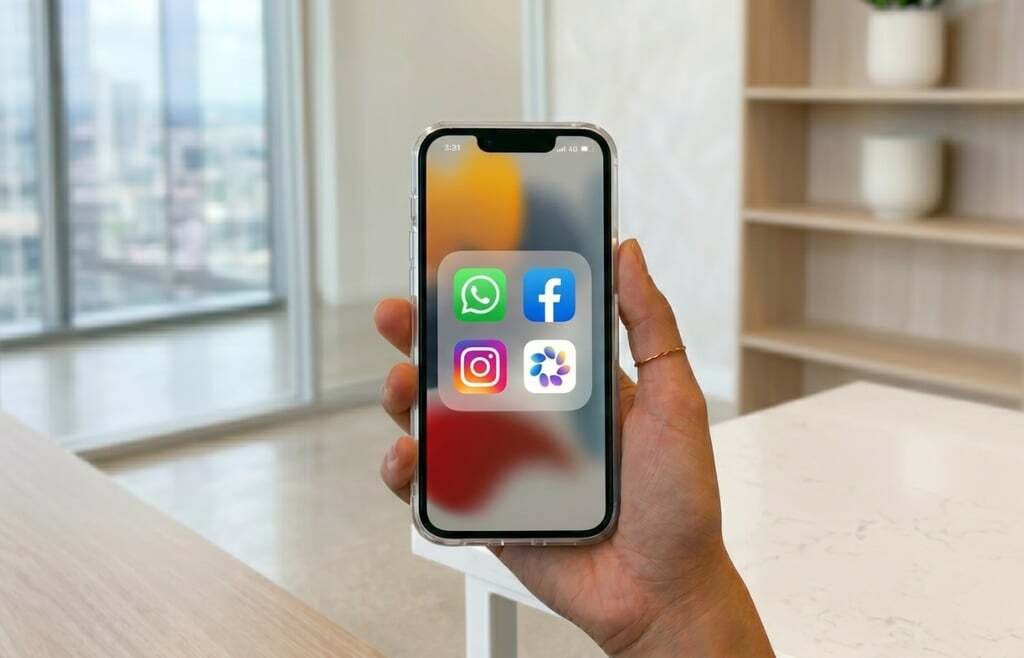
Meta has agreed to pay billions and restrict how teenagers use Facebook and Instagram, settling claims that the platforms were designed to encourage addictive use.
The settlement could be worth approximately $18 billion and ends a federal trial brought by a bipartisan coalition of US attorneys general.
The agreements cover 47 states, Washington, D.C., Puerto Rico, American Samoa and the Northern Mariana Islands, including a separate agreement with Texas.
Meta says its total payment could reach approximately $18 billion. About $12.7 billion will be distributed over 10 years, while the remaining $5.3 billion is contingent on TikTok and YouTube adopting comparable protections and making matching payments.
The settlement was submitted to US District Judge Yvonne Gonzalez Rogers and remains subject to court approval. The deal resolves allegations that Meta deliberately designed its platforms to encourage addictive use among young people, misled consumers about safety and collected data from children without proper parental consent.
Meta denies wrongdoing.
What changes for teen users
Under the agreement, users under 18 will face a default two-hour daily limit across Facebook and Instagram, which they can turn off only with a parent’s permission. The restrictions are expected to take effect within six months if the settlement receives court approval. Meta will also block most teen access from midnight to 6 a.m. and mute push notifications from 8 a.m. to 3 p.m. during school hours, except for direct messages and account security or safety alerts.
Other changes include hidden like counts, blocks on cosmetic surgery and extreme makeup filters, options to disable autoplay and use a non-personalized feed, and prompts after 15 minutes of continuous use and at 60 and 90 minutes of daily use.
Meta also agreed to strengthen age-assurance technology, restrict age-inappropriate content and improve parental controls.
If TikTok and YouTube adopt comparable protections, Meta would reduce its daily limit to one hour per app and extend the overnight block to 10 p.m. through 7 a.m.
A costly deal with wider consequences
The settlement does not require Meta to abandon personalized recommendations or targeted advertising, Reuters reported. That leaves a central part of its engagement-driven business model intact.
Still, the financial and product changes could influence thousands of other lawsuits against Meta, TikTok, YouTube and Snap. Reuters reported that governments and private plaintiffs are pursuing claims alleging social media companies contributed to a youth mental health crisis.
The agreement could therefore become more than a costly settlement for Meta: it may establish a practical template for regulating how major social platforms design products for teenagers.
An independent auditor will review Meta’s compliance and the effectiveness of its safeguards, while a research foundation will use data from consenting users to study teen well-being. For technology companies, the settlement shows that youth safety is becoming a product-design and compliance requirement affecting age-assurance systems, recommendation features, notifications and parental controls — not simply a matter of updating privacy policies.
Read more: A recent New Mexico ruling ordered Meta to pay $567 million and overhaul teen protections on Facebook and Instagram, showing how courts are increasingly treating youth safety as a product-design and compliance issue.
>
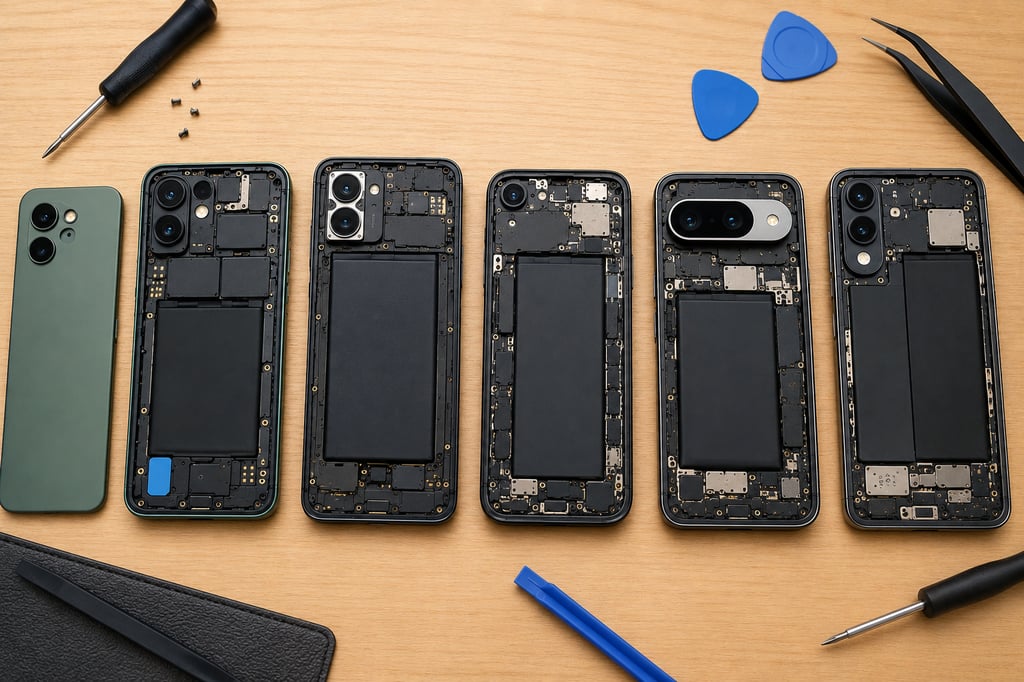
A phone becomes expensive to own when a worn battery, cracked screen, or damaged charging port turns into a complicated repair.
In 2026, some manufacturers make those jobs considerably easier, but repairability still varies widely between models.
Fairphone has centered its phones on modular, owner-replaceable hardware for more than a decade. HMD has adopted similarly repair-friendly designs, while Apple and Google have made common repairs easier on some mainstream models.
For this comparison, we prioritized current phones with independent iFixit repairability scores, available parts or repair documentation, and practical access to components such as batteries, displays, and charging ports.
Most repairable phones at a glance
| Phone | iFixit score | Best for | Main drawback |
|---|---|---|---|
| Fairphone Gen. 6+ | Gen. 6 design: 10/10 | Most replaceable components | Limited availability compared with major brands |
| HMD Skyline | 9/10 | Easier DIY repairs | Shorter software support |
| iPhone 17e | 7/10 provisional | Apple buyers | USB-C repair remains difficult |
| Google Pixel 10 | 6/10 provisional | Android buyers | Display still relies heavily on adhesive |
iFixit changes its scoring methodology over time, so the scores are useful indicators rather than perfectly standardized measurements across every phone generation.
Fairphone Gen. 6+ offers the most modular design
The Fairphone Gen. 6+ keeps the modular construction of the Gen. 6, which earned 10/10 in an iFixit teardown.
Owners can replace 12 modules, including the battery, display, cameras, and USB-C port. The battery and screen avoid adhesive, and Fairphone sells replacement parts directly.
The Gen. 6+ also carries a five-year warranty and software support through 2033. That combination addresses both sides of device longevity: replacing worn hardware and keeping the phone supported after the repair.
HMD Skyline also performs strongly on hardware repairability. iFixit gave it 9/10, citing its screw-assisted opening mechanism, replaceable display, accessible battery, and modular charging port.
Its shorter software-support period is the main trade-off. Buyers planning to keep a phone for several years should compare repairability with current software support windows before choosing a model.
iPhone 17e and Pixel 10 bring easier repairs to major brands
The iPhone 17e received a provisional 7/10 from iFixit. Its dual-entry design lets technicians reach internal components from either side, while Apple’s electrically releasable battery adhesive makes battery replacement easier.
Apple also publishes repair manuals and sells replacement parts. The USB-C port remains a more involved repair because several components must be removed to reach it.
Google’s Pixel 10 received a provisional 6/10. Its back panel can be removed without heat, battery removal is easier than on previous Pixels, and the USB-C board is replaceable.
The display still relies heavily on adhesive, limiting the Pixel’s score. Google offsets some of that hardware complexity with seven years of OS, security, and Pixel Drop updates.
Samsung’s self-repair program does not eliminate hardware complexity
Samsung’s US Self-Repair program provides genuine parts, tools, and documentation for supported Galaxy phones. One UI 9 is also making repair support easier to access from the device.
Recent Galaxy hardware remains more difficult to work on than the highest-scoring phones in this comparison. The Galaxy S25 Edge received a provisional 5/10 from iFixit despite improvements to battery removal and a modular USB-C port.
Its display and back cover still rely heavily on adhesive. Samsung therefore offers stronger access to DIY repair resources than its hardware repairability score alone might suggest.
An independent iFixit score for the Galaxy S26 series was not available when this article was written, so we have not ranked those models alongside independently tested phones.
Which repairable phone should you buy?
The Fairphone Gen. 6+ offers the most repair-friendly hardware in this group, with 12 replaceable modules, readily available spare parts, and software support through 2033.
HMD Skyline provides similarly accessible hardware but a shorter software-support period. The iPhone 17e is the strongest option here for Apple buyers, while Pixel 10 combines improved repair access with seven years of updates.
For long-term ownership, we recommend checking four things before buying: whether the battery and display can be replaced without excessive adhesive, whether high-wear components such as the charging port are modular, whether spare parts and manuals are available, and how long software updates will continue.
Also read: Samsung is reportedly exploring self-healing display glass for the Galaxy S27 Ultra, which could reduce surface damage without necessarily making the phone easier to repair.
>
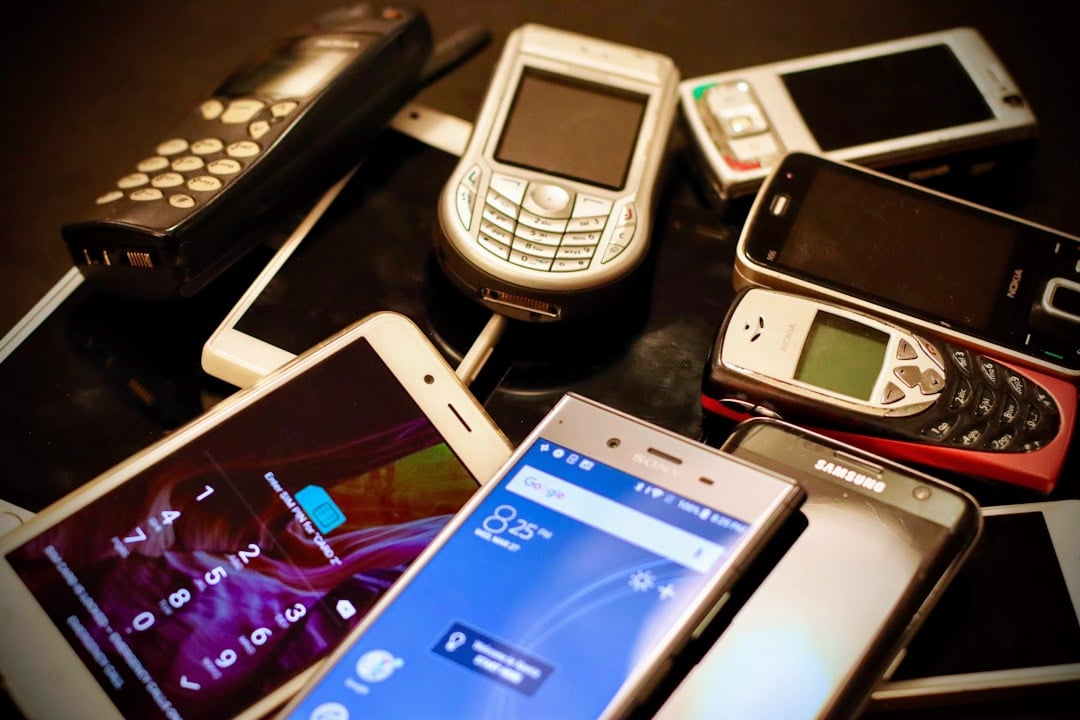
An old phone can still work in 2026, but age alone does not determine whether a carrier will activate it. A hand-me-down smartphone from several years ago may work perfectly, while an older 4G phone can fail because it lacks the right voice support or carrier compatibility.
Four checks matter most: the phone needs current network support, VoLTE, a compatible IMEI result, and an unlocked status. Software support matters too, especially if you’ll still use the phone for apps, payments, email, or other sensitive tasks.
T-Mobile’s current BYOD guidance recommends checking the IMEI, the phone’s unique device identifier, and unlock status before activation. Its compatibility tool can return fully compatible, partially compatible, incompatible, or blocked.
2G and 3G phones are effectively out
The major US networks have moved beyond the technologies many older phones were built around.
T-Mobile’s Network Evolution page says its 2G GSM network was retired on August 3, 2026. Its 3G UMTS network was retired in July 2022, following the shutdowns of Sprint’s 3G CDMA and LTE networks earlier that year.
AT&T phased out 3G in February 2022. Verizon completed the retirement of its 3G CDMA network at the end of 2022 and says 4G devices without VoLTE also lost calling, texting, and data service.
That means a 2G- or 3G-only phone is no longer a practical option on the major US networks. A 4G label alone is not enough either. The phone still needs VoLTE and carrier support.
Run these four checks before activating an old phone
| Check | Pass | Warning or failure |
|---|---|---|
| Network | Supports the carrier’s LTE or 5G bands | 2G/3G-only or missing important bands |
| Voice | Supports VoLTE on the destination carrier | LTE data works, but voice support is missing |
| IMEI | Carrier reports fully compatible | Partial, incompatible, or blocked |
| Unlock | Device is unlocked | Still locked to another carrier |
Network support depends on the exact model. Phones sold for different carriers or countries can support different frequency bands, so an imported phone may connect to LTE while still missing bands needed for reliable US coverage.
VoLTE, or Voice over LTE, is just as important. A phone can support LTE data without supporting the carrier’s LTE voice service. Verizon’s shutdown guidance specifically says 4G non-VoLTE devices are no longer supported.
Run the IMEI through the destination carrier’s compatibility checker rather than relying only on the specifications. A fully compatible result is the safest sign that activation should work, while a partial or incompatible result deserves a closer look before buying a SIM or switching service.
The phone also needs to be unlocked if it is moving to another carrier. Unlock requirements vary, but carriers commonly require eligible devices to be paid off and in good standing.
Software longevity belongs in the decision too. Recent Samsung and Google phones now receive much longer software support windows, while older models may already have stopped receiving security updates.
A new SIM cannot fix an incompatible phone
Once the phone passes those checks, activation itself is usually straightforward.
A compatible device can use either a physical SIM or eSIM if the phone and carrier support it. Changing the SIM type cannot add missing LTE bands, VoLTE support, or carrier approval.
T-Mobile says many smartphones released since 2020 support eSIM, although availability varies by model and region. With eSIM, activation can often complete within minutes.
After activation, test voice calls, texts, and mobile data. If data or MMS does not work, check the APN settings. Some older and imported devices may require manual configuration.
If you’re transferring an existing phone number, keep the old service active until the port finishes. T-Mobile says number transfers can take from a few minutes to several hours.
A phone can connect and still be too old to use safely
Carrier compatibility is only one part of keeping an old phone useful.
Older devices may no longer receive security patches or current app versions. More than a billion older Android devices were estimated to be outside Google’s current security-update coverage earlier this year, making unsupported Android phones a separate concern from whether they can connect to a cellular network.
Apps can impose their own cutoffs too. WhatsApp, for example, is ending Android 5 support in September 2026.
Before putting an old phone back into regular use, check whether it still receives security updates and whether the apps you rely on still support its operating system.
If the phone supports the carrier’s LTE bands and VoLTE, passes the IMEI check, is unlocked when necessary, and still receives acceptable software support, it can remain perfectly usable in 2026. If one of those checks fails, a new SIM is unlikely to rescue it.
Also read: If replacement is unavoidable, our guide to the most repairable phones in 2026 compares current models by repairability, parts access, and software support.
>

Liz Meriwether’s Furious Renewed for Season 2 at Hulu

‘Miami Vice ’85’ Movie Adds Danny Ramirez To Cast

Junket Bank TV Anime Premieres on October 5 – News
-

 movies3 months ago
Search For Canadian TV Actor Stewart McLean Now Homicide Investigation
-

 Fashion9 years ago
These ’90s fashion trends are making a comeback in 2017
-
Fashion9 years ago
According to Dior Couture, this taboo fashion accessory is back
-
Fashion9 years ago
Model Jocelyn Chew’s Instagram is the best vacation you’ve ever had
-
Fashion9 years ago
Emily Ratajkowski channels back-to-school style
-
Fashion9 years ago
9 Celebrities who have spoken out about being photoshopped
-
Fashion9 years ago
Your comprehensive guide to this fall’s biggest trends
-

 Anime3 months ago
Rurouni Kenshin: Hokkaido Arc Manga Takes 1-Issue Break – News