
Tech
A Startup Brought Back ‘Twitter’ — Now X Is Suing


Elon Musk replaced Twitter with X three years ago. Now another company is testing whether that rebrand left the Twitter name up for grabs.
Startup Operation Bluebird has launched Twitter.now, a social network built around the familiar Twitter name and posting format, while arguing that X abandoned its rights to the Twitter and Tweet trademarks. X disputes that claim and has sued the startup.
The fight turns Musk’s 2023 rebrand into an unusual legal and business question: can a company walk away from one of the internet’s most recognizable brands and still stop someone else from bringing it back?
Twitter.now launches while X fights the trademark claim
Twitter.now is not just a website holding the old name for recall purposes — it is a functioning social platform designed to feel familiar to anyone who used Twitter before the X rebrand.
Users can post, reply, repost, and interact through the same public-conversation format that made Twitter recognizable in the first place.
The platform has officially launched on a strictly paid model with no free tier. To use the network, users must purchase either a $20 “Founder” early access pass or a $40 “Fighter” status tier. Operation Bluebird positions these mandatory fees as a way to support platform development and fund its high-profile trademark battle to reclaim the Twitter brand.
Underneath that familiar shell is a platform Operation Bluebird says is designed differently.
What’s hot at TechRepublic
Can AI make Twitter better this time?
Attracting Twitter’s old audience is only half the challenge. Keeping that audience may depend on whether Twitter.now can avoid the problems it claims to have affected X.
The proposed answer is VERA, an AI system that uses Google’s Gemini models to analyze posts, assess claims, and provide context, sources, and trust signals.
Those signals are meant to power the platform’s planned Trust Dial, letting users decide content they want in their feeds based on confidence ranking rather than having the platform make every moderation decision for them.
That could give Twitter.now a distinct approach to misinformation. However, that also puts AI in the middle of content moderation — an area where automated systems can misread context, make incorrect judgments and create their own trust problems.
Why X’s new competition matters
Twitter.now enters a social-media market that already includes several alternatives to X, including Meta’s Threads and Bluesky. Its unusual advantage is not scale but familiarity: it is trying to build a new network around the identity X deliberately left behind.
The platform still has to attract enough users, creators and conversations to make its feeds worth returning to, while proving that its AI-assisted approach can deliver a better experience.
For readers, the social-media choice is getting wider, but the differences between these platforms are becoming more important. Threads offers Meta’s scale, Bluesky offers its own different approach, while Twitter.now is betting that people still want the old Twitter experience.
Twitter.now is betting that the old Twitter identity still carries enough cultural value to attract people who never warmed to X. The lawsuit will determine whether the startup can continue using that identity, but the harder test may come afterward.
A recognizable name can get people through the door. Building the network effects, moderation systems and trust that kept the original Twitter relevant will be much harder.
Other Social Media News: Meta has agreed to pay up to $18 billion and introduce new Facebook and Instagram restrictions for teenagers to settle claims that its platforms were designed to encourage addictive use.
>
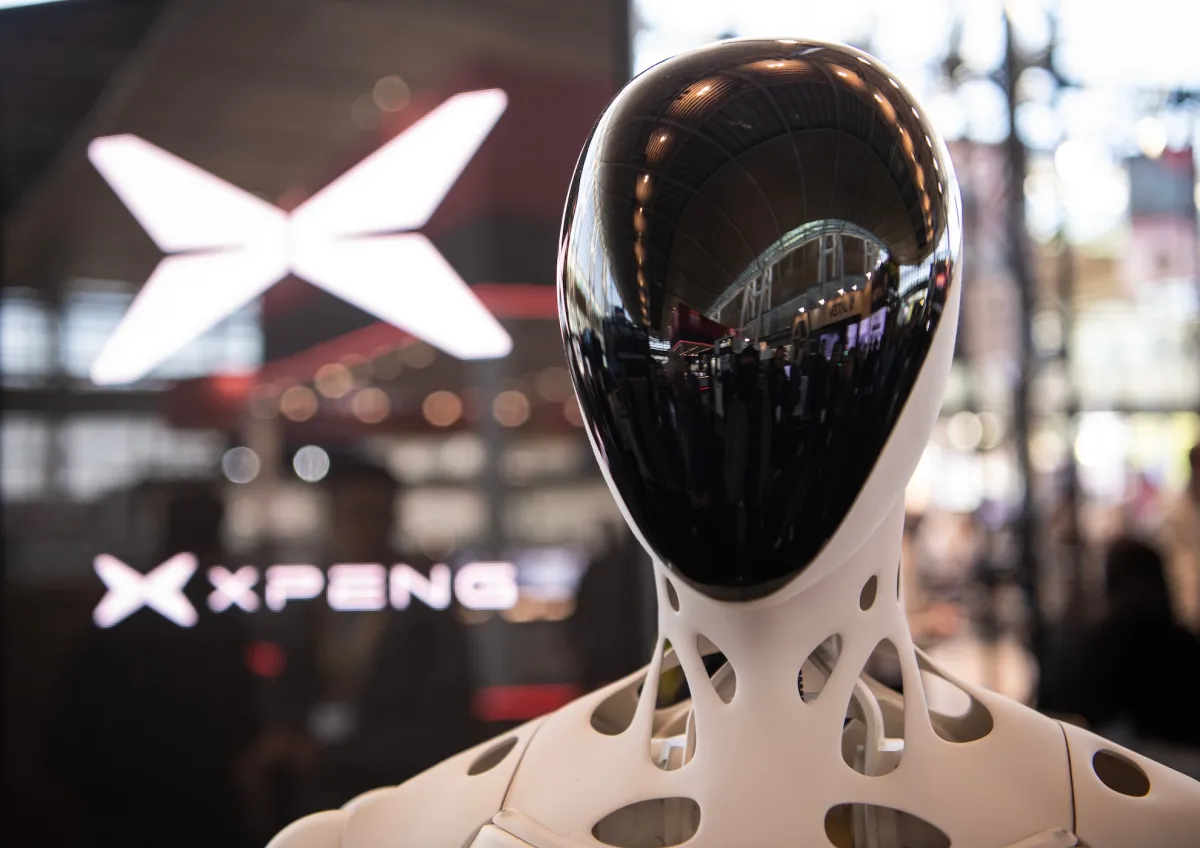
The hype around humanoid robots isn’t particularly new. Thank Tesla CEO Elon Musk and his Optimus robot, as well as the myriad videos of Boston Dynamics’ Atlas robot, for that.
Behind that hype, though, there is real progress. The physical capabilities of robots continue to improve, and researchers now believe that the AI techniques behind large language models can make complex robots capable of learning nearly any task.
Those tailwinds have encouraged a new batch of companies to jump in on the promise of profits from humanoid robots. And many of the latest entrants are Chinese automakers.
Earlier this week, Xpeng’s robotics unit raised more than $900 million at a post-money valuation of more than $6.3 billion. The round, led by IDG Capital with participation from Gaorong Ventures, Tencent, and Alibaba, was described by the company as the largest single-round private financing ever recorded in China’s “embodied AI” industry (AI systems built directly into physical machines).
This month, AiMOGA, the robotics unit of China’s Chery Automobile, reportedly began preparing for an IPO , while BYD unveiled a humanoid robot called Xiao Di. Other Chinese automakers, including Changan, GAC, Li Auto, SAIC, and Seres, are also developing humanoid robots.
Among all of them, Xpeng is the Chinese automaker that most closely watches and follows Tesla’s initiatives, according to Michael Dunne, CEO of San Diego- and Singapore-based advisory firm Dunne Insights.
“It’s the most focused on autonomy, it’s the first to commit in a big way to humanoid robots,” Dunne told TechCrunch, adding that Xpeng founder He Xiaopeng is a tech billionaire known for his agility and quick adjustments. “He sees razor-thin profit in cars on the near horizon. Robots look much more promising.”
Xiaopeng and Xpeng co-president Brian Gu are bullish enough that they’ve put their own funds behind the robotics unit. According to the WSJ, the pair invested about $100 million into the recent fundraising round.
Xpeng’s bet is on Iron, a humanoid robot with a realistic human shape that is built for commercial deployment.
Chinese automakers like Xpeng do bring a manufacturing edge.
“They have all the hardware to get the job done,” Dunne said. “Question is if they can catch Tesla on the AI side if the equation.”
There are, of course, many other companies developing humanoid robots, including Agility Robotics, Apptronik, and Figure, all chasing the same goal: commercial deployment at scale.
Hyundai-owned Boston Dynamics is getting closer to that goal. Hyundai plans to bring Boston Dynamics’ Atlas humanoid robot to its Georgia factory this year and eventually deploy the robots for tasks like parts sequencing by 2028. The Korean automaker, which partnered with Google’s AI research lab DeepMind to speed up the development of Atlas, is opening a U.S. facility this year called a Robot Metaplant Application Center, which will teach robots how to map movements like lifts and turns.
Other automotive companies are also jumping, including supplier Mobileye, which acquired humanoid robot startup Mentee Robotics earlier this year for $900 million. Even Rivian is dabbling in robots with its Mind Robotics spinout — although its robots are not expected to look quite like the humanoids in development elsewhere.
When you purchase through links in our articles, we may earn a small commission. This doesn’t affect our editorial independence.
>
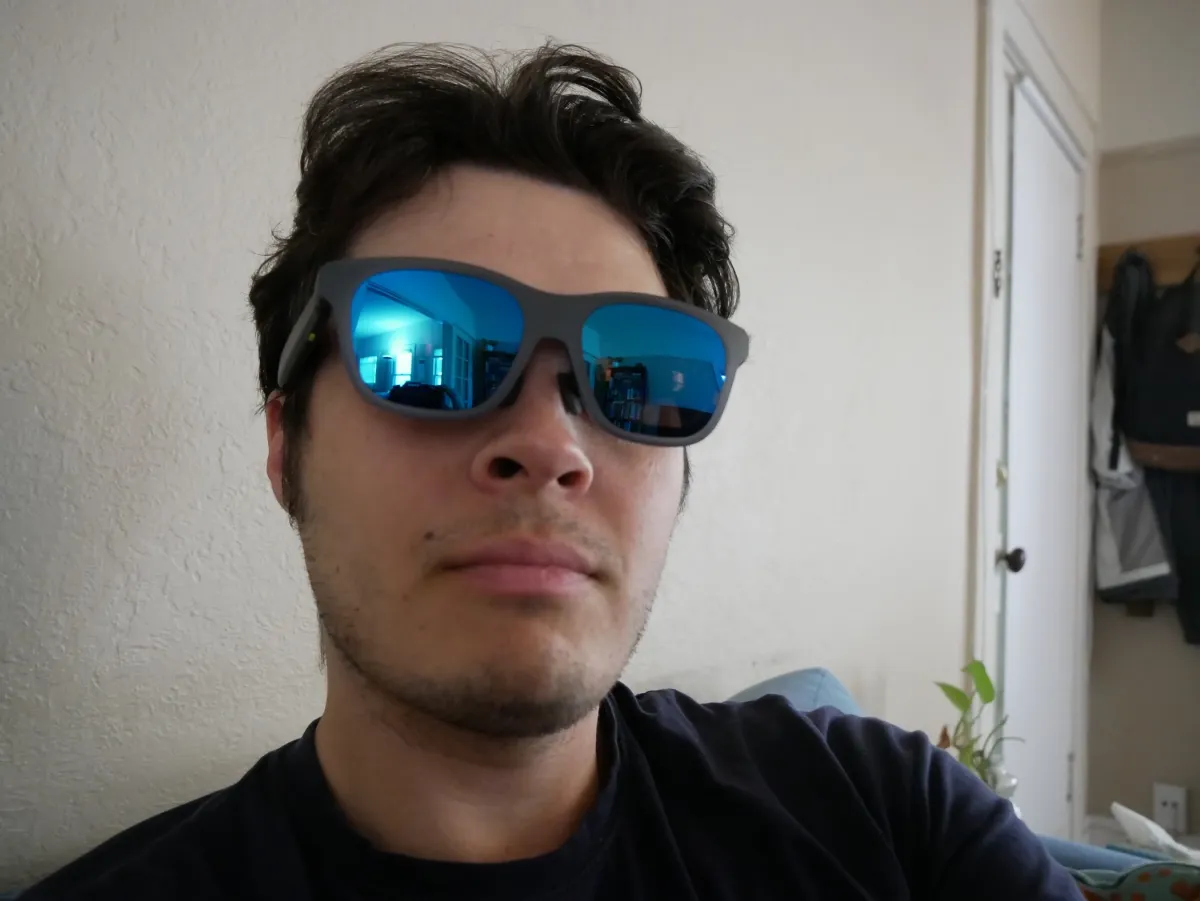
I am nothing if not a huge movie buff. I watch way too many of them, and I’m always on the hunt for a new format in which to experience them. So when XREAL, the smart glasses company, sent me an a01 — one of its newer models, which it released in May of this year — I was eager to give them a spin as the newest vector by which to satisfy my media fanaticism.
The a01 isn’t a particularly sophisticated smart glasses model. Unlike more software-heavy AR glasses like, say, the Meta Orion or Snap’s Specs, it’s basically just an external monitor. It also doesn’t have a battery or an internal power mechanism. Instead, a simple USB-C cable plugs the glasses into a device of your choosing, which then becomes the headset’s power source. It’s also not so expensive, at an accessible price point of around $300.
The a01 is actually optimized for gaming, in that it can be plugged into a Steam Deck or other handheld gaming device. However, XREAL also advertises them as a way to watch movies and TV — and since that’s more my speed, once I had the a01 in hand, I plugged it into my personal laptop and booted up the Criterion Channel. I then sat watching David Lynch’s film Wild at Heart for a while, enjoying a sequence where Nicolas Cage, dressed in a snakeskin jacket, beats up a guy in a bar and then sings an Elvis song.
I’ll say this: the images look quite good. The glasses, which come outfitted with dual mini OLED panels, provide quite a nice image (those panels offer a 1080p resolution with up to 1,600 nits of brightness), with very vibrant colors. If you aim the glasses at a wall, it feels vaguely like you’re using a really vivid home projector — or perhaps are at a drive-in movie. In a dark room, you’re one step closer to the in-theater experience.
However, the overall experience also brought some questions to mind. Namely, why would I sit next to my computer with glasses on my head watching a thing that is also playing on my laptop only 14 inches away? The reason, XREAL offers, is that the glasses are more immersive (indeed, they claim the device’s projections are equivalent to viewing content on a 147-inch screen). Still, the redundancy of watching a movie while it plays right next to you makes you question what the actual purpose of the device is.
XREAL has suggested that the glasses can function as a “second monitor” (indeed, they’ve actually been referred to as a “wearable display”) but the functionality of this is, again, questionable. It’s rather difficult to see anything other than what the glasses are projecting — which would make it quite difficult to, say, work on a laptop while also wearing them.
The glasses can also be connected to your phone. Unfortunately, I have an older iPhone, which means that the a01’s cable is not compatible with the phone’s port. An adapter would have been necessary to link the two.
The user experience is easy enough to imagine, however. Connecting the glasses to a phone changes the situation in that you’re not captive to an indoor experience anymore as you would be with a heftier device like a laptop. You can watch a movie while you’re traveling on a plane or a train (or, hell, while you’re walking down the street — although I would say this last option is generally ill-advised unless you want to accidentally walk into traffic).

However, there are still inconvenient limitations with using the device this way. For one thing, the glasses still only function as a screen-mirroring device — meaning that the screen of your phone needs to remain active while you’re using the glasses. This brings us back to the redundancy problem. You’re watching a video on a screen attached to your face while the same video plays on a different screen that is located less than a foot away. You could partially solve this issue by putting the phone in your pocket, but the chances seem high that any jostling might upset the device’s playback functionality.
It’s worth noting that the device can also be paired with a separate device, dubbed the Beam Pro, which is essentially a mini-tablet and can act as an isolated streaming hub. Users download shows and movies onto the Beam, connect it to the glasses, and watch. However, this device will cost you another $200.
Then there’s the heat. It doesn’t take long for the a01 to start warming up — producing an odd tingling sensation on the bridge of your nose and over your eyes. This is, of course, not an experience unique to XREAL’s products — it’s a well-known defect of most XR glasses. You can only cram so much computing into a small plastic device before all the electrical processing begins to warm everything up. Still, it’s a tad disconcerting, and not exactly what you would want from an accessory that you’re wearing on your face.
I will say that — heat aside — the a01 is a relatively lightweight and comfortable device — and it isn’t overly cumbersome like other smart glasses that I’ve worn. (Having given Snap’s Specs a try at CES earlier this year, I promise you those are significantly heavier — although it’s also a very different kind of device than the a01.)

XREAL continues to iterate its product line, with each new device seeming to improve upon the previous one. Indeed, some of the existential dilemmas present in the a01 and previous XREAL headsets seem to have been ironed out in the company’s newest (and yet to be released) device: Project Aura — which I caught a glimpse of during my visit to Google I/O earlier this year — promises a significantly more immersive and convenient experience.
The Aura is powered by Android XR, an extended reality operating system developed by Google and Samsung. The Aura comes with native hand tracking (which is absent in the a01), as well as access to the Google Play Store, giving the glasses significantly more interactive abilities and AR potential. It also comes with a puck, tethered to the glasses, that acts as both the charging source and a compute node. The puck, which can be easily placed in your pocket, means that — unlike the a01 — you have substantially more mobility and you don’t have to keep it plugged into a separate device.
Let’s return to the a01, though. Unfortunately, from a cinephile’s perspective, watching movies on a pair of sunglasses just isn’t ideal. In general, movie fans like a big screen — the bigger, the better, really. In a world of 4K OLEDs of varyingly gargantuan sizes, consumers have a lot of options. My TV — a 55-inch TCL S-series — isn’t even a particularly powerful device, but it provides a home-viewing experience that is more comfortable and satisfying than what the a01 can provide. To my mind, watching a movie at home on a large flat screen is second only to actually going to a theater. Watching a film on tiny screens less than an inch from your eyes, meanwhile, is an interesting experience for its distinct sense of immersion but not what I’d call optimal.
The a01 is an interesting glimpse into a hardware industry that continues to evolve and that is still finding its footing with consumers. I’m curious to see how the user experience shifts with XREAL’s upcoming Aura, and I’m game to reevaluate my movie-watching preferences when that time comes.
When you purchase through links in our articles, we may earn a small commission. This doesn’t affect our editorial independence.
>

Lambda, an AI cloud company that buys computing chips and rents them out to businesses, has raised $1 billion in private, short-dated debt to buy Nvidia’s AI chips that it will lease to Microsoft, Bloomberg reports.
The terms of the deal, which Bloomberg says was arranged by JP Morgan Chase, signal that Lambda is betting it will be able to quickly deploy the chips and start generating revenue from them, letting it repay the debt fairly quickly using that incoming cash.
This is the latest in a string of loans that Lambda is using to fund GPU infrastructure for specific customers. In May, it closed a $1 billion secured credit facility, and this week it announced the closing of a $926 million loan to fund Nvidia GB300 GPUs, one of Nvidia’s newest chip models, for a deployment it’s under contract to provide Nvidia itself.
The $1 billion private debt deal comes as as Lambda is reportedly in talks for a $3 billion pre-IPO round. The company last November raised $1.5 billion in venture capital at a $5.43 billion post-money valuation, per PitchBook data.
Lambda isn’t the only one relying on debt to fund the AI boom — according to data Bloomberg compiled, banks and tech companies have raised over $400 billion in AI-related debt globally in 2026 so far.
>

How to watch White Sox vs. Twins: TV channel and streaming options for August 28

How to watch Rockies vs. Braves: TV channel and streaming options for August 28

How to watch Diamondbacks vs. Giants: TV channel and streaming options for August 28
-

 movies3 months ago
Search For Canadian TV Actor Stewart McLean Now Homicide Investigation
-

 Fashion9 years ago
These ’90s fashion trends are making a comeback in 2017
-
Fashion9 years ago
According to Dior Couture, this taboo fashion accessory is back
-
Fashion9 years ago
Model Jocelyn Chew’s Instagram is the best vacation you’ve ever had
-
Fashion9 years ago
Emily Ratajkowski channels back-to-school style
-
Fashion9 years ago
9 Celebrities who have spoken out about being photoshopped
-
Fashion9 years ago
Your comprehensive guide to this fall’s biggest trends
-

 Anime3 months ago
Rurouni Kenshin: Hokkaido Arc Manga Takes 1-Issue Break – News