
Tech
Oscar Winner Jernej Barbič Brings Monsters to Life

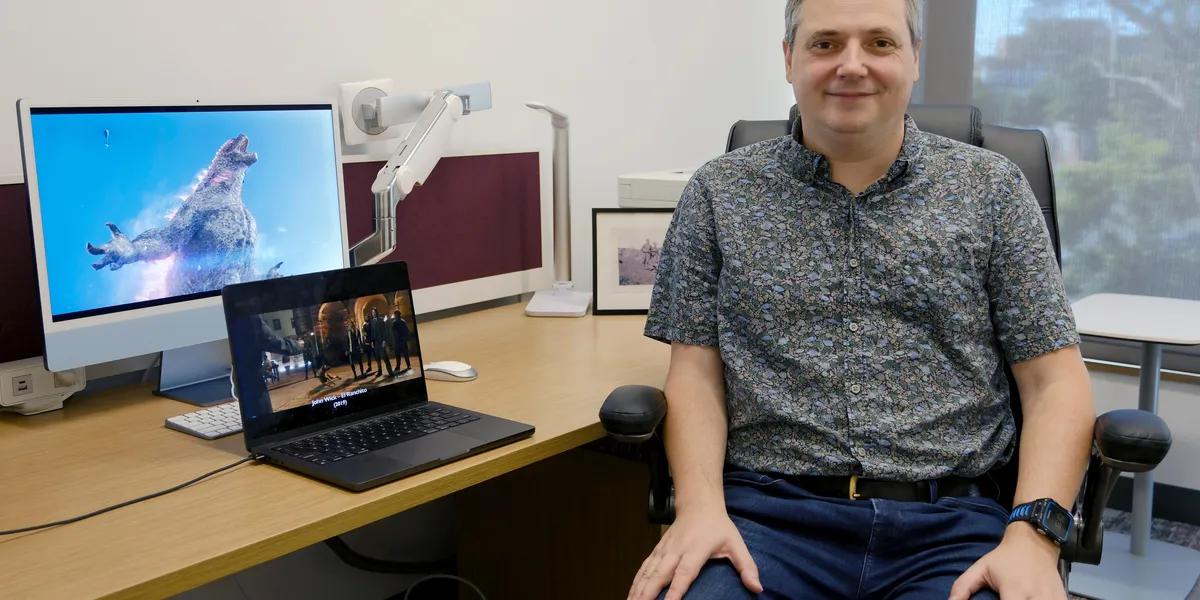
While walking to school as a child, Jernej Barbič would marvel at how beautiful his home was. He was born and raised in a picturesque village in northwestern Slovenia (formerly Yugoslavia), located in the European Alps. Surrounded by alpine and beech trees, Barbic dreamed of replicating their swaying in the wind for others to enjoy.
At the time, he didn’t have the tools or the knowledge to create a system that could do that, but it sparked his interest in computer graphics, he says.
Jernej Barbič
Employer
University of Southern California, in Los Angeles
Title
Professor of computer science
Member grade
Senior member
Alma maters
University of Ljubljana, in Slovenia; Carnegie Mellon
Twenty years later, in 2016, Barbič, a professor of computer science at the University of Southern California, in Los Angeles, made his mark. His Ziva VFX software system allows for the creation of realistic muscle, fat, and skin simulations for 3D digital humans and creatures.
The technology was launched in 2016 by a startup he helped found, Ziva Dynamics, headquartered in Vancouver. It was acquired in 2021 by Unity Technologies of San Francisco.
Ziva VFX has been used in more than 60 movies including Aquaman and the Lost Kingdom; Godzilla x Kong: The New Empire; and Venom: Let There Be Carnage.
For the design and development of Ziva VFX, Barbič, an IEEE senior member, received a 2025 technical achievement Academy Award. It was a “tremendous honor,” he says, as the award recognizes technologies that have had a significant impact on motion picture production.
“Computer graphics and simulation can sometimes feel like a specialized technical field,” he says, “but the award showed that these ideas affect not just science but also art and how stories are told on screen.
“The digital characters enabled by mathematics become important parts of people’s lives.”
Barbič says he was inspired to pursue engineering by his father, an engineer who headed a cement factory’s research department and invented a technology that uses magnetic resonance imaging to test the integrity of cement. His father’s work showed him that “mathematics and physics are beautiful on their own, but engineering lets you build something that other people can use,” he says.
It was Barbič’s mother, an elementary school teacher, who introduced him to computer science. When he was 8 years old, the school his mother taught at bought a ZX Spectrum computer. With permission from the principal, she brought it home for her son to play on for two weeks. But he didn’t just play games; he created his own game using the BASIC programming language.
The machine came with a booklet that contained instructions on how to write a computer program, he says.
“At first,” he says, “I copied them verbatim without understanding what they did. But then I started realizing there is structure, and I modified the instructions.”
 Of all the creatures brought to life using his technology, Barbič is particularly enamored with King Kong from 2024’s Godzilla vs. Kong.DNEG/Warner Bros. Entertainment Inc./Legendary
By the end of the two weeks, he’d developed a computer game where players guided a snowman along a winding road. It shifted unpredictably to the left or right, and players accumulated points by remaining on the road for as long as possible.
Barbič went on to earn a bachelor’s degree in mathematics in 2000 from the University of Ljubljana, in Slovenia. The following year, he moved to the United States to begin a doctoral program in computer science at Carnegie Mellon. It was a major turning point in his life, he says.
His doctoral research focused on developing simulation methods for objects that can change their shape when an outside force is applied to them, known as “deformable objects.”
That project shaped much of his later research, he says: “I became interested not only in making simulations accurate but also in making them practical: fast enough, robust enough, and controllable enough to be used in real applications.”
After earning his Ph.D. in computer science in 2007, he worked as a postdoctoral researcher at MIT. Two years later, he joined USC as an assistant professor.
Making movie magic possible
It was at USC that Barbič merged his passion for computer science with film. He developed Vega FEM, an open-source software program that allowed people to animate realistic 3D deformable objects. But Vega FEM was narrow in scope and not exactly what filmmakers needed, he says, so he started exploring how to create a version suitable for the movie industry.
“A major theme of my career has been the translation of research ideas into practical tools,” he says. “Academic research often produces beautiful algorithms, but it can be difficult to make those algorithms usable by artists, engineers, or production teams. I have always been interested in that bridge: taking rigorous computational methods and turning them into systems that people can actually use.”
In 2011 he attended an Association for Computing Machinery conference presented by its Special Interest Group on Computer Graphics and Interactive Techniques (SIGGraph). There he met James Jacobs, the creature supervisor at visual effects company Weta FX of Wellington, New Zealand. The company is behind the effects in the Lord of the Rings and Hobbit trilogies and other movies. Jacobs used Barbič’s software to create animals and fantastical creatures.
Two years later, Weta FX offered Barbič a summerlong research position in New Zealand. He accepted and spent the time studying the process of creating visual effects and learning what roadblocks existed in the film industry, he says.
At the time, the technology to create realistic soft-tissue and anatomical simulation for digital characters didn’t exist.
“The visual effects industry had reached a point where surface-level realism was not enough,” Barbič says. “A creature could have beautiful skin textures and detailed geometry, but if the bones, muscles, and fat underneath did not move correctly, the illusion would break.
“The problem was especially difficult for creatures and characters that need to feel alive: animals, monsters, fantasy creatures, or digital doubles. Their bodies may have unfamiliar anatomy, but the audience still anticipates them to move in a way that matches real-world expectations. Muscles should bulge and contract, skin should stretch and slide, fat should have inertia, and tissue should respond to motion and impact.”
In an effort to solve the problem Jacobs in 2014 approached Barbič about founding a startup. In 2015 they launched Ziva Dynamics, where they began what is now Ziva VFX.
The software uses physics-based simulations to model the internal anatomy of a character. It numerically solves the partial differential equations of nonlinear elasticity for musculoskeletal human and creature tissues, Barbič says. The equations describe how muscles, fat, skin, and connective tissue deform, interact with bones, and connect, and how muscles activate. Instead of animating only the outside surface, artists can create a model with underlying muscles, bones, soft tissue, and fat. Each component is assigned material properties, constraints, attachments, and activations. The simulator then computes how they deform and interact over time.
The technology uses ideas from computational mechanics, finite element methods, numerical optimization, contact handling, and computer graphics, Barbič says. Finite element simulation, a method used to predict how a product or structure reacts to heat and other real-world forces, provides a way to model deformable materials volumetrically, not just as surfaces, he says. The tool computes internal elastic forces and solves the equations of motion so the character’s tissues respond plausibly to animation, pose changes, muscle activation, and dynamic motion.
But the system had to be designed for artists, Barbič says. In production, he says, the goal is not only physical realism but also controllable realism.
“Artists need to direct the result, iterate, and fit the simulation into a larger animation pipeline,” he says. “So the technology had to combine scientific simulation with practical controls, robustness, and integration with visual effects workflows.”
Barbič says Ziva VFX has been used in more than 60 movies. Of all the creatures brought to life using his technology, he is particularly enamored with King Kong from 2024’s Godzilla vs. Kong.
“When King Kong is walking, you can see the muscles, how they’re very pronounced, and how they influence the shape of the skin. You can really feel the strength of King Kong,” he says. “And this was made through my software, so I think it’s amazing.”
After Ziva Dynamics was acquired by Unity, Barbič consulted for the company for almost two years.
In 2024 DNEG, a London-based visual effects and computer animation company, acquired the exclusive license to Ziva VFX.
Animating the human hand
Barbič strives to improve visual effects as an entrepreneur and an academic. His most recent research, funded by the U.S. National Science Foundation, focused on the modeling, simulation, and animation of human hands. The goal is to create computer models of hands that can be used to design tools, medical prosthetics, and robotic hands.
“The hand is a fascinating and difficult system,” Barbič says. “It contains many small bones, muscles, tendons, ligaments, skin, fat, and other soft tissues, all packed into a compact structure and interacting mechanically in complex ways.”
He and his team built a digital twin of the human hand.
He aimed to move toward “anatomically meaningful simulation,” he says. He used medical imaging, geometric modeling, finite element methods, and multibody simulation to represent the internal structures of the hand and its motions.
“IEEE lets me place my work not only in the world of images and animation but also in the world of engineering systems that must be accurate, stable, interactive, and useful.”
He worked with Bohan Wang, who at the time was a USC doctoral candidate, and George Matcuk, an associate professor of radiology. Wang is now an assistant professor of computer science at the National University of Singapore.
Barbič, Wang, and Matcuk scanned four people’s hands with an MRI machine. The two men and two women would position their hands in 12 poses, which allowed the team to gather data about how the bones, muscles, and fat move with each pose.
The data sets are available for anyone to use in their own studies.
“This project can help medical doctors learn more about how the hand is moving,” Barbič says. “It’s also great for roboticists to better understand how the human hand actually works, so [the movements] can be replicated.”
IEEE: Integral in interdisciplinary research
Barbič joined IEEE in 2008, when he published his research paper on simulation methods for deformable objects in the inaugural issue of the IEEE Transactions on Haptics. He has since published several papers in the IEEE Transactions on Visualization and Computer Graphics, which he says connected his work to a wider community interested in visual computing and computational methods. You can find his research in the IEEE Xplore Digital Library.
“IEEE recognizes the engineering side of computer science,” he says. “My work is often presented as computer graphics, but at its core, it is also simulation, mechanics, numerical methods, haptics, visualization, and software systems.
“IEEE is a community where that broader identity makes sense. It lets me place my work not only in the world of images and animation but also in the world of engineering systems that must be accurate, stable, interactive, and useful.”
He believes the organization is key in supporting a healthy interdisciplinary research ecosystem at a global scale—which, he says, is why he has served as an associate editor for Transactions on Visualization and Computer Graphics and Transactions on Haptics.
Being a member has made it easier for Barbič to connect with engineers in different fields, he says.
“My research often lives between categories: It is mathematical but also practical; visual but also mechanical; artistic but also engineering-driven,” he says. “IEEE is one of the professional communities where that mixture is understood.”
From Your Site Articles
Related Articles Around the Web
>

I am nothing if not a huge movie buff. I watch way too many of them, and I’m always on the hunt for a new format in which to experience them. So when XREAL, the smart glasses company, sent me an a01 — one of its newer models, which it released in May of this year — I was eager to give them a spin as the newest vector by which to satisfy my media fanaticism.
The a01 isn’t a particularly sophisticated smart glasses model. Unlike more software-heavy AR glasses like, say, the Meta Orion or Snap’s Specs, it’s basically just an external monitor. It also doesn’t have a battery or an internal power mechanism. Instead, a simple USB-C cable plugs the glasses into a device of your choosing, which then becomes the headset’s power source. It’s also not so expensive, at an accessible price point of around $300.
The a01 is actually optimized for gaming, in that it can be plugged into a Steam Deck or other handheld gaming device. However, XREAL also advertises them as a way to watch movies and TV — and since that’s more my speed, once I had the a01 in hand, I plugged it into my personal laptop and booted up the Criterion Channel. I then sat watching David Lynch’s film Wild at Heart for a while, enjoying a sequence where Nicolas Cage, dressed in a snakeskin jacket, beats up a guy in a bar and then sings an Elvis song.
I’ll say this: the images look quite good. The glasses, which come outfitted with dual mini OLED panels, provide quite a nice image (those panels offer a 1080p resolution with up to 1,600 nits of brightness), with very vibrant colors. If you aim the glasses at a wall, it feels vaguely like you’re using a really vivid home projector — or perhaps are at a drive-in movie. In a dark room, you’re one step closer to the in-theater experience.
However, the overall experience also brought some questions to mind. Namely, why would I sit next to my computer with glasses on my head watching a thing that is also playing on my laptop only 14 inches away? The reason, XREAL offers, is that the glasses are more immersive (indeed, they claim the device’s projections are equivalent to viewing content on a 147-inch screen). Still, the redundancy of watching a movie while it plays right next to you makes you question what the actual purpose of the device is.
XREAL has suggested that the glasses can function as a “second monitor” (indeed, they’ve actually been referred to as a “wearable display”) but the functionality of this is, again, questionable. It’s rather difficult to see anything other than what the glasses are projecting — which would make it quite difficult to, say, work on a laptop while also wearing them.
The glasses can also be connected to your phone. Unfortunately, I have an older iPhone, which means that the a01’s cable is not compatible with the phone’s port. An adapter would have been necessary to link the two.
The user experience is easy enough to imagine, however. Connecting the glasses to a phone changes the situation in that you’re not captive to an indoor experience anymore as you would be with a heftier device like a laptop. You can watch a movie while you’re traveling on a plane or a train (or, hell, while you’re walking down the street — although I would say this last option is generally ill-advised unless you want to accidentally walk into traffic).

However, there are still inconvenient limitations with using the device this way. For one thing, the glasses still only function as a screen-mirroring device — meaning that the screen of your phone needs to remain active while you’re using the glasses. This brings us back to the redundancy problem. You’re watching a video on a screen attached to your face while the same video plays on a different screen that is located less than a foot away. You could partially solve this issue by putting the phone in your pocket, but the chances seem high that any jostling might upset the device’s playback functionality.
It’s worth noting that the device can also be paired with a separate device, dubbed the Beam Pro, which is essentially a mini-tablet and can act as an isolated streaming hub. Users download shows and movies onto the Beam, connect it to the glasses, and watch. However, this device will cost you another $200.
Then there’s the heat. It doesn’t take long for the a01 to start warming up — producing an odd tingling sensation on the bridge of your nose and over your eyes. This is, of course, not an experience unique to XREAL’s products — it’s a well-known defect of most XR glasses. You can only cram so much computing into a small plastic device before all the electrical processing begins to warm everything up. Still, it’s a tad disconcerting, and not exactly what you would want from an accessory that you’re wearing on your face.
I will say that — heat aside — the a01 is a relatively lightweight and comfortable device — and it isn’t overly cumbersome like other smart glasses that I’ve worn. (Having given Snap’s Specs a try at CES earlier this year, I promise you those are significantly heavier — although it’s also a very different kind of device than the a01.)

XREAL continues to iterate its product line, with each new device seeming to improve upon the previous one. Indeed, some of the existential dilemmas present in the a01 and previous XREAL headsets seem to have been ironed out in the company’s newest (and yet to be released) device: Project Aura — which I caught a glimpse of during my visit to Google I/O earlier this year — promises a significantly more immersive and convenient experience.
The Aura is powered by Android XR, an extended reality operating system developed by Google and Samsung. The Aura comes with native hand tracking (which is absent in the a01), as well as access to the Google Play Store, giving the glasses significantly more interactive abilities and AR potential. It also comes with a puck, tethered to the glasses, that acts as both the charging source and a compute node. The puck, which can be easily placed in your pocket, means that — unlike the a01 — you have substantially more mobility and you don’t have to keep it plugged into a separate device.
Let’s return to the a01, though. Unfortunately, from a cinephile’s perspective, watching movies on a pair of sunglasses just isn’t ideal. In general, movie fans like a big screen — the bigger, the better, really. In a world of 4K OLEDs of varyingly gargantuan sizes, consumers have a lot of options. My TV — a 55-inch TCL S-series — isn’t even a particularly powerful device, but it provides a home-viewing experience that is more comfortable and satisfying than what the a01 can provide. To my mind, watching a movie at home on a large flat screen is second only to actually going to a theater. Watching a film on tiny screens less than an inch from your eyes, meanwhile, is an interesting experience for its distinct sense of immersion but not what I’d call optimal.
The a01 is an interesting glimpse into a hardware industry that continues to evolve and that is still finding its footing with consumers. I’m curious to see how the user experience shifts with XREAL’s upcoming Aura, and I’m game to reevaluate my movie-watching preferences when that time comes.
When you purchase through links in our articles, we may earn a small commission. This doesn’t affect our editorial independence.
>

Lambda, an AI cloud company that buys computing chips and rents them out to businesses, has raised $1 billion in private, short-dated debt to buy Nvidia’s AI chips that it will lease to Microsoft, Bloomberg reports.
The terms of the deal, which Bloomberg says was arranged by JP Morgan Chase, signal that Lambda is betting it will be able to quickly deploy the chips and start generating revenue from them, letting it repay the debt fairly quickly using that incoming cash.
This is the latest in a string of loans that Lambda is using to fund GPU infrastructure for specific customers. In May, it closed a $1 billion secured credit facility, and this week it announced the closing of a $926 million loan to fund Nvidia GB300 GPUs, one of Nvidia’s newest chip models, for a deployment it’s under contract to provide Nvidia itself.
The $1 billion private debt deal comes as as Lambda is reportedly in talks for a $3 billion pre-IPO round. The company last November raised $1.5 billion in venture capital at a $5.43 billion post-money valuation, per PitchBook data.
Lambda isn’t the only one relying on debt to fund the AI boom — according to data Bloomberg compiled, banks and tech companies have raised over $400 billion in AI-related debt globally in 2026 so far.
>
Training AI models with other AI models has become a very popular goal for neolabs — and now, a researcher in Anthropic’s fellows program has given us an early look at what it might look like in practice.
On Friday, Anthropic published a new paper titled “Automated Researchers Can Reliably Mitigate Alignment Failures,” detailing how AI systems could reliably improve a model’s performance on a set of alignment benchmarks. When given 10 benchmarks for specific misaligned behaviors, the automated systems were able to improve performance on every single one without degrading overall performance.
Led by Anthropic Fellow Chen Yueh-Han, the system replicates much of the traditional approach to research. Each automated system searches the available literature, proposes a method, and trains the model using that method for 30 minutes, gradually increasing the benchmark over several iterations. Effective methods are preserved while ineffective ones are discarded, allowing the system to operate quickly and at a great scale.
“Overall, these results provide early evidence that automated alignment post-training could become practical in the near term,” the paper reads.
The paper is a step toward recursive self-improvement, which many see as the next significant step in AI progress. If models can improve their own alignment training, it’s plausible they could improve training practices more broadly — at which point, human AI researchers might soon become obsolete.
The paper isn’t shy about addressing this idea, explicitly comparing the Automated Alignment Researcher (AAR) to its human equivalent. “The best AAR method beats what experienced humans propose, on average within six hours,” the paper reads. “Human guided research directions do not lead to stronger performance.”
There’s even a cost comparison, in case anyone wasn’t convinced. “An AAR costs roughly $4 per hour in API inference against the $150 per hour we pay our human researchers.”
In fairness, the paper also points out a few limitations to this approach. The automated system only works insofar as the benchmarks reflect the actual alignment goals, and even then there’s significant work to be done in establishing and maintaining those benchmarks — not to mention maintaining and expanding on the literature the automated researchers are draw from.
When you purchase through links in our articles, we may earn a small commission. This doesn’t affect our editorial independence.
>

New Seahawks owner Vinod Khosla defends Steelers fandom amid criticism

Coyote vs. Acme: Will Forte Celebrates Film’s Long-Awaited Release

Will Cale Makar’s record-breaking extension kick-start Wild-Quinn Hughes negotiations?
-

 movies3 months ago
Search For Canadian TV Actor Stewart McLean Now Homicide Investigation
-

 Fashion9 years ago
These ’90s fashion trends are making a comeback in 2017
-
Fashion9 years ago
According to Dior Couture, this taboo fashion accessory is back
-
Fashion9 years ago
Model Jocelyn Chew’s Instagram is the best vacation you’ve ever had
-
Fashion9 years ago
Emily Ratajkowski channels back-to-school style
-
Fashion9 years ago
9 Celebrities who have spoken out about being photoshopped
-
Fashion9 years ago
Your comprehensive guide to this fall’s biggest trends
-

 Anime3 months ago
Rurouni Kenshin: Hokkaido Arc Manga Takes 1-Issue Break – News