
Entertainment
Ridley Scott on ‘The Dog Stars,’ Multiple Cameras, and Love Stories


Part of the appeal of Ridley Scott‘s latest film, “The Dog Stars,” is that it gives the audience several movies for the price of one: its story of a mechanic (Jacob Elordi) searching for human connection after a virus has wiped out most of civilization is part dystopian drama, part buddy comedy (in the scenes between Elordi and survivalist Josh Brolin), part Kubrickian horror film, and part kinetic action movie.
In the end, however, “The Dog Stars” turns out to be primarily a love story between Elordi and young widow Margaret Qualley — but because this is a Ridley Scott movie, the love story is subtle and barely consummated. “When I go to Hollywood, they’ll pitch me on a story and say ‘it’s sentimental,’ or ‘it’s melodramatic,’ like it’s a compliment,” Scott told IndieWire on the latest episode of the Filmmaker Toolkit podcast. “I say, ‘Stop.’ Those two words are terrible.”


Scott prefers understated love stories like the one he depicted between Susan Sarandon and Michael Madsen in “Thelma and Louise.” “He was so underrated, Michael,” Scott said. In the scene between Sarandon and Madsen in the hotel room where they say goodbye, or the moments between Elordi and Qualley where they tentatively let their guards down, Scott tries to keep the emotional expression as restrained as possible, something he attributes to his British lineage.
“I think Churchill once said that the English and Americans are divided only by the same language,” Scott said. “You’ve got to earn the emotion. As soon as the music comes up, that means it’s not quite working. [Elordi and Qualley] never consummate the relationship, other than a kiss.”
The biggest difference between Scott’s approach on “Thelma and Louise” and his way of shooting “The Dog Stars” is technical. On “Thelma and Louise” he was covering scenes with only one camera that he operated himself, but for “The Dog Stars” he tended to employ between four and six cameras to cover dialogue scenes — a practice he began after “Thelma” that he has become known for in the years following “Black Hawk Down.”
“I did that for a very brief time as a director in BBC television,” Scott said of his early years before working in advertising and feature films. “There you’re doing live drama with six cameras, so I learned to pre-plan the geometry of the scene with the actors.” After his BBC years, Scott operated the camera on thousands of commercials and now-classic feature films like “Alien,” “Blade Runner,” and “The Duellists,” but after “Thelma and Louise” he decided he would be better served by multiple cameras that he could direct from a bank of monitors.
”Now the camera’s receiving through the viewfinder directly into a monitor, so I can sit there with four monitors, and I can talk to each operator as an operator,” Scott said. “Say, ‘You missed it, you got it, change your lens, you’re too slow,’ et cetera.” By the time he got to “Black Hawk Down,” Scott was shooting massive action set pieces with 11 cameras, which allowed him to get everything in one take. “That would’ve taken two days, but I did it in a morning.”
Shooting with multiple cameras isn’t just about saving time and money, however. For Scott, it’s a way of giving his actors total freedom, so they don’t have to worry about matching their action from take to take, and they don’t have to get exhausted doing the same scene over and over again. Scott arrives on set each day with detailed sketches so that everyone knows the plan. “I’m filming on paper before I get there,” Scott said. “On some sets they’re still arguing at 11 about where the camera’s going to go — I turn over by a quarter to nine every morning.”
That doesn’t mean Scott is rigid about his plan, however. “I’ll leave it on the actor,” Scott said. “Not the cameraman, the actor. If they say, ‘I don’t like it that way,’ I say, ‘What do you want to do?’” The key for Scott is finding a rhythm for the shots so that they work in relation to each other, and in relation to the overall shape of the screenplay. “You need movement, but sometimes I know when to sit still. It’s like sound. Silence is the biggest sound you can have — suddenly you go silent, and everyone starts paying attention.”
“The Dog Stars” is now playing in theaters. To hear the entire conversation with Ridley Scott and make sure you don’t miss a single episode of Filmmaker Toolkit, subscribe to the podcast on Apple, Spotify, or your favorite podcast platform.
>
Summer is rapidly coming to an end, even if the weather doesn’t feel like it just yet, and that means it’s back to school for many. To prepare, some good back-to-school movies might help.
Whether you’re headed back to the classroom yourself — either a student or maybe a teacher — or just have a loved one getting back into the swing of things, a new school year can be daunting. So, for this list, we picked some films that can remind you how fun it is, while maybe teaching some good lessons along the way.
Here are five back-to-school movies to stream in August.
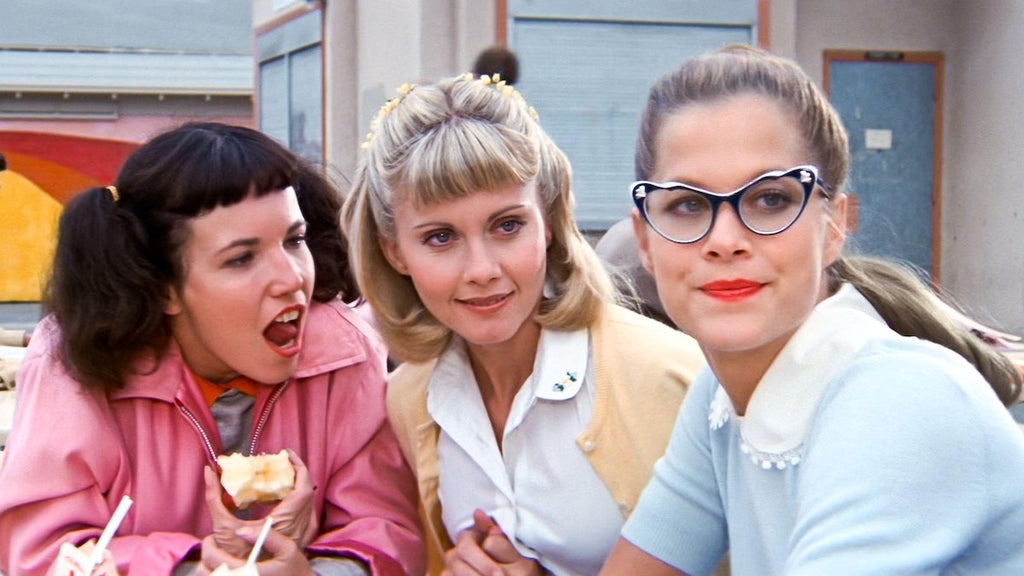
Grease
Technically, “Grease” takes place over the course of an entire school year, but it does start at the end of summer and the beginning of a new school year. Danny Zuko literally says (very cheekily, thanks to John Travolta understanding the assignment) “it’s only the beginning” at the start of the film.
“Grease” will hit extra hard for any youngins who found a summer romance, as it stars Olivia Newton-John and Travolta as somewhat star-crossed lovers, who have to figure out how to navigate life when they run into their summer fling at school. Can they even exist together as a couple when they get back to real life and their usual friends?
Granted, “Grease” doesn’t send an awesome message when Sandy (Newton-John) changes nearly everything about herself in order to keep her man and friends as she heads into the next summer. Maybe just turn it off before you get to that part, and pretend it ends just before the “Look at Me I’m Sandra Dee” reprise (though that reprise is gorgeous).
“Grease” is streaming now on Pluto TV and Paramount+.

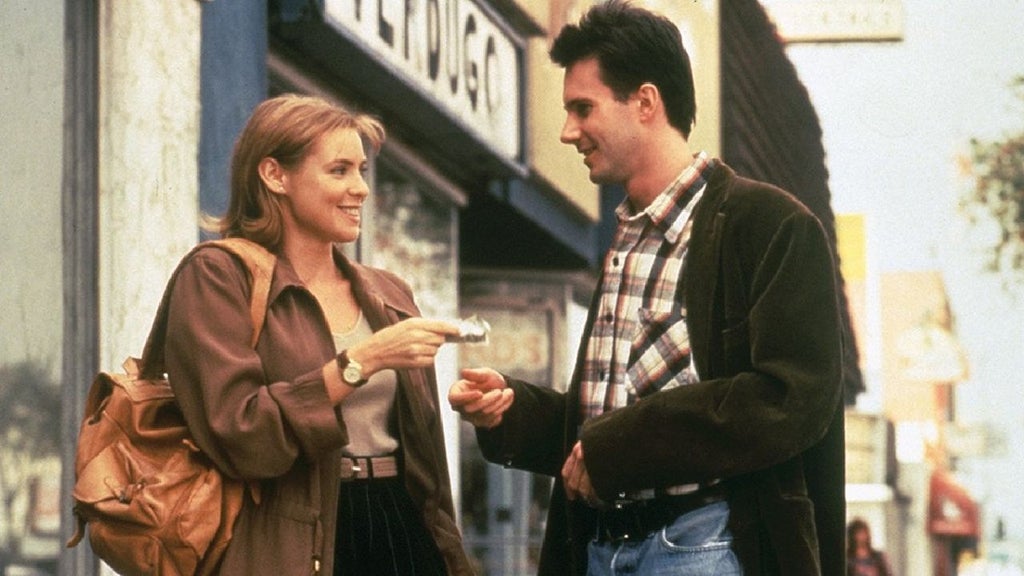
Kicking and Screaming
Just about every cinephile knows the name Noah Baumbach, and his debut film, “Kicking and Screaming” is a perfect back-to-school movie if you want to buff up your knowledge of his work, or just enjoy a good filmmaker’s start.
“Kicking and Screaming” follows a group of college grads who, for various reasons, decided to stick around their college town instead of moving on with their lives. Now it’s a new school year, and they spend the fall semester figuring things out (or … not) while navigating situations and dynamics they no longer relate to.
It’s a beloved entry in ’90s slacker culture cinema, and boasts a stacked cast of indie darlings, including Parker Posey, Chris Eigeman, Eric Stoltz, Cara Buono and Josh Hamilton.
“Kicking and Screaming” is currently streaming on YouTube, Tubi, The Roku Channel, PLEX and Fandango.
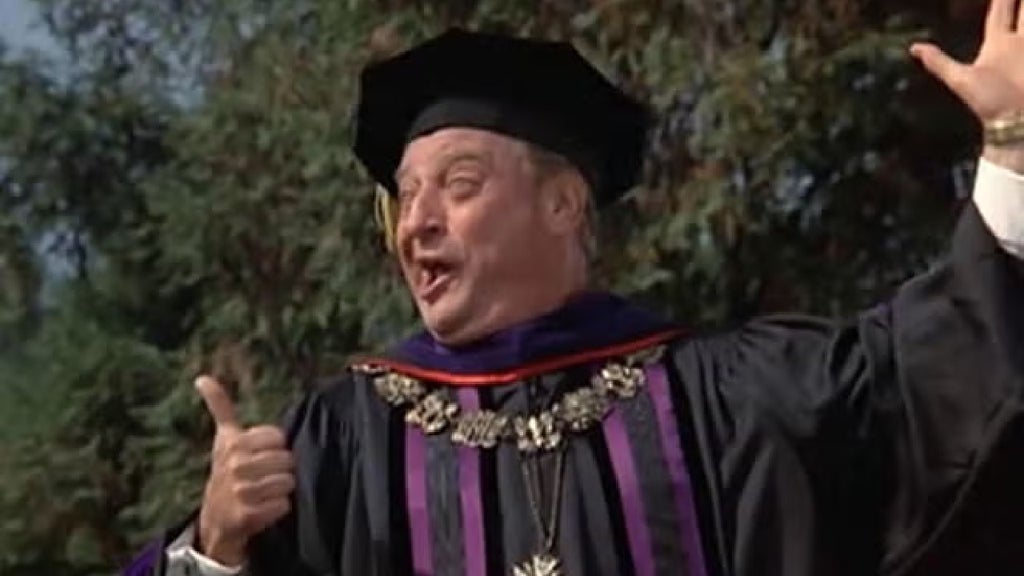
Back to School
I mean, it’s hard to have a “Best Back-To-School Movies” list and not have “Back to School” on it. A little literal? Perhaps. But it counts!
The film stars Rodney Dangerfield as a wealthy but uneducated father, who goes to college in solidarity with his discouraged son, Jason (Keith Gordon). But here, he learns that money can’t actually take care of everything. We’ve seen plenty of similar plotlines since — at least, in the “parents go back to school and learn how different it is” genre — but this is one of the best.
It also stars a young Robert Downey Jr., which is always an added bonus.
“Back to School” is now streaming on Prime Video and Philo.


Mean Girls
When joining a new school, it’s important to figure out the cliques pretty fast, and figure out who you can trust. Otherwise, things can get messy.
This is a lesson that Cady Heron (Lindsay Lohan) learns pretty immediately on her first day at North Shore High. She’s just started going to public school, after being homeschooled for her entire life. Things in a real school work differently, she soon learns, but it’s not unlike the jungle environment she grew up in.
“Mean Girls” is just a classic, and may be a good reminder to your kid not to be the Regina George of their class. And maybe it’ll encourage them to join mathletes, who knows.
“Mean Girls” is currently streaming on Pluto TV, Peacock and Paramount+.
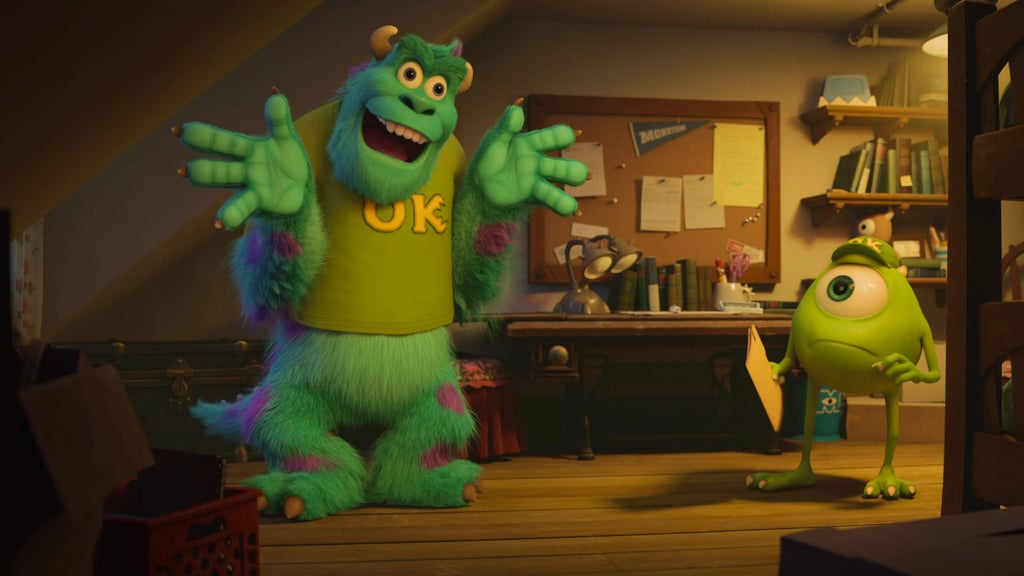
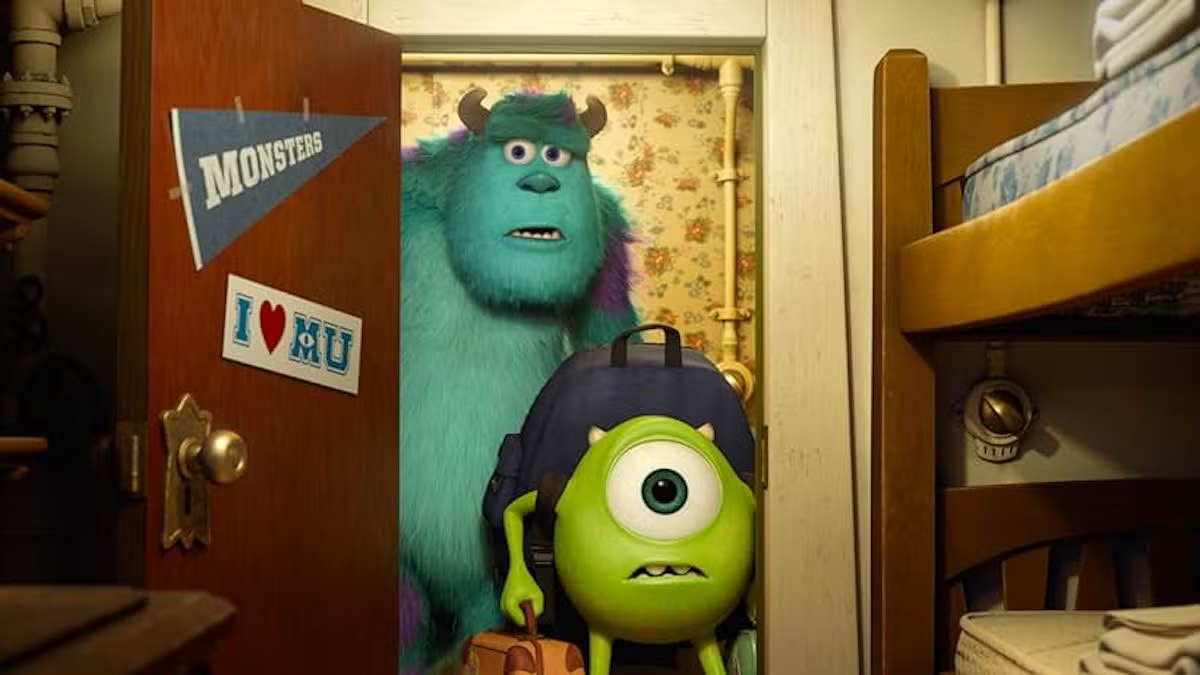
Monsters University
It’s rare that a sequel that’s actually a prequel is as good as the original, but such is the case for “Monster’s University,” and it just so happens to be a great back-to-school movie.
The animated film gives fans the story of how Mike Wazowski (Billy Crystal) and James P. Sullivan (John Goodman) first met and became best friends. And it turns out, it was in college. At the start of their first year at Monster’s University, both are determined to be great scarers, but Sulley is a slacker and Mike is just … not that scary looking.
Though they initially butt heads, they eventually work together to help each other out, creating the bond that eventually leads to “Monsters Inc.” It’s a college story, sure, but it’s Disney and Pixar, which means it works for kids of all ages, headed to a new school year and looking to make friends.
“Monsters University” is streaming on Disney+.

>

The California production community can breathe a sigh of relief: State lawmakers have officially introduced a bill meant to allow studios a few key exemptions from a recently enacted restriction on corporate tax credits.
AB136, introduced Friday evening, addresses concerns raised from stakeholders including the Motion Picture Association about the threat of undermining the efforts to expand California’s Film & TV Tax Credit pool to $750 million.
Lawmakers have to consider legislation for 72 hours before voting. With that in mind, a vote on AB136 is likely to come Monday evening, hours before the midnight end to the legislative session.
The state budget, passed this summer, seeks to stabilize revenue by preventing corporations from offsetting more than $5 million in tax liability annually for the next three years. Several advocacy groups pushed for a complete exemption, but the solution introduced by lawmakers on Friday evening does fall short of that.
Instead, only independent productions will be completely exempt from the $5 million cap. The legislation also addresses concerns about the payback period for studios that have elected to refund credits for cash. Current law allows studios to get cash instead of claiming the credit against tax liability for a 10% discount on the total with a payback period of five years. The fix accelerates that to two years with just a 5% discount.
The new legislation will also extend the expiration date of the non-refundable tax credits that were issued prior to 2025.
>
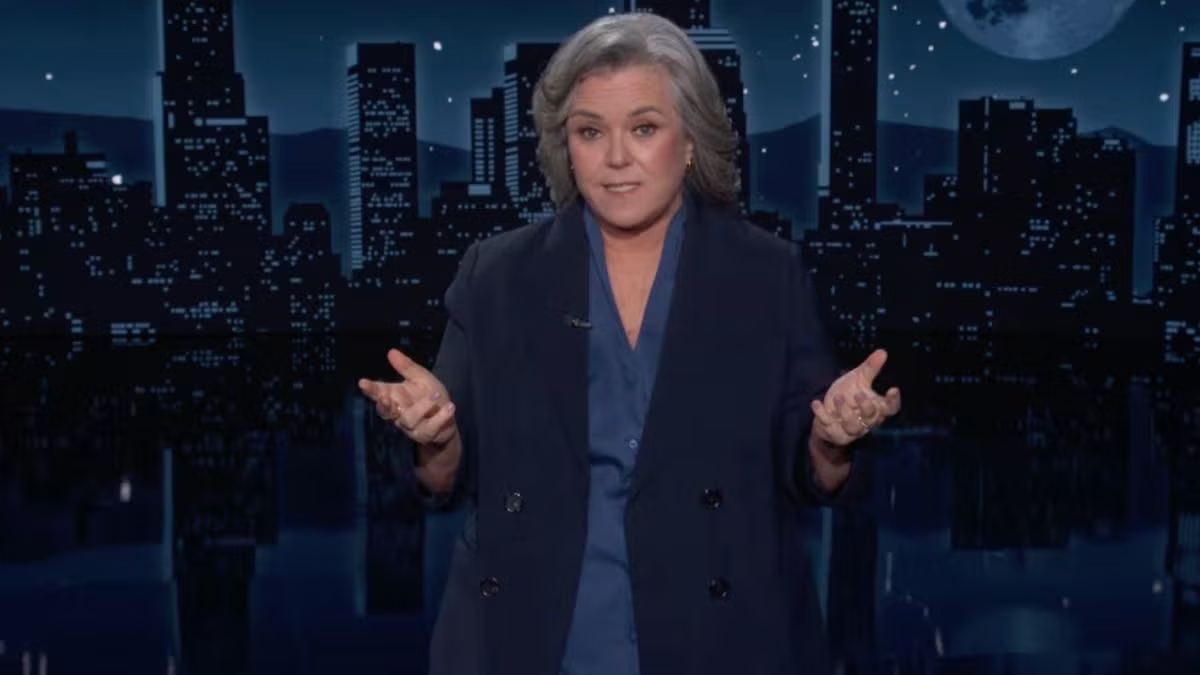
Rosie O’Donnell wrapped up her week guest hosting on “Jimmy Kimmel Live!” to impressive numbers, ranking as the highest-rated summer substitute thus far.
For the week of Aug. 17, O’Donnell averaged a total viewership of 2.17 million and a demo viewership of 237,000 viewers, according to live-plus-three-day viewing figures from Nielsen reported by LateNighter.
O’Donnell’s week of hosting marks the ABC late night show’s most-watched week in both measures since mid-June, before Kimmel tossed the show over to a suite of guest hosts, including Tiffany Haddish, Anthony Anderson, Ike Barinholtz and Colman Domingo.
In fact, viewership for O’Donnell’s week of hosting was up in both categories from the week of Aug. 9, which was headed up by Anderson. Total viewership for O’Donnell was up 40% from the previous week, while demo viewership saw a 34% rise.

With that, “Jimmy Kimmel Live!” maintained its lead on NBC’s “The Tonight Show Starring Jimmy Fallon,” which averaged 1.43 million viewers and 171,000 demo viewers, as well as “Comics Unleashed,” which averaged 654,000 total viewers and 75,000 demo viewers across the same hour.
O’Donnell’s stint hosting also boosted ratings for ABC’s “Nightline” as it picked up at 12:35 a.m. The show averaged 918,000 total viewers – up 11% from the previous week — and 110,000 demo viewers — rising 20% from the previous week.
O’Donnell started her guest hosting week strong. On Monday, Aug. 17, O’Donnell brought in 1.87 million total viewers, according to preliminary Nielsen live-plus-same-day figures reported by LateNighter, which marked the biggest audience for any of Kimmel’s guest hosts so far this summer.
Country music artist Jelly Roll took the baton from O’Donnell for the week of Aug. 24. So far, Jelly Roll’s Monday audience landed at 1.07 million viewers, down 11% from the previous Monday when O’Donnell held the stage. Full ratings for Jelly Roll’s week of hosting will be available next week.

>

How to watch Red Sox vs. Yankees: TV channel and streaming options for August 28

How to watch Rangers vs. Brewers: TV channel and streaming options for August 28

How to watch White Sox vs. Twins: TV channel and streaming options for August 28
-

 movies3 months ago
Search For Canadian TV Actor Stewart McLean Now Homicide Investigation
-

 Fashion9 years ago
These ’90s fashion trends are making a comeback in 2017
-
Fashion9 years ago
According to Dior Couture, this taboo fashion accessory is back
-
Fashion9 years ago
Model Jocelyn Chew’s Instagram is the best vacation you’ve ever had
-
Fashion9 years ago
Emily Ratajkowski channels back-to-school style
-
Fashion9 years ago
9 Celebrities who have spoken out about being photoshopped
-
Fashion9 years ago
Your comprehensive guide to this fall’s biggest trends
-

 Anime3 months ago
Rurouni Kenshin: Hokkaido Arc Manga Takes 1-Issue Break – News