Connect with us

Sports

Will Cale Makar’s record-breaking extension kick-start Wild-Quinn Hughes negotiations?

Published

on

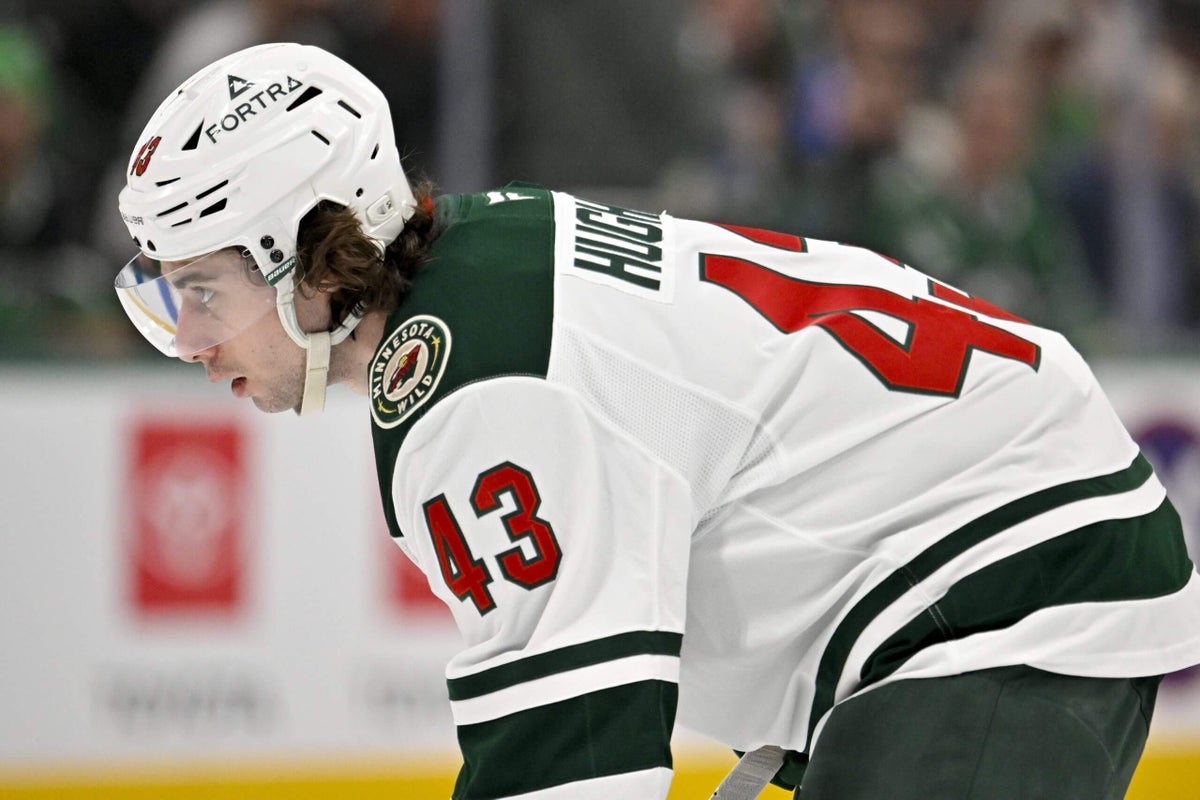
ST. PAUL, Minn. — On Friday, Cale Makar set a new market for superstar defensemen. Now we’ll see if doing so kick-starts the Minnesota Wild’s negotiations with Quinn Hughes, with training camp less than three weeks away and the start of the season in less than five.

At least now, there’s a legitimate comparable contract.

Makar, a two-time Norris Trophy winner and a former Calder Trophy and Conn Smythe Trophy winner, became the NHL’s first $20 million man, signing an eight-year, $163.2 million extension that will kick in July 1, 2027. That’s a $20.4 million average annual value. The max Makar could have received is 20 percent of the $104 million 2026-27 cap, or $20.8 million annually, so he came within a hair of that.

Hughes, who also has won a Norris Trophy, is entering the final year of his contract and would become a free agent July 1 if he doesn’t extend before then. If he signs before July 1, he would max out at a $20.8 million AAV. If he waited until after July 1 to sign with another team, he’d be allowed to max out at 20 percent of the 2027-28 cap, which is expected to be $113.5 million. That’d be a $22.7 million AAV.

However, the max term he could sign for on another team after July 1 would be six years. He would be allowed to sign an eight-year deal, like Makar, if he re-signs before Sept. 15. If the extension came after, the max term would be seven years under the new CBA.

Of course, term may not be the issue, because Hughes seems to want a shorter deal, as most of today’s stars have been signing.

In fact, earlier this summer, when Wild owner Craig Leipold appeared on Minnesota Public Radio, he said that the team would “want to go as long as we could” but that Hughes “would probably want it to be a little shorter — maybe three years.”

“Hopefully we’ll end up at five,” Leipold said.

Why sports leagues finally embraced Las Vegas

Tifo Sports

The Wild have been in talks with Hughes and his agent, Pat Brisson, throughout the summer and remain confident that they can get an extension done before the start of the season. They’ve gone over different concepts of what a deal might look like, from term to average annual value to contract structure.

Hughes, who has been training in Michigan and Florida over the past month, is expected to return to Minnesota on Sept. 10 after representing the Wild at the NHL/NHLPA Player Media Tour in Las Vegas with teammate Matt Boldy.

The changing landscape in NHL salaries over the past year is part of what’s made negotiations like Hughes’ increasingly complicated, and Makar’s is the new standard.

Makar’s $20.4 million AAV surpasses the Chicago Blackhawks’ Bowen Byram ($12.5 million AAV for six years) as the largest AAV signed by a defenseman. Byram’s extension is also set for 2027-28.

Theoretically, by this comp, Hughes’ AAV should be less than Makar’s $20.4 million if he signs for three to five years. But, like last September when the Wild felt pressure to give Kirill Kaprizov the then-largest contract in NHL history (eight years, $136 million, $17 million AAV), there is immense pressure to re-sign Hughes.

The Wild couldn’t afford to let Kaprizov walk. Similarly, they took the risk of trading the equivalent of four first-round picks (Marco Rossi, Zeev Buium, Liam Öhgren and a 2026 first-rounder) for Hughes without the guarantee of an extension, so there is incredible pressure to ensure they re-up Hughes after giving up such a large package.

President of hockey operations and general manager Bill Guerin has said that the franchise is in “win now” mode more than ever before and that it needs to take advantage of this window.

Kaprizov’s eye-popping $17 million AAV deal set a new bar, both league-wide and with the Wild. The Wild structured Kaprizov’s deal to give him $128 million of his $136 million in annual July 1 signing bonuses. Hughes could very well want a large chunk in signing bonuses, too, which would be quite a financial commitment for Leipold.

Makar received $127.6 million in signing bonuses.

According to The Athletic’s Dom Luszczyszyn earlier this summer, Hughes’ market value on an eight-year deal was $17.8 million. It went down to $17.7 million on a five-year deal and $17.5 million on a three-year deal.

He has Makar at $21.6 million.
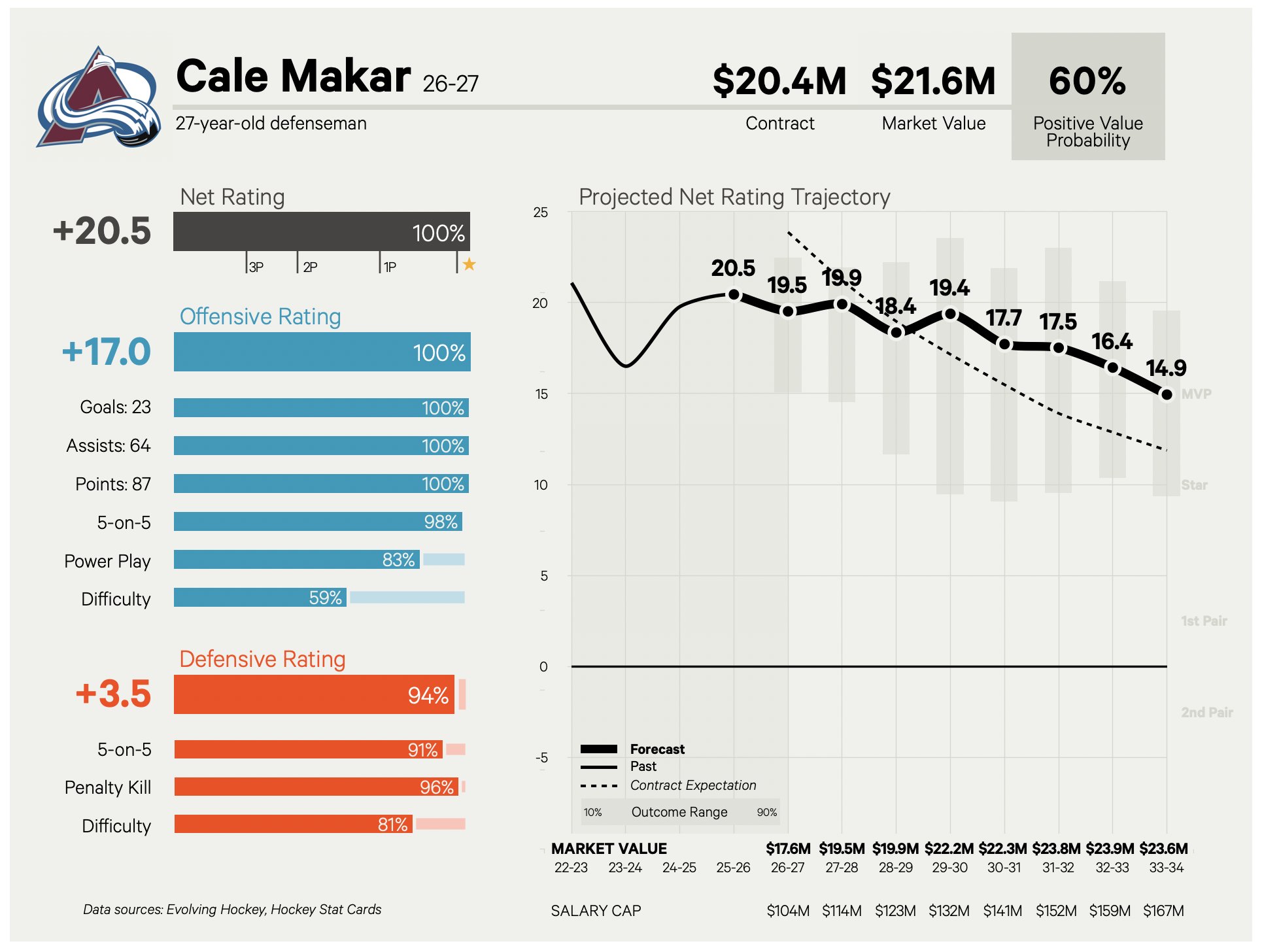
But Hughes’ market value could be irrelevant for three reasons: 1) The internal pressure to re-sign him; 2) The fact Makar created this new bar, and Hughes is the only defenseman in the same tier; and 3) Kaprizov signed for 16.3 percent of the cap, which would already be $18.5 million in relation to the 2027-28 $113.5 million cap ceiling.

After Kaprizov’s blockbuster deal last fall, this summer’s offer sheet by the Philadelphia Flyers for young Anaheim Ducks star Leo Carlsson (which Anaheim matched at an $18 million AAV) continued to push the envelope. Macklin Celebrini, already one of the game’s top players at 20 years old, then signed a five-year deal with a then-league-record $18.8 million AAV.

Hughes will earn $8.25 million this season and carry a cap hit of $7.85 million.

Like Makar, Hughes is among the game’s best players overall — “in the top group of stars” regardless of position, analyst and former GM Craig Button told The Athletic — and they will both be paid like it on their next deals, one way or another.

>

Continue Reading

Sports

How to watch North Carolina vs. TCU: TV channel and streaming options for August 29

Published

on

Aviva Stadium in Dublin, Ireland is the setting for the TCU Horned Frogs’ (0-0) matchup against the North Carolina Tar Heels (0-0) on August 29, 2026.

How to watch North Carolina Tar Heels vs. TCU Horned Frogs

North Carolina vs. TCU odds

  • Spread: TCU -8.5 (-117), North Carolina +8.5 (-108)
  • Favorite Moneyline: TCU -362
  • Underdog Moneyline: North Carolina +275
  • Total: 46.5
  • Total Over Odds: -107
  • Total Under Odds: -112

Stats to know

  • TCU put up 6.2 more points per game (30.7) than North Carolina gave up (24.5) last year.
  • TCU collected 421.5 yards per game last year, 85.0 more yards than the 336.5 North Carolina gave up per outing.
  • North Carolina racked up 6.0 fewer points per game (19.3) than TCU surrendered (25.3) last year.
  • North Carolina averaged 89.6 fewer yards per game (289.1) than TCU allowed per contest (378.7) last season.

This watch guide was created using technology provided by Data Skrive.

Betting/odds, ticketing and streaming links in this article are provided by partners of The Athletic. Restrictions may apply. The Athletic maintains full editorial independence. Partners have no control over or input into the reporting or editing process and do not review stories before publication.

Photo: Jonathan Bachman, Tim Warner, Kevin C. Cox, Eakin Howard / Getty Images

Connections: Sports Edition Logo

Connections: Sports Edition Logo

Connections: Sports Edition

Spot the pattern. Connect the terms

Find the hidden link between sports terms

>

Continue Reading

Sports

How to watch San Jose State vs. No. 14 USC: TV channel and streaming options for August 29

Published

on

The No. 14 USC Trojans (0-0) and the San Jose State Spartans (0-0) play at Los Angeles Memorial Coliseum on Saturday, August 29, 2026.

How to watch San Jose State Spartans vs. USC Trojans

San Jose State vs. USC odds

  • Spread: USC -38.5 (-114), San Jose State +38.5 (-108)
  • Favorite Moneyline: USC -100000
  • Underdog Moneyline: San Jose State +5000
  • Total: 61.5
  • Total Over Odds: -108
  • Total Under Odds: -111

Stats to know

  • Last year, USC scored 3.3 more points per game (35.8) than San Jose State allowed (32.5).
  • USC racked up 465.5 yards per game last year, 62.3 more yards than the 403.2 San Jose State allowed per outing.
  • San Jose State put up 21.4 points per game last season, comparable to the 23.0 USC allowed.
  • San Jose State collected 52.0 more yards per game (402.8) than USC gave up per contest (350.8) last season.

This watch guide was created using technology provided by Data Skrive.

Betting/odds, ticketing and streaming links in this article are provided by partners of The Athletic. Restrictions may apply. The Athletic maintains full editorial independence. Partners have no control over or input into the reporting or editing process and do not review stories before publication.

Photo: Jonathan Bachman, Tim Warner, Kevin C. Cox, Eakin Howard / Getty Images

Connections: Sports Edition Logo

Connections: Sports Edition Logo

Connections: Sports Edition

Spot the pattern. Connect the terms

Find the hidden link between sports terms

>

Continue Reading

Sports

‘The Athletic Football Show’ previews the 2026 Dallas Cowboys

Published

on

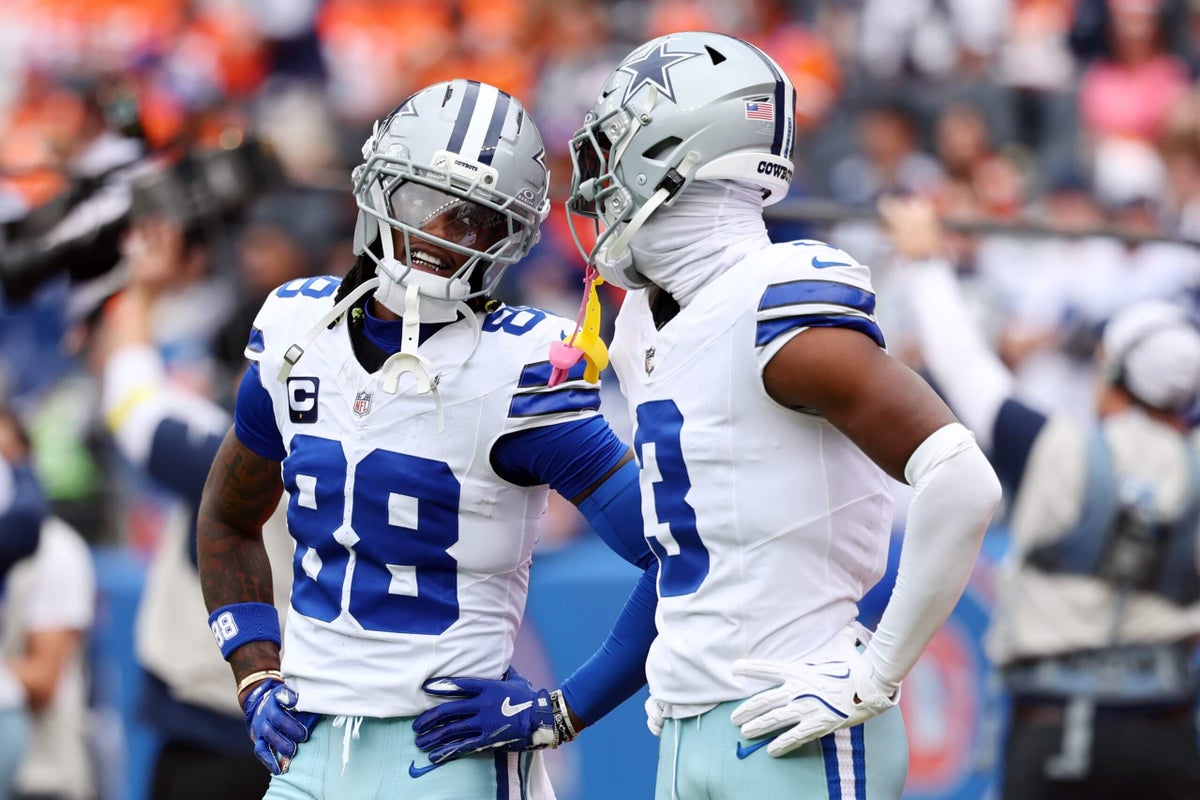
Dallas Cowboys wide receivers CeeDee Lamb and George Pickens

Wide receivers CeeDee Lamb and George Pickens are two big reasons why the Cowboys could have the best offense in the league this season. Dustin Bradford / Getty Images

The Athletic Football Show is previewing all 32 teams leading up to the start of the 2026 NFL season. Below are select quotes from the show’s preview of the Dallas Cowboys. The quotes are edited for clarity. You can watch the whole preview on YouTube and in the embedded video below, or listen to the full NFC East preview wherever you get your podcasts.

Derrik Klassen on what about the Cowboys most excites him: This might be the best offense in football. I just feel that they have all the right pieces. They have a quarterback who we’ve seen play at MVP heights before and put up some of the best passing numbers in the NFL. They have an offensive line that is young and really talented almost across the entire board. They have, outside of Cincinnati, the best one-two punch at wide receiver in the NFL. The offensive line was exciting last year, but they were a little bit banged up and a lot of those guys missed time. It wasn’t that many games, but when Tyler Guyton and Cooper Beebe played together, they had a 45.2 percent rushing success rate, according to TruMedia, which would have been tied for third in the league with the Chicago Bears. When they had their guys, they were mashing people. If they can get back to that in the second year in the system, this could be wheels up.

Robert Mays on what he’s watching the first month of the season: Can Christian Parker do this? People have said that I’m baking in an improvement from the Cowboys defense and how we talk about them, where I would typically be more speculative with a first-year play caller in other situations. I’m absolutely doing that. We collectively play the wait-and-see game so often on this show. And we do that because we understand the things we don’t know. But every once in a while, if you believe in something, if you have conviction about something, make a stand. I haven’t been shy about this. He’s got the goods and I think that they can do it. And yes, I’m baking that in a way that I wouldn’t with a coordinator I’ve never seen do this before.

Dave Helman on what’s keeping him up at night: We’ve been talking about it for two weeks, but at this point, across the NFL community, the defensive turnaround feels like a fait accompli. The Cowboys being a trendy Super Bowl pick because of a defensive turnaround that feels plausible but is entirely theoretical keeps me up at night.

I undermined myself a little bit when I looked at the DVOA stuff and saw that there’s plenty of precedent for units doing this. It’s not nuts. That doesn’t mean it’s going to happen. And for all the teams I said had these big turnarounds, there were plenty that went from 31 to 27 or 32 to 24, and 24 is not going to be good enough to get where you’re trying to go.

Subscribe to “The Athletic Football Show” on YouTube

Connections: Sports Edition Logo

Connections: Sports Edition Logo

Connections: Sports Edition

Spot the pattern. Connect the terms

Find the hidden link between sports terms

>

Continue Reading

Trending

Copyright © 2017 Zox News Theme. Theme by MVP Themes, powered by WordPress.